Sorry, this entry is only available in Español.
(Español) Industria automovilística: Las nuevas normas sobre vehículos más limpios y seguros empiezan a aplicarse en toda Europa
(Español)
Industria automovilística: Las nuevas normas sobre vehículos más limpios y seguros empiezan a aplicarse en toda…
(Español) Industria automovilística: Las nuevas normas sobre vehículos más limpios y seguros empiezan a aplicarse en toda Europa
(Español)
Industria automovilística: Las nuevas normas sobre vehículos más limpios y seguros empiezan a aplicarse en toda…
Car industry: New rules on cleaner and safer cars start to apply across Europe
Car industry: New rules on cleaner and safer cars start to apply across Europe
PR Newswire
BRUSSELS, 31…
Car industry: New rules on cleaner and safer cars start to apply across Europe
PR Newswire
BRUSSELS, 31 August 2020
BRUSSELS, 31 August 2020 /PRNewswire Policy/ — Tomorrow, the EU Regulation on the approval and market surveillance of motor vehicles will start to apply. Adopted in May 2018, the new Regulation significantly overhauls and tightens the previous type approval and market surveillance system. It improves the quality and independence of vehicle type-approval and testing, increases checks of cars already on the EU market and strengthens the overall system with greater European oversight.
Thierry Breton, Commissioner for Internal Market said: “Europeans rightly expect to drive the cleanest and safest cars. That presupposes the strictest controls of cars placed on the market and circulating on our roads. It also requires real enforcement and oversight at European level: that is why from now on the Commission will be able to carry out checks on cars, trigger EU-wide recalls, and impose fines of up to €30,000 per car when the law is broken. These reforms complement our work on cleaner and safer mobility, which in the challenging context of the crisis require even more future-oriented investments in infrastructure and innovation. Our efforts to restore consumer confidence, strengthen the Single Market and support the long-term viability and global competitiveness of Europe’s car industry go hand in hand.”
The key elements of the new EU rules are:
Independence and quality of testing before a car is placed on the market: Technical services performing testing and inspections of new car models will be independently audited on the basis of stringent criteria to obtain and keep their designation by Member States. National type approval authorities are now subject to peer reviews to ensure that the relevant rules are implemented and enforced rigorously across the EU.
Checks on cars already on the market: The new framework also improves checks on the vehicles that are already circulating on the market and for sale at the dealerships. From now on, Member States are required to regularly test a minimum number of cars and are now able to take safeguard measures against non-compliant vehicles on their territory without waiting for the authority that issued the type approval to take action.
European oversight: In addition, the Commission is now able to carry out compliance and conformity checks on vehicles in laboratories or on the road. In cases where manufacturers are in breach of type-approval legislation (e.g. defeat devices or fake declarations), the Commission can order EU-wide recalls and impose sanctions on those manufacturers of up to € 30 000 per car. Until today, only national authorities that type approved the car could impose such measures.
Since the adoption of the Regulation in 2018, car manufacturers, type approval agencies and other stakeholders have been working continuously to implement the new rules and adapt to the stricter requirements.
The Commission has provided additional resources for the Joint Research Centre (JRC) to take up this new role in market surveillance, funding necessary extra staff, operational costs and the construction of two new laboratories. The JRC avails of two new state-of-the-art laboratories to conduct checks.
BACKGROUND
Type approval is the process for certifying that a vehicle meets all requirements to be placed on the market and for rigorous checking of manufacturers’ ongoing compliance with EU law, including emissions limits as laid out in separate regulation.
The new type approval rules were proposed by the Commission in 2016 in the wake of the Dieselgate scandal and adopted by the European Parliament and the Council in 2018.
This reform is part of the Commission’s wider work for a clean, sustainable and competitive car sector as laid down in the Commission Communication ‘Europe on the Move’. Commission initiatives include air quality and CO2 standards, the improvement of emission testing for cars or the support for alternative fuels and battery production and defending the competitiveness of European industry.
Copyright European Union, 1995-2020
SOURCE European Commission

BRUSSELS, 31 August 2020 /PRNewswire Policy/ — Tomorrow, the EU Regulation on the approval and market surveillance of motor vehicles will start to apply. Adopted in May 2018, the new Regulation significantly overhauls and tightens the previous type approval and market surveillance system. It improves the quality and independence of vehicle type-approval and testing, increases checks of cars already on the EU market and strengthens the overall system with greater European oversight.
Thierry Breton, Commissioner for Internal Market said: “Europeans rightly expect to drive the cleanest and safest cars. That presupposes the strictest controls of cars placed on the market and circulating on our roads. It also requires real enforcement and oversight at European level: that is why from now on the Commission will be able to carry out checks on cars, trigger EU-wide recalls, and impose fines of up to €30,000 per car when the law is broken. These reforms complement our work on cleaner and safer mobility, which in the challenging context of the crisis require even more future-oriented investments in infrastructure and innovation. Our efforts to restore consumer confidence, strengthen the Single Market and support the long-term viability and global competitiveness of Europe’s car industry go hand in hand.”
The key elements of the new EU rules are:
Independence and quality of testing before a car is placed on the market: Technical services performing testing and inspections of new car models will be independently audited on the basis of stringent criteria to obtain and keep their designation by Member States. National type approval authorities are now subject to peer reviews to ensure that the relevant rules are implemented and enforced rigorously across the EU.
Checks on cars already on the market: The new framework also improves checks on the vehicles that are already circulating on the market and for sale at the dealerships. From now on, Member States are required to regularly test a minimum number of cars and are now able to take safeguard measures against non-compliant vehicles on their territory without waiting for the authority that issued the type approval to take action.
European oversight: In addition, the Commission is now able to carry out compliance and conformity checks on vehicles in laboratories or on the road. In cases where manufacturers are in breach of type-approval legislation (e.g. defeat devices or fake declarations), the Commission can order EU-wide recalls and impose sanctions on those manufacturers of up to € 30 000 per car. Until today, only national authorities that type approved the car could impose such measures.
Since the adoption of the Regulation in 2018, car manufacturers, type approval agencies and other stakeholders have been working continuously to implement the new rules and adapt to the stricter requirements.
The Commission has provided additional resources for the Joint Research Centre (JRC) to take up this new role in market surveillance, funding necessary extra staff, operational costs and the construction of two new laboratories. The JRC avails of two new state-of-the-art laboratories to conduct checks.
BACKGROUND
Type approval is the process for certifying that a vehicle meets all requirements to be placed on the market and for rigorous checking of manufacturers’ ongoing compliance with EU law, including emissions limits as laid out in separate regulation.
The new type approval rules were proposed by the Commission in 2016 in the wake of the Dieselgate scandal and adopted by the European Parliament and the Council in 2018.
This reform is part of the Commission’s wider work for a clean, sustainable and competitive car sector as laid down in the Commission Communication ‘Europe on the Move’. Commission initiatives include air quality and CO2 standards, the improvement of emission testing for cars or the support for alternative fuels and battery production and defending the competitiveness of European industry.
Copyright European Union, 1995-2020
SOURCE European Commission
Carbon Footprint Freedom Flight Prize
Multimillion Pound Prize for First Carbon Free Commercial Flight across the Atlantic
LONDON, Sept. 1, 2020 /PRNewswire/ — Sustainability expert Carbon Footprint Ltd carbonfootprint.com has launched the world’s first Freedom Flight Prize freedomflightprize.org. The competition is open to manufacturers, research/academic…
Multimillion Pound Prize for First Carbon Free Commercial Flight across the Atlantic
LONDON, Sept. 1, 2020 /PRNewswire/ — Sustainability expert Carbon Footprint Ltd carbonfootprint.com has launched the world’s first Freedom Flight Prize freedomflightprize.org. The competition is open to manufacturers, research/academic groups and inventors to design and fly a 100+ seater passenger aircraft powered by 100% renewable energy. The plane must complete a return trip from London to New York; each leg of the trip in under 10 hours and must finish the return leg within 24 hours of starting out on the round trip. The first to complete this historic flight will win the Freedom Flight Prize, which is expected to be in the £millions by the time the prize is won.
The Freedom Flight Prize gives anyone the opportunity to support and encourage this historic venture freedomflightprize.org/sponsors. Businesses, organisations, philanthropists and the general public are being urged to get involved and support the legacy-forming project through different promotion, sponsorship and donation opportunities.
Said John Buckley, MD of Carbon Footprint Ltd, Aerospace Engineer and founder of the Freedom Flight Prize, “This is the revolution that I have been waiting my whole career for – the Freedom Flight Prize puts 100% renewable flights right in the spotlight in order to address the climate emergency we face. The Prize does not accept the compromise that long haul travel produces a high carbon footprint – in fact it recognises that the technologies to power flights solely on sustainable renewable energy are available. We anticipate that the Freedom Flight Prize will propel the travel industry to deliver on the needs of the people and the planet.”
About Freedom Flight Prize:
Freedom Flight Prize awards and recognises the 1st truly renewable energy powered 100+ seater return flight across the Atlantic. The Prize was conceived and is being led by Carbon Footprint Ltd, the climate change solution business carbonfootprint.com.
Press Information:
Sharon Corrigan
Westmount360 Ltd
scorrigan@westmount360.com

Questions and answers: New EU type-approval rules for safer and cleaner cars
Questions and answers: New EU type-approval rules for safer and cleaner cars
PR Newswire
BRUSSELS, 31…
Questions and answers: New EU type-approval rules for safer and cleaner cars
PR Newswire
BRUSSELS, 31 August 2020
BRUSSELS, 31 August 2020 /PRNewswire Policy/ — From 1 September 2020, the new EU vehicle type-approval framework starts to apply across the EU. It significantly raises the quality level and independence of vehicle type-approval and testing, increases checks of cars that are already on the EU market and strengthens the overall system with European oversight.
This reform is only part of the Commission’s wider work for a clean, sustainable and competitive car sector as laid down in the Commission Communication ‘Europe on the Move’. Commission initiatives include air quality and CO2 standards, the improvement of emission testing for cars and the support for alternative fuels and battery production.
How will the independence of quality of testing be reinforced?
The majority of Member States designate technical services to test and inspect new car models. From now on, these technical services will be regularly and independently audited, on the basis of stringent performance criteria, to obtain and maintain their designation by a Member State for testing and inspecting new car models.
National authorities will have to use accreditation bodies to assess and certify the full remit of technical services or otherwise technical services to be designated will be subject to joint audits by the Commission with national experts from other Member States, including on-site visits to testing facilities.
Other Member States will be able to challenge a designation when something is wrong. The Commission will have the power to suspend, restrict or withdraw the designation of technical services that are underperforming and too lax in applying the rules.
Who will pay for the testing?
When a manufacturer is preparing the launch of a new model on the EU market, the technical services that perform the official type-approval testing will continue to be paid directly by car manufacturers. As regards vehicles that are already available on the market and for sale at the dealerships, the new EU type approval framework requires that all Member States make sure that there is enough national funding available in each country to test a minimum number of vehicles. This will fundamentally improve the situation compared to the past, when market surveillance checks by Member States were virtually non-existent, leading to a situation where some manufacturers did not respect the rules.
Will all cars on our roads be subject to these tests?
Type-approval focuses on pre-market compliance checks of vehicles that come off the manufacturing assembly line. The manufacturer makes available about a dozen or more pre-production cars that are equal to the final product. If all relevant requirements are met, the national authority delivers an EU vehicle type-approval certificate to the manufacturer authorising the sale of the vehicle type in the EU. Every vehicle produced is accompanied by a certificate of conformity which is like the car’s birth certificate and indicates that the vehicle corresponds to an approved type. On the basis of this document, the vehicle can be registered.
Additionally to testing these prototypes, Member States and the Commission will from now on carry out compliance verification spot-checks of vehicles already on the market.
All Member States have to carry out a verification test on at least one car for every 40,000 new registered motor vehicles. Although the focus is on emission testing, safety will also be checked. Given that in 2019 almost 17.9 million new motor vehicles were registered in the EU, this would mean that at least 447 vehicle market surveillance checks would have to be carried out spread over the Member States to meet the new obligations.
The Commission will carry out compliance and conformity checks through its Joint Research Centre. It will be the technical arm of the supervisory system of the Commission and will carry out selected regulatory emissions testing in the laboratory and on the road, as well as perform vehicle safety checks in line with the applicable regulations. This will allow the Commission to make an informed and unbiased judgement on any non-compliance. There is no minimum number of checks for the Commission, but future cases will be selected on the basis of risk assessment, suspicion and indication of compliance issues in the field.
What happens if a vehicle fails the type-approval test?
If a new vehicle type fails to pass the type-approval test, then it is not allowed to be placed on the market.
What happens if a car already on the market is not actually compliant?
All national authorities as well as the Commission will be able to order corrective measures and order recalls at no cost to the consumers as a result of the new rules that will apply as from 1 September 2020. Up to now, all recall actions have to be coordinated by the Member State that has actually type-approved the vehicle in question. Experience has shown us that this situation is far from optimal to have cars fixed quickly on a large enough scale.
Under the new rules, Member States can also levy fines when they find something is wrong through their own checks. They are required to make sure that their penalties are proportionate and dissuasive to deter car manufacturers from breaking the law. However, the Commission can also issue fines of up to € 30 000 per to make sure this is guaranteed.
Persons that have already repaired their vehicle at their own cost, when it is later shown that the vehicle has become subject to a manufacturer’s recall, will have to be reimbursed as part of the new rules.
Who can order the recall?
Up to now, the responsibility to remedy wrongdoings has lied with the Member State in which the type-approval has been granted. Other Member States or the Commission could not initiate a recall. The Commission can only take action indirectly, as it did in the past by referring Germany to the Court of Justice of the EU over its failure to take remedial action to comply with the Directive on Mobile Air Conditioning.
Under the new Regulation, all national authorities as well as the Commission will carry out compliance verification checks on vehicles already placed on the market to verify that they comply with applicable EU legislation. Where tests and investigations show non-compliance, the market surveillance authority can decide to demand a recall or, in severe cases, full withdrawal from the market. Other national authorities will then be notified so they can also take similar action. The Commission will also have the right to order recalls or market withdrawals. This will allow the remedial measure to have an EU wide effect, which does not currently exist. The Commission will evaluate and decide on whether the measures taken by a manufacturer to remedy the situation are sufficient.
What level of penalties do car manufacturers face if they break the law?
Member States have the discretion to decide on the exact penalties system, including the level of penalties, as long as these are effective, proportionate and dissuasive. Typically Member States have introduced a range of penalties levels depending on the type of infringement of the law. What level of sanctions is applied within that bracket is at the Member State’s discretion and will be decided case by case.
In addition, the new Regulation empowers the Commission to levy penalties in case of non-compliant vehicles on the EU market. Car manufactures who are in breach of type-approval legislation (e.g. defeat devices or fake declarations) risk administrative fines of up to € 30 000 per vehicle which can be levied by the Commission if no fine is being imposed by the Member State. Fines can also be imposed on technical services if they fail to carry out the tests rigorously enough. The level of fines will depend on an assessment of the gravity and extent of the non-compliance.
The Regulation maintains the existing obligation for Member States to lay down rules for effective, proportionate and dissuasive penalties. In the future, Member States have to inform the Commission every two years on the penalties they have imposed. The type approval specific legislation complements the general civil and criminal law of Member States that may be applicable if allegations of fraud are confirmed.
How will the EU ensure that national authorities are doing their job properly?
From now on, Member States will be subject to greater scrutiny. They will have to review regularly the functioning of their market surveillance activities and make the results publicly available. National type-approval authorities will be subject to peer evaluations if they assess their own technical services instead of the national accreditation bodies, but they will always be subject to an independent assessment carried out directly by the Commission to ensure that the relevant rules are implemented and enforced rigorously across the EU.
An Enforcement Forum will coordinate the network of national authorities responsible for type-approval and market surveillance. It will also have an advisory role to promote good practices, exchange of information on enforcement problems and penalties, cooperation, development of working methods and tools, development of an electronic information exchange platform, evaluation of harmonised enforcement projects and joint audits. Member States will nominate their representatives in the Forum. Existing market surveillance platforms, such as Rapid Alert System (RAPEX) and the Information and Communication System on Market Surveillance (ICSMS) will be further used and strengthened for exchange of information of market surveillance activities.
Will this new legislation avoid instances of car manufacturers using defeat devices?
Defeat devices are already illegal and Member States have a standing obligation to police and enforce this ban. Defeat devices were banned by Directive 98/69/EC and later by the currently applicable Regulation 715/2007/EC. Article 3 of Regulation 715/2007/EC defines defeat device as any element of design which senses temperature, vehicle speed, engine speed (RPM), transmission gear, manifold vacuum or any other parameter for the purpose of activating, modulating, delaying or deactivating the operation of any part of the emission control system, that reduces the effectiveness of the emission control system under conditions which may reasonably be expected to be encountered in normal vehicle operation and use.
The new Regulation does not change this definition of defeat devices, but tightens the screws further. It obliges manufacturers to provide access to data of vehicle software for the purpose of carrying out external checks. This will complement the Real Driving Emissions package, which introduces an obligation for the car manufacturer to declare its emissions reduction strategy. That will widen the legal basis for action in case of any irregularities. More widely, testing emissions in real driving conditions will help to a great extent limit the risk of cheating with a defeat device, and prevent that manufacturers exploit flexibility within the laboratory based test procedure.
In the context of these investigations, some Member States have concluded that a number of manufacturers use emission strategies that can be justified and legal because they are needed to protect the engine. The ban on defeat devices foresees an exemption (both under EU and US law) for when the need for the device is justified to protect the engine against damage or accident and to ensure the safe operation of the vehicle. It is up to the manufacturer to demonstrate to the national authority that any use of defeat devices is covered by one of the exceptions and is technically necessary.
That is why new rules adopted new rules (RDE 4 Regulation 2018/1832) to help Member States evaluate if car manufacturers use defeat devices or other strategies that lead to higher vehicle emissions outside of the test cycle and analyse whether they are technically justified. A car manufacturer using emissions abatement strategies should be able to provide a technical justification for questions such as: Is the increase of emissions kept at the lowest possible level? Is there no better technology or design on the market that would allow for improved emission control or safer operation of the engine? Can the risk of sudden and irreparable engine damage be appropriately demonstrated and documented?
How does this Regulation work together with RDE and WLTP legislation?
The new type-approval regulation is a framework that governs the main components of vehicle type-approval and all the underlying topics that are relevant for such approval.
While they are both very important, emissions testing based on Real Driving Emissions (RDE) and Worldwide Harmonised Light Vehicles Test Procedure (WLTP), are merely two aspects of a much broader set of technical requirements for environmental and safety performance (e.g. emissions, lighting, crashworthiness, breaking, pedestrian protection) to overall approve a car. These systems are tested independently from each other, on complete (prototype) vehicles against detailed technical prescriptions and by following a similar procedural logic.
Does the Regulation only apply to emissions testing?
Before authorising a vehicle type to be placed on the EU market, national authorities need to certify compliance with safety rules (installation of lights, braking performance, stability control, crash tests with dummies), emissions limits (see below) and production requirements (of individual parts and components, such as seats or steering wheel airbags). The requirements that need to be met differ case by case, depending on the category of vehicle and other classifications.
Copyright European Union, 1995-2020
SOURCE European Commission

BRUSSELS, 31 August 2020 /PRNewswire Policy/ — From 1 September 2020, the new EU vehicle type-approval framework starts to apply across the EU. It significantly raises the quality level and independence of vehicle type-approval and testing, increases checks of cars that are already on the EU market and strengthens the overall system with European oversight.
This reform is only part of the Commission’s wider work for a clean, sustainable and competitive car sector as laid down in the Commission Communication ‘Europe on the Move’. Commission initiatives include air quality and CO2 standards, the improvement of emission testing for cars and the support for alternative fuels and battery production.
How will the independence of quality of testing be reinforced?
The majority of Member States designate technical services to test and inspect new car models. From now on, these technical services will be regularly and independently audited, on the basis of stringent performance criteria, to obtain and maintain their designation by a Member State for testing and inspecting new car models.
National authorities will have to use accreditation bodies to assess and certify the full remit of technical services or otherwise technical services to be designated will be subject to joint audits by the Commission with national experts from other Member States, including on-site visits to testing facilities.
Other Member States will be able to challenge a designation when something is wrong. The Commission will have the power to suspend, restrict or withdraw the designation of technical services that are underperforming and too lax in applying the rules.
Who will pay for the testing?
When a manufacturer is preparing the launch of a new model on the EU market, the technical services that perform the official type-approval testing will continue to be paid directly by car manufacturers. As regards vehicles that are already available on the market and for sale at the dealerships, the new EU type approval framework requires that all Member States make sure that there is enough national funding available in each country to test a minimum number of vehicles. This will fundamentally improve the situation compared to the past, when market surveillance checks by Member States were virtually non-existent, leading to a situation where some manufacturers did not respect the rules.
Will all cars on our roads be subject to these tests?
Type-approval focuses on pre-market compliance checks of vehicles that come off the manufacturing assembly line. The manufacturer makes available about a dozen or more pre-production cars that are equal to the final product. If all relevant requirements are met, the national authority delivers an EU vehicle type-approval certificate to the manufacturer authorising the sale of the vehicle type in the EU. Every vehicle produced is accompanied by a certificate of conformity which is like the car’s birth certificate and indicates that the vehicle corresponds to an approved type. On the basis of this document, the vehicle can be registered.
Additionally to testing these prototypes, Member States and the Commission will from now on carry out compliance verification spot-checks of vehicles already on the market.
All Member States have to carry out a verification test on at least one car for every 40,000 new registered motor vehicles. Although the focus is on emission testing, safety will also be checked. Given that in 2019 almost 17.9 million new motor vehicles were registered in the EU, this would mean that at least 447 vehicle market surveillance checks would have to be carried out spread over the Member States to meet the new obligations.
The Commission will carry out compliance and conformity checks through its Joint Research Centre. It will be the technical arm of the supervisory system of the Commission and will carry out selected regulatory emissions testing in the laboratory and on the road, as well as perform vehicle safety checks in line with the applicable regulations. This will allow the Commission to make an informed and unbiased judgement on any non-compliance. There is no minimum number of checks for the Commission, but future cases will be selected on the basis of risk assessment, suspicion and indication of compliance issues in the field.
What happens if a vehicle fails the type-approval test?
If a new vehicle type fails to pass the type-approval test, then it is not allowed to be placed on the market.
What happens if a car already on the market is not actually compliant?
All national authorities as well as the Commission will be able to order corrective measures and order recalls at no cost to the consumers as a result of the new rules that will apply as from 1 September 2020. Up to now, all recall actions have to be coordinated by the Member State that has actually type-approved the vehicle in question. Experience has shown us that this situation is far from optimal to have cars fixed quickly on a large enough scale.
Under the new rules, Member States can also levy fines when they find something is wrong through their own checks. They are required to make sure that their penalties are proportionate and dissuasive to deter car manufacturers from breaking the law. However, the Commission can also issue fines of up to € 30 000 per to make sure this is guaranteed.
Persons that have already repaired their vehicle at their own cost, when it is later shown that the vehicle has become subject to a manufacturer’s recall, will have to be reimbursed as part of the new rules.
Who can order the recall?
Up to now, the responsibility to remedy wrongdoings has lied with the Member State in which the type-approval has been granted. Other Member States or the Commission could not initiate a recall. The Commission can only take action indirectly, as it did in the past by referring Germany to the Court of Justice of the EU over its failure to take remedial action to comply with the Directive on Mobile Air Conditioning.
Under the new Regulation, all national authorities as well as the Commission will carry out compliance verification checks on vehicles already placed on the market to verify that they comply with applicable EU legislation. Where tests and investigations show non-compliance, the market surveillance authority can decide to demand a recall or, in severe cases, full withdrawal from the market. Other national authorities will then be notified so they can also take similar action. The Commission will also have the right to order recalls or market withdrawals. This will allow the remedial measure to have an EU wide effect, which does not currently exist. The Commission will evaluate and decide on whether the measures taken by a manufacturer to remedy the situation are sufficient.
What level of penalties do car manufacturers face if they break the law?
Member States have the discretion to decide on the exact penalties system, including the level of penalties, as long as these are effective, proportionate and dissuasive. Typically Member States have introduced a range of penalties levels depending on the type of infringement of the law. What level of sanctions is applied within that bracket is at the Member State’s discretion and will be decided case by case.
In addition, the new Regulation empowers the Commission to levy penalties in case of non-compliant vehicles on the EU market. Car manufactures who are in breach of type-approval legislation (e.g. defeat devices or fake declarations) risk administrative fines of up to € 30 000 per vehicle which can be levied by the Commission if no fine is being imposed by the Member State. Fines can also be imposed on technical services if they fail to carry out the tests rigorously enough. The level of fines will depend on an assessment of the gravity and extent of the non-compliance.
The Regulation maintains the existing obligation for Member States to lay down rules for effective, proportionate and dissuasive penalties. In the future, Member States have to inform the Commission every two years on the penalties they have imposed. The type approval specific legislation complements the general civil and criminal law of Member States that may be applicable if allegations of fraud are confirmed.
How will the EU ensure that national authorities are doing their job properly?
From now on, Member States will be subject to greater scrutiny. They will have to review regularly the functioning of their market surveillance activities and make the results publicly available. National type-approval authorities will be subject to peer evaluations if they assess their own technical services instead of the national accreditation bodies, but they will always be subject to an independent assessment carried out directly by the Commission to ensure that the relevant rules are implemented and enforced rigorously across the EU.
An Enforcement Forum will coordinate the network of national authorities responsible for type-approval and market surveillance. It will also have an advisory role to promote good practices, exchange of information on enforcement problems and penalties, cooperation, development of working methods and tools, development of an electronic information exchange platform, evaluation of harmonised enforcement projects and joint audits. Member States will nominate their representatives in the Forum. Existing market surveillance platforms, such as Rapid Alert System (RAPEX) and the Information and Communication System on Market Surveillance (ICSMS) will be further used and strengthened for exchange of information of market surveillance activities.
Will this new legislation avoid instances of car manufacturers using defeat devices?
Defeat devices are already illegal and Member States have a standing obligation to police and enforce this ban. Defeat devices were banned by Directive 98/69/EC and later by the currently applicable Regulation 715/2007/EC. Article 3 of Regulation 715/2007/EC defines defeat device as any element of design which senses temperature, vehicle speed, engine speed (RPM), transmission gear, manifold vacuum or any other parameter for the purpose of activating, modulating, delaying or deactivating the operation of any part of the emission control system, that reduces the effectiveness of the emission control system under conditions which may reasonably be expected to be encountered in normal vehicle operation and use.
The new Regulation does not change this definition of defeat devices, but tightens the screws further. It obliges manufacturers to provide access to data of vehicle software for the purpose of carrying out external checks. This will complement the Real Driving Emissions package, which introduces an obligation for the car manufacturer to declare its emissions reduction strategy. That will widen the legal basis for action in case of any irregularities. More widely, testing emissions in real driving conditions will help to a great extent limit the risk of cheating with a defeat device, and prevent that manufacturers exploit flexibility within the laboratory based test procedure.
In the context of these investigations, some Member States have concluded that a number of manufacturers use emission strategies that can be justified and legal because they are needed to protect the engine. The ban on defeat devices foresees an exemption (both under EU and US law) for when the need for the device is justified to protect the engine against damage or accident and to ensure the safe operation of the vehicle. It is up to the manufacturer to demonstrate to the national authority that any use of defeat devices is covered by one of the exceptions and is technically necessary.
That is why new rules adopted new rules (RDE 4 Regulation 2018/1832) to help Member States evaluate if car manufacturers use defeat devices or other strategies that lead to higher vehicle emissions outside of the test cycle and analyse whether they are technically justified. A car manufacturer using emissions abatement strategies should be able to provide a technical justification for questions such as: Is the increase of emissions kept at the lowest possible level? Is there no better technology or design on the market that would allow for improved emission control or safer operation of the engine? Can the risk of sudden and irreparable engine damage be appropriately demonstrated and documented?
How does this Regulation work together with RDE and WLTP legislation?
The new type-approval regulation is a framework that governs the main components of vehicle type-approval and all the underlying topics that are relevant for such approval.
While they are both very important, emissions testing based on Real Driving Emissions (RDE) and Worldwide Harmonised Light Vehicles Test Procedure (WLTP), are merely two aspects of a much broader set of technical requirements for environmental and safety performance (e.g. emissions, lighting, crashworthiness, breaking, pedestrian protection) to overall approve a car. These systems are tested independently from each other, on complete (prototype) vehicles against detailed technical prescriptions and by following a similar procedural logic.
Does the Regulation only apply to emissions testing?
Before authorising a vehicle type to be placed on the EU market, national authorities need to certify compliance with safety rules (installation of lights, braking performance, stability control, crash tests with dummies), emissions limits (see below) and production requirements (of individual parts and components, such as seats or steering wheel airbags). The requirements that need to be met differ case by case, depending on the category of vehicle and other classifications.
Copyright European Union, 1995-2020
SOURCE European Commission
HiPhi X launches with a unique handle-less, touch-free, electronically controlled NT Door System
SHANGHAI, Sept. 1, 2020 /PRNewswire/ — HiPhi, Human Horizons’ premium, smart, all-electric vehicle brand, is excited to announce the application of its world-first NT Door system on the HiPhi X. The innovative new entry to the premium automotive segment will debut at the 2020 Beijing Auto Show.
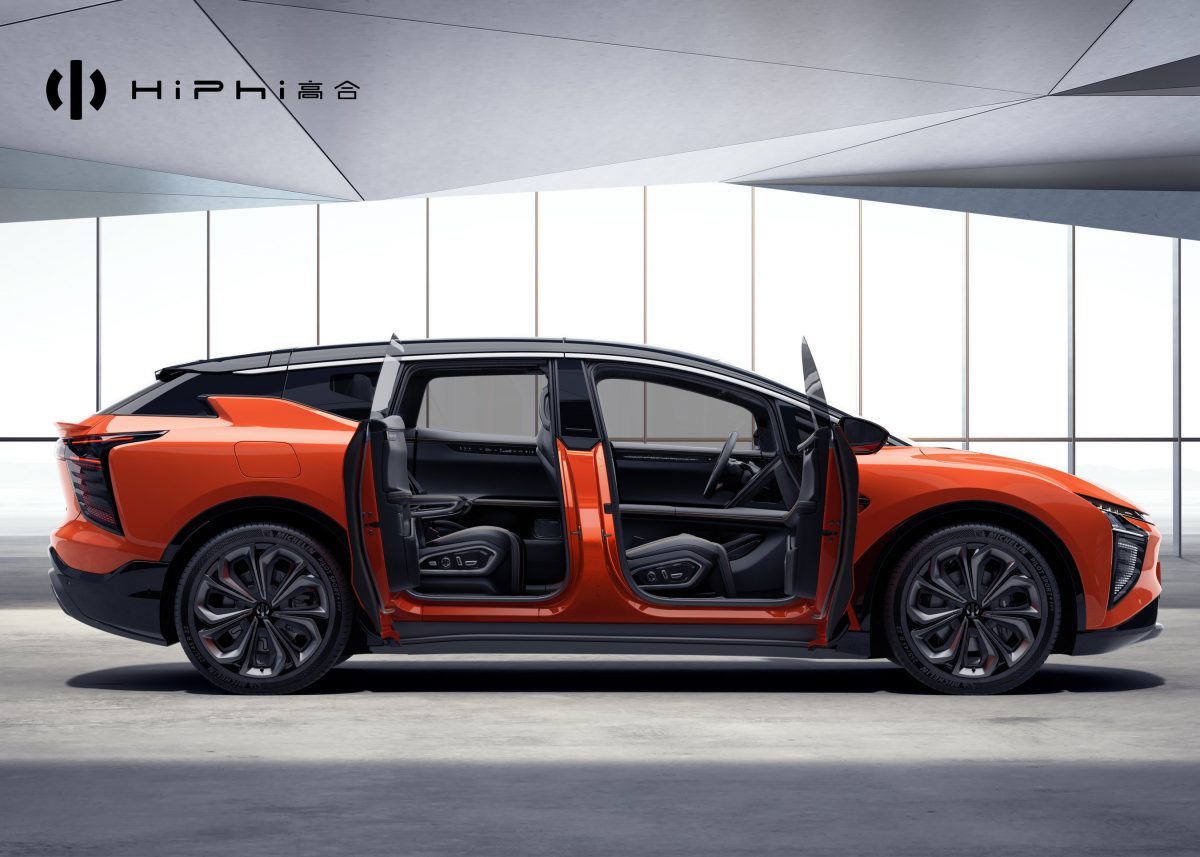
SHANGHAI, Sept. 1, 2020 /PRNewswire/ — HiPhi, Human Horizons’ premium, smart, all-electric vehicle brand, is excited to announce the application of its world-first NT Door system on the HiPhi X. The innovative new entry to the premium automotive segment will debut at the 2020 Beijing Auto Show.
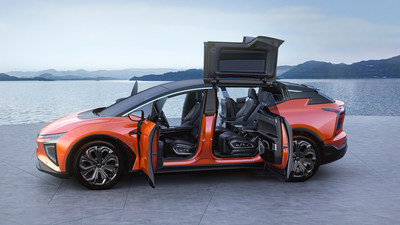
HiPhi X, the first model of the HiPhi brand, is positioned as a self-learning, supercar-inspired SUV, adopting the world’s first Human Oriented Architecture (HOA) enabling a secure, developer-open software platform. HOA comprises of 6 “super brain” domain controllers, connected by 1G Ethernet, over 500 sensors, and a 5G-V2X technology network.
HiPhi X comes with 2 battery options, the larger being a 96 kWh unit. The battery technology, highly efficient electric drive system and a low drag coefficient of 0.27, delivers a range of 610 km (NEDC). The HiPhi X will accelerate from 0 to 100km/h in just 3.9s. The advanced vehicle has been developed with dual-redundant systems which is a key enabler for its Level 3 autonomous driving capability. The HiPhi X is equipped with the worlds-first NT Door system, Programmable Matrix Lighting (PML), Intelligent Signal Display (ISD), a theatre-style co-pilot screen and other leading technologies to bring users a truly new experience.
Review:
- Touch-free NT Door system: The world’s only touch-free entry, luxury SUV without door handles or mechanical lock cylinders
- Six electronically controlled doors: All six doors in the NT Door system contain independent control modules, creating an intelligent system well beyond the simplicity of traditional mechanical structures typically seen in the automotive world. All six doors power-close with the push of a button. One need not crease their suit jacket or dinner gown whilst reaching to close the door.
- Multiple methods of lock/unlock: Users can enter through facial recognition, smart key, smartphone ID and can also be unlocked remotely through the HiPhi app.
- 6 modes of ingress and egress: With multiple different combinations, the world’s first NT Doors give users an original, unparalleled sense of occasion.
- 360° proximity sensing: With the omnidirectional intelligent sensing system made possible through both positioning and ultrasonic sensors, the HiPhi X can detect the user’s position, or objects, that may be in the path of the doors and adjust the opening angle accordingly. With the gentle press of a button the doors swing out in a safe manner with purpose and precision for ultimate convenience.
- Continuously evolving: The HOA electrical architecture will allow over-the-air updates for improved or additional control of all electronic features from vehicle performance to seat control and UX interfaces.
HiPhi X is now entering the final phase of development and launch ahead of production which is expected to commence by the end of this year, with official deliveries in 2021.
About the HiPhi Brand
HiPhi is a premium brand created by Human Horizons and enhanced by its users. HiPhi X is an EV with a lightweight hybrid aluminum-steel construction. It also embeds sustainability with the adoption of vegan leather and the use of recyclable materials to further increase the sustainable nature of Human Horizons’ EV products.
About Human Horizons
Human Horizons is established for R&D in innovative and leading intelligent mobility technologies as well as the industrialisation of future-oriented smart vehicles. Furthermore, Human Horizons builds smart transportation technologies and contributes to the development of smart cities, which will redefine human mobility.

Photo – https://mma.prnewswire.com/media/1246824/HiPhi_1.jpg
Photo – https://mma.prnewswire.com/media/1246825/HiPhi_2.jpg
Logo – https://mma.prnewswire.com/media/1226979/Logo_Logo.jpg

HiPhi X launches with a unique handle-less, touch-free, electronically controlled NT Door System
SHANGHAI, Sept. 1, 2020 /PRNewswire/ — HiPhi, Human Horizons’ premium, smart, all-electric vehicle brand, is excited to announce the application of its world-first NT Door system on the HiPhi X. The innovative new entry to the premium automotive segment will debut at the 2020 Beijing Auto Show.
<img id="prnejpgbeb6left" title="HiPhi X will be one of the world's leaders by offering Level 3 autonomous driving at…

SHANGHAI, Sept. 1, 2020 /PRNewswire/ — HiPhi, Human Horizons’ premium, smart, all-electric vehicle brand, is excited to announce the application of its world-first NT Door system on the HiPhi X. The innovative new entry to the premium automotive segment will debut at the 2020 Beijing Auto Show.
HiPhi X, the first model of the HiPhi brand, is positioned as a self-learning, supercar-inspired SUV, adopting the world’s first Human Oriented Architecture (HOA) enabling a secure, developer-open software platform. HOA comprises of 6 “super brain” domain controllers, connected by 1G Ethernet, over 500 sensors, and a 5G-V2X technology network.
HiPhi X comes with 2 battery options, the larger being a 96 kWh unit. The battery technology, highly efficient electric drive system and a low drag coefficient of 0.27, delivers a range of 610 km (NEDC). The HiPhi X will accelerate from 0 to 100km/h in just 3.9s. The advanced vehicle has been developed with dual-redundant systems which is a key enabler for its Level 3 autonomous driving capability. The HiPhi X is equipped with the worlds-first NT Door system, Programmable Matrix Lighting (PML), Intelligent Signal Display (ISD), a theatre-style co-pilot screen and other leading technologies to bring users a truly new experience.
Review:
- Touch-free NT Door system: The world’s only touch-free entry, luxury SUV without door handles or mechanical lock cylinders
- Six electronically controlled doors: All six doors in the NT Door system contain independent control modules, creating an intelligent system well beyond the simplicity of traditional mechanical structures typically seen in the automotive world. All six doors power-close with the push of a button. One need not crease their suit jacket or dinner gown whilst reaching to close the door.
- Multiple methods of lock/unlock: Users can enter through facial recognition, smart key, smartphone ID and can also be unlocked remotely through the HiPhi app.
- 6 modes of ingress and egress: With multiple different combinations, the world’s first NT Doors give users an original, unparalleled sense of occasion.
- 360° proximity sensing: With the omnidirectional intelligent sensing system made possible through both positioning and ultrasonic sensors, the HiPhi X can detect the user’s position, or objects, that may be in the path of the doors and adjust the opening angle accordingly. With the gentle press of a button the doors swing out in a safe manner with purpose and precision for ultimate convenience.
- Continuously evolving: The HOA electrical architecture will allow over-the-air updates for improved or additional control of all electronic features from vehicle performance to seat control and UX interfaces.
HiPhi X is now entering the final phase of development and launch ahead of production which is expected to commence by the end of this year, with official deliveries in 2021.
About the HiPhi Brand
HiPhi is a premium brand created by Human Horizons and enhanced by its users. HiPhi X is an EV with a lightweight hybrid aluminum-steel construction. It also embeds sustainability with the adoption of vegan leather and the use of recyclable materials to further increase the sustainable nature of Human Horizons’ EV products.
About Human Horizons
Human Horizons is established for R&D in innovative and leading intelligent mobility technologies as well as the industrialisation of future-oriented smart vehicles. Furthermore, Human Horizons builds smart transportation technologies and contributes to the development of smart cities, which will redefine human mobility.
Photo – https://mma.prnewswire.com/media/1246824/HiPhi_1.jpg
Photo – https://mma.prnewswire.com/media/1246825/HiPhi_2.jpg
Logo – https://mma.prnewswire.com/media/1226979/Logo_Logo.jpg
Backpack or Sling? Customers Choose with WaterField’s new Field Pack
SAN FRANCISCO, Sept. 1, 2020 /PRNewswire-PRWeb/ — San Francisco designer and manufacturer WaterField Designs introduces the handsome, easy-access
SAN FRANCISCO, Sept. 1, 2020 /PRNewswire-PRWeb/ — San Francisco designer and manufacturer WaterField Designs introduces the handsome, easy-access Field Sling and Field Backpack. Designed to carry essentials on errands or creative explorations, these multi-compartment daypacks include a built-in, padded laptop or tablet sleeve. For over twenty years WaterField has provided consumers with customization choices, including its 100+ custom-sized laptop sleeves. The Field bags bring a new twist to this WaterField tradition by allowing customers to choose the carry style that best fits their daily lives — one strap or two.
“These new Field packs are ideal for our now primarily local routines,” said company owner Gary Waterfield. “You can choose the same look as either a full-featured sling or as a compact, efficient backpack. Both are incredibly comfortable and give you easy access to everything you need—basic necessities, a light jacket, lunch, a water bottle, and more. They keep you nimble with your hands free for a full day out and about.”
The Field Sling and Backpack are agile bags that share the same clean aesthetic and plethora of pockets. Some prefer the single-strap sling option that can be worn cross body and tightened or loosened with the one-handed Cam Lock buckle. While remaining on one shoulder, the bag easily shifts to the front, allowing quick access to side pockets. Others looking for a compact pack that distributes weight evenly on both shoulders may favor the dual-strap backpack.
FEATURES
- Full-grain leather on black ballistic nylon or brown waxed canvas create a professional or more casual look.
- A gold, water-resistant, nylon liner makes it easy to find items inside the bag and pockets.
- A plush-lined and foam-backed padded compartment protects a tablet or laptop sized up to a 13″ MacBook Pro.
- A zipper-secured pocket inside the main compartment secures valuables.
- Side pockets with interior organization fit large items without bulging by utilizing space in the main compartment.
- A spacious front pocket closes with a full-grain leather flap secured by a heavy-duty paragliding buckle.
- The front pocket includes a pen slot, organization pockets, and a key hook.
- Rear breathable mesh padding enhances air flow and wicks away moisture.
- A comfortable leather-wrapped handle facilitates a convenient grab-and-go.
- Water-resistant zippers slide smoothly and add to the bag’s clean look.
- A full-grain leather bottom adds extra durability.
- The size and form are optimized for people of medium stature.
SLING ONLY
- A swivel D-ring strap attachment grants 180-degree rotation so the bag rests flat.
- Two lower D-ring strap attachments accommodate a right-handed or left-handed preference.
- A leather, removable shoulder pad distributes weight for enhanced comfort.
- A Cam Lock buckle easily adjusts the strap with one hand.
- Custom designed, sturdy snap hooks attach the strap to the bag.
BACKPACK ONLY
- Comfortable foam- and neoprene-padded straps lined with breathable mesh prevent sweat marks and reduce wrinkles.
The Field Sling and Field Backpack are suited for just about any scenario. These bags join the WaterField sling and backpack collections designed to support professionals at work, home, and in the field.
Availability & Pricing
The Field Sling and Field Backpack
Price: $249
Colors: black ballistic nylon with full-grain black leather or brown waxed canvas with distressed, full-grain chocolate leather.
Built-in sleeve fits: 12.9-inch iPad Pro with Smart Keyboard Folio and laptops up to 13-inch MacBook Pro.
Dimensions: 14.25 x 10.375 x 4.5 inches.
Volume: 10.9 liters.
Weight: black ballistic nylon 1.5 lbs., brown waxed canvas 2 lbs.
Shipping now.
About WaterField Designs
WaterField Designs is an innovative San Francisco designer and manufacturer of bags and cases for tech-savvy consumers who want to stylishly and responsibly transport their technology. WaterField manufactures custom-fitted, high-quality cases and bags for a full-range of laptop computers, smartphones, tablets, gaming devices and other digital gear. All products are manufactured to exacting standards entirely in San Francisco. More information at “Our Story“.
—–
WaterField Designs and SFBags are trademarks of WaterField Designs. © 2020. All Rights Reserved. Other company and product names may be trademarks of their respective owners.
SOURCE WaterField Designs

(Español) The Magic of Jewellery: THOMAS SABO y Rita Ora presentan la glamourosa colección otoño/invierno 2020
(Español)
LAUF AN DER PEGNITZ, Alemania, 1 de septiembre de 2020 /PRNewswire/ — THOMAS SABO y Rita Ora, embajadora internacional de la marca, nos invitan a descubrir la nueva campaña otoño/invierno 2020. La protagonista indiscutible es la “magia de las joyas”, una temática que queda plasmada en multitud de nuevas propuestas. Son unas creaciones que destacan por su glamour y elaboración artesanal y que vienen acompañadas de un punto de seducción. Con su diseño, rinden tributo a la naturaleza, sus fascinantes mitos y maravilloso…

(Español) The Magic of Jewellery: THOMAS SABO y Rita Ora presentan la glamourosa colección otoño/invierno 2020
(Español)
LAUF AN DER PEGNITZ, Alemania, 1 de septiembre de 2020 /PRNewswire/ — THOMAS SABO y Rita Ora, embajadora internacional de la marca, nos invitan a descubrir la nueva campaña otoño/invierno 2020. La protagonista indiscutible es la “magia de las joyas”, una temática que queda plasmada en multitud de nuevas propuestas. Son unas creaciones que destacan por su glamour y elaboración artesanal y que vienen acompañadas de un punto de seducción. Con su diseño, rinden tributo a la naturaleza, sus fascinantes mitos y maravilloso…