Questions and answers: New EU type-approval rules for safer and cleaner cars


Questions and answers: New EU type-approval rules for safer and cleaner cars

Questions and answers: New EU type-approval rules for safer and cleaner cars

PR Newswire


Questions and answers: New EU type-approval rules for safer and cleaner cars

Questions and answers: New EU type-approval rules for safer and cleaner cars

PR Newswire

BRUSSELS, 31 August 2020 /PRNewswire Policy/ — From 1 September 2020, the new EU vehicle type-approval framework starts to apply across the EU. It significantly raises the quality level and independence of vehicle type-approval and testing, increases checks of cars that are already on the EU market and strengthens the overall system with European oversight.

This reform is only part of the Commission’s wider work for a clean, sustainable and competitive car sector as laid down in the Commission Communication ‘Europe on the Move’. Commission initiatives include air quality and CO2 standards, the improvement of emission testing for cars and the support for alternative fuels and battery production.

How will the independence of quality of testing be reinforced?

The majority of Member States designate technical services to test and inspect new car models. From now on, these technical services will be regularly and independently audited, on the basis of stringent performance criteria, to obtain and maintain their designation by a Member State for testing and inspecting new car models.

National authorities will have to use accreditation bodies to assess and certify the full remit of technical services or otherwise technical services to be designated will be subject to joint audits by the Commission with national experts from other Member States, including on-site visits to testing facilities.

Other Member States will be able to challenge a designation when something is wrong. The Commission will have the power to suspend, restrict or withdraw the designation of technical services that are underperforming and too lax in applying the rules.

Who will pay for the testing?

When a manufacturer is preparing the launch of a new model on the EU market, the technical services that perform the official type-approval testing will continue to be paid directly by car manufacturers. As regards vehicles that are already available on the market and for sale at the dealerships, the new EU type approval framework requires that all Member States make sure that there is enough national funding available in each country to test a minimum number of vehicles. This will fundamentally improve the situation compared to the past, when market surveillance checks by Member States were virtually non-existent, leading to a situation where some manufacturers did not respect the rules.

Will all cars on our roads be subject to these tests?

Type-approval focuses on pre-market compliance checks of vehicles that come off the manufacturing assembly line. The manufacturer makes available about a dozen or more pre-production cars that are equal to the final product. If all relevant requirements are met, the national authority delivers an EU vehicle type-approval certificate to the manufacturer authorising the sale of the vehicle type in the EU. Every vehicle produced is accompanied by a certificate of conformity which is like the car’s birth certificate and indicates that the vehicle corresponds to an approved type. On the basis of this document, the vehicle can be registered.

Additionally to testing these prototypes, Member States and the Commission will from now on carry out compliance verification spot-checks of vehicles already on the market.

All Member States have to carry out a verification test on at least one car for every 40,000 new registered motor vehicles. Although the focus is on emission testing, safety will also be checked. Given that in 2019 almost 17.9 million new motor vehicles were registered in the EU, this would mean that at least 447 vehicle market surveillance checks would have to be carried out spread over the Member States to meet the new obligations.

The Commission will carry out compliance and conformity checks through its Joint Research Centre. It will be the technical arm of the supervisory system of the Commission and will carry out selected regulatory emissions testing in the laboratory and on the road, as well as perform vehicle safety checks in line with the applicable regulations. This will allow the Commission to make an informed and unbiased judgement on any non-compliance. There is no minimum number of checks for the Commission, but future cases will be selected on the basis of risk assessment, suspicion and indication of compliance issues in the field.

What happens if a vehicle fails the type-approval test?

If a new vehicle type fails to pass the type-approval test, then it is not allowed to be placed on the market.

What happens if a car already on the market is not actually compliant?

All national authorities as well as the Commission will be able to order corrective measures and order recalls at no cost to the consumers as a result of the new rules that will apply as from 1 September 2020. Up to now, all recall actions have to be coordinated by the Member State that has actually type-approved the vehicle in question. Experience has shown us that this situation is far from optimal to have cars fixed quickly on a large enough scale.

Under the new rules, Member States can also levy fines when they find something is wrong through their own checks. They are required to make sure that their penalties are proportionate and dissuasive to deter car manufacturers from breaking the law. However, the Commission can also issue fines of up to € 30 000 per to make sure this is guaranteed.

Persons that have already repaired their vehicle at their own cost, when it is later shown that the vehicle has become subject to a manufacturer’s recall, will have to be reimbursed as part of the new rules.

Who can order the recall?

Up to now, the responsibility to remedy wrongdoings has lied with the Member State in which the type-approval has been granted. Other Member States or the Commission could not initiate a recall. The Commission can only take action indirectly, as it did in the past by referring Germany to the Court of Justice of the EU over its failure to take remedial action to comply with the Directive on Mobile Air Conditioning.

Under the new Regulation, all national authorities as well as the Commission will carry out compliance verification checks on vehicles already placed on the market to verify that they comply with applicable EU legislation. Where tests and investigations show non-compliance, the market surveillance authority can decide to demand a recall or, in severe cases, full withdrawal from the market. Other national authorities will then be notified so they can also take similar action. The Commission will also have the right to order recalls or market withdrawals. This will allow the remedial measure to have an EU wide effect, which does not currently exist. The Commission will evaluate and decide on whether the measures taken by a manufacturer to remedy the situation are sufficient.

What level of penalties do car manufacturers face if they break the law?

Member States have the discretion to decide on the exact penalties system, including the level of penalties, as long as these are effective, proportionate and dissuasive. Typically Member States have introduced a range of penalties levels depending on the type of infringement of the law. What level of sanctions is applied within that bracket is at the Member State’s discretion and will be decided case by case.

In addition, the new Regulation empowers the Commission to levy penalties in case of non-compliant vehicles on the EU market. Car manufactures who are in breach of type-approval legislation (e.g. defeat devices or fake declarations) risk administrative fines of up to € 30 000 per vehicle which can be levied by the Commission if no fine is being imposed by the Member State. Fines can also be imposed on technical services if they fail to carry out the tests rigorously enough. The level of fines will depend on an assessment of the gravity and extent of the non-compliance.

The Regulation maintains the existing obligation for Member States to lay down rules for effective, proportionate and dissuasive penalties. In the future, Member States have to inform the Commission every two years on the penalties they have imposed. The type approval specific legislation complements the general civil and criminal law of Member States that may be applicable if allegations of fraud are confirmed.

How will the EU ensure that national authorities are doing their job properly?

From now on, Member States will be subject to greater scrutiny. They will have to review regularly the functioning of their market surveillance activities and make the results publicly available. National type-approval authorities will be subject to peer evaluations if they assess their own technical services instead of the national accreditation bodies, but they will always be subject to an independent assessment carried out directly by the Commission to ensure that the relevant rules are implemented and enforced rigorously across the EU.

An Enforcement Forum will coordinate the network of national authorities responsible for type-approval and market surveillance. It will also have an advisory role to promote good practices, exchange of information on enforcement problems and penalties, cooperation, development of working methods and tools, development of an electronic information exchange platform, evaluation of harmonised enforcement projects and joint audits. Member States will nominate their representatives in the Forum. Existing market surveillance platforms, such as Rapid Alert System (RAPEX) and the Information and Communication System on Market Surveillance (ICSMS) will be further used and strengthened for exchange of information of market surveillance activities.

Will this new legislation avoid instances of car manufacturers using defeat devices?

Defeat devices are already illegal and Member States have a standing obligation to police and enforce this ban. Defeat devices were banned by Directive 98/69/EC and later by the currently applicable Regulation 715/2007/EC. Article 3 of Regulation 715/2007/EC defines defeat device as any element of design which senses temperature, vehicle speed, engine speed (RPM), transmission gear, manifold vacuum or any other parameter for the purpose of activating, modulating, delaying or deactivating the operation of any part of the emission control system, that reduces the effectiveness of the emission control system under conditions which may reasonably be expected to be encountered in normal vehicle operation and use.

The new Regulation does not change this definition of defeat devices, but tightens the screws further. It obliges manufacturers to provide access to data of vehicle software for the purpose of carrying out external checks. This will complement the Real Driving Emissions package, which introduces an obligation for the car manufacturer to declare its emissions reduction strategy. That will widen the legal basis for action in case of any irregularities. More widely, testing emissions in real driving conditions will help to a great extent limit the risk of cheating with a defeat device, and prevent that manufacturers exploit flexibility within the laboratory based test procedure.

In the context of these investigations, some Member States have concluded that a number of manufacturers use emission strategies that can be justified and legal because they are needed to protect the engine. The ban on defeat devices foresees an exemption (both under EU and US law) for when the need for the device is justified to protect the engine against damage or accident and to ensure the safe operation of the vehicle. It is up to the manufacturer to demonstrate to the national authority that any use of defeat devices is covered by one of the exceptions and is technically necessary.

That is why new rules adopted new rules (RDE 4 Regulation 2018/1832) to help Member States evaluate if car manufacturers use defeat devices or other strategies that lead to higher vehicle emissions outside of the test cycle and analyse whether they are technically justified. A car manufacturer using emissions abatement strategies should be able to provide a technical justification for questions such as: Is the increase of emissions kept at the lowest possible level? Is there no better technology or design on the market that would allow for improved emission control or safer operation of the engine? Can the risk of sudden and irreparable engine damage be appropriately demonstrated and documented?

How does this Regulation work together with RDE and WLTP legislation?

The new type-approval regulation is a framework that governs the main components of vehicle type-approval and all the underlying topics that are relevant for such approval.

While they are both very important, emissions testing based on Real Driving Emissions (RDE) and Worldwide Harmonised Light Vehicles Test Procedure (WLTP), are merely two aspects of a much broader set of technical requirements for environmental and safety performance (e.g. emissions, lighting, crashworthiness, breaking, pedestrian protection) to overall approve a car. These systems are tested independently from each other, on complete (prototype) vehicles against detailed technical prescriptions and by following a similar procedural logic.

Does the Regulation only apply to emissions testing?

Before authorising a vehicle type to be placed on the EU market, national authorities need to certify compliance with safety rules (installation of lights, braking performance, stability control, crash tests with dummies), emissions limits (see below) and production requirements (of individual parts and components, such as seats or steering wheel airbags). The requirements that need to be met differ case by case, depending on the category of vehicle and other classifications.

Copyright European Union, 1995-2020

SOURCE European Commission

BRUSSELS, 31 August 2020 /PRNewswire Policy/ — From 1 September 2020, the new EU vehicle type-approval framework starts to apply across the EU. It significantly raises the quality level and independence of vehicle type-approval and testing, increases checks of cars that are already on the EU market and strengthens the overall system with European oversight.

This reform is only part of the Commission’s wider work for a clean, sustainable and competitive car sector as laid down in the Commission Communication ‘Europe on the Move’. Commission initiatives include air quality and CO2 standards, the improvement of emission testing for cars and the support for alternative fuels and battery production.

How will the independence of quality of testing be reinforced?

The majority of Member States designate technical services to test and inspect new car models. From now on, these technical services will be regularly and independently audited, on the basis of stringent performance criteria, to obtain and maintain their designation by a Member State for testing and inspecting new car models.

National authorities will have to use accreditation bodies to assess and certify the full remit of technical services or otherwise technical services to be designated will be subject to joint audits by the Commission with national experts from other Member States, including on-site visits to testing facilities.

Other Member States will be able to challenge a designation when something is wrong. The Commission will have the power to suspend, restrict or withdraw the designation of technical services that are underperforming and too lax in applying the rules.

Who will pay for the testing?

When a manufacturer is preparing the launch of a new model on the EU market, the technical services that perform the official type-approval testing will continue to be paid directly by car manufacturers. As regards vehicles that are already available on the market and for sale at the dealerships, the new EU type approval framework requires that all Member States make sure that there is enough national funding available in each country to test a minimum number of vehicles. This will fundamentally improve the situation compared to the past, when market surveillance checks by Member States were virtually non-existent, leading to a situation where some manufacturers did not respect the rules.

Will all cars on our roads be subject to these tests?

Type-approval focuses on pre-market compliance checks of vehicles that come off the manufacturing assembly line. The manufacturer makes available about a dozen or more pre-production cars that are equal to the final product. If all relevant requirements are met, the national authority delivers an EU vehicle type-approval certificate to the manufacturer authorising the sale of the vehicle type in the EU. Every vehicle produced is accompanied by a certificate of conformity which is like the car’s birth certificate and indicates that the vehicle corresponds to an approved type. On the basis of this document, the vehicle can be registered.

Additionally to testing these prototypes, Member States and the Commission will from now on carry out compliance verification spot-checks of vehicles already on the market.

All Member States have to carry out a verification test on at least one car for every 40,000 new registered motor vehicles. Although the focus is on emission testing, safety will also be checked. Given that in 2019 almost 17.9 million new motor vehicles were registered in the EU, this would mean that at least 447 vehicle market surveillance checks would have to be carried out spread over the Member States to meet the new obligations.

The Commission will carry out compliance and conformity checks through its Joint Research Centre. It will be the technical arm of the supervisory system of the Commission and will carry out selected regulatory emissions testing in the laboratory and on the road, as well as perform vehicle safety checks in line with the applicable regulations. This will allow the Commission to make an informed and unbiased judgement on any non-compliance. There is no minimum number of checks for the Commission, but future cases will be selected on the basis of risk assessment, suspicion and indication of compliance issues in the field.

What happens if a vehicle fails the type-approval test?

If a new vehicle type fails to pass the type-approval test, then it is not allowed to be placed on the market.

What happens if a car already on the market is not actually compliant?

All national authorities as well as the Commission will be able to order corrective measures and order recalls at no cost to the consumers as a result of the new rules that will apply as from 1 September 2020. Up to now, all recall actions have to be coordinated by the Member State that has actually type-approved the vehicle in question. Experience has shown us that this situation is far from optimal to have cars fixed quickly on a large enough scale.

Under the new rules, Member States can also levy fines when they find something is wrong through their own checks. They are required to make sure that their penalties are proportionate and dissuasive to deter car manufacturers from breaking the law. However, the Commission can also issue fines of up to € 30 000 per to make sure this is guaranteed.

Persons that have already repaired their vehicle at their own cost, when it is later shown that the vehicle has become subject to a manufacturer’s recall, will have to be reimbursed as part of the new rules.

Who can order the recall?

Up to now, the responsibility to remedy wrongdoings has lied with the Member State in which the type-approval has been granted. Other Member States or the Commission could not initiate a recall. The Commission can only take action indirectly, as it did in the past by referring Germany to the Court of Justice of the EU over its failure to take remedial action to comply with the Directive on Mobile Air Conditioning.

Under the new Regulation, all national authorities as well as the Commission will carry out compliance verification checks on vehicles already placed on the market to verify that they comply with applicable EU legislation. Where tests and investigations show non-compliance, the market surveillance authority can decide to demand a recall or, in severe cases, full withdrawal from the market. Other national authorities will then be notified so they can also take similar action. The Commission will also have the right to order recalls or market withdrawals. This will allow the remedial measure to have an EU wide effect, which does not currently exist. The Commission will evaluate and decide on whether the measures taken by a manufacturer to remedy the situation are sufficient.

What level of penalties do car manufacturers face if they break the law?

Member States have the discretion to decide on the exact penalties system, including the level of penalties, as long as these are effective, proportionate and dissuasive. Typically Member States have introduced a range of penalties levels depending on the type of infringement of the law. What level of sanctions is applied within that bracket is at the Member State’s discretion and will be decided case by case.

In addition, the new Regulation empowers the Commission to levy penalties in case of non-compliant vehicles on the EU market. Car manufactures who are in breach of type-approval legislation (e.g. defeat devices or fake declarations) risk administrative fines of up to € 30 000 per vehicle which can be levied by the Commission if no fine is being imposed by the Member State. Fines can also be imposed on technical services if they fail to carry out the tests rigorously enough. The level of fines will depend on an assessment of the gravity and extent of the non-compliance.

The Regulation maintains the existing obligation for Member States to lay down rules for effective, proportionate and dissuasive penalties. In the future, Member States have to inform the Commission every two years on the penalties they have imposed. The type approval specific legislation complements the general civil and criminal law of Member States that may be applicable if allegations of fraud are confirmed.

How will the EU ensure that national authorities are doing their job properly?

From now on, Member States will be subject to greater scrutiny. They will have to review regularly the functioning of their market surveillance activities and make the results publicly available. National type-approval authorities will be subject to peer evaluations if they assess their own technical services instead of the national accreditation bodies, but they will always be subject to an independent assessment carried out directly by the Commission to ensure that the relevant rules are implemented and enforced rigorously across the EU.

An Enforcement Forum will coordinate the network of national authorities responsible for type-approval and market surveillance. It will also have an advisory role to promote good practices, exchange of information on enforcement problems and penalties, cooperation, development of working methods and tools, development of an electronic information exchange platform, evaluation of harmonised enforcement projects and joint audits. Member States will nominate their representatives in the Forum. Existing market surveillance platforms, such as Rapid Alert System (RAPEX) and the Information and Communication System on Market Surveillance (ICSMS) will be further used and strengthened for exchange of information of market surveillance activities.

Will this new legislation avoid instances of car manufacturers using defeat devices?

Defeat devices are already illegal and Member States have a standing obligation to police and enforce this ban. Defeat devices were banned by Directive 98/69/EC and later by the currently applicable Regulation 715/2007/EC. Article 3 of Regulation 715/2007/EC defines defeat device as any element of design which senses temperature, vehicle speed, engine speed (RPM), transmission gear, manifold vacuum or any other parameter for the purpose of activating, modulating, delaying or deactivating the operation of any part of the emission control system, that reduces the effectiveness of the emission control system under conditions which may reasonably be expected to be encountered in normal vehicle operation and use.

The new Regulation does not change this definition of defeat devices, but tightens the screws further. It obliges manufacturers to provide access to data of vehicle software for the purpose of carrying out external checks. This will complement the Real Driving Emissions package, which introduces an obligation for the car manufacturer to declare its emissions reduction strategy. That will widen the legal basis for action in case of any irregularities. More widely, testing emissions in real driving conditions will help to a great extent limit the risk of cheating with a defeat device, and prevent that manufacturers exploit flexibility within the laboratory based test procedure.

In the context of these investigations, some Member States have concluded that a number of manufacturers use emission strategies that can be justified and legal because they are needed to protect the engine. The ban on defeat devices foresees an exemption (both under EU and US law) for when the need for the device is justified to protect the engine against damage or accident and to ensure the safe operation of the vehicle. It is up to the manufacturer to demonstrate to the national authority that any use of defeat devices is covered by one of the exceptions and is technically necessary.

That is why new rules adopted new rules (RDE 4 Regulation 2018/1832) to help Member States evaluate if car manufacturers use defeat devices or other strategies that lead to higher vehicle emissions outside of the test cycle and analyse whether they are technically justified. A car manufacturer using emissions abatement strategies should be able to provide a technical justification for questions such as: Is the increase of emissions kept at the lowest possible level? Is there no better technology or design on the market that would allow for improved emission control or safer operation of the engine? Can the risk of sudden and irreparable engine damage be appropriately demonstrated and documented?

How does this Regulation work together with RDE and WLTP legislation?

The new type-approval regulation is a framework that governs the main components of vehicle type-approval and all the underlying topics that are relevant for such approval.

While they are both very important, emissions testing based on Real Driving Emissions (RDE) and Worldwide Harmonised Light Vehicles Test Procedure (WLTP), are merely two aspects of a much broader set of technical requirements for environmental and safety performance (e.g. emissions, lighting, crashworthiness, breaking, pedestrian protection) to overall approve a car. These systems are tested independently from each other, on complete (prototype) vehicles against detailed technical prescriptions and by following a similar procedural logic.

Does the Regulation only apply to emissions testing?

Before authorising a vehicle type to be placed on the EU market, national authorities need to certify compliance with safety rules (installation of lights, braking performance, stability control, crash tests with dummies), emissions limits (see below) and production requirements (of individual parts and components, such as seats or steering wheel airbags). The requirements that need to be met differ case by case, depending on the category of vehicle and other classifications.

Copyright European Union, 1995-2020

SOURCE European Commission
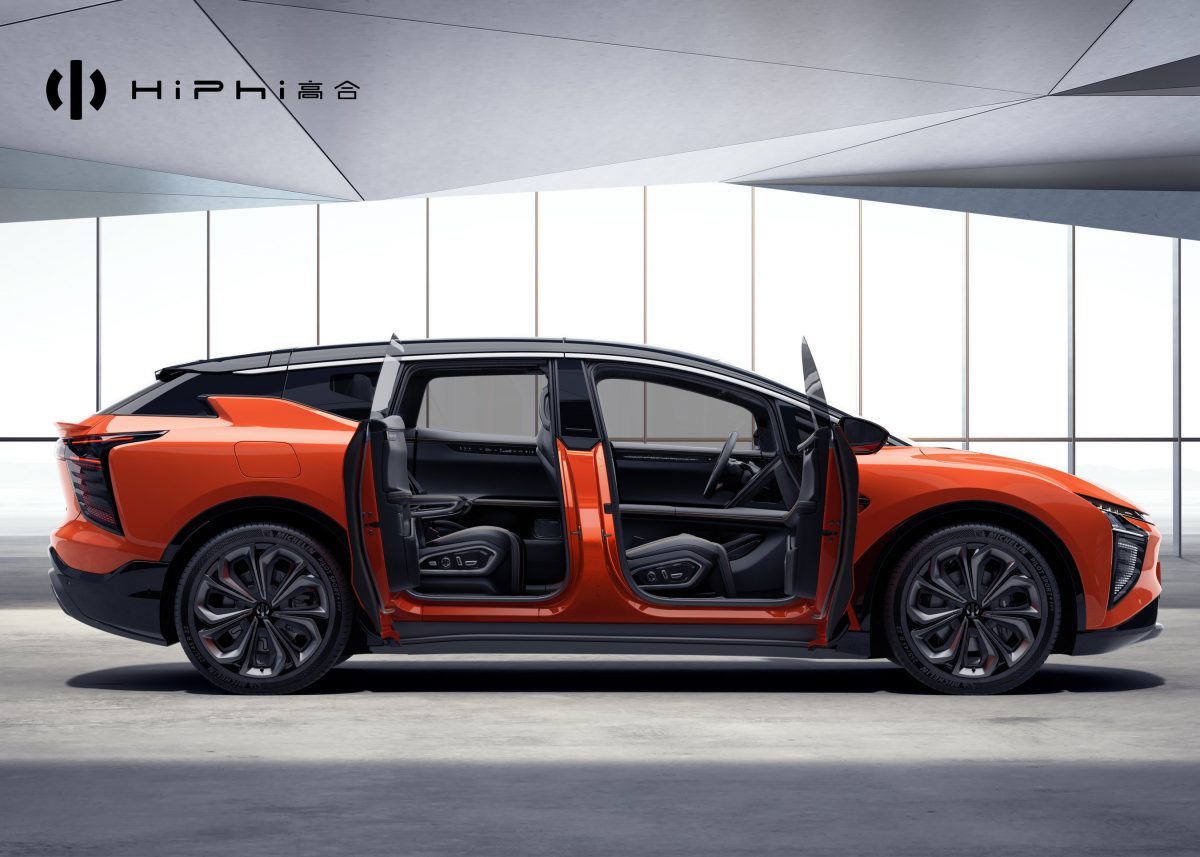
HiPhi X launches with a unique handle-less, touch-free, electronically controlled NT Door System

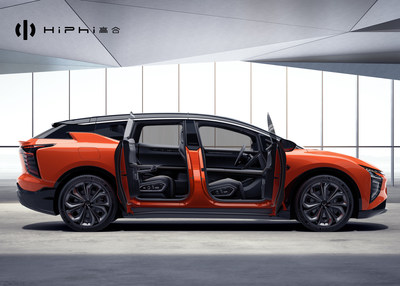
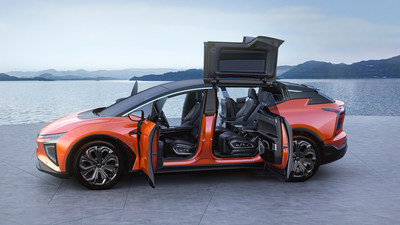
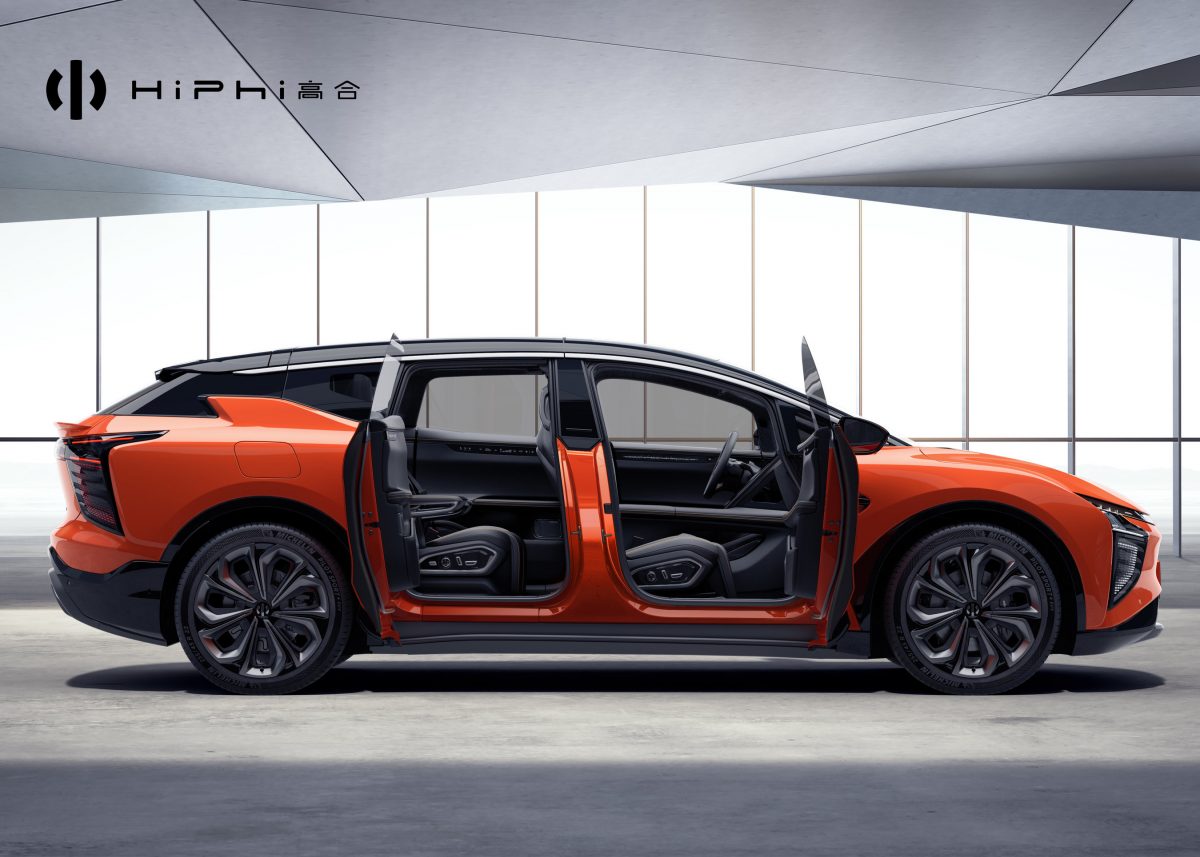
SHANGHAI, Sept. 1, 2020 /PRNewswire/ — HiPhi, Human Horizons’ premium, smart, all-electric vehicle brand, is excited to announce the application of its world-first NT Door system on the HiPhi X. The innovative new entry to the premium automotive segment will debut at the 2020 Beijing Auto Show.

HiPhi X launches with a unique handle-less, touch-free, electronically controlled NT Door System

SHANGHAI, Sept. 1, 2020 /PRNewswire/ — HiPhi, Human Horizons’ premium, smart, all-electric vehicle brand, is excited to announce the application of its world-first NT Door system on the HiPhi X. The innovative new entry to the premium automotive segment will debut at the 2020 Beijing Auto Show.

HiPhi X will be one of the world's leaders by offering Level 3 autonomous driving at launch, which is supported by redundancy in all key safety-related systems.

HiPhi X, the first model of the HiPhi brand, is positioned as a self-learning, supercar-inspired SUV, adopting the world’s first Human Oriented Architecture (HOA) enabling a secure, developer-open software platform. HOA comprises of 6 “super brain” domain controllers, connected by 1G Ethernet, over 500 sensors, and a 5G-V2X technology network.

HiPhi X comes with 2 battery options, the larger being a 96 kWh unit. The battery technology, highly efficient electric drive system and a low drag coefficient of 0.27, delivers a range of 610 km (NEDC). The HiPhi X will accelerate from 0 to 100km/h in just 3.9s. The advanced vehicle has been developed with dual-redundant systems which is a key enabler for its Level 3 autonomous driving capability. The HiPhi X is equipped with the worlds-first NT Door system, Programmable Matrix Lighting (PML), Intelligent Signal Display (ISD), a theatre-style co-pilot screen and other leading technologies to bring users a truly new experience.

HiPhi X will be offered with rear-wheel and all-wheel drive derivatives and will provide a 0 to 100 km/h time of 3.9 seconds.

Review:

  • Touch-free NT Door system: The world’s only touch-free entry, luxury SUV without door handles or mechanical lock cylinders
  • Six electronically controlled doors: All six doors in the NT Door system contain independent control modules, creating an intelligent system well beyond the simplicity of traditional mechanical structures typically seen in the automotive world. All six doors power-close with the push of a button. One need not crease their suit jacket or dinner gown whilst reaching to close the door.
  • Multiple methods of lock/unlock: Users can enter through facial recognition, smart key, smartphone ID and can also be unlocked remotely through the HiPhi app.
  • 6 modes of ingress and egress: With multiple different combinations, the world’s first NT Doors give users an original, unparalleled sense of occasion.
  • 360° proximity sensing: With the omnidirectional intelligent sensing system made possible through both positioning and ultrasonic sensors, the HiPhi X can detect the user’s position, or objects, that may be in the path of the doors and adjust the opening angle accordingly. With the gentle press of a button the doors swing out in a safe manner with purpose and precision for ultimate convenience.
  • Continuously evolving: The HOA electrical architecture will allow over-the-air updates for improved or additional control of all electronic features from vehicle performance to seat control and UX interfaces.

HiPhi X is now entering the final phase of development and launch ahead of production which is expected to commence by the end of this year, with official deliveries in 2021.

About the HiPhi Brand

HiPhi is a premium brand created by Human Horizons and enhanced by its users. HiPhi X is an EV with a lightweight hybrid aluminum-steel construction. It also embeds sustainability with the adoption of vegan leather and the use of recyclable materials to further increase the sustainable nature of Human Horizons’ EV products.

About Human Horizons

Human Horizons is established for R&D in innovative and leading intelligent mobility technologies as well as the industrialisation of future-oriented smart vehicles. Furthermore, Human Horizons builds smart transportation technologies and contributes to the development of smart cities, which will redefine human mobility.

Photo – https://mma.prnewswire.com/media/1246824/HiPhi_1.jpg
Photo – https://mma.prnewswire.com/media/1246825/HiPhi_2.jpg
Logo – https://mma.prnewswire.com/media/1226979/Logo_Logo.jpg


Backpack or Sling? Customers Choose with WaterField’s new Field Pack

SAN FRANCISCO, Sept. 1, 2020 /PRNewswire-PRWeb/ — San Francisco designer and manufacturer WaterField Designs introduces the handsome, easy-access

SAN FRANCISCO, Sept. 1, 2020 /PRNewswire-PRWeb/ — San Francisco designer and manufacturer WaterField Designs introduces the handsome, easy-access Field Sling and Field Backpack. Designed to carry essentials on errands or creative explorations, these multi-compartment daypacks include a built-in, padded laptop or tablet sleeve. For over twenty years WaterField has provided consumers with customization choices, including its 100+ custom-sized laptop sleeves. The Field bags bring a new twist to this WaterField tradition by allowing customers to choose the carry style that best fits their daily lives — one strap or two.

FEATURES VIDEO

“These new Field packs are ideal for our now primarily local routines,” said company owner Gary Waterfield. “You can choose the same look as either a full-featured sling or as a compact, efficient backpack. Both are incredibly comfortable and give you easy access to everything you need—basic necessities, a light jacket, lunch, a water bottle, and more. They keep you nimble with your hands free for a full day out and about.”

The Field Sling and Backpack are agile bags that share the same clean aesthetic and plethora of pockets. Some prefer the single-strap sling option that can be worn cross body and tightened or loosened with the one-handed Cam Lock buckle. While remaining on one shoulder, the bag easily shifts to the front, allowing quick access to side pockets. Others looking for a compact pack that distributes weight evenly on both shoulders may favor the dual-strap backpack.

FEATURES

  • Full-grain leather on black ballistic nylon or brown waxed canvas create a professional or more casual look.
  • A gold, water-resistant, nylon liner makes it easy to find items inside the bag and pockets.
  • A plush-lined and foam-backed padded compartment protects a tablet or laptop sized up to a 13″ MacBook Pro.
  • A zipper-secured pocket inside the main compartment secures valuables.
  • Side pockets with interior organization fit large items without bulging by utilizing space in the main compartment.
  • A spacious front pocket closes with a full-grain leather flap secured by a heavy-duty paragliding buckle.
  • The front pocket includes a pen slot, organization pockets, and a key hook.
  • Rear breathable mesh padding enhances air flow and wicks away moisture.
  • A comfortable leather-wrapped handle facilitates a convenient grab-and-go.
  • Water-resistant zippers slide smoothly and add to the bag’s clean look.
  • A full-grain leather bottom adds extra durability.
  • The size and form are optimized for people of medium stature.

SLING ONLY

  • A swivel D-ring strap attachment grants 180-degree rotation so the bag rests flat.
  • Two lower D-ring strap attachments accommodate a right-handed or left-handed preference.
  • A leather, removable shoulder pad distributes weight for enhanced comfort.
  • A Cam Lock buckle easily adjusts the strap with one hand.
  • Custom designed, sturdy snap hooks attach the strap to the bag.

BACKPACK ONLY

  • Comfortable foam- and neoprene-padded straps lined with breathable mesh prevent sweat marks and reduce wrinkles.

The Field Sling and Field Backpack are suited for just about any scenario. These bags join the WaterField sling and backpack collections designed to support professionals at work, home, and in the field.

Availability & Pricing
The Field Sling and Field Backpack
Price: $249
Colors: black ballistic nylon with full-grain black leather or brown waxed canvas with distressed, full-grain chocolate leather.
Built-in sleeve fits: 12.9-inch iPad Pro with Smart Keyboard Folio and laptops up to 13-inch MacBook Pro.
Dimensions: 14.25 x 10.375 x 4.5 inches.
Volume: 10.9 liters.
Weight: black ballistic nylon 1.5 lbs., brown waxed canvas 2 lbs.

Shipping now.

About WaterField Designs
WaterField Designs is an innovative San Francisco designer and manufacturer of bags and cases for tech-savvy consumers who want to stylishly and responsibly transport their technology. WaterField manufactures custom-fitted, high-quality cases and bags for a full-range of laptop computers, smartphones, tablets, gaming devices and other digital gear. All products are manufactured to exacting standards entirely in San Francisco. More information at “Our Story“.

—–

WaterField Designs and SFBags are trademarks of WaterField Designs. © 2020. All Rights Reserved. Other company and product names may be trademarks of their respective owners.


SOURCE WaterField Designs

HiPhi X launches with a unique handle-less, touch-free, electronically controlled NT Door System

SHANGHAI, Sept. 1, 2020 /PRNewswire/ — HiPhi, Human Horizons’ premium, smart, all-electric vehicle brand, is excited to announce the application of its world-first NT Door system on the HiPhi X. The innovative new entry to the premium automotive segment will debut at the 2020 Beijing Auto Show.

SHANGHAI, Sept. 1, 2020 /PRNewswire/ — HiPhi, Human Horizons’ premium, smart, all-electric vehicle brand, is excited to announce the application of its world-first NT Door system on the HiPhi X. The innovative new entry to the premium automotive segment will debut at the 2020 Beijing Auto Show.

HiPhi X will be one of the world's leaders by offering Level 3 autonomous driving at launch, which is supported by redundancy in all key safety-related systems.

HiPhi X, the first model of the HiPhi brand, is positioned as a self-learning, supercar-inspired SUV, adopting the world’s first Human Oriented Architecture (HOA) enabling a secure, developer-open software platform. HOA comprises of 6 “super brain” domain controllers, connected by 1G Ethernet, over 500 sensors, and a 5G-V2X technology network.

HiPhi X comes with 2 battery options, the larger being a 96 kWh unit. The battery technology, highly efficient electric drive system and a low drag coefficient of 0.27, delivers a range of 610 km (NEDC). The HiPhi X will accelerate from 0 to 100km/h in just 3.9s. The advanced vehicle has been developed with dual-redundant systems which is a key enabler for its Level 3 autonomous driving capability. The HiPhi X is equipped with the worlds-first NT Door system, Programmable Matrix Lighting (PML), Intelligent Signal Display (ISD), a theatre-style co-pilot screen and other leading technologies to bring users a truly new experience.

HiPhi X will be offered with rear-wheel and all-wheel drive derivatives and will provide a 0 to 100 km/h time of 3.9 seconds.

Review:

  • Touch-free NT Door system: The world’s only touch-free entry, luxury SUV without door handles or mechanical lock cylinders
  • Six electronically controlled doors: All six doors in the NT Door system contain independent control modules, creating an intelligent system well beyond the simplicity of traditional mechanical structures typically seen in the automotive world. All six doors power-close with the push of a button. One need not crease their suit jacket or dinner gown whilst reaching to close the door.
  • Multiple methods of lock/unlock: Users can enter through facial recognition, smart key, smartphone ID and can also be unlocked remotely through the HiPhi app.
  • 6 modes of ingress and egress: With multiple different combinations, the world’s first NT Doors give users an original, unparalleled sense of occasion.
  • 360° proximity sensing: With the omnidirectional intelligent sensing system made possible through both positioning and ultrasonic sensors, the HiPhi X can detect the user’s position, or objects, that may be in the path of the doors and adjust the opening angle accordingly. With the gentle press of a button the doors swing out in a safe manner with purpose and precision for ultimate convenience.
  • Continuously evolving: The HOA electrical architecture will allow over-the-air updates for improved or additional control of all electronic features from vehicle performance to seat control and UX interfaces.

HiPhi X is now entering the final phase of development and launch ahead of production which is expected to commence by the end of this year, with official deliveries in 2021.

About the HiPhi Brand

HiPhi is a premium brand created by Human Horizons and enhanced by its users. HiPhi X is an EV with a lightweight hybrid aluminum-steel construction. It also embeds sustainability with the adoption of vegan leather and the use of recyclable materials to further increase the sustainable nature of Human Horizons’ EV products.

About Human Horizons

Human Horizons is established for R&D in innovative and leading intelligent mobility technologies as well as the industrialisation of future-oriented smart vehicles. Furthermore, Human Horizons builds smart transportation technologies and contributes to the development of smart cities, which will redefine human mobility.


Cision View original content to download multimedia:http://www.prnewswire.com/news-releases/hiphi-x-launches-with-a-unique-handle-less-touch-free-electronically-controlled-nt-door-system-301121667.html

SOURCE Human Horizons

Boucher Nissan of Waukesha Offers Service Specials to Customers This Spring

WAUKESHA, Wis., May 15, 2020 /PRNewswire-PRWeb/ — Customers can visit Boucher Nissan of Waukesha this spring to explore the Spring Service Specials that the dealership has…

WAUKESHA, Wis., May 15, 2020 /PRNewswire-PRWeb/ — Customers can visit Boucher Nissan of Waukesha this spring to explore the Spring Service Specials that the dealership has available. There are currently five different automotive maintenance services at Boucher Nissan of Waukesha that customers can have completed at a reduced price point. These five specials include The Works special, a $1 Over Cost Tires special, a Warning Light Diagnosis special, a Pothole Special and a You Pat What We Pay special.

The Works special at Boucher Nissan of Waukesha includes an oil change, filter change, tire rotation, brake inspection, car wash and multi-point inspection all for the low price of $49.95 plus tax. The $1 Over Cost Tires special is relatively self-explanatory. With this special, customers will spend only $1 above what the service center pays the manufacturers for the tires the dealership sells. Tire brands that are available in the service center include Goodyear, Uniroyal, Michelin, General Tire, Falken, Pirelli, Dunlop, Yokohama, Continental and Kumho.

With the Warning Light Diagnosis special, customers can save 50% off an hour-long scan to determine the issue causing a warning light to activate. The Pothole Special available this spring includes a 4-wheel alignment, wheel balance, tire rotation and brake inspection for only $149.95 plus tax. Finally, with the You Pay What We Pay special, customers are able to receive recommended maintenance services for employee pricing.

Customers who would like to explore the Spring Service Specials available at Boucher Nissan of Waukesha can contact the dealership directly. The dealership can be reached by phone at 800-504-6619, online at http://www.waukeshanissan.com, or in person at 1451 East Moreland Boulevard in Waukesha, Wisconsin.


SOURCE Boucher Nissan of Waukesha

New Washington State Convention Center Addition at Risk Without Urgent Federal Funding

SEATTLE, May 15, 2020 /PRNewswire/ — Leaders representing the Washington State Convention Center (WSCC), King County, labor, business and civic groups today sounded the alarm about the need for critical financing to complete the Convention Center’s Addition project.

The $1.8 billion project – and some 2,000 construction jobs – are in jeopardy if federal stimulus funds are not secured to…

SEATTLE, May 15, 2020 /PRNewswire/ — Leaders representing the Washington State Convention Center (WSCC), King County, labor, business and civic groups today sounded the alarm about the need for critical financing to complete the Convention Center’s Addition project.

The $1.8 billion project – and some 2,000 construction jobs – are in jeopardy if federal stimulus funds are not secured to keep workers completing the project. The deep drop in lodging-tax revenue in King County due to the coronavirus pandemic has created a gap of roughly $300 million in financing capacity needed to complete the project in 2022.

The facility will be a key tool for regional economic recovery following the COVID-19 pandemic and for the region’s long-term economic vitality. Given the project’s widespread economic impact, leaders from across the region are united in their support for future federal funds to keep the project on track.

“The Convention Center is an important centerpiece of our regional economy,” said King County Executive Dow Constantine. “Delaying construction on the Addition project would have devastating effects on construction workers, the hospitality industry, and our regional economy, and would have ripple effects statewide.”

The project was 30 percent complete, with nearly 90 percent of the materials ordered, when the COVID-19 public health emergency effectively shuttered the entire tourism sector of the state’s economy. Hospitality and lodging were particularly hard hit.

The Convention Center had scheduled its final round of financing to complete the Addition construction for this year and next. With the collapse of the tourism sector – and the subsequent drop in lodging-tax revenue to back the bonds – the financing is in peril, as is the completion of the Addition without a harmful delay that would bring a host of additional costs.

Matt Griffin, principal at Pine Street Group, the project’s developer, laid out the severity of the situation.

“Within a year, construction on this project will come to a halt if we don’t secure federal financing assistance for the project,” Griffin said. “This project has the potential to be one of our region’s most important economic recovery tools. Delaying it would be a huge loss for our community.”

The Addition project will help meet the strong demand for conventions in Seattle. “Conventions are already booked for years out that will use the new space,” said Jeff Blosser, president and CEO of the Washington State Convention Center. “We have customers who want to come to Seattle, and we need to take care of them in June of 2022 and beyond. We want to satisfy our customers with completion of the facility on schedule.”

Tom Norwalk, president and CEO of Visit Seattle, worries about the consequences to Seattle’s tourism industry, which is already hurting.

“Tourism in Seattle and King County is an $8 billion industry,” he said. “The attendees of our large national conventions at the WSCC play a large role in that. Their spend contributes to restaurants, retail and cultural institutions – in addition to our hotel economy. If we are forced to stop construction – we will be effectively delaying recovery, and this will not only impact downtown Seattle but our entire region.”

Diana Birkett Rakow, vice president of external relations at Alaska Airlines and chair of the board for the Seattle Metropolitan Chamber, said the Convention Center Addition is core to the recovery of the travel, hospitality and tourism sectors.

“The travel, tourism, and hospitality industries and our employees face one of the greatest challenges in history – and we are a significant part of our region’s fabric and economy. We’re hugely proud of our hometown and love to share it with visitors. And we need to build on smart infrastructure investments underway, like the Convention Center Addition, to fuel recovery and remind the world that Seattle is ‘open for business,'” she said.

Jon Scholes, president and CEO of the Downtown Seattle Association, said, “The coronavirus pandemic has already had a severe impact on businesses in our downtown core. With support from city, regional and federal leaders, I’m optimistic we can find a funding solution to complete the WSCC Addition project and ensure a faster recovery and brighter future downtown.”

The WSCC Addition project expects some 2,000 union jobs will be delayed or lost if a lack of a funding bridge forces construction to stop.

Nicole Grant, executive secretary-treasurer of MLK Labor and WSCC board member, said, “As one of the largest construction projects in our state, we need to do all we can to protect our region’s workers from further economic uncertainty. Keep the Addition moving. We need these jobs and the economic benefits of the project now more than ever.”

Monty Anderson, executive secretary of Seattle Building & Construction Trades Council, added, “The WSCC Addition project provides important opportunities for underrepresented contractors, workers and apprentices in our region. I worry about the thousands of family-wage jobs that will be lost if construction ceases on this project.”

General contractor Clark Lewis began work on the Addition in July 2018. Over the three-plus-year construction period, the project team is expected to hire as many as 6,000 union construction workers and hundreds of apprentices. The project will pay more than $100 million to the region in construction sales tax alone.

Once open, the Addition, known as the Summit building, is expected to create about 3,900 new, ongoing jobs and generate approximately $260 million in new customer spending and $19 million in sales taxes annually. It also will create a key link in the Pike/Pine corridor between Capitol Hill and the renovated Waterfront.

About the Washington State Convention Center

Located in the heart of Seattle and walking distance to world-class hotels, restaurants, entertainment and attractions, the Washington State Convention Center has been the Northwest’s premier meetings and events facility for 30 years. WSCC welcomes hundreds of thousands of visitors from around the globe each year, offering industry-leading service, award-winning catering and a comprehensive range of services for event planners, exhibitors and guests. With a longstanding commitment to sustainability, public art and modern technology, WSCC serves its surrounding community and provides visitors with a truly unique Northwest experience. For information, visit www.wscc.com.


Cision View original content to download multimedia:http://www.prnewswire.com/news-releases/new-washington-state-convention-center-addition-at-risk-without-urgent-federal-funding-301060245.html

SOURCE Washington State Convention Center

InventHelp Inventor Develops Safety Muffler Extension (HLW-2221)

PITTSBURGH, May 15, 2020 /PRNewswire/ — “I live in south Florida and constantly deal with heavy rains and hurricanes that produce rising water conditions on roadways that cause vehicles to stall,” said an inventor from North Miami, Florida. “This inspired me to develop a means to prevent engines from stalling to keep motorists from becoming stranded.”

PITTSBURGH, May 15, 2020 /PRNewswire/ — “I live in south Florida and constantly deal with heavy rains and hurricanes that produce rising water conditions on roadways that cause vehicles to stall,” said an inventor from North Miami, Florida. “This inspired me to develop a means to prevent engines from stalling to keep motorists from becoming stranded.”

He developed the MUFFLER BUDDY to extend and elevate the tailpipe to prevent the engine from stalling. This invention allows for unrestricted engine exhaust flow in high water situations. It could provide peace of mind for motorists as it could save lives while avoiding expensive vehicle damage.

The original design was submitted to the Hollywood sales office of InventHelp. It is currently available for licensing or sale to manufacturers or marketers. For more information, write Dept. 18-HLW-2221, InventHelp, 217 Ninth Street, Pittsburgh, PA 15222, or call (412) 288-1300 ext. 1368. Learn more about InventHelp’s Invention Submission Services at http://www.InventHelp.com.

Cision View original content to download multimedia:http://www.prnewswire.com/news-releases/inventhelp-inventor-develops-safety-muffler-extension-hlw-2221-301053803.html

SOURCE InventHelp

InventHelp Inventor Develops Device to Protect Pneumatic Brake Lines (HUN-849)

PITTSBURGH, May 15, 2020 /PRNewswire/ — “I’m a truck driver and I’ve had problems with loose air lines in the past,” said an inventor, from Humble, Texas, “so I invented the GLADHAND HOLDER.”

PITTSBURGH, May 15, 2020 /PRNewswire/ — “I’m a truck driver and I’ve had problems with loose air lines in the past,” said an inventor, from Humble, Texas, “so I invented the GLADHAND HOLDER.”

The invention protects pneumatic brake lines against damage when disconnected from a commercial trailer. In doing so, it offers an improved alternative to traditional glad hand holders. As a result, it enhances safety and it could prevent down time and the need for replacements. The invention features a durable design that is easy to use so it is ideal for trucking companies and truck drivers. Additionally, it is producible in design variations and a prototype is available.

The inventor described the invention design. “My design could help to prevent a driver from being pulled over by police for faulty equipment.”

The original design was submitted to the Houston sales office of InventHelp. It is currently available for licensing or sale to manufacturers or marketers. For more information, write Dept. 18-HUN-849, InventHelp, 217 Ninth Street, Pittsburgh, PA 15222, or call (412) 288-1300 ext. 1368. Learn more about InventHelp’s Invention Submission Services at http://www.InventHelp.com.

Cision View original content to download multimedia:http://www.prnewswire.com/news-releases/inventhelp-inventor-develops-device-to-protect-pneumatic-brake-lines-hun-849-301052272.html

SOURCE InventHelp

Atlantic Honda Promotes the Sale of Genuine Honda Parts and Accessories with the Honda eStore

LONG ISLAND, N.Y., May 15, 2020 /PRNewswire-PRWeb/ — Atlantic Honda makes it easy for customers and drivers in the Long Island, New York area to shop for genuine Honda…

LONG ISLAND, N.Y., May 15, 2020 /PRNewswire-PRWeb/ — Atlantic Honda makes it easy for customers and drivers in the Long Island, New York area to shop for genuine Honda automotive parts and accessories with the integration of the Honda eStore into their dealership website.

The Honda eStore allows customers to shop from one database of genuine Honda parts and accessories. Connected to local Honda dealers nationwide, the Honda eStore offers no-charge shipping with free pickup at a nearby Honda dealership at no additional freight cost. Furthermore, every order from the Honda eStore comes with installation instructions and the status of a customer’s order can be checked online to see when it will be ready for pickup. After an order is completed, drivers can also work with the dealership service team to schedule a vehicle installation appointment for the Honda part or accessory if necessary or if requested.

Honda eStore participating dealerships are independently owned and operated and establish their own prices.

For additional information regarding parts and accessories services at Atlantic Honda, customers are encouraged to browse through the services offered at the Atlantic Honda parts center. Featured pages include the Parts Specials page for the latest deals on genuine Honda parts and accessories, the Authorized Tire Center page for information and shopping of tires best fitted for every Honda model and the Order Parts page for the inquiry, order and installation of Honda parts and accessories at the dealership.

To address questions and concerns regarding Atlantic Honda products and services, drivers can contact the Atlantic Honda staff at 631-665-0005. Additional means of communication include online messaging and email and visits to the store. The Atlantic Honda dealership is located at 1375 Sunshine Hwy., Bay Shore, New York 11706.


SOURCE Atlantic Honda

Richie Bello Helps End Extended Car Warranty Monkey Business

JEFFERSON, N.Y., May 15, 2020 /PRNewswire-PRWeb/ — The pre-owned market maintains its overall impact on the automotive industry. Edmunds reported 40.2 million used vehicles were purchased in 2019 versus 17 million new in the United States. The depreciation factor on a three year old car could be over 50%, making the used car market the strongest segment. At the three year/36,000 mile mark many manufacturer warranties end and many used car dealers do not provide…

JEFFERSON, N.Y., May 15, 2020 /PRNewswire-PRWeb/ — The pre-owned market maintains its overall impact on the automotive industry. Edmunds reported 40.2 million used vehicles were purchased in 2019 versus 17 million new in the United States. The depreciation factor on a three year old car could be over 50%, making the used car market the strongest segment. At the three year/36,000 mile mark many manufacturer warranties end and many used car dealers do not provide warranties, which could be the most important consideration when buying a pre-owned vehicle. The typical example of an unexpected repair that could cost thousands of dollars is the transmission. The average transmission lasts about 7 years, so the warranty that could cost a little extra each month, pays for itself with claiming one major repair.

WarranTchimp.com invites consumers to get online and calculate their own extended coverage plan with its selected provider. The website features a chimp that helps the consumer log on, plug in their vehicle’s vin number and a couple of items of information and the recommended plan comes up for consideration. Consumers can choose what coverage they want, how long they want it for and what they want as a deductible. Then the consumer can make interest free payments over half the term of the warranty. “The point of the program is to share the ease of getting a warranty with us and that the coverage is solid while the cost is far less,” stated Fontana. “We simply provide a portal site to what we believe to be the best the consumer can buy and make a much smaller fee than what is customary for that service. The consumer is buying directly from the provider.” The WarranTchimp price guarantee promises consumers that if they can find the same coverage for the same model, mileage and options for less, the portal site will refund the difference plus a $100 bonus. “It’s easy because we only put on a reasonable fee as the portal to the provider. That will hopefully make the consumers spread the word that they can have some control on the preparedness and ability to keep their car in good working order for hundreds of thousands of miles. Consumers will never overpay for an automobile warranty again,” said Bello. WarranTchimp has a plan for most cars with mileage as high as 175,000 getting approved for a program.

Bello, whose thirty five years in the industry was exclusively focused on the dealer and the individual sales representative’s method of selling, recently started a consumer site called ShopSmartAutos.com, where over 6 million vehicles are pulled together into one site. Consumers spend 85% of their time during their purchasing journey online doing their research. Today, dealers are moving into selling online and finding finance solutions online. ShopSmartAutos.com will be able to assist the consumer from shopping, to financing and WarranT chimp will promote the warranty that the consumer can purchase directly. The used car warranty site promises that plugging in your own warranty plan is as simple as booking an airline or hotel and extremely cost effective, because the consumer is buying directly from the provider without the cost of middlemen. The group also has dealer programs that can be sold to consumers at far less than usual and customary while providing a solid fee for the dealer. The ease of the automated back-end of the programs will keep the process simple for consumers and dealers to offer their consumers a more customized and cost effective solution.


SOURCE RBBP Marketing, Ltd