Land Rover Boerne Promotes Prepaid Maintenance Plans to San Antonio Drivers

BOERNE, Texas, Jan. 29, 2021 /PRNewswire-PRWeb/ — The Land Rover Boerne dealership offers drivers protection for Land Rover vehicles through the use of prepaid maintenance plans. Prepaid…

BOERNE, Texas, Jan. 29, 2021 /PRNewswire-PRWeb/ — The Land Rover Boerne dealership offers drivers protection for Land Rover vehicles through the use of prepaid maintenance plans. Prepaid maintenance plans offer automotive service coverage in the event of needed auto care and services are fulfilled through the work of factory-trained Land Rover technicians using high-quality, genuine Land Rover OEM auto parts and accessories as well as Castrol Synthetic Oil for superior performance and reliability.

Land Rover prepaid maintenance plans provide engine oil and filter replacements*, pollen filter replacements*, air cleaner element replacements*, brake fluid replacements*, fluid levels (brake, coolant, windshield) checks and top-offs, battery condition check, electrolyte level check and top-off, brake pad inspection, tire pressure inspection and fluid leaks inspection.

Additionally, the Land Rover Boerne dealership offers the Prepaid Maintenance Plus Plan which adds replacements for wear items in addition to the services included in the standard plan. Wear items coverage includes front pads (set), front rotors (set), front brake wear sensor, rear pads (set), rear rotors (set), rear brake wear sensor, front wiper blades and rear wiper blade(s).

The cost of Land Rover prepaid maintenance plans varies depending on the choice of model and can be purchased in 2-year, 3-year or 4-year increments. In addition to the Land Rover Boerne dealership, prepaid maintenance plans are only available for purchase and servicing at participating and authorized Jaguar or Land Rover Retailers within the USA.

For more information on Land Rover specials and automotive services, drivers are encouraged to browse through the Land Rover Boerne website and to contact the dealership team. The Land Rover Boerne staff can be reached at the number 830-428-2245. Additional means of communication include online messages and on-site visits to the store’s location. The Land Rover Boerne dealership is located at 32120 IH-10 West, Boerne, Texas 78006.

*At specified maintenance interval.

Media Contact

Michael Chestney, Land Rover Boerne, 210-669-7562, mchestney@barrett.co


SOURCE Land Rover Boerne

TEMSA está electrificando el mundo

ADANA, Turquía, 29 de enero de 2021 /PRNewswire/ — TEMSA, una filial de Sabancı Holding y PPF Group, se ha puesto manos a la obra para llevar el transporte eléctrico a todo el mundo. Después de haber enviado su primera exportación de autobuses eléctricos a Suecia en diciembre, TEMSA comenzó a producir baterías de iones de litio que se utilizan en sus vehículos eléctricos en su planta de Adana.

<img id="prnejpg41faleft" title="TEMSA CEO Tolga Kaan Dogancioglu,…

ADANA, Turquía, 29 de enero de 2021 /PRNewswire/ — TEMSA, una filial de Sabancı Holding y PPF Group, se ha puesto manos a la obra para llevar el transporte eléctrico a todo el mundo. Después de haber enviado su primera exportación de autobuses eléctricos a Suecia en diciembre, TEMSA comenzó a producir baterías de iones de litio que se utilizan en sus vehículos eléctricos en su planta de Adana.

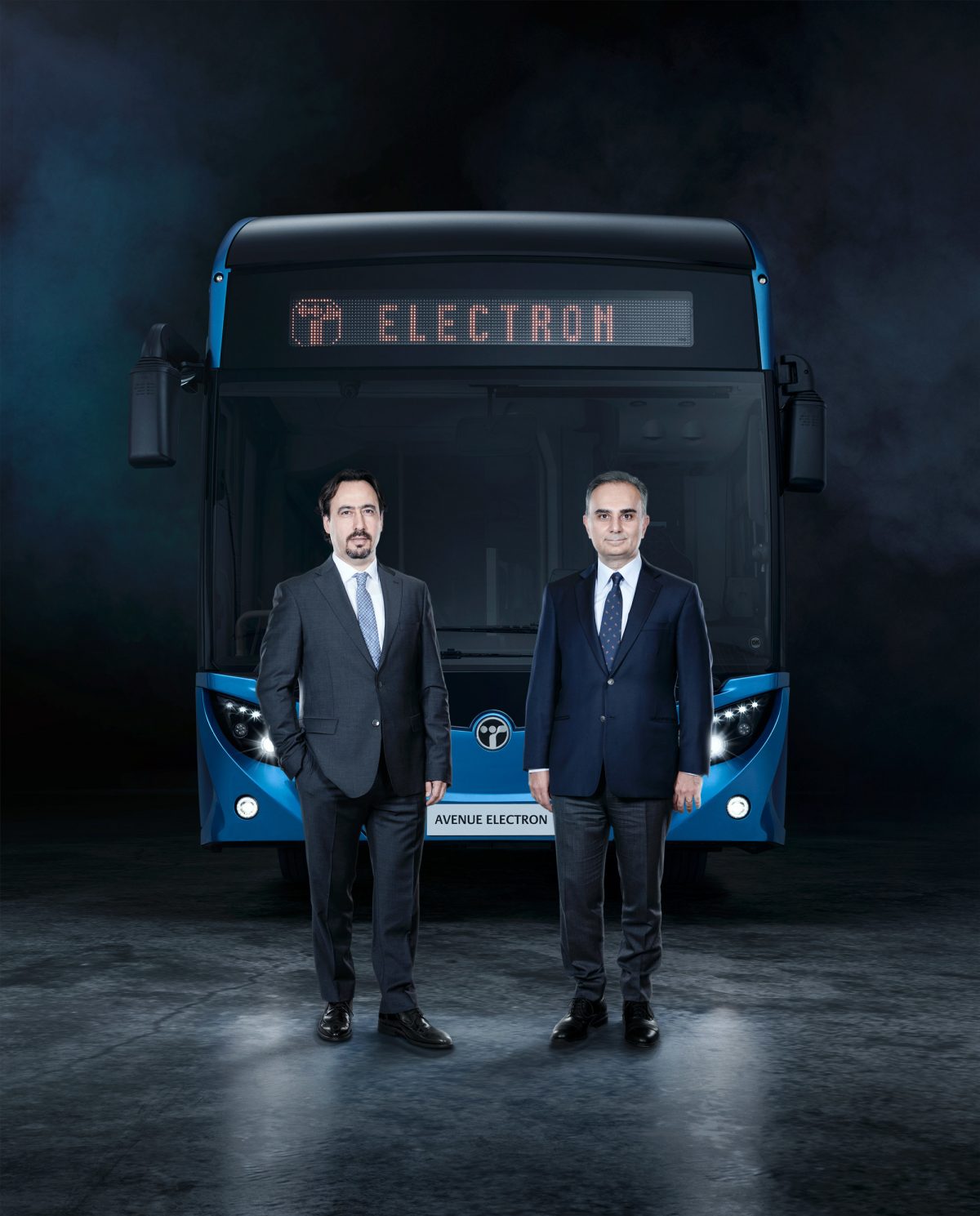
TEMSA CEO Tolga Kaan Dogancioglu, Industry SBU President of Sabancı Holding and Chairman of the Board of Directors of TEMSA (Left to right)


TEMSA, llamando la atención con las importantes entregas que ha realizado recientemente en el extranjero, ha expuesto su visión por los vehículos eléctricos. TEMSA, que hizo su primera entrega de autobuses eléctricos impulsados por TEMSA a Suecia, cultiva todas las tecnologías que dirigen la industria, especialmente cuando se trata de vehículos eléctricos, en la planta de Adana de la compañía.

«PRODUCIMOS LAS BATERÍAS EN TURQUÍA»

Tomando nota de que TEMSA es una de las pocas empresas del mundo que ha comenzado a crear soluciones innovadoras en el campo de las nuevas tecnologías hace muchos años y que múltiples modelos diseñados orientados a los vehículos eléctricos están listos para la producción en masa hoy en día, CevdetAlemdar, Presidente de Industria SBU de Sabancı Holding y Presidente del Consejo de Administración de TEMSA, dijo: «Hoy consideramos a TEMSA como no sólo una empresa automotriz, sino también una empresa de tecnología automotriz. Ahora estamos desarrollando y fabricando las baterías que utilizamos en nuestros vehículos eléctricos, con nuestros propios ingenieros y nuestro propio equipo de I+D en la planta de Adana de TEMSA. Más recientemente, hemos exportado 6 autobuses MD9 electriCITY con alimentación TEMSA, en los que utilizamos los paquetes de baterías que desarrollamos y producimos en nuestra propia instalación de baterías. Estamos muy orgullosos de haber implementado un proyecto tan importante en TEMSA.»

«CRECEREMOS EN EE.UU. Y EUROPA»

CevdetAlemdar expresó que TEMSA se ha centrado en la sostenibilidad y la tecnología en su estrategia de crecimiento y dijo: «Nosotros, como TEMSA, entregamos nuestra primera exportación de vehículos eléctricos a Suecia en el último mes. Suecia es, de hecho, el país que ha poseído esta tecnología durante muchos años, presentó una visión significativa para este tema y, tal vez, es la que más asume poseer este esfuerzo en el mundo. Por ejemplo, las empresas tecnológicas más grandes del mundo en los EE.UU. utilizan nuestros autobuses de la marca TEMSA para el transporte de sus empleados. También veremos nuestros vehículos eléctricos allí en el próximo período. TS45 es nuestro modelo popular en los EE.UU. Estamos en el proceso de producir el modelo eléctrico de este vehículo. Un prototipo está siendo probado actualmente en California. Esperamos que nuestros vehículos eléctricos que hemos producido en Adana, con sus baterías, cubiertas y tecnología TEMSA, estén en las carreteras de diferentes regiones de los EE.UU., particularmente en Silicon Valley.»

CevdetAlemdar recordó que TEMSA ha exportado más de 12 mil vehículos a 66 países de todo el mundo y dijo: «Más de cinco mil vehículos TEMSA están en las carreteras de Francia. En EE.UU., uno de los mercados más competitivos del mundo, este número es de más de 1.000, y aquí estamos en el top 5 de nuestro segmento. Queremos lograr un éxito mucho mayor en el próximo período en los EE.UU.  Nos gustaría conseguir logros aún mayores en los EE.UU. en el próximo período. Creemos que el mercado norteamericano será uno de los motores del crecimiento de TEMSA en el futuro. Del mismo modo, estamos muy fuertes en el Reino Unido, Italia y Alemania. Ahora, creceremos rápidamente en Europa Central y Oriental también a través de la fuerza de nuestro socio PPF y Skoda Transportation.»

NUEVO CENTRO DE I+D: TEMSATECH

Destacando el hecho de que TEMSA ha invertido en I+D e innovación en gran medida durante muchos años, TolgaKaanDoğancıoğlu, consejero delegado de TEMSA, dice que se ha establecido una plataforma llamada TEMSATech dentro de la empresa para diseñar nuevas tecnologías. Doğancıoğlu declara que en TEMSATech se llevan a cabo estudios en muchas áreas diferentes, como vehículos autónomos, distribución de energía y unidad de carga de vehículos, y estaciones de carga junto con vehículos eléctricos, y dice: «Aproximadamente 30 ingenieros de nosotros trabajamos aquí y los vehículos eléctricos que hemos exportado a Suecia también son producto de TEMSATech.»

«LA MITAD DE NUESTROS AUTOBUSES SERÁN ELÉCTRICOS PARA 2025»

Compartiendo información y sus objetivos, TolgaKaanDoğancıoğlu dijo: «Nuestro objetivo es cumplir más de la mitad de nuestro volumen total de autobuses, con vehículos eléctricos para 2025. Asignamos alrededor del cuatro por ciento de nuestra facturación a I+D cada año. Concebimos que la participación de las exportaciones en nuestros vehículos eléctricos alcance alrededor del 80 por ciento. Cuando se trata de corto plazo, estamos planeando alcanzar un volumen de negocio que es 2-3 veces mayor que el año anterior.»

Photo – https://mma.prnewswire.com/media/1318937/TEMSA_Logo.jpg 
Logo – https://mma.prnewswire.com/media/1318937/TEMSA_Logo.jpg

TEMSA Logo


Cocktails Inspired by Mayan Astrology Now Offered at Grand Velas Riviera Maya

RIVIERA MAYA, Mexico, Jan. 29, 2021 /PRNewswire/ — Travelers visiting the AAA Five Diamond Grand Velas Riviera Maya this spring can enjoy a new cocktail menu inspired by local Mayan astrology. Showcasing a festival of flavors and ancestral ingredients from Mexico, thirteen cocktails are based on traits of Mayan astrological signs. In the Mayan lunar calendar, a year is divided into thirteen moons of twenty-eight days, totaling 364 days. On the 365th day,…

RIVIERA MAYA, Mexico, Jan. 29, 2021 /PRNewswire/ — Travelers visiting the AAA Five Diamond Grand Velas Riviera Maya this spring can enjoy a new cocktail menu inspired by local Mayan astrology. Showcasing a festival of flavors and ancestral ingredients from Mexico, thirteen cocktails are based on traits of Mayan astrological signs. In the Mayan lunar calendar, a year is divided into thirteen moons of twenty-eight days, totaling 364 days. On the 365th day, called «The Day Where Time Does Not Exist,» the Mayans would celebrate. Guests at Grand Velas Riviera Maya can celebrate every night through spring.

For travelers at home yearning to try the cosmic menu, the resort shares the below recipe for one of the cocktails, Coz. The full list of cocktails with ingredients, star sign, and special characteristics can be found here.

Coz
Mayan Astrology Sign: Falcon (February 7 – March 6
Sign Characteristics: Falcons possess great judgement and are incredibly faithful and solution-oriented. In the Coz cocktail, triple sec and sharp citrus flavors represent a falcon watching from above, attentive and swift.

Ingredients:

  • 4 tbsp. Charanda (White rum can also be used)
  • 2 tbsp.  Orange liqueur
  • 3 tbsp.  Grapefruit juice
  • 3 tbsp.  Orange juice
  • Grated orange rinds for decoration

Preparation Instructions: Combine Charanda, orange liqueur, grapefruit juice, and orange juice in a shaker with ice. Next, strain into a martini glass. Add grated orange rinds for decoration then serve.

Velas Resorts have received the global safety stamp of approval from the World Travel and Tourism Council (WTTC) due to its state-of-the-art safety and cleanliness protocols detailed in a 15-page Stay Safe with Velas program. Sanitizing mats and booths, touchless hand sanitizing dispensers, increased cleaning and sanitation with both EPA-chemicals and UV light, and special COVID-19 training for staff are examples of protocols being implemented by the resort collection.

Resort nightly rates start at $478 USD per person based on double occupancy. The Mayan Cocktails and other premium beverages, luxury suite accommodations, à la carte gourmet meals at a variety of specialty restaurants, 24-hour in-suite service, fitness center, taxes, gratuity and more are included. For reservations or additional information, call 1-888-407-4869, or visit https://rivieramaya.grandvelas.com.  

Explore tips, recipes, lifestyle and travel trends, and the latest news about Velas Resorts on the digital mag: www.velasmagazine.com.

Cision View original content to download multimedia:http://www.prnewswire.com/news-releases/cocktails-inspired-by-mayan-astrology-now-offered-at-grand-velas-riviera-maya-301218162.html

SOURCE Velas Resorts

Tesla in India: Boost in a Country with Low Appetite for Electric Cars, Reports IDTechEx

BOSTON, Jan. 29, 2021 /PRNewswire/ — Tesla has plans to enter a new market: India. This story has unfolded only one way so far. Tesla decides to enter a new market and quickly becomes the top-selling EV maker by leveraging its powerful brand and class-leading technology at a competitive price: China, South Korea, the UK, the Netherlands, and <span…

BOSTON, Jan. 29, 2021 /PRNewswire/ — Tesla has plans to enter a new market: India. This story has unfolded only one way so far. Tesla decides to enter a new market and quickly becomes the top-selling EV maker by leveraging its powerful brand and class-leading technology at a competitive price: China, South Korea, the UK, the Netherlands, and Norway, to name a few countries which have been conquered so far. But will it be so easy in India?

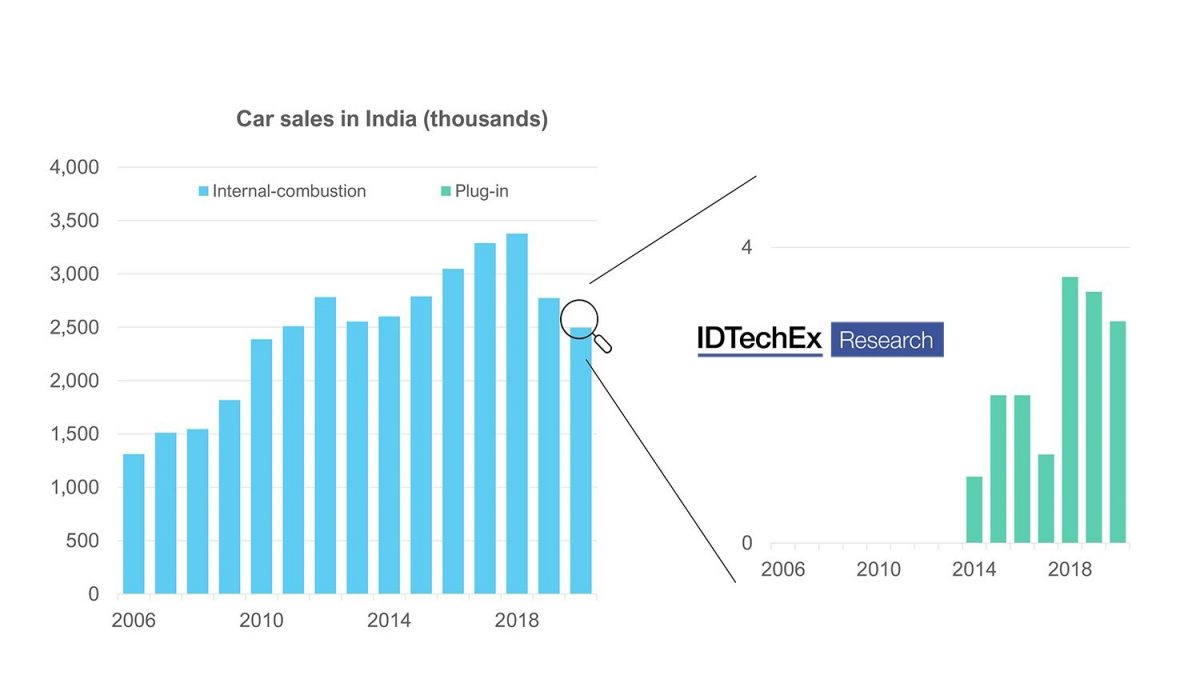
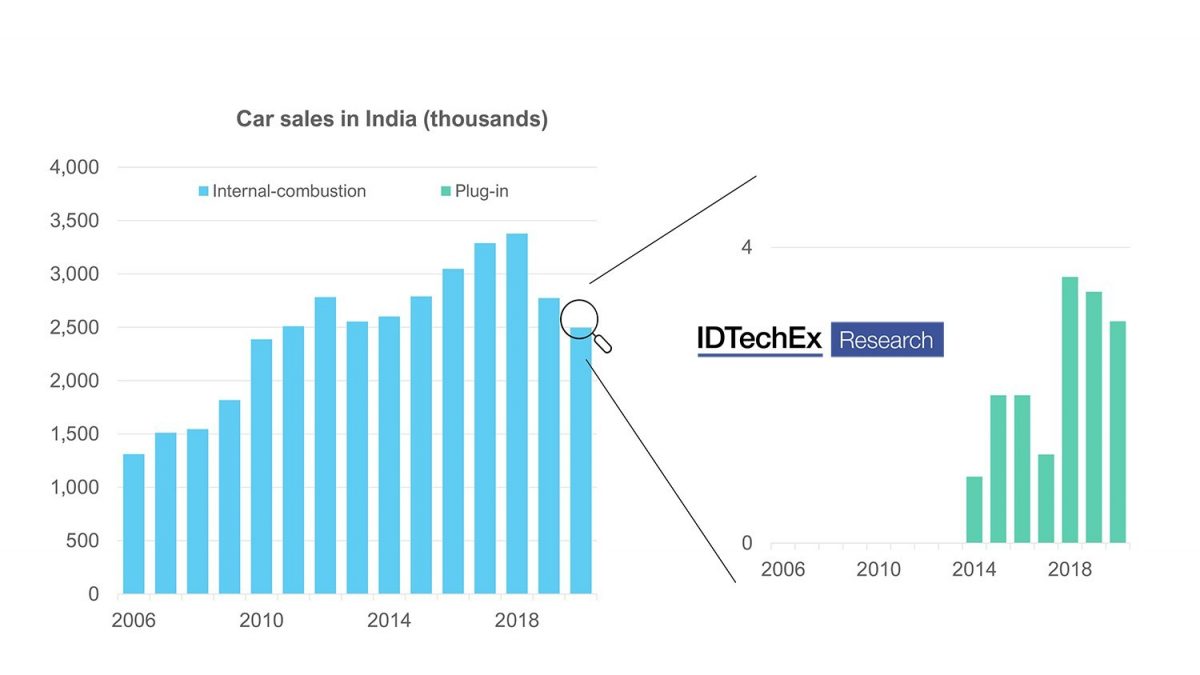
Plug-in refers to battery-electric + plug-in hybrid vehicles; 2020 figures are estimated by IDTechEx. Data sources: SIAM, SMEV, IDTechEx

The trouble is India currently does not have much of an appetite for electric cars, at least in the current situation. In fact, this stretches to cars in general. While it is true that India has one of the largest auto markets in the world – it is fifth behind China, the US, Europe & Japan – and peaked at 3.3 million vehicle sales in 2018 (before the anticipation of new emissions regulation in 2020 sparked a short-term decline), taking a look at vehicles in-use per capita tells a different story.

The new IDTechEx report «Electric Vehicles in India 2021-2041» finds that roughly 26 cars are in-use per 1000 people in India; this compares with 700–800 for the US and Europe and 200 for China, the world’s largest auto market. In contrast, looking at two-wheelers, India is the largest motorcycle market in the world and has around 170 motorcycles per 1000 people: clearly, motorcycles are the current mobility preference. The main reason behind this disparity is the price, as popular motorcycles are typically sold between $700$2000 in India, compared to the average car being north of $10,000.

As is well known, the largest barrier to the adoption of electric vehicles is the higher upfront price, which is, therefore, an even higher barrier in India. The result is India’s plug-in electric car market has never truly taken off and is currently fluctuating between 2000 and 4000 sales yearly, compared to 1 million sales from China in 2020. Looking at the models available on the Indian market, low-priced offerings (under $20k) are still well above the average car price and have less than 150 miles of range, for example, the Mahindra e-Verito or Tata Tigor, making them unattractive as well as unaffordable. The other issue is charging infrastructure, where deployment is also very low in the country. Market entry of Tesla in 2021, unfortunately, does not solve these core problems, at least in the short term.

Moreover, the government’s FAME-II policy does not subsidize private electric cars – only commercial ones – reflecting how the focus of electrification in India is still very much in the realm of micro-mobility (two and three wheelers), which are much easier to electrify and can use standard electrical outlets to charge removable batteries.

To learn more about IDTechEx’s long-term forecast for electric cars in India, the new report «Electric Vehicles in India 2021–2041″ (www.IDTechEx.com/IndiaEV) addresses and forecasts electric two-wheelers, electric three-wheelers (e-rickshaws), electric cars and electric buses in the country, revealing the massive potential and opportunity from one of the world’s largest and fastest-growing economies. The report further explores key technology trends unique to India, such as the transition away from Lead-acid batteries, Li-ion chemistry choices for 45-degree midday heat, the importance of local battery production and the country’s reliance on permanent magnet motors from China.

This research forms part of the broader electric vehicle and energy storage portfolio from IDTechEx, who track the adoption of electric vehicles, battery trends, and demand across land, sea and air, helping you navigate whatever may be ahead. Find out more at www.IDTechEx.com/Research/EV.

About IDTechEx

IDTechEx guides your strategic business decisions through its Research, Subscription and Consultancy products, helping you profit from emerging technologies. For more information, contact research@IDTechEx.com or visit www.IDTechEx.com.

Images download: https://www.dropbox.com/sh/r0vt0dq7oufnwtk/AACcyO0OAuzexVe-PV3FOFLla?dl=0 

Media Contact:

Natalie Moreton
Digital Marketing Manager
press@IDTechEx.com
+44(0)1223 812300

Social Media Links:

Twitter: https://www.twitter.com/IDTechEx
LinkedIn: https://www.linkedin.com/company/idtechex/
Facebook: https://www.facebook.com/IDTechExResearch

IDTechEx Logo

Photo: https://mma.prnewswire.com/media/1429483/IDTechEx_EV_India.jpg
Logo: https://mma.prnewswire.com/media/478371/IDTechEx_Logo.jpg

Tesla in India: Boost in a Country with Low Appetite for Electric Cars, Reports IDTechEx

BOSTON, Jan. 29, 2021 /PRNewswire/ — Tesla has plans to enter a new market: India. This story has unfolded only one way so far. Tesla decides to enter a new market and quickly becomes the top-selling EV maker by leveraging its powerful brand and class-leading technology at a competitive price: China, South Korea, the UK, the Netherlands, and <span…

BOSTON, Jan. 29, 2021 /PRNewswire/ — Tesla has plans to enter a new market: India. This story has unfolded only one way so far. Tesla decides to enter a new market and quickly becomes the top-selling EV maker by leveraging its powerful brand and class-leading technology at a competitive price: China, South Korea, the UK, the Netherlands, and Norway, to name a few countries which have been conquered so far. But will it be so easy in India?

Plug-in refers to battery-electric + plug-in hybrid vehicles; 2020 figures are estimated by IDTechEx. Data sources: SIAM, SMEV, IDTechEx

The trouble is India currently does not have much of an appetite for electric cars, at least in the current situation. In fact, this stretches to cars in general. While it is true that India has one of the largest auto markets in the world – it is fifth behind China, the US, Europe & Japan – and peaked at 3.3 million vehicle sales in 2018 (before the anticipation of new emissions regulation in 2020 sparked a short-term decline), taking a look at vehicles in-use per capita tells a different story.

The new IDTechEx report «Electric Vehicles in India 2021-2041» finds that roughly 26 cars are in-use per 1000 people in India; this compares with 700–800 for the US and Europe and 200 for China, the world’s largest auto market. In contrast, looking at two-wheelers, India is the largest motorcycle market in the world and has around 170 motorcycles per 1000 people: clearly, motorcycles are the current mobility preference. The main reason behind this disparity is the price, as popular motorcycles are typically sold between $700$2000 in India, compared to the average car being north of $10,000.

As is well known, the largest barrier to the adoption of electric vehicles is the higher upfront price, which is, therefore, an even higher barrier in India. The result is India’s plug-in electric car market has never truly taken off and is currently fluctuating between 2000 and 4000 sales yearly, compared to 1 million sales from China in 2020. Looking at the models available on the Indian market, low-priced offerings (under $20k) are still well above the average car price and have less than 150 miles of range, for example, the Mahindra e-Verito or Tata Tigor, making them unattractive as well as unaffordable. The other issue is charging infrastructure, where deployment is also very low in the country. Market entry of Tesla in 2021, unfortunately, does not solve these core problems, at least in the short term.

Moreover, the government’s FAME-II policy does not subsidize private electric cars – only commercial ones – reflecting how the focus of electrification in India is still very much in the realm of micro-mobility (two and three wheelers), which are much easier to electrify and can use standard electrical outlets to charge removable batteries.

To learn more about IDTechEx’s long-term forecast for electric cars in India, the new report «Electric Vehicles in India 2021–2041″ (www.IDTechEx.com/IndiaEV) addresses and forecasts electric two-wheelers, electric three-wheelers (e-rickshaws), electric cars and electric buses in the country, revealing the massive potential and opportunity from one of the world’s largest and fastest-growing economies. The report further explores key technology trends unique to India, such as the transition away from Lead-acid batteries, Li-ion chemistry choices for 45-degree midday heat, the importance of local battery production and the country’s reliance on permanent magnet motors from China.

This research forms part of the broader electric vehicle and energy storage portfolio from IDTechEx, who track the adoption of electric vehicles, battery trends, and demand across land, sea and air, helping you navigate whatever may be ahead. Find out more at www.IDTechEx.com/Research/EV.

About IDTechEx

IDTechEx guides your strategic business decisions through its Research, Subscription and Consultancy products, helping you profit from emerging technologies. For more information, contact research@IDTechEx.com or visit www.IDTechEx.com.

Images download: https://www.dropbox.com/sh/r0vt0dq7oufnwtk/AACcyO0OAuzexVe-PV3FOFLla?dl=0 

Media Contact:

Natalie Moreton
Digital Marketing Manager
press@IDTechEx.com
+44(0)1223 812300

Social Media Links:

Twitter: https://www.twitter.com/IDTechEx
LinkedIn: https://www.linkedin.com/company/idtechex/
Facebook: https://www.facebook.com/IDTechExResearch

IDTechEx Logo

Photo: https://mma.prnewswire.com/media/1429483/IDTechEx_EV_India.jpg
Logo: https://mma.prnewswire.com/media/478371/IDTechEx_Logo.jpg

Tesla in India: Boost in a Country with Low Appetite for Electric Cars, Reports IDTechEx

BOSTON, Jan. 29, 2021 /PRNewswire/ — Tesla has plans to enter a new market: India. This story has unfolded only one way so far. Tesla decides to enter a new market and quickly becomes the top-selling EV maker by leveraging its powerful brand and class-leading technology at a competitive price: China, South Korea, the UK, the Netherlands, and <span…

BOSTON, Jan. 29, 2021 /PRNewswire/ — Tesla has plans to enter a new market: India. This story has unfolded only one way so far. Tesla decides to enter a new market and quickly becomes the top-selling EV maker by leveraging its powerful brand and class-leading technology at a competitive price: China, South Korea, the UK, the Netherlands, and Norway, to name a few countries which have been conquered so far. But will it be so easy in India?

The trouble is India currently does not have much of an appetite for electric cars, at least in the current situation. In fact, this stretches to cars in general. While it is true that India has one of the largest auto markets in the world – it is fifth behind China, the US, Europe & Japan – and peaked at 3.3 million vehicle sales in 2018 (before the anticipation of new emissions regulation in 2020 sparked a short-term decline), taking a look at vehicles in-use per capita tells a different story.

The new IDTechEx report «Electric Vehicles in India 2021-2041» finds that roughly 26 cars are in-use per 1000 people in India; this compares with 700–800 for the US and Europe and 200 for China, the world’s largest auto market. In contrast, looking at two-wheelers, India is the largest motorcycle market in the world and has around 170 motorcycles per 1000 people: clearly, motorcycles are the current mobility preference. The main reason behind this disparity is the price, as popular motorcycles are typically sold between $700$2000 in India, compared to the average car being north of $10,000.

As is well known, the largest barrier to the adoption of electric vehicles is the higher upfront price, which is, therefore, an even higher barrier in India. The result is India’s plug-in electric car market has never truly taken off and is currently fluctuating between 2000 and 4000 sales yearly, compared to 1 million sales from China in 2020. Looking at the models available on the Indian market, low-priced offerings (under $20k) are still well above the average car price and have less than 150 miles of range, for example, the Mahindra e-Verito or Tata Tigor, making them unattractive as well as unaffordable. The other issue is charging infrastructure, where deployment is also very low in the country. Market entry of Tesla in 2021, unfortunately, does not solve these core problems, at least in the short term.

Moreover, the government’s FAME-II policy does not subsidize private electric cars – only commercial ones – reflecting how the focus of electrification in India is still very much in the realm of micro-mobility (two and three wheelers), which are much easier to electrify and can use standard electrical outlets to charge removable batteries.

To learn more about IDTechEx’s long-term forecast for electric cars in India, the new report «Electric Vehicles in India 2021–2041″ (www.IDTechEx.com/IndiaEV) addresses and forecasts electric two-wheelers, electric three-wheelers (e-rickshaws), electric cars and electric buses in the country, revealing the massive potential and opportunity from one of the world’s largest and fastest-growing economies. The report further explores key technology trends unique to India, such as the transition away from Lead-acid batteries, Li-ion chemistry choices for 45-degree midday heat, the importance of local battery production and the country’s reliance on permanent magnet motors from China.

This research forms part of the broader electric vehicle and energy storage portfolio from IDTechEx, who track the adoption of electric vehicles, battery trends, and demand across land, sea and air, helping you navigate whatever may be ahead. Find out more at www.IDTechEx.com/Research/EV.

About IDTechEx

IDTechEx guides your strategic business decisions through its Research, Subscription and Consultancy products, helping you profit from emerging technologies. For more information, contact research@IDTechEx.com or visit www.IDTechEx.com.

Images download: https://www.dropbox.com/sh/r0vt0dq7oufnwtk/AACcyO0OAuzexVe-PV3FOFLla?dl=0 

Media Contact:

Natalie Moreton
Digital Marketing Manager
press@IDTechEx.com
+44(0)1223 812300

Social Media Links:

Twitter: https://www.twitter.com/IDTechEx
LinkedIn: https://www.linkedin.com/company/idtechex/
Facebook: https://www.facebook.com/IDTechExResearch

Photo: https://mma.prnewswire.com/media/1429483/IDTechEx_EV_India.jpg
Logo: https://mma.prnewswire.com/media/478371/IDTechEx_Logo.jpg

Cision View original content to download multimedia:http://www.prnewswire.com/news-releases/tesla-in-india-boost-in-a-country-with-low-appetite-for-electric-cars-reports-idtechex-301218173.html

SOURCE IDTechEx

Pending Home Sales Inch Back 0.3% in December

WASHINGTON, Jan. 29, 2021 /PRNewswire/ — Despite dropping slightly in the last month of 2020, the latest pending home sales registered as the highest ever recorded in the month of December, according to the National Association of Realtors®. The decrease marks the fourth consecutive month of month-over-month declines. While contract transactions fell in one of the four major U.S. regions, activity climbed or remained flat in the three other areas. Compared to a year ago, all…

WASHINGTON, Jan. 29, 2021 /PRNewswire/ — Despite dropping slightly in the last month of 2020, the latest pending home sales registered as the highest ever recorded in the month of December, according to the National Association of Realtors®. The decrease marks the fourth consecutive month of month-over-month declines. While contract transactions fell in one of the four major U.S. regions, activity climbed or remained flat in the three other areas. Compared to a year ago, all four regions witnessed double-digit gains in pending home sales transactions.

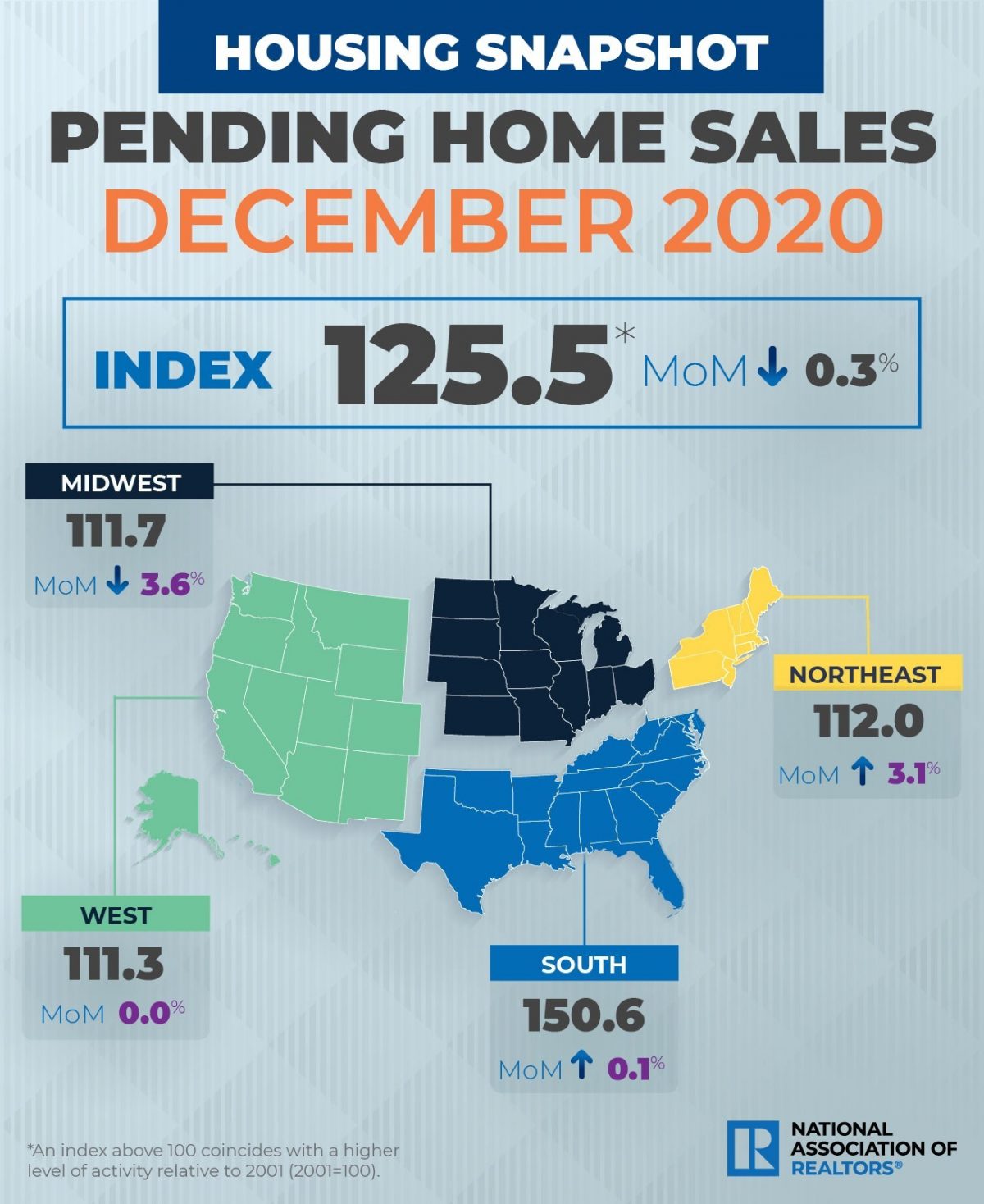
The Pending Home Sales Index (PHSI),*www.nar.realtor/pending-home-sales, a forward-looking indicator of home sales based on contract signings, waned 0.3% to 125.5 in December. Year-over-year, contract signings jumped 21.4%. An index of 100 is equal to the level of contract activity in 2001.

«Pending home sales contracts have dipped during recent months, but I would attribute that to having too few homes for sale,» said Lawrence Yun, NAR’s chief economist. «There is a high demand for housing and a great number of would-be buyers, and therefore sales should rise with more new listings.»

«This elevated demand without a significant boost in supply has caused home prices to increase and we can expect further upward pressure on prices for the foreseeable future,» Yun said.

Yun continues to project that 2021 will bring about strong economic growth, supported by low mortgage rates and fiscal stimulus, which in turn will bolster existing-home sales.

«I expect the 30-year fixed mortgage rate to average 3%, with the Federal Reserve refraining from any rate increases this year,» he said.

Yun added that, with rates to remain low, existing-homes sales are likely to reach 6.49 million, which would be a 15% increase from 5.64 million in 2020. «There will also be slower home price appreciation, likely 6.6%, as increased confidence from homebuilders will ultimately lead to an increase in housing starts.»

December Pending Home Sales Regional Breakdown
The Northeast PHSI rose 3.1% to 112.0 in December, a 22.1% increase from a year ago. In the Midwest, the index fell 3.6% to 111.7 last month, up 13.9% from December 2019.

Pending home sales in the South increased 0.1% to an index of 150.6 in December, up 26.6% from December 2019. The index in the West was unchanged in December, remaining at 111.3, which is up 18.9% from a year ago.

Realtor.com®‘s Housing Market Recovery Index, which reveals metro areas where the market has recovered or even exceeded prior trends, showed Portland, Ore.; Las Vegas, Nev.; Denver, Colo.; Los Angeles, Calif.; and Boston, Mass., had enjoyed the most significant recovery as of January 16.

The National Association of Realtors® is America’s largest trade association, representing more than 1.4 million members involved in all aspects of the residential and commercial real estate industries.

*The Pending Home Sales Index is a leading indicator for the housing sector, based on pending sales of existing homes. A sale is listed as pending when the contract has been signed but the transaction has not closed, though the sale usually is finalized within one or two months of signing.
The index is based on a large national sample, typically representing about 20% of transactions for existing-home sales. In developing the model for the index, it was demonstrated that the level of monthly sales-contract activity parallels the level of closed existing-home sales in the following two months.
An index of 100 is equal to the average level of contract activity during 2001, which was the first year to be examined. By coincidence, the volume of existing-home sales in 2001 fell within the range of 5.0 to 5.5 million, which is considered normal for the current U.S. population.

NOTE: Existing-Home Sales for January will be reported February 19. The next Pending Home Sales Index will be February 25; all release times are 10:00 a.m. ET.

Information about NAR is available at www.nar.realtor. This and other news releases are posted on the NAR Newsroom at www.nar.realtor/newsroom. Statistical data in this release, as well as other tables and surveys, are posted in the «Research and Statistics» tab.

Cision View original content to download multimedia:http://www.prnewswire.com/news-releases/pending-home-sales-inch-back-0-3-in-december-301218156.html

SOURCE National Association of Realtors

Federal Program’s Quick Response Helps U.S. Manufacturers Supply Critical PPE and Other Domestic Products

WASHINGTON, Jan. 29, 2021 /PRNewswire-PRWeb/ — The CARES Act recognized the potential of manufacturers to implement creative strategies to adapt and respond to the pandemic and provided $50 million for the 51 MEP Centers in every state and Puerto Rico to assist manufacturers in a wide variety of ways. These efforts include helping firms retool production systems, identify new supply chains, integrate new technologies, deliver safety…

WASHINGTON, Jan. 29, 2021 /PRNewswire-PRWeb/ — The CARES Act recognized the potential of manufacturers to implement creative strategies to adapt and respond to the pandemic and provided $50 million for the 51 MEP Centers in every state and Puerto Rico to assist manufacturers in a wide variety of ways. These efforts include helping firms retool production systems, identify new supply chains, integrate new technologies, deliver safety training, and enhance cybersecurity protection.

A team at The University of North Carolina at Chapel Hill, led by CURS Interim Director Dr. Nichola Lowe, Professor of City and Regional Planning, documented the wide range of MEP Center responses to the COVID-19 pandemic. Their report is based on the team’s research conducted during the fall of 2020

Key findings include:

  • 94,681 manufacturers contacted by MEP Centers as reported June 30 through September 30, 2020
  • 8,966 manufacturing client projects completed by MEP Centers as reported June 30 through September 30, 2020
  • MEP Centers in 48 states provided new or expanded consulting services or performed needs surveys
  • MEP Centers in 42 states provided product and/or supplier matching services
  • MEP Centers in 31 states created return-to-work guides
  • MEP Centers in 29 states provided assistance with retooling to produce PPE
  • MEP Centers in 13 states assisted manufacturers with PPE product testing and development

«MEP Centers have expanded far beyond process-oriented client support, demonstrating their ability to also help firms retain and redirect workforce talent, design innovative products and develop emergency response strategies that will be helpful for future pandemics and natural disasters. Scaling these efforts further will ensure our national economic recovery is driven by manufacturing innovation and the growth of high-paying, quality jobs,» said Dr. Nichola Lowe.

The report contains 51 profiles, one for each state and Puerto Rico. Each profile is 1-2 pages long and outlines the MEP Center’s pandemic-related assistance to their state’s manufacturers in areas such as training, layoff aversion, domestic sourcing and technology needs. The report includes a detailed chart that shows the types of pandemic-related assistance done by each state’s MEP Center.

«MEP Centers used the opportunities afforded by CARES Act funding to respond to both shorter-term challenges related to COVID-19, such as PPE retooling assistance and conducting needs assessments, as well as long-term opportunities that will benefit manufacturers long after the pandemic is over. In the short-term, MEP Centers have shown innovation and an ability to lean on nonconventional partners to meet common goals,» shared Olivia Raines, Project Lead at the Center for Urban and Regional Studies at the University of North Carolina at Chapel Hill.

About the Center for Urban and Regional Studies
The Center for Urban and Regional Studies conducts and supports research on urban and regional affairs — research that helps to build healthy, sustainable communities across the country and around the world. This project was supported by the North Carolina Policy Collaboratory at The University of North Carolina at Chapel Hill with funding from the North Carolina Coronavirus Relief Fund, established and appropriated by the North Carolina General Assembly.

About ASMC
The American Small Manufacturers Coalition (ASMC) is a trade association of manufacturing extension centers that work to improve the innovation and productivity of America’s manufacturing community. ASMC advocates for legislative and programmatic resources that allow our small manufac13turing clients to better compete in the global marketplace. The Coalition and its members do this by increasing awareness of the importance of American small manufacturers, the challenges which they face, and the federal legislation and programs that affect them.

Media Contact

Kelly Buchanan, Foundation for Manufacturing Excellence, +1 7852188669, kelly@mfgfoundation.com

Twitter


SOURCE Center for Urban and Regional Studies

ALYI Announces First Rideshare Electric Motorcycles Scheduled To Go Into Service By July

DALLAS, Jan. 29, 2021 /PRNewswire/ — Alternet Systems, Inc. (USOTC: ALYI) today announced finalizing plans for its first rideshare electric motorcycles to go into service by July of this year. ALYI has an order to deliver 2000 electric motorcycles in Kenya to be deployed into the motorcycle taxi (boda) market. The first delivery schedule for July is intended to support a first phase, pilot rollout of the rideshare service.

ALYI’s Revolt Electric Motorcycle…

DALLAS, Jan. 29, 2021 /PRNewswire/ — Alternet Systems, Inc. (USOTC: ALYI) today announced finalizing plans for its first rideshare electric motorcycles to go into service by July of this year. ALYI has an order to deliver 2000 electric motorcycles in Kenya to be deployed into the motorcycle taxi (boda) market. The first delivery schedule for July is intended to support a first phase, pilot rollout of the rideshare service.

ALYI’s Revolt Electric Motorcycle Program is only a small part of the company’s comprehensive strategy to build a far-reaching electric vehicle ecosystem. 

The success of any electric vehicle will depend on the simultaneous availability of an entire network of solutions necessary to support the electric vehicle. 

For example, the electric vehicle support network ranges from the availability of power, to charging stations where power can be accessed, to long-range batteries to make electric vehicles efficient modes of transportation, to connectivity so software updates for motor synchronization and battery optimization applications can be continuously updated along with other electric vehicle user support applications.

ALYI’s primary business focus is on its electric vehicle ecosystem strategy out of which electric vehicles will be just one component. 

ALYI is building its electric vehicle ecosystem in a region with one of the lowest per capita transportation ratios in the world, Sub Saharan Africa.  

To both attract industry leading talent to collaborate in ALYI’s electric vehicle ecosystem, and to provide an opportunity to prove innovations coming out of the electric vehicle ecosystem, ALYI is launching an annual electric vehicle race in partnership with a brand name racing organization. The annual race event will be hosted simultaneously with an electric mobility symposium and expo.

ALYI is setting itself apart from the rest of the electric vehicle industry not only through its electric vehicle ecosystem strategy, but also through its commitment to democratize the electric vehicle ecosystem.

ALYI’s financing partner and electric vehicle ecosystem collaborator, RevoltTOKEN, has already provided key funding to advance ALYI’s business plan to its current stage. RevoltTOKEN plans to democratize the ALYI electric vehicle ecosystem through the introduction of a dedicated cryptocurrency that will offer holders a participation opportunity in the ecosystem. RevoltTOKEN, the business entity, plans to offer RevoltTOKENs, a cryptocurrency, through an Initial Coin Offering (ICO).

Next week, we plan to publish a more detailed presentation on our comprehensive electric vehicle ecosystem strategy. Starting now, we anticipate beginning to announce electric vehicle collaboration partnerships.

For more information and to stay up to date on ALYI’s overall latest developments, please visit www.alternetsystemsinc.com.

Disclaimer/Safe Harbor: This news release contains forward-looking statements within the meaning of the Securities Litigation Reform Act. The statements reflect the Company’s current views with respect to future events that involve risks and uncertainties. Among others, these risks include the expectation that any of the companies mentioned herein will achieve significant sales, the failure to meet schedule or performance requirements of the companies’ contracts, the companies’ liquidity position, the companies’ ability to obtain new contracts, the emergence of competitors with greater financial resources and the impact of competitive pricing. In the light of these uncertainties, the forward-looking events referred to in this release might not occur.

Alternet Systems, Inc. Contact:
Randell Torno
info@lithiumip.com
+1-800-713-0297

Cision View original content:http://www.prnewswire.com/news-releases/alyi-announces-first-rideshare-electric-motorcycles-scheduled-to-go-into-service-by-july-301218135.html

SOURCE Alternet Systems, Inc.

ALYI Announces First Rideshare Electric Motorcycles Scheduled To Go Into Service By July

DALLAS, Jan. 29, 2021 /PRNewswire/ — Alternet Systems, Inc. (USOTC: ALYI) today announced finalizing plans for its first rideshare electric motorcycles to go into service by July of this year. ALYI has an order to deliver 2000 electric motorcycles in Kenya to be deployed into the motorcycle taxi (boda) market. The first delivery schedule for July is intended to support a first phase, pilot rollout of the rideshare service.

ALYI’s Revolt Electric Motorcycle…

DALLAS, Jan. 29, 2021 /PRNewswire/ — Alternet Systems, Inc. (USOTC: ALYI) today announced finalizing plans for its first rideshare electric motorcycles to go into service by July of this year. ALYI has an order to deliver 2000 electric motorcycles in Kenya to be deployed into the motorcycle taxi (boda) market. The first delivery schedule for July is intended to support a first phase, pilot rollout of the rideshare service.

ALYI’s Revolt Electric Motorcycle Program is only a small part of the company’s comprehensive strategy to build a far-reaching electric vehicle ecosystem. 

The success of any electric vehicle will depend on the simultaneous availability of an entire network of solutions necessary to support the electric vehicle. 

For example, the electric vehicle support network ranges from the availability of power, to charging stations where power can be accessed, to long-range batteries to make electric vehicles efficient modes of transportation, to connectivity so software updates for motor synchronization and battery optimization applications can be continuously updated along with other electric vehicle user support applications.

ALYI’s primary business focus is on its electric vehicle ecosystem strategy out of which electric vehicles will be just one component. 

ALYI is building its electric vehicle ecosystem in a region with one of the lowest per capita transportation ratios in the world, Sub Saharan Africa.  

To both attract industry leading talent to collaborate in ALYI’s electric vehicle ecosystem, and to provide an opportunity to prove innovations coming out of the electric vehicle ecosystem, ALYI is launching an annual electric vehicle race in partnership with a brand name racing organization. The annual race event will be hosted simultaneously with an electric mobility symposium and expo.

ALYI is setting itself apart from the rest of the electric vehicle industry not only through its electric vehicle ecosystem strategy, but also through its commitment to democratize the electric vehicle ecosystem.

ALYI’s financing partner and electric vehicle ecosystem collaborator, RevoltTOKEN, has already provided key funding to advance ALYI’s business plan to its current stage. RevoltTOKEN plans to democratize the ALYI electric vehicle ecosystem through the introduction of a dedicated cryptocurrency that will offer holders a participation opportunity in the ecosystem. RevoltTOKEN, the business entity, plans to offer RevoltTOKENs, a cryptocurrency, through an Initial Coin Offering (ICO).

Next week, we plan to publish a more detailed presentation on our comprehensive electric vehicle ecosystem strategy. Starting now, we anticipate beginning to announce electric vehicle collaboration partnerships.

For more information and to stay up to date on ALYI’s overall latest developments, please visit www.alternetsystemsinc.com.

Disclaimer/Safe Harbor: This news release contains forward-looking statements within the meaning of the Securities Litigation Reform Act. The statements reflect the Company’s current views with respect to future events that involve risks and uncertainties. Among others, these risks include the expectation that any of the companies mentioned herein will achieve significant sales, the failure to meet schedule or performance requirements of the companies’ contracts, the companies’ liquidity position, the companies’ ability to obtain new contracts, the emergence of competitors with greater financial resources and the impact of competitive pricing. In the light of these uncertainties, the forward-looking events referred to in this release might not occur.

Alternet Systems, Inc. Contact:
Randell Torno
info@lithiumip.com
+1-800-713-0297

Cision View original content:http://www.prnewswire.com/news-releases/alyi-announces-first-rideshare-electric-motorcycles-scheduled-to-go-into-service-by-july-301218135.html

SOURCE Alternet Systems, Inc.