US-Mexico relations expert, Hiroshi Takahashi warns that changing Mexico’s Outsourcing law will endanger American companies

MEXICO CITY, Jan. 26, 2021 /PRNewswire/ — American businesses in Mexico face a challenging future ahead if the amendment proposal to reform the current outsourcing scheme in the country is passed, according to Hiroshi Takahashi, Editorial Director of El Sol de México and an expert in <span…

MEXICO CITY, Jan. 26, 2021 /PRNewswire/ — American businesses in Mexico face a challenging future ahead if the amendment proposal to reform the current outsourcing scheme in the country is passed, according to Hiroshi Takahashi, Editorial Director of El Sol de México and an expert in Mexico-US economic relations.

In an essay published this week in El Sol de México, Mexico City’s leading newspaper, Takahashi states that the outsourcing scheme reform will jeopardise Mexico’s special relationship with the United States and put in danger more than seven million jobs.

El Sol de México the Organización Editorial Mexicana, a chain that publishes over 30 newspapers and several million copies a day. Takahashi serves as its editor since August 2017.

The analyst, who has written for media outlets such as Forbes, El Heraldo de México, Diario 24 Horas and La Silla Rota, mentions that the reform will violate the labour clauses of the United States–Mexico–Canada Agreement, add legal uncertainty and reduce Mexico’s position in the region.

«The approval of the outsourcing law will make it so difficult for large U.S. companies to operate in our country that it will surely cost us jobs and have repercussions for our relationship with the new Biden administration», Takahashi wrote in his essay.

According to Takahashi, among the companies affected by the law reform are Amazon, American Express, Coca-Cola, Costco, DHL, Pepsico, Exxon, FedEx, Ford, General Electric, General Motors, Philips, Chrysler, Honeywell, and Intel.

In his analysis, the reform’s approval will pose significant obstacles to the American plan for economic recovery, in a global context where China continues to gain ground. A considerable part of the U.S. recovery will depend on its investment in Mexico.

Passage of the law reform will increase their costs and make it unfeasible for them to have their factories operating here, experts write.

In Mexico, the formally employed population affiliated to the Social Security system (IMSS) is more or less 23 million people, according to official sources.

More than 30 million people work informally, in conditions that in many cases are below the poverty level and that does not allow for the advancement of workers, companies or the country.

According to official data, Mexico sells 50 billion pesos worth of vehicles to the United States each year, 30 billion pesos worth of auto parts, 29.7 billion pesos worth of technological machinery, and 29.7 billion pesos worth of machinery.

The outsourcing scheme allows workers to meet certain labor conditions in today’s post COVID-19 market.

«If the Mexican congress passes the outsourcing law reform, we will be sending a wrong foreign policy signal to Washington«, he describes.

The United States–Mexico–Canada Agreement states that Members will make changes to labour legislation in Mexico that might affect companies’ operation from its member states.


Cision View original content:http://www.prnewswire.com/news-releases/us-mexico-relations-expert-hiroshi-takahashi-warns-that-changing-mexicos-outsourcing-law-will-endanger-american-companies-301214640.html

SOURCE Hiroshi Takahashi

BlackBerry Expands Partnership with Baidu to Power Next Generation Autonomous Driving Technology

WATERLOO, ON and BEIJING, Jan. 25, 2021 /PRNewswire/ — BlackBerry Limited (NYSE: BB; TSX: BB) today announced an expansion of its strategic partnership with

WATERLOO, ON and BEIJING, Jan. 25, 2021 /PRNewswire/ — BlackBerry Limited (NYSE: BB; TSX: BB) today announced an expansion of its strategic partnership with Baidu, whose high-definition maps will run on the QNX® Neutrino® Real-time Operating System (RTOS) and will be mass-produced in the forthcoming GAC New Energy Aion models from the EV arm of GAC Group (Guangzhou Automobile Group Co., Ltd.).

The milestones build on the company’s January 2018 agreement to make BlackBerry QNX’s industry-leading ISO 26262 ASIL D certified operating system (OS) the foundation for Baidu’s ‘Apollo’ autonomous driving open platform.

Baidu is one of the few high-definition map vendors with an Automotive SPICE® certification from TÜV Rheinland – an industry certification that addresses rigid requirements for the software development process for Tier 1 and Tier 2 automotive suppliers. With world-leading levels of data granularity, Baidu’s high-definition maps provide a critical component for global automakers looking to launch next generation connected and autonomous vehicles in China.

The QNX Neutrino RTOS foundation for Baidu’s high-definition maps is a robust real-time microkernel operating system that provides deterministic performance as well as flexibility to address the limited resources of the embedded system.

«With BlackBerry QNX’s embedded software as its foundation, Baidu has made significant progress as part of its Apollo platform in establishing a commercial ecosystem for innovative technologies that OEMs can leverage for their next generation vehicles,» said Dhiraj Handa, VP, Channel, Partners and APAC, BlackBerry Technology Solutions. «We look forward to continuing to work closely with Baidu to help develop and deploy leading edge autonomous driving and connected vehicle technologies to meet the ever increasing mission-critical and security requirements of the automotive industry.»

«We aim to provide car manufacturers with a clear and fast path to the production of autonomous vehicles, with safety and security as the top priority. The BlackBerry QNX software performs well in functional safety, network security and reliability, while Baidu has achieved long-term development in artificial intelligence and deep learning. Together, we can help car manufacturers quickly produce safe autonomous vehicles and promote the development collaboratively of the intelligent networked automobile industry,» said Wang Yunpeng, Senior Director of Technology Department of Baidu’s Intelligent Driving Group.

As the leader in safe, secure, and reliable software for critical embedded systems, BlackBerry QNX provides OEMs and Tier 1s around the world with state-of-the-art foundational software and cybersecurity technologies. BlackBerry QNX technology is used in more than 175 million vehicles on the road in their advanced driver assistance (ADAS), digital instrument clusters, connectivity modules, hands-free, and infotainment systems.

About BlackBerry

BlackBerry (NYSE: BB; TSX: BB) provides intelligent security software and services to enterprises and governments around the world. The company secures more than 500M endpoints including over 175M cars on the road today.  Based in Waterloo, Ontario, the company leverages AI and machine learning to deliver innovative solutions in the areas of cybersecurity, safety and data privacy solutions, and is a leader in the areas of endpoint security management, encryption, and embedded systems.  BlackBerry’s vision is clear – to secure a connected future you can trust.

BlackBerry. Intelligent Security. Everywhere. 

For more information, visit BlackBerry.com and follow @BlackBerry.  

Trademarks, including but not limited to BLACKBERRY, EMBLEM Design and QNX are the trademarks or registered trademarks of BlackBerry Limited, its subsidiaries and/or affiliates, used under license, and the exclusive rights to such trademarks are expressly reserved. All other trademarks are the property of their respective owners. BlackBerry is not responsible for any third-party products or services.

Media Contact:
BlackBerry Media Relations
+1 (519) 597-7273
mediarelations@BlackBerry.com


Cision View original content to download multimedia:http://www.prnewswire.com/news-releases/blackberry-expands-partnership-with-baidu-to-power-next-generation-autonomous-driving-technology-301211498.html

SOURCE BlackBerry Limited

Colorado Sportsbooks Remain Innovative As They Close $1.2 Billion First Year With Record December, According to PlayColorado

LAS VEGAS, Jan. 25, 2021 /PRNewswire/ — Colorado sportsbooks closed 2020 with yet another record month that made the Centennial State the sixth to surpass $1 billion in wagers for a year, a significant accomplishment considering the industry launched in May with no major U.S. sports in action, according to

LAS VEGAS, Jan. 25, 2021 /PRNewswire/ — Colorado sportsbooks closed 2020 with yet another record month that made the Centennial State the sixth to surpass $1 billion in wagers for a year, a significant accomplishment considering the industry launched in May with no major U.S. sports in action, according to PlayColorado, which provides news and analysis of the state’s gaming industry.

«Colorado’s launch in the heart of a pandemic has, perhaps inadvertently, spawned what could be the most innovative market in the country,» said Ian St. Clair, analyst for PlayColorado.com. «It’s not just that table tennis remains a popular draw in the state, even months after the return of major U.S. sports. It’s also the way operators are using unique betting markets to help connect with customers. The unusual recipe has unquestionably been a success.»

Colorado’s online and retail sportsbooks tallied their eighth consecutive month of record wagering with $284.6 million in December, according to data released Monday by the Colorado Department of Revenue’s Division of Gaming. That was up 23.1% from the previous record of $231.2 million set in November.

Gross gaming revenue fell just short of a state record in December, hitting $17.2 million. That was down from the high of $18.4 million in gross gaming revenue set in November. Meanwhile, net sports betting proceeds fell to $5.7 million, down from $9 million in November. Sports betting produced $531,490 in state taxes in December.

For all of 2020, Colorado’s retail and online sportsbooks produced:

  • $1.2 billion in wagers, of which $1.17 billion were made online
  • $75.8 million in gross gaming revenue.
  • $28.3 million in net betting proceeds
  • $3 million in state taxes, including $2.2 million in the last three months.

«After a slow start as sportsbooks ramped up, the last three months prove that sports betting will be a reliable revenue generator for the state,» said Jessica Welman, analyst for PlayColorado.com. «Revenue ebbs and flows in every sports betting market, typically peaking at the height of the football season. In that way, Colorado’s pattern is on par with what we see most everywhere in the U.S.»

With heavy action in December on pro football ($88.2 million), pro basketball ($42.9 million), and college basketball ($35.2 million), Colorado will likely place sixth in the U.S., behind only New Jersey, presumably Nevada and Illinois, Pennsylvania, and Indiana.

But the Centennial State did not take a conventional route to become one of the largest U.S. markets. Table tennis has generated $63.5 million in bets this year, including $11 million in December. Only football, baseball and basketball have generated more.

And sportsbooks have been creative in drumming up interest. FanDuel offered a promotion in December in which it shifted the line 1 point in the University of Colorado’s favor for every 500 fans who placed a bet on the Buffaloes. And sportsbooks have increasingly offered unique proposition bets, like where star quarterback Deshaun Watson could eventually land.

«Colorado’s books are offering bets that are simply not available in other states,» Welman said. «There are myriad reasons why, but one of them is that table tennis has been so lucrative that state regulators and sportsbooks themselves have been inspired to take chances on more unconventional offerings.»

For more, visit PlayColorado.com/news.

About the PlayUSA.com Network:
The PlayUSA.com Network and its state-focused branches is a leading source for news, analysis, and research related to the market for regulated online gaming in the U.S.

Contact:
Zack Hall, DVA Advertising & PR, 541-389-2411, 289973@email4pr.com


Cision View original content to download multimedia:http://www.prnewswire.com/news-releases/colorado-sportsbooks-remain-innovative-as-they-close-1-2-billion-first-year-with-record-december-according-to-playcolorado-301214571.html

SOURCE PlayColorado.com

Over 300 companies and organizations join forces to help resolve a humanitarian crisis on the world’s ocean

COPENHAGEN, Denmark, Jan. 26, 2021 /PRNewswire/ — Global industry and human rights leaders, including A.P. Møller – Mærsk, BP, BW, Cargill, COSCO, DOW, Euronav, MISC, NYK, Rio Tinto, Shell, Trafigura, Unilever and Vale, sign the Neptune Declaration on Seafarer Wellbeing and Crew Change in a worldwide call to action to end the unprecedented crew change crisis caused by Covid-19.

Hundreds of thousands…

COPENHAGEN, Denmark, Jan. 26, 2021 /PRNewswire/ — Global industry and human rights leaders, including A.P. Møller – Mærsk, BP, BW, Cargill, COSCO, DOW, Euronav, MISC, NYK, Rio Tinto, Shell, Trafigura, Unilever and Vale, sign the Neptune Declaration on Seafarer Wellbeing and Crew Change in a worldwide call to action to end the unprecedented crew change crisis caused by Covid-19.

Hundreds of thousands of seafarers from across the globe have been left stranded working aboard ships beyond the expiry of their initial contracts and are unable to be relieved since the outbreak of the coronavirus pandemic. Fatigue after long periods at sea has significant consequences on the physical and mental wellbeing of seafarers. It also increases the risk of maritime incidents and environmental disasters, and poses a threat to the integrity of maritime supply chains, which carry 90% of global trade.

Despite significant efforts by international organizations, unions, companies and some governments to resolve this untenable crew change crisis we are starting to see the situation getting worse as governments bring in more travel bans in response to the new strains of the Covid-19 virus. A number of key issues leave this critical situation unresolved: national authorities around the world continue to see crew changes and international travel as a Covid-19 risk; high-quality health protocols are not being consistently implemented by ship operators; and the disruption of international air travel has reduced the number of flights between traditional crew change hubs and major seafaring nations.

«We are witnessing a humanitarian crisis at sea. Throughout the coronavirus pandemic, seafarers have kept the world supplied with food, energy and other vital goods, with no line of sight of when to go home to their families. They have become hostage of the situation and unable to disembark from their ships. Yet, we can put an end to the crew change crisis without any risk to the general public health,» says Jeremy Nixon, CEO of ONE.

More than 300 companies and organizations recognize that they have a shared responsibility based on their roles across the entire maritime value chain, and beyond, to ensure that the crew change crisis is resolved as soon as possible. They have signed the Neptune Declaration on Seafarer Wellbeing and Crew Change that defines four main actions to facilitate crew changes and keep global supply chains functioning:

  • Recognize seafarers as key workers and give them priority access to Covid-19 vaccines
  • Establish and implement gold standard health protocols based on existing best practice
  • Increase collaboration between ship operators and charterers to facilitate crew changes
  • Ensure air connectivity between key maritime hubs for seafarers

«Seafarers play a significant role in the global race to halt the coronavirus pandemic by providing critical medical medical supplies to the world’s population, particularly in developing economies. They are crucial to millions of peoples’ wellbeing. We call on our peers, government bodies and other stakeholders to join us in our efforts to ensure that the rights and wellbeing of the frontline workers of global supply chains are respected,» says Graham Westgarth, Chairman of V. Group.

The Neptune Declaration has been developed by a taskforce of stakeholders from across the maritime value chain including A. M. Nomikos, Cargill, Dorian LPG, GasLog, Global Maritime Forum, International Chamber of Shipping, International Maritime Employers’ Council, International Transport Workers’ Federation, ONE, Philippine Transmarine Carriers, Sustainable Shipping Initiative, Synergy Group, V. Group, and World Economic Forum.

See the Neptune Declaration and the full list of undersigning companies and organizations here.

Further information: Head of Communications, Torben Vemmelund at tve@globalmaritimeforum.org or +45 2224 1446.

Cision View original content:http://www.prnewswire.com/news-releases/over-300-companies-and-organizations-join-forces-to-help-resolve-a-humanitarian-crisis-on-the-worlds-ocean-301213200.html

SOURCE Neptune Declaration

Neutrino Energy is This Generation’s Solar Energy

HAMBURG, Germany, Jan. 25, 2021 /PRNewswire/ — The Neutrino Energy Group, led by Holger Thorsten Schubart, is convinced that we are encountering a similar situation in the case of neutrino-generated electricity. While skeptics continue to doubt the validity of neutrinovoltaic energy…

HAMBURG, Germany, Jan. 25, 2021 /PRNewswire/ — The Neutrino Energy Group, led by Holger Thorsten Schubart, is convinced that we are encountering a similar situation in the case of neutrino-generated electricity. While skeptics continue to doubt the validity of neutrinovoltaic energy generation, Schubart and his team have already demonstrated the practical utility of neutrino energy many times over.

Neutrinovoltaics Are a Natural Evolution of Photovoltaics

Like photons, neutrinos are also produced by the sun. Unlike photons, however, neutrinos pass through rather than strike most objects. Estimates suggest that 60 billion neutrinos pass through every square centimeter of the Earth’s surface every day.

For decades, scientists concluded that neutrinos do not carry energy. With the 2015 discovery that neutrinos possess mass, however, it was proven that neutrinos have energy-generation potential.

As a result, neutrino energy can be considered a natural evolution of solar energy. Since sunlight is visible and warm, it’s obviously the form of solar radiation that scientists would first turn to for energy production. While more ethereal, however, neutrinovoltaic may prove to be much more practical for energy generation as time goes by.

Neutrino Energy Is the Revolution the Future Needs

Already, the United States Department of Energy has recognized the validity of neutrino energy production, and millions of dollars have been poured into neutrino research around the world. According to Schubart, however, it’s time this research takes a more practical approach.

While recognizing the impressive positive changes that modern technologies have wrought in our lives, Schubart laments that «when it comes to energy production, we are, figuratively speaking, still standing in a phone booth that only takes coins and has a rotary dial.» According to former Austrian Undersecretary Gernot Spanninger, «the necessity for a technological revolution in the field of energy production cannot be asserted clearly enough – or often enough.» Neutrino energy is that very revolution.

Neutrino Energy Is Proven and Environmentally Friendly

Since they can produce electrical energy continuously even in complete darkness, neutrinovoltaic devices are both simpler and more reliable than their photovoltaic counterparts. Neutrinovoltaic devices produced by the Neutrino Energy Group have been proven to produce electricity in laboratory settings.

In neutrino energy, humanity finally has a reliable solution to the modern energy crisis. Neutrinovoltaic devices still have a ways to go before they can be practically implemented, but just as with photovoltaic cells, this new technology will eventually be accepted as a viable solution to the world’s energy needs.

Author: Stephen Underwood

Neutrino Deutschland GmbH
Unter den Linden 21-23
10117 Berlin
Tel.:+49 30 20924013

Related Images

neutrino-energy.jpg
Neutrino Energy
Neutrinovoltaics Are a Natural Evolution of Photovoltaics


Cision View original content to download multimedia:http://www.prnewswire.com/news-releases/neutrino-energy-is-this-generations-solar-energy-301214460.html

SOURCE Neutrino Energy Group

Brandon Ford Earns Top Spot in the World as 2020 New Ford Retail Sales Leader

TAMPA, Fla., Jan. 25, 2021 /PRNewswire-PRWeb/ — Brandon Ford of Tampa, Florida, won the race to become the top new Ford retail sales leader for the second year in a row.

The dealership took home the title of 2020 New Ford Retail Sales Leader after also taking home the title for the 2019 sales year. These two awards come after Brandon Ford ranked in the top three for the last few years.

Continued success came to the dealership during 2020 thanks to the…

TAMPA, Fla., Jan. 25, 2021 /PRNewswire-PRWeb/ — Brandon Ford of Tampa, Florida, won the race to become the top new Ford retail sales leader for the second year in a row.

The dealership took home the title of 2020 New Ford Retail Sales Leader after also taking home the title for the 2019 sales year. These two awards come after Brandon Ford ranked in the top three for the last few years.

Continued success came to the dealership during 2020 thanks to the dealership’s staff’s continued focus on premium customer service combined with a large inventory and competitive pricing.

«Brandon Ford attributes its tremendous success throughout 2020 to its massive inventory of over 3,000 new Ford cars, trucks and SUVS, its aggressive pricing structure and its unparalleled customer service,» said Tom Murray, Brandon Ford Marketing Director.

«We have a growing sales team of world-class individuals from diverse backgrounds, all of whom are very knowledgeable and motivated to earn the business of our customers. And our customers come from all over the state of Florida to take advantage, and they are the true winners with every purchase. Despite our growing size, we still conduct business one customer at a time.»

Interested parties can learn more about Brandon Ford and the new Ford cars, trucks and SUVs housed on its lot by checking out the Brandon Ford Blog and the dealership’s Ford Model Research Page.

All of those tools and more can be found dealership’s website at http://www.brandonford.com. Customers can direct any questions they may have to the friendly and knowledgeable staff at Brandon Ford by calling 813-246-3673 or by emailing Murray at tom@brandonford.com. Brandon Ford is located at 9090 Adamo Drive in Tampa.

Media Contact

Tom Murray, Brandon Ford, 813-371-7945, tom@brandonford.com


SOURCE Brandon Ford

China pide multilateralismo para hacer frente a las crisis mundiales

-CGTN: mano a mano: China pide multilateralismo para hacer frente a las crisis mundiales

BEIJING, 25 de enero de 2021 /PRNewswire/ — En el contexto de una pandemia que ha cobrado peajes a la salud pública mundial y ha puesto a la economía mundial en profunda recesión, el mundo en 2020 dejó a muchos viviendo con miedo e incertidumbre con la situación empeorando debido a otros desafíos emergentes.

<div id="prni_dvprnevidcb27left" title=" " style="WIDTH: 100%; TEXT-ALIGN:…

-CGTN: mano a mano: China pide multilateralismo para hacer frente a las crisis mundiales

BEIJING, 25 de enero de 2021 /PRNewswire/ — En el contexto de una pandemia que ha cobrado peajes a la salud pública mundial y ha puesto a la economía mundial en profunda recesión, el mundo en 2020 dejó a muchos viviendo con miedo e incertidumbre con la situación empeorando debido a otros desafíos emergentes.

La caótica situación a la que se enfrenta actualmente el mundo es similar a la de hace cuatro años, cuando el presidente chino Xi Jinping pronunció su primer discurso histórico en el Foro Económico Mundial (WEF), ofreciendo soluciones chinas a la comunidad mundial.

«Debemos continuar la lucha», dijo Xi a los líderes mundiales para frenar el brote de COVID-19 en el evento virtual del WEF de la Agenda de Davos el lunes. «Sin embargo, seguimos convencidos de que el invierno no puede detener la llegada de la primavera y la oscuridad nunca puede envolver la luz del amanecer».

El evento de este año con el tema «Un año crucial para reconstruir la confianza», que tiene lugar del 25 al 29 de enero, tiene como objetivo reconstruir la confianza y dar forma a las políticas y asociaciones necesarias en 2021. Más de 1.500 líderes empresariales, gubernamentales y de la sociedad civil de más de 70 países y regiones establecerán la agenda para 2021.

China ha dicho que espera que el discurso de Xi este año ayude a alcanzar el consenso mundial, reconstruir la confianza mundial e impulsar la cooperación mundial, y que juntos encuentren soluciones para los problemas mundiales urgentes a los que se enfrenta la comunidad internacional.

Xi dijo que la cooperación mundial es la mejor manera de derrotar la pandemia, así como otras crisis mundiales. El mundo debe defender el multilateralismo y construir una comunidad con un futuro compartido para la humanidad, dijo el presidente chino, señalando que ningún problema global puede ser resuelto por ningún país.

«Debe haber acción mundial, respuesta mundial y cooperación mundial,» dijo.

Facilitar el mecanismo mundial de cooperación y consulta  

China siempre ha sido un firme defensor y practicante activo del multilateralismo, uniéndose o construyendo plataformas multilaterales.

Ha iniciado el Belt and Road Forum for International Cooperation y la China International Import Expo y ha firmado el mayor acuerdo de libre comercio del mundo, la Regional Comprehensive Economic Partnership (RCEP), en noviembre del año pasado.

A medida que el mundo se enfrenta a la urgente tarea de recuperación económica en la era post-pandemia, Xi dijo que los países deberían en primer lugar intensificar su coordinación de políticas macroeconómicas para promover un crecimiento más fuerte e inclusivo de la economía mundial, utilizando el G20 como el principal foro para la gobernanza económica mundial.

La economía de China creció un 2,3 por ciento en 2020, lo que la convierte en la única economía importante en ver un crecimiento positivo con la economía mundial devastada por la pandemia.

Los principales organismos financieros, incluido el Fondo Monetario Internacional (FMI), esperan que China lidere la recuperación macro mundial, ya que se cree que el poder de gasto de los consumidores chinos impulsará la continua recuperación del país en 2021.

Además, Xi también llamó al mundo a evitar la confrontación utilizando excusas de diferencias en la historia, la cultura o el sistema. En cambio, el mundo debe atenerse a una cooperación basada en beneficios mutuos y resolver desacuerdos a través de la consulta y el diálogo.

Esforzarse por lograr un desarrollo equilibrado para todos los países

Con el mundo lidiando con la pandemia, las recuperaciones económicas de las naciones desarrolladas y los países en desarrollo están siguiendo trayectorias divergentes. Los países en desarrollo con menos recursos, particularmente afectados por la pandemia, necesitan ayuda de manera inminente para ponerse al día en la recuperación mundial.

En su discurso, Xi instó al mundo a proporcionar la ayuda necesaria en términos de más recursos y espacio para el desarrollo de los países en desarrollo, en aras del bien de todos. «Debemos reconocer que con el crecimiento de los países en desarrollo, la prosperidad y la estabilidad mundial se pondrán en una base más sólida, y los países desarrollados se beneficiarán de ese crecimiento,» dijo.

El presidente chino también advirtió que el mundo debía mantenerse comprometido con el derecho internacional y las normas internacionales en lugar de buscar la propia supremacía. «El multilateralismo consiste en abordar los asuntos internacionales a través de la consulta y el futuro del mundo decidido por todos los que trabajan juntos», dijo.

La comunidad internacional debe salvaguardar los intereses legítimos de desarrollo de los países en desarrollo. Debe hacer del fortalecimiento de la igualdad de derechos, la igualdad de oportunidades y la igualdad de las normas el objetivo a largo plazo para que todos los países se beneficien de las oportunidades y los frutos del desarrollo, añadió.

China reitera la cooperación continua para la prosperidad común

A pesar de la pandemia, China ha logrado impulsar sus tareas internas. En los últimos 40 años, China ha logrado avances históricos para poner fin a la pobreza extrema, sacando a más de 800 millones de personas de la pobreza, lo que representa más del 70 por ciento de la reducción de la pobreza mundial.

Por parte de China en la contribución al nuevo año, Xi prometió que China trabajará con otros países para construir un mundo abierto, inclusivo, limpio y hermoso que disfrute de una paz duradera, seguridad universal y prosperidad común. Ha prometido que China ayudará a los países en desarrollo para erradicar la pobreza, aliviar la carga de la deuda y lograr un mayor crecimiento.

A medida que China entra en una nueva etapa de desarrollo, Xi dijo que China seguirá una nueva filosofía de desarrollo y fomentará un nuevo paradigma de desarrollo con la circulación interna como el pilar y las circulaciones nacionales e internacionales reforzándose mutuamente, liberando el potencial del enorme mercado chino y la enorme demanda interna.

«Esperamos que estos esfuerzos traigan más oportunidades de cooperación a otros países y den un nuevo impulso a la recuperación y el crecimiento de la economía mundial,» dijo Xi.

Artículo original: aquí.

Vídeo – https://www.youtube.com/watch?v=qg6ACnr2P08


Nigeria Accounts for Largest Share of New Housing Units in Africa/Mideast Region – Freedonia Group Analysis

CLEVELAND, Jan. 25, 2021 /PRNewswire/ — Homebuilding activity in the Africa/Mideast region will continue to be driven by urban population growth, increased standards of living, and – aside from 2020, when the region will see a recession brought on by the COVID-19 pandemic – <a target="_blank"…

CLEVELAND, Jan. 25, 2021 /PRNewswire/ — Homebuilding activity in the Africa/Mideast region will continue to be driven by urban population growth, increased standards of living, and – aside from 2020, when the region will see a recession brought on by the COVID-19 pandemic – healthy economic expansion. Nigeria will continue to account for the largest share of new housing units in the region, due primarily to its large population and fast urbanization rate. The fastest gains are projected for Nigeria, South Africa, and Iraq, as these markets rebound from weak performances posted during the 2014-2019 period.

The number of existing dwellings in the Africa/Mideast region totaled 398 million units in 2019, accounting for 18% of the global housing stock. The following trends are common among national housing sectors throughout the region:

  • Over 72% of the regional housing stock consists of single-family dwellings, reflecting the large rural population, especially in sub-Saharan Africa.
  • In spite of the high percentage of single-family dwellings, the average unit size was only 69 square meters in 2019 – among the lowest in the world – due to low average incomes in many of the region’s populous countries.
  • The share of multifamily housing has continued to increase due to ongoing rural-to-urban migration throughout the region.
  • Much of the population lives in poor quality, informal housing lacking basic amenities, and there is a significant housing deficit in the region.
  • While most countries are economically developing, standards of living – and quality of housing – are relatively high in a few of the region’s more

New housing construction activity in the Africa/Mideast region is forecast to increase an average of 2.3% per year to 14.3 million units in 2024, the fastest pace of any world region and representing an acceleration from the pace of the 2014-2019 period, as several key markets begin to rebound.

Global Housing, published in January 2021, examines the global housing market in terms of both the global housing stock and the construction of new housing units. Historical data for 2008, 2013, and 2018 and forecasts for 2023 and 2028 are presented in units by country.

About The Freedonia Group – The Freedonia Group, a division of MarketResearch.com, is a leading international industrial research company publishing more than 100 studies annually. Since 1985 we have provided research to customers ranging in size from global conglomerates to one-person consulting firms. More than 90% of the industrial companies in the Fortune 500 use Freedonia Group research to help with their strategic planning. Each study includes product and market analyses and forecasts, in-depth discussions of important industry trends, and market share information. Studies can be purchased at www.freedoniagroup.com and are also available on www.marketresearch.com and www.profound.com.

Press Contact:
Corinne Gangloff
+1 440.842.2400
cgangloff@freedoniagroup.com


Cision View original content to download multimedia:http://www.prnewswire.com/news-releases/nigeria-accounts-for-largest-share-of-new-housing-units-in-africamideast-region–freedonia-group-analysis-301214472.html

SOURCE The Freedonia Group

GCA announces key adaptation initiatives at Climate Adaptation Summit 2021

ROTTERDAM, Netherlands, Jan. 25, 2021 /PRNewswire/ — The Global Center on Adaptation (GCA) today made a number of key announcements during the Climate Adaptation Summit (CAS2021) hosted by the Netherlands – the first international summit for global leaders aimed at triggering the systemic change required to accelerate adaptation action globally for a climate resilient world. During the Summit GCA’s work was endorsed by a number of world leaders including <span…

ROTTERDAM, Netherlands, Jan. 25, 2021 /PRNewswire/ — The Global Center on Adaptation (GCA) today made a number of key announcements during the Climate Adaptation Summit (CAS2021) hosted by the Netherlands – the first international summit for global leaders aimed at triggering the systemic change required to accelerate adaptation action globally for a climate resilient world. During the Summit GCA’s work was endorsed by a number of world leaders including Ali Bongo Odimba, President of Gabon; Nana Akufo-Addo, President of Ghana; Keith Mitchell, Prime Minister of Grenada; Carlos Alvarado Quesado, President of Costa Rica, Sheikh Hasina, Prime Minister of Bangladesh and Uhuru Kenyatta, President of Kenya.
The Summit took place as the pandemic continues to erode recent progress in building climate resilience, leaving countries and communities more vulnerable to future shocks. A report by GCA «State and Trends in Adaptation 2020» showed that global funding would need to increase ten-fold, to US$300 billion a year, to meet the UN Environment Programme’s estimates of what is needed to respond to escalating climate risks. An accompanying technical report «Adaptation Finance in the Context of Covid-19» estimated that funding for climate adaptation fell by up to 10% in 2020, reversing the decade long trend of increasing adaptation finance to developing countries.

Ministerial Dialogue
At the start of CAS2021, GCA hosted its first annual Ministerial Dialogue, with over 50 ministers and leaders from international organizations, to scale-up global leadership cooperation to accelerate climate adaptation. Going forward it will also serve as an annual high-level forum on climate change adaptation, acting as a lever for global leadership to drive a decade of transformation for a climate resilient world by 2030.

Hosting the meeting, Ban Ki-moon, Co-Chair of Global Center on Adaptation said:
«In this GCA ministerial dialogue, we hope to achieve three things: a step change in ambition, so that adaptation receives the funding and attention it deserves. We need a step change in financing to mobilize hundreds of billions of dollars for this decade of transformation. And we need to strengthen partnerships and knowledge exchanges to make the best solutions and approaches available to all.»

Kristalina Georgieva, Managing Director of the International Monetary Fund and Board Member of Global Center on Adaptation said:
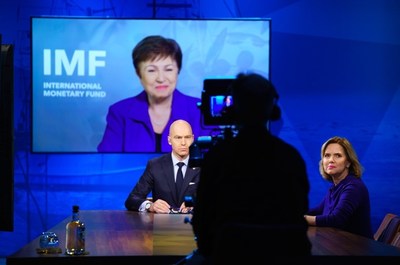
«The IMF is ramping up support for the policies, investment plans and skills countries need to strengthen their response to climate change. Reducing emissions and building resilience is win-win-win – good for growth and jobs, for health and for our planet.»

John Kerry, US Climate Presidential Envoy, who gave the keynote speech, noted that:
«All countries are now learning how to cope with climate change. But nobody has all the answers. The faster we gather information from each other, share data, the faster we can join together in the effort to do what we all know is necessary. The more quickly we’re going to be able to put good solutions to work, the faster we’re going to be able to make savings in hard pressed budgets around the world.»

Patrick Verkooijen, CEO of Global Center on Adaptation said:
«Covid-19 ushered in an era of multiple, intersecting systemic shocks, which demand equally powerful and coordinated solutions. Adaptation should be at the heart our recovery. Combining steadily rising carbon prices with a green infrastructure push can boost global GDP over the next 15 years by about 0.7 percent and generate work for millions of people. It will make us better prepared for future shocks.»

African Adaptation Acceleration Program (AAAP)
The urgency of the compounded COVID-19 and climate crises require accelerated momentum in Africa’s climate adaptation efforts. The African Development Bank and the Global Center on Adaptation (GCA) announced they are joining forces to use their complementary expertise, resources, and networks to launch a bold new Africa Adaptation Acceleration Program (AAAP). This flagship program will focus on agriculture, infrastructure, youth, and innovative finance. The African Development Bank has committed to mobilize $25 billion as climate finance between 2020 and 2025, of which at least 50% ($12.5 billion) will support climate adaptation and resilience building. The Bank and GCA will use this to leverage an additional $12.5 billion with other key partners to support African governments, private sector, and civil society to scale up effective adaptation solutions.

An example of GCA and the Bank’s transformative approach to accelerating adaptation is a project already underway in Ghana to develop its first national-level assessment of the resilience of its infrastructure systems to climate change. By exploring and showcasing the potential co-benefits of Nature-based Solutions as part of country-level package of investment in grey and green infrastructure, Ghana will function as a demonstration country of how to reduce costs and enhance ecosystems.

Commenting on the program launch, Akinwumi Adesina, President of the African Development Bank said:
«We must work together to accelerate adaptation action in Africa , a continent on the frontline of climate change emergency. Today’s announcement with GCA marks the start of a bold global effort to ensure that developing countries have the climate financing they need to implement and scale up climate adaptation solutions.»

Feike Sijbesma, Co-Chair of the Global Center on Adaptation said:
«We are all witnessing how climate change is visibly affecting people, societies and business. We must take a strategic and integrated approach to adaptation and develop the bold innovations and solutions to this global challenge. This all in combination to our continued effort to mitigate climate changes by reducing our emissions.»

Youth Leadership
Following the call to action from one million young people from more than 115 countries to «Adapt for our Future», Akinwumi Adesina, President of the African Development Bank and Patrick Verkooijen, CEO of GCA announced the African Adaptation Acceleration Program would strengthen ecosystems that support youth-led climate adaptation entrepreneurship and youth participation in adaptation policies; scale up climate adaptation innovations by strengthening business development services to 10,000 youth-owned enterprises and 10,000 youth with business ideas on jobs and adaptation; Develop tailored skills and provide starting tool packs for 1 million youth to prepare them for climate resilient jobs and entrepreneurial opportunities in adaptation and unlock USD 3 billion in credit for adaptation action by innovative youth-owned enterprises through innovative financial instruments.

State and Trends Knowledge Exchange
GCA launched the State and Trends in Adaptation Knowledge Exchange (STAKE) to make data, information, and learnings on climate-change adaptation both accessible and actionable, with the aim of engaging policy-makers, professionals, experts, and other stakeholders. The new platform connects areas of science, policy, and practice through dedicated elements—such as the Adaptation Gateway, which covers data, solutions and insights, Communities of Practice, the State and Trends report series, and the Adaptation Action Agenda—brokering solutions to accelerate adaptation action from a local to a global scale. The Adaptation Gateway provides data visualization, systematized solutions, analyses, and insights on the state and trends of climate-change resilience and adaptation.

1000 Cities Adapt Now Initiative
During the Summit, the Mayor of Rotterdam Ahmed Aboutaleb presented the 10-year Global Program 1000 Cities Adapt Now. 1000 Cities Adapt Now’ (1000CAN) is a global program that aims for a green and just post-COVID-19 recovery — a recovery that helps create new jobs, improve equity and prepare communities to adapt to climate and health threats. The coalition network partners, including GCA which will host the program, sought the commitment of other mayors to strengthen the role of cities in improving our environment, climate and society in the lead-up to COP26, and beyond. This resulted in the Joint Statement on Accelerating Climate Adaptation in Cities being presented to world leaders including Prime Minister Mark Rutte.

Mayor Aboutaleb speaking at the launch said:
«Every day, cities are dealing with the effects of climate change and the need to adapt to be resilient. It is our task as mayors of cities worldwide to address these issues and generate solutions. With the Joint Statement on Accelerating Climate Adaptation in Cities, we underline our ambitions and needs to speed up and scale up adaptation measures in 1000 cities in the coming decade.»

Living with water: Climate Adaptation in the World’s Deltas
GCA launched a report on climate adaptation in the world’s deltas which presents a series of lighthouse adaptation case studies and sets how to scale up and accelerate adaptation in these climate hotspots. The report flagged that climate adaptation in delta areas is a complex issue and that understanding deltas requires better, open-access climate data collection.  The report also noted that making deltas more climate resilient requires decades and legal and political frameworks that are conducive to long-term, integrated planning, and predictable budgets, but at the same time urgent adaptation action needs to start immediately.

Free online global education initiative
GCA announced it is collaborating with the University of of Groningen in the Netherlands to offer free online courses on Climate Adaptation Governance through FutureLearn. The first course is on Climate Adaptation Governance – Making Climate Adaptation Happen. In addition, the University of Groningen will start offering a specialisation in Climate Adaptation Governance from September 2021 onwards.


07887 804594, alex.gee@gca.org


Cision View original content to download multimedia:http://www.prnewswire.com/news-releases/gca-announces-key-adaptation-initiatives-at-climate-adaptation-summit-2021-301214473.html

SOURCE The Global Center on Adaptation

AB Global High Income Fund Releases Monthly Portfolio Update

NEW YORK, Jan. 25, 2021 /PRNewswire/ — AB Global High Income Fund, Inc.[NYSE: AWF] (the «Fund») today released its monthly portfolio update as of December 31,2020.

AB Global High Income Fund, Inc.

Top 10 Fixed-Income Holdings

<p…

NEW YORK, Jan. 25, 2021 /PRNewswire/ — AB Global High Income Fund, Inc.[NYSE: AWF] (the «Fund») today released its monthly portfolio update as of December 31,2020.

AB Global High Income Fund, Inc.

Top 10 Fixed-Income Holdings

Portfolio %

1) U.S. Treasury Notes  2.25%, 2/15/27 

2.31%

2) Brazil Notas do Tesouro Nacional Series F 10.00%, 1/01/23 

1.83%

3) U.S. Treasury Notes  2.875%, 8/15/28 

1.45%

4) Argentine Republic Government International Bond  0.125%, 7/09/30 – 7/09/41 

0.87%

5) Dominican Republic International Bond  8.625%, 4/20/27 

0.65%

6) Colombian TES Series B 10.00%, 7/24/24 

0.58%

7) Nigeria Government International Bond  7.625%, 11/21/25 – 11/28/47 

0.53%

8) Ukraine Government International Bond  7.75%, 9/01/22 – 9/01/24 

0.50%

9) U.S. Treasury Bonds  5.25%, 2/15/29 

0.40%

10) First Quantum Minerals Ltd.  7.25%, 4/01/23 

0.39%

Investment Type

Portfolio %

Corporates – Non-Investment Grade

Industrial

Energy

4.77%

Communications – Media

3.59%

Consumer Non-Cyclical

3.54%

Basic

2.64%

Consumer Cyclical – Automotive

2.62%

Capital Goods

2.50%

Consumer Cyclical – Other

2.48%

Services

2.30%

Technology

2.17%

Communications – Telecommunications

2.01%

Consumer Cyclical – Retailers

1.79%

Consumer Cyclical – Entertainment

1.75%

Transportation – Services

0.47%

Other Industrial

0.33%

Consumer Cyclical – Restaurants

0.29%

Transportation – Airlines

0.19%

SUBTOTAL

33.44%

Credit Default Swaps

26.60%

SUBTOTAL

26.60%

Financial Institutions

Banking

2.30%

Finance

0.97%

Insurance

0.90%

REITS

0.86%

Brokerage

0.47%

Other Finance

0.44%

SUBTOTAL

5.94%

Utility

Electric

0.60%

SUBTOTAL

0.60%

SUBTOTAL

66.58%

Corporates – Investment Grade

Financial Institutions

Banking

4.65%

Insurance

1.90%

Finance

0.74%

REITS

0.42%

Other Finance

0.02%

SUBTOTAL

7.73%

Industrial

Energy

0.96%

Consumer Cyclical – Other

0.91%

Basic

0.83%

Transportation – Airlines

0.56%

Consumer Cyclical – Automotive

0.40%

Consumer Non-Cyclical

0.39%

Technology

0.28%

Capital Goods

0.19%

Other Industrial

0.19%

Services

0.12%

Communications – Media

0.07%

Consumer Cyclical – Retailers

0.05%

SUBTOTAL

4.95%

SUBTOTAL

12.68%

Emerging Markets – Sovereigns

Emerging Markets – Sovereigns

10.91%

Credit Default Swaps

0.46%

SUBTOTAL

11.37%

Collateralized Mortgage Obligations

Risk Share Floating Rate

7.87%

Non-Agency Fixed Rate

0.59%

Non-Agency Floating Rate

0.49%

Agency Fixed Rate

0.45%

SUBTOTAL

9.40%

Global Governments

6.51%

Commercial Mortgage-Backed Securities

Credit Default Swaps

4.82%

Non-Agency Fixed Rate CMBS

1.20%

Non-Agency Floating Rate CMBS

0.09%

SUBTOTAL

6.11%

Interest Rate Futures

5.29%

Bank Loans

Industrial

Consumer Non-Cyclical

1.10%

Technology

0.73%

Services

0.57%

Capital Goods

0.53%

Consumer Cyclical – Other

0.47%

Communications – Media

0.31%

Communications – Telecommunications

0.29%

Other Industrial

0.25%

Consumer Cyclical – Retailers

0.16%

Consumer Cyclical – Restaurants

0.11%

Consumer Cyclical – Entertainment

0.08%

Consumer Cyclical – Automotive

0.07%

Basic

0.05%

Energy

0.05%

Transportation – Airlines

0.02%

SUBTOTAL

4.79%

Utility

Electric

0.18%

SUBTOTAL

0.18%

Financial Institutions

Insurance

0.12%

SUBTOTAL

0.12%

SUBTOTAL

5.09%

Emerging Markets – Corporate Bonds

Industrial

Basic

1.67%

Energy

0.79%

Consumer Cyclical – Other

0.54%

Consumer Non-Cyclical

0.43%

Capital Goods

0.24%

Communications – Telecommunications

0.23%

Communications – Media

0.08%

Transportation – Services

0.04%

SUBTOTAL

4.02%

Utility

Electric

0.38%

SUBTOTAL

0.38%

Financial Institutions

Insurance

0.07%

Banking

0.05%

Finance

0.02%

SUBTOTAL

0.14%

SUBTOTAL

4.54%

Emerging Markets – Treasuries

1.83%

Common Stocks

1.45%

Collateralized Loan Obligations

CLO – Floating Rate

1.43%

SUBTOTAL

1.43%

Quasi-Sovereigns

Quasi-Sovereign Bonds

1.39%

SUBTOTAL

1.39%

Total Return Swaps

0.98%

Asset-Backed Securities

Other ABS – Fixed Rate

0.44%

Autos – Fixed Rate

0.27%

Home Equity Loans – Fixed Rate

0.25%

Home Equity Loans – Floating Rate

0.01%

SUBTOTAL

0.97%

Investment Companies

Funds and Investment Trusts

0.51%

SUBTOTAL

0.51%

Preferred Stocks

Financial Institutions

0.23%

Industrial

0.10%

SUBTOTAL

0.33%

Local Governments – US Municipal Bonds

0.32%

Inflation-Linked Securities

0.26%

Warrants

0.04%

Reverse Repurchase Agreements

-0.06%

Equity Futures

Equity Index Futures

-0.10%

SUBTOTAL

-0.10%

Currency Instruments

Forward Currency Exchange Contracts

-0.24%

SUBTOTAL

-0.24%

Net Cash Equivalents

Investment Companies

0.66%

Cash

0.36%

Governments – Treasuries

0.33%

Foreign Currency

-0.02%

SUBTOTAL

1.33%

Derivative Offsets

Futures Offsets

-5.24%

Swaps Offsets

-32.77%

SUBTOTAL

-38.01%

Total

100.00%

Country Breakdown

Portfolio %

United States

64.50%

Brazil

4.49%

United Kingdom

2.63%

Canada

1.86%

Mexico

1.81%

Egypt

1.39%

Colombia

1.15%

France

1.07%

Luxembourg

1.06%

Dominican Republic

1.04%

Cayman Islands

0.98%

Italy

0.97%

Argentina

0.92%

Netherlands

0.88%

Switzerland

0.86%

Nigeria

0.85%

Ukraine

0.82%

Bahrain

0.74%

Russia

0.67%

Ivory Coast

0.64%

Spain

0.60%

Zambia

0.53%

Kenya

0.49%

Ireland

0.49%

Oman

0.45%

Gabon

0.45%

South Africa

0.43%

Senegal

0.42%

Angola

0.41%

Bermuda

0.41%

Finland

0.39%

Ghana

0.39%

Sweden

0.37%

Macau

0.31%

El Salvador

0.30%

Costa Rica

0.28%

Jersey (Channel Islands)

0.27%

Ecuador

0.27%

Denmark

0.26%

Honduras

0.25%

Indonesia

0.25%

Peru

0.25%

Germany

0.25%

Hong Kong

0.23%

Israel

0.22%

India

0.20%

Turkey

0.18%

Chile

0.18%

Mongolia

0.16%

Jamaica

0.14%

Australia

0.13%

Japan

0.11%

Kazakhstan

0.07%

Venezuela

0.07%

Guatemala

0.06%

Jordan

0.06%

United Arab Emirates

0.06%

Iraq

0.06%

Morocco

0.05%

Kuwait

0.04%

China

0.03%

Lebanon

0.03%

Sri Lanka

0.02%

Pakistan

0.02%

Belgium

0.02%

Norway

0.01%

Total Investments

100.00%

Net Currency Exposure Breakdown

Portfolio %

United States Dollar

98.34%

South African Rand

0.49%

Brazilian Real

0.42%

Egypt Pound

0.41%

Indonesian Rupiah

0.25%

Euro

0.11%

Great British Pound

0.05%

Canadian Dollar

0.03%

Argentine Peso

0.02%

Nigerian Naira

0.02%

Indian Rupee

0.01%

Mexican Peso

0.01%

Malaysian Ringgit

0.01%

Norwegian Krone

0.01%

Taiwan New Dollar

0.01%

Swiss Franc

-0.01%

Chilean Peso

-0.01%

Russian Rubles

-0.06%

Colombian Peso

-0.11%

Total Net Assets

100.00%

Credit Rating

Portfolio %

AAA

5.48%

AA

0.91%

A

0.83%

BBB

19.02%

BB

28.95%

B

25.39%

CCC

9.16%

CC

0.47%

C

0.11%

D

0.62%

Not Rated

5.49%

Short Term Investments

0.99%

Reverse Repurchase Agreements

-0.06%

N/A

2.64%

Total

100.00%

Bonds By Maturity

Portfolio %

Less than 1 year

6.70%

1 to 5 years

59.21%

5 to 10 years

21.49%

10 to 20 years

6.69%

20 to 30 years

3.95%

More Than 30 years

0.47%

Other

1.49%

Total Net Assets

100.00%

Portfolio Statistics:

Average Coupon:

7.58%

Average Bond Price:

105.48

Percentage of Leverage(based on gross assets):

Bank Borrowing:

0.00%

Investment Operations:

40.58%

Preferred stock:

0.00%

Tender Option Bonds:

0.00%

VMTP Shares:

0.00%

Total Fund Leverage:

40.58%

Average Maturity:

5.45  Years

Effective Duration:

4.30  Years

Total Net Assets:

$1,120.52 Million

Net Asset Value:

$12.99

Number of Holdings:

1718

Portfolio Turnover:

32%

* Investment Operations may include the use of certain portfolio management techniques such as credit default swaps, dollar rolls, negative cash, reverse repurchase agreements and when-issued securities.

The foregoing portfolio characteristics are as of the date indicated and can be expected to change. The Fund is a closed-end U.S.-registered management investment company advised by AllianceBernstein L. P.

Cision View original content:http://www.prnewswire.com/news-releases/ab-global-high-income-fund-releases-monthly-portfolio-update-301214443.html

SOURCE AllianceBernstein Global High Income Fund, Inc.