Washington State House Vote Advances 2030 Gas Car Phaseout Bill: a Historic Milestone, says Coltura

SEATTLE, Feb. 23, 2021 /PRNewswire/ — Washington made history when the State House Transportation Committee voted late yesterday to advance legislation calling for all model year 2030 or later passenger and light-duty vehicles sold in the state to be electric vehicles (EVs). Introduced by Rep. Nicole Macri (D-Seattle), <a target="_blank"…

SEATTLE, Feb. 23, 2021 /PRNewswire/ — Washington made history when the State House Transportation Committee voted late yesterday to advance legislation calling for all model year 2030 or later passenger and light-duty vehicles sold in the state to be electric vehicles (EVs). Introduced by Rep. Nicole Macri (D-Seattle), Clean Cars 2030 (HB 1204) sets the first 2030 gas car phaseout target in the country.

«This vote builds on our incredible track record here in Washington leading on big climate issues,» said Rep. Macri. «Clean Cars 2030 puts Washington on the road to powering its vehicles with cheap, clean, renewable electricity produced in-state and reduces the threat that oil and gasoline pose to our air, water, and health.»

«This is the first time in history that a state legislative body has voted to end the use of gasoline,» said Matthew Metz, co-executive director of Coltura, the nonprofit leading a coalition of organizations rallying around this bill. «By setting a target date for the transition to electric vehicles, Clean Cars 2030 builds clarity around the future growth of the state’s EV market. We’re not resting until this bill becomes law.»

Since Clean Cars 2030 was introduced, GM announced plans to sell only zero-emissions models by 2035, and Ford said it would only sell electric vehicles in Europe by 2030. Passage of the Clean Cars 2030 bill will serve as a model for other states to make an accelerated switch to EVs, putting more of the U.S. in line with countries worldwide pushing for a 2030 phaseout of gas vehicles, a critical step to meet urgent carbon reduction goals. It will also give the Biden administration leverage in negotiating with automakers on an accelerated timeline for a national gas car phaseout while providing added certainty to the industry that the all-EV future is near and that investment in it will be profitable.

More information about Clean Cars 2030 is available at www.coltura.org/washington-clean-cars.

About Coltura

Coltura is working to improve climate, health, and equity by accelerating the transition from gasoline and diesel to cleaner alternatives. It focuses on changing gasoline supply, gasoline demand, and gasoline culture through innovative legal and policy pathways, media, and art. Learn more at www.coltura.org.

Media Contact
Samara Villasenor
425-255-0890
292126@email4pr.com

Cision View original content to download multimedia:http://www.prnewswire.com/news-releases/washington-state-house-vote-advances-2030-gas-car-phaseout-bill-a-historic-milestone-says-coltura-301233662.html

SOURCE Coltura

Utilice la etiqueta de información nutricional para elegir opciones alimentarias buenas para el corazón

SILVER SPRING, Maryland, 23 de febrero de 2021 /PRNewswire-HISPANIC PR WIRE/ — ¿Sabía que febrero es el Mes Nacional del Corazón en los Estados Unidos? Según los <a target="_blank"…

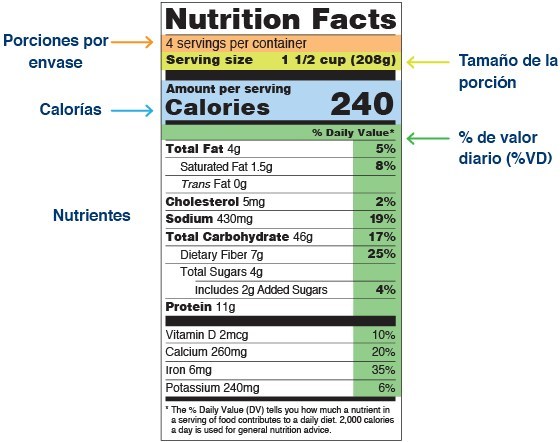
SILVER SPRING, Maryland, 23 de febrero de 2021 /PRNewswire-HISPANIC PR WIRE/ — ¿Sabía que febrero es el Mes Nacional del Corazón en los Estados Unidos? Según los Centros para el Control y la Prevención de Enfermedades (CDC, por sus siglas en inglés), las enfermedades del corazón son la principal causa de muerte en los Estados Unidos. La etiqueta de información nutricional actualizada de la Administración de Alimentos y Medicamentos de los Estados Unidos es una herramienta que le puede ayudar a elegir opciones alimentarias sanas para su corazón.

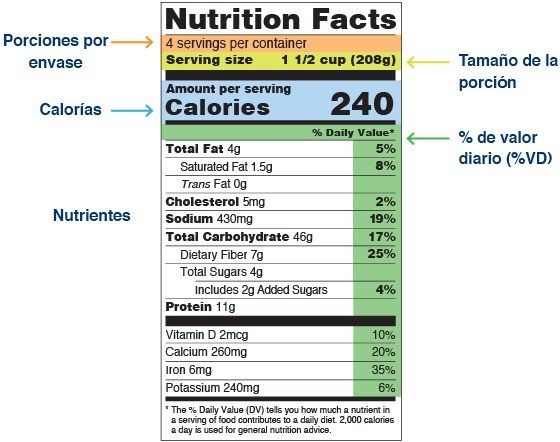
  • Las porciones por envase muestra la cantidad total de porciones que contiene el envase o paquete de alimentos. Es común que un paquete de alimentos contenga más de una porción.
  • El tamaño de la porción se basa en la cantidad del alimento que se acostumbra ingerir en una sóla comida. No es una recomendación de cuánto se debe comer.
  • Las calorías hace referencia a la cantidad total de calorías que contiene una porción del alimento en cuestión.
  • El % de valor diario (%VD) muestra la cantidad de un nutriente que una porción del alimento contribuye al total de la dieta diaria.
  • Los nutrientes: la etiqueta de información nutricional le puede ayudar a aprender, comparar y monitorear los nutrientes contenidos en muchos alimentos de su dieta.
    • Nutrientes que debería reducir: grasas saturadas, sodio y azúcares añadidas.
    • Nutrientes que debería consumir más: fibra, vitamina D, calcio, hierro y potasio.

A continuación le presentamos una forma de utilizar la información contenida en la etiqueta de información nutricional para ayudarle a elegir alimentos saludables y reducir el riesgo de desarrollar presión arterial alta o enfermedades del corazón:

  • Revise el tamaño de la porción y el número de porciones que come o bebe para determinar cuánto está consumiendo de cada nutriente.
  • Determine sus necesidades calóricas. 2,000 calorías al día es la recomendación general nutricional. Identifique la cantidad que usted requiere en https://www.myplate.gov/es/myplate-plan.
  • Utilice el %VD para determinar si una porción del alimento aporta mucho o poco de un nutriente específico, y compare diferentes tipos de alimentos (recuerde asegurarse de que los tamaños de la porción sean iguales al compararlas). Como regla general:
    • El 5% del VD o menos de un nutriente por porción se considera bajo.
    • El 20% del VD o más de un nutriente por porción se considera alto.
  • Limite el sodio en su dieta a menos de 2,300 mg al día.
  • Limite las grasas saturadas en su dieta a menos del 10 % de las calorías del día (por ejemplo, 20 gramos al día con base en una dieta de 2,000 calorías diarias).
  • Limite las calorías de azúcares añadidas a menos del 10 % de las calorías totales del día (por ejemplo, 200 calorías o 50 gramos de azúcares añadidas al día con base en una dieta de 2,000 calorías diarias).
  • Consuma una dieta rica en fibra, vitaminas y minerales, en especial vitamina D, calcio, hierro y potasio. Para esto, elija una amplia variedad de alimentos que sean buena fuente de esos nutrientes, ya que muchas personas no alcanzan a consumir las cantidades recomendadas.

Visite la página web de la etiqueta de información nutricional para aprender sobre esta de una manera interactiva: https://www.accessdata.fda.gov/scripts/InteractiveNutritionFactsLabel/es-default.cfm

Para obtener más información sobre cómo utilizar la etiqueta de información nutricional y hacer decisiones alimentarias informadas, visite www.fda.gov/nutritioneducation (disponible sólo en inglés)

Contacto: Medios: 1-301-796-4540; Consumidores: 1-888-SAFEFOOD (línea sin costo)

Fotografía: https://mma.prnewswire.com/media/1440710/Nutrition_Facts_Label_Spanish.jpg
Logotipo: https://mma.prnewswire.com/media/585467/ucm519149_Logo.jpg

FUENTE U.S. Food and Drug Administration

Utilice la etiqueta de información nutricional para elegir opciones alimentarias buenas para el corazón

SILVER SPRING, Maryland, 23 de febrero de 2021 /PRNewswire-HISPANIC PR WIRE/ — ¿Sabía que febrero es el Mes Nacional del Corazón en los Estados Unidos? Según los <a target="_blank"…

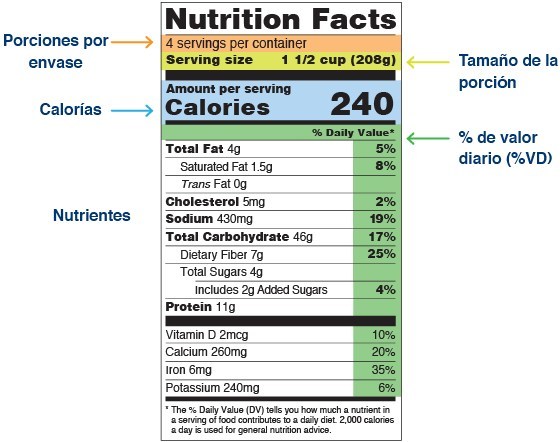
SILVER SPRING, Maryland, 23 de febrero de 2021 /PRNewswire-HISPANIC PR WIRE/ — ¿Sabía que febrero es el Mes Nacional del Corazón en los Estados Unidos? Según los Centros para el Control y la Prevención de Enfermedades (CDC, por sus siglas en inglés), las enfermedades del corazón son la principal causa de muerte en los Estados Unidos. La etiqueta de información nutricional actualizada de la Administración de Alimentos y Medicamentos de los Estados Unidos es una herramienta que le puede ayudar a elegir opciones alimentarias sanas para su corazón.

  • Las porciones por envase muestra la cantidad total de porciones que contiene el envase o paquete de alimentos. Es común que un paquete de alimentos contenga más de una porción.
  • El tamaño de la porción se basa en la cantidad del alimento que se acostumbra ingerir en una sóla comida. No es una recomendación de cuánto se debe comer.
  • Las calorías hace referencia a la cantidad total de calorías que contiene una porción del alimento en cuestión.
  • El % de valor diario (%VD) muestra la cantidad de un nutriente que una porción del alimento contribuye al total de la dieta diaria.
  • Los nutrientes: la etiqueta de información nutricional le puede ayudar a aprender, comparar y monitorear los nutrientes contenidos en muchos alimentos de su dieta.
    • Nutrientes que debería reducir: grasas saturadas, sodio y azúcares añadidas.
    • Nutrientes que debería consumir más: fibra, vitamina D, calcio, hierro y potasio.

A continuación le presentamos una forma de utilizar la información contenida en la etiqueta de información nutricional para ayudarle a elegir alimentos saludables y reducir el riesgo de desarrollar presión arterial alta o enfermedades del corazón:

  • Revise el tamaño de la porción y el número de porciones que come o bebe para determinar cuánto está consumiendo de cada nutriente.
  • Determine sus necesidades calóricas. 2,000 calorías al día es la recomendación general nutricional. Identifique la cantidad que usted requiere en https://www.myplate.gov/es/myplate-plan.
  • Utilice el %VD para determinar si una porción del alimento aporta mucho o poco de un nutriente específico, y compare diferentes tipos de alimentos (recuerde asegurarse de que los tamaños de la porción sean iguales al compararlas). Como regla general:
    • El 5% del VD o menos de un nutriente por porción se considera bajo.
    • El 20% del VD o más de un nutriente por porción se considera alto.
  • Limite el sodio en su dieta a menos de 2,300 mg al día.
  • Limite las grasas saturadas en su dieta a menos del 10 % de las calorías del día (por ejemplo, 20 gramos al día con base en una dieta de 2,000 calorías diarias).
  • Limite las calorías de azúcares añadidas a menos del 10 % de las calorías totales del día (por ejemplo, 200 calorías o 50 gramos de azúcares añadidas al día con base en una dieta de 2,000 calorías diarias).
  • Consuma una dieta rica en fibra, vitaminas y minerales, en especial vitamina D, calcio, hierro y potasio. Para esto, elija una amplia variedad de alimentos que sean buena fuente de esos nutrientes, ya que muchas personas no alcanzan a consumir las cantidades recomendadas.

Visite la página web de la etiqueta de información nutricional para aprender sobre esta de una manera interactiva: https://www.accessdata.fda.gov/scripts/InteractiveNutritionFactsLabel/es-default.cfm

Para obtener más información sobre cómo utilizar la etiqueta de información nutricional y hacer decisiones alimentarias informadas, visite www.fda.gov/nutritioneducation (disponible sólo en inglés)

Contacto: Medios: 1-301-796-4540; Consumidores: 1-888-SAFEFOOD (línea sin costo)

Fotografía: https://mma.prnewswire.com/media/1440710/Nutrition_Facts_Label_Spanish.jpg
Logotipo: https://mma.prnewswire.com/media/585467/ucm519149_Logo.jpg

FUENTE U.S. Food and Drug Administration

Utilice la etiqueta de información nutricional para elegir opciones alimentarias buenas para el corazón

SILVER SPRING, Maryland, 23 de febrero de 2021 /PRNewswire-HISPANIC PR WIRE/ — ¿Sabía que febrero es el Mes Nacional del Corazón en los Estados Unidos? Según los <a target="_blank"…

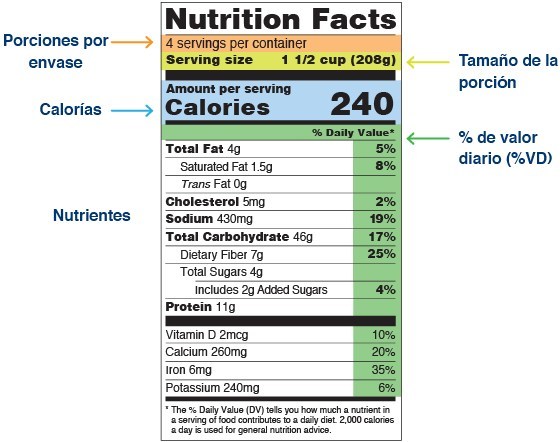
SILVER SPRING, Maryland, 23 de febrero de 2021 /PRNewswire-HISPANIC PR WIRE/ — ¿Sabía que febrero es el Mes Nacional del Corazón en los Estados Unidos? Según los Centros para el Control y la Prevención de Enfermedades (CDC, por sus siglas en inglés), las enfermedades del corazón son la principal causa de muerte en los Estados Unidos. La etiqueta de información nutricional actualizada de la Administración de Alimentos y Medicamentos de los Estados Unidos es una herramienta que le puede ayudar a elegir opciones alimentarias sanas para su corazón.

  • Las porciones por envase muestra la cantidad total de porciones que contiene el envase o paquete de alimentos. Es común que un paquete de alimentos contenga más de una porción.
  • El tamaño de la porción se basa en la cantidad del alimento que se acostumbra ingerir en una sóla comida. No es una recomendación de cuánto se debe comer.
  • Las calorías hace referencia a la cantidad total de calorías que contiene una porción del alimento en cuestión.
  • El % de valor diario (%VD) muestra la cantidad de un nutriente que una porción del alimento contribuye al total de la dieta diaria.
  • Los nutrientes: la etiqueta de información nutricional le puede ayudar a aprender, comparar y monitorear los nutrientes contenidos en muchos alimentos de su dieta.
    • Nutrientes que debería reducir: grasas saturadas, sodio y azúcares añadidas.
    • Nutrientes que debería consumir más: fibra, vitamina D, calcio, hierro y potasio.

A continuación le presentamos una forma de utilizar la información contenida en la etiqueta de información nutricional para ayudarle a elegir alimentos saludables y reducir el riesgo de desarrollar presión arterial alta o enfermedades del corazón:

  • Revise el tamaño de la porción y el número de porciones que come o bebe para determinar cuánto está consumiendo de cada nutriente.
  • Determine sus necesidades calóricas. 2,000 calorías al día es la recomendación general nutricional. Identifique la cantidad que usted requiere en https://www.myplate.gov/es/myplate-plan.
  • Utilice el %VD para determinar si una porción del alimento aporta mucho o poco de un nutriente específico, y compare diferentes tipos de alimentos (recuerde asegurarse de que los tamaños de la porción sean iguales al compararlas). Como regla general:
    • El 5% del VD o menos de un nutriente por porción se considera bajo.
    • El 20% del VD o más de un nutriente por porción se considera alto.
  • Limite el sodio en su dieta a menos de 2,300 mg al día.
  • Limite las grasas saturadas en su dieta a menos del 10 % de las calorías del día (por ejemplo, 20 gramos al día con base en una dieta de 2,000 calorías diarias).
  • Limite las calorías de azúcares añadidas a menos del 10 % de las calorías totales del día (por ejemplo, 200 calorías o 50 gramos de azúcares añadidas al día con base en una dieta de 2,000 calorías diarias).
  • Consuma una dieta rica en fibra, vitaminas y minerales, en especial vitamina D, calcio, hierro y potasio. Para esto, elija una amplia variedad de alimentos que sean buena fuente de esos nutrientes, ya que muchas personas no alcanzan a consumir las cantidades recomendadas.

Visite la página web de la etiqueta de información nutricional para aprender sobre esta de una manera interactiva: https://www.accessdata.fda.gov/scripts/InteractiveNutritionFactsLabel/es-default.cfm

Para obtener más información sobre cómo utilizar la etiqueta de información nutricional y hacer decisiones alimentarias informadas, visite www.fda.gov/nutritioneducation (disponible sólo en inglés)

Contacto: Medios: 1-301-796-4540; Consumidores: 1-888-SAFEFOOD (línea sin costo)

Fotografía: https://mma.prnewswire.com/media/1440710/Nutrition_Facts_Label_Spanish.jpg
Logotipo: https://mma.prnewswire.com/media/585467/ucm519149_Logo.jpg

FUENTE U.S. Food and Drug Administration

Utilice la etiqueta de información nutricional para elegir opciones alimentarias buenas para el corazón

SILVER SPRING, Maryland, 23 de febrero de 2021 /PRNewswire-HISPANIC PR WIRE/ — ¿Sabía que febrero es el Mes Nacional del Corazón en los Estados Unidos? Según los <a target="_blank"…

SILVER SPRING, Maryland, 23 de febrero de 2021 /PRNewswire-HISPANIC PR WIRE/ — ¿Sabía que febrero es el Mes Nacional del Corazón en los Estados Unidos? Según los Centros para el Control y la Prevención de Enfermedades (CDC, por sus siglas en inglés), las enfermedades del corazón son la principal causa de muerte en los Estados Unidos. La etiqueta de información nutricional actualizada de la Administración de Alimentos y Medicamentos de los Estados Unidos es una herramienta que le puede ayudar a elegir opciones alimentarias sanas para su corazón.

  • Las porciones por envase muestra la cantidad total de porciones que contiene el envase o paquete de alimentos. Es común que un paquete de alimentos contenga más de una porción.
  • El tamaño de la porción se basa en la cantidad del alimento que se acostumbra ingerir en una sóla comida. No es una recomendación de cuánto se debe comer.
  • Las calorías hace referencia a la cantidad total de calorías que contiene una porción del alimento en cuestión.
  • El % de valor diario (%VD) muestra la cantidad de un nutriente que una porción del alimento contribuye al total de la dieta diaria.
  • Los nutrientes: la etiqueta de información nutricional le puede ayudar a aprender, comparar y monitorear los nutrientes contenidos en muchos alimentos de su dieta.
    • Nutrientes que debería reducir: grasas saturadas, sodio y azúcares añadidas.
    • Nutrientes que debería consumir más: fibra, vitamina D, calcio, hierro y potasio.

A continuación le presentamos una forma de utilizar la información contenida en la etiqueta de información nutricional para ayudarle a elegir alimentos saludables y reducir el riesgo de desarrollar presión arterial alta o enfermedades del corazón:

  • Revise el tamaño de la porción y el número de porciones que come o bebe para determinar cuánto está consumiendo de cada nutriente.
  • Determine sus necesidades calóricas. 2,000 calorías al día es la recomendación general nutricional. Identifique la cantidad que usted requiere en https://www.myplate.gov/es/myplate-plan.
  • Utilice el %VD para determinar si una porción del alimento aporta mucho o poco de un nutriente específico, y compare diferentes tipos de alimentos (recuerde asegurarse de que los tamaños de la porción sean iguales al compararlas). Como regla general:
    • El 5% del VD o menos de un nutriente por porción se considera bajo.
    • El 20% del VD o más de un nutriente por porción se considera alto.
  • Limite el sodio en su dieta a menos de 2,300 mg al día.
  • Limite las grasas saturadas en su dieta a menos del 10 % de las calorías del día (por ejemplo, 20 gramos al día con base en una dieta de 2,000 calorías diarias).
  • Limite las calorías de azúcares añadidas a menos del 10 % de las calorías totales del día (por ejemplo, 200 calorías o 50 gramos de azúcares añadidas al día con base en una dieta de 2,000 calorías diarias).
  • Consuma una dieta rica en fibra, vitaminas y minerales, en especial vitamina D, calcio, hierro y potasio. Para esto, elija una amplia variedad de alimentos que sean buena fuente de esos nutrientes, ya que muchas personas no alcanzan a consumir las cantidades recomendadas.

Visite la página web de la etiqueta de información nutricional para aprender sobre esta de una manera interactiva: https://www.accessdata.fda.gov/scripts/InteractiveNutritionFactsLabel/es-default.cfm

Para obtener más información sobre cómo utilizar la etiqueta de información nutricional y hacer decisiones alimentarias informadas, visite www.fda.gov/nutritioneducation (disponible sólo en inglés)

Contacto: Medios: 1-301-796-4540; Consumidores: 1-888-SAFEFOOD (línea sin costo)

Fotografía: https://mma.prnewswire.com/media/1440710/Nutrition_Facts_Label_Spanish.jpg
Logotipo: https://mma.prnewswire.com/media/585467/ucm519149_Logo.jpg

FUENTE U.S. Food and Drug Administration

Liberty Public Schools Receives $20,000 for Propane-Fueled School Buses

LIBERTY, Mo., Feb. 23, 2021 /PRNewswire-PRWeb/ — The Missouri Propane Education & Research Council presented Liberty Public Schools a check for $20,000 for its purchase of 10 new Blue Bird propane autogas school buses. The emissions- and cost-reducing propane school buses are currently in service for the district’s daily and activity routes, which have decreased during the COVID-19 pandemic.

«By choosing propane buses, we are…

LIBERTY, Mo., Feb. 23, 2021 /PRNewswire-PRWeb/ — The Missouri Propane Education & Research Council presented Liberty Public Schools a check for $20,000 for its purchase of 10 new Blue Bird propane autogas school buses. The emissions- and cost-reducing propane school buses are currently in service for the district’s daily and activity routes, which have decreased during the COVID-19 pandemic.

«By choosing propane buses, we are seeing dramatic cost savings. Money saved in transportation becomes available for other education expenses related to the classroom,» said Jeff Baird, transportation director for Liberty Public Schools. «Taking care of our students’ needs is top priority because they’ve sacrificed so much during the pandemic, and our propane buses help us do that.»

Baird heard about the benefits other school districts in the area experienced after switching to propane school buses. Liberty Public Schools’ most recent diesel price is $1.86 per gallon, while locked in at $0.79 per gallon for propane. He says the district expects to cut its fuel costs by 35% on propane buses.

«There are now more than 300 propane school buses operating in Missouri. Liberty Public Schools joins other districts across the state not only experiencing the economic benefits, but also improving the health of its students, drivers and community,» said Steve Ahrens, president and CEO of MOPERC. «These buses are clean-operating and eliminate strong-smelling fumes and harmful tailpipe emissions found with diesel buses.»

The rebate presented to the school district is part of MOPERC’s Clean Bus Replacement Plan, which has committed $1 million to help Missouri school districts transition from diesel to propane buses. The plan offers rebates of $2,000 per propane bus, up to 10 per district, at the time of delivery. «By helping Liberty Public Schools lower its acquisition cost of these propane school buses, the district is lowering its transportation operations costs with lower fuel and maintenance costs,» Ahrens added.

In addition to its Clean Bus Replacement Plan, MOPERC offers a Zero Percent Financing plan where districts can get 0% interest loans through lease purchase financing up to $300,000.

Liberty Public Schools, which received its new buses in early January, is in the process of installing an on-site fuel station with an 18,000-gallon tank. Representatives from Liberty Public Schools, Central States Bus Sales, MOPERC and CHS, Inc. attended the check presentation on Feb. 19 at the district’s Support Services building.

About MOPERC: The Missouri Propane Education & Research Council is a not-for-profit organization authorized by the Missouri Legislature. Dedicated to propane education and public awareness, MOPERC provides industry training, consumer safety, appliance rebates and market development programs. The council is composed of 15 volunteer directors and administered by an executive staff. Visit http://www.PropaneMissouri.com.

Media Contact

Adrianna Amato, Missouri Propane Education & Research Council, 480.201.2639, adrianna@tsncommunications.com


SOURCE Missouri Propane Education & Research Council

Colgate Launches The Bright Smiles Kids Awards

NEW YORK, Feb. 23, 2021 /PRNewswire-HISPANIC PR WIRE/ —  A toothy tune, a dental dish or a scientific smile? Anything is possible in Colgate’s Bright Smiles Kids Awards, which will unleash the creativity of young people to inspire healthy dental habits and celebrate National Children’s Dental Health Month.

<img id="prnejpgdcf5left" title=" " border="0" alt=" " align="middle" imagelabel="General"…

NEW YORK, Feb. 23, 2021 /PRNewswire-HISPANIC PR WIRE/ —  A toothy tune, a dental dish or a scientific smile? Anything is possible in Colgate’s Bright Smiles Kids Awards, which will unleash the creativity of young people to inspire healthy dental habits and celebrate National Children’s Dental Health Month.

Hosted by Bright Smiles, Bright Futures (BSBF)®, Colgate’s children’s oral health education initiative, the Bright Smiles Kids Awards is accepting entries from groups of children – ages 6-14 – who submit videos, or slide presentations of musical, scientific, artistic, journalistic, technology-focused, culinary or other projects highlighting the importance of oral health. Children must be enrolled in schools, clubs, after school programs or activities hosted by formal organizations. Submissions will be reviewed by local advisory panels, and grants of up to $1,000 will be awarded to the schools or organizations supporting winners in Colgate BSBF’s nine regions. A first-place national award winner and two runners-up – eligible for up to $5,000 in grants – will be determined by a live public vote at the Bright Smiles Kids Awards event presented virtually in May.

Entries should include a video or slide presentation, up to two minutes long, that showcases and describes the project. All entries require the signed support of a school or formal organization. They must also be submitted to the Colgate Bright Smiles Kids Awards website, https://bit.ly/colgatekidsawards. YouTube video URLs will also be accepted.

In announcing the award, Dr. Gillian Barclay, Colgate’s Vice President Global Public Health and Scientific Affairs, said: «Looking at the world through the eyes of children, there are limitless opportunities to inspire the change we want to see in the world. Colgate understands that good oral health is one of the building blocks to a bright future. We are enlisting children to help raise awareness, encourage their friends and families to maintain healthy teeth and gums, and pursue a Zero Cavity Future.»

The deadline for submitting entries to the Bright Smiles Kids Awards is March 19, 2021. Terms and conditions for the program and additional information are available on the awards website and via https://bit.ly/bska-rules-regulations

About Colgate-Palmolive
Colgate-Palmolive Company is a caring, innovative growth company reimagining a healthier future for people, their pets and our planet. Focused on Oral Care, Personal Care, Home Care and Pet Nutrition and reaching more than 200 countries and territories, Colgate teams are developing and selling health and hygiene products and pet nutrition offerings essential to society through brands such as Colgate, Palmolive, elmex, meridol, Tom’s of Maine, hello, Sorriso, Speed Stick, Softsoap, Irish Spring, Protex, Sanex, Filorga, eltaMD, PCA Skin, Ajax, Axion, Fabuloso, Soupline and Suavitel, as well as Hill’s Science Diet and Hill’s Prescription Diet. Colgate seeks to deliver strong, consistent business results and superior shareholder returns and to provide Colgate people with an innovative and inclusive work environment. Colgate does this by developing and selling products globally that make people’s lives healthier and more enjoyable and by embracing its sustainability, diversity, equity and inclusion and social responsibility strategies across the organization. For more information about Colgate’s global business, its efforts to improve the oral health of children through its Bright Smiles, Bright Futures program and how the Company is building a future to smile about, visit www.colgatepalmolive.com

About Colgate Bright Smiles, Bright Futures
Established in 1991, Colgate Bright Smiles, Bright Futures provides free oral health education, dental screenings, and treatment referrals to children ages 1-12 in underserved areas. Through its mobile dental van program, award-winning in-school oral health curriculum, and grass-roots efforts, BSBF has reached more than 1.3 million children in more than 80 countries around the world.


SOURCE Colgate-Palmolive Company

Colgate Launches The Bright Smiles Kids Awards

NEW YORK, Feb. 23, 2021 /PRNewswire-HISPANIC PR WIRE/ —  A toothy tune, a dental dish or a scientific smile? Anything is possible in Colgate’s Bright Smiles Kids Awards, which will unleash the creativity of young people to inspire healthy dental habits and celebrate National Children’s Dental Health Month.

<img id="prnejpgdcf5left" title=" " border="0" alt=" " align="middle" imagelabel="General"…

NEW YORK, Feb. 23, 2021 /PRNewswire-HISPANIC PR WIRE/ —  A toothy tune, a dental dish or a scientific smile? Anything is possible in Colgate’s Bright Smiles Kids Awards, which will unleash the creativity of young people to inspire healthy dental habits and celebrate National Children’s Dental Health Month.

Hosted by Bright Smiles, Bright Futures (BSBF)®, Colgate’s children’s oral health education initiative, the Bright Smiles Kids Awards is accepting entries from groups of children – ages 6-14 – who submit videos, or slide presentations of musical, scientific, artistic, journalistic, technology-focused, culinary or other projects highlighting the importance of oral health. Children must be enrolled in schools, clubs, after school programs or activities hosted by formal organizations. Submissions will be reviewed by local advisory panels, and grants of up to $1,000 will be awarded to the schools or organizations supporting winners in Colgate BSBF’s nine regions. A first-place national award winner and two runners-up – eligible for up to $5,000 in grants – will be determined by a live public vote at the Bright Smiles Kids Awards event presented virtually in May.

Entries should include a video or slide presentation, up to two minutes long, that showcases and describes the project. All entries require the signed support of a school or formal organization. They must also be submitted to the Colgate Bright Smiles Kids Awards website, https://bit.ly/colgatekidsawards. YouTube video URLs will also be accepted.

In announcing the award, Dr. Gillian Barclay, Colgate’s Vice President Global Public Health and Scientific Affairs, said: «Looking at the world through the eyes of children, there are limitless opportunities to inspire the change we want to see in the world. Colgate understands that good oral health is one of the building blocks to a bright future. We are enlisting children to help raise awareness, encourage their friends and families to maintain healthy teeth and gums, and pursue a Zero Cavity Future.»

The deadline for submitting entries to the Bright Smiles Kids Awards is March 19, 2021. Terms and conditions for the program and additional information are available on the awards website and via https://bit.ly/bska-rules-regulations

About Colgate-Palmolive
Colgate-Palmolive Company is a caring, innovative growth company reimagining a healthier future for people, their pets and our planet. Focused on Oral Care, Personal Care, Home Care and Pet Nutrition and reaching more than 200 countries and territories, Colgate teams are developing and selling health and hygiene products and pet nutrition offerings essential to society through brands such as Colgate, Palmolive, elmex, meridol, Tom’s of Maine, hello, Sorriso, Speed Stick, Softsoap, Irish Spring, Protex, Sanex, Filorga, eltaMD, PCA Skin, Ajax, Axion, Fabuloso, Soupline and Suavitel, as well as Hill’s Science Diet and Hill’s Prescription Diet. Colgate seeks to deliver strong, consistent business results and superior shareholder returns and to provide Colgate people with an innovative and inclusive work environment. Colgate does this by developing and selling products globally that make people’s lives healthier and more enjoyable and by embracing its sustainability, diversity, equity and inclusion and social responsibility strategies across the organization. For more information about Colgate’s global business, its efforts to improve the oral health of children through its Bright Smiles, Bright Futures program and how the Company is building a future to smile about, visit www.colgatepalmolive.com

About Colgate Bright Smiles, Bright Futures
Established in 1991, Colgate Bright Smiles, Bright Futures provides free oral health education, dental screenings, and treatment referrals to children ages 1-12 in underserved areas. Through its mobile dental van program, award-winning in-school oral health curriculum, and grass-roots efforts, BSBF has reached more than 1.3 million children in more than 80 countries around the world.


SOURCE Colgate-Palmolive Company

Colgate Launches The Bright Smiles Kids Awards

NEW YORK, Feb. 23, 2021 /PRNewswire/ — A toothy tune, a dental dish or a scientific smile? Anything is possible in Colgate’s Bright Smiles Kids Awards, which will unleash the creativity of young people to inspire healthy dental habits and celebrate National Children’s Dental Health Month.

<a href="https://mma.prnewswire.com/media/1442363/Colgate_Logo.html" target="_blank"…

NEW YORK, Feb. 23, 2021 /PRNewswire/ — A toothy tune, a dental dish or a scientific smile? Anything is possible in Colgate’s Bright Smiles Kids Awards, which will unleash the creativity of young people to inspire healthy dental habits and celebrate National Children’s Dental Health Month.

Hosted by Bright Smiles, Bright Futures (BSBF)®, Colgate’s children’s oral health education initiative, the Bright Smiles Kids Awards is accepting entries from groups of children – ages 6-14 – who submit videos, or slide presentations of musical, scientific, artistic, journalistic, technology-focused, culinary or other projects highlighting the importance of oral health. Children must be enrolled in schools, clubs, after school programs or activities hosted by formal organizations. Submissions will be reviewed by local advisory panels, and grants of up to $1,000 will be awarded to the schools or organizations supporting winners in Colgate BSBF’s nine regions. A first-place national award winner and two runners-up – eligible for up to $5,000 in grants – will be determined by a live public vote at the Bright Smiles Kids Awards event presented virtually in May.

Entries should include a video or slide presentation, up to two minutes long, that showcases and describes the project. All entries require the signed support of a school or formal organization. They must also be submitted to the Colgate Bright Smiles Kids Awards website, https://bit.ly/colgatekidsawards. YouTube video URLs will also be accepted.

In announcing the award, Dr. Gillian Barclay, Colgate’s Vice President Global Public Health and Scientific Affairs, said: «Looking at the world through the eyes of children, there are limitless opportunities to inspire the change we want to see in the world. Colgate understands that good oral health is one of the building blocks to a bright future. We are enlisting children to help raise awareness, encourage their friends and families to maintain healthy teeth and gums, and pursue a Zero Cavity Future.»

The deadline for submitting entries to the Bright Smiles Kids Awards is March 19, 2021. Terms and conditions for the program and additional information are available on the awards website and via https://bit.ly/bska-rules-regulations

About Colgate-Palmolive
Colgate-Palmolive Company is a caring, innovative growth company reimagining a healthier future for people, their pets and our planet. Focused on Oral Care, Personal Care, Home Care and Pet Nutrition and reaching more than 200 countries and territories, Colgate teams are developing and selling health and hygiene products and pet nutrition offerings essential to society through brands such as Colgate, Palmolive, elmex, meridol, Tom’s of Maine, hello, Sorriso, Speed Stick, Softsoap, Irish Spring, Protex, Sanex, Filorga, eltaMD, PCA Skin, Ajax, Axion, Fabuloso, Soupline and Suavitel, as well as Hill’s Science Diet and Hill’s Prescription Diet. Colgate seeks to deliver strong, consistent business results and superior shareholder returns and to provide Colgate people with an innovative and inclusive work environment. Colgate does this by developing and selling products globally that make people’s lives healthier and more enjoyable and by embracing its sustainability, diversity, equity and inclusion and social responsibility strategies across the organization. For more information about Colgate’s global business, its efforts to improve the oral health of children through its Bright Smiles, Bright Futures program and how the Company is building a future to smile about, visit www.colgatepalmolive.com

About Colgate Bright Smiles, Bright Futures
Established in 1991, Colgate Bright Smiles, Bright Futures provides free oral health education, dental screenings, and treatment referrals to children ages 1-12 in underserved areas. Through its mobile dental van program, award-winning in-school oral health curriculum, and grass-roots efforts, BSBF has reached more than 1.3 million children in more than 80 countries around the world.


Cision View original content to download multimedia:http://www.prnewswire.com/news-releases/colgate-launches-the-bright-smiles-kids-awards-301232938.html

SOURCE Colgate-Palmolive Company

The Conference Board Consumer Confidence Index® Improved in February

NEW YORK, Feb. 23, 2021 /PRNewswire/ — The Conference Board Consumer Confidence Index® improved again in February, after increasing in January. The Index now stands at 91.3 (1985=100), up from 88.9 in January. The Present Situation Index—based on consumers’ assessment of current business and labor market conditions—climbed from 85.5 to 92.0. However, the Expectations Index—based on consumers’ short-term outlook for income, business, and labor market conditions—fell…

NEW YORK, Feb. 23, 2021 /PRNewswire/ — The Conference Board Consumer Confidence Index® improved again in February, after increasing in January. The Index now stands at 91.3 (1985=100), up from 88.9 in January. The Present Situation Index—based on consumers’ assessment of current business and labor market conditions—climbed from 85.5 to 92.0. However, the Expectations Index—based on consumers’ short-term outlook for income, business, and labor market conditions—fell marginally, from 91.2 last month to 90.8 in February.  

The monthly Consumer Confidence Survey®, based on a probability-design random sample, is conducted for The Conference Board by Nielsen, a leading global provider of information and analytics around what consumers buy and watch. The cutoff date for the preliminary results was February 11. The survey results did not fully capture the events surrounding the Texas power crisis nor the loosening of dining restrictions in NYC.

«After three months of consecutive declines in the Present Situation Index, consumers’ assessment of current conditions improved in February,» said Lynn Franco, Senior Director of Economic Indicators at The Conference Board. «This course reversal suggests economic growth has not slowed further. While the Expectations Index fell marginally in February, consumers remain cautiously optimistic, on the whole, about the outlook for the coming months. Notably, vacation intentions—particularly, plans to travel outside the U.S. and via air—saw an uptick this month, and are poised to improve further as vaccination efforts expand.»

Consumers’ assessment of current conditions improved in February. The percentage of consumers claiming business conditions are «good» increased from 15.8 percent to 16.5 percent, while the proportion claiming business conditions are «bad» fell from 42.4 percent to 39.9 percent. Consumers’ assessment of the labor market also improved. The percentage of consumers saying jobs are «plentiful» increased from 20.0 percent to 21.9 percent, while those claiming jobs are «hard to get» declined from 22.5 percent to 21.2 percent.

Consumers, however, were marginally less optimistic about the short-term outlook in February. The percentage of consumers expecting business conditions will improve over the next six months fell from 34.1 percent to 31.0 percent; however, the proportion expecting business conditions will worsen also declined, from 19.0 percent to 17.7 percent. Likewise, consumers’ outlook regarding the job market was somewhat mixed. The proportion expecting more jobs in the months ahead decreased from 30.4 percent to 26.1 percent; however, those anticipating fewer jobs also declined, from 22.1 percent to 20.6 percent. Regarding short-term income prospects, 15.2 percent of consumers expect their incomes to increase in the next six months, down slightly from 15.8 percent in January. Conversely, 13.2 percent expect their incomes to decrease, down from 15.5 percent last month.

Source: February 2021 Consumer Confidence Survey®

The Conference Board / Release #8036

The Conference Board publishes the Consumer Confidence Index® at 10 a.m. ET on the last Tuesday of every month. Subscription information and the technical notes to this series are available on The Conference Board website: https://www.conference-board.org/data/consumerdata.cfm.

About The Conference Board
The Conference Board is the member-driven think tank that delivers trusted insights for what’s ahead. Founded in 1916, we are a non-partisan, not-for-profit entity holding 501 (c) (3) tax-exempt status in the United States. www.conference-board.org.

About NIELSEN
Nielsen Holdings plc (NYSE: NLSN) is a global performance management company that provides a comprehensive understanding of what consumers watch and buy. Nielsen’s Watch segment provides media and advertising clients with Total Audience measurement services for all devices on which content — video, audio and text — is consumed. The Buy segment offers consumer packaged goods manufacturers and retailers the industry’s only global view of retail performance measurement. By integrating information from its Watch and Buy segments and other data sources, Nielsen also provides its clients with analytics that help improve performance. Nielsen, an S&P 500 company, has operations in over 100 countries, covering more than 90 percent of the world’s population. For more information, visit www.nielsen.com.   

Cision View original content to download multimedia:http://www.prnewswire.com/news-releases/the-conference-board-consumer-confidence-index-improved-in-february-301233589.html

SOURCE The Conference Board