How to Advocate for Climate Change

MISSION, Kan., Feb. 22, 2021 /PRNewswire/ — (Family Features) Climate change is an issue that impacts everyone, especially children. The impacts can be seen first-hand, as the planet warms, and human fingerprints are all over the consequences: bigger, stronger hurricanes; deadly heat waves; more intense downpours; and devastating wildfires.

<a…

MISSION, Kan., Feb. 22, 2021 /PRNewswire/ — (Family Features) Climate change is an issue that impacts everyone, especially children. The impacts can be seen first-hand, as the planet warms, and human fingerprints are all over the consequences: bigger, stronger hurricanes; deadly heat waves; more intense downpours; and devastating wildfires.

In fact, 60% of Americans are concerned about climate change, according to a survey by the Potential Energy Coalition. For many moms, having a child is what made them start to care about climate change in the first place. Eighty-three percent of moms are concerned about climate change and want to do something about it.

«It’s hard to study climate change and aspects of climate change and be a mother because the data’s very real to you,» said Dr. Emily Fischer, atmospheric chemist and associate professor in the Department of Atmospheric Science at Colorado State University. «We need a massive shift in the way we produce energy within 10 years, the same time period I need to save and plan to send my daughter to college. We’re hoping moms will realize climate change impacts their children and that we have solutions, but we need to act relatively quickly.»

If you’re not sure where to begin, however, know that whether big or small, steps, such as these ideas from the climate scientists at Science Moms, can add up to create meaningful solutions.

Learn about climate change. Education is a powerful tool, so learning all you can about climate change is one of the best ways to get involved.

«Sorting through myriad information online can be daunting,» said Dr. Katharine Hayhoe, scientist and professor at Texas Tech University. «That’s why Science Moms was created. This nonpartisan group of leading climate scientists, who are also mothers, aims to break down climate change through simple, engaging content.»

Raise your voice. Leaders have the ability to truly take action on the scale needed to make lasting progress on this challenge, but they need to know that it’s a top priority of individuals. You can add your name to petitions and invite others to do the same, attend local meetings to voice your support for reducing carbon pollution and clean energy projects and meet with elected leaders to ensure they know you stand behind them. Of all the actions you can take, one of the most powerful is telling your representatives this is an issue you care about.

«By investing in a clean energy future and common-sense solutions that keep families and communities safe, government leaders have the ability to enact policies that escalate on a scale we could never achieve alone,» Hayhoe said. «They all need to know we stand behind their decisions to tackle this issue.»

Talk about it. In order to avoid some of the worst impacts of climate change, fast action is needed. The more people who know the facts about this issue, the quicker an impact can be made. Share what you learn with your neighbors and other parents to help make everyone more aware of the issue. Also remember that environmental concerns aren’t just for adults. Oftentimes, concern for the climate comes from children. Talking with your kids about the importance of good stewardship and empowering them to make a difference can affect how the next generation approaches concerns like climate change and pollution.

Make climate-conscious choices. There are nearly countless examples of smaller actions you can take to adapt your own home and life. Options to consider include switching to electric cars, buying green electricity (now available in 24 states), putting solar panels on your roof, insulating your house or adding more plant-based foods to your diet.

For more information and to get involved, visit sciencemoms.com.

Talking and Listening to Your Kids About Climate Change

Climate change can be a scary subject no matter how old your kids are, and there are some big concepts that are hard to understand. For others, they know that their future is at risk and are taking matters into their own hands by becoming activists on social media and marching in youth climate strikes.

Focus on developing a love for nature and the environment. Encourage your kids to spend time outdoors and plan activities for the family that celebrate nature, like camping and hiking. You can also introduce and inspire healthy curiosity by reading books about different aspects of the environment, like oceans, land formations and the animals that inhabit different climates.

When talking with older kids, try to avoid scientific jargon and complicated explanations. Answer questions to the best of your ability and work together to find answers to the things you don’t know. Correct misinformation they may be hearing from others and be sure to include facts along with your own perspective as you discuss climate change.

It’s common for kids of all ages to be anxious about the impact of climate change. You can help channel that energy into productive action by getting involved in local organizations that are focused on improving the environment.

Climate Change Myths and Facts

There are many misconceptions about climate change. It’s a complex issue and a better understanding comes when you can sort the myths from the facts.

Myth: Climate change isn’t confirmed science.

Fact: More than 99% of climate scientists agree on the basic facts about climate change: it’s real, it’s human-caused, it’s harming people now and it’s solvable.

Myth: Climate change is a natural phenomenon.

Fact: The climate has changed naturally in the past, but right now, the world is warming up to 100 times faster than it has previously, according to research published in «Scientific American.» Billions of tons of burning coal, oil and natural gas have released carbon pollution into the air that traps the sun’s heat, making the planet hotter while simultaneously melting ice and raising sea levels.

Myth: Climate change is in the distant future.

Fact: It’s happening right now. In the West, hot, dry conditions are fueling massive fires with smoke that blocks out the sun and pollutes the air. In the Southwest, historic droughts threaten the food supply. In the South, warmer oceans are fueling stronger, deadlier hurricanes.

Myth: It might get bad, but America can handle it.

Fact: If left unchecked, the heat trapped by the thickening pollution blanket directly threatens human health and may make virtually every natural disaster more deadly and destructive. These disasters are increasingly happening at the same time, destroying more homes and businesses, and there is only so much emergency relief available.

Myth: There is nothing we can do about it.

Fact: It’s not too late to prevent the worst-case scenarios. That requires reducing pollution and moving from fossil fuels to clean, renewable energy sources, and relying on existing technology to build a clean economy. Governments across the world can work together to tackle climate change and invest in a safer future for children, but they need to know that this is a top priority for families.

Michael French
mfrench@familyfeatures.com 
1-888-824-3337
editors.familyfeatures.com

About Family Features Editorial Syndicate
A leading source for high-quality food, lifestyle and home and garden content, Family Features provides readers with topically and seasonally relevant tips, takeaways, information, recipes, videos, infographics and more. Find additional articles and information at Culinary.net and eLivingToday.com.


Cision View original content to download multimedia:http://www.prnewswire.com/news-releases/how-to-advocate-for-climate-change-301232693.html

SOURCE Family Features Editorial Syndicate

CallRevu Announces a New Senior Vice President of Sales, Charlie Bass

BALTIMORE, Feb. 22, 2021 /PRNewswire-PRWeb/ — CallRevu, an industry leader in automotive communication intelligence, featuring call data, tracking and advanced machine monitoring with artificial intelligence (AI) for dealers, announces today the addition of Charlie Bass as the new Senior Vice President of Sales. Charlie will leverage his 20 years of experience in automotive advertising and demand generation to help support CallRevu’s mission of creating meaningful…

BALTIMORE, Feb. 22, 2021 /PRNewswire-PRWeb/ — CallRevu, an industry leader in automotive communication intelligence, featuring call data, tracking and advanced machine monitoring with artificial intelligence (AI) for dealers, announces today the addition of Charlie Bass as the new Senior Vice President of Sales. Charlie will leverage his 20 years of experience in automotive advertising and demand generation to help support CallRevu’s mission of creating meaningful customer relationships.

«CallRevu has created a world-class product to solve for the #1 profit leak in a dealership today – the phones! Once I discovered what CallRevu had built and saw how the team was serving the dealer body, it was an easy choice for me to join the team. We are going to continue to see a shift where dealers stop chasing novelties and continue to focus on the core areas that drive revenue for dealerships,» comments Charlie Bass.

During his two decades in the automotive industry, Charlie has excelled at helping automotive dealers advance their advertising efforts and drive sales through enhanced customer interactions. Charlie was an early employee at CarGurus, helping to grow the unknown business into a publicly traded $4 billion dollar company. Most recently, Charlie comes to CallRevu from PureCars, where he was a pivotal player in transforming a startup into the second largest advertiser in Tier 3 Automotive.

As Senior Vice President of Sales, Charlie will lead CallRevu’s Sales Team in an effort to drive high-quality traffic at the lowest cost. He intends to help expand CallRevu’s customer base, boosting sales with best-in-class advertising methods and a bold outlook.

«We are excited to have Charlie join the CallRevu team, bringing his rich automotive history helping dealers and OEMs harness the power of data and demand generation and transforming those engagements into powerful conversation and commerce – exactly CallRevu’s sweet spot,» says Anthony Giagnacovo, CEO of CallRevu.

Charlie is excited for the opportunity to work with CallRevu to help deliver quantifiable value to dealers, believing that customers will be interacting more via online and telephone channels than ever before.

About CallRevu
CallRevu, founded in 2008, helps thousands of automotive dealers in the U.S. cultivate the customers that make it into the showroom after having a great experience on the phone. CallRevu has monitored over 110 million calls and by providing local and toll-free numbers to place on all ads, we track, listen, summarize, alert, and report on dealership’s phone calls to monitor call performance. With the robust data we collect, we coach on how to enhance the caller’s experience and improve the bottom line of dealerships. Visit http://www.callrevu.com.

Media Contact

Tasha Willingham, CallRevu, 3176706739, TASHAWILLINGHAM@CALLREVU.COM


SOURCE CallRevu

NJ Patient Notification Law Introduced by Congress to Help Prevent Opioid Addiction Nationally

WASHINGTON, Feb. 22, 2021 /PRNewswire/ — U.S. Representative David Trone (D-Md.), along with Reps. Guy Reschenthaler (R-Pa.), Teresa Leger Fernandez (D-N.M.), and David McKinley (R-W.V.), has introduced the bipartisan Opioid Patients’ Right to Know Act to help prevent opioid addiction across the country that is based on the success of the <a target="_blank"…

WASHINGTON, Feb. 22, 2021 /PRNewswire/ — U.S. Representative David Trone (D-Md.), along with Reps. Guy Reschenthaler (R-Pa.), Teresa Leger Fernandez (D-N.M.), and David McKinley (R-W.V.), has introduced the bipartisan Opioid Patients’ Right to Know Act to help prevent opioid addiction across the country that is based on the success of the New Jersey Patient Notification Act.

The New Jersey law, authored and passed in New Jersey in 2017 and since replicated in 18 states, requires prescribers to notify patients or their parents and guardians about the addictive nature of opioids, as well as non-opioid alternatives available, prior to prescribing an opioid.

«Every American has the right to be warned about the highly addictive qualities of opioids — and made aware of effective non-opioid pain relief alternatives — especially right before an opioid is prescribed,» said Elaine Pozycki, the Chair of the Partnership for a Drug-Free New Jersey (PDFNJ) and Founder of Prevent Opioid Abusea national organization working to educate patients and parents about the risks of opioid-based pain relievers and the availability of non-opioid alternatives. «The Opioid Patients’ Right to Know Act provides a proven prevention measure, and I urge Congress to move speedily to adopt it.»

The Opioid Patients’ Right to Know Act would create a grant program to incentivize states to require prescribers to discuss the addictive qualities of the drugs with patients and inform them of alternative treatment options before prescribing them for acute pain.

The New Jersey Patient Notification Act has had a profound impact on the state’s fight against the opioid epidemic, according to a study of the law commissioned by PDFNJ and conducted by Dr. Andrew Kolodny, Medical Director of Opioid Policy Research at Brandeis University’s Heller School for Social Policy and Management.

The study’s promising results found that prior to the enactment of the law only 18 percent of the participants warned patients about the risk of opioid addiction when prescribing opioids. Following the law’s passage, 95 percent routinely warned patients about the risk of addiction.

«These findings show that very few opioid prescribers were warning patients about the risk of addiction before New Jersey required them to do so, and since the law was enacted, the results speak for themselves,» Kolodny said. «It is much easier to prevent opioid use disorder in the first place than it is to treat it. One of the best ways to do this is by making sure prescribers, patients and parents understand how highly addictive opioids are before a first prescription is ever written or filled. This legislation will save lives.» 

New Jersey State Senator Joseph Vitale (D-Middlesex), prime sponsor of the New Jersey law, is encouraged by the introduction of the Opioid Patients’ Right to Know Act.

«I am proud that what we have done in New Jersey to prevent opioid dependency and addiction can serve as a model for the country,» he said. «We must continue to support and improve access to prevention, treatment, education and recovery efforts for patients, parents, and families from the very first point of contact, oftentimes with a physician, so we can reverse the rapid trend of opioid-related addiction and deaths. We have a shared responsibility to take action.»

«Opioid addiction is on the rise, made even worse by the COVID-19 pandemic, and we need to take steps to prevent it from happening in the first place,» said Trone, the bill’s sponsor and a member of the Commission to Combat Synthetic Opioid Trafficking. «This bill will help ensure that patients have the knowledge to make informed decisions about what treatment option is right for them.»

National organizations supporting the Opioid Patients’ Right to Know Act include: Prevent Opioid Abuse (POA), Collaborative for Effective Prescription Opioid Policies (CEPOP), Mothers Against Prescription Drug Abuse (MAPDA), Partnership to End Addiction, Shatterproof, Addiction Policy Forum, FED UP!, Physicians for Responsible Opioid Prescribing (PROP), and Voices for Non-Opioid Choices.

To read bill text, click here

To read a bill summary, click here.

Cision View original content:http://www.prnewswire.com/news-releases/nj-patient-notification-law-introduced-by-congress-to-help-prevent-opioid-addiction-nationally-301232728.html

SOURCE Partnership for a Drug-Free New Jersey

After a Tremendous Outpouring of Support, Paul Newman’s Hole in the Wall Gang Camp Announces It Has Raised the Anticipated Funds Needed to Rebuild After Fire

NEW HAVEN, Conn., Feb. 22, 2021 /PRNewswire-PRWeb/ — Following a significant fire at The Hole in the Wall Gang Camp on Friday, Feb. 12, CEO Jimmy Canton announced today that a $1 million match initiated by The Travelers Companies, Inc. and the Travelers Championship to inspire community support has been achieved. Canton also acknowledged that Hole in the Wall feels they will have the anticipated funds needed to…

NEW HAVEN, Conn., Feb. 22, 2021 /PRNewswire-PRWeb/ — Following a significant fire at The Hole in the Wall Gang Camp on Friday, Feb. 12, CEO Jimmy Canton announced today that a $1 million match initiated by The Travelers Companies, Inc. and the Travelers Championship to inspire community support has been achieved. Canton also acknowledged that Hole in the Wall feels they will have the anticipated funds needed to rebuild the structures that were lost in the fire to best meet the current, future and varied needs of the seriously ill children the Camp serves.

«We are deeply grateful for the tremendous outpouring of kindness and generosity from the thousands of people in our Camp family and beyond who brought us to this milestone,» said Canton. «To every person who donated, every camper family that raised money on social media and everyone who reached out with their prayers and well wishes, know that we are honored by your friendship. We also want to express our heartfelt thanks to Travelers and the Travelers Championship for their extraordinary $1 million match, and to Newman’s Own Foundation for their exceptional $1 million commitment to ensure we build the future-minded buildings our children will need. It is because of this incredible support that we can now focus our efforts on rebuilding.»

On Monday, Feb. 15, longtime Camp advocates Travelers and the Travelers Championship announced a $1 million match to inspire support for Hole in the Wall’s rebuilding efforts.

«A week ago, The Hole in the Wall Gang Camp was struck by tragedy, but in a matter of days, the community responded with remarkable generosity,» said Alan Schnitzer, Chairman and Chief Executive Officer of Travelers. «The fire may have come as a shock, but the outpouring of support was hardly a surprise. The Hole in the Wall Gang Camp has touched many lives and countless hearts. We’re honored to do our part to help the Camp recover and rebuild stronger than ever.»

«It was clear from the first time I visited Camp that it was a magical place,» said Andy Bessette, Executive Vice President and Chief Administrative Officer of Travelers. «Its phenomenal programs allow kids to, as Paul Newman put it, ‘raise a little hell,’ and thanks to everyone in the community, Camp will be able to preserve the special activities that families have counted on for so many years.»

More than 3,300 donations and commitments have been received since Feb. 12, totaling just over $1 million. Included in the total are a number of pledges from generous individual donors, foundations and corporations. On Feb. 17, Newman’s Own Foundation announced an additional $1 million commitment, encouraging the Camp staff to dream the most cutting-edge, accessible and inclusive new buildings possible.

«I couldn’t be more thrilled by the far-reaching support shown to The Hole in the Wall Gang Camp,» said Miriam E. Nelson, President and CEO of Newman’s Own Foundation. «It says so much about the community that Hole in the Wall and Paul built. We are proud to be a part of the Camp family, and we know that Hole in the Wall will rise stronger to continue to serve more children with serious illnesses and their families.»

For the last 14 years, Hole in the Wall has been a primary beneficiary of the Travelers Championship in Cromwell, Connecticut. On Feb. 17, three-time Travelers Championship winner Bubba Watson announced his own $25,000 commitment in response to the match, demonstrating the far-reaching friendship between the tournament and The Hole in the Wall Gang Camp. Watson also has supported Camp in the past – after his win at the 2018 Travelers Championship, he donated $200,000.

«The Camp is a charitable focus and source of inspiration for us, not only among our local community but throughout the PGA TOUR and its players,» said Nathan Grube, Travelers Championship Tournament Director. «The response from across our region has been absolutely outstanding, and we’re happy to have been there for Camp when they needed us most.»

About The Hole in the Wall Gang Camp
Founded in 1988 by Paul Newman, The Hole in the Wall Gang Camp provides «a different kind of healing» to more than 20,000 seriously ill children and family members annually. For many of these children and families, Hole in the Wall provides multiple Camp experiences throughout the year at the facility in Ashford, Conn., in more than 40 hospitals and clinics, directly in camper homes and communities, and through other outreach activities across the Northeast and mid-Atlantic. All programming is provided completely free of charge and reliant on the support of thousands of donors each year who have made Paul Newman’s dream their own. Learn more at http://www.holeinthewallgang.org.

About Newman’s Own Foundation
Actor and philanthropist Paul Newman was committed to helping make the world a better place. To carry on his philanthropic legacy, he founded Newman’s Own Foundation to turn all net profits and royalties from the sale of Newman’s Own products into donations. To date, Paul Newman and Newman’s Own Foundation have given nearly $570 million to thousands of impactful organizations around the world. For more information, visit http://www.newmansownfoundation.org.

About Travelers
The Travelers Companies, Inc. (NYSE: TRV) is a leading provider of property casualty insurance for auto, home and business. A component of the Dow Jones Industrial Average, Travelers has approximately 30,000 employees and generated revenues of approximately $32 billion in 2020. For more information, visit http://www.Travelers.com.

About the Travelers Championship
The Travelers Championship, held in Cromwell, Connecticut, is one of the premier events on the PGA TOUR and part of the FedExCup series. The tournament proudly supports the TOUR’s Tradition of Giving Back by donating 100% of net proceeds to charities. Travelers, a leading provider of property and casualty insurance for auto, home and business, is the Official Property Casualty Insurance Provider of the PGA TOUR. The company became the tournament’s title sponsor in 2007. Travelers has been doing business in the Hartford community for more than 160 years and has been a corporate sponsor of this event each year since its inception in 1952. Complete details are available at http://www.TravelersChampionship.com.

Media Contact

Beth Starkin, The Hole in the Wall Gang Camp, 203-745-2720, beth.starkin@holeinthewallgang.org


SOURCE The Hole in the Wall Gang Camp

Leading Health and Cancer Advocacy Groups Unite to Reduce Racial Disparities in Cancer Care

NCCN, ACS CAN, and NMQF present new polling data showing patient, caregiver and provider views of bias and suggest policy and practice changes to improve equity in access to high quality cancer care.

WASHINGTON and PLYMOUTH MEETING, Pa., Feb. 22, 2021 /PRNewswire-HISPANIC PR WIRE/ — Today, the National Comprehensive Cancer Network® (

NCCN, ACS CAN, and NMQF present new polling data showing patient, caregiver and provider views of bias and suggest policy and practice changes to improve equity in access to high quality cancer care.

WASHINGTON and PLYMOUTH MEETING, Pa., Feb. 22, 2021 /PRNewswire-HISPANIC PR WIRE/ — Today, the National Comprehensive Cancer Network® (NCCN®), American Cancer Society Cancer Action Network (ACS CAN) and the National Minority Quality Forum (NMQF) presented new ideas for overcoming inequality in oncology. The recommendations—developed by a group of 17 national experts, representing patients and advocates, caregivers, healthcare providers, researchers, and industry—directly address how medical systems in the United States often disproportionately fail minority patients, particularly those who are Black and/or Indigenous, and draws on extensive polling data from a recent poll fielded by Public Opinion Strategies on behalf of the organizations to make clear the case for urgent action.

NCCN Logo (C)NCCN(R) 2018. All rights reserved.

Among the notable survey findings: 63% of African American and 67% of Latinx patients, survivors, and caregivers said they had a negative experience with their oncology care team, such as having assumptions made about them or their financial situation, or trouble getting questions answered; in contrast to 43% of white respondents who reported such experiences. As for oncologists, 2/3 of those surveyed believed that non-white patients experienced worse outcomes from cancer care but only 1/3 felt those patient populations were receiving worse care or poorer communication during care.

«The research shows disparities in outcomes that aren’t based on biology; they result from systemic inequality and bias in access and care delivery,» said Robert W. Carlson, MD, Chief Executive Officer, NCCN. «Racism exists in the United States and impacts everyone, including the medical community. One proven method for improving equity is using guideline-concordant care. We’re grateful to be able to learn from experts about what we can do right now to make sure everyone is getting the best evidence-based care possible; the process has been both humbling and inspiring. Now we’re committed to working together to make these recommendations a reality.»

«Communities of color and other medically underserved groups continue to have higher cancer rates and are less likely to be diagnosed early or receive optimal treatment compared to other groups,» said Lisa Lacasse, President of ACS CAN. «Ensuring quality clinical practices are in place and applied equitably to all patients regardless of race, ethnicity, socioeconomic status or geographic location is essential to reducing those disparities. We cannot achieve our mission of a world without cancer until we lessen the burden of this disease across all communities; these recommendations provide important means to achieve that goal.»

«We can improve cancer outcomes for communities of color and rural areas by closing gaps in screening, diagnosis, treatment and survivorship, both in clinical practice and in policy,» said Gary A. Puckrein, PhD, NMQF President and CEO. «NMQF is pleased to collaborate with NCCN and ACS CAN to develop evidence-based recommendations using real-world data that allow us to design a system that delivers high-quality cancer care to all of America’s diverse populations.»

To address the inequalities in access to cancer care, the three organizations convened the Elevating Cancer Equity Working Group, co-chaired by Shonta Chambers, MSW, EVP Health Equity Initiatives and Community Engagement, Patient Advocate Foundation, and Robert Winn, MD, Director, VCU Massey Cancer Center. Workgroup recommendations include a new Equity Report Card to help providers, payers, and accreditation entities advance equitable care delivery. The report card includes 17 measurable practice changes, such as having health systems provide and require annual implicit bias training for all employees, offer culturally and linguistically representative patient navigators or community health workers through internal hiring or contracting with community-based organizations, and offer flexible hours for screening and treatment appointments. The full list of practice recommendations are broken down into the following categories:

  • Community Engagement
  • Accessibility of Care and Social Determinants of Health
  • Addressing Bias in Care Delivery
  • Quality and Comprehensiveness of Care

The recommendations will be explained in greater detail during a keynote address at the NCCN Virtual 2021 Annual Conference online on March 19.

The organizations also created a series of policy change recommendations targeted toward:

  • The United States Congress
  • CMS and Commercial Payers
  • Federal Agencies
  • State and Local Policymakers

Policy examples include measures to remove barriers to clinical trial participation and requiring the Food and Drug Administration to consider clinical trial diversity as part of a drug approval process, providing resources to historically black colleges and universities and other minority serving institutions with the goal of fostering a more diverse health care workforce, funding public awareness campaigns around cancer prevention that are linguistically and culturally reflective of diverse audiences, and ensuring access to and reimbursement for patient navigators to assist patients with all kinds of insurance.

The groups plan a series of ongoing engagements for providers, patients and lawmakers as a means to advance this work and improve patient care. A deeper analysis of the Public Opinion Strategies data— which was captured in two surveys, one geared toward patients, survivors, and family caregivers with an oversampling to assure minority representation, and another of oncologists— will be addressed in a future, peer-reviewed article.

To learn more about the working group and next steps, visit NCCN.org/policy. Join the conversation online with the hashtag #ElevatingCancerEquity.

About ACS CAN
The American Cancer Society Cancer Action Network (ACS CAN) is making cancer a top priority for public officials and candidates at the federal, state and local levels. ACS CAN empowers advocates across the country to make their voices heard and influence evidence-based public policy change as well as legislative and regulatory solutions that will reduce the cancer burden. As the American Cancer Society’s nonprofit, nonpartisan advocacy affiliate, ACS CAN is critical to the fight for a world without cancer. For more information, visit www.fightcancer.org.

About the National Comprehensive Cancer Network
The National Comprehensive Cancer Network® (NCCN®) is a not-for-profit alliance of leading cancer centers devoted to patient care, research, and education. NCCN is dedicated to improving and facilitating quality, effective, efficient, and accessible cancer care so patients can live better lives. Visit NCCN.org for more information on the NCCN Clinical Practice Guidelines in Oncology (NCCN Guidelines®) and other initiatives. Follow NCCN on Facebook @NCCNorg, Instagram @NCCNorg and Twitter @NCCN.

About the National Minority Quality Forum
The National Minority Quality Forum assists health care providers, professionals, administrators, researchers, policymakers, and community and faith-based organizations in delivering appropriate health care to minority communities. This assistance is based on providing the evidence in the form of science, research, and analysis that will lead to the effective organization and management of system resources to improve the quality and safety of health care for the entire population of the U.S., including minorities. For more information, please visit www.nmqf.org.

Media Contacts:
ACS CAN: Allison Miller, allison.miller@cancer.org, 202-585-3241 
NCCN: Rachel Darwin, darwin@nccn.org, 267-622-6624
NMQF: Kelly Ann Collins, media@nmqf-pr.org, 202-413-1187

Logo – https://mma.prnewswire.com/media/441768/NCCN_Logo.jpg

SOURCE National Comprehensive Cancer Network

Leading Health and Cancer Advocacy Groups Unite to Reduce Racial Disparities in Cancer Care

NCCN, ACS CAN, and NMQF present new polling data showing patient, caregiver and provider views of bias and suggest policy and practice changes to improve equity in access to high quality cancer care.

WASHINGTON and PLYMOUTH MEETING, Pa., Feb. 22, 2021 /PRNewswire-HISPANIC PR WIRE/ — Today, the National Comprehensive Cancer Network® (

NCCN, ACS CAN, and NMQF present new polling data showing patient, caregiver and provider views of bias and suggest policy and practice changes to improve equity in access to high quality cancer care.

WASHINGTON and PLYMOUTH MEETING, Pa., Feb. 22, 2021 /PRNewswire-HISPANIC PR WIRE/ — Today, the National Comprehensive Cancer Network® (NCCN®), American Cancer Society Cancer Action Network (ACS CAN) and the National Minority Quality Forum (NMQF) presented new ideas for overcoming inequality in oncology. The recommendations—developed by a group of 17 national experts, representing patients and advocates, caregivers, healthcare providers, researchers, and industry—directly address how medical systems in the United States often disproportionately fail minority patients, particularly those who are Black and/or Indigenous, and draws on extensive polling data from a recent poll fielded by Public Opinion Strategies on behalf of the organizations to make clear the case for urgent action.

NCCN Logo (C)NCCN(R) 2018. All rights reserved.

Among the notable survey findings: 63% of African American and 67% of Latinx patients, survivors, and caregivers said they had a negative experience with their oncology care team, such as having assumptions made about them or their financial situation, or trouble getting questions answered; in contrast to 43% of white respondents who reported such experiences. As for oncologists, 2/3 of those surveyed believed that non-white patients experienced worse outcomes from cancer care but only 1/3 felt those patient populations were receiving worse care or poorer communication during care.

«The research shows disparities in outcomes that aren’t based on biology; they result from systemic inequality and bias in access and care delivery,» said Robert W. Carlson, MD, Chief Executive Officer, NCCN. «Racism exists in the United States and impacts everyone, including the medical community. One proven method for improving equity is using guideline-concordant care. We’re grateful to be able to learn from experts about what we can do right now to make sure everyone is getting the best evidence-based care possible; the process has been both humbling and inspiring. Now we’re committed to working together to make these recommendations a reality.»

«Communities of color and other medically underserved groups continue to have higher cancer rates and are less likely to be diagnosed early or receive optimal treatment compared to other groups,» said Lisa Lacasse, President of ACS CAN. «Ensuring quality clinical practices are in place and applied equitably to all patients regardless of race, ethnicity, socioeconomic status or geographic location is essential to reducing those disparities. We cannot achieve our mission of a world without cancer until we lessen the burden of this disease across all communities; these recommendations provide important means to achieve that goal.»

«We can improve cancer outcomes for communities of color and rural areas by closing gaps in screening, diagnosis, treatment and survivorship, both in clinical practice and in policy,» said Gary A. Puckrein, PhD, NMQF President and CEO. «NMQF is pleased to collaborate with NCCN and ACS CAN to develop evidence-based recommendations using real-world data that allow us to design a system that delivers high-quality cancer care to all of America’s diverse populations.»

To address the inequalities in access to cancer care, the three organizations convened the Elevating Cancer Equity Working Group, co-chaired by Shonta Chambers, MSW, EVP Health Equity Initiatives and Community Engagement, Patient Advocate Foundation, and Robert Winn, MD, Director, VCU Massey Cancer Center. Workgroup recommendations include a new Equity Report Card to help providers, payers, and accreditation entities advance equitable care delivery. The report card includes 17 measurable practice changes, such as having health systems provide and require annual implicit bias training for all employees, offer culturally and linguistically representative patient navigators or community health workers through internal hiring or contracting with community-based organizations, and offer flexible hours for screening and treatment appointments. The full list of practice recommendations are broken down into the following categories:

  • Community Engagement
  • Accessibility of Care and Social Determinants of Health
  • Addressing Bias in Care Delivery
  • Quality and Comprehensiveness of Care

The recommendations will be explained in greater detail during a keynote address at the NCCN Virtual 2021 Annual Conference online on March 19.

The organizations also created a series of policy change recommendations targeted toward:

  • The United States Congress
  • CMS and Commercial Payers
  • Federal Agencies
  • State and Local Policymakers

Policy examples include measures to remove barriers to clinical trial participation and requiring the Food and Drug Administration to consider clinical trial diversity as part of a drug approval process, providing resources to historically black colleges and universities and other minority serving institutions with the goal of fostering a more diverse health care workforce, funding public awareness campaigns around cancer prevention that are linguistically and culturally reflective of diverse audiences, and ensuring access to and reimbursement for patient navigators to assist patients with all kinds of insurance.

The groups plan a series of ongoing engagements for providers, patients and lawmakers as a means to advance this work and improve patient care. A deeper analysis of the Public Opinion Strategies data— which was captured in two surveys, one geared toward patients, survivors, and family caregivers with an oversampling to assure minority representation, and another of oncologists— will be addressed in a future, peer-reviewed article.

To learn more about the working group and next steps, visit NCCN.org/policy. Join the conversation online with the hashtag #ElevatingCancerEquity.

About ACS CAN
The American Cancer Society Cancer Action Network (ACS CAN) is making cancer a top priority for public officials and candidates at the federal, state and local levels. ACS CAN empowers advocates across the country to make their voices heard and influence evidence-based public policy change as well as legislative and regulatory solutions that will reduce the cancer burden. As the American Cancer Society’s nonprofit, nonpartisan advocacy affiliate, ACS CAN is critical to the fight for a world without cancer. For more information, visit www.fightcancer.org.

About the National Comprehensive Cancer Network
The National Comprehensive Cancer Network® (NCCN®) is a not-for-profit alliance of leading cancer centers devoted to patient care, research, and education. NCCN is dedicated to improving and facilitating quality, effective, efficient, and accessible cancer care so patients can live better lives. Visit NCCN.org for more information on the NCCN Clinical Practice Guidelines in Oncology (NCCN Guidelines®) and other initiatives. Follow NCCN on Facebook @NCCNorg, Instagram @NCCNorg and Twitter @NCCN.

About the National Minority Quality Forum
The National Minority Quality Forum assists health care providers, professionals, administrators, researchers, policymakers, and community and faith-based organizations in delivering appropriate health care to minority communities. This assistance is based on providing the evidence in the form of science, research, and analysis that will lead to the effective organization and management of system resources to improve the quality and safety of health care for the entire population of the U.S., including minorities. For more information, please visit www.nmqf.org.

Media Contacts:
ACS CAN: Allison Miller, allison.miller@cancer.org, 202-585-3241 
NCCN: Rachel Darwin, darwin@nccn.org, 267-622-6624
NMQF: Kelly Ann Collins, media@nmqf-pr.org, 202-413-1187

Logo – https://mma.prnewswire.com/media/441768/NCCN_Logo.jpg

SOURCE National Comprehensive Cancer Network

Leading Health and Cancer Advocacy Groups Unite to Reduce Racial Disparities in Cancer Care

WASHINGTON and PLYMOUTH MEETING, Pa., Feb. 22, 2021 /PRNewswire/ — Today, the National Comprehensive Cancer Network® (NCCN®), American Cancer Society Cancer Action Network (ACS…

WASHINGTON and PLYMOUTH MEETING, Pa., Feb. 22, 2021 /PRNewswire/ — Today, the National Comprehensive Cancer Network® (NCCN®), American Cancer Society Cancer Action Network (ACS CAN) and the National Minority Quality Forum (NMQF) presented new ideas for overcoming inequality in oncology. The recommendations—developed by a group of 17 national experts, representing patients and advocates, caregivers, healthcare providers, researchers, and industry—directly address how medical systems in the United States often disproportionately fail minority patients, particularly those who are Black and/or Indigenous, and draws on extensive polling data from a recent poll fielded by Public Opinion Strategies on behalf of the organizations to make clear the case for urgent action.

Among the notable survey findings: 63% of African American and 67% of Latinx patients, survivors, and caregivers said they had a negative experience with their oncology care team, such as having assumptions made about them or their financial situation, or trouble getting questions answered; in contrast to 43% of white respondents who reported such experiences. As for oncologists, 2/3 of those surveyed believed that non-white patients experienced worse outcomes from cancer care but only 1/3 felt those patient populations were receiving worse care or poorer communication during care.

«The research shows disparities in outcomes that aren’t based on biology; they result from systemic inequality and bias in access and care delivery,» said Robert W. Carlson, MD, Chief Executive Officer, NCCN. «Racism exists in the United States and impacts everyone, including the medical community. One proven method for improving equity is using guideline-concordant care. We’re grateful to be able to learn from experts about what we can do right now to make sure everyone is getting the best evidence-based care possible; the process has been both humbling and inspiring. Now we’re committed to working together to make these recommendations a reality.»

«Communities of color and other medically underserved groups continue to have higher cancer rates and are less likely to be diagnosed early or receive optimal treatment compared to other groups,» said Lisa Lacasse, President of ACS CAN. «Ensuring quality clinical practices are in place and applied equitably to all patients regardless of race, ethnicity, socioeconomic status or geographic location is essential to reducing those disparities. We cannot achieve our mission of a world without cancer until we lessen the burden of this disease across all communities; these recommendations provide important means to achieve that goal.»

«We can improve cancer outcomes for communities of color and rural areas by closing gaps in screening, diagnosis, treatment and survivorship, both in clinical practice and in policy,» said Gary A. Puckrein, PhD, NMQF President and CEO. «NMQF is pleased to collaborate with NCCN and ACS CAN to develop evidence-based recommendations using real-world data that allow us to design a system that delivers high-quality cancer care to all of America’s diverse populations.»

To address the inequalities in access to cancer care, the three organizations convened the Elevating Cancer Equity Working Group, co-chaired by Shonta Chambers, MSW, EVP Health Equity Initiatives and Community Engagement, Patient Advocate Foundation, and Robert Winn, MD, Director, VCU Massey Cancer Center. Workgroup recommendations include a new Equity Report Card to help providers, payers, and accreditation entities advance equitable care delivery. The report card includes 17 measurable practice changes, such as having health systems provide and require annual implicit bias training for all employees, offer culturally and linguistically representative patient navigators or community health workers through internal hiring or contracting with community-based organizations, and offer flexible hours for screening and treatment appointments. The full list of practice recommendations are broken down into the following categories:

  • Community Engagement
  • Accessibility of Care and Social Determinants of Health
  • Addressing Bias in Care Delivery
  • Quality and Comprehensiveness of Care

The recommendations will be explained in greater detail during a keynote address at the NCCN Virtual 2021 Annual Conference online on March 19.

The organizations also created a series of policy change recommendations targeted toward:

  • The United States Congress
  • CMS and Commercial Payers
  • Federal Agencies
  • State and Local Policymakers

Policy examples include measures to remove barriers to clinical trial participation and requiring the Food and Drug Administration to consider clinical trial diversity as part of a drug approval process, providing resources to historically black colleges and universities and other minority serving institutions with the goal of fostering a more diverse health care workforce, funding public awareness campaigns around cancer prevention that are linguistically and culturally reflective of diverse audiences, and ensuring access to and reimbursement for patient navigators to assist patients with all kinds of insurance.

The groups plan a series of ongoing engagements for providers, patients and lawmakers as a means to advance this work and improve patient care. A deeper analysis of the Public Opinion Strategies data— which was captured in two surveys, one geared toward patients, survivors, and family caregivers with an oversampling to assure minority representation, and another of oncologists— will be addressed in a future, peer-reviewed article.

To learn more about the working group and next steps, visit NCCN.org/policy. Join the conversation online with the hashtag #ElevatingCancerEquity.

About ACS CAN
The American Cancer Society Cancer Action Network (ACS CAN) is making cancer a top priority for public officials and candidates at the federal, state and local levels. ACS CAN empowers advocates across the country to make their voices heard and influence evidence-based public policy change as well as legislative and regulatory solutions that will reduce the cancer burden. As the American Cancer Society’s nonprofit, nonpartisan advocacy affiliate, ACS CAN is critical to the fight for a world without cancer. For more information, visit www.fightcancer.org.

About the National Comprehensive Cancer Network
The National Comprehensive Cancer Network® (NCCN®) is a not-for-profit alliance of leading cancer centers devoted to patient care, research, and education. NCCN is dedicated to improving and facilitating quality, effective, efficient, and accessible cancer care so patients can live better lives. Visit NCCN.org for more information on the NCCN Clinical Practice Guidelines in Oncology (NCCN Guidelines®) and other initiatives. Follow NCCN on Facebook @NCCNorg, Instagram @NCCNorg and Twitter @NCCN.

About the National Minority Quality Forum
The National Minority Quality Forum assists health care providers, professionals, administrators, researchers, policymakers, and community and faith-based organizations in delivering appropriate health care to minority communities. This assistance is based on providing the evidence in the form of science, research, and analysis that will lead to the effective organization and management of system resources to improve the quality and safety of health care for the entire population of the U.S., including minorities. For more information, please visit www.nmqf.org.

Media Contacts:
ACS CAN: Allison Miller, allison.miller@cancer.org, 202-585-3241 
NCCN: Rachel Darwin, darwin@nccn.org, 267-622-6624
NMQF: Kelly Ann Collins, media@nmqf-pr.org, 202-413-1187

Cision View original content to download multimedia:http://www.prnewswire.com/news-releases/leading-health-and-cancer-advocacy-groups-unite-to-reduce-racial-disparities-in-cancer-care-301232603.html

SOURCE National Comprehensive Cancer Network

ENOC opens Service Station of the Future at Expo 2020 Dubai

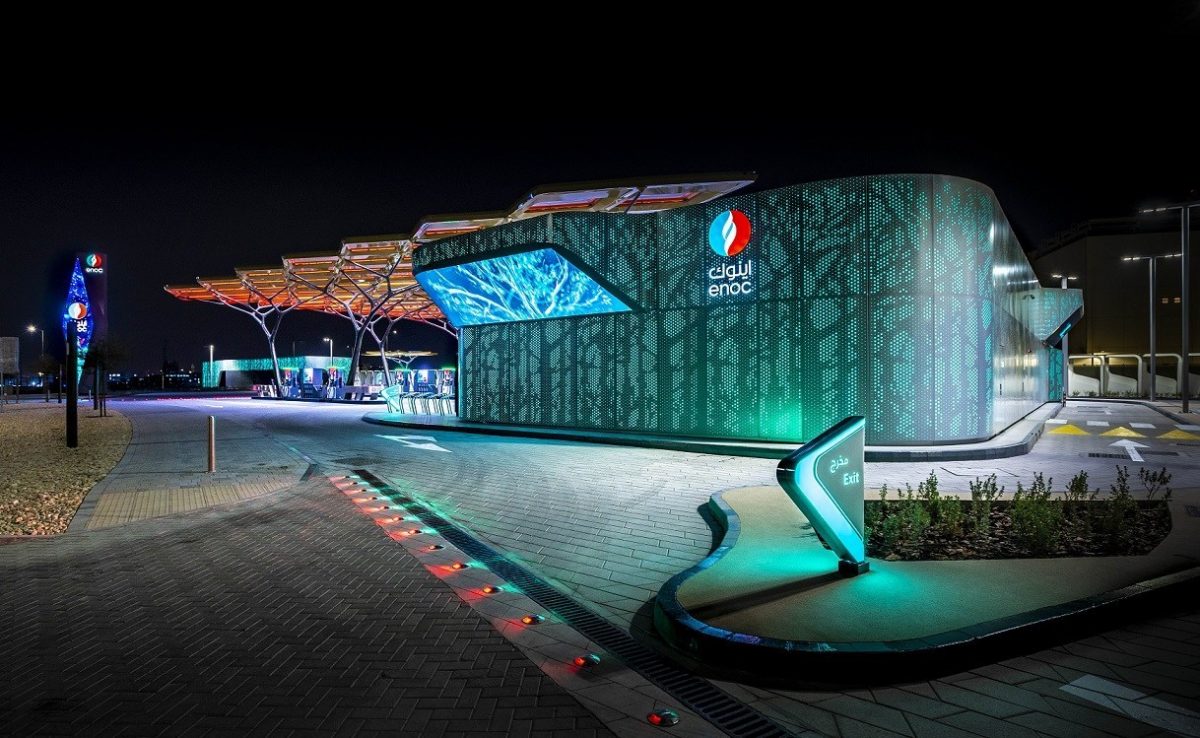
DUBAI, UAE, Feb. 22, 2021 /PRNewswire/ — ENOC Group, the Official Integrated Energy Partner of Expo 2020 Dubai, unveiled its innovatively designed Service Station of the Future, located at the Expo 2020 site.

DUBAI, UAE, Feb. 22, 2021 /PRNewswire/ — ENOC Group, the Official Integrated Energy Partner of Expo 2020 Dubai, unveiled its innovatively designed Service Station of the Future, located at the Expo 2020 site.

In addition to supporting the logistical needs of Expo 2020’s fleet ahead of the global event, it will serve the public at District 2020, the smart human-centric community that will become Expo’s physical legacy after the event concludes on 31 March 2022.

The station is the world’s first LEED Platinum certified and the region’s first to incorporate on-grid wind turbine for power generation and carbon fibre in the construction of its canopy, with the design inspired by the ghaf, UAE’s national tree.

Over 43,000m2/37 tonnes of carbon fibre have been used to build the 133 multi-layer canopy frame. The leaf-shaped ethylene tetrafluoroethylene cushion canopy is 100 per cent UV ray-protected and corrosion-proof, and illuminated with more than 3,800 LED light modules. The nine tree designs that support the station were built from another 22,500m2 of carbon fibre. Some 283 solar photovoltaic panels generate 143 MWh of solar power per year and a 25-metre wind turbine produce 12.7 MWh of wind energy annually.

Highlighting the group’s aspirations to ‘Reimagine Energy’, HE Saif Humaid Al Falasi, Group CEO, ENOC, said: «Our role as Official Integrated Energy Partner for Expo 2020 Dubai provides us the opportunity to showcase our industry and country on the global stage. The station further underlines our participation at the event. The first-of-its-kind in the world which harnesses the power of renewables, it heralds a new era in fuel retail.»

The station uses carbon filtration technologies to recycle grey water for irrigation, and has drinkable air units with ozonation techniques to convert water molecules from the air to drinkable water for staff. Machine learning, artificial intelligence and data analytics customise retail offerings, managing queue and waiting times at the forecourt, and improving the customer journey.

Vehicle mapping surface lighting direct vehicles to the fuelling area, as well as entry and exits. Over 12 million LED chips illuminate the digital screens. For enhanced safety, the station uses advanced fuel management and gauging systems, providing 24-hour leak detection.

ENOC recorded 400,000 manhours during the build process, with zero lost time injury, demonstrating its commitment to adhering to best practices in health, safety and environment.

Contact: 
Srishti Soni 
srishti.soni@bcw-global.com   
+971 506473920


Cision View original content to download multimedia:http://www.prnewswire.com/news-releases/enoc-opens-service-station-of-the-future-at-expo-2020-dubai-301232663.html

SOURCE ENOC Group

1PointFive Selects Worley for FEED on Milestone Direct Air Capture Facility

Global EPC firm Worley has been awarded the initial engineering phase of 1PointFive’s first direct air capture facility, the first commercial scale deployment of Carbon Engineering’s direct air capture technology.

HOUSTON, Feb. 22, 2021 /PRNewswire/ — 1PointFive announced today…

Global EPC firm Worley has been awarded the initial engineering phase of 1PointFive’s first direct air capture facility, the first commercial scale deployment of Carbon Engineering’s direct air capture technology.

HOUSTON, Feb. 22, 2021 /PRNewswire/ — 1PointFive announced today its selection of Worley for the Front End Engineering and Design (FEED) phase of its first direct air capture (DAC) facility in the U.S. Permian Basin—DAC 1. The project will support 1PointFive’s mission to stabilize the climate through the commercialization and deployment of Carbon Engineering’s DAC technology that captures CO2 directly from the atmosphere. DAC 1 represents the technology’s first commercial-scale deployment. This FEED agreement is the first step of an alliance between 1PointFive and Worley. The initial focus of this collaboration is on the Permian Clean Campus targeting DAC 1 through DAC 4.

This first-of-its-kind facility is taking on one of the greatest challenges of our time.

When complete, this facility will be capable of extracting one million metric tons of atmospheric CO2 annually, serving as a starting point for the acceleration of commercial-scale DAC deployment as critical infrastructure to help companies around the world meet CO2 emission reduction targets. The FEED phase for DAC 1 will focus on the first train, which will capture 500,000 metric tons of CO2 annually, and  is scheduled to begin within the next 90 days, with completion estimated by the end of 2021. Upon completion of FEED, the alliance will move into the engineering, procurement and construction (EPC) phase.  

«We partnered with Worley for this historic project because our organizations are like-minded in their vision of sustainability,» said 1PointFive Chairman Richard Jackson. «Worley has a proven track record of true innovation, and that will be essential to bring DAC to commercial scale. This first-of-its-kind facility is taking on one of the greatest challenges of our time. Our combined knowledge and expertise will not only make the project a success but also make real progress in the creation of a circular economy.»

«Partnering with 1PointFive on this project aligns perfectly with our desire to deliver a more sustainable world,» noted Worley CEO Chris Ashton. «And their vision of a circular economy that includes direct air capture has the power to drive future sustainability at the intersection of economics, energy and the environment. Climate change is a big challenge to take on. But we’ll have some of the brightest minds in the world on this historic project.»

In DAC 1’s FEED, Worley and 1PointFive will explore next-generation technology, materials and manufacturing approaches consistent with a circular economy—from recycled plastics to 3D printing and fully integrated zero-emission power. These innovations will contribute to the facilities’ sustainability and capital efficiency while creating data-driven optimization for continuous improvement of future DAC facilities.

About 1PointFive
1PointFive’s mission is to stabilize the climate by limiting global warming to 1.5 degrees Celsius or less in coming years. To make this happen, they are dedicated to the deployment and commercialization of Carbon Engineering’s proven Direct Air Capture (DAC) technology at scale—enabling the removal of atmospheric CO2 via a network of DAC facilities. More at 1PointFive.com.

About Worley
Worley is a global company headquartered in Australia and our purpose is delivering a more sustainable world. Worley is a leading global provider of professional project and asset services in the energy, chemicals and resources sectors. As a knowledge-based service provider, we use our knowledge and capabilities to support our customers to reduce their emissions and move towards a low carbon future. Visit Worley.com for more information.

About Carbon Engineering (CE):
Founded in 2009, CE is a Canadian-based clean energy company focused on the global deployment of Direct Air Capture technology that captures CO₂ directly from the atmosphere so it can be stored permanently underground, or synthesized into clean, affordable transportation fuels. From a pilot plant in Squamish, B.C., CE has been removing CO₂ from the atmosphere since 2015 and converting it into fuels since 2017. Learn more: www.carbonengineering.com.

Cision View original content to download multimedia:http://www.prnewswire.com/news-releases/1pointfive-selects-worley-for-feed-on-milestone-direct-air-capture-facility-301232059.html

SOURCE 1PointFive

World Waste-to-Energy (WtE) Market Report 2020: Thermal, Incineration, Pyrolysis, Gasification, Biological

DUBLIN, Feb. 22, 2021 /PRNewswire/ — The «Waste-to-Energy (WtE) Market – Global Industry Analysis (2017-2020). Growth Trends and Market Forecast (2021-2025)» report has been added to ResearchAndMarkets.com’s offering.

Research and Markets Logo

The global demand for waste-to-energy (WtE) market is expected to witness high surge in demand as governments across the globe invest in developing sustainable solutions for generating energy from waste.

This is being encouraged by improved awareness amongst consumers about the depletion of the non-renewable energy resources and soaring levels of pollution across land, water and air. Collectively, these factors have contributed to rise in demand for the incineration process and public waste-to-energy expenditure.

The positive approach to waste-to-energy technologies has led to its widespread acceptance in various countries. The need to cater to the rising demand of electricity consumption is also triggering the demand for these alternative technologies. Government bodies are increasingly implementing several federal laws and regulations to control usage of non-renewable energy resources. Countries are moving towards achieving the zero emission sources, bolstering the demand for the global waste-to-energy market.

However, there are certain restraints affecting the growth of the global market such as environmental hazards associated with the incineration process.

The type segment in the waste-to-energy market is segregated into thermal and biological. The thermal segment is further segmented into incineration, pyrolysis, and gasification. Among these, the incineration segment is expected to lead the global waste-to-energy market by registering a rising CAGR over the forecast period. There has been a rise in waste generation across the globe leading to increased demand for incineration process globally. This process is increasingly rising in demand as it can treat multiple types of wastes.

North America is expected to lead the global waste-to-energy market as this region has high potential due to developed economies in this region. North America has high potential for growth with steady installations of waste to energy plants. The government policies in this region are strict, adhering to the Paris Climate Change Agreement hence, bolstering demand for better alternatives of non renewable energy sources.

Europe is also expected to rise in demand during the forecast period as this region is heavily focusing on an energy system that depends lesser on fossil fuels.

Key players in the market are actively focusing on strategies such as mergers and acquisitions. There has been a rise in investment for research and development activities as investors are actively seeking reliable sources of energy conversion to create lucrative market growth opportunities.

The key players operating in the global waste-to-energy market are Covanta Energy Corporation, Veolia, Seuz Environment, China Everbright International Limited, EDF, AVR, EQT AB, Wheelabrator, Hitachi Zosen Inova AG, Babcock & Wilcox V?lund A/S, Viridor, Ramboll Group and GCL Poly.

Key Highlights

  • Rise in demand for sustainable energy sources to boost the demand for the global market.
  • Stricter government laws and regulations are forcing the key players to invest in alternative sources of energy generation.
  • The incineration segment expected to rise, owing to its ability to treat multiple types of wastes.
  • Players to focus on investing in research and development activities to stay at the top of the game.

Key Topics Covered:

1. Executive Summary
1.1. Global Waste to Energy (WtE) Market Snapshot
1.2. Future Projections
1.3. Key Market Trends
1.4. Analyst Recommendations

2. Market Overview
2.1. Market Definitions and Segmentations
2.2. Market Dynamics
2.2.1. Drivers
2.2.2. Restraints
2.2.3. Market Opportunities
2.3. Value Chain Analysis
2.4. Porter’s Five Forces Analysis
2.5. Covid-19 Impact Analysis
2.5.1. Supply Chain
2.5.2. Demand
2.6. Economic Overview
2.6.1. Microeconomic Trends
2.6.2. Macroeconomic Trends
2.7. Raw Materials Impact Analysis

3. Price Trends Analysis and Future Projects, 2017-2025
3.1. Key Highlights
3.2. By Technology/By Application
3.3. By Region

4. Global Waste to Energy (WtE) Market Outlook, 2017-2025
4.1. Global Waste to Energy (WtE) Market Outlook, by Technology, Volume (Million Tons) and Value (US$ Mn), 2017-2025
4.1.1. Key Highlights
4.1.1.1. Thermal
4.1.1.1.1. Incineration
4.1.1.1.2. Pyrolysis
4.1.1.1.3. Gasification
4.1.1.2. Biological
4.1.2. BPS Analysis/Market Attractiveness Analysis
4.2. Global Waste to Energy (WtE) Market Outlook, by Application, Volume (Million Tons) and Value (US$ Mn), 2017-2025
4.2.1. Key Highlights
4.2.1.1. Electricity Generation
4.2.1.2. Steam Exports
4.2.1.3. Combined Heat & Power (CHP)
4.2.2. BPS Analysis/Market Attractiveness Analysis
4.3. Global Waste to Energy (WtE) Market Outlook, by Region, Volume (Million Tons) and Value (US$ Mn), 2017-2025
4.3.1. Key Highlights
4.3.1.1. North America
4.3.1.2. Europe
4.3.1.3. Asia Pacific
4.3.1.4. Rest of the World (RoW)
4.3.2. BPS Analysis/Market Attractiveness Analysis

5. North America Waste to Energy (WtE) Market Outlook, 2017-2025

6. Europe Waste to Energy (WtE) Market Outlook, 2017-2025

7. Asia Pacific Waste to Energy (WtE) Market Outlook, 2017-2025

8. Rest of the World (RoW)Waste to Energy (WtE) Market Outlook, 2017-2025

9. Competitive Landscape
9.1. Company Market Share Analysis, 2019
9.2. Product Heatmap
9.3. Strategic Collaborations
9.4. Company Profiles

  • AVR
  • Babcock & Wilcox Enterprises, Inc.
  • China Everbright Environment Group Limited
  • Covanta Energy Corporation
  • EQT AB
  • Hitachi Zosen Inova AG
  • Ramboll Group
  • Sembcorp Industries
  • Seuz
  • Veolia
  • Viridor
  • Wheelabrator Technologies Inc.

For more information about this report visit https://www.researchandmarkets.com/r/44xws3

Media Contact:

Research and Markets
Laura Wood, Senior Manager
press@researchandmarkets.com

For E.S.T Office Hours Call +1-917-300-0470
For U.S./CAN Toll Free Call +1-800-526-8630
For GMT Office Hours Call +353-1-416-8900

U.S. Fax: 646-607-1907
Fax (outside U.S.): +353-1-481-1716

Cision View original content:http://www.prnewswire.com/news-releases/world-waste-to-energy-wte-market-report-2020-thermal-incineration-pyrolysis-gasification-biological-301232445.html

SOURCE Research and Markets