Bloomberg Tax Leadership Event Will Convene Tax Experts To Discuss Creative Solutions For Challenges Ahead

ARLINGTON, Va., Jan. 28, 2021 /PRNewswire/ — Bloomberg Tax & Accounting today announced a virtual event, Inspirational Leadership: Creative Solutions for the Challenges Ahead, to be held February 4, 2021. The event brings together tax leaders to discuss how they have developed creative solutions to successfully lead their tax departments and how they overcame the challenges they faced in 2020. For additional information and registration, please visit <a…

ARLINGTON, Va., Jan. 28, 2021 /PRNewswire/ — Bloomberg Tax & Accounting today announced a virtual event, Inspirational Leadership: Creative Solutions for the Challenges Ahead, to be held February 4, 2021. The event brings together tax leaders to discuss how they have developed creative solutions to successfully lead their tax departments and how they overcame the challenges they faced in 2020. For additional information and registration, please visit http://onb-tax.com/k2fS50DhFtq.  

The event brings together tax leaders to discuss how they overcame the challenges they faced in 2020.

The event begins with an interview with Sunita Lough, Deputy Commissioner for Services and Enforcement for the Internal Revenue Service, who will discuss anticipated regulatory updates as well as organizational changes under the Biden administration.

The next session, All-Star Corporate Tax Roundtable, features tax leaders who will share inspirational stories and creative solutions that might help others deal with the many challenges of our time. Panelists will discuss how the role of the tax department is changing within a business and how the wider discussions around social justice, diversity, and inclusion are influencing how tax departments work and operate today.

Additional topics include relief measures, nexus, automation, audits, quarter closing, and much more. Panelists include Aditi Banerjee, Vice President and Corporate Counsel – Tax, Prudential; Denise Bee, Head of Tax, Slack; Linda Evans, Director Global Tax Policy and Government Affairs, IBM Corporation; and Kumar Nandan, Vice President, Global Tax, PPG.

The event concludes with a keynote interview with Senator Ron Wyden (D-Oregon), Chairman of the Senate Committee on Finance, who will discuss the Committee’s agenda for the year ahead and discuss current and anticipated legislative initiatives.

Panelists will join the audience in small breakout rooms in order to continue the discussion and dive deeper into topics addressed throughout the program. Attendees are invited to share their experiences with each other.

«This interactive, virtual event offers tax professionals the opportunity to learn from tax administrators, tax policy makers, and corporate tax leaders and share perspectives and best practices with featured speakers and fellow event attendees,» said Lisa Fitzpatrick, president, Bloomberg Tax & Accounting. «Attendees can expect robust discussion about lessons learned and creative solutions to address the big and small challenges corporate tax departments face today, including navigating continuing change due to Covid-19.»

About Bloomberg Tax & Accounting
Bloomberg Tax & Accounting provides comprehensive global research, news and technology services enabling tax and accounting professionals to get the timely, accurate, and in-depth information they need to plan and comply with confidence. Our flagship Bloomberg Tax platform combines the proven expertise and perspectives of leading practitioners in our renowned Tax Management Portfolios™ with integrated news from the industry-leading Daily Tax Report®, authoritative analysis and insights, primary sources, and time-saving practice tools.  Bloomberg Tax & Accounting technology solutions streamline tax management processes and enable practitioners to tackle complex scenarios with up-to-date calculations, in-depth analytics, and projections so they can mitigate risk and maximize outcomes. For more information, visit pro.bloombergtax.com.


Cision View original content to download multimedia:http://www.prnewswire.com/news-releases/bloomberg-tax-leadership-event-will-convene-tax-experts-to-discuss-creative-solutions-for-challenges-ahead-301217485.html

SOURCE Bloomberg Tax & Accounting

Qatar National Tourism Council Announces Jason Statham Has Been Spotted Filming in Qatar

DOHA, Qatar, Jan. 28, 2021 /PRNewswire/ — Jason Statham has been spotted in Qatar as filming commences for Guy Ritchie’s upcoming spy thriller. British rapper and upcoming actor Bugzy Malone and American actor Aubrey Plaza were also pictured alongside the Hollywood star shooting scenes near Doha’s Museum of Islamic Art. Qatar National…

DOHA, Qatar, Jan. 28, 2021 /PRNewswire/ — Jason Statham has been spotted in Qatar as filming commences for Guy Ritchie’s upcoming spy thriller. British rapper and upcoming actor Bugzy Malone and American actor Aubrey Plaza were also pictured alongside the Hollywood star shooting scenes near Doha’s Museum of Islamic Art. Qatar National Tourism Council has identified the museum as a key tourist hotspot for the city in 2021.

For media-related inquiries, please contact QNTC’s Press Office on:

+974 4499 7882 or +974 3392 4466 | pressoffice@visitqatar.qa

About Qatar National Tourism Council (QNTC)

Qatar National Tourism Council’s mission is to firmly establish Qatar as a place where cultural authenticity meets modernity, and where people of the world come together to experience unique offerings in culture, sports, business and family entertainment.

QNTC’s work is guided by the Qatar National Tourism Sector Strategy (QNTSS), which seeks to diversify the country’s tourism offering and increase visitor spending.

Since launching QNTSS, Qatar has welcomed over 14 million visitors. The economic impact of the tourism sector in Qatar is becoming increasingly visible with the government designating tourism in 2017 a priority sector in pursuit of a more diverse economy and more active private sector. 

Web: www.visitqatar.qa

Twitter: @NTC_Qatar

LinkedIn: Qatar National Tourism Council

Related Images

jason-statham-has-been-spotted-in.jpg
Jason Statham has been spotted in Qatar filming

jason-statham-has-been-spotted-in.jpg
Jason Statham has been spotted in Qatar filming
Credit: Julien Scussel

jason-statham-has-been-spotted-in.jpg
Jason Statham has been spotted in Qatar filming
Credit: Julien Scussel

Biden’s EV Revolution: A boon for Electric Trucks and the Tesla Semi, says IDTechEx

BOSTON, Jan. 28, 2021 /PRNewswire/ — The electric truck market in the US is primed for huge growth. Having largely lagged behind China and Europe in electric commercial vehicle deployment, the transition to zero-emission vehicles in this sector now seems set to begin in earnest. The IDTechEx report, «Electric Truck…

BOSTON, Jan. 28, 2021 /PRNewswire/ — The electric truck market in the US is primed for huge growth. Having largely lagged behind China and Europe in electric commercial vehicle deployment, the transition to zero-emission vehicles in this sector now seems set to begin in earnest. The IDTechEx report, «Electric Truck Markets 2021-2041» contains twenty-year regional forecasts for the battery electric and fuel cell truck markets. 

Whilst the Biden presidency is only a week old, the step change that has occurred in the US Government’s attitude towards confronting climate change and reducing road transport emissions could not have been made any clearer.  Just five days into his presidency, President Biden announced that his Government is planning to replace the federal Government’s fleet of combustion engine vehicles with electric vehicles manufactured in the US, creating a million clean-energy automotive jobs, in what he described as the «largest mobilization of public investment in procurement, infrastructure and R&D since World War Two».

According to the U.S. General Services Administration (GSA), the US federal fleet comprises near 650,000 vehicles with around 100,000 medium-duty and 40,000 heavy-duty trucks in the inventory.  Whilst the strategy, funding, and timelines behind the policy are yet to be expounded upon, it is clear that the new Government sees vehicle electrification both as a strategy for reducing greenhouse gas emission (with the co-benefit of improving air quality) and for supporting the US automotive sector. 

Biden’s announcement, alongside factors such as the California Air Resources Board’s Advanced Clean Trucks regulation, which last year mandated that 75% of new Class 4-8 ridged truck and 55% of new tractor truck sales in California must be zero-emission by 2035 and growing evidence of significant demand for commercial EVs from major US corporations, should give great confidence to truck manufacturers and their supply chain that the market for electric trucks will be worth the resources and investment that is necessary to transition away from the combustion engine.  Established OEMs such as Freightliner (Daimler), Volvo, and Paccar are already conducting extensive real-world pilots of heavy-duty electric trucks; however, Biden’s support for EV should result in efforts being ramped up to get significant numbers of zero-emission trucks on the road.  

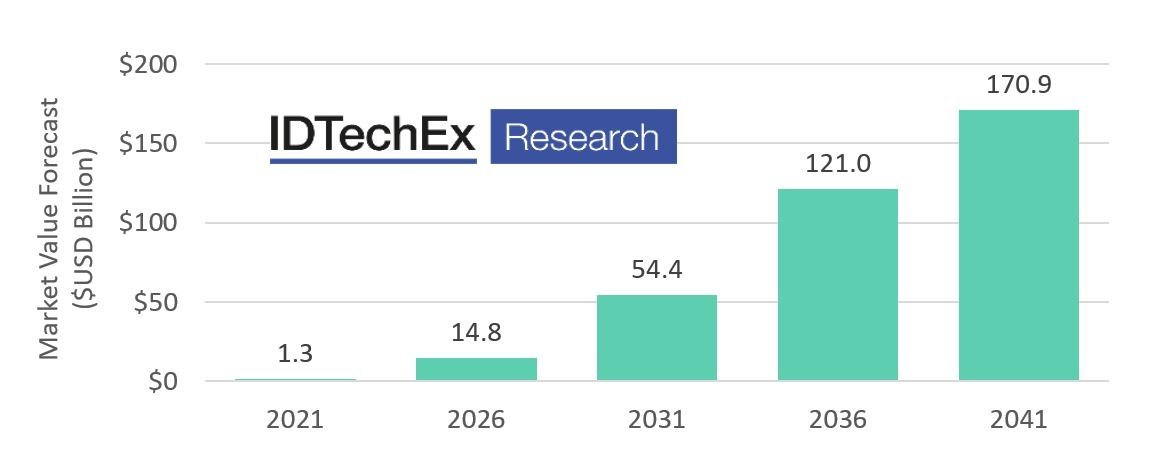
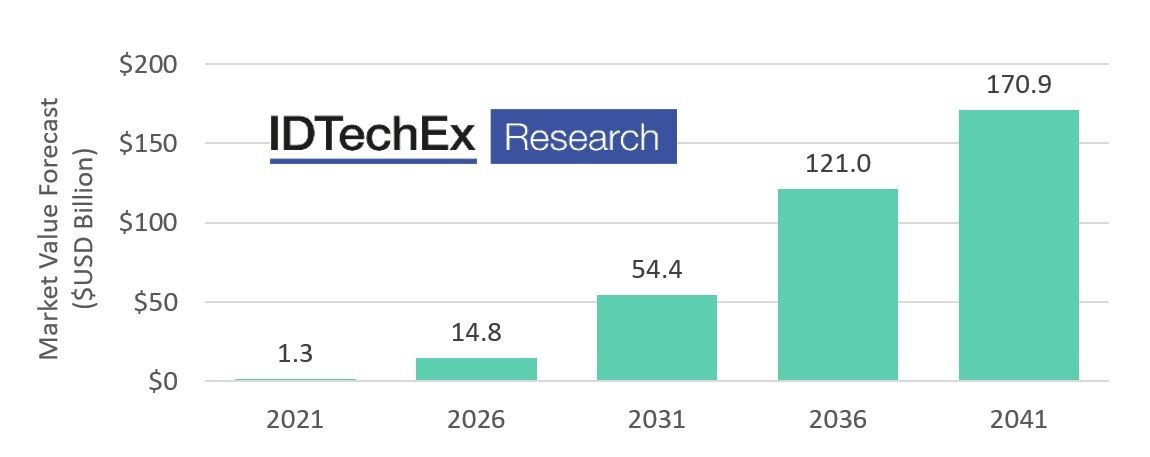
IDTechEx’s «Electric Truck Markets 2021-2041» report provides a COVID-19 adjusted, 20-year outlook for both the medium-duty (MDT) and heavy-duty truck (HDT) markets, with separate forecast lines for battery electric, plug-in hybrid (PHEV), and fuel cell M&HDTs, both at the global scale and for key regions: the US, China, and Europe. Regional forecasts are presented for electric M&HDT unit sales, battery demand (GWh), and market size value ($ billion).

A great deal of attention is given to whether battery electric trucks will be able to offer the range to make long-haul trucking applications viable with an electric powertrain.  This question will be addressed to some extent by the first delivery of Tesla Semi trucks, which at least provisionally is still penciled in for 2021 (though production timelines have slipped on multiple occasions).  While the mass of batteries required and the likely need for ultra-fast charging undoubtedly make long haul EV trucking a challenge, there is a significant market for medium and heavy-duty trucks that do not require extensive range. For example, at the Novi Battery Show, Keshav Sondhi, Director of Fleet Engineering and Sustainability at Pepsi, said that of their Class 8 trucks at their Sacramento facility, 93% operate less than 100 miles a day and are parked for 15+ hours, time which is more than adequate for charging.  The duty cycles of a large percentage of medium and heavy-duty trucks are suitable for electrification with current battery technology.  There are plenty of lower daily range applications; low hanging fruit that mean long haul is not a necessity for market growth in the short term.

Swedish heavy-duty truck and bus manufacturer Scania’s recent forecasts highlight how quickly the market is progressing around the world.  By 2025 they expect 10% of their total vehicle sales will be electric vehicles, rising to 50% of sales by 2030.  With this pace of change, manufacturers and parts suppliers not already making strong plans to transition to zero-emission powertrains are likely to find themselves left behind.         

IDTechEx’s report «Electric Truck Markets 2021-2041» (www.IDTechEx.com/eTruck) is intended to help businesses across the automotive value chain plan for the future in this changing market.  The report provides detail about industry efforts to commercialize zero-emission trucks; background to electric truck technologies, including fuel cells and electric hybridization; and discussion of key enabling technologies for electric truck deployment such as batteries, motors, and charging infrastructure.

This report forms part of the broader electric vehicle and energy storage research from IDTechEx, who track the adoption of electric vehicles, battery trends, and demand across more than 100 different mobility sectors. This is summarized in a master report: www.IDTechEx.com/EV, or for further in-depth analysis, please see the full portfolio of electric vehicle research available from IDTechEx: www.IDTechEx.com/research/EV.  

About IDTechEx

IDTechEx guides your strategic business decisions through its Research, Subscription and Consultancy products, helping you profit from emerging technologies. For more information, contact research@IDTechEx.com or visit www.IDTechEx.com.

Images download:

https://www.dropbox.com/sh/h5n1h3chitfsmk2/AABBL8M3c68sfO0di-c3ZLVLa?dl=0 

Media Contact:
Natalie Moreton
Digital Marketing Manager
press@IDTechEx.com
+44(0)1223 812300

Social Media Links:

Twitter: https://www.twitter.com/IDTechEx
LinkedIn: https://www.linkedin.com/company/idtechex/
Facebook: https://www.facebook.com/IDTechExResearch

Cision View original content to download multimedia:http://www.prnewswire.com/news-releases/bidens-ev-revolution-a-boon-for-electric-trucks-and-the-tesla-semi-says-idtechex-301217484.html

SOURCE IDTechEx

Biden’s EV Revolution: A boon for Electric Trucks and the Tesla Semi, says IDTechEx

BOSTON, Jan. 28, 2021 /PRNewswire/ — The electric truck market in the US is primed for huge growth. Having largely lagged behind China and Europe in electric commercial vehicle deployment, the transition to zero-emission vehicles in this sector now seems set to begin in earnest. The IDTechEx report, «Electric Truck…

BOSTON, Jan. 28, 2021 /PRNewswire/ — The electric truck market in the US is primed for huge growth. Having largely lagged behind China and Europe in electric commercial vehicle deployment, the transition to zero-emission vehicles in this sector now seems set to begin in earnest. The IDTechEx report, «Electric Truck Markets 2021-2041» contains twenty-year regional forecasts for the battery electric and fuel cell truck markets. 

Whilst the Biden presidency is only a week old, the step change that has occurred in the US Government’s attitude towards confronting climate change and reducing road transport emissions could not have been made any clearer.  Just five days into his presidency, President Biden announced that his Government is planning to replace the federal Government’s fleet of combustion engine vehicles with electric vehicles manufactured in the US, creating a million clean-energy automotive jobs, in what he described as the «largest mobilization of public investment in procurement, infrastructure and R&D since World War Two».

According to the U.S. General Services Administration (GSA), the US federal fleet comprises near 650,000 vehicles with around 100,000 medium-duty and 40,000 heavy-duty trucks in the inventory.  Whilst the strategy, funding, and timelines behind the policy are yet to be expounded upon, it is clear that the new Government sees vehicle electrification both as a strategy for reducing greenhouse gas emission (with the co-benefit of improving air quality) and for supporting the US automotive sector. 

Biden’s announcement, alongside factors such as the California Air Resources Board’s Advanced Clean Trucks regulation, which last year mandated that 75% of new Class 4-8 ridged truck and 55% of new tractor truck sales in California must be zero-emission by 2035 and growing evidence of significant demand for commercial EVs from major US corporations, should give great confidence to truck manufacturers and their supply chain that the market for electric trucks will be worth the resources and investment that is necessary to transition away from the combustion engine.  Established OEMs such as Freightliner (Daimler), Volvo, and Paccar are already conducting extensive real-world pilots of heavy-duty electric trucks; however, Biden’s support for EV should result in efforts being ramped up to get significant numbers of zero-emission trucks on the road.  

IDTechEx’s «Electric Truck Markets 2021-2041» report provides a COVID-19 adjusted, 20-year outlook for both the medium-duty (MDT) and heavy-duty truck (HDT) markets, with separate forecast lines for battery electric, plug-in hybrid (PHEV), and fuel cell M&HDTs, both at the global scale and for key regions: the US, China, and Europe. Regional forecasts are presented for electric M&HDT unit sales, battery demand (GWh), and market size value ($ billion).

A great deal of attention is given to whether battery electric trucks will be able to offer the range to make long-haul trucking applications viable with an electric powertrain.  This question will be addressed to some extent by the first delivery of Tesla Semi trucks, which at least provisionally is still penciled in for 2021 (though production timelines have slipped on multiple occasions).  While the mass of batteries required and the likely need for ultra-fast charging undoubtedly make long haul EV trucking a challenge, there is a significant market for medium and heavy-duty trucks that do not require extensive range. For example, at the Novi Battery Show, Keshav Sondhi, Director of Fleet Engineering and Sustainability at Pepsi, said that of their Class 8 trucks at their Sacramento facility, 93% operate less than 100 miles a day and are parked for 15+ hours, time which is more than adequate for charging.  The duty cycles of a large percentage of medium and heavy-duty trucks are suitable for electrification with current battery technology.  There are plenty of lower daily range applications; low hanging fruit that mean long haul is not a necessity for market growth in the short term.

Swedish heavy-duty truck and bus manufacturer Scania’s recent forecasts highlight how quickly the market is progressing around the world.  By 2025 they expect 10% of their total vehicle sales will be electric vehicles, rising to 50% of sales by 2030.  With this pace of change, manufacturers and parts suppliers not already making strong plans to transition to zero-emission powertrains are likely to find themselves left behind.         

IDTechEx’s report «Electric Truck Markets 2021-2041» (www.IDTechEx.com/eTruck) is intended to help businesses across the automotive value chain plan for the future in this changing market.  The report provides detail about industry efforts to commercialize zero-emission trucks; background to electric truck technologies, including fuel cells and electric hybridization; and discussion of key enabling technologies for electric truck deployment such as batteries, motors, and charging infrastructure.

This report forms part of the broader electric vehicle and energy storage research from IDTechEx, who track the adoption of electric vehicles, battery trends, and demand across more than 100 different mobility sectors. This is summarized in a master report: www.IDTechEx.com/EV, or for further in-depth analysis, please see the full portfolio of electric vehicle research available from IDTechEx: www.IDTechEx.com/research/EV.  

About IDTechEx

IDTechEx guides your strategic business decisions through its Research, Subscription and Consultancy products, helping you profit from emerging technologies. For more information, contact research@IDTechEx.com or visit www.IDTechEx.com.

Images download:

https://www.dropbox.com/sh/h5n1h3chitfsmk2/AABBL8M3c68sfO0di-c3ZLVLa?dl=0 

Media Contact:
Natalie Moreton
Digital Marketing Manager
press@IDTechEx.com
+44(0)1223 812300

Social Media Links:

Twitter: https://www.twitter.com/IDTechEx
LinkedIn: https://www.linkedin.com/company/idtechex/
Facebook: https://www.facebook.com/IDTechExResearch

Cision View original content to download multimedia:http://www.prnewswire.com/news-releases/bidens-ev-revolution-a-boon-for-electric-trucks-and-the-tesla-semi-says-idtechex-301217484.html

SOURCE IDTechEx

General Motors, the Largest U.S. Automaker, Plans to be Carbon Neutral by 2040

DETROIT, Jan. 28, 2021 /PRNewswire/ —  

  • GM plans to be carbon neutralⁱ by 2040 in its global products and operations
  • GM aspires to eliminate tailpipe emissions from new light-duty vehicles by 2035
  • GM has committed to the Business Ambition Pledge for 1.5⁰C

Today, GM announced that it plans to become carbon neutral in its global products and operations by 2040 and has committed to setting science-based targetsⁱⁱ to achieve…

DETROIT, Jan. 28, 2021 /PRNewswire/ —  

  • GM plans to be carbon neutralⁱ by 2040 in its global products and operations
  • GM aspires to eliminate tailpipe emissions from new light-duty vehicles by 2035
  • GM has committed to the Business Ambition Pledge for 1.5⁰C

Today, GM announced that it plans to become carbon neutral in its global products and operations by 2040 and has committed to setting science-based targetsⁱⁱ to achieve carbon neutrality. The company has also signed the Business Ambition Pledge for 1.5⁰C, an urgent call to action from a global coalition of UN agencies, business and industry leaders.

«General Motors is joining governments and companies around the globe working to establish a safer, greener and better world,» said Mary Barra, GM Chairman and CEO. «We encourage others to follow suit and make a significant impact on our industry and on the economy as a whole.»

In addition to GM’s carbon goals, the company worked with the Environmental Defense Fund to develop a shared vision of an all-electric future and an aspiration to eliminate tailpipe emissions from new light-duty vehicles by 2035. GM’s focus will be offering zero-emissions vehicles across a range of price points and working with all stakeholders, including EDF, to build out the necessary charging infrastructure and promote consumer acceptance while maintaining high quality jobs, which will all be needed to meet these ambitious goals.

«With this extraordinary step forward, GM is making it crystal clear that taking action to eliminate pollution from all new light-duty vehicles by 2035 is an essential element of any automaker’s business plan,» said Environmental Defense Fund President Fred Krupp. «EDF and GM have had some important differences in the past, but this is a new day in America — one where serious collaboration to achieve transportation electrification, science-based climate progress and equitably shared economic opportunity can move our nation forward.»

A Science-Based Approach

General Motors is committed to reaching carbon neutrality in its global products and operations by 2040, supported by a commitment to science-based targets. To reach its goals, GM plans to decarbonizeⁱⁱⁱ its portfolio by transitioning to battery electric vehicles or other zero-emissions vehicle technology, sourcing renewable energy and leveraging minimal offsets or creditsⁱⁱⁱⁱ.

Electrification

The use of GM’s products accounts for 75 percent of carbon emissions related to this commitment. GM will offer 30 all-electric models globally by mid-decade and 40 percent of the company’s U.S. models offered will be battery electric vehicles by the end of 2025. GM is investing $27 billion in electric and autonomous vehicles in the next five years – up from the $20 billion planned before the onset of the COVID-19 pandemic.

This investment includes the continued development of GM’s Ultium battery technology, updating facilities such as Factory ZERO in Michigan and Spring Hill Manufacturing in Tennessee to build electric vehicles from globally sourced parts and investing in new sites like Ultium Cells LLC in Ohio as well as manufacturing and STEM jobs.

More than half of GM’s capital spending and product development team will be devoted to electric and electric-autonomous vehicle programs. And in the coming years, GM plans to offer an EV for every customer, from crossovers and SUVs to trucks and sedans.

The company will also continue to increase fuel efficiency of its traditional internal combustion vehicles in accordance with regional fuel economy and greenhouse gas regulations. Some of these initiatives include fuel economy improvement technologies, such as Stop/Start, aerodynamic efficiency enhancements, downsized boosted engines, more efficient transmissions and other vehicle improvements, including mass reduction and lower rolling resistance tires.

Renewable Energy

To address emissions from its own operations, GM will source 100 percent renewable energy to power its U.S. sites by 2030 and global sites by 2035, which represents a five-year acceleration of the company’s previously announced global goal. Today, GM is the 10th largest offtaker of renewable energy in the world and in 2020, the company received a 2020 Green Power Leadership Award from the U.S. Environmental Protection Agency.

Carbon Offsets and Credits

To account for the expected remaining carbon emissions, GM expects to invest in carbon credits or offsets. The company will assess credit and offset solutions in the coming years as the most efficient, equitable and inclusive ideas mature. The company recognizes that offsets must be used sparingly and should reflect a holistic view of mitigating the effects of climate change and helping people thrive around the world.

Supply Chain and Infrastructure

GM’s carbon neutral commitment applies to its global product portfolio and owned operations. The company is implementing plans today to reduce the impact associated with its supply chain while supporting grids and utilities to power electric vehicles with renewable energy. GM has worked with some of its largest suppliers to create a sustainability council to share best practices, learn from each other and create new standards for the industry. In addition to the council’s work, GM is collaborating with suppliers to set ambitious targets for the supply chain to reduce emissions, increase transparency and source more sustainable materials.

While electric vehicles themselves do not emit tailpipe emissions, it is critical that they be charged with electricity generated from renewable sources like wind and solar. GM has worked with utilities and developers to support investments in renewable energy found in and around communities that have GM facilities via power purchase agreements and green tariffs. The company is also working with EVgo to triple the size of the nation’s largest public fast charging network by adding more than 2,700 new fast chargers by the end of 2025, a move set to help accelerate widespread electric vehicle adoption. The new fast chargers will be powered by 100 percent renewable energy. GM believes that the energy sector is well on its way to a decarbonized grid and that an all-electric future will be supported by renewable infrastructure and technology.

General Motors (NYSE:GM) is a global company focused on advancing an all-electric future that is inclusive and accessible to all. At the heart of this strategy is the Ultium battery platform, which powers everything from mass-market to high-performance vehicles. General Motors, its subsidiaries and its joint venture entities sell vehicles under the Chevrolet, Buick, GMC, Cadillac, Baojun and Wuling brands. More information on the company and its subsidiaries, including OnStar, a global leader in vehicle safety and security services, can be found at https://www.gm.com. 

Carbon neutrality is defined as achieved when anthropogenic CO2 emissions are balanced globally by anthropogenic CO2 removals over a specified period. [Source IPCC SR15]
ⁱScience-based targets provide a clearly defined pathway for companies to reduce greenhouse gas (GHG) emissions, helping prevent the worst impacts of climate change and future-proof business growth. Targets are considered ‘science-based’ if they are in line with what the latest climate science deems necessary to meet the goals of the Paris Agreement – limiting global warming to well-below 2°C above pre-industrial levels and pursuing efforts to limit warming to 1.5°C.
ⁱⁱⁱDecarbonize: In this case, companies seek to mitigate their impact on the climate by eliminating the sources of emissions within the boundary of the target. This is often achieved by avoiding activities that generate emissions (e.g. avoiding combustion of fossil fuels) and/or by preventing the release of emissions that continue to be generated (e.g. through the capture and permanent sequestration of emissions before they are released into the atmosphere).
ⁱⁱⁱⁱCarbon credits and offsets: In the context of corporate climate neutrality, offsetting refers to the balancing of emissions within the target boundary with an equivalent amount of carbon credits originated from activities that avoid or remove emissions somewhere else. Carbon credits are often issued from two types of project activities:

A. Carbon removal projects: Activities that remove and sequester atmospheric carbon as a result of a specific intervention (e.g. reforestation projects). In this case, a carbon credit is issued for every ton of carbon dioxide effectively removed and sequestered over a predefined period;
B. Avoided emission projects: Activities that result in a lower emissions scenario compared to a hypothetical business-as-usual scenario as a result of a specific intervention. A carbon credit is issued for every ton of carbon dioxide equivalent effectively avoided, in comparison to the hypothetical business-as-usual scenario, over a certain period. Some project activities can remove and avoid carbon as a result of the same intervention (e.g. REDD+ programs or projects).

Cision View original content:http://www.prnewswire.com/news-releases/general-motors-the-largest-us-automaker-plans-to-be-carbon-neutral-by-2040-301217381.html

SOURCE General Motors Co.

ISM® Makes Annual Adjustments to Seasonal Factors for ISM® Manufacturing PMI® and Diffusion Indexes and ISM® Services PMI® and Diffusion Indexes

TEMPE, Ariz., Jan. 28, 2021 /PRNewswire/ — Based on input from an independent expert, Institute for Supply Management® recently announced the completion of its annual adjustments to the seasonal factors used in the monthly Institute for Supply Management® (ISM®) Manufacturing PMI® Report On Business® and the monthly Services PMI® Report On Business®. Purchasing managers and economists who track these indexes will note that changes are effective with the <span…

TEMPE, Ariz., Jan. 28, 2021 /PRNewswire/ — Based on input from an independent expert, Institute for Supply Management® recently announced the completion of its annual adjustments to the seasonal factors used in the monthly Institute for Supply Management® (ISM®) Manufacturing PMI® Report On Business® and the monthly Services PMI® Report On Business®. Purchasing managers and economists who track these indexes will note that changes are effective with the January 2021 ISM® Manufacturing PMI® Report On Business®, which is scheduled to be released on February 1, 2021, and the January 2021 ISM® Services PMI® Report On Business®, which will be released on February 3, 2021.

NOTE: Beginning with the February 2019 report (January 2019 data), ISM® only rounds the final published numbers rather than also rounding intermediate numbers.

Seasonal adjustment factors are used to allow for the effects of repetitive intra-year variations resulting primarily from normal differences in weather conditions, various institutional arrangements, and differences attributable to non-movable holidays. It is standard practice to project the seasonal adjustment factors used to calculate the indexes one year ahead (2021).

As in previous years, the X-13-ARIMA program was used to develop the revisions to the Manufacturing and Services indexes for January 2012 through December 2020, as well as the 2021 projected seasonal factors. The 2021 seasonal factors will be recomputed when the actual data are known in early 2022. Projected seasonal factors for 2021 are shown below.

2021 Seasonal Adjustment Factors for ISM® Manufacturing Indexes

New Orders

Production

Employment

Inventories

Jan-2021

1.022

0.983

0.952

1.000

Feb-2021

1.050

0.990

0.982

1.034

Mar-2021

1.027

0.990

0.978

1.016

Apr-2021

1.095

1.063

1.001

1.017

May-2021

1.023

1.043

1.011

0.999

Jun-2021

1.015

1.048

1.075

0.992

Jul-2021

1.011

1.045

1.041

0.991

Aug-2021

0.966

0.987

1.009

1.026

Sep-2021

0.955

0.979

0.993

0.996

Oct-2021

0.984

0.987

1.014

0.998

Nov-2021

0.916

0.958

0.992

0.972

Dec-2021

0.942

0.914

0.954

0.960

To compute the PMI®:

1)  Calculate the unadjusted diffusion index for New Orders, Production, Employment and Inventories to two decimal places. Supplier Deliveries (which are not seasonally adjusted) it will be percent slower plus one half of the percent same or unchanged.

2)  Divide each unadjusted diffusion index by its seasonal factor (round to one decimal place).

3)  Add all five index numbers together and divide by five.

To compute other indexes, follow steps #1 and #2 above for each indicator.

2021 Seasonal Adjustment Factors for ISM® Services Indexes

Business
Activity

New Orders

Employment

Prices

Jan-2021

0.927

0.911

0.956

0.991

Feb-2021

1.006

1.049

0.969

0.978

Mar-2021

0.966

0.960

0.974

1.020

Apr-2021

1.120

1.100

1.001

1.023

May-2021

1.034

1.034

1.020

1.026

Jun-2021

1.032

1.029

1.070

1.017

Jul-2021

1.039

1.033

1.023

1.007

Aug-2021

0.970

0.944

0.979

0.995

Sep-2021

1.045

1.042

1.025

1.019

Oct-2021

0.984

0.968

1.011

0.996

Nov-2021

0.942

0.976

0.987

0.986

Dec-2021

0.925

0.944

0.984

0.946

To compute the Services PMI®:

1)  Calculate the unadjusted diffusion index for Business Activity, New Orders and Employment to two decimal places (percent higher or up plus one half of the percent same or unchanged). For Supplier Deliveries, it will be percent slower plus one half of the percent same or unchanged.

2)  Divide each unadjusted diffusion index by its seasonal factor (round to one decimal place).

3)  Add all four index numbers together and divide by four.

To compute other indexes, follow steps #1 and #2 above for each indicator.

The revised breakeven point for the overall economy is a PMI® of 43.1 percent. A PMI® over 43.1 percent indicates an expanding overall economy. A PMI® below 43.1 percent indicates the overall economy is declining.

The revised breakeven point for the overall economy is a Services PMI® of 49.2 percent. A Services PMI® over 49.2 percent indicates an expanding overall economy. A Services PMI® below 49.2 percent indicates the overall economy is declining.

About ISM® Report On Business®
The ISM® Report On Business® is considered by many economists to be the most reliable near-term economic barometer available. It is reviewed regularly by top government agencies and economic and business leaders for its timely, accurate information. The Manufacturing and Non-Manufacturing ISM® Report On Business® is published monthly by Institute for Supply Management®. Each month, both reports are compiled from responses to questions asked of purchasing and supply executives across the country and reflects change, if any, in the current month compared to previous months.

About Institute for Supply Management®
Institute for Supply Management® (ISM®) serves supply management professionals in more than 90 countries. Its 50,000 members around the world manage about $1 trillion in corporate and government supply chain procurement annually. Founded in 1915 as the first supply management institute in the world, ISM® is committed to advancing the practice of supply management to drive value and competitive advantage for its members, contributing to a prosperous and sustainable world. ISM® leads the profession through the ISM® Report On Business®, its highly regarded certification programs and the ISM® Mastery Model™. This report has been issued by the association since 1931, except for a four-year interruption during World War II.

Contact:

Kristina Cahill

Research Manager

Report On Business® Analyst

Tempe, Arizona

800/888-6276, Ext. 3015

kcahill@ismworld.org


Institute for Supply Management logo. (PRNewsFoto/Institute for Supply Management)


Cision View original content to download multimedia:http://www.prnewswire.com/news-releases/ism-makes-annual-adjustments-to-seasonal-factors-for-ism-manufacturing-pmi-and-diffusion-indexes-and-ism-services-pmi-and-diffusion-indexes-301216777.html

SOURCE Institute for Supply Management

Upstream Tech Announces a Partnership for Forecasting Technology with ENGIE in 2021

SAN FRANCISCO, Jan. 28, 2021 /PRNewswire/ — Upstream Tech, a for-purpose environmental technology company, today announced its partnership with ENGIE, a global reference in low-carbon energy and services, to provide inflow forecasting for the company’s newly acquired hydroelectric portfolio in <span…

SAN FRANCISCO, Jan. 28, 2021 /PRNewswire/ — Upstream Tech, a for-purpose environmental technology company, today announced its partnership with ENGIE, a global reference in low-carbon energy and services, to provide inflow forecasting for the company’s newly acquired hydroelectric portfolio in Portugal.

Upstream Tech’s HydroForecast™ is an end-to-end modeling and decision support service that combines physical theory with AI and satellite imagery to provide accurate and reliable hydrological forecasts anywhere on Earth. These forecasts contain the future expected conditions of surface water flows, such as how much water will flow into a lake over the next 10 days, enabling hydropower asset owners to more effectively plan operations.

«ENGIE is a leader when it comes to research and innovation,» said Marshall Moutenot, co-founder of Upstream Tech. «We are excited to embark on this project with their team and explore how HydroForecast™ can improve these assets’ operational efficiency and coordination with other renewable generation.»

ENGIE’s purpose is to act to accelerate the transition towards a carbon-neutral world, through reduced energy consumption and more environmentally-friendly solutions. Part of the Douro river system, ENGIE’s newly acquired hydroelectric facilities consist of three cascade run-of-river plants and three pump-storage plants. ENGIE has a longstanding presence in Spain, and is today a significant energy player in the country.

In recent years, ENGIE has been developing and growing in Iberia mainly through landmark renewable projects such as Goya and Phoenix (onshore wind), Seneca (solar PV) and acquisition of these Douro assets is part of ENGIE’s strategy towards carbon-neutrality, adding 1.7GW of renewable generation capacity. These assets will be optimized by ENGIE’s teams dedicated to global energy management, from Madrid. HydroForecast™ will enable the assets to maximize operational efficiency, grid coordination, and consideration of downstream needs. Upstream Tech has raised the attention of ENGIE thanks to their innovative approach for hydrological forecast and the positive spirit of the team. The first results have already shown an improved accuracy compared to historical providers.

About Upstream Tech
Upstream Tech is a US-based public benefit corporation that builds environmental decision-support technologies. Upstream Tech is a subsidiary of Natel Energy with a team from a diverse range of backgrounds including machine learning engineering, hydrology, distributed computing/computer science, water resource engineering, and conservation finance. This range of expertise enables Upstream Tech to harness technological advancements in remote sensing, computer science, and machine learning to create technologies and services that support complex and multi-stakeholder processes.

Cision View original content to download multimedia:http://www.prnewswire.com/news-releases/upstream-tech-announces-a-partnership-for-forecasting-technology-with-engie-in-2021-301217174.html

SOURCE Upstream Tech

General Motors, the Largest U.S. Automaker, Plans to be Carbon Neutral by 2040

DETROIT, Jan. 28, 2021 /PRNewswire/ —  

  • GM plans to be carbon neutralⁱ by 2040 in its global products and operations
  • GM aspires to eliminate tailpipe emissions from new light-duty vehicles by 2035
  • GM has committed to the Business Ambition Pledge for 1.5⁰C

Today, GM announced that it plans to become carbon neutral in its global products and operations by 2040 and has committed to setting science-based targetsⁱⁱ to achieve…

DETROIT, Jan. 28, 2021 /PRNewswire/ —  

  • GM plans to be carbon neutralⁱ by 2040 in its global products and operations
  • GM aspires to eliminate tailpipe emissions from new light-duty vehicles by 2035
  • GM has committed to the Business Ambition Pledge for 1.5⁰C

Today, GM announced that it plans to become carbon neutral in its global products and operations by 2040 and has committed to setting science-based targetsⁱⁱ to achieve carbon neutrality. The company has also signed the Business Ambition Pledge for 1.5⁰C, an urgent call to action from a global coalition of UN agencies, business and industry leaders.

«General Motors is joining governments and companies around the globe working to establish a safer, greener and better world,» said Mary Barra, GM Chairman and CEO. «We encourage others to follow suit and make a significant impact on our industry and on the economy as a whole.»

In addition to GM’s carbon goals, the company worked with the Environmental Defense Fund to develop a shared vision of an all-electric future and an aspiration to eliminate tailpipe emissions from new light-duty vehicles by 2035. GM’s focus will be offering zero-emissions vehicles across a range of price points and working with all stakeholders, including EDF, to build out the necessary charging infrastructure and promote consumer acceptance while maintaining high quality jobs, which will all be needed to meet these ambitious goals.

«With this extraordinary step forward, GM is making it crystal clear that taking action to eliminate pollution from all new light-duty vehicles by 2035 is an essential element of any automaker’s business plan,» said Environmental Defense Fund President Fred Krupp. «EDF and GM have had some important differences in the past, but this is a new day in America — one where serious collaboration to achieve transportation electrification, science-based climate progress and equitably shared economic opportunity can move our nation forward.»

A Science-Based Approach

General Motors is committed to reaching carbon neutrality in its global products and operations by 2040, supported by a commitment to science-based targets. To reach its goals, GM plans to decarbonizeⁱⁱⁱ its portfolio by transitioning to battery electric vehicles or other zero-emissions vehicle technology, sourcing renewable energy and leveraging minimal offsets or creditsⁱⁱⁱⁱ.

Electrification

The use of GM’s products accounts for 75 percent of carbon emissions related to this commitment. GM will offer 30 all-electric models globally by mid-decade and 40 percent of the company’s U.S. models offered will be battery electric vehicles by the end of 2025. GM is investing $27 billion in electric and autonomous vehicles in the next five years – up from the $20 billion planned before the onset of the COVID-19 pandemic.

This investment includes the continued development of GM’s Ultium battery technology, updating facilities such as Factory ZERO in Michigan and Spring Hill Manufacturing in Tennessee to build electric vehicles from globally sourced parts and investing in new sites like Ultium Cells LLC in Ohio as well as manufacturing and STEM jobs.

More than half of GM’s capital spending and product development team will be devoted to electric and electric-autonomous vehicle programs. And in the coming years, GM plans to offer an EV for every customer, from crossovers and SUVs to trucks and sedans.

The company will also continue to increase fuel efficiency of its traditional internal combustion vehicles in accordance with regional fuel economy and greenhouse gas regulations. Some of these initiatives include fuel economy improvement technologies, such as Stop/Start, aerodynamic efficiency enhancements, downsized boosted engines, more efficient transmissions and other vehicle improvements, including mass reduction and lower rolling resistance tires.

Renewable Energy

To address emissions from its own operations, GM will source 100 percent renewable energy to power its U.S. sites by 2030 and global sites by 2035, which represents a five-year acceleration of the company’s previously announced global goal. Today, GM is the 10th largest offtaker of renewable energy in the world and in 2020, the company received a 2020 Green Power Leadership Award from the U.S. Environmental Protection Agency.

Carbon Offsets and Credits

To account for the expected remaining carbon emissions, GM expects to invest in carbon credits or offsets. The company will assess credit and offset solutions in the coming years as the most efficient, equitable and inclusive ideas mature. The company recognizes that offsets must be used sparingly and should reflect a holistic view of mitigating the effects of climate change and helping people thrive around the world.

Supply Chain and Infrastructure

GM’s carbon neutral commitment applies to its global product portfolio and owned operations. The company is implementing plans today to reduce the impact associated with its supply chain while supporting grids and utilities to power electric vehicles with renewable energy. GM has worked with some of its largest suppliers to create a sustainability council to share best practices, learn from each other and create new standards for the industry. In addition to the council’s work, GM is collaborating with suppliers to set ambitious targets for the supply chain to reduce emissions, increase transparency and source more sustainable materials.

While electric vehicles themselves do not emit tailpipe emissions, it is critical that they be charged with electricity generated from renewable sources like wind and solar. GM has worked with utilities and developers to support investments in renewable energy found in and around communities that have GM facilities via power purchase agreements and green tariffs. The company is also working with EVgo to triple the size of the nation’s largest public fast charging network by adding more than 2,700 new fast chargers by the end of 2025, a move set to help accelerate widespread electric vehicle adoption. The new fast chargers will be powered by 100 percent renewable energy. GM believes that the energy sector is well on its way to a decarbonized grid and that an all-electric future will be supported by renewable infrastructure and technology.

General Motors (NYSE:GM) is a global company focused on advancing an all-electric future that is inclusive and accessible to all. At the heart of this strategy is the Ultium battery platform, which powers everything from mass-market to high-performance vehicles. General Motors, its subsidiaries and its joint venture entities sell vehicles under the Chevrolet, Buick, GMC, Cadillac, Baojun and Wuling brands. More information on the company and its subsidiaries, including OnStar, a global leader in vehicle safety and security services, can be found at https://www.gm.com. 

Carbon neutrality is defined as achieved when anthropogenic CO2 emissions are balanced globally by anthropogenic CO2 removals over a specified period. [Source IPCC SR15]
ⁱScience-based targets provide a clearly defined pathway for companies to reduce greenhouse gas (GHG) emissions, helping prevent the worst impacts of climate change and future-proof business growth. Targets are considered ‘science-based’ if they are in line with what the latest climate science deems necessary to meet the goals of the Paris Agreement – limiting global warming to well-below 2°C above pre-industrial levels and pursuing efforts to limit warming to 1.5°C.
ⁱⁱⁱDecarbonize: In this case, companies seek to mitigate their impact on the climate by eliminating the sources of emissions within the boundary of the target. This is often achieved by avoiding activities that generate emissions (e.g. avoiding combustion of fossil fuels) and/or by preventing the release of emissions that continue to be generated (e.g. through the capture and permanent sequestration of emissions before they are released into the atmosphere).
ⁱⁱⁱⁱCarbon credits and offsets: In the context of corporate climate neutrality, offsetting refers to the balancing of emissions within the target boundary with an equivalent amount of carbon credits originated from activities that avoid or remove emissions somewhere else. Carbon credits are often issued from two types of project activities:

A. Carbon removal projects: Activities that remove and sequester atmospheric carbon as a result of a specific intervention (e.g. reforestation projects). In this case, a carbon credit is issued for every ton of carbon dioxide effectively removed and sequestered over a predefined period;
B. Avoided emission projects: Activities that result in a lower emissions scenario compared to a hypothetical business-as-usual scenario as a result of a specific intervention. A carbon credit is issued for every ton of carbon dioxide equivalent effectively avoided, in comparison to the hypothetical business-as-usual scenario, over a certain period. Some project activities can remove and avoid carbon as a result of the same intervention (e.g. REDD+ programs or projects).

Cision View original content:http://www.prnewswire.com/news-releases/general-motors-the-largest-us-automaker-plans-to-be-carbon-neutral-by-2040-301217381.html

SOURCE General Motors Co.

Pointsbet Offering Exclusive «Big Game Goat Insurance» For Chiefs Vs. Buccaneers

DENVER, Jan. 28, 2021 /PRNewswire/ — PointsBet, a premier global sportsbook operator and leader in bettor-friendly initiatives, announced today it will be exclusively offering «Big Game GOAT Insurance» for all clients on the upcoming NFL Championship between the Kansas City Chiefs and the Tampa Bay Buccaneers on <span…

DENVER, Jan. 28, 2021 /PRNewswire/ — PointsBet, a premier global sportsbook operator and leader in bettor-friendly initiatives, announced today it will be exclusively offering «Big Game GOAT Insurance» for all clients on the upcoming NFL Championship between the Kansas City Chiefs and the Tampa Bay Buccaneers on Sunday, February 7.

At the conclusion of the contest, PointsBet will refund any losing moneyline wager with up to $50 in Free Bets, so long as your selected team loses by a margin of 43 points or less. In a matchup that will feature two of the game’s very best under center, the 43-point margin represents the age of Tampa Bay quarterback Tom Brady, arguably the greatest of all time, as he prepares to duel the young phenom Patrick Mahomes

In addition to «Big Game GOAT Insurance,» PointsBet is also offering other special promotions. Back by popular demand, PointsBet’s «No Juice» campaign has returned for the fourth consecutive weekend of the NFL Playoffs, offering spreadline prices on either side of the NFL Championship game at even money +100 odds. The week-long promotional market was made live on Monday, January 25, and will expire this Sunday, January 31, at 11:59 p.m. ET.

PointsBet has also boosted the odds for Chiefs quarterback, and last season’s NFL Championship MVP, Patrick Mahomes, to repeat as MVP this year. As part of a promotion that will be available until kickoff, PointsBet is offering Mahomes to win MVP at very favorable +110 odds, boosted from -110.

Finally, PointBet will unveil «Twilight Boosters» for the NFL Championship every night from 5 to 7 p.m. ET in the leadup to kickoff. Twilight Boosters will vary, so be sure to check out the promos section on the PointsBet app or companion website for the NFL Title Game Booster of the Night.

For last year’s NFL Championship, PointsBet offered over 700 different bet types with nearly 4,000 total outcomes – the most of any sportsbook operator in the world. As PointsBet sits in the rare position of truly owning and controlling their technology system from end-to-end, thus dictating their own product, PointsBet will strive to outpace competing sportsbooks once more to deliver the deepest and most differentiated way to wager on the upcoming NFL Championship.

About PointsBet
PointsBet is one of the fastest growing sportsbooks in the country and is rapidly expanding its U.S. footprint, currently bringing its best-in-class proprietary technology, modernized and premium brand mentality, expert trading practices, and proven growth marketing strategies to the burgeoning sports betting markets of Colorado, Illinois, Indiana, Iowa, Michigan, and New Jersey. Originally founded in Australia, PointsBet is a cutting-edge bookmaker that prides itself on having the quickest and most user-friendly app (iOS and Android) while also providing the best content and experience for sports bettors. PointsBet is the only U.S. online bookmaker to offer PointsBetting – a unique and innovative way to bet – and has also introduced a slew of well-received, bettor-first initiatives, including: Good Karma Payouts, which provides bettors relief in the event of unlikely circumstances that sway the fate of the game, and Early Payouts. PointsBet offers the most markets on all four major U.S. sports (NFL, NBA, MLB, NHL) and PointsBetting in the world. For more information, visit www.PointsBet.com.

Media Contact
Patrick Eichner
Director of Communications, PointsBet
(908) 723-4341
patrick.eichner@pointsbet.com 

Cision View original content to download multimedia:http://www.prnewswire.com/news-releases/pointsbet-offering-exclusive-big-game-goat-insurance-for-chiefs-vs-buccaneers-301217466.html

SOURCE PointsBet

INTELITY Collaborates with The Leading Hotels of the World to Develop Custom Mobile App and Guest Experience Platform for Brand and Member Hotels

LOS ANGELES, Jan. 28, 2021 /PRNewswire-PRWeb/ — INTELITY®, the developer of hospitality’s broadest guest experience platform, announced today a new collaboration with <a target="_blank"…

LOS ANGELES, Jan. 28, 2021 /PRNewswire-PRWeb/ — INTELITY®, the developer of hospitality’s broadest guest experience platform, announced today a new collaboration with The Leading Hotels of the World (Leading Hotels). The relationship will launch the INTELITY platform worldwide with the future development of a Leading Hotels mobile app. The app will be customer-facing and specifically designed for Leaders Club loyalty members by catering to their needs at Leading Hotels’ more than 400 properties across 80 countries. The collaboration also includes preferred options for Leading Hotels’ members to partner with INTELITY for an app completely customized for their property.

The need for contactless and digitized offerings have become critical in the hospitality industry. Smartphones and other mobile devices are changing the way the hospitality industry communicates with and serves its customers. Now, Leading Hotels is paving the way for its hotels to deliver a more personalized and tech-enabled guest experience. This is an important measure to engage with guests who have become accustomed to mobile convenience, streamlined service, and contactless options in every aspect of their travel journey.

«We are pleased to collaborate with INTELITY, a leader in the hospitality technology space,» said Phil Koserowski, Vice President, Digital Product Development and Marketing, The Leading Hotels of the World. «The relationship provides our more than 400 hotel members with preferred access to INTELITY’s guest experience and staff management platform. It will allow for our hotels to work with INTELITY to create their own apps, along with LHW brand level support and digital expertise. This effort will further digitize and enhance key touchpoints of the customer journey and complement the high-touch service that our skilled hoteliers already provide.»

In addition to the development of a Leading Hotels brand app, each of the individual member properties will also have the option to partner with INTELITY for an app completely customized to their property. As properties implement their own apps, they’ll be able to deliver further contactless safety measures and mobile capabilities for guests and staff.

«Leading Hotels is well known for their engaging experiences, uncompromising guest service, and large portfolio of unique member properties around the world,» remarked INTELITY CEO Robert Stevenson. «It’s an honor to work with such a prestigious brand. With the new Leading Hotels mobile app and our partnerships with member hotels, we’re excited to significantly elevate the digital guest experience across the brand.»

In tandem with its Healthy Stays commitment to provide enhanced cleanliness standards and protocols for more than 400 worldwide members, Leading Hotels’ future mobile app developed by INTELITY will enable the company to continue to deliver the highest standards for guests. As guests slowly return to travel, the curated collection of independent and uncommon luxury properties will welcome back guests with the first-class service the company is known for, supplemented by the mobile-first digital capabilities provided by INTELITY. For more information on this collaboration or the INTELITY platform, visit http://www.intelity.com.

About INTELITY
INTELITY is the global leader in contactless guest experience technology, uniting mobile, in-room, and operational tools into one fully-integrated hospitality platform. Built for the hotel, casino, and luxury residential markets, INTELITY has been named the «Official Mobile and In-Room Technology Provider» by the distinguished Forbes Travel Guide in 2017, 2018, 2019, and 2020, and is in use at boutique properties, casino-resorts, and global hotel brands, including Marriott, Fairmont, Hard Rock, and more. For more information, visit http://www.intelity.com.

About The Leading Hotels of the World, Ltd. (Leading Hotels)
Comprised of more than 400 hotels in over 80 countries, Leading Hotels is a collection of uncommon luxury hotels. Rooted in the locations in which they are found, members embody the very essence of their destination. Through varied styles of architecture and design and distinct cultural experiences enhanced by passionate people, the collection is for the curious traveler looking for their next discovery. Established in 1928 by several influential and forward-thinking European hoteliers, Leading Hotels has a more than nine-decade-long commitment to providing remarkable, authentic travel experiences. The company selects only hotels that meet its high standards for quality and distinctiveness, resulting in a curated portfolio of hotels united not by what makes them the same, but the details that make them different. Leaders Club is the company’s exclusive tiered guest loyalty program, consisting of like-minded travelers seeking uncommon travel experiences. The program provides its members with personalized service and exclusive travel benefits to enhance their stays at any Leading Hotel around the world. For more information visit: http://www.lhw.com, Facebook @LeadingHotels, Twitter @LeadingHotels, and Instagram @leadinghotelsoftheworld.

Media Contact

Hannah Scott, INTELITY, 3105968160, hannah.scott@intelity.com

Twitter


SOURCE INTELITY