Report: As Social Challenges Intensify Due to COVID-19, Companies Can Help Through Disaster Response Programs

NEW YORK, Dec. 17, 2020 /PRNewswire/ –A new report by The Conference Board outlines how companies can strengthen their philanthropy programs to respond to natural disasters – from the COVID-19 pandemic to hurricanes, earthquakes, and fires. Among the findings, companies are shifting their resources from disaster relief to preparedness. As they do so, companies have an opportunity to mitigate the disparate impact that natural disasters have on disadvantaged communities. 

<div…

NEW YORK, Dec. 17, 2020 /PRNewswire/ –A new report by The Conference Board outlines how companies can strengthen their philanthropy programs to respond to natural disasters – from the COVID-19 pandemic to hurricanes, earthquakes, and fires. Among the findings, companies are shifting their resources from disaster relief to preparedness. As they do so, companies have an opportunity to mitigate the disparate impact that natural disasters have on disadvantaged communities. 

These findings and more are from Disaster Philanthropy Practices: 2020 Edition. The report presents findings from a survey of more than 100 corporate citizenship professionals and draws upon additional research conducted by The Conference Board.

Select findings from the new report include:

While most funding is allocated to relief, many companies are prioritizing disaster preparedness.

  • While relief continues to be the response of choice for companies, preparedness now ranks second, moving up from fourth in the 2019 edition of this report.

«Looking ahead, we expect the transition from relief to preparedness to accelerate,» said Robert Schwarz, Senior Researcher at The Conference Board ESG Center. «This shift is being driven by the increased frequency, intensity, and magnitude of natural disasters, along with companies seeing that preparedness can be more cost efficient than relief.»

Companies’ involvement in disaster philanthropy is mainly driven by their commitment to corporate citizenship and local communities. Those priorities were cited by 61 percent of respondents.

  • By comparison, 19 percent said their company’s involvement in disaster philanthropy is driven by an expectation set by their CEO and/or business units.
  • Just 12 percent view it as an expectation set by their employees.

«Much like Hurricane Katrina 15 years ago, the COVID-19 pandemic has—on a much larger scale—highlighted the disparate impact that natural disasters can have,» said Paul Washington, Executive Director of The Conference Board ESG Center. «Companies should consider incorporating an assessment of the impact a disaster has on disadvantaged populations into their disaster response protocols. They should also consider how they can partner with local organizations devoted to economic, health, and racial equality in planning for, and responding to, natural disasters.»

Due to COVID-19 related restrictions, much of the workforce will likely continue volunteering virtually for an extended period.

  • Many companies have been or are transitioning to virtual volunteering. However, research from The Conference Board shows that opportunities are insufficient to meet employee demand, especially when it comes to skills-based programs.
  • Companies will want to continue to innovate in response to these challenges, including developing more skills-based virtual volunteering programs that align employees’ areas of expertise with nonprofit/NGO partners and other entities dedicated to responding to disasters.

«Virtual volunteering programs can be designed to enable employees to help not just with immediate relief efforts, but also with the other phases of disaster preparedness, recovery, and rebuilding,» noted Jeff Hoffman, Leader of The Conference Board Corporate Citizenship & Philanthropy Institute. «Virtual volunteering not only supports the shift of corporate disaster philanthropy toward preparedness, but also enables more employees to volunteer, deepens the company’s involvement in disaster philanthropy on an ongoing (not just periodic) basis, and increases the impact of the company’s efforts.»

An increasing number of companies will likely seek to collaborate more with each other, given the challenges disaster response programs are facing – especially during this pandemic.

  • The skills, expertise, and capacity that multiple partners bring can increase the scale and scope of any individual company’s response. The case for such collaboration is strengthened by the increased frequency and severity of natural disasters, and it can go hand-in-hand with the shift toward disaster preparedness. 

About The Conference Board
The Conference Board is the member-driven think tank that delivers trusted insights for what’s ahead. Founded in 1916, we are a non-partisan, not-for-profit entity holding 501 (c) (3) tax-exempt status in the United States. www.conference-board.org

Cision View original content to download multimedia:http://www.prnewswire.com/news-releases/report-as-social-challenges-intensify-due-to-covid-19-companies-can-help-through-disaster-response-programs-301195417.html

SOURCE The Conference Board

SeaWorld, Pacific Marine Mammal Center, and University of Florida Establish Health Markers for Dolphins to Support the Health of the Species around the World

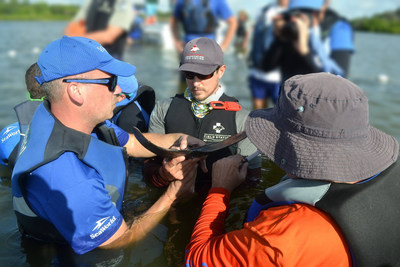
SAN DIEGO, Dec. 17, 2020 /PRNewswire/ — Following SeaWorld’s 2019 publication of a foundational study that created first-ever standards for assessing the health of killer whales, this same team of veterinarians from SeaWorld, the Pacific Marine Mammal Center, and the University of Florida College of Veterinary Medicine has published a similar study about dolphin health in

SAN DIEGO, Dec. 17, 2020 /PRNewswire/ — Following SeaWorld’s 2019 publication of a foundational study that created first-ever standards for assessing the health of killer whales, this same team of veterinarians from SeaWorld, the Pacific Marine Mammal Center, and the University of Florida College of Veterinary Medicine has published a similar study about dolphin health in Veterinary Quarterly. Using data from 1,426 blood samples collected as part of SeaWorld’s routine preventative medicine program from 156 healthy bottlenose dolphins at SeaWorld Orlando, San Antonio, and San Diego parks, experts were able to define health benchmarks that can be used by other veterinarians and conservation biologists to help improve the diagnosis of health, disease, and stressors of wild dolphin populations.

Bottlenose dolphins in the United States are protected under the Marine Mammal Protection Act because they are vulnerable to many threats. These can include disease, biotoxin, pollution, habitat alteration, interactions with commercial and recreational fishing, energy exploration and oil spills, and other types of human disturbance (such as underwater noise).

«It is very difficult to assess the health of a wildlife species, to in turn be able to help them, because they are typically very challenging to access and their individual histories are largely unknown,» said Dr. Hendrik Nollens, Pacific Marine Mammal Center’s Vice President of Conservation Medicine and Science and study lead author. «Our study not only reports on what normal looks like in a large population of healthy dolphins with a known medical history, but we also compare what normal looks like across several populations of dolphins, both in human care and in the wild. SeaWorld has uniquely equipped, on-site veterinary diagnostic laboratories that generate high quality health data that can be shared with the scientific community.»

Similar to the earlier report on standards for assessing health in killer whales, the ability to collect blood-based health data of dolphins in a reliable, controlled manner provides a unique opportunity for scientists to understand the species’ physiology. The results of managed population studies are also very valuable because veterinarians can conduct longer-term follow-up of those same dolphins to track their known age, health, reproductive and nutritional statuses. Not only are dolphins able to participate in such studies as part of their routine preventative medical care at SeaWorld, they are trained to participate in their health care such as presenting the underside of their tail – or fluke – so a veterinary professional can draw a blood sample.

«We had the opportunity to work closely with one of our former undergraduate students on this research study,» said Dr. Nicole Stacy, Clinical Assistant Professor of Aquatic, Amphibian and Reptile Pathology, College of Veterinary Medicine, University of Florida. «The dataset was very unique given the number of animals in the study and their broad age range, which in turn provides many applications for the results to benefit cetacean research and conservation.»

«Similar to how your primary care doctor checks your weight, blood pressure and overall health and compares the results against a benchmark for human health, this research provides the same benefit to the dolphin population,» said Dr. Todd Robeck, SeaWorld Vice President of Conservation Research and study author. «We need to find ways to take better care of the animals in our oceans through research, rescue, animal care and conservation efforts, and my research partners and I are happy to share the results of this study with other scientists and animal welfare experts around the world to help do this.»

About SeaWorld Entertainment, Inc.

SeaWorld Entertainment, Inc. (NYSE: SEAS) is a leading theme park and entertainment company providing experiences that matter, and inspiring guests to protect animals and the wild wonders of our world. The Company is one of the world’s foremost zoological organizations and a global leader in animal welfare, training, husbandry and veterinary care. The Company collectively cares for one of the largest zoological collections in the world and has helped lead advances in the care of animals. The Company also rescues and rehabilitates marine and terrestrial animals that are ill, injured, orphaned or abandoned, with the goal of returning them to the wild. The SeaWorld® rescue team has helped more than 36,000 animals in need over the Company’s history.  SeaWorld Entertainment, Inc. owns or licenses a portfolio of recognized brands including SeaWorld®, Busch Gardens®, Aquatica®, Sesame Place® and Sea Rescue®. Over its more than 60-year history, the Company has built a diversified portfolio of 12 destination and regional theme parks that are grouped in key markets across the United States, many of which showcase its one-of-a-kind zoological collection. The Company’s theme parks feature a diverse array of rides, shows and other attractions with broad demographic appeal which deliver memorable experiences and a strong value proposition for its guests.

Copies of this and other news releases as well as additional information about SeaWorld Entertainment, Inc. can be obtained online at www.seaworldentertainment.com. Shareholders and prospective investors can also register to automatically receive the Company’s press releases, SEC filings and other notices by e-mail by registering at that website.

About Pacific Marine Mammal Center

The Pacific Marine Mammal Center rescues, rehabilitates and releases marine mammals and inspires ocean stewardship through research, education and collaboration. PMMC is a non-profit 501 (c)(3) organization. Our Tax-ID number is: 95-3680896

20612 Laguna Canyon Road | Laguna Beach, California, 92651 | (949) 494-3050

About the University of Florida College of Veterinary Medicine

The University of Florida College of Veterinary Medicine, the state’s only veterinary college, is supported through funding from UF Health and the UF Institute of Food of Agricultural Sciences, (UF-IFAS). The college’s Aquatic Animal Health program focuses on the health of marine mammals and other aquatic species and is funded in part by the Florida Fish and Wildlife Conservation Commission.

Contact: Stephen Schuler, stephen.schuler@seaworld.com


Cision View original content to download multimedia:http://www.prnewswire.com/news-releases/seaworld-pacific-marine-mammal-center-and-university-of-florida-establish-health-markers-for-dolphins-to-support-the-health-of-the-species-around-the-world-301195408.html

SOURCE SeaWorld Parks & Entertainment

Subvención de $10 millones de exact sciences para apoyar la iniciativa de Unidos Contra El Cáncer para mejorar la detección y prevención de cáncer colorrectal

NUEVA YORK, 17 de diciembre de 2020 /PRNewswire-HISPANIC PR WIRE/ — Hoy Unidos Contra El Cáncer® (Stand Up To Cancer, SU2C) dio a conocer una iniciativa de colaboración destinada a mejorar los exámenes revisión del cáncer colorrectal, su detección temprana y su prevención en los Estados Unidos. La transformadora subvención de $10 millones de Exact Sciences, un proveedor de pruebas de detección y diagnóstico de cáncer, financiará un «equipo de ensueño» de investigadores del cáncer…

NUEVA YORK, 17 de diciembre de 2020 /PRNewswire-HISPANIC PR WIRE/ — Hoy Unidos Contra El Cáncer® (Stand Up To Cancer, SU2C) dio a conocer una iniciativa de colaboración destinada a mejorar los exámenes revisión del cáncer colorrectal, su detección temprana y su prevención en los Estados Unidos. La transformadora subvención de $10 millones de Exact Sciences, un proveedor de pruebas de detección y diagnóstico de cáncer, financiará un «equipo de ensueño» de investigadores del cáncer colorrectal, así como una amplia campaña de concientización pública para aumentar las evaluaciones y pruebas de detección.

El nuevo equipo de ensueño recibirá la subvención a principios de 2021 e identificará las comunidades cercanas a instituciones ancla que prestan servicios a las minorías y a las comunidades menos favorecidas desde el punto de vista médico, determinará las necesidades locales únicas de esas áreas y convertirá a las comunidades participantes en riesgo en «Zonas de Unidos Contra El Cáncer» con altas tasas de detección de cáncer colorrectal. El equipo de ensueño proporcionará pruebas gratuitas de detección de cáncer colorrectal en las zonas identificadas y estudiará las muestras obtenidas a través de pruebas aprobadas para el cáncer colorrectal, que incluyen colonoscopia, colonografía por tomografía computarizada, sigmoidoscopia flexible y pruebas de heces en el hogar que analizan el ADN y/o la sangre en heces. La investigación tendrá como objetivo desarrollar mejores enfoques para interceptar el cáncer colorrectal.

También se financiarán becas para investigadores en las primeras etapas de su carrera que se comprometan a estudiar las igualdades y desigualdades en la salud con respecto al cáncer colorrectal. Las campañas de concientización pública se centrarán en las comunidades menos favorecidas desde el punto de vista médico para aumentar la concientización sobre la importancia de los exámenes de detección de cáncer colorrectal y la detección temprana, y la disponibilidad de múltiples opciones eficaces de detección, como la colonoscopia tradicional, así como las opciones utilizadas en el hogar.

«Este financiamiento nos permite reunir instituciones, médicos y comunidades para abordar los desafíos que enfrentamos en la detección del cáncer colorrectal», dijo el premio Nobel Phillip A. Sharp, PhD, presidente del Comité de Asesoría Científica de Unidos Contra El Cáncer y profesor del Instituto David H. Koch para la Investigación Integral del Cáncer en Massachusetts Institute of Technology. «Debido a la pandemia de COVID-19, es más importante que nunca asegurarse de que las personas estén informadas sobre los beneficios de la detección del cáncer colorrectal y sus opciones».

«Estamos entusiasmados de trabajar con Unidos Contra El Cáncer en esta nueva y audaz iniciativa», dijo Kevin Conroy, Presidente y Director Ejecutivo de Exact Sciences. «Queremos cambiar la forma en que las personas ven los exámenes de detección del cáncer colorrectal. Esta colaboración hará avanzar la investigación de vanguardia y los esfuerzos de educación para que podamos ayudar a más personas».

Este año, casi 148,000 estadounidenses recibirán un nuevo diagnóstico de cáncer de colon o recto.[i] El cáncer colorrectal es tratable en el 90 % de los casos cuando se detecta a tiempo,[ii] sin embargo 1 de cada 3 adultos mayores de 50 años no están al día con las pruebas de detección de cáncer colorrectal recomendadas.[iii] La pandemia de COVID-19 ha agravado aún más el problema, ya que las tasas de detección han disminuido significativamente debido a las órdenes de quedarse en casa. Por ejemplo, la cantidad total de colonoscopias y biopsias realizadas disminuyó en casi un 90% para mediados de abril de 2020 en comparación con abril de 2019.[iv] Al mismo tiempo, se están produciendo nuevos casos de cáncer colorrectal a un ritmo creciente entre los adultos jóvenes y de mediana edad en los EE. UU., y se espera que la cantidad de casos de cáncer colorrectal en personas menores de 50 años casi se duplique para 2030.[v] La enfermedad afecta de manera desproporcionada a las personas de color; las personas negras tienen las tasas más altas de cáncer colorrectal de cualquier grupo racial o étnico en los EE. UU.[vi] En octubre de 2020, el Grupo de Trabajo de Servicios Preventivos de los EE. UU. publicó una recomendación preliminar para reducir la edad de los exámenes de detección de cáncer colorrectal de 50 a 45 años,[vii] pero sigue siendo vital educar al público sobre los beneficios de los exámenes de detección, así como sobre las opciones de exámenes de detección.

«Queremos que las personas comprendan que esta enfermedad es altamente prevenible y que una prueba simple puede salvar vidas», dijo Sung Poblete, PhD, RN y Directora Ejecutiva de Unidos Contra El Cáncer. «Cuando se trata de la detección del cáncer colorrectal, la mejor prueba es la que se realiza. Las personas siempre se beneficiarán de opciones de atención médica sencillas y accesibles, y la atención preventiva en el hogar es particularmente vital para mantener a las personas saludables durante la pandemia. Junto con Exact Sciences, haremos que este mensaje sea masivo y esperamos que otros colaboradores, como proveedores de atención médica, líderes comunitarios y grupos de defensa, se unan a nosotros para adoptar una postura contra el cáncer colorrectal».

Las investigaciones han demostrado que las tasas de detección de cáncer colorrectal son las más bajas en las comunidades hispanas, con un 59 % de hispanos que se realizan la prueba de detección, en comparación con el 66 % de las personas negras y el 69 % de las personas blancas que se realizan la prueba de detección.[viii] Las personas negras e hispanas generalmente reciben un diagnóstico en una etapa posterior de la enfermedad, cuando es más difícil de tratar. Estas desigualdades podrían deberse a las barreras económicas, la falta de seguro, las desigualdades existentes en materia de salud y la falta de información sobre el cáncer colorrectal y las opciones de detección del cáncer colorrectal.

Unidos Contra El Cáncer, junto con Exact Sciences, planea interactuar con otros colaboradores para ayudar a llegar a las comunidades menos favorecidas, fomentar la investigación científica y guiar la participación pública. El enfoque múltiple tiene como objetivo garantizar que el cáncer colorrectal siga siendo una enfermedad tratable y de la que se pueda sobrevivir a través de exámenes de detección generalizados y detección temprana.

Unidos Contra El Cáncer anunció una iniciativa de igualdad en salud en enero de 2020. La iniciativa requiere que todos los futuros equipos que busquen financiación de Unidos Contra El Cáncer se ocupen del reclutamiento y la retención de pacientes de diferentes grupos étnicos y raciales y de comunidades menos favorecidas para mejorar la participación diversa en los ensayos clínicos sobre el cáncer. La iniciativa también incluye colaboraciones con grupos de defensa y patrocinadores de la industria y corporativos para hacer avanzar los esfuerzos de investigación y concientización pública. La nueva subvención de Exact Sciences es el siguiente paso crucial en el movimiento de Unidos Contra El Cáncer para garantizar que la investigación, la detección y el tratamiento del cáncer beneficien a todos.

Acerca de Unidos Contra El Cáncer
Unidos Contra El Cáncer recauda fondos para acelerar el ritmo de la investigación para llevar rápidamente a los pacientes nuevas terapias y salvar vidas ahora. Unidos Contra el Cáncer, es una división de Entertainment Industry Foundation, una organización caritativa 501(c)(3), y fue establecida en 2008 por líderes del sector de medios y entretenimiento que utilizan los recursos de estas comunidades para involucrar al público en el apoyo a un nuevo modelo colaborativo de investigación sobre el cáncer, aumentar la conciencia sobre la prevención del cáncer y resaltar el progreso que se está logrando en la lucha contra la enfermedad. Al mes de agosto de 2020, más de 1,950 científicos que representan a más de 210 instituciones participan en proyectos de investigación financiados por Unidos Contra el Cáncer.

Bajo la dirección de nuestro Comité de Asesoría Científica, dirigido por el premio Nobel Phillip A. Sharp, Ph.D., Unidos Contra el Cáncer trabaja para implementar procesos de revisión rigurosos y competitivos destinados a identificar las mejores propuestas de investigación que serán recomendadas como candidatas de financiación, supervisar la administración de las subvenciones y verificar que exista un trabajo colaborativo entre los diferentes programas de investigación.

Los miembros actuales del Consejo de Fundadores y Asesores (Council of Founders and Advisors, CFA) de Unidos Contra el Cáncer incluyen a Katie Couric, Sherry Lansing, Kathleen Lobb, Lisa Paulsen, Rusty Robertson, Sue Schwartz, Pamela Oas Williams y Ellen Ziffren. Laura Ziskin y Noreen Fraser, ya fallecidas, son también cofundadoras. La Dra. Sung Poblete, PhD, R.N., se desempeña como Directora Ejecutiva de Unidos Contra el Cáncer. Para obtener más información, visite unidoscontraelcancer.org.

Acerca de Exact Sciences Corp.
Como proveedor de pruebas de detección y diagnóstico de cáncer, Exact Sciences busca soluciones que proporcionen la información para tomar medidas que cambien la vida, de manera temprana. Exact Sciences está invirtiendo en su línea de productos para combatir algunos de los cánceres más mortales y mejorar la atención de los pacientes. Exact Sciences une a colaboradores para ayudar a avanzar en la lucha contra el cáncer. Para obtener más información, visite el sitio web de la compañía en www.exactsciences.com, siga Exact Sciences en Twitter @ExactSciences o encuentre Exact Sciences en Facebook.

i American Cancer Society. Datos y cifras de 2020-2022 sobre el cáncer colorrectal.  Atlanta: American Cancer Society; 2020.
ii Colon Cancer Coalition. Opciones de exámenes de detección de cáncer colorrectal. https://coloncancercoalition.org/get-educated/get-screened/colon-cancer-screening-options/  Consultado el 10 de diciembre de 2020
iii Centros para el Control y la Prevención de Enfermedades. Las tasas de detección de cáncer colorrectal siguen siendo bajas.
https://www.cdc.gov/media/releases/2013/p1105-colorectal-cancer-screening.html
Consultado el 10 de diciembre de 2020
iv Londres JW, et al. Efectos de la pandemia de COVID-19 en los encuentros con pacientes relacionados con el cáncer. JCO Clinical Cancer Informatics. Publicado en línea el 27 de julio de 2020. DOI: 10.1200.CCI.20.00068.
v Bailey CE; et al. Aumento de las disparidades en la incidencia del cáncer de colon y recto relacionado con la edad en los Estados Unidos, 1975-2010. JAMA Surg. 2015;150(1):17-22.
vi American Cancer Society. Datos y cifras de 2020-2022 sobre el cáncer colorrectal.  Atlanta: American Cancer Society; 2020.
vii USPSTF (United States Pharmacopeia, Farmacopea de los Estados Unidos). Declaración de recomendación preliminar sobre el cáncer colorrectal: detección. 27 de octubre de 2020. https://www.uspreventiveservicestaskforce.org/uspstf/draft-recommendation/colorectal-cancer-screening3.  Consultado el 5 de diciembre de 2020
viii American Cancer Society. Datos y cifras de 2020-2022 sobre el cáncer colorrectal.  Atlanta: American Cancer Society; 2020.

Logo – https://mma.prnewswire.com/media/1388006/SU2C_Spanish_Exact_Sciences_Logo.jpg


FUENTE Stand Up To Cancer; Unidos Contra El Cáncer

Class Action Lawsuit Filed Alleging Defective Trim Panels on 2014 to 2021 Model Year Dodge Chargers and Chrysler 300s

ATLANTA, Dec. 17, 2020 /PRNewswire-PRWeb/ — Atlanta-based Webb, Klase & Lemond, LLC, Kansas City-based Wagstaff & Cartmell, LLP, and Detroit-based FinkBressack have filed a class action lawsuit against automotive giant FCA US, LLC («Chrysler») alleging it knowingly sold Dodge Charger and Chrysler 300 vehicles with interior trim panels that peel away from the…

ATLANTA, Dec. 17, 2020 /PRNewswire-PRWeb/ — Atlanta-based Webb, Klase & Lemond, LLC, Kansas City-based Wagstaff & Cartmell, LLP, and Detroit-based FinkBressack have filed a class action lawsuit against automotive giant FCA US, LLC («Chrysler») alleging it knowingly sold Dodge Charger and Chrysler 300 vehicles with interior trim panels that peel away from the adjacent surface of the vehicle frame («the defect»). According to the suit, this defect creates gaps that are both unsightly and can result in serious safety issues. Chrysler is the third largest automobile manufacturer in the United States.

The suit alleges that the defect is most prominent on the front doors, but also occurs on the rear doors, center console, and dashboard. The suit alleges Chrysler did not take steps to correct the defect during the manufacturing process, actively concealed the defect from the public, and continued to market and sell Chargers and 300s with the defect even after thousands of Charger and 300 owners and lessees complained. The suit alleges that Chrysler has failed to adequately remedy the defect while the cars are under warranty. Chrysler concedes that it must fix the defect while the cars are under warranty but it only performs a superficial repair that is bound to later fail. After the vehicles are outside the warranty period Chrysler refuses to repair the defect.

Once the defect begins to show itself, the vehicles – both of which are marketed as high-end cars – appear ugly and cheap. In addition to being unsightly, the defect raises serious safety issues. Most obviously, because the side airbags in both vehicles are located inside the door cavity, the proper deployment of the airbags is undermined when the cavity is not secure. The defect can also hamper the safe operation of the door locks, anti-theft mechanisms, and heating/cooling systems.

The plaintiffs seek to compel Chrysler to fix the defect in all affected Charger and 300 model vehicles. They also request reimbursement for all damages owners and lessees sustained as a result of the defect. Further, they demand that the Court order Chrysler to cease and desist designing, manufacturing, distributing, marketing, and selling the vehicles with the defect.

Counsel are also investigating similar defects in 2014 to 2021 model year Dodge Challengers.

The case, styled Johnson, et al. v. FCA US, LLC, is pending in the United States District Court for the Eastern District of Michigan and has been assigned case number 4:20-cv-12690-MFL-DRG.

If you wish to discuss this action, have been victimized by the defect, or have knowledge about the defect, please contact Webb, Klase & Lemond, LLC at (770) 444-0998 or contact@WebbLLC.com or Wagstaff & Cartmell, LLP at (816) 701-1167 or contact@wcllp.com. You may also visit the firms’ websites at http://www.WebbLLC.com and http://www.wagstaffcartmell.com.

Media Contact

E. Adam Webb, Webb, Klase & Lemond, LLC, +1 7704449325, contact@webbllc.com


SOURCE Webb, Klase & Lemond, LLC

Subvención de $10 millones de exact sciences para apoyar la iniciativa de Unidos Contra El Cáncer para mejorar la detección y prevención de cáncer colorrectal

NUEVA YORK, 17 de diciembre de 2020 /PRNewswire-HISPANIC PR WIRE/ — Hoy Unidos Contra El Cáncer® (Stand Up To Cancer, SU2C) dio a conocer una iniciativa de colaboración destinada a mejorar los exámenes revisión del cáncer colorrectal, su detección temprana y su prevención en los Estados Unidos. La transformadora subvención de $10 millones de Exact Sciences, un proveedor de pruebas de detección y diagnóstico de cáncer, financiará un «equipo de ensueño» de investigadores del cáncer…

NUEVA YORK, 17 de diciembre de 2020 /PRNewswire-HISPANIC PR WIRE/ — Hoy Unidos Contra El Cáncer® (Stand Up To Cancer, SU2C) dio a conocer una iniciativa de colaboración destinada a mejorar los exámenes revisión del cáncer colorrectal, su detección temprana y su prevención en los Estados Unidos. La transformadora subvención de $10 millones de Exact Sciences, un proveedor de pruebas de detección y diagnóstico de cáncer, financiará un «equipo de ensueño» de investigadores del cáncer colorrectal, así como una amplia campaña de concientización pública para aumentar las evaluaciones y pruebas de detección.

El nuevo equipo de ensueño recibirá la subvención a principios de 2021 e identificará las comunidades cercanas a instituciones ancla que prestan servicios a las minorías y a las comunidades menos favorecidas desde el punto de vista médico, determinará las necesidades locales únicas de esas áreas y convertirá a las comunidades participantes en riesgo en «Zonas de Unidos Contra El Cáncer» con altas tasas de detección de cáncer colorrectal. El equipo de ensueño proporcionará pruebas gratuitas de detección de cáncer colorrectal en las zonas identificadas y estudiará las muestras obtenidas a través de pruebas aprobadas para el cáncer colorrectal, que incluyen colonoscopia, colonografía por tomografía computarizada, sigmoidoscopia flexible y pruebas de heces en el hogar que analizan el ADN y/o la sangre en heces. La investigación tendrá como objetivo desarrollar mejores enfoques para interceptar el cáncer colorrectal.

También se financiarán becas para investigadores en las primeras etapas de su carrera que se comprometan a estudiar las igualdades y desigualdades en la salud con respecto al cáncer colorrectal. Las campañas de concientización pública se centrarán en las comunidades menos favorecidas desde el punto de vista médico para aumentar la concientización sobre la importancia de los exámenes de detección de cáncer colorrectal y la detección temprana, y la disponibilidad de múltiples opciones eficaces de detección, como la colonoscopia tradicional, así como las opciones utilizadas en el hogar.

«Este financiamiento nos permite reunir instituciones, médicos y comunidades para abordar los desafíos que enfrentamos en la detección del cáncer colorrectal», dijo el premio Nobel Phillip A. Sharp, PhD, presidente del Comité de Asesoría Científica de Unidos Contra El Cáncer y profesor del Instituto David H. Koch para la Investigación Integral del Cáncer en Massachusetts Institute of Technology. «Debido a la pandemia de COVID-19, es más importante que nunca asegurarse de que las personas estén informadas sobre los beneficios de la detección del cáncer colorrectal y sus opciones».

«Estamos entusiasmados de trabajar con Unidos Contra El Cáncer en esta nueva y audaz iniciativa», dijo Kevin Conroy, Presidente y Director Ejecutivo de Exact Sciences. «Queremos cambiar la forma en que las personas ven los exámenes de detección del cáncer colorrectal. Esta colaboración hará avanzar la investigación de vanguardia y los esfuerzos de educación para que podamos ayudar a más personas».

Este año, casi 148,000 estadounidenses recibirán un nuevo diagnóstico de cáncer de colon o recto.[i] El cáncer colorrectal es tratable en el 90 % de los casos cuando se detecta a tiempo,[ii] sin embargo 1 de cada 3 adultos mayores de 50 años no están al día con las pruebas de detección de cáncer colorrectal recomendadas.[iii] La pandemia de COVID-19 ha agravado aún más el problema, ya que las tasas de detección han disminuido significativamente debido a las órdenes de quedarse en casa. Por ejemplo, la cantidad total de colonoscopias y biopsias realizadas disminuyó en casi un 90% para mediados de abril de 2020 en comparación con abril de 2019.[iv] Al mismo tiempo, se están produciendo nuevos casos de cáncer colorrectal a un ritmo creciente entre los adultos jóvenes y de mediana edad en los EE. UU., y se espera que la cantidad de casos de cáncer colorrectal en personas menores de 50 años casi se duplique para 2030.[v] La enfermedad afecta de manera desproporcionada a las personas de color; las personas negras tienen las tasas más altas de cáncer colorrectal de cualquier grupo racial o étnico en los EE. UU.[vi] En octubre de 2020, el Grupo de Trabajo de Servicios Preventivos de los EE. UU. publicó una recomendación preliminar para reducir la edad de los exámenes de detección de cáncer colorrectal de 50 a 45 años,[vii] pero sigue siendo vital educar al público sobre los beneficios de los exámenes de detección, así como sobre las opciones de exámenes de detección.

«Queremos que las personas comprendan que esta enfermedad es altamente prevenible y que una prueba simple puede salvar vidas», dijo Sung Poblete, PhD, RN y Directora Ejecutiva de Unidos Contra El Cáncer. «Cuando se trata de la detección del cáncer colorrectal, la mejor prueba es la que se realiza. Las personas siempre se beneficiarán de opciones de atención médica sencillas y accesibles, y la atención preventiva en el hogar es particularmente vital para mantener a las personas saludables durante la pandemia. Junto con Exact Sciences, haremos que este mensaje sea masivo y esperamos que otros colaboradores, como proveedores de atención médica, líderes comunitarios y grupos de defensa, se unan a nosotros para adoptar una postura contra el cáncer colorrectal».

Las investigaciones han demostrado que las tasas de detección de cáncer colorrectal son las más bajas en las comunidades hispanas, con un 59 % de hispanos que se realizan la prueba de detección, en comparación con el 66 % de las personas negras y el 69 % de las personas blancas que se realizan la prueba de detección.[viii] Las personas negras e hispanas generalmente reciben un diagnóstico en una etapa posterior de la enfermedad, cuando es más difícil de tratar. Estas desigualdades podrían deberse a las barreras económicas, la falta de seguro, las desigualdades existentes en materia de salud y la falta de información sobre el cáncer colorrectal y las opciones de detección del cáncer colorrectal.

Unidos Contra El Cáncer, junto con Exact Sciences, planea interactuar con otros colaboradores para ayudar a llegar a las comunidades menos favorecidas, fomentar la investigación científica y guiar la participación pública. El enfoque múltiple tiene como objetivo garantizar que el cáncer colorrectal siga siendo una enfermedad tratable y de la que se pueda sobrevivir a través de exámenes de detección generalizados y detección temprana.

Unidos Contra El Cáncer anunció una iniciativa de igualdad en salud en enero de 2020. La iniciativa requiere que todos los futuros equipos que busquen financiación de Unidos Contra El Cáncer se ocupen del reclutamiento y la retención de pacientes de diferentes grupos étnicos y raciales y de comunidades menos favorecidas para mejorar la participación diversa en los ensayos clínicos sobre el cáncer. La iniciativa también incluye colaboraciones con grupos de defensa y patrocinadores de la industria y corporativos para hacer avanzar los esfuerzos de investigación y concientización pública. La nueva subvención de Exact Sciences es el siguiente paso crucial en el movimiento de Unidos Contra El Cáncer para garantizar que la investigación, la detección y el tratamiento del cáncer beneficien a todos.

Acerca de Unidos Contra El Cáncer
Unidos Contra El Cáncer recauda fondos para acelerar el ritmo de la investigación para llevar rápidamente a los pacientes nuevas terapias y salvar vidas ahora. Unidos Contra el Cáncer, es una división de Entertainment Industry Foundation, una organización caritativa 501(c)(3), y fue establecida en 2008 por líderes del sector de medios y entretenimiento que utilizan los recursos de estas comunidades para involucrar al público en el apoyo a un nuevo modelo colaborativo de investigación sobre el cáncer, aumentar la conciencia sobre la prevención del cáncer y resaltar el progreso que se está logrando en la lucha contra la enfermedad. Al mes de agosto de 2020, más de 1,950 científicos que representan a más de 210 instituciones participan en proyectos de investigación financiados por Unidos Contra el Cáncer.

Bajo la dirección de nuestro Comité de Asesoría Científica, dirigido por el premio Nobel Phillip A. Sharp, Ph.D., Unidos Contra el Cáncer trabaja para implementar procesos de revisión rigurosos y competitivos destinados a identificar las mejores propuestas de investigación que serán recomendadas como candidatas de financiación, supervisar la administración de las subvenciones y verificar que exista un trabajo colaborativo entre los diferentes programas de investigación.

Los miembros actuales del Consejo de Fundadores y Asesores (Council of Founders and Advisors, CFA) de Unidos Contra el Cáncer incluyen a Katie Couric, Sherry Lansing, Kathleen Lobb, Lisa Paulsen, Rusty Robertson, Sue Schwartz, Pamela Oas Williams y Ellen Ziffren. Laura Ziskin y Noreen Fraser, ya fallecidas, son también cofundadoras. La Dra. Sung Poblete, PhD, R.N., se desempeña como Directora Ejecutiva de Unidos Contra el Cáncer. Para obtener más información, visite unidoscontraelcancer.org.

Acerca de Exact Sciences Corp.
Como proveedor de pruebas de detección y diagnóstico de cáncer, Exact Sciences busca soluciones que proporcionen la información para tomar medidas que cambien la vida, de manera temprana. Exact Sciences está invirtiendo en su línea de productos para combatir algunos de los cánceres más mortales y mejorar la atención de los pacientes. Exact Sciences une a colaboradores para ayudar a avanzar en la lucha contra el cáncer. Para obtener más información, visite el sitio web de la compañía en www.exactsciences.com, siga Exact Sciences en Twitter @ExactSciences o encuentre Exact Sciences en Facebook.

i American Cancer Society. Datos y cifras de 2020-2022 sobre el cáncer colorrectal.  Atlanta: American Cancer Society; 2020.
ii Colon Cancer Coalition. Opciones de exámenes de detección de cáncer colorrectal. https://coloncancercoalition.org/get-educated/get-screened/colon-cancer-screening-options/  Consultado el 10 de diciembre de 2020
iii Centros para el Control y la Prevención de Enfermedades. Las tasas de detección de cáncer colorrectal siguen siendo bajas.
https://www.cdc.gov/media/releases/2013/p1105-colorectal-cancer-screening.html
Consultado el 10 de diciembre de 2020
iv Londres JW, et al. Efectos de la pandemia de COVID-19 en los encuentros con pacientes relacionados con el cáncer. JCO Clinical Cancer Informatics. Publicado en línea el 27 de julio de 2020. DOI: 10.1200.CCI.20.00068.
v Bailey CE; et al. Aumento de las disparidades en la incidencia del cáncer de colon y recto relacionado con la edad en los Estados Unidos, 1975-2010. JAMA Surg. 2015;150(1):17-22.
vi American Cancer Society. Datos y cifras de 2020-2022 sobre el cáncer colorrectal.  Atlanta: American Cancer Society; 2020.
vii USPSTF (United States Pharmacopeia, Farmacopea de los Estados Unidos). Declaración de recomendación preliminar sobre el cáncer colorrectal: detección. 27 de octubre de 2020. https://www.uspreventiveservicestaskforce.org/uspstf/draft-recommendation/colorectal-cancer-screening3.  Consultado el 5 de diciembre de 2020
viii American Cancer Society. Datos y cifras de 2020-2022 sobre el cáncer colorrectal.  Atlanta: American Cancer Society; 2020.

Logo – https://mma.prnewswire.com/media/1388006/SU2C_Spanish_Exact_Sciences_Logo.jpg


FUENTE Stand Up To Cancer; Unidos Contra El Cáncer

Subvención de $10 millones de exact sciences para apoyar la iniciativa de Unidos Contra El Cáncer para mejorar la detección y prevención de cáncer colorrectal

NUEVA YORK, 17 de diciembre de 2020 /PRNewswire-HISPANIC PR WIRE/ — Hoy Unidos Contra El Cáncer® (Stand Up To Cancer, SU2C) dio a conocer una iniciativa de colaboración destinada a mejorar los exámenes revisión del cáncer colorrectal, su detección temprana y su prevención en los Estados Unidos. La transformadora subvención de $10 millones de Exact Sciences, un proveedor de pruebas de detección y diagnóstico de cáncer, financiará un «equipo de ensueño» de investigadores del cáncer…

NUEVA YORK, 17 de diciembre de 2020 /PRNewswire-HISPANIC PR WIRE/ — Hoy Unidos Contra El Cáncer® (Stand Up To Cancer, SU2C) dio a conocer una iniciativa de colaboración destinada a mejorar los exámenes revisión del cáncer colorrectal, su detección temprana y su prevención en los Estados Unidos. La transformadora subvención de $10 millones de Exact Sciences, un proveedor de pruebas de detección y diagnóstico de cáncer, financiará un «equipo de ensueño» de investigadores del cáncer colorrectal, así como una amplia campaña de concientización pública para aumentar las evaluaciones y pruebas de detección.

El nuevo equipo de ensueño recibirá la subvención a principios de 2021 e identificará las comunidades cercanas a instituciones ancla que prestan servicios a las minorías y a las comunidades menos favorecidas desde el punto de vista médico, determinará las necesidades locales únicas de esas áreas y convertirá a las comunidades participantes en riesgo en «Zonas de Unidos Contra El Cáncer» con altas tasas de detección de cáncer colorrectal. El equipo de ensueño proporcionará pruebas gratuitas de detección de cáncer colorrectal en las zonas identificadas y estudiará las muestras obtenidas a través de pruebas aprobadas para el cáncer colorrectal, que incluyen colonoscopia, colonografía por tomografía computarizada, sigmoidoscopia flexible y pruebas de heces en el hogar que analizan el ADN y/o la sangre en heces. La investigación tendrá como objetivo desarrollar mejores enfoques para interceptar el cáncer colorrectal.

También se financiarán becas para investigadores en las primeras etapas de su carrera que se comprometan a estudiar las igualdades y desigualdades en la salud con respecto al cáncer colorrectal. Las campañas de concientización pública se centrarán en las comunidades menos favorecidas desde el punto de vista médico para aumentar la concientización sobre la importancia de los exámenes de detección de cáncer colorrectal y la detección temprana, y la disponibilidad de múltiples opciones eficaces de detección, como la colonoscopia tradicional, así como las opciones utilizadas en el hogar.

«Este financiamiento nos permite reunir instituciones, médicos y comunidades para abordar los desafíos que enfrentamos en la detección del cáncer colorrectal», dijo el premio Nobel Phillip A. Sharp, PhD, presidente del Comité de Asesoría Científica de Unidos Contra El Cáncer y profesor del Instituto David H. Koch para la Investigación Integral del Cáncer en Massachusetts Institute of Technology. «Debido a la pandemia de COVID-19, es más importante que nunca asegurarse de que las personas estén informadas sobre los beneficios de la detección del cáncer colorrectal y sus opciones».

«Estamos entusiasmados de trabajar con Unidos Contra El Cáncer en esta nueva y audaz iniciativa», dijo Kevin Conroy, Presidente y Director Ejecutivo de Exact Sciences. «Queremos cambiar la forma en que las personas ven los exámenes de detección del cáncer colorrectal. Esta colaboración hará avanzar la investigación de vanguardia y los esfuerzos de educación para que podamos ayudar a más personas».

Este año, casi 148,000 estadounidenses recibirán un nuevo diagnóstico de cáncer de colon o recto.[i] El cáncer colorrectal es tratable en el 90 % de los casos cuando se detecta a tiempo,[ii] sin embargo 1 de cada 3 adultos mayores de 50 años no están al día con las pruebas de detección de cáncer colorrectal recomendadas.[iii] La pandemia de COVID-19 ha agravado aún más el problema, ya que las tasas de detección han disminuido significativamente debido a las órdenes de quedarse en casa. Por ejemplo, la cantidad total de colonoscopias y biopsias realizadas disminuyó en casi un 90% para mediados de abril de 2020 en comparación con abril de 2019.[iv] Al mismo tiempo, se están produciendo nuevos casos de cáncer colorrectal a un ritmo creciente entre los adultos jóvenes y de mediana edad en los EE. UU., y se espera que la cantidad de casos de cáncer colorrectal en personas menores de 50 años casi se duplique para 2030.[v] La enfermedad afecta de manera desproporcionada a las personas de color; las personas negras tienen las tasas más altas de cáncer colorrectal de cualquier grupo racial o étnico en los EE. UU.[vi] En octubre de 2020, el Grupo de Trabajo de Servicios Preventivos de los EE. UU. publicó una recomendación preliminar para reducir la edad de los exámenes de detección de cáncer colorrectal de 50 a 45 años,[vii] pero sigue siendo vital educar al público sobre los beneficios de los exámenes de detección, así como sobre las opciones de exámenes de detección.

«Queremos que las personas comprendan que esta enfermedad es altamente prevenible y que una prueba simple puede salvar vidas», dijo Sung Poblete, PhD, RN y Directora Ejecutiva de Unidos Contra El Cáncer. «Cuando se trata de la detección del cáncer colorrectal, la mejor prueba es la que se realiza. Las personas siempre se beneficiarán de opciones de atención médica sencillas y accesibles, y la atención preventiva en el hogar es particularmente vital para mantener a las personas saludables durante la pandemia. Junto con Exact Sciences, haremos que este mensaje sea masivo y esperamos que otros colaboradores, como proveedores de atención médica, líderes comunitarios y grupos de defensa, se unan a nosotros para adoptar una postura contra el cáncer colorrectal».

Las investigaciones han demostrado que las tasas de detección de cáncer colorrectal son las más bajas en las comunidades hispanas, con un 59 % de hispanos que se realizan la prueba de detección, en comparación con el 66 % de las personas negras y el 69 % de las personas blancas que se realizan la prueba de detección.[viii] Las personas negras e hispanas generalmente reciben un diagnóstico en una etapa posterior de la enfermedad, cuando es más difícil de tratar. Estas desigualdades podrían deberse a las barreras económicas, la falta de seguro, las desigualdades existentes en materia de salud y la falta de información sobre el cáncer colorrectal y las opciones de detección del cáncer colorrectal.

Unidos Contra El Cáncer, junto con Exact Sciences, planea interactuar con otros colaboradores para ayudar a llegar a las comunidades menos favorecidas, fomentar la investigación científica y guiar la participación pública. El enfoque múltiple tiene como objetivo garantizar que el cáncer colorrectal siga siendo una enfermedad tratable y de la que se pueda sobrevivir a través de exámenes de detección generalizados y detección temprana.

Unidos Contra El Cáncer anunció una iniciativa de igualdad en salud en enero de 2020. La iniciativa requiere que todos los futuros equipos que busquen financiación de Unidos Contra El Cáncer se ocupen del reclutamiento y la retención de pacientes de diferentes grupos étnicos y raciales y de comunidades menos favorecidas para mejorar la participación diversa en los ensayos clínicos sobre el cáncer. La iniciativa también incluye colaboraciones con grupos de defensa y patrocinadores de la industria y corporativos para hacer avanzar los esfuerzos de investigación y concientización pública. La nueva subvención de Exact Sciences es el siguiente paso crucial en el movimiento de Unidos Contra El Cáncer para garantizar que la investigación, la detección y el tratamiento del cáncer beneficien a todos.

Acerca de Unidos Contra El Cáncer
Unidos Contra El Cáncer recauda fondos para acelerar el ritmo de la investigación para llevar rápidamente a los pacientes nuevas terapias y salvar vidas ahora. Unidos Contra el Cáncer, es una división de Entertainment Industry Foundation, una organización caritativa 501(c)(3), y fue establecida en 2008 por líderes del sector de medios y entretenimiento que utilizan los recursos de estas comunidades para involucrar al público en el apoyo a un nuevo modelo colaborativo de investigación sobre el cáncer, aumentar la conciencia sobre la prevención del cáncer y resaltar el progreso que se está logrando en la lucha contra la enfermedad. Al mes de agosto de 2020, más de 1,950 científicos que representan a más de 210 instituciones participan en proyectos de investigación financiados por Unidos Contra el Cáncer.

Bajo la dirección de nuestro Comité de Asesoría Científica, dirigido por el premio Nobel Phillip A. Sharp, Ph.D., Unidos Contra el Cáncer trabaja para implementar procesos de revisión rigurosos y competitivos destinados a identificar las mejores propuestas de investigación que serán recomendadas como candidatas de financiación, supervisar la administración de las subvenciones y verificar que exista un trabajo colaborativo entre los diferentes programas de investigación.

Los miembros actuales del Consejo de Fundadores y Asesores (Council of Founders and Advisors, CFA) de Unidos Contra el Cáncer incluyen a Katie Couric, Sherry Lansing, Kathleen Lobb, Lisa Paulsen, Rusty Robertson, Sue Schwartz, Pamela Oas Williams y Ellen Ziffren. Laura Ziskin y Noreen Fraser, ya fallecidas, son también cofundadoras. La Dra. Sung Poblete, PhD, R.N., se desempeña como Directora Ejecutiva de Unidos Contra el Cáncer. Para obtener más información, visite unidoscontraelcancer.org.

Acerca de Exact Sciences Corp.
Como proveedor de pruebas de detección y diagnóstico de cáncer, Exact Sciences busca soluciones que proporcionen la información para tomar medidas que cambien la vida, de manera temprana. Exact Sciences está invirtiendo en su línea de productos para combatir algunos de los cánceres más mortales y mejorar la atención de los pacientes. Exact Sciences une a colaboradores para ayudar a avanzar en la lucha contra el cáncer. Para obtener más información, visite el sitio web de la compañía en www.exactsciences.com, siga Exact Sciences en Twitter @ExactSciences o encuentre Exact Sciences en Facebook.

i American Cancer Society. Datos y cifras de 2020-2022 sobre el cáncer colorrectal.  Atlanta: American Cancer Society; 2020.
ii Colon Cancer Coalition. Opciones de exámenes de detección de cáncer colorrectal. https://coloncancercoalition.org/get-educated/get-screened/colon-cancer-screening-options/  Consultado el 10 de diciembre de 2020
iii Centros para el Control y la Prevención de Enfermedades. Las tasas de detección de cáncer colorrectal siguen siendo bajas.
https://www.cdc.gov/media/releases/2013/p1105-colorectal-cancer-screening.html
Consultado el 10 de diciembre de 2020
iv Londres JW, et al. Efectos de la pandemia de COVID-19 en los encuentros con pacientes relacionados con el cáncer. JCO Clinical Cancer Informatics. Publicado en línea el 27 de julio de 2020. DOI: 10.1200.CCI.20.00068.
v Bailey CE; et al. Aumento de las disparidades en la incidencia del cáncer de colon y recto relacionado con la edad en los Estados Unidos, 1975-2010. JAMA Surg. 2015;150(1):17-22.
vi American Cancer Society. Datos y cifras de 2020-2022 sobre el cáncer colorrectal.  Atlanta: American Cancer Society; 2020.
vii USPSTF (United States Pharmacopeia, Farmacopea de los Estados Unidos). Declaración de recomendación preliminar sobre el cáncer colorrectal: detección. 27 de octubre de 2020. https://www.uspreventiveservicestaskforce.org/uspstf/draft-recommendation/colorectal-cancer-screening3.  Consultado el 5 de diciembre de 2020
viii American Cancer Society. Datos y cifras de 2020-2022 sobre el cáncer colorrectal.  Atlanta: American Cancer Society; 2020.

Logo – https://mma.prnewswire.com/media/1388006/SU2C_Spanish_Exact_Sciences_Logo.jpg


FUENTE Stand Up To Cancer; Unidos Contra El Cáncer

$10 Million Grant From Exact Sciences To Support Stand Up To Cancer Initiative To Improve Colorectal Cancer Screening And Prevention

NEW YORK, Dec. 17, 2020 /PRNewswire-HISPANIC PR WIRE/ — Today Stand Up To Cancer® (SU2C) unveiled a collaborative initiative aimed at improving colorectal cancer screening, early detection and prevention across the United States. The transformative $10 million grant from Exact Sciences, a provider of cancer screening and diagnostic tests, will fund a colorectal cancer ‘Dream Team’ of researchers, as well as a comprehensive public…

NEW YORK, Dec. 17, 2020 /PRNewswire-HISPANIC PR WIRE/ — Today Stand Up To Cancer® (SU2C) unveiled a collaborative initiative aimed at improving colorectal cancer screening, early detection and prevention across the United States. The transformative $10 million grant from Exact Sciences, a provider of cancer screening and diagnostic tests, will fund a colorectal cancer ‘Dream Team’ of researchers, as well as a comprehensive public awareness campaign to increase screenings.

The new Dream Team will be awarded in early 2021 and will identify communities near anchor institutions that serve minority and medically underserved communities, pinpoint the unique local needs of those areas and turn participating at-risk communities into «Stand Up To Cancer Zones» with high rates of colorectal cancer screening. The Dream Team will provide free colorectal cancer testing in the identified zones and will study samples collected via approved tests for colorectal cancer, including colonoscopy, CT colonography, flexible sigmoidoscopy, and at-home stool tests that analyze fecal DNA and/or blood. The research will aim to develop better approaches to colorectal cancer interception.

Fellowships for early-career investigators committed to studying health equity and disparities in colorectal cancer will also be funded. Public awareness campaigns will focus on medically underserved communities to increase awareness of the importance of colorectal cancer screening and early detection, and the availability of multiple effective screening options, such as traditional colonoscopy as well as options used at home.

«This funding allows us to bring together institutions, clinicians and communities to address the challenges we face in colorectal cancer screening,» said Nobel laureate Phillip A. Sharp, PhD, chair of Stand Up To Cancer’s Scientific Advisory Committee and an Institute professor at the David H. Koch Institute for Integrative Cancer Research at Massachusetts Institute of Technology. «Due to the COVID-19 pandemic, it’s more important than ever to make sure people are informed about both the benefits of colorectal cancer screening and their options.»

«We’re excited to work with Stand Up To Cancer on this bold new initiative,» said Kevin Conroy, chairman and CEO of Exact Sciences. «We want to change the way people think about colorectal cancer screening. This collaboration will move cutting-edge research and education efforts forward so we can help more people.»

This year, nearly 148,000 Americans will receive a new diagnosis of colon or rectal cancer.i Colorectal cancer is treatable in 90% of cases when detected early,ii yet 1 in 3 adults over age 50 are not up-to-date on recommended colorectal cancer screening.iii The COVID-19 pandemic has further compounded the problem with screening rates dropping significantly due to stay-at-home orders. For example, the total number of colonoscopies and biopsies performed declined by nearly 90% by mid-April 2020 compared to April 2019.iv Concurrently, new cases of colorectal cancer are occurring at a growing rate among young and middle-aged adults in the US, with the number of cases of colorectal cancer in people under 50 expected to almost double by 2030.v The disease disproportionately impacts people of color; Black people have the highest rates of colorectal cancer of any racial or ethnic group in the US.vi In October 2020, the US Preventive Services Task Force released a draft recommendation to lower the colorectal cancer screening age from 50 to 45,vii but educating the public about the benefits of screening, as well as screening options, remains vital.

«We want people to understand that this disease is highly preventable and that a simple test can save lives,» said Sung Poblete, PhD, RN, CEO of Stand Up To Cancer. «When it comes to screening for colorectal cancer, the best test is the test that gets done. People will always benefit from simple and accessible healthcare options, and at-home preventive care is particularly vital to keeping people healthy during the pandemic. Together with Exact Sciences, we’re going to make this message mainstream and our hope is that other collaborators, such as healthcare providers, community leaders and advocacy groups, will join us in taking a stand against colorectal cancer.»

Research has shown that colorectal cancer screening rates are the lowest in Hispanic communities, with 59% of Hispanics getting screened, compared to 66% of Black people and 69% of white people getting screened.viii Black and Hispanic people are typically diagnosed at a later stage in the disease when it is more difficult to treat. These disparities could be driven by financial barriers, lack of insurance, existing health inequities and insufficient information about colorectal cancer and colorectal cancer screening options.

SU2C, along with Exact Sciences, plans to engage with other collaborators to help reach the underserved communities, foster scientific research and guide public participation. The multi-pronged approach intends to ensure that colorectal cancer remains a disease that is treatable and survivable through widespread screening and early detection.

SU2C announced a Health Equity Initiative in January 2020. The initiative requires all future teams seeking Stand Up To Cancer funding to address recruitment and retention of patients from different ethnic and racial groups and underserved communities to improve diverse participation in cancer clinical trials. The initiative also includes collaborations with advocacy groups and industry and corporate supporters to move research and public awareness efforts forward. The new grant from Exact Sciences is the next critical step in SU2C’s movement to ensure cancer research, screening and treatment benefit everyone.

About Stand Up To Cancer
Stand Up To Cancer® (SU2C) raises funds to accelerate the pace of research to get new therapies to patients quickly and save lives now. SU2C, a division of the Entertainment Industry Foundation, a 501(c)(3) charitable organization, was established in 2008 by media and entertainment leaders who utilize these communities’ resources to engage the public in supporting a new, collaborative model of cancer research, to increase awareness about cancer prevention, and to highlight progress being made in the fight against the disease. As of August 2020, more than 1,950 scientists representing more than 210 institutions are involved in SU2C-funded research projects.

Under the direction of our Scientific Advisory Committee, led by Nobel laureate Phillip A. Sharp, Ph.D., SU2C operates rigorous competitive review processes to identify the best research proposals to recommend for funding, oversee grants administration, and ensure collaboration across research programs.

Current members of the SU2C Council of Founders and Advisors (CFA) include Katie Couric, Sherry Lansing, Kathleen Lobb, Lisa Paulsen, Rusty Robertson, Sue Schwartz, Pamela Oas Williams, and Ellen Ziffren. The late Laura Ziskin and the late Noreen Fraser are also co-founders. Sung Poblete, Ph.D., R.N., serves as SU2C’s CEO. For more information, visit StandUpToCancer.org.

About Exact Sciences Corp.
A provider of cancer screening and diagnostic tests, Exact Sciences pursues solutions providing the information to take life-changing action, earlier. Exact Sciences is investing in its product pipeline to take on some of the deadliest cancers and improve patient care. Exact Sciences unites collaborators to help advance the fight against cancer. For more information, please visit the company’s website at www.exactsciences.com, follow Exact Sciences on Twitter @ExactSciences, or find Exact Sciences on Facebook.

i American Cancer Society. Colorectal Cancer Facts & Figures 2020-2022.  Atlanta: American Cancer Society; 2020.
ii Colon Cancer Coalition. Colorectal Cancer Screening Options.
https://coloncancercoalition.org/get-educated/get-screened/colon-cancer-screening-options/
 
Accessed December 10, 2020
iii Centers for Disease Control and Prevention. Colorectal cancer screening rates remain low.  https://www.cdc.gov/media/releases/2013/p1105-colorectal-cancer-screening.html 
Accessed December 10, 2020
iv London JW, et al. Effects of the COVID-19 pandemic on cancer-related patient encounters. JCO Clin Cancer Inform. Published online July 27, 2020. doi: 10.1200.CCI.20.00068.
v Bailey CE; et al. Increasing disparities in age-related incidence of colon and rectal cancer in the United States, 1975-2010. JAMA Surg. 2015;150(1):17-22.
vi American Cancer Society. Colorectal Cancer Facts & Figures 2020-2022.  Atlanta: American Cancer Society; 2020.
vii USPSTF. Draft Recommendation Statement Colorectal Cancer: Screening. October 27, 2020. https://www.uspreventiveservicestaskforce.org/uspstf/draft-recommendation/colorectal-cancer-screening3.  Accessed December 5, 2020
viii American Cancer Society. Colorectal Cancer Facts & Figures 2020-2022.  Atlanta: American Cancer Society; 2020.

Logo – https://mma.prnewswire.com/media/1387747/SU2C_Exact_Sciences_Logo.jpg

SOURCE Stand Up To Cancer; Unidos Contra El Cáncer

$10 Million Grant From Exact Sciences To Support Stand Up To Cancer Initiative To Improve Colorectal Cancer Screening And Prevention

NEW YORK, Dec. 17, 2020 /PRNewswire-HISPANIC PR WIRE/ — Today Stand Up To Cancer® (SU2C) unveiled a collaborative initiative aimed at improving colorectal cancer screening, early detection and prevention across the United States. The transformative $10 million grant from Exact Sciences, a provider of cancer screening and diagnostic tests, will fund a colorectal cancer ‘Dream Team’ of researchers, as well as a comprehensive public…

NEW YORK, Dec. 17, 2020 /PRNewswire-HISPANIC PR WIRE/ — Today Stand Up To Cancer® (SU2C) unveiled a collaborative initiative aimed at improving colorectal cancer screening, early detection and prevention across the United States. The transformative $10 million grant from Exact Sciences, a provider of cancer screening and diagnostic tests, will fund a colorectal cancer ‘Dream Team’ of researchers, as well as a comprehensive public awareness campaign to increase screenings.

The new Dream Team will be awarded in early 2021 and will identify communities near anchor institutions that serve minority and medically underserved communities, pinpoint the unique local needs of those areas and turn participating at-risk communities into «Stand Up To Cancer Zones» with high rates of colorectal cancer screening. The Dream Team will provide free colorectal cancer testing in the identified zones and will study samples collected via approved tests for colorectal cancer, including colonoscopy, CT colonography, flexible sigmoidoscopy, and at-home stool tests that analyze fecal DNA and/or blood. The research will aim to develop better approaches to colorectal cancer interception.

Fellowships for early-career investigators committed to studying health equity and disparities in colorectal cancer will also be funded. Public awareness campaigns will focus on medically underserved communities to increase awareness of the importance of colorectal cancer screening and early detection, and the availability of multiple effective screening options, such as traditional colonoscopy as well as options used at home.

«This funding allows us to bring together institutions, clinicians and communities to address the challenges we face in colorectal cancer screening,» said Nobel laureate Phillip A. Sharp, PhD, chair of Stand Up To Cancer’s Scientific Advisory Committee and an Institute professor at the David H. Koch Institute for Integrative Cancer Research at Massachusetts Institute of Technology. «Due to the COVID-19 pandemic, it’s more important than ever to make sure people are informed about both the benefits of colorectal cancer screening and their options.»

«We’re excited to work with Stand Up To Cancer on this bold new initiative,» said Kevin Conroy, chairman and CEO of Exact Sciences. «We want to change the way people think about colorectal cancer screening. This collaboration will move cutting-edge research and education efforts forward so we can help more people.»

This year, nearly 148,000 Americans will receive a new diagnosis of colon or rectal cancer.i Colorectal cancer is treatable in 90% of cases when detected early,ii yet 1 in 3 adults over age 50 are not up-to-date on recommended colorectal cancer screening.iii The COVID-19 pandemic has further compounded the problem with screening rates dropping significantly due to stay-at-home orders. For example, the total number of colonoscopies and biopsies performed declined by nearly 90% by mid-April 2020 compared to April 2019.iv Concurrently, new cases of colorectal cancer are occurring at a growing rate among young and middle-aged adults in the US, with the number of cases of colorectal cancer in people under 50 expected to almost double by 2030.v The disease disproportionately impacts people of color; Black people have the highest rates of colorectal cancer of any racial or ethnic group in the US.vi In October 2020, the US Preventive Services Task Force released a draft recommendation to lower the colorectal cancer screening age from 50 to 45,vii but educating the public about the benefits of screening, as well as screening options, remains vital.

«We want people to understand that this disease is highly preventable and that a simple test can save lives,» said Sung Poblete, PhD, RN, CEO of Stand Up To Cancer. «When it comes to screening for colorectal cancer, the best test is the test that gets done. People will always benefit from simple and accessible healthcare options, and at-home preventive care is particularly vital to keeping people healthy during the pandemic. Together with Exact Sciences, we’re going to make this message mainstream and our hope is that other collaborators, such as healthcare providers, community leaders and advocacy groups, will join us in taking a stand against colorectal cancer.»

Research has shown that colorectal cancer screening rates are the lowest in Hispanic communities, with 59% of Hispanics getting screened, compared to 66% of Black people and 69% of white people getting screened.viii Black and Hispanic people are typically diagnosed at a later stage in the disease when it is more difficult to treat. These disparities could be driven by financial barriers, lack of insurance, existing health inequities and insufficient information about colorectal cancer and colorectal cancer screening options.

SU2C, along with Exact Sciences, plans to engage with other collaborators to help reach the underserved communities, foster scientific research and guide public participation. The multi-pronged approach intends to ensure that colorectal cancer remains a disease that is treatable and survivable through widespread screening and early detection.

SU2C announced a Health Equity Initiative in January 2020. The initiative requires all future teams seeking Stand Up To Cancer funding to address recruitment and retention of patients from different ethnic and racial groups and underserved communities to improve diverse participation in cancer clinical trials. The initiative also includes collaborations with advocacy groups and industry and corporate supporters to move research and public awareness efforts forward. The new grant from Exact Sciences is the next critical step in SU2C’s movement to ensure cancer research, screening and treatment benefit everyone.

About Stand Up To Cancer
Stand Up To Cancer® (SU2C) raises funds to accelerate the pace of research to get new therapies to patients quickly and save lives now. SU2C, a division of the Entertainment Industry Foundation, a 501(c)(3) charitable organization, was established in 2008 by media and entertainment leaders who utilize these communities’ resources to engage the public in supporting a new, collaborative model of cancer research, to increase awareness about cancer prevention, and to highlight progress being made in the fight against the disease. As of August 2020, more than 1,950 scientists representing more than 210 institutions are involved in SU2C-funded research projects.

Under the direction of our Scientific Advisory Committee, led by Nobel laureate Phillip A. Sharp, Ph.D., SU2C operates rigorous competitive review processes to identify the best research proposals to recommend for funding, oversee grants administration, and ensure collaboration across research programs.

Current members of the SU2C Council of Founders and Advisors (CFA) include Katie Couric, Sherry Lansing, Kathleen Lobb, Lisa Paulsen, Rusty Robertson, Sue Schwartz, Pamela Oas Williams, and Ellen Ziffren. The late Laura Ziskin and the late Noreen Fraser are also co-founders. Sung Poblete, Ph.D., R.N., serves as SU2C’s CEO. For more information, visit StandUpToCancer.org.

About Exact Sciences Corp.
A provider of cancer screening and diagnostic tests, Exact Sciences pursues solutions providing the information to take life-changing action, earlier. Exact Sciences is investing in its product pipeline to take on some of the deadliest cancers and improve patient care. Exact Sciences unites collaborators to help advance the fight against cancer. For more information, please visit the company’s website at www.exactsciences.com, follow Exact Sciences on Twitter @ExactSciences, or find Exact Sciences on Facebook.

i American Cancer Society. Colorectal Cancer Facts & Figures 2020-2022.  Atlanta: American Cancer Society; 2020.
ii Colon Cancer Coalition. Colorectal Cancer Screening Options.
https://coloncancercoalition.org/get-educated/get-screened/colon-cancer-screening-options/
 
Accessed December 10, 2020
iii Centers for Disease Control and Prevention. Colorectal cancer screening rates remain low.  https://www.cdc.gov/media/releases/2013/p1105-colorectal-cancer-screening.html 
Accessed December 10, 2020
iv London JW, et al. Effects of the COVID-19 pandemic on cancer-related patient encounters. JCO Clin Cancer Inform. Published online July 27, 2020. doi: 10.1200.CCI.20.00068.
v Bailey CE; et al. Increasing disparities in age-related incidence of colon and rectal cancer in the United States, 1975-2010. JAMA Surg. 2015;150(1):17-22.
vi American Cancer Society. Colorectal Cancer Facts & Figures 2020-2022.  Atlanta: American Cancer Society; 2020.
vii USPSTF. Draft Recommendation Statement Colorectal Cancer: Screening. October 27, 2020. https://www.uspreventiveservicestaskforce.org/uspstf/draft-recommendation/colorectal-cancer-screening3.  Accessed December 5, 2020
viii American Cancer Society. Colorectal Cancer Facts & Figures 2020-2022.  Atlanta: American Cancer Society; 2020.

Logo – https://mma.prnewswire.com/media/1387747/SU2C_Exact_Sciences_Logo.jpg

SOURCE Stand Up To Cancer; Unidos Contra El Cáncer

$10 Million Grant From Exact Sciences To Support Stand Up To Cancer Initiative To Improve Colorectal Cancer Screening And Prevention

NEW YORK, Dec. 17, 2020 /PRNewswire/ — Today Stand Up To Cancer® (SU2C) unveiled a collaborative initiative aimed at improving colorectal cancer screening, early detection and prevention across the United States. The transformative $10 million grant from Exact Sciences, a provider of cancer screening and diagnostic tests, will fund a colorectal cancer ‘Dream Team’ of researchers, as well as a comprehensive public awareness campaign to…

NEW YORK, Dec. 17, 2020 /PRNewswire/ — Today Stand Up To Cancer® (SU2C) unveiled a collaborative initiative aimed at improving colorectal cancer screening, early detection and prevention across the United States. The transformative $10 million grant from Exact Sciences, a provider of cancer screening and diagnostic tests, will fund a colorectal cancer ‘Dream Team’ of researchers, as well as a comprehensive public awareness campaign to increase screenings.

The new Dream Team will be awarded in early 2021 and will identify communities near anchor institutions that serve minority and medically underserved communities, pinpoint the unique local needs of those areas and turn participating at-risk communities into «Stand Up To Cancer Zones» with high rates of colorectal cancer screening. The Dream Team will provide free colorectal cancer testing in the identified zones and will study samples collected via approved tests for colorectal cancer, including colonoscopy, CT colonography, flexible sigmoidoscopy, and at-home stool tests that analyze fecal DNA and/or blood. The research will aim to develop better approaches to colorectal cancer interception.

Fellowships for early-career investigators committed to studying health equity and disparities in colorectal cancer will also be funded. Public awareness campaigns will focus on medically underserved communities to increase awareness of the importance of colorectal cancer screening and early detection, and the availability of multiple effective screening options, such as traditional colonoscopy as well as options used at home.

«This funding allows us to bring together institutions, clinicians and communities to address the challenges we face in colorectal cancer screening,» said Nobel laureate Phillip A. Sharp, PhD, chair of Stand Up To Cancer’s Scientific Advisory Committee and an Institute professor at the David H. Koch Institute for Integrative Cancer Research at Massachusetts Institute of Technology. «Due to the COVID-19 pandemic, it’s more important than ever to make sure people are informed about both the benefits of colorectal cancer screening and their options.»

«We’re excited to work with Stand Up To Cancer on this bold new initiative,» said Kevin Conroy, chairman and CEO of Exact Sciences. «We want to change the way people think about colorectal cancer screening. This collaboration will move cutting-edge research and education efforts forward so we can help more people.»

This year, nearly 148,000 Americans will receive a new diagnosis of colon or rectal cancer.i Colorectal cancer is treatable in 90% of cases when detected early,ii yet 1 in 3 adults over age 50 are not up-to-date on recommended colorectal cancer screening.iii The COVID-19 pandemic has further compounded the problem with screening rates dropping significantly due to stay-at-home orders. For example, the total number of colonoscopies and biopsies performed declined by nearly 90% by mid-April 2020 compared to April 2019.iv Concurrently, new cases of colorectal cancer are occurring at a growing rate among young and middle-aged adults in the US, with the number of cases of colorectal cancer in people under 50 expected to almost double by 2030.v The disease disproportionately impacts people of color; Black people have the highest rates of colorectal cancer of any racial or ethnic group in the US.vi In October 2020, the US Preventive Services Task Force released a draft recommendation to lower the colorectal cancer screening age from 50 to 45,vii but educating the public about the benefits of screening, as well as screening options, remains vital.

«We want people to understand that this disease is highly preventable and that a simple test can save lives,» said Sung Poblete, PhD, RN, CEO of Stand Up To Cancer. «When it comes to screening for colorectal cancer, the best test is the test that gets done. People will always benefit from simple and accessible healthcare options, and at-home preventive care is particularly vital to keeping people healthy during the pandemic. Together with Exact Sciences, we’re going to make this message mainstream and our hope is that other collaborators, such as healthcare providers, community leaders and advocacy groups, will join us in taking a stand against colorectal cancer.»

Research has shown that colorectal cancer screening rates are the lowest in Hispanic communities, with 59% of Hispanics getting screened, compared to 66% of Black people and 69% of white people getting screened.viii Black and Hispanic people are typically diagnosed at a later stage in the disease when it is more difficult to treat. These disparities could be driven by financial barriers, lack of insurance, existing health inequities and insufficient information about colorectal cancer and colorectal cancer screening options.

SU2C, along with Exact Sciences, plans to engage with other collaborators to help reach the underserved communities, foster scientific research and guide public participation. The multi-pronged approach intends to ensure that colorectal cancer remains a disease that is treatable and survivable through widespread screening and early detection.

SU2C announced a Health Equity Initiative in January 2020. The initiative requires all future teams seeking Stand Up To Cancer funding to address recruitment and retention of patients from different ethnic and racial groups and underserved communities to improve diverse participation in cancer clinical trials. The initiative also includes collaborations with advocacy groups and industry and corporate supporters to move research and public awareness efforts forward. The new grant from Exact Sciences is the next critical step in SU2C’s movement to ensure cancer research, screening and treatment benefit everyone.

About Stand Up To Cancer
Stand Up To Cancer® (SU2C) raises funds to accelerate the pace of research to get new therapies to patients quickly and save lives now. SU2C, a division of the Entertainment Industry Foundation, a 501(c)(3) charitable organization, was established in 2008 by media and entertainment leaders who utilize these communities’ resources to engage the public in supporting a new, collaborative model of cancer research, to increase awareness about cancer prevention, and to highlight progress being made in the fight against the disease. As of August 2020, more than 1,950 scientists representing more than 210 institutions are involved in SU2C-funded research projects.

Under the direction of our Scientific Advisory Committee, led by Nobel laureate Phillip A. Sharp, Ph.D., SU2C operates rigorous competitive review processes to identify the best research proposals to recommend for funding, oversee grants administration, and ensure collaboration across research programs.

Current members of the SU2C Council of Founders and Advisors (CFA) include Katie Couric, Sherry Lansing, Kathleen Lobb, Lisa Paulsen, Rusty Robertson, Sue Schwartz, Pamela Oas Williams, and Ellen Ziffren. The late Laura Ziskin and the late Noreen Fraser are also co-founders. Sung Poblete, Ph.D., R.N., serves as SU2C’s CEO. For more information, visit StandUpToCancer.org.

About Exact Sciences Corp.
A provider of cancer screening and diagnostic tests, Exact Sciences pursues solutions providing the information to take life-changing action, earlier. Exact Sciences is investing in its product pipeline to take on some of the deadliest cancers and improve patient care. Exact Sciences unites collaborators to help advance the fight against cancer. For more information, please visit the company’s website at www.exactsciences.com, follow Exact Sciences on Twitter @ExactSciences, or find Exact Sciences on Facebook.

i American Cancer Society. Colorectal Cancer Facts & Figures 2020-2022.  Atlanta: American Cancer Society; 2020.
ii Colon Cancer Coalition. Colorectal Cancer Screening Options.
https://coloncancercoalition.org/get-educated/get-screened/colon-cancer-screening-options/
 
Accessed December 10, 2020
iii Centers for Disease Control and Prevention. Colorectal cancer screening rates remain low.  https://www.cdc.gov/media/releases/2013/p1105-colorectal-cancer-screening.html 
Accessed December 10, 2020
iv London JW, et al. Effects of the COVID-19 pandemic on cancer-related patient encounters. JCO Clin Cancer Inform. Published online July 27, 2020. doi: 10.1200.CCI.20.00068.
v Bailey CE; et al. Increasing disparities in age-related incidence of colon and rectal cancer in the United States, 1975-2010. JAMA Surg. 2015;150(1):17-22.
vi American Cancer Society. Colorectal Cancer Facts & Figures 2020-2022.  Atlanta: American Cancer Society; 2020.
vii USPSTF. Draft Recommendation Statement Colorectal Cancer: Screening. October 27, 2020. https://www.uspreventiveservicestaskforce.org/uspstf/draft-recommendation/colorectal-cancer-screening3.  Accessed December 5, 2020
viii American Cancer Society. Colorectal Cancer Facts & Figures 2020-2022.  Atlanta: American Cancer Society; 2020.

Cision View original content to download multimedia:http://www.prnewswire.com/news-releases/10-million-grant-from-exact-sciences-to-support-stand-up-to-cancer-initiative-to-improve-colorectal-cancer-screening-and-prevention-301194743.html

SOURCE Stand Up To Cancer; Unidos Contra El Cáncer

InventHelp Inventors Develop Modified Toilet to Help Conserve Water (LAX-1219)

PITTSBURGH, Dec. 17, 2020 /PRNewswire/ — «We wanted to create an improved toilet design to prevent men from wasting water when urinating,» said one of two inventors, from Ventura, Calif., «so we invented the WATER SAVER DUAL TOILET. Our design helps to save water.»

<a href="https://mma.prnewswire.com/media/634035/InventHelp_Logo.html" target="_blank"…

PITTSBURGH, Dec. 17, 2020 /PRNewswire/ — «We wanted to create an improved toilet design to prevent men from wasting water when urinating,» said one of two inventors, from Ventura, Calif., «so we invented the WATER SAVER DUAL TOILET. Our design helps to save water.»

The invention provides an effective way to conserve water when using a toilet. In doing so, it offers an alternative to conventional toilet designs. As a result, it increases efficiency and it could help to reduce the associated water bills. The invention features an environmentally-friendly design that is easy to install and use so it is ideal for households. Additionally, a prototype model is available upon request.

The original design was submitted to the Los Angeles sales office of InventHelp. It is currently available for licensing or sale to manufacturers or marketers. For more information, write Dept. 19-LAX-1219, InventHelp, 217 Ninth Street, Pittsburgh, PA 15222, or call (412) 288-1300 ext. 1368. Learn more about InventHelp’s Invention Submission Services at http://www.InventHelp.com

Cision View original content to download multimedia:http://www.prnewswire.com/news-releases/inventhelp-inventors-develop-modified-toilet-to-help-conserve-water-lax-1219-301191893.html

SOURCE InventHelp