I Would Drive 500 Miles: Consumers Are Willing to Travel Longer Distances to Get the Cars They Want During COVID-19, According to Edmunds

SANTA MONICA, Calif., Feb. 11, 2021 /PRNewswire/ — Consumers are willing to go the extra mile to get the cars they desire during the COVID-19 pandemic, according to the car shopping experts at Edmunds. Edmunds data…

SANTA MONICA, Calif., Feb. 11, 2021 /PRNewswire/ — Consumers are willing to go the extra mile to get the cars they desire during the COVID-19 pandemic, according to the car shopping experts at Edmunds. Edmunds data reveals that new vehicle inventory is down by nearly 20% compared to the same time last year and, as a result, car shoppers are expanding their online searches to include dealerships that are farther away. According to Edmunds website data, car shoppers indicated that they were willing to drive 47 miles on average for outgoing 2019 model year vehicles in January 2020. In January 2021, car shoppers indicated that they were willing to drive 65 miles on average for outgoing 2020 model year vehicles, nearly a 20-mile increase year over year.

«car shoppers aren’t being dissuaded by the lack of inventory… they’re ready to literally go the distance»

«New car inventory was already tight due to coronavirus-related factory shutdowns from last year, and the current global chipset shortage has exacerbated the situation,» said Jessica Caldwell, Edmunds’ executive director of insights. «But car shoppers aren’t being dissuaded by the lack of inventory. They’re demonstrating that they’re ready to literally go the distance to get their hearts’ desire, even in the midst of a pandemic.»

Edmunds analysts have created a Valentine’s Day-themed «Most Desired Vehicles» barometer, which takes into account all car shopping leads submitted on Edmunds and identifies vehicles that car shoppers indicated they were willing to drive the farthest distance to obtain. The Mercedes-Benz G-Class clinched the No. 1 spot in the hearts of car shoppers, commanding an average distance of 363 miles. The Toyota GR Supra came in second, with consumers indicating they’d be willing to drive an average of 167 miles. The Kia Stinger came in third, rating an average distance of 166 miles from willing car shoppers. The complete Top 25 list of Most Desired Vehicles can be found below and on Edmunds here.

«By looking at the vehicles that topped the list, it’s clear that different motivations are pushing car shoppers to go long distance,» said Caldwell. «Consumers with more eclectic or expensive tastes are going out of their way to get the cars that they want, but we’re also seeing that consumers are willing to travel farther for more affordable, high-demand options as well.»

Ahead of Valentine’s Day and the Presidents’ Day holiday weekend, Edmunds experts note that car shoppers who are willing to travel longer distances for their next vehicle purchase should consider taking some important steps before hitting the road to save time and stay safe:

  • Test-drive a similar vehicle closer to home. Edmunds experts strongly recommend driving the vehicle before you buy it to make sure it feels right before you make a big financial commitment. If the dealership with the specific make and model you have your heart set on is out of town, schedule a test drive with a similar vehicle at your local dealership. You might find out that some of your must-haves might actually be nice-to-haves and aren’t worth spending the time on the road for. Dealerships also trade cars all the time, so it’s possible your local dealer can work with the one out of town and have it shipped.
  • Get your trade-in appraisal online. If you have a trade-in, Edmunds experts note that it’s a good idea to figure out how much you can sell yours for so you can determine what to put down on a new car. To do so, they advise getting a real cash offer for your vehicle on sites such as Edmunds because it saves time and can be done from the comfort and safety of home.
  • Do as much paperwork at home as possible. Work with the dealer to complete as much of the necessary paperwork online, including your loan application, so that you can spend minimal time at the dealership.
  • Ask about delivery. Some dealers will deliver your new vehicle to your door, so be sure to ask. You might be able to skip the big drive altogether.

«If you have your heart set on a vehicle that’s a long drive away, the good news is that you can take most steps from the comfort of home,» said Ivan Drury. «Dealerships have done a good job of bringing so much more of the car shopping process online in response to the pandemic. As long as you’re willing to do some extra research and prep work beforehand, you can feel confident in committing to a car purchase even if it’s a long drive away.»


Top 25 Most Desired Vehicles,
Ranked by Greatest Average Lead Distance Submitted on Edmunds (2021 Model Year)

Vehicle Make

Vehicle Model

Average Lead Distance
Submitted on
Edmunds (miles)

Mercedes-Benz

G-Class

363

Toyota

GR Supra

167

Kia

Stinger

166

GMC

Sierra 3500HD

161

Lexus

LX 570

135

GMC

Sierra 2500HD

132

Ford

F-350 Super Duty

122

Chevrolet

Corvette

99

Genesis

G80

97

Nissan

Titan

97

Mercedes-Benz

A-Class

92

Kia

Sedona

91

Audi

Q8

85

Audi

e-tron

81

Cadillac

Escalade

81

Toyota

Land Cruiser

78

Lexus

IS 350

77

Toyota

Sequoia

74

Buick

Encore

72

Ram  

1500 pickup

72

Mini

Hardtop 2 Door

70

Lincoln

Navigator

70

Porsche

Cayenne

64

Land-Rover

Range Rover Sport

63

Volkswagen

Jetta GLI

63

About Edmunds
Edmunds
 guides car shoppers online from research to purchase. With in-depth reviews of every new vehicle, shopping tips from an in-house team of experts, plus a wealth of consumer and automotive market insights, Edmunds helps millions of shoppers each month select, price and buy a car with confidence. Regarded as one of America’s best workplaces by Fortune and Great Place to Work, Edmunds is based in Santa Monica, California, and has a satellite office in Detroit, Michigan. Follow us on Twitter, Facebook and Instagram.

CONTACT:
Talia James-Armand
Associate Director, PR & Communications
PR@Edmunds.com
310-309-4900
http://edmunds.com/about/press

Cision View original content to download multimedia:http://www.prnewswire.com/news-releases/i-would-drive-500-miles-consumers-are-willing-to-travel-longer-distances-to-get-the-cars-they-want-during-covid-19-according-to-edmunds-301226947.html

SOURCE Edmunds

Cultural Comfort, Siloes And Stress Impacts Gen Z Trust Circles

FAIRFAX, Va., Feb. 11, 2021 /PRNewswire-HISPANIC PR WIRE/ — According to a study by the Culture Marketing Council: The Voice of Hispanic Marketing (CMC), despite a multicultural majority among the under-18 age segment, most non-Hispanic white (NHW) teens do not experience the MC majority reality in their daily lives—from their schools and neighborhoods to their friendships online and in real life. Regardless of race or background, teen stress levels are high, trust circles are tight and…

FAIRFAX, Va., Feb. 11, 2021 /PRNewswire-HISPANIC PR WIRE/ — According to a study by the Culture Marketing Council: The Voice of Hispanic Marketing (CMC), despite a multicultural majority among the under-18 age segment, most non-Hispanic white (NHW) teens do not experience the MC majority reality in their daily lives—from their schools and neighborhoods to their friendships online and in real life. Regardless of race or background, teen stress levels are high, trust circles are tight and vary among kids and parents, depending on culture, age, and experience with organizations and institutions.

AHAA: The Voice of Hispanic Marketing is rebranding as Culture Marketing Council: The Voice of Hispanic Marketing, which will continue to elevate the quality and effectiveness of U.S. marketing by harnessing the power of cultural expertise and impact to drive business results.

«Trust circles, cultural comfort or discomfort, and stress are all nuances that marketers must understand, as they impact brand relationships and purchase decisions,» said CMC Research Chair Nancy Tellet, founder, brand & consumer navigator at PureClarity LLC. «Trust, plays a huge role not only in the political arena and friendships, but also where we live, how we raise our kids, and in the brands we choose to buy.»

Today, two-thirds of multicultural Gen Zers grow up in families that attempt to retain most of their historical cultural values. They also take cues from modern American society, choosing which values to keep, reject and add.

A Multicultural Majority in Numbers but Not in Daily Life

Racial and ethnic segments tend to self-silo across schools, neighborhoods and friendships, both on social media and in real life. This is mostly prevalent among NHW teens and tweens ages 8-17. While non-Hispanic Blacks (NHB) and Hispanics silo less, the majority of their in real life friends are either their own segment or other persons of color (POC). When it comes to social media, however, friends are slightly more diverse for NHW & NHB but virtually same for Hispanics.

The Majority of Gen Zers and Parents Are Comfortable with All Types of People

Sixty percent of Gen Zers and parents say, «I am truly comfortable with all people.» Among the 40 percent—a sizable minority—who are uncomfortable, all segments regardless of race or ethnicity report most discomfort with «rich people» and «evangelical Christians.» Blacks and Hispanics also say they are most uncomfortable among NHWs, NHWs and Blacks share a discomfort of LGBTQ+ people, and, surprisingly, Hispanics say they are most uncomfortable around «other Hispanics.» In addition, one in five (22 percent) NHWs are uncomfortable hearing Spanish spoken in public.

The Stress is Real for Gen Zers

Across all segments, teens report «being smart and well educated» as a core value for success; however, this ambition and often, fear of failure leaves them feeling stressed and isolated. Stress among Hispanic teens is higher than other groups. The shrinking middle class has added to teen stress for all groups especially NHW teens who feel they need to «protect» their turf. Black and Hispanic teens expressed more resilience with an attitude of «Life is tough, but I am tougher,» since life was never that easy to begin with. Hispanic teen stress actually decreased during COVID, as the negative spotlight shifted from them to the pandemic and other social and political issues.

The Cultural Closet: What’s Kept, What’s Tossed and What’s Being Added

More than two-thirds of POC want to keep most of their historical cultural values. Among Hispanics and NHB, family culture «keeps you safe, sane and happy.» For Hispanics, it’s about sharing knowledge and traditions while instilling a sense of interdependence (we vs me). For NHBs, family connections not only protect and support but also serve to share knowledge and pass down tradition. Hispanics and NHBs ages 13 to 49 keep values of resilience and the importance of their communities in their cultural closet, as it is important to succeed in spite of adversity.

Hispanic and Black teens place a high level of importance on the practice of «respect» including respect for their elders and stronger parental authority, including discipline within the parent/child relationship. Among NHBs, respect is straightforward, stressing the importance of respect for oneself and receiving it from others.  Among Hispanics, «respeto» is complex and more formal than what is typically expected in the U.S—with an emphasis on courtesy,  including helping above and beyond when you are a guest in someone’s house or how you behave with authority figures, such as your doctor or an elder.

More than half of Hispanic and NHB teens agree that traditional gender roles have to go. In addition, six out of 10 Hispanics ages 13 to 49 would like to get rid of socio-economic and racial colorism hierarchies.

Methodology  & Funders:

  • This study builds on more than 20,500 consumer touchpoints to date, the CMC released the third part of a comprehensive study on Gen Z (ages 13 to 17), IT’S TIME: Ready (or Not) for the Multicultural Majority, analyzing social media consumption, streaming video habits and the escalating power of culture in content.
  • The study received financial or operational support from Kantar, ThinkNow, ViacomCBS and Univision.
  • Quantitative research came from 2,418 13-17s (Gen Z) and 25-49 parents of kids 8-12 (65% Millennials/ 35% Xers) with equal sample representation of Hispanics (HISP), non-Hispanic Blacks (NHB) & non-Hispanic Whites (NHW) from January 2020 to February 2020.
  • Qualitative interviews with 54 respondents (36T/18P), in-home pairs (HISP/NHB/NHW) and two Gen Z multicultural workshops (HISP/NHB/NHW/Asian-American/Other)

For more information, visit culturemarketingcouncil.org and follow the CMC on Facebook, Instagram, and Twitter at @cmchispanic.

About CMC: Founded in 1996 as the Association of Hispanic Advertising Agencies, the Culture Marketing Council: The Voice of Hispanic Marketing is the national trade organization of all marketing, communications, and media firms with trusted Hispanic expertise.

«In our landmark study, IT’S TIME: Ready (or Not) for the Multicultural Majority, we learned that Gen Z teens and parents feel a sense of unity with other minority segments and understands that hate and racism are the biggest issues they face together,» said CMC Research Chair Nancy Tellet, founder, brand & consumer navigator at PureClarity LLC. «With more than half of people ages 13 to 49 having quit a culturally illiterate brand, it’s all about what role culture plays in what stays in and what gets thrown out of trust circles.»

Logo – https://mma.prnewswire.com/media/635930/Culture_Marketing_Council_Logo.jpg  

SOURCE Culture Marketing Council: The Voice of Hispanic Marketing

Cultural Comfort, Siloes And Stress Impacts Gen Z Trust Circles

FAIRFAX, Va., Feb. 11, 2021 /PRNewswire/ — According to a study by the Culture Marketing Council: The Voice of Hispanic Marketing (CMC), despite a multicultural majority among the under-18 age segment, most non-Hispanic white (NHW) teens do not experience the MC majority reality in their daily lives—from their schools and neighborhoods to their friendships online and in real life. Regardless of race or background, teen stress levels are high, trust circles are tight and vary among kids and…

FAIRFAX, Va., Feb. 11, 2021 /PRNewswire/ — According to a study by the Culture Marketing Council: The Voice of Hispanic Marketing (CMC), despite a multicultural majority among the under-18 age segment, most non-Hispanic white (NHW) teens do not experience the MC majority reality in their daily lives—from their schools and neighborhoods to their friendships online and in real life. Regardless of race or background, teen stress levels are high, trust circles are tight and vary among kids and parents, depending on culture, age, and experience with organizations and institutions.

«Trust circles, cultural comfort or discomfort, and stress are all nuances that marketers must understand, as they impact brand relationships and purchase decisions,» said CMC Research Chair Nancy Tellet, founder, brand & consumer navigator at PureClarity LLC. «Trust, plays a huge role not only in the political arena and friendships, but also where we live, how we raise our kids, and in the brands we choose to buy.»

Today, two-thirds of multicultural Gen Zers grow up in families that attempt to retain most of their historical cultural values. They also take cues from modern American society, choosing which values to keep, reject and add.

A Multicultural Majority in Numbers but Not in Daily Life

Racial and ethnic segments tend to self-silo across schools, neighborhoods and friendships, both on social media and in real life. This is mostly prevalent among NHW teens and tweens ages 8-17. While non-Hispanic Blacks (NHB) and Hispanics silo less, the majority of their in real life friends are either their own segment or other persons of color (POC). When it comes to social media, however, friends are slightly more diverse for NHW & NHB but virtually same for Hispanics.

The Majority of Gen Zers and Parents Are Comfortable with All Types of People

Sixty percent of Gen Zers and parents say, «I am truly comfortable with all people.» Among the 40 percent—a sizable minority—who are uncomfortable, all segments regardless of race or ethnicity report most discomfort with «rich people» and «evangelical Christians.» Blacks and Hispanics also say they are most uncomfortable among NHWs, NHWs and Blacks share a discomfort of LGBTQ+ people, and, surprisingly, Hispanics say they are most uncomfortable around «other Hispanics.» In addition, one in five (22 percent) NHWs are uncomfortable hearing Spanish spoken in public.

The Stress is Real for Gen Zers

Across all segments, teens report «being smart and well educated» as a core value for success; however, this ambition and often, fear of failure leaves them feeling stressed and isolated. Stress among Hispanic teens is higher than other groups. The shrinking middle class has added to teen stress for all groups especially NHW teens who feel they need to «protect» their turf. Black and Hispanic teens expressed more resilience with an attitude of «Life is tough, but I am tougher,» since life was never that easy to begin with. Hispanic teen stress actually decreased during COVID, as the negative spotlight shifted from them to the pandemic and other social and political issues.

The Cultural Closet: What’s Kept, What’s Tossed and What’s Being Added

More than two-thirds of POC want to keep most of their historical cultural values. Among Hispanics and NHB, family culture «keeps you safe, sane and happy.» For Hispanics, it’s about sharing knowledge and traditions while instilling a sense of interdependence (we vs me). For NHBs, family connections not only protect and support but also serve to share knowledge and pass down tradition. Hispanics and NHBs ages 13 to 49 keep values of resilience and the importance of their communities in their cultural closet, as it is important to succeed in spite of adversity.

Hispanic and Black teens place a high level of importance on the practice of «respect» including respect for their elders and stronger parental authority, including discipline within the parent/child relationship. Among NHBs, respect is straightforward, stressing the importance of respect for oneself and receiving it from others.  Among Hispanics, «respeto» is complex and more formal than what is typically expected in the U.S—with an emphasis on courtesy,  including helping above and beyond when you are a guest in someone’s house or how you behave with authority figures, such as your doctor or an elder.

More than half of Hispanic and NHB teens agree that traditional gender roles have to go. In addition, six out of 10 Hispanics ages 13 to 49 would like to get rid of socio-economic and racial colorism hierarchies.

Methodology  & Funders:

  • This study builds on more than 20,500 consumer touchpoints to date, the CMC released the third part of a comprehensive study on Gen Z (ages 13 to 17), IT’S TIME: Ready (or Not) for the Multicultural Majority, analyzing social media consumption, streaming video habits and the escalating power of culture in content.
  • The study received financial or operational support from Kantar, ThinkNow, ViacomCBS and Univision.
  • Quantitative research came from 2,418 13-17s (Gen Z) and 25-49 parents of kids 8-12 (65% Millennials/ 35% Xers) with equal sample representation of Hispanics (HISP), non-Hispanic Blacks (NHB) & non-Hispanic Whites (NHW) from January 2020 to February 2020.
  • Qualitative interviews with 54 respondents (36T/18P), in-home pairs (HISP/NHB/NHW) and two Gen Z multicultural workshops (HISP/NHB/NHW/Asian-American/Other)

For more information, visit culturemarketingcouncil.org and follow the CMC on Facebook, Instagram, and Twitter at @cmchispanic.

About CMC: Founded in 1996 as the Association of Hispanic Advertising Agencies, the Culture Marketing Council: The Voice of Hispanic Marketing is the national trade organization of all marketing, communications, and media firms with trusted Hispanic expertise.

«In our landmark study, IT’S TIME: Ready (or Not) for the Multicultural Majority, we learned that Gen Z teens and parents feel a sense of unity with other minority segments and understands that hate and racism are the biggest issues they face together,» said CMC Research Chair Nancy Tellet, founder, brand & consumer navigator at PureClarity LLC. «With more than half of people ages 13 to 49 having quit a culturally illiterate brand, it’s all about what role culture plays in what stays in and what gets thrown out of trust circles.»

Cision View original content to download multimedia:http://www.prnewswire.com/news-releases/cultural-comfort-siloes-and-stress-impacts-gen-z-trust-circles-301226573.html

SOURCE Culture Marketing Council: The Voice of Hispanic Marketing

New Data Shows Workers With Lowest Income Suffer Longest Wait Times for Unemployment Insurance

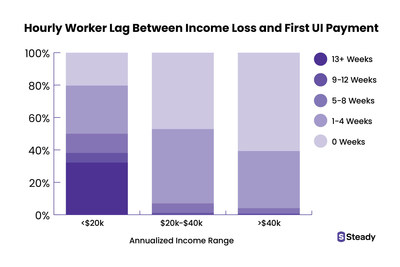
ATLANTA, Feb. 11, 2021 /PRNewswire/ — Steady, an app used by over 2.5 million gig and hourly wage earners, today released findings from a national analysis which suggests that lower income gig workers experience longer delays than their more affluent peers, when it comes to accessing unemployment insurance. 

<div…

ATLANTA, Feb. 11, 2021 /PRNewswire/ — Steady, an app used by over 2.5 million gig and hourly wage earners, today released findings from a national analysis which suggests that lower income gig workers experience longer delays than their more affluent peers, when it comes to accessing unemployment insurance. 

The data reflects the growing disconnect between the unemployment insurance system, and the rise of the 1099 economy workforce which has grown 15% since 2010 and now accounts for more than one-third of the U.S. workforce, according to the Bureau of Labor Statistics.  Unlike full-time employees, which have fewer income sources, 1099 or hourly wage earners often struggle to compile and provide paperwork from multiple income sources, including gig apps like Lyft or Instacart.

«1099 workers often face an insurmountable clerical task of providing documentation of income from multiple streams, and then wait in the balance as the government attempts to verify it, » said Adam Roseman, founder and CEO of Steady. «The data tells us that Americans who need emergency relief the most often face the greatest delays in getting access to benefits.»

Because workers grant Steady access to their actual bank transactions, the app can generate a real time understanding of earnings.  Workers also use the app to generate «income intelligence» to inform job searches and financial decisions. According to an analysis published this year, workers who use the app see average gains of $5,500.

Other findings from Steady’s analysis include:

  • There has been over a 23% drop in gig or hourly workers earning income since six months ago.
  • The industries hit hardest by the pandemic that saw the biggest declines in gig worker income include Entertainment, Hospitality, and Rideshare; those that saw the biggest increase in gig worker income were the three categories of Delivery: Grocery, Other (e.g., FedEx), and Restaurant.

«Steady’s data highlights the harsh reality that our unemployment insurance system is ill-equipped to serve workers hardest hit by the pandemic,» said Andy Stettner, fellow of the Century Foundation. «The requirement that unemployment insurance applicants send in their tax records or other verification may help to prevent rampant fraud, but in doing so, it blocks access to the benefits that American families urgently need.»

To learn more, visit https://steadyapp.com/

About Steady

Steady puts tools into the hands of American workers to help them solve their increasing income challenges caused by wages not keeping up with costs of living, the reduction of available work hours at employers due to their driving efficiencies, and future job loss due to automation. Steady makes it easier than ever for workers to fill their income gaps, gain insights into their income, and improve their overall financial well-being. Steady has over 2.5 million Members.

The Steady app can be downloaded for free from the App Store and Google Play.


Cision View original content to download multimedia:http://www.prnewswire.com/news-releases/new-data-shows-workers-with-lowest-income-suffer-longest-wait-times-for-unemployment-insurance-301226805.html

SOURCE Steady

Moxy South Beach Debuts As A Stylish Playful Celebration Of Miami’s Cosmopolitan Culture, Setting A New Paradigm For Leisure Travel

MIAMI BEACH, Fla., Feb. 11, 2021 /PRNewswire/ — Miami’s Art Deco District lights up today with the opening of Moxy Miami South Beach. <a target="_blank"…

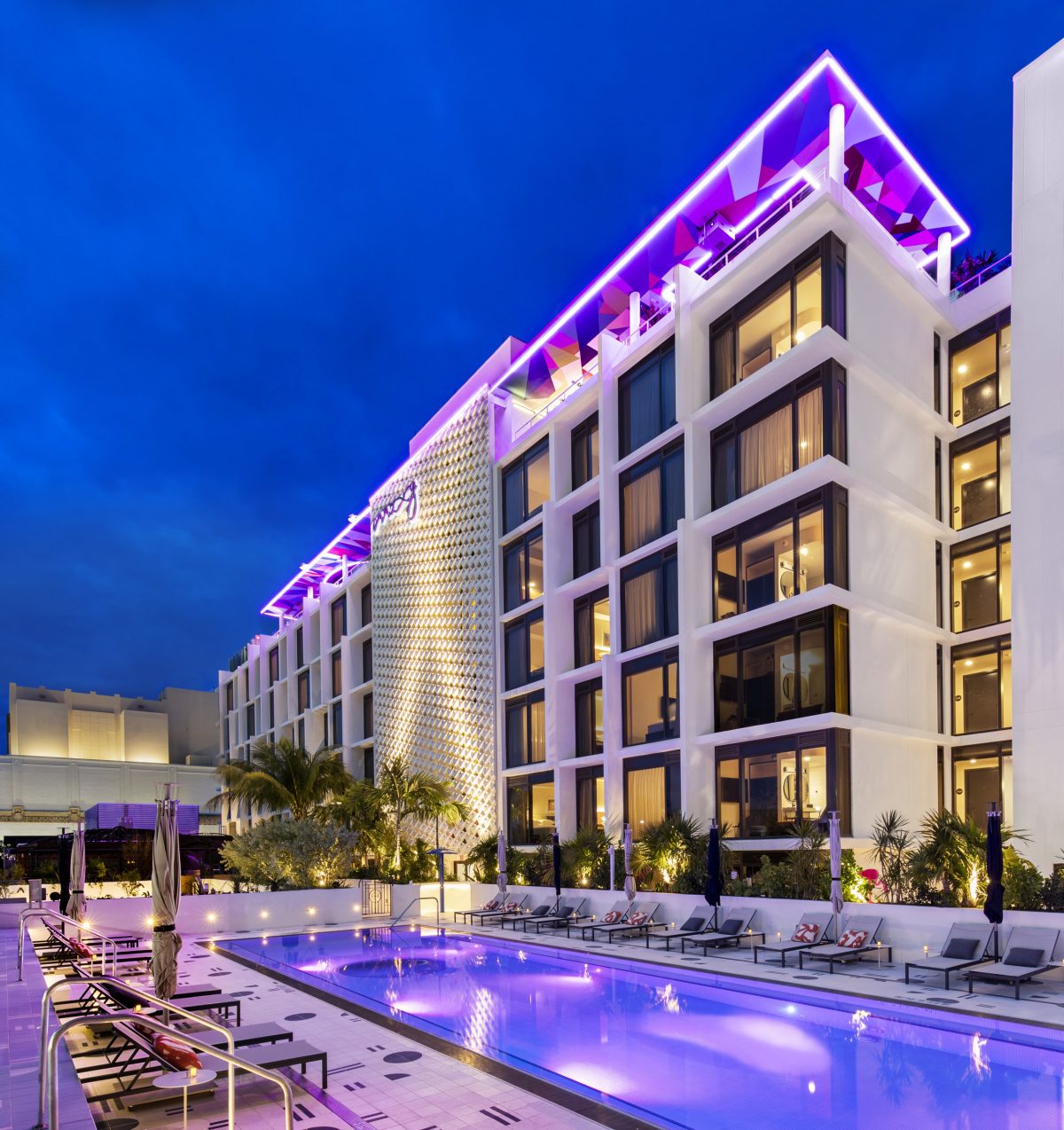
MIAMI BEACH, Fla., Feb. 11, 2021 /PRNewswire/ — Miami’s Art Deco District lights up today with the opening of Moxy Miami South Beach. Lightstone, the developers behind three award-winning Moxy hotels in New York City, has created a stylish, playful open-air concept celebrating Miami’s cosmopolitan culture and breezy outdoor living. With a design that blends the glamour of midcentury Havana, the artistry of contemporary Mexico City, and a tropical vibrancy that’s unmistakably Miami, Moxy South Beach offers the dining, drinking, and lounging options that modern travelers crave, all located steps from the sand. The 202-room, eight-story hotel, featuring two pools and the nearby Moxy Beach Club, will be the first resort-style property under Marriott International’s Moxy Hotels® brand, marking a new chapter for hospitality in Miami Beach. Moxy South Beach is upending the way travelers experience hotels in the new year, from contactless check-in to indoor-outdoor lounging, meeting, fitness, and dining spaces.

The highly anticipated opening of Moxy South Beach comes at a pivotal time for Miami Beach, which is repositioning its traditional entertainment district as the new «Art Deco District» — a reimagination of the historic neighborhood with Moxy South Beach at the forefront. Situated at a cultural crossroads, nearby landmarks include the Miami Beach Convention Center, Wolfsonian-FIU Museum, Miami Beach Cinematheque, Fillmore Miami Beach at the Jackie Gleason Theater, and The Webster boutique.

«Opening the hotel during this unprecedented time presented Lightstone with a unique challenge,» says Mitchell Hochberg, Lightstone’s President. «Moxy South Beach isn’t a response to the pandemic, even if it feels like an antidote to it,» says Hochberg. «In a way, the design anticipated the needs of the current environment, so we’re able to accommodate what people are looking for right now: contactless check-in, outdoor spaces, and a do-it-yourself ethos. But we always stayed true to the roots of the Moxy brand, letting guests curate their own experience while they escape reality for a few days in South Beach – and the icing on the cake is that it’s all at an attractive price point. That’s an idea with timeless appeal.»

Design: Celebrating Miami’s Cosmopolitan Culture

Moxy South Beach’s interiors are designed by Rockwell Group (public spaces and bedrooms) and Saladino Design Studios (Serena, Como Como, and Mezcalista), while exteriors are by Kobi Karp Architecture in collaboration with Rockwell Group. Guests can customize their level of interaction as they move from the sanctuary of their bedroom to public spaces designed for socializing on demand. The majority of spaces are open-air and blend seamlessly with indoor areas. Public areas are peppered with private and semi-private enclaves — including poolside cabanas, open-air meeting studios, and sequestered dining tables — that let guests be in the mix and on their own all at once. 

Guests enter the hotel through the main walkway on Washington Avenue or the modern porte-cochère at the east entrance. The sun-drenched lobby features several relaxed seating areas with amusements such as a foosball table whose players are vintage pinup dolls brought into the modern era as a women’s soccer team as well as a carnivalesque, Zoltar inspired, pay phone that provides complimentary horoscope readings from resident astrologer @Bassfunkdaddy. The lobby’s three flexible meeting studios and restaurant all converge around a large, open-air courtyard. The space is surrounded by glass walls that can open or close as the weather allows.

The indoor-outdoor spaces continue with a fitness center inspired by nearby Muscle Beach; an outdoor movie screening room on the rooftop; and the Moxy Beach Club on Miami’s famous South Beach. The 72-foot, cabana-lined pool on the second-floor terrace maximizes see-and-be-seen sightlines with tiered lounge seating, benches in the water, and luxury private cabanas. A circular communal shower invites flirtatious interaction, with flamingoes peeking through the surrounding hedge. Swimmers in the pool can peek down directly into the lobby through an eight-foot, see-through cutout at the bottom of the pool, adding up to an exhibitionistic vibe that embodies South Beach. The hotel’s eighth floor rooftop features a shallow lounging pool with chaises submerged in the water and daybeds shaped like lily pads.

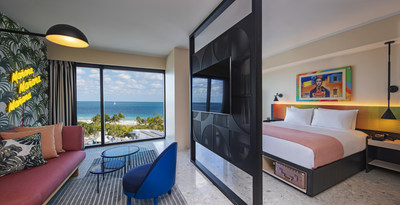
The 202 thoughtfully-designed bedrooms include King, Double Queen, or Quad Bunk options, as well as residentially styled suites. All rooms are dressed in vivid Miami hues and bathed in sunlight thanks to floor-to-ceiling windows. Inspired in part by the Clyde Mallory Line, an overnight ferry service between Miami and Havana that operated in the 1940s and ’50s, the rooms resemble ocean liner staterooms with ingenious, space-maximizing storage solutions. Oceanview rooms on higher floors offer unobstructed vistas of the Atlantic, while other rooms feature expansive views of South Beach’s pastel-hued architecture. Bedrooms feature custom art by Miami artist Aquarela Sabol depicting iconic artists — Frida Kahlo, Jean-Michel Basquiat, Pablo Picasso, and Salvador Dalí — visiting South Beach.

«Our design concept for Moxy South Beach celebrates Miami’s uniquely multicultural style, from eclectic Art Deco motifs and Miami Modernism, to Cuban and other Latin American influences,» says Greg Keffer, Partner and Studio Leader at Rockwell Group. «To capture the bright, carefree sophistication of South Beach, we blurred the boundaries between indoor and outdoor amenities, and created light-filled guestrooms that have a feeling of openness.»

Food & Beverage: Design Inspired by Mexico City, Oaxaca & Havana

For the dining and drinking venues, Lightstone tapped the Miami restaurateurs behind the uber-popular Coyo Taco and 1-800-Lucky to create six new exclusive concepts, drawing on Mexican, Caribbean, and local flavors.

Starting at the signature Bar Moxy, guests can simultaneously check-in contact-free and order a handcrafted cocktail. Retro-style swivel barstools surround the oval-shaped bar, while an infinity mirror installation above contains the phone number of El Floridita, the legendary Havana watering hole, paying tribute to Miami’s Cuban heritage.

Facing Bar Moxy is Los Buenos, the all-day bodega and taco stand, which will dish up tacos on hand-pressed tortillas and burrito bowls, as well as breakfast items and a variety of specialty coffee drinks by La Colombe, including super-strong and sweet Cuban-style cafecitos. Los Buenos will also sell a curated selection of clothing, accessories, magazines, and classic Miami gifts sourced from local purveyors.

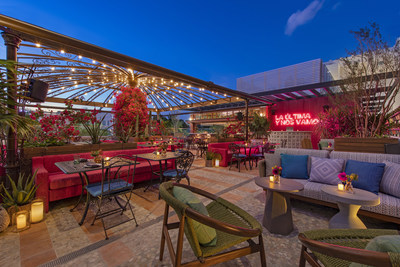
On the second floor, an open-air rooftop restaurant and bar, Serena, channels the enchanting rooftop and patio restaurants of Oaxaca and Mexico City. Located on a vibrant, lushly planted terrace, Serena has a laid-back yet sophisticated vibe that’s like none other in Miami. Lounge and table seating — plus an enticing menu of shareable dishes and hand-crafted cocktails — create an inviting atmosphere for sunset cocktails and nibbles, leisurely lunches and dinners, or buzzy brunches accompanied by live music.

The hotel’s eighth-floor rooftop bar, aptly named The Upside, has a shallow lounging pool, alfresco movie screening area, whimsical seating options, and 360-degree panoramic views of the ocean and Miami Beach. Available exclusively to hotel guests and for private events, The Upside will become a coveted space for parties, film screenings, and pop-ups. A sinuous canopy on the rooftop provides shade during the day, while showcasing a brilliant, geometric mural by New York artist Edward Granger when illuminated at night. The piece is a nod to the thriving street art scene in nearby Wynwood and acts as a colorful beacon for the hotel.

Opening April 2021 is Como Como, a marisqueria (seafood restaurant) and raw bar centered around the «fuego,» a wood- and charcoal-fired grill utilizing ancient Mexican techniques. The open-cooking concept allows diners to watch the culinary process firsthand, while a «tequila tree» sculpture theatrically dispenses the agave spirit from hand-blown glass spheres. The restaurant also serves diners in its outdoor courtyard, a lush space layered with colored tilework, hanging plants, and a sign reading «Besos De Mezcal,» hinting at the night to come.

Also opening in April is a sexy and mysterious mezcal lounge, Mezcalista, accessed either from the back of the marisquería or through a discreet entrance on Washington Avenue. Guests will sip and savor an assortment of over 100 types of rare mezcals and tequilas in this seductively lit, catacomb-like lounge.

«We’re creating concepts that give people a lot of choice,» says Sven Vogtland, co-founder of Coyo Taco Group. «You can head up to Serena for a sunset drink and a bite, sit down for an elegant meal at Como Como, or enjoy the intimate energy of Mezcalista while the DJ spins. Or you can have all three in one night. We’re providing a variety of vibes and environments, which in turn will attract a real intermingling of different types of guests.»

Programming: The Hotel as a Cultural Crossroads

An energetic mix of cultural and lifestyle programming will roll out at Moxy South Beach, including several exclusive partnerships. Adapting the notable #SWEATatMoxy program from its sister properties in New York, Moxy South Beach will have guests working up a sweat with «Glutes Check» classes from local fitness guru Starr Hawkins, taking part in restorative sessions from NYC-based BeRevolutionarie, or joining a Surfing Bootcamp from Surfrider Foundation, an organization dedicated to the protection and enjoyment of the world’s ocean waves and beaches. The Surfrider Foundation collaboration continues with Silent Disco beach cleanups and surf-inspired movie screenings on the rooftop. The rooftop will also host biannual screenings in partnership with the Miami Film Festival.

On the rhythm front, Prism Creative and Tigre Sounds are curating a weekly live music series with emerging musicians. The hotel is also partnering with heralded genre-bending Miami orchestra Nu Deco Ensemble to share frequent live streams of their sold-out concerts. These partnerships continue on the small screen via Moxy South Beach’s in-room TV channels, including Nu Deco Ensemble’s «Orchestra Reimagined» performances. Hotel guests will also receive special perks at cultural institutions like the Bass Museum, Rubell Museum, Superblue Miami, and the Pérez Art Museum Miami (PAMM).

Launching opening weekend – just in time for Valentine’s day – is the Foreplay – Mezcal, Oysters, Vinyls & Dice Package. In true Moxy fashion, the playful package is complete with all the essentials for a romantic evening out and a naughty night in. Guests receive a dozen oysters, two signature mezcal cocktails at Serena, and a Sexy 6 Dice Game for impromptu foreplay fun. The free in-room record player with «aphrodisiac album collections» is a mood-boosting enhancement.

COVID-19 Safeguards & Enhanced Sanitation

In the wake of the COVID-19 pandemic, Moxy South Beach is utilizing the most advanced cleaning and sanitizing systems available. A fresh AtmosAir system will continuously monitor, disinfect, and purify the indoor air, using a cutting-edge bipolar ionization technology that filters out airborne viruses, molds, and bacteria. Additionally, Asepticare® cleaner, used across the hotel, properly deodorizes and eliminates allergens, germs, mold, viruses, bacteria, and mildew. High-touch items such as elevator buttons and stair handrails will be consistently and frequently disinfected using hospital-grade disinfectants. An on-property Cleanliness Captain enforces Marriott’s 200-plus cleaning protocols through its Global Cleanliness Council and Commitment to Clean, which include frequent disinfection of all hotel surfaces, rigorous room cleanliness standards, limited capacities, and new social distancing practices. All Moxy South Beach crewmembers are required to take temperature checks before entering the building, and all will receive certification on COVID-19 safety and sanitation protocols from the on-site Cleanliness Captain.

Moxy South Beach is located at 915 Washington Avenue, Miami Beach, FL 33139. For more information or to book, visit moxysouthbeach.com. Rates start at $159 per night.

About Moxy South Beach
A stylish and playful celebration of Miami’s cosmopolitan culture, Moxy South Beach marks a new chapter for hospitality in Miami Beach. The first resort-style property for the Moxy brand, the 202-room, eight-story hotel is located steps from the sand on Washington Avenue. It offers the dining, drinking, lounging, and co-working options that modern, design-focused travelers crave — all at an attractive price point. Interiors by Rockwell Group and Saladino Design Studios mix the glamour of midcentury Havana, the artistry of contemporary Mexico City, and a tropical vibrancy that’s unmistakably Miami. Bedrooms, dressed in vivid Miami hues and drenched in Florida sunshine thanks to floor-to-ceiling windows, feature rain showers and ingenious, space-maximizing storage solutions. Six new dining and drinking venues, developed by the founders of Miami’s uber-popular Coyo Taco and 1-800-LUCKY, include Como Como, a marisquería and raw bar; Mezcalista, a sexy mezcal lounge; Serena, an open-air rooftop restaurant and bar; Los Buenos, a taco stand/bodega in the lobby, complemented by Bar Moxy, which does double duty as a social hub and check-in area; and The Upside, a rooftop bar on the eighth floor exclusively for hotel guests and private events. Multiple indoor-outdoor spaces include a ground floor courtyard; a 72-foot, cabana-lined pool; an indoor-outdoor fitness center; an outdoor movie screening room on the rooftop; and an exclusive beach club on Miami’s famous South Beach. Moxy South Beach is Lightstone’s first Moxy hotel opening outside of New York City, following the successful launches of Moxy Times Square, Moxy Chelsea, and Moxy East Village.

About Moxy Hotels
Moxy offers a playful hotel experience for the young at heart. With more than 70 properties open across North America, Europe, and Asia Pacific, Moxy breaks the rules of a conventional hotel stay across the globe. The nontraditional experience starts with check-in at Bar Moxy and can be felt throughout the social public spaces, like the Lounge and Library, and the small but smart bedrooms. Moxy provides stylish, industrial design and sociable service at an attractive price point, so that guests can splurge on the experiences that matter most to them during their travels. Moxy strives to cultivate fun and spontaneity in all aspects of one’s stay, forever giving its guests permission to Play On #atthemoxy. For more information, visit www.moxyhotels.com and join the fun #atthemoxy on Instagram. Moxy is proud to participate in Marriott Bonvoy, the global travel program from Marriott International. The program offers members an extraordinary portfolio of global brands, exclusive experiences on Marriott Bonvoy Moments, and unparalleled benefits including free nights and Elite status recognition. To enroll for free or for more information about the program, visit MarriottBonvoy.com.   

About Lightstone
Lightstone, founded by David Lichtenstein, is one of the largest and most diversified privately held real estate companies in the United States. Lightstone is active in 24 states across the country, developing, managing and investing in all sectors of the real estate market, including residential, hospitality, commercial, and retail. With 127 existing properties, Lightstone’s over $6.5 billion portfolio currently includes over 4 million square feet of office, retail and industrial commercial properties, over 15,000 residential units, and 4,100 hotel keys. Lightstone also owns over 12,000 land lots across the country.

Headquartered in New York City, Lightstone continues to grow its development portfolio with over $3.5 billion currently under development in the residential and hospitality sectors. Moxy South Beach is Lightstone’s first Moxy hotel opening outside of New York City, following the award-winning openings of Moxy Times Square, Moxy Chelsea, and Moxy East Village. Moxy Downtown Los Angeles and New York’s Moxy Lower East Side and Moxy Williamsburg are also under construction and opening in 2022.

Media Contacts:
Madelyn Alster
The Brandman Agency
212.683.2442
moxy@brandmanagency.com  

Vanessa Menkes
Vanessa Menkes Communications
305.490.4494
vanessa@vanessamenkes.com  

Christine Lin
Marriott International
212.365.8363
christine.lin@marriott.com  

Cision View original content to download multimedia:http://www.prnewswire.com/news-releases/moxy-south-beach-debuts-as-a-stylish-playful-celebration-of-miamis-cosmopolitan-culture-setting-a-new-paradigm-for-leisure-travel-301226275.html

SOURCE Marriott International, Inc.

Brain Corp Extends Leadership Position in Autonomous Mobile Robots with Record 2020 Growth

SAN DIEGO, Feb. 11, 2021 /PRNewswire/ — Brain Corp, an artificial intelligence (AI) software company creating transformative core technology in robotics, today announced record growth in 2020 as global retailers ramped up their adoption of <a target="_blank"…

SAN DIEGO, Feb. 11, 2021 /PRNewswire/ — Brain Corp, an artificial intelligence (AI) software company creating transformative core technology in robotics, today announced record growth in 2020 as global retailers ramped up their adoption of robotic floor scrubbers and other autonomous solutions in the wake of the global pandemic.

Working through its OEM partners, Brain Corp achieved over a 300% increase in robotic deployments during the year as retailers leaned heavily on cleaning automation to help better manage «a constant state of clean» caused by the ongoing health crisis. As of Jan. 31, 2021, the company and its partners had deployed more than 14,500 BrainOS®-powered robots, representing the world’s largest robotic fleet operating in public indoor spaces (retail and grocery stores, malls, airports, schools and healthcare facilities). Brain Corp also recorded more than an 80% y-o-y increase in monthly subscription revenue for its cloud-connected autonomous services that help operators run the robots.

«Given the rapid adoption rates and strong value proposition, robotic solutions are clearly becoming the new commercial cleaning standard,» said Dr. Eugene Izhikevich, CEO at Brain Corp. «In today’s changing world, businesses are rethinking their automation strategies, bringing robots out from behind locked areas and into public spaces where they bring a new level of process automation. We’ve seen how much support robots have provided essential workers through the pandemic, and look forward to continued innovation with our OEM partners.» 

Additional 2020 Brain Corp operational highlights:

  • Surpassed a total of 4 million autonomous hours of global operation to date.
  • Generated an estimated 3.3 million hours of additional productivity for end customers during the year through its BrainOS-powered robotic fleet.
  • Surpassed 54 billion square feet of space covered autonomously to date through its combined robotic applications.
  • Launched a new BrainOS-powered robotic scrubber with Tennant Company, the T380AMR solution, which is adept at handling tighter retail store footprints. Schnucks, a leading Midwest grocery chain, recently deployed the T380AMR robotic scrubbers to help improve in-store customer experiences.
  • Launched a new BrainOS-powered scrubber with Nilfisk, the Liberty SC60, which is ideal for large indoor spaces like retail, airports, malls, warehouses, and light industrial.
  • Announced that Sam’s Club is expanding its investment in BrainOS-powered robotic scrubbers to all of its stores nationwide, while also extending a retail shelf analytics pilot program designed to deliver faster inventory insights and customer experiences. The pilot uses a first-of-its-kind dual function robot design that integrates a data-scanning accessory with a robotic scrubber from Tennant.
  • Announced the initial commercial rollout of the BrainOS-powered autonomous delivery tug, a industry first robotic application that helps retailers bridge the automation gap in moving inventory from the stockroom out to store shelves. Brain Corp announced two new OEM partners for the delivery tug, Dane Technologies and Mitsubishi Logisnext Americas.
  • Launched new user experience (UX) and reporting features that revolutionize the ease of which AMRs can be used and managed by non-technical employees, speeding deployment at scale and enabling commercial businesses to achieve rapid ROI.
  • Recognized as an AMR deployment leader, and a «hot tech innovator,» in two separate reports by ABI Research, a global tech market advisory firm.
  • Named a winner of the San Diego Top Workplaces Award 2020 by The San Diego Union-Tribune.

In a recent white paper, «The Business Value of Autonomous Mobile Robots in the Wake of COVID-19,» author Rian Whitton, a senior analyst with ABI Research, noted that Brain Corp is pioneering a new class of «public-facing» autonomous robots that can operate outside of tightly controlled environments, such as traditional manufacturing and warehouse settings, thanks to advanced navigation and technical features. This brings new automation value to commercial businesses and their employees, helping establish a new operational standard for cleaning.

«We have a burgeoning ecosystem of robotics developers, lots of partnerships with original equipment manufacturers like Tennant and Nilfisk, and sufficient buy-in from grocers and retailers like Kroger, Schnucks, and Walmart,» Whitton said in a recent interview. «All the infrastructure is in place for automated commercial cleaning to be mainstreamed in retail.»

Top OEM partners leverage BrainOS, the company’s robotic AI software platform for building and managing commercial robots at scale, to develop an array of robotic applications, including floor scrubbers, vacuums, delivery tugs, and retail shelf-scanning units. Retailers can use these applications for «automating the aisle,» a new approach that uses multiple, vertically focused robotics applications—bound together by a centralized platform—that enables them to more easily adapt to changing consumer buying habits and shifts to e-commerce and digital fulfillment, while also removing long-standing bottlenecks in the retail supply chain.

About Brain Corp
Brain Corp is an AI software leader that powers the world’s largest fleet of autonomous mobile robots operating in commercial indoor public spaces. The BrainOS platform and its cloud-connected autonomy service are used by global manufacturing partners to successfully build, deploy, and support commercial robots at scale across industries and applications. Through intuitive software and controls, BrainOS also enables end customers to easily leverage the power of robotics to offload repetitive, labor-intensive tasks related to floor care, in-store inventory delivery, and shelf-scanning. This frees employees’ time to focus on higher-value responsibilities. Working with its partners, Brain Corp has deployed over 14,500 robots within retail, grocery, malls, airports, hospitals, warehouses, and other industries. For more information, please visit www.braincorp.com. 

Media Contact:
Zara Andrabi
zara@bulleitgroup.com

Cision View original content to download multimedia:http://www.prnewswire.com/news-releases/brain-corp-extends-leadership-position-in-autonomous-mobile-robots-with-record-2020-growth-301226418.html

SOURCE Brain Corp

ROOMDEX, A Hotel Upsell Innovator, Partners with Pacifica Hotels

SANTA CRUZ, Calif., Feb. 11, 2021 /PRNewswire-PRWeb/ — ROOMDEX, a pioneer in automated hotel upselling solutions, announces that Pacifica Hotels has activated ROOMDEX’s Upgrade OptimizerTM software in four hotels, including, Marina Del Rey Hotel, (Venice, CA), Inn at the Pier (<span…

SANTA CRUZ, Calif., Feb. 11, 2021 /PRNewswire-PRWeb/ — ROOMDEX, a pioneer in automated hotel upselling solutions, announces that Pacifica Hotels has activated ROOMDEX’s Upgrade OptimizerTM software in four hotels, including, Marina Del Rey Hotel, (Venice, CA), Inn at the Pier (Pismo Beach, CA), Blue Sea Beach Hotel (San Diego, CA) and La Jolla Cove Hotel (La Jolla, CA).

Upgrade Optimizer is an automated hotel upsell tool that generates revenue directly to a hotel’s bottom line. ROOMDEX intelligently calculates the best upgrade offer price and ensures that only available rooms will be offered. Along with the upgrade, guests have the chance to purchase early check-in or late check-out. Late check out is offered automatically pre-arrival and during stay.

«The reasons for moving our hotels to ROOMDEX were twofold,» said John Pedlow, Vice President of Revenue at Pacifica Hotels, «The first was the automation and streamlining of the upsell process all the way to the PMS. Other upsell software only ever got us half-way there. Once the offer request was made, somebody needed to actually go and make sure that is happened in the PMS. By contrast, ROOMDEX integrates all the way through the system. Our operations team doesn’t have to worry about a thing.»

«The second reason is the reach,» John continued, «Other platforms only reach the guests who directly through our website. ROOMDEX offers go out to any guest in the system, regardless of whether they booked directly with us or booked through an OTA. We’re excited to continue to roll out ROOMDEX to our other properties.»

At Pacifica ROOMDEX enabled hotels have reported an average of $103 of additional room product up-sell revenue per up-sold stay since using the hotel upsell tool. Upgrade OptimizerTM room revenue is improving RevPar and boosting ADR when hotels need it most – even during low occupancy.

«We have been extremely pleased with the performance we are seeing at the Pacifica hotels so far,» said Jos Schaap, CEO and Co-Founder of ROOMDEX, «Despite the occupancy challenges the pandemic has presented, the Pacifica team has shown that they can still drive ancillary revenue in tough market conditions.»

ABOUT ROOMDEX :

ROOMDEX’s hotel upsell software, «Upgrade Optimizer,» automates, monetizes and ultimately simplifies the hotel room upgrade process by putting the power of choice in the hotel guest’s hands. Automation is the cornerstone of our pioneering hotel optimization platform. ROOMDEX uses hotel reservation, guest data and its proprietary persona and price algorithms to deliver personalized digital offers, greatly enhancing the guest experience. The hotel upsell tool relieves hoteliers of the labor time required by other upselling solutions while delivering high margin revenue and a substantial ROI.

The company was founded by Jos Schaap, Pierre Boettner and Denis Bajet, three industry veterans (Ex. MICROS-OPERA (now Oracle Hospitality), StayNTouch, Shiji and Nor1) who together bring over 90 years of hotel software innovation experience in PMS, integrations, revenue management, BI, mobile, self-service and upgrade optimization software. Since founding in spring of 2020, ROOMDEX has signed on more than 55 hotels with 5,500 rooms across the U.S., U.K. and Europe, visit http://www.roomdex.io

Twitter: @ROOMDEX
Facebook: facebook.com/roomdexinc
LinkedIn: linkedin.com/company/roomdex
Youtube: click here

ABOUT Pacifica Hotels:

Pacifica Hotels was formed in 1993 to consolidate the hospitality operations of Invest West Financial Corporation, which has been involved in the acquisition, development, refurbishing and operating of quality hotel properties and other commercial real estate properties for almost 30 years. Today, Pacifica Hotels is the largest owner and operator of boutique hotels on the Pacific Coast. Pacifica Hotels’ 40 independent and flag properties in key California cities from San Diego to San Francisco, as well as Hawaii, feature outstanding locations, AAA 3 and 4-diamond ratings, upgraded amenities and high standards of guest service. For complete hotel descriptions and reservations, visit http://www.pacificahotels.com.

Media Contact

Jos Schaap, ROOMDEX, Inc, +1 240 720-7582, info@roomdex.io

Kate Morgan, Pacifica Hotels, 949-299-5601, kendal@ballantinespr.com

Twitter, Facebook


SOURCE ROOMDEX, Inc

Hospital Association Launches Second Phase of Climate Resiliency Work

WASHINGTON, Feb. 11, 2021 /PRNewswire-PRWeb/ — In a second phase of work to help hospitals build climate resiliency for their communities, America’s Essential Hospitals will educate its members about how climate affects health and health equity and energize them to embrace resiliency and sustainability.

The work, part of a Kresge Foundation–supported project, follows a 2019 climate resiliency report from Essential Hospitals Institute, the association’s research entity. That report, part of…

WASHINGTON, Feb. 11, 2021 /PRNewswire-PRWeb/ — In a second phase of work to help hospitals build climate resiliency for their communities, America’s Essential Hospitals will educate its members about how climate affects health and health equity and energize them to embrace resiliency and sustainability.

The work, part of a Kresge Foundation–supported project, follows a 2019 climate resiliency report from Essential Hospitals Institute, the association’s research entity. That report, part of the project’s first phase, identified a lack of strategic leadership and funding as the main barriers to broader hospital adoption of climate resiliency programs.

In this new project phase, the Institute will convene essential hospital leaders at regional meetings to raise awareness of the relationship of climate change to health equity and essential hospitals’ mission of caring for underrepresented people and underserved communities. It also will develop a framework for an Action Learning Cohort, a network of essential hospitals that will share knowledge, ideas, and experience to put climate resiliency plans into action.

«Environmental factors and other social determinants of health weigh heaviest on the vulnerable people our hospitals serve, and climate change threatens to make matters worse,» said Bruce Siegel, MD, MPH, president and CEO of America’s Essential Hospitals. «This project will activate our members to confront and mitigate this threat.»

The U.S. health care system accounts for 8.5 percent of greenhouse gas emissions, and health care emissions have risen 6 percent from 2010 to 2018. The health impacts of climate change are similar in scope to preventable medical errors and disproportionately affect low-income communities and communities of color. Climate change has sparked a national conversation about how to build climate resilience and sustainability in health care to enhance equity.

Some essential hospitals have taken noteworthy steps toward this goal, and the Institute project seeks to engage more hospitals in climate resiliency work.

«Essential hospitals have extensive experience making the lived environment better in communities that face the greatest environmental threats to good health,» said Kalpana Ramiah, DrPH, MSc, Institute director and the association’s vice president of innovation. «By engaging our members with this project, we will help them not only support patients but also make their communities at large more resilient to climate change.»

# # #

About America’s Essential Hospitals
America’s Essential Hospitals is the leading champion for hospitals and health systems dedicated to high-quality care for all, including the vulnerable. We support our more than 300 members with advocacy, policy development, research, and education. Communities depend on essential hospitals to provide specialized, lifesaving services; train the health care workforce; advance public health and health equity; and coordinate care. Essential hospitals innovate and adapt to lead the way to more effective and efficient care. Learn more at essentialhospitals.org.

About Essential Hospitals Institute
Essential Hospitals Institute is the research, education, dissemination, and leadership development arm of America’s Essential Hospitals. The Institute supports the nation’s essential hospitals as they provide high-quality, equitable, and affordable care to their communities. Working with members of America’s Essential Hospitals, we identify promising practices from the field, conduct research, disseminate innovative strategies, and help our members improve their organizational performance. We do all of this with an eye toward improving individual and population health, especially for vulnerable people.

Media Contact

Carl Graziano, America’s Essential Hospitals, +1 (202) 585-0102, cgraziano@essentialhospitals.org

Twitter, Facebook


SOURCE America’s Essential Hospitals

Fans Of The Wizarding World Rejoice! An All-New Harry Potter: The Exhibition Is Coming In 2022

ATLANTA and BURBANK, Calif., Feb. 11, 2021 /PRNewswire/ — A brand-new Wizarding World exhibition is now under development and is scheduled to make its worldwide debut in 2022.

ATLANTA and BURBANK, Calif., Feb. 11, 2021 /PRNewswire/ — A brand-new Wizarding World exhibition is now under development and is scheduled to make its worldwide debut in 2022.


A brand-new Wizarding World exhibition is now under development and is scheduled to make its worldwide debut in 2022.

Imagine Exhibitions today announced a partnership with Warner Bros. Consumer Products to create a newly innovative Harry Potter and Fantastic Beasts exhibition which is slated to tour in multiple regions around the world including: North America, Latin America, Asia-Pacific Region (APAC) and Europe, Middle-East and Africa (EMEA). 

The all-new Harry Potter: The Exhibition, will be a scalable experience that will delight fans from around the world, the exhibition will have a footprint between 10,000 square feet (929 square meters) up to 20,000 square feet (1,858 square meters).

«We are honored to be entrusted with the iconic Harry Potter brand and excited to develop and share an exhibition experience that celebrates the magic of the Wizarding World,» said Tom Zaller, CEO of Imagine Exhibitions. «We look forward to working with world-class partners, promoters, and sponsors to bring an all-new Harry Potter: The Exhibition to fans around the globe.»

The initial venue for the all-new Harry Potter: The Exhibition will be announced in the coming months. 

For over 20 years, the Harry Potter stories and films have captivated fans worldwide.  For today’s growing community, and for generations to come, the Wizarding World connects all aspects of this magical realm, including seven much-loved novels (which have sold over 500 million copies worldwide), eight timeless Harry Potter films, the multiple Tony and Olivier award-winning stage show Harry Potter and the Cursed Child and the first two of the five-part Fantastic Beasts film series.  Harry Potter: The Exhibition will deliver to a devoted and growing fanbase a comprehensive touring exhibition.

The new exhibition will celebrate the most iconic moments of the films and stories of Harry Potter, Fantastic Beasts, and the expanded Wizarding World through an immersive, behind-the-scenes exhibition experience. This groundbreaking touring exhibition will present beautifully crafted environments that honor the beloved characters, settings, and beasts seen in the films while exploring the filmmaking magic that brought them to life. Visitors will get an up-close look at authentic props and original costumes from the Harry Potter and Fantastic Beasts films as they engage with innovative, awe-inspiring, and magical environments and installations.

«We are thrilled to be partnering with the experts at Imagine Exhibitions, on this all-new Harry Potter exhibition,» said Peter van Roden, Senior Vice President of Global Themed Entertainment at Warner Bros. Consumer Products. «Everyone involved with this project is committed to bringing a masterfully crafted newly innovative Wizarding World experience to fans around the world.»

About Warner Bros. Consumer Products
Warner Bros. Consumer Products (WBCP), a WarnerMedia Company, extends the Studio’s powerful portfolio of entertainment brands and franchises into the lives of fans around the world.  WBCP partners with best-in-class licensees globally on an award-winning range of toys, fashion, home décor, and publishing inspired by franchises and properties such as DC, Wizarding World, Looney Tunes, Hanna-Barbera, HBO, Cartoon Network and Adult Swim. The division’s successful global themed entertainment business includes groundbreaking experiences such as The Wizarding World of Harry Potter and Warner Bros. World Abu Dhabi. With innovative global licensing and merchandising programs, retail initiatives, promotional partnerships and themed experiences, WBCP is one of the leading licensing and retail merchandising organizations in the world.

WIZARDING WORLD and all related trademarks, characters, names, and indicia are © & ™ Warner Bros. Entertainment Inc. Publishing Rights © JKR. (s21)

About Imagine Exhibitions
A world leader in narrative-driven, immersive theatrical design, Imagine Exhibitions, Inc., creates sophisticated, high quality experiences for museums, brands, venues, and integrated resorts across the globe. From ideation to operation, Imagine’s team of industry pioneers draws upon decades of success in the fields of immersive design, awareness, and entertainment to consistently create and implement memorable and thought-provoking environments. The company’s custom experiences deliver focused messaging and serve to increase attendance wherever they are presented.  Imagine Exhibitions, Inc., a global pioneer in traveling entertainment responsible for many internationally-recognized exhibitions such as Titanic: The Exhibition, The Hunger Games: The Exhibition, Angry Birds: The Art & Science Behind a Global Phenomenon, Jurassic World: The Exhibition, and Downton Abbey: The Exhibition.

Imagine Exhibitions is currently presenting more than 40 unique exhibitions in museums, science centers, aquariums, integrated resorts, and non-traditional venues worldwide. The Company also continues to design, open, and operate its own venues, along with creating and implementing permanent and semi-permanent museum, brand, and entertainment properties.

For more information, visit www.ImagineExhibitions.com or find us on Facebook. 

Cision View original content to download multimedia:http://www.prnewswire.com/news-releases/fans-of-the-wizarding-world-rejoice-an-all-new-harry-potter-the-exhibition-is-coming-in-2022-301226824.html

SOURCE Imagine Exhibitions, Inc.

Cultural Comfort, Siloes And Stress Impacts Gen Z Trust Circles

FAIRFAX, Va., Feb. 11, 2021 /PRNewswire-HISPANIC PR WIRE/ — According to a study by the Culture Marketing Council: The Voice of Hispanic Marketing (CMC), despite a multicultural majority among the under-18 age segment, most non-Hispanic white (NHW) teens do not experience the MC majority reality in their daily lives—from their schools and neighborhoods to their friendships online and in real life. Regardless of race or background, teen stress levels are high, trust circles are tight and…

FAIRFAX, Va., Feb. 11, 2021 /PRNewswire-HISPANIC PR WIRE/ — According to a study by the Culture Marketing Council: The Voice of Hispanic Marketing (CMC), despite a multicultural majority among the under-18 age segment, most non-Hispanic white (NHW) teens do not experience the MC majority reality in their daily lives—from their schools and neighborhoods to their friendships online and in real life. Regardless of race or background, teen stress levels are high, trust circles are tight and vary among kids and parents, depending on culture, age, and experience with organizations and institutions.

AHAA: The Voice of Hispanic Marketing is rebranding as Culture Marketing Council: The Voice of Hispanic Marketing, which will continue to elevate the quality and effectiveness of U.S. marketing by harnessing the power of cultural expertise and impact to drive business results.

«Trust circles, cultural comfort or discomfort, and stress are all nuances that marketers must understand, as they impact brand relationships and purchase decisions,» said CMC Research Chair Nancy Tellet, founder, brand & consumer navigator at PureClarity LLC. «Trust, plays a huge role not only in the political arena and friendships, but also where we live, how we raise our kids, and in the brands we choose to buy.»

Today, two-thirds of multicultural Gen Zers grow up in families that attempt to retain most of their historical cultural values. They also take cues from modern American society, choosing which values to keep, reject and add.

A Multicultural Majority in Numbers but Not in Daily Life

Racial and ethnic segments tend to self-silo across schools, neighborhoods and friendships, both on social media and in real life. This is mostly prevalent among NHW teens and tweens ages 8-17. While non-Hispanic Blacks (NHB) and Hispanics silo less, the majority of their in real life friends are either their own segment or other persons of color (POC). When it comes to social media, however, friends are slightly more diverse for NHW & NHB but virtually same for Hispanics.

The Majority of Gen Zers and Parents Are Comfortable with All Types of People

Sixty percent of Gen Zers and parents say, «I am truly comfortable with all people.» Among the 40 percent—a sizable minority—who are uncomfortable, all segments regardless of race or ethnicity report most discomfort with «rich people» and «evangelical Christians.» Blacks and Hispanics also say they are most uncomfortable among NHWs, NHWs and Blacks share a discomfort of LGBTQ+ people, and, surprisingly, Hispanics say they are most uncomfortable around «other Hispanics.» In addition, one in five (22 percent) NHWs are uncomfortable hearing Spanish spoken in public.

The Stress is Real for Gen Zers

Across all segments, teens report «being smart and well educated» as a core value for success; however, this ambition and often, fear of failure leaves them feeling stressed and isolated. Stress among Hispanic teens is higher than other groups. The shrinking middle class has added to teen stress for all groups especially NHW teens who feel they need to «protect» their turf. Black and Hispanic teens expressed more resilience with an attitude of «Life is tough, but I am tougher,» since life was never that easy to begin with. Hispanic teen stress actually decreased during COVID, as the negative spotlight shifted from them to the pandemic and other social and political issues.

The Cultural Closet: What’s Kept, What’s Tossed and What’s Being Added

More than two-thirds of POC want to keep most of their historical cultural values. Among Hispanics and NHB, family culture «keeps you safe, sane and happy.» For Hispanics, it’s about sharing knowledge and traditions while instilling a sense of interdependence (we vs me). For NHBs, family connections not only protect and support but also serve to share knowledge and pass down tradition. Hispanics and NHBs ages 13 to 49 keep values of resilience and the importance of their communities in their cultural closet, as it is important to succeed in spite of adversity.

Hispanic and Black teens place a high level of importance on the practice of «respect» including respect for their elders and stronger parental authority, including discipline within the parent/child relationship. Among NHBs, respect is straightforward, stressing the importance of respect for oneself and receiving it from others.  Among Hispanics, «respeto» is complex and more formal than what is typically expected in the U.S—with an emphasis on courtesy,  including helping above and beyond when you are a guest in someone’s house or how you behave with authority figures, such as your doctor or an elder.

More than half of Hispanic and NHB teens agree that traditional gender roles have to go. In addition, six out of 10 Hispanics ages 13 to 49 would like to get rid of socio-economic and racial colorism hierarchies.

Methodology  & Funders:

  • This study builds on more than 20,500 consumer touchpoints to date, the CMC released the third part of a comprehensive study on Gen Z (ages 13 to 17), IT’S TIME: Ready (or Not) for the Multicultural Majority, analyzing social media consumption, streaming video habits and the escalating power of culture in content.
  • The study received financial or operational support from Kantar, ThinkNow, ViacomCBS and Univision.
  • Quantitative research came from 2,418 13-17s (Gen Z) and 25-49 parents of kids 8-12 (65% Millennials/ 35% Xers) with equal sample representation of Hispanics (HISP), non-Hispanic Blacks (NHB) & non-Hispanic Whites (NHW) from January 2020 to February 2020.
  • Qualitative interviews with 54 respondents (36T/18P), in-home pairs (HISP/NHB/NHW) and two Gen Z multicultural workshops (HISP/NHB/NHW/Asian-American/Other)

For more information, visit culturemarketingcouncil.org and follow the CMC on Facebook, Instagram, and Twitter at @cmchispanic.

About CMC: Founded in 1996 as the Association of Hispanic Advertising Agencies, the Culture Marketing Council: The Voice of Hispanic Marketing is the national trade organization of all marketing, communications, and media firms with trusted Hispanic expertise.

«In our landmark study, IT’S TIME: Ready (or Not) for the Multicultural Majority, we learned that Gen Z teens and parents feel a sense of unity with other minority segments and understands that hate and racism are the biggest issues they face together,» said CMC Research Chair Nancy Tellet, founder, brand & consumer navigator at PureClarity LLC. «With more than half of people ages 13 to 49 having quit a culturally illiterate brand, it’s all about what role culture plays in what stays in and what gets thrown out of trust circles.»

Logo – https://mma.prnewswire.com/media/635930/Culture_Marketing_Council_Logo.jpg  

SOURCE Culture Marketing Council: The Voice of Hispanic Marketing