Gobierno brasileño prohíbe la entrada de extranjeros por tierra y agua

Gobierno brasileño prohíbe la entrada de extranjeros por tierra y agua

Gobierno brasileño prohíbe la entrada de extranjeros por tierra y agua

PR Newswire


Gobierno brasileño prohíbe la entrada de extranjeros por tierra y agua

Gobierno brasileño prohíbe la entrada de extranjeros por tierra y agua

PR Newswire

BRASILIA, Brasil, 27 January 2021 /PRNewswire Policy/ — La Presidencia de la República publicó una resolución que restringe la entrada de extranjeros en el país por medios terrestres o acuáticos. La restricción se aplica a todas las nacionalidades, según recomienda la Agencia Nacional de Vigilancia Sanitaria (Anvisa). La medida se produce a raíz del avance de las nuevas cepas de coronavirus identificadas en Reino Unido, Irlanda del Norte y Sudáfrica.

«Teniendo en cuenta el impacto epidemiológico que la nueva variante de coronavirus identificada en Reino Unido y en la República de Sudáfrica podría causar en la actual situación que atraviesa el país […], queda restringida la entrada de extranjeros de cualquier nacionalidad, por medios terrestres o acuáticos», dice un extracto de la resulución gubernamental.

De acuerdo con la Organización Mundial de la Salud (OMS), el número de países y territorios en los que ya se ha detectado la variante británica puede superar los 50. Por su parte, la variante identificada en Sudáfrica se ha detectado en 20 países, aunque la organización considera que esta valoración puede estar subestimada.

La normativa exceptúa los inmigrantes con residencia fija en Brasil; cónyuges, parejas, hijos, padres o curadores de brasileños y extranjeros al servicio de organizaciones internacionales; y residentes de ciudades gemelas en la frontera. Estas excepciones no se aplican a los venezolanos.

Aeropuertos

La llegada de extranjeros a los aeropuertos no está prohibida, salvo en el caso de vuelos con origen o pasaje por Reino Unido, Irlanda del Norte y Sudáfrica. En el caso de los vuelos procedentes de otros países, deben cumplirse los requisitos migratorios adecuados.

Los demás extranjeros pueden entrar a Brasil por vía aérea siempre y cuando comprueben, a través de una prueba RT-PCR realizada hasta 72 horas antes del embarque, que no están infectados con el coronavirus.

Quienes no cumplan con las medidas sanitarias serán repatriados o deportados inmediatamente, además de ser procesados civil y penalmente.

SOURCE Agência Brasil – Empresa Brasil de Comunicação S/A – EBC

BRASILIA, Brasil, 27 January 2021 /PRNewswire Policy/ — La Presidencia de la República publicó una resolución que restringe la entrada de extranjeros en el país por medios terrestres o acuáticos. La restricción se aplica a todas las nacionalidades, según recomienda la Agencia Nacional de Vigilancia Sanitaria (Anvisa). La medida se produce a raíz del avance de las nuevas cepas de coronavirus identificadas en Reino Unido, Irlanda del Norte y Sudáfrica.

«Teniendo en cuenta el impacto epidemiológico que la nueva variante de coronavirus identificada en Reino Unido y en la República de Sudáfrica podría causar en la actual situación que atraviesa el país […], queda restringida la entrada de extranjeros de cualquier nacionalidad, por medios terrestres o acuáticos», dice un extracto de la resulución gubernamental.

De acuerdo con la Organización Mundial de la Salud (OMS), el número de países y territorios en los que ya se ha detectado la variante británica puede superar los 50. Por su parte, la variante identificada en Sudáfrica se ha detectado en 20 países, aunque la organización considera que esta valoración puede estar subestimada.

La normativa exceptúa los inmigrantes con residencia fija en Brasil; cónyuges, parejas, hijos, padres o curadores de brasileños y extranjeros al servicio de organizaciones internacionales; y residentes de ciudades gemelas en la frontera. Estas excepciones no se aplican a los venezolanos.

Aeropuertos

La llegada de extranjeros a los aeropuertos no está prohibida, salvo en el caso de vuelos con origen o pasaje por Reino Unido, Irlanda del Norte y Sudáfrica. En el caso de los vuelos procedentes de otros países, deben cumplirse los requisitos migratorios adecuados.

Los demás extranjeros pueden entrar a Brasil por vía aérea siempre y cuando comprueben, a través de una prueba RT-PCR realizada hasta 72 horas antes del embarque, que no están infectados con el coronavirus.

Quienes no cumplan con las medidas sanitarias serán repatriados o deportados inmediatamente, además de ser procesados civil y penalmente.

SOURCE Agência Brasil – Empresa Brasil de Comunicação S/A – EBC

Brazil bans entry of foreigners in country by land and sea

Brazil bans entry of foreigners in country by land and sea

Brazil bans entry of foreigners in country by land and sea

PR Newswire

<div…


Brazil bans entry of foreigners in country by land and sea

Brazil bans entry of foreigners in country by land and sea

PR Newswire

BRASILIA, Brazil, 27 January 2021 /PRNewswire Policy/ — Brazilian President Jair Bolsonaro’s office published a resolution limiting the entry of foreigners coming into the country by land or sea. The restriction applies to all nationalities, in compliance with a recommendation by the country’s sanitary regulator Anvisa. The move was motivated by the detection of variants of the novel coronavirus in the UK, Northern Ireland, and South Africa.

“Considering the epidemiological impact the new variant of the coronavirus identified in the UK and the Republic of South Africa may make upon the current situation witnessed in the country […], we bar the entry into the country of foreigners of any nationalities, through roads or any other means by land, as well as through water transport,” an excerpt of the resolution published Tuesday (Jan. 26) reads.

According to the World Health Organization, the number of countries and territories where the British variety has been detected may exceed 50, and the variant detected in South Africa has been seen in 20, but the organization believes these are likely to be underestimated.

Exceptions apply, for immigrants with fixed residence in Brazil; spouses, partners, children, or fathers or caretakers of Brazilians; foreigners at the service of an international entity; and people living near borders of twin cities. Such exceptions are not applicable to Venezuelans.

Airports

The arrival of foreigners through airports is not forbidden, except for flights coming from or making connections in the UK, Northern Ireland, and South Africa. For flights coming from other countries, migratory requirements apply.

Foreigners who wish to come to Brazil by plane must show a document demonstrating a RT-PCR test was conducted up to 74 hours before boarding time, with a negative a result.

Those who fail to meet the requirements in the resolution will be repatriated or deported immediately, in addition to facing civil and criminal liabilities.

SOURCE Agência Brasil – Empresa Brasil de Comunicação S/A – EBC

BRASILIA, Brazil, 27 January 2021 /PRNewswire Policy/ — Brazilian President Jair Bolsonaro’s office published a resolution limiting the entry of foreigners coming into the country by land or sea. The restriction applies to all nationalities, in compliance with a recommendation by the country’s sanitary regulator Anvisa. The move was motivated by the detection of variants of the novel coronavirus in the UK, Northern Ireland, and South Africa.

“Considering the epidemiological impact the new variant of the coronavirus identified in the UK and the Republic of South Africa may make upon the current situation witnessed in the country […], we bar the entry into the country of foreigners of any nationalities, through roads or any other means by land, as well as through water transport,” an excerpt of the resolution published Tuesday (Jan. 26) reads.

According to the World Health Organization, the number of countries and territories where the British variety has been detected may exceed 50, and the variant detected in South Africa has been seen in 20, but the organization believes these are likely to be underestimated.

Exceptions apply, for immigrants with fixed residence in Brazil; spouses, partners, children, or fathers or caretakers of Brazilians; foreigners at the service of an international entity; and people living near borders of twin cities. Such exceptions are not applicable to Venezuelans.

Airports

The arrival of foreigners through airports is not forbidden, except for flights coming from or making connections in the UK, Northern Ireland, and South Africa. For flights coming from other countries, migratory requirements apply.

Foreigners who wish to come to Brazil by plane must show a document demonstrating a RT-PCR test was conducted up to 74 hours before boarding time, with a negative a result.

Those who fail to meet the requirements in the resolution will be repatriated or deported immediately, in addition to facing civil and criminal liabilities.

SOURCE Agência Brasil – Empresa Brasil de Comunicação S/A – EBC

FCA US LLC Reaches Agreement With The U.S. Attorney’s Office To Resolve Investigation Involving The National Training Center

AUBURN HILLS, Mich., Jan. 27, 2021 /PRNewswire/ — FCA US LLC (FCA US) today announces that it has reached an agreement with the U.S. Attorney’s Office for the Eastern District of Michigan to resolve its investigation into past misconduct of certain former FCA US employees involving the UAW-Chrysler National Training Center (NTC). The agreement, which is subject to U.S. federal court approval, includes a…

AUBURN HILLS, Mich., Jan. 27, 2021 /PRNewswire/ — FCA US LLC (FCA US) today announces that it has reached an agreement with the U.S. Attorney’s Office for the Eastern District of Michigan to resolve its investigation into past misconduct of certain former FCA US employees involving the UAW-Chrysler National Training Center (NTC). The agreement, which is subject to U.S. federal court approval, includes a guilty plea to a single count of conspiracy to violate the Labor Management Relations Act and the payment of a $30 million fine. FCA US has also agreed to implement an independent compliance monitor for three years with respect to the dissolution of the NTC and internal controls as they relate to the trusts being implemented to replace the NTC.

Today’s agreement completes the U.S. Attorney’s Office’s investigation into FCA US’s involvement in the misconduct involving the NTC.

For more information, please visit the Stellantis media site at https://media.stellantisnorthamerica.com.


Cision View original content:http://www.prnewswire.com/news-releases/fca-us-llc-reaches-agreement-with-the-us-attorneys-office-to-resolve-investigation-involving-the-national-training-center-301216377.html

SOURCE FCA US LLC

A Second Chance for Organic Photovoltaics, IDTechEx Investigates

BOSTON, Jan. 27, 2021 /PRNewswire/ — Printing solar panels like newsprint using organic semiconductors is the longstanding aspiration, given the obvious benefits of renewable energy and the potential for low-cost, large-area, energy-efficient production. However, despite attempts by Konarka and others, commercializing organic photovoltaic (OPV) panels has previously proved challenging. This was largely due to the falling prices of silicon panels, the comparatively low efficiency of OPV modules, and…

BOSTON, Jan. 27, 2021 /PRNewswire/ — Printing solar panels like newsprint using organic semiconductors is the longstanding aspiration, given the obvious benefits of renewable energy and the potential for low-cost, large-area, energy-efficient production. However, despite attempts by Konarka and others, commercializing organic photovoltaic (OPV) panels has previously proved challenging. This was largely due to the falling prices of silicon panels, the comparatively low efficiency of OPV modules, and the difficulty of ensuring adequate long-term stability under constant irradiation.

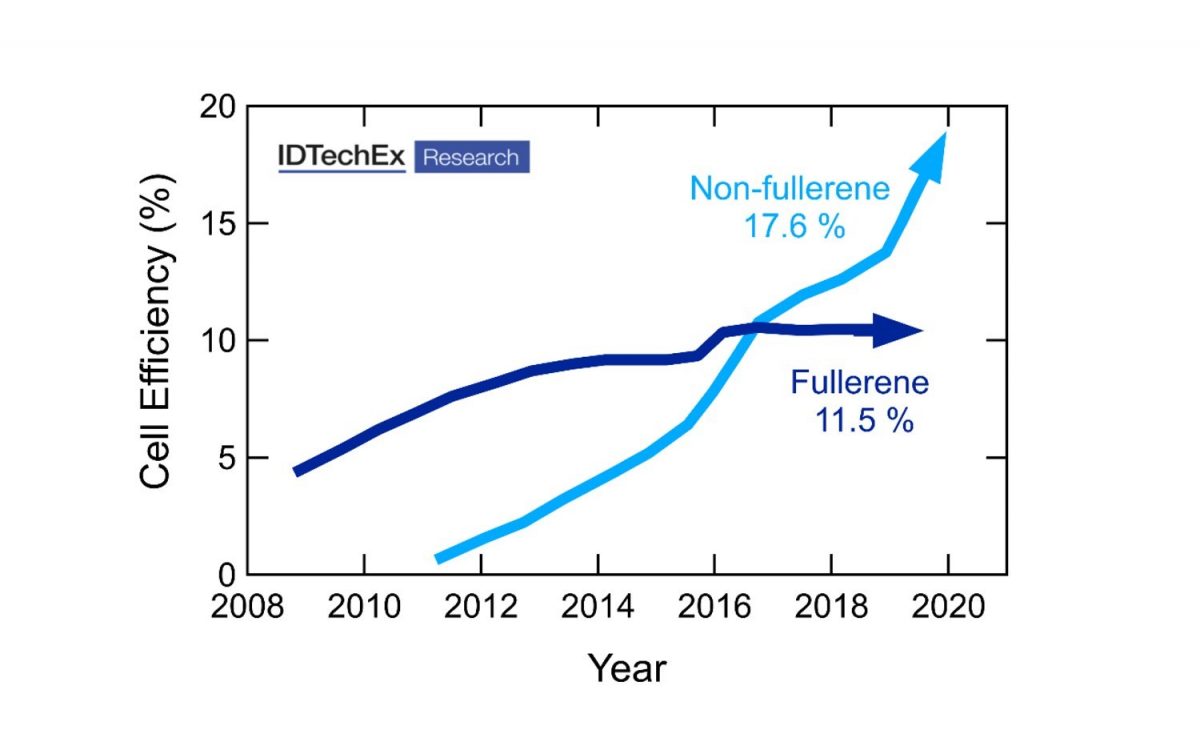
Around 2015 single-junction organic solar cell efficiencies seemed to be plateauing at around 11%, and the technology was largely regarded as a nice idea that never quite met the necessary efficiency and longevity requirements. However, recently efficiencies have increased, while the differentiated attributes of OPV enable commercial viability for applications such as building-integrated, indoor, and semi-transparent photovoltaics. Additional discussion of this renaissance in OPV, along with analysis of the printed electronic materials market, is provided in the recently released IDTechEx report «Materials for Printed/Flexible Electronics 2021-2031: Technologies, Applications, Market Forecasts«.

OPV suits emerging applications

OPV offers all the advantages associated with printed electronics: flexibility, thinness, low weight and energy-efficient manufacturing. These attributes make it ideal for small volume emerging applications where flexibility and a thin film format is essential, such as incorporating solar panels into clothing and bags. However, for established applications such as rooftop panels, these are offset by the lower efficiency and perceived lower durability relative to conventional silicon PV.

As such, some of the most promising applications for OPV with the potential for high volumes are those that exploit a feature not present in silicon cells: a tunable absorption spectrum. Changing the molecules used to make the active, light-absorbing layer enables semi-transparent solar cells with around 70% transmission at visible wavelengths. This approach reduces installation costs since window glass will be installed in buildings anyway while harvesting energy from non-visible light reduces air conditioning requirements – Brazilian OPV manufacturer Sunew are seeing rapid growth for this application.

Another emerging application in which OPV is well-suited is indoor energy harvesting. The light-absorbing molecules can be chosen to maximize efficiency for the emission spectrum of indoor lighting, such as white LEDs or fluorescent tubes, while the lower intensity reduces unwanted energy loss mechanisms. These features enable OPV to out-compete silicon PV for indoor applications. Indeed, Swedish company Epishine have raised millions of Euros to commercialize OPV for indoor energy harvesting, targeting low power IoT applications.

Technological transition brings multiple benefits

Improvements in OPV efficiency and stability have largely been driven by a recent technological transition. The first generation of OPV cells had the active, light-absorbing layer containing a blend of polymer and fullerene, with an energy level offset between the materials enabling charges to be separated and thus current to be produced. The fullerene is known as an acceptor material and was regarded as an essential component of an organic solar cell. However, fullerene-based molecules have now largely been replaced with non-fullerene acceptors (NFAs). This technological transition brings multiple benefits, including:

  • Increased efficiency (now over 17%, see Figure 1)
  • Increased stability
  • Greater tunability
  • Increased absorption 
  • Facilitating simpler donor polymers
  • Improved printability
  • Easier manufacturing of acceptor materials

Analyzing the printed electronic materials market

Extensive discussion regarding organic photovoltaics and the opportunities for this technology in emerging applications are given in the new IDTechEx report «Materials for Printed/Flexible Electronics 2021-2031: Technologies, Applications, Market Forecasts«. This report also covers a wide range of other materials, including materials for organic light-emitting diodes, transistors and photodetectors, carbon nanotubes, perovskites, quantum dots, functional inorganic inks, conductive adhesives, low-temperature solder, and conductive inks. Our granular market forecasts (in both revenue and volume (kg)) cover each of the material categories outlined above, with breakdowns into further subcategories where relevant. The market is enabled by specialized, functional materials, with the report focusing on material requirements, progress, and opportunities. Technical analysis and an interview-led approach bring the reader unbiased outlooks, benchmarking studies, and player assessments across the diverse printed electronic materials market.

For more information on this report, please visit www.IDTechEx.com/PEMats or for the full portfolio of Printed Electronics research available from IDTechEx please visit www.IDTechEx.com/Research/PE.

About IDTechEx

IDTechEx guides your strategic business decisions through its Research, Subscription and Consultancy products, helping you profit from emerging technologies. For more information, contact research@IDTechEx.com or visit www.IDTechEx.com.

Images download:

https://www.dropbox.com/sh/r0mg9vbl6t9u65r/AAAHsDzhhm-JBqQDI8vkOvZBa?dl=0

Media Contact:

Natalie Moreton
Digital Marketing Manager
press@IDTechEx.com
+44(0)1223 812300

Social Media Links:

Twitter: https://www.twitter.com/IDTechEx
LinkedIn: https://www.linkedin.com/company/idtechex/
Facebook: https://www.facebook.com/IDTechExResearch

Photo: https://mma.prnewswire.com/media/1427983/IDTechEx_cell_efficiency.jpg
Logo: https://mma.prnewswire.com/media/478371/IDTechEx_Logo.jpg

Cision View original content to download multimedia:http://www.prnewswire.com/news-releases/a-second-chance-for-organic-photovoltaics-idtechex-investigates-301216360.html

SOURCE IDTechEx

Arriver™ presents software stack for Advanced Driver Assistance and semi-autonomous driving

STOCKHOLM, Jan. 27, 2021 /PRNewswire/ — Arriver™ today presents the capabilities of its next generation software stack for Advanced Driver Assistance and (ADAS) and semi-autonomous driving. The presentation by Arriver’s Head of Technology, Salah Hadi at Qualcomm’s annual Automotive Summit outlines how Arriver™ will provide a leading software stack enabling Level 1 ADAS to Level 3 semi-autonomous driving in 2024.

Arriver is developing this next generation software stack to…

STOCKHOLM, Jan. 27, 2021 /PRNewswire/ — Arriver™ today presents the capabilities of its next generation software stack for Advanced Driver Assistance and (ADAS) and semi-autonomous driving. The presentation by Arriver’s Head of Technology, Salah Hadi at Qualcomm’s annual Automotive Summit outlines how Arriver™ will provide a leading software stack enabling Level 1 ADAS to Level 3 semi-autonomous driving in 2024.

Arriver is developing this next generation software stack to be an open, flexible and scalable solution which will allow automotive manufacturers and automotive suppliers to, based on a robust software platform, tailor and customize solutions to their specific needs based on their individual product development strategies.

The software stack consists of a fifth-generation perception stack which is built on almost two decades of development of vision-based perception. The fifth generation will provide high resolution, using 8-megapixel cameras, allowing for higher framerates and provide a wider field of view of 120 degrees, compared to today’s solutions.

The Arriver stack will provide full NCAP ratings and include features like Automatic Cruise Control, Pilot Assist, Glare Free High Beam, Lane Keep Assist, and Traffic Jam Assist supported by state of the art deep learning based detection functions like full 3D vehicle detection, pedestrians, bicycles, motor cycles as well as traffic signs, traffic lights. On top of that it will enable innovative solutions for determining drive free space and challenging police restricted and road work scenarios.

The development uses the next generation of Arrivers Convolutional Neural Network (CNN), which is up to 100 time more powerful than the current generation and will allow for the higher accuracy necessary for Level 3 applications and beyond, when the car takes over responsibility for the driver.

The Arriver software will include up-to-date fusion capabilities, catering for simultaneous input from a number of different sensor types beyond vision, including radar, lidar, driver monitoring, thermal sensing, and ultrasonic sensor for short range (parking) application.

Arriver‘s second generation drive policy; which will drive the vehicles decision making and actuation of the cars movement; will be developed and offered as part of the full software solution.

The drive policy stack will further allow for up to 12 cameras, creating a high resolution, real time image of the environment around the vehicle. This capability will pave the way for fully autonomous driving in most scenarios and be Level 3 and higher capable from its introduction in production vehicles by 2024.

Using the latest artificial intelligence and deep learning techniques both the perception and drive policy software will be able to support active learning, allowing for improved functionality over time with limited need for human interaction. In addition, Arriver is using advanced annotation concepts like non-causal stereo vision for automatic ground truth generation, leveraging the strong stereo vision knowledge and extensive data base. Non-causal stereo is moving detailed stereo information from future frames to the current frame, generating accurate ground truth for training and validation.

As its main System on a Chip (SoC) hardware platform Arriver will use the Qualcomm® Snapdragon Ride™  platform expanded to support all tiers from L1 to L3 and above systems,  which will bring industry leading performance and power management and a range of options allowing for a scalable system suitable for mass market cars as well as pushing the envelope for what is possible  in the high-end premium vehicle market.

In summary, Arriver software will be scalable and flexible, delivering industry leading performance in a new way not available in the market today. The software is going to be available to all auto manufacturers and Tier1 suppliers, and this will allow car manufacturers to create fantastic driving experience tailored to their own specific needs.

The Technology Deep Dive will be presented by Salah Hadi at Qualcomm’s automotive day on January 27, 2021.

For more information please contact:
Thomas Jönsson, EVP Communications & IR,
thomas.jonsson@veoneer.com, tel +46 (0)8 527 762 27

Arriver

Arriver, a new software unit and brand which will be fully focused on further developing perception, fusion and drive policy software for the next generation cars. It builds on more than a decade of experience in Active Safety software development and will deliver an open, scalable and flexible architecture solution running on Qualcomm® Snapdragon Ride™ System on a Chip (SoC) platform. Arriver is a wholly owned unit within Veoneer (NYSE: VNE and SSE: VNE-SDB)

This information was brought to you by Cision http://news.cision.com

https://news.cision.com/arriver/r/arriver–tm–presents-software-stack-for-advanced-driver-assistance-and-semi-autonomous-driving,c3274988

The following files are available for download:

Arriver™ presents software stack for Advanced Driver Assistance and semi-autonomous driving

STOCKHOLM, Jan. 27, 2021 /PRNewswire/ — Arriver™ today presents the capabilities of its next generation software stack for Advanced Driver Assistance and (ADAS) and semi-autonomous driving. The presentation by Arriver’s Head of Technology, Salah Hadi at Qualcomm’s annual Automotive Summit outlines how Arriver™ will provide a leading software stack enabling Level 1 ADAS to Level 3 semi-autonomous driving in 2024.

Arriver is developing this next generation software stack to…

STOCKHOLM, Jan. 27, 2021 /PRNewswire/ — Arriver™ today presents the capabilities of its next generation software stack for Advanced Driver Assistance and (ADAS) and semi-autonomous driving. The presentation by Arriver’s Head of Technology, Salah Hadi at Qualcomm’s annual Automotive Summit outlines how Arriver™ will provide a leading software stack enabling Level 1 ADAS to Level 3 semi-autonomous driving in 2024.

Arriver is developing this next generation software stack to be an open, flexible and scalable solution which will allow automotive manufacturers and automotive suppliers to, based on a robust software platform, tailor and customize solutions to their specific needs based on their individual product development strategies.

The software stack consists of a fifth-generation perception stack which is built on almost two decades of development of vision-based perception. The fifth generation will provide high resolution, using 8-megapixel cameras, allowing for higher framerates and provide a wider field of view of 120 degrees, compared to today’s solutions.

The Arriver stack will provide full NCAP ratings and include features like Automatic Cruise Control, Pilot Assist, Glare Free High Beam, Lane Keep Assist, and Traffic Jam Assist supported by state of the art deep learning based detection functions like full 3D vehicle detection, pedestrians, bicycles, motor cycles as well as traffic signs, traffic lights. On top of that it will enable innovative solutions for determining drive free space and challenging police restricted and road work scenarios.

The development uses the next generation of Arrivers Convolutional Neural Network (CNN), which is up to 100 time more powerful than the current generation and will allow for the higher accuracy necessary for Level 3 applications and beyond, when the car takes over responsibility for the driver.

The Arriver software will include up-to-date fusion capabilities, catering for simultaneous input from a number of different sensor types beyond vision, including radar, lidar, driver monitoring, thermal sensing, and ultrasonic sensor for short range (parking) application.

Arriver‘s second generation drive policy; which will drive the vehicles decision making and actuation of the cars movement; will be developed and offered as part of the full software solution.

The drive policy stack will further allow for up to 12 cameras, creating a high resolution, real time image of the environment around the vehicle. This capability will pave the way for fully autonomous driving in most scenarios and be Level 3 and higher capable from its introduction in production vehicles by 2024.

Using the latest artificial intelligence and deep learning techniques both the perception and drive policy software will be able to support active learning, allowing for improved functionality over time with limited need for human interaction. In addition, Arriver is using advanced annotation concepts like non-causal stereo vision for automatic ground truth generation, leveraging the strong stereo vision knowledge and extensive data base. Non-causal stereo is moving detailed stereo information from future frames to the current frame, generating accurate ground truth for training and validation.

As its main System on a Chip (SoC) hardware platform Arriver will use the Qualcomm® Snapdragon Ride™  platform expanded to support all tiers from L1 to L3 and above systems,  which will bring industry leading performance and power management and a range of options allowing for a scalable system suitable for mass market cars as well as pushing the envelope for what is possible  in the high-end premium vehicle market.

In summary, Arriver software will be scalable and flexible, delivering industry leading performance in a new way not available in the market today. The software is going to be available to all auto manufacturers and Tier1 suppliers, and this will allow car manufacturers to create fantastic driving experience tailored to their own specific needs.

The Technology Deep Dive will be presented by Salah Hadi at Qualcomm’s automotive day on January 27, 2021.

For more information please contact:
Thomas Jönsson, EVP Communications & IR,
thomas.jonsson@veoneer.com, tel +46 (0)8 527 762 27

Arriver

Arriver, a new software unit and brand which will be fully focused on further developing perception, fusion and drive policy software for the next generation cars. It builds on more than a decade of experience in Active Safety software development and will deliver an open, scalable and flexible architecture solution running on Qualcomm® Snapdragon Ride™ System on a Chip (SoC) platform. Arriver is a wholly owned unit within Veoneer (NYSE: VNE and SSE: VNE-SDB)

This information was brought to you by Cision http://news.cision.com

https://news.cision.com/arriver/r/arriver–tm–presents-software-stack-for-advanced-driver-assistance-and-semi-autonomous-driving,c3274988

The following files are available for download:

Arriver™ presents software stack for Advanced Driver Assistance and semi-autonomous driving

STOCKHOLM, Jan. 27, 2021 /PRNewswire/ — Arriver™ today presents the capabilities of its next generation software stack for Advanced Driver Assistance and (ADAS) and semi-autonomous driving. The presentation by Arriver’s Head of Technology, Salah Hadi at Qualcomm’s annual Automotive Summit outlines how Arriver™ will provide a leading software stack enabling Level 1 ADAS to Level 3 semi-autonomous driving in 2024.

Arriver is developing this next generation software stack to…

STOCKHOLM, Jan. 27, 2021 /PRNewswire/ — Arriver™ today presents the capabilities of its next generation software stack for Advanced Driver Assistance and (ADAS) and semi-autonomous driving. The presentation by Arriver’s Head of Technology, Salah Hadi at Qualcomm’s annual Automotive Summit outlines how Arriver™ will provide a leading software stack enabling Level 1 ADAS to Level 3 semi-autonomous driving in 2024.

Arriver is developing this next generation software stack to be an open, flexible and scalable solution which will allow automotive manufacturers and automotive suppliers to, based on a robust software platform, tailor and customize solutions to their specific needs based on their individual product development strategies.

The software stack consists of a fifth-generation perception stack which is built on almost two decades of development of vision-based perception. The fifth generation will provide high resolution, using 8-megapixel cameras, allowing for higher framerates and provide a wider field of view of 120 degrees, compared to today’s solutions.

The Arriver stack will provide full NCAP ratings and include features like Automatic Cruise Control, Pilot Assist, Glare Free High Beam, Lane Keep Assist, and Traffic Jam Assist supported by state of the art deep learning based detection functions like full 3D vehicle detection, pedestrians, bicycles, motor cycles as well as traffic signs, traffic lights. On top of that it will enable innovative solutions for determining drive free space and challenging police restricted and road work scenarios.

The development uses the next generation of Arrivers Convolutional Neural Network (CNN), which is up to 100 time more powerful than the current generation and will allow for the higher accuracy necessary for Level 3 applications and beyond, when the car takes over responsibility for the driver.

The Arriver software will include up-to-date fusion capabilities, catering for simultaneous input from a number of different sensor types beyond vision, including radar, lidar, driver monitoring, thermal sensing, and ultrasonic sensor for short range (parking) application.

Arriver‘s second generation drive policy; which will drive the vehicles decision making and actuation of the cars movement; will be developed and offered as part of the full software solution.

The drive policy stack will further allow for up to 12 cameras, creating a high resolution, real time image of the environment around the vehicle. This capability will pave the way for fully autonomous driving in most scenarios and be Level 3 and higher capable from its introduction in production vehicles by 2024.

Using the latest artificial intelligence and deep learning techniques both the perception and drive policy software will be able to support active learning, allowing for improved functionality over time with limited need for human interaction. In addition, Arriver is using advanced annotation concepts like non-causal stereo vision for automatic ground truth generation, leveraging the strong stereo vision knowledge and extensive data base. Non-causal stereo is moving detailed stereo information from future frames to the current frame, generating accurate ground truth for training and validation.

As its main System on a Chip (SoC) hardware platform Arriver will use the Qualcomm® Snapdragon Ride™  platform expanded to support all tiers from L1 to L3 and above systems,  which will bring industry leading performance and power management and a range of options allowing for a scalable system suitable for mass market cars as well as pushing the envelope for what is possible  in the high-end premium vehicle market.

In summary, Arriver software will be scalable and flexible, delivering industry leading performance in a new way not available in the market today. The software is going to be available to all auto manufacturers and Tier1 suppliers, and this will allow car manufacturers to create fantastic driving experience tailored to their own specific needs.

The Technology Deep Dive will be presented by Salah Hadi at Qualcomm’s automotive day on January 27, 2021.

For more information please contact:
Thomas Jönsson, EVP Communications & IR,
thomas.jonsson@veoneer.com, tel +46 (0)8 527 762 27

Arriver

Arriver, a new software unit and brand which will be fully focused on further developing perception, fusion and drive policy software for the next generation cars. It builds on more than a decade of experience in Active Safety software development and will deliver an open, scalable and flexible architecture solution running on Qualcomm® Snapdragon Ride™ System on a Chip (SoC) platform. Arriver is a wholly owned unit within Veoneer (NYSE: VNE and SSE: VNE-SDB)

This information was brought to you by Cision http://news.cision.com

https://news.cision.com/arriver/r/arriver–tm–presents-software-stack-for-advanced-driver-assistance-and-semi-autonomous-driving,c3274988

The following files are available for download:

Cision View original content:http://www.prnewswire.com/news-releases/arriver-presents-software-stack-for-advanced-driver-assistance-and-semi-autonomous-driving-301216355.html

SOURCE Arriver

FlexGen, KPP Team Up to Deliver Kansas’ Solomon Energy Storage Center

DURHAM, N.C., Jan. 27, 2021 /PRNewswire/ — FlexGen, a leading energy storage technology company, announced that it is partnering with The Kansas Power…

DURHAM, N.C., Jan. 27, 2021 /PRNewswire/ — FlexGen, a leading energy storage technology company, announced that it is partnering with The Kansas Power Pool (KPP), to design, build and operate the Solomon Energy Storage Center in Minneapolis, Kansas. KPP is a member-driven public power organization which procures energy and transmission service for community-owned electric utilities across Kansas. 

«FlexGen is proud to serve KPP and the people of Kansas on this record-setting battery storage project.» Alan Grosse, COO

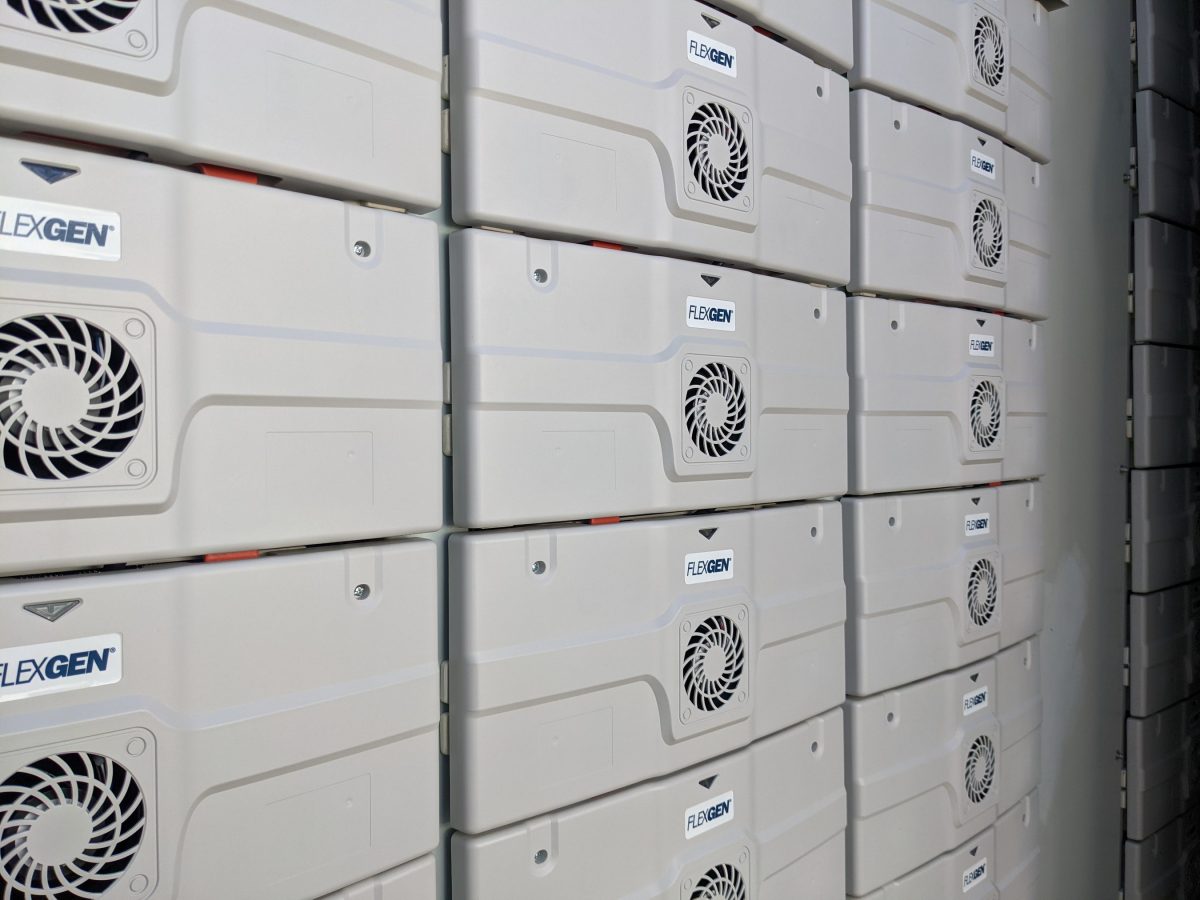
When commissioned at the end of the year, the Solomon Energy Storage Center will deliver a total of 1 MW of power – with enough energy to supply four hours of power to more than 250 homes when the utility’s members need it most. The FlexGen battery system also includes a «black start» capability for the utility to use if the grid goes offline. «Black start» is often compared to jumpstarting a car, where the FlexGen battery system provides the power needed to jumpstart backup generators that put more power onto the grid.

«The Solomon Energy Storage Center is another example of KPP delivering on its mission to provide cost-effective and reliable public power and services for our community of members,» says Mark Chesney, KPP’s CEO and General Manager. «We are pleased to work with FlexGen on this important project that will add resiliency and reduce costs.» Kelson Energy is providing project development, market analytics and implementation support to KPP on the project.

Kansas’ largest battery storage project
Sized at 5.1 MWh, the Solomon Energy Storage Center will be the largest battery project in Kansas, according to Bloomberg New Energy Finance data. Kelson Energy is providing project development, market analytics and implementation support to KPP on the project. The battery system operates on FlexGen’s energy management software platform, FlexGen HybridOS, which enables the seamless export of power onto the grid when it’s most needed – during times of peak demand or when weather disrupts the grid. During off-peak times the battery storage systems will charge when power prices are lower.

«FlexGen is proud to serve KPP and the people of Kansas on this record-setting battery storage project,» says Alan Grosse, COO of FlexGen. «The Solomon Energy Storage Center exemplifies how the FlexGen HybridOS platform enables utilities to affordably offer dependable energy storage for their customers.»

About FlexGen 
FlexGen is the second-largest U.S. energy storage technology company, and first in Texas with 80% market share. Leveraging its best-in-class energy management software and power electronics, FlexGen delivers utility-scale storage projects integrated with traditional and renewable power generation globally. Our customers and partners include the most technically and commercially demanding developers, utilities, government agencies and industrial companies in the world. For more information, visit www.flexgen.com.

MEDIA CONTACT:
Karen Carrera, 972-207-1935
karen@mckeemanpr.com

Cision View original content to download multimedia:http://www.prnewswire.com/news-releases/flexgen-kpp-team-up-to-deliver-kansas-solomon-energy-storage-center-301215636.html

SOURCE FlexGen

Darden Restaurants Helps Feeding America® Food Banks In Five States Add Mobile Food Pantries To Serve Communities In Need

ORLANDO, Fla., Jan. 27, 2021 /PRNewswire/ — As part of the company’s ongoing efforts to fight hunger, Darden Restaurants has partnered with Feeding America® to enhance mobile food pantry programs in areas with higher levels of food insecurity, including communities of color. Through a $500,000 grant from the Darden Restaurants, Inc. Foundation and additional support from Darden’s partners, Penske Truck Leasing and Lineage Logistics,…

ORLANDO, Fla., Jan. 27, 2021 /PRNewswire/ — As part of the company’s ongoing efforts to fight hunger, Darden Restaurants has partnered with Feeding America® to enhance mobile food pantry programs in areas with higher levels of food insecurity, including communities of color. Through a $500,000 grant from the Darden Restaurants, Inc. Foundation and additional support from Darden’s partners, Penske Truck Leasing and Lineage Logistics, five Feeding America food banks will each receive a 26-foot refrigerated box truck to help increase access to nutritious food and address transportation needs.

«As a restaurant company, we are uniquely positioned to make a meaningful difference in the fight against hunger, and we are proud to partner with Feeding America to make a positive impact in communities where it is needed most,» said Gene Lee, Chairman and CEO of Darden. «Mobile food pantries are an important tool to help food banks meet the increased need caused by the pandemic. These vehicles will help Feeding America food banks in five different states directly distribute a large supply of food in their communities for years to come.»

Due to the coronavirus pandemic, Feeding America projects that one in six people could experience food insecurity, and people of color are even more likely to face hunger. According to data from the U.S. Department of Agriculture, when compared to white households, black households are 2.4 times more likely to be food insecure, and Hispanic households are two times more likely.

«Hunger in America is a devastating reality for millions of our neighbors. The pandemic has created an increased need for food assistance and caused major disruptions for charitable food distribution,» said Claire Babineaux-Fontenot, Chief Executive Officer for Feeding America. «Mobile food pantries are a critical solution to addressing both concerns. These refrigerated vehicles will remove significant barriers to getting food to vulnerable populations in five different communities. We are grateful to Darden, Penske and Lineage for making this possible.»

Feeding America helped identify food banks serving communities of color with disproportionately high levels of food insecurity and the need to increase their mobile food pantry capacity to serve neighbors facing hunger. Food banks receiving this gift include:

  • Feeding the Valley Food Bank in Midland, Ga.
  • Food Bank of Northwest Louisiana in Shreveport, La.
  • Mid-South Food Bank in Memphis, Tenn.
  • San Antonio Food Bank in San Antonio, Texas
  • Second Harvest of Central Florida in Orlando, Fla.

Darden and the Darden Foundation have a long-standing commitment to help fight hunger and have been partners with Feeding America for more than 10 years. Since 2018, the Darden Foundation has provided $6.5 million to support member food banks across all 50 states.

These efforts go hand-in-hand with Darden’s Harvest program. Each day, every Darden restaurant collects surplus, wholesome food that is not served to guests and prepares it for donation to local nonprofit partners. Since its inception, more than 120 million pounds of food — totaling more than 100 million meals — have been donated through the Harvest program.

About Darden Restaurants and The Darden Foundation
Darden is a restaurant company featuring a portfolio of differentiated brands that include Olive Garden, LongHorn Steakhouse, Cheddar’s Scratch Kitchen, Yard House, The Capital Grille, Seasons 52, Bahama Breeze and Eddie V’s. For more information, please visit www.darden.com.

The Darden Foundation works to bring to life our spirit of service through its philanthropic support of charitable organizations across the country. Since 1995, The Darden Foundation has awarded more than $90 million in grants to non-profit organizations such as Feeding America, National Restaurant Association Educational Foundation (NRAEF) and American Red Cross.

About Feeding America
Feeding America® is the largest hunger-relief organization in the United States. Through a network of 200 food banks and 60,000 food pantries and meal programs, we provide meals to more than 40 million people each year. Feeding America also supports programs that prevent food waste and improve food security among the people we serve; educates the public about the problem of hunger; and advocates for legislation that protects people from going hungry. Visit http://www.feedingamerica.org, find us on Facebook or follow us on Twitter.

Cision View original content to download multimedia:http://www.prnewswire.com/news-releases/darden-restaurants-helps-feeding-america-food-banks-in-five-states-add-mobile-food-pantries-to-serve-communities-in-need-301216345.html

SOURCE Darden Restaurants, Inc.

Worldwide Electronic Power Steering Industry to 2027 – Growing Trends of Electrification of Vehicles Presents Opportunities

DUBLIN, Jan. 27, 2021 /PRNewswire/ — The «Electronic Power Steering Market Forecast to 2027 – COVID-19 Impact and Global Analysis By Type; Application, Passenger Cars, Heavy Commercial Vehicles» report has been added to ResearchAndMarkets.com’s offering.

Research and Markets Logo

According to this report the global electronic power steering market was valued at US$ 52,692.31 million in 2019 and is projected to reach US$ 54,933.16 million by 2027; it is expected to grow at a CAGR of 3.63% from 2020 to 2027.

There is an increase in adoption of buses and trucks across the world, specifically for logistics and public transportation purposes. In Asia, Oceania, and Europe, populations rely more on public transportation, whereas in North America, transportation is mainly through private vehicles. Growing population in urban areas is propelling the need of expansion of public transportation, with insufficiency of existing transportation infrastructure. The OEMs worldwide are now focusing on reducing the global carbon footprint, thus boosting the use of electric vehicles. With the growing mobility on demand, the manufacturers and users of passenger cars and taxis are focusing on the deployment of greener technologies.

The manufacturers are majorly focusing on vehicle electrification, specifically in the passenger cars segment. In May 2019, the Ministry of Transport and various other ministries in China mutually issued the Green Travel Action Plan for 2019-2022 that would promote the use of green vehicles. Further, the country would continue to enhance public transportation facilities and information systems supporting green transportation. The governments across different countries are taking several initiatives to boost the adoption of electric vehicles – such as e-trucks and e-buses – in their public transportation to reduce CO2 emissions; they are offering tax rebates and incentives for this purpose. A few of the electric vehicle models include BYD K9, Mercedes Benz electric truck, and Tata Starbus Hybrid e-buses. Recently, a few of the commercial vehicle manufacturers introduced electric buses to the automotive market, while several OEMs announced the plans for converting full-size trucks or pickup trucks into battery EV platforms. These factors are expected to create huge opportunities for the implementation of new technologies such as EPS in the world.

Asia Pacific held the largest share of the electronic power steering market in 2019, followed by Europe and North America. Further, the market in Asia Pacific is projected to witness the highest CAGR during the forecast period. The electronic power steering market is segmented on the basis of type, application, and geography. Based on type, the market is segmented into column-assisted electronic power steering (C-EPS), pinion-assisted electronic power steering (P-EPS), rack-assisted power steering system (R-EPS), and electronic hydraulic power steering (EHPS). The C-EPS segment accounted for the largest share of the overall market during the forecast period from 2020 to 2027. On the basis of application, the electronic power steering market is further segmented into light commercial vehicles (LCV), passenger cars, and heavy commercial vehicles (HCV). In 2019, the passenger cars segment accounted for a substantial share in the market.

Impact of COVID-19 Pandemic on Electronic Power Steering (EPS) Market

The emergence and rapid spread of COVID-19 has paralyzed numerous developed and developing countries. The continuous surge in count of infected patients is threatening several industries across the globe. As of December 2020, the US, India, Brazil, Russia, and France are a few of the worst-affected countries in terms confirmed cases and reported deaths. According to the latest WHO figures, the global count of confirmed cases has reached 22,071,625, while the death count has reach 1,773,719. The coronavirus outbreak has been affecting economies and industries in various countries due to lockdowns, travel bans, and business shutdowns. Since majority of the countries are exercising lockdowns, the demand for electronic power steering is decreasing at a prominent rate. This is due to the fact that, the key electronic power steering purchasing countries have been restricting their investment on these components, and are utilizing a fair percentage of their budget to combat COVID-19. The temporary shutdown of manufacturing facilities is also hampering the electronic power steering market.

Hyundai Mobis, JTEKT Corporation, Mitsubishi Electric Corporation, Nexteer Automotive, NSK Ltd., Robert Bosch GmbH, Showa Corporation, The Mando Corporation, ThyssenKrupp AG, and ZF Friedrichshafen AG are among the major companies operating in the electronic power steering market.

Reasons to Buy:

  • Save and reduce time carrying out entry-level research by identifying the growth, size, leading players and segments in the global electronic power steering (EPS) market
  • Highlights key business priorities in order to assist companies to realign their business strategies
  • The key findings and recommendations highlight crucial progressive industry trends in the global electronic power steering (EPS) market, thereby allowing players across the value chain to develop effective long-term strategies
  • Develop/modify business expansion plans by using substantial growth offering developed and emerging markets
  • Scrutinize in-depth global market trends and outlook coupled with the factors driving the market, as well as those hindering it
  • Enhance the decision-making process by understanding the strategies that underpin commercial interest with respect to client products, segmentation, pricing and distribution

Key Topics Covered:

1. Introduction
1.1 Study Scope
1.2 Report Guidance
1.3 Market Segmentation
1.3.1 Electronic Power Steering Market – By Type
1.3.2 Electronic Power Steering Market – By Application
1.3.3 Electronic Power Steering Market – By Geography

2. Key Takeaways

3. Research Methodology
3.1 Coverage
3.2 Secondary Research
3.3 Primary Research

4. Electronic Power Steering (EPS) Market Landscape
4.1 Market Overview
4.2 PEST Analysis
4.2.1 North America
4.2.2 Europe
4.2.3 Asia Pacific
4.2.4 Middle East and Africa
4.2.5 South America
4.3 Ecosystem Analysis
4.4 Expert Opinion

5. Electronic Power Steering (EPS) – Market Dynamics
5.1 Market Drivers
5.1.1 Mounting Requirement of Fuel-Efficient Vehicles Globally
5.1.2 Boosting Adoption of Steer-by-Wire (SbW) Technology
5.1.3 Growing Sales of Premium Cars in China
5.2 Market Restraints
5.2.1 High Cost of Electronic Power Steering (EPS)
5.3 Market Opportunities
5.3.1 Growing Trends of Electrification of Vehicles
5.4 Future Trends
5.4.1 Rising Development of Self-Driving Vehicles
5.5 Impact Analysis of Drivers and Restraints

6. Electronic Power Steering (EPS) – Global Market Analysis
6.1 Electronic Power Steering (EPS) Market Overview
6.2 Electronic Power Steering (EPS) Market – Revenue and Forecast to 2027 (US$ Million)
6.3 Market Positioning – Global Market Players Ranking

7. Electronic Power Steering (EPS) Market Analysis – By Type
7.1 Overview
7.2 Electronic Power Steering (EPS) Market Breakdown, By Type, 2018 & 2027
7.3 Column Assisted Electronic Power Steering(C-EPS)
7.3.1 Overview
7.3.2 Column Assisted Electronic Power Steering(C-EPS) Market Revenue and Forecasts to 2027 (US$ Mn)
7.4 Pinion Assisted Electronic Power Steering (P-EPS)
7.4.1 Overview
7.4.2 Pinion Assisted Electronic Power Steering (P-EPS) Market Revenue and Forecasts to 2027 (US$ Mn)
7.5 Rack Assisted Power Steering System (R-EPS)
7.5.1 Overview
7.5.2 Rack Assisted Power Steering System (R-EPS) Market Revenue and Forecasts to 2027 (US$ Mn)
7.6 Electronic Hydraulic Power Steering (E-HPS)
7.6.1 Overview
7.6.2 Electronic Hydraulic Power Steering (E-HPS) Market Revenue and Forecasts to 2027 (US$ Mn)

8. Electronic Power Steering (EPS) Market Analysis – By Application
8.1 Overview
8.2 Global Electronic Power Steering (EPS) Market Breakdown, By Application, 2019 & 2027 (%)
8.3 Light Commercial Vehicles (LCV)
8.3.1 Overview
8.3.2 Light Commercial Vehicles (LCV) Market Forecast and Analysis
8.4 Passenger Cars
8.4.1 Overview
8.4.2 Passenger Cars Market Forecast and Analysis
8.5 Heavy Commercial Vehicles (HCV)
8.5.1 Overview
8.5.2 Heavy Commercial Vehicles (HCV) Market Forecast and Analysis

9. Electronic Power Steering (EPS) Market – Geographic Analysis
9.1 Overview
9.2 North America: Electronic Power Steering (EPS) Market
9.3 Europe: Electronic Power Steering (EPS) Market
9.4 APAC: Electronic Power Steering (EPS) Market
9.5 MEA: Electronic Power Steering (EPS) Market
9.6 SAM: Electronic Power Steering (EPS) Market

10. Electronic Power Steering (EPS) Market – COVID-19 Impact Analysis
10.1 Overview
10.1.1 North America: Impact Assessment of COVID-19 Pandemic
10.1.2 Europe: Impact Assessment of COVID-19 Pandemic
10.1.3 Asia Pacific: Impact Assessment of COVID-19 Pandemic
10.1.4 Middle East and Africa: Impact Assessment of COVID-19 Pandemic
10.1.5 South America: Impact Assessment of COVID-19 Pandemic

11. Industry Landscape
11.1 Overview
11.2 Market Initiative
11.3 New Product Development

12. Company Profiles
12.1 Hyundai Mobis
12.1.1 Key Facts
12.1.2 Business Description
12.1.3 Products and Services
12.1.4 Financial Overview
12.1.5 SWOT Analysis
12.1.6 Key Developments
12.2 JTEKT Corporation
12.2.1 Key Facts
12.2.2 Business Description
12.2.3 Products and Services
12.2.4 Financial Overview
12.2.5 SWOT Analysis
12.2.6 Key Developments
12.3 Mitsubishi Electric Corporation
12.3.1 Key Facts
12.3.2 Business Description
12.3.3 Products and Services
12.3.4 Financial Overview
12.3.5 SWOT Analysis
12.3.6 Key Developments
12.4 Nexteer Automotive
12.4.1 Key Facts
12.4.2 Business Description
12.4.3 Products and Services
12.4.4 financial Overview
12.4.5 SWOT Analysis
12.4.6 Key Developments
12.5 NSK Ltd.
12.5.1 Key Facts
12.5.2 Business Description
12.5.3 Products and Services
12.5.4 Financial Overview
12.5.5 SWOT Analysis
12.5.6 Key Developments
12.6 Robert Bosch GmbH
12.6.1 Key Facts
12.6.2 Business Description
12.6.3 Products and Services
12.6.4 Financial Overview
12.6.5 SWOT Analysis
12.6.6 Key Developments
12.7 Showa Corporation
12.7.1 Key Facts
12.7.2 Business Description
12.7.3 Products and Services
12.7.4 Financial Overview
12.7.5 SWOT Analysis
12.7.6 Key Developments
12.8 The Mando Corporation
12.8.1 Key Facts
12.8.2 Business Description
12.8.3 Products and Services
12.8.4 Financial Overview
12.8.5 SWOT Analysis
12.8.6 Key Developments
12.9 ThyssenKrupp AG
12.9.1 Key Facts
12.9.2 Business Description
12.9.3 Products and Services
12.9.4 Financial Overview
12.9.5 SWOT Analysis
12.9.6 Key Developments
12.10 ZF Friedrichshafen AG
12.10.1 Key Facts
12.10.2 Business Description
12.10.3 Products and Services
12.10.4 Financial Overview
12.10.5 SWOT Analysis
12.10.6 Key Developments

13. Appendix
13.1 About the Publisher
13.2 Word Index

For more information about this report visit https://www.researchandmarkets.com/r/tbcb5d

Research and Markets also offers Custom Research services providing focused, comprehensive and tailored research.

Media Contact:

Research and Markets
Laura Wood, Senior Manager
press@researchandmarkets.com   

For E.S.T Office Hours Call +1-917-300-0470
For U.S./CAN Toll Free Call +1-800-526-8630
For GMT Office Hours Call +353-1-416-8900

U.S. Fax: 646-607-1904
Fax (outside U.S.): +353-1-481-1716

Cision View original content:http://www.prnewswire.com/news-releases/worldwide-electronic-power-steering-industry-to-2027—growing-trends-of-electrification-of-vehicles-presents-opportunities-301216113.html

SOURCE Research and Markets