Nuevos estudios evidencian como la COVID-19 y las crisis climáticas contribuyen a un importante incremento del hambre en América Latina

NUEVA YORK, 4 de marzo de 2021 /PRNewswire-HISPANIC PR WIRE/ — Más del 85 por ciento de familias que habitan comunidades rurales del llamado Corredor Seco en Nicaragua, Guatemala, El Salvador y Honduras se encuentran en diferentes niveles de inseguridad alimentaria, según una encuesta de hogares realizada por una coalición de organizaciones humanitarias y de…

NUEVA YORK, 4 de marzo de 2021 /PRNewswire-HISPANIC PR WIRE/ — Más del 85 por ciento de familias que habitan comunidades rurales del llamado Corredor Seco en Nicaragua, Guatemala, El Salvador y Honduras se encuentran en diferentes niveles de inseguridad alimentaria, según una encuesta de hogares realizada por una coalición de organizaciones humanitarias y de desarrollo, incluida Acción contra el Hambre, que es líder en la lucha mundial contra el hambre. Dos encuestas adicionales llevadas a cabo por la organización en Colombia y Perú también indican niveles alarmantemente altos de hambre como consecuencia de la pandemia de la COVID-19.
Incluso antes de la pandemia, más del 39% de las personas en Centroamérica se encontraban en situación de inseguridad alimentaria y los nuevos datos sugieren que la pandemia y las condiciones meteorológicas extremas podrían hacer que ese porcentaje se triplique en amplias zonas de la región.

«Aunque América Latina tiene más de 19 millones de casos confirmados de COVID-19, las personas a las que ayudamos dicen que le tienen más miedo al hambre que al virus», contó Miguel García, el director regional de Acción contra el Hambre en Centroamérica. «En los peores momentos de los confinamientos aplicados, aquellas personas que dependían de trabajos diarios informales perdieron sus ingresos debido a las restricciones de circulación. En los mercados, los alimentos son cada vez más costosos debido a las consecuencias comerciales y económicas de la pandemia». 

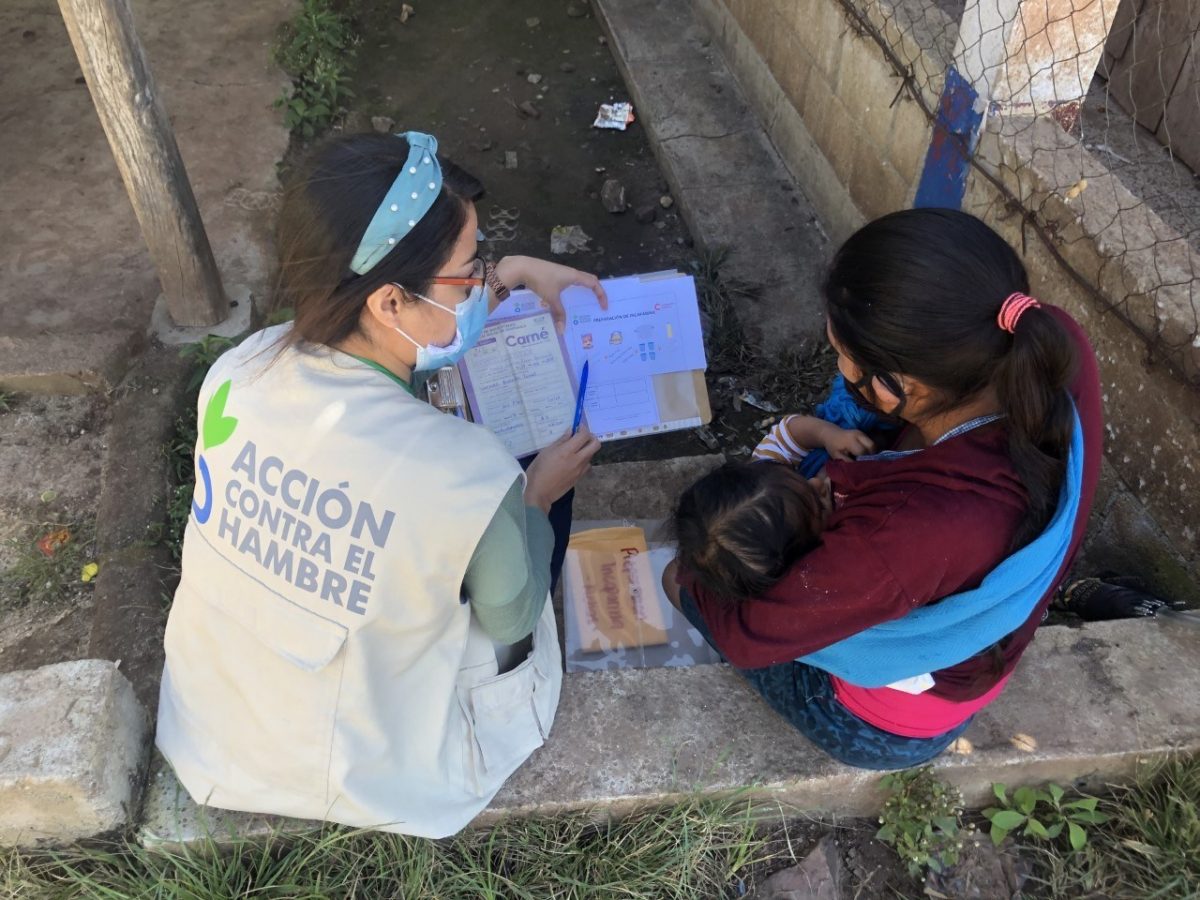
El Corredor Seco se extiende desde Nicaragua hasta Guatemala e incluye partes de El Salvador y Honduras, donde, según el Programa Mundial de Alimentos, al menos 1,4 millones de personas necesitan asistencia alimentaria. Acción contra el Hambre y ONG socias encuestaron miles de hogares de esta región en octubre y noviembre de 2020. En una muestra de 3700 hogares, el 86% de las familias vivían con distinto grado de inseguridad alimentaria.

Además del daño socioeconómico causado por la pandemia, se añaden las repercusiones de las graves sequías de 2018 y 2019, junto con los huracanes Iota y Eta, que azotaron la región en noviembre de 2020 y provocaron desplazamientos de población y la pérdida de cosechas. Las familias en situación de pobreza extrema y hambre se endeudaron, recurrieron a préstamos de sus familias o amigos, o pusieron en venta sus escasas posesiones.

«Los programas de protección social por parte de los Estados para las personas en peor situación socioeconómica pueden impedir que millones de personas caigan en la miseria. No obstante, la cobertura de estos programas es extremadamente dispar en la región, por lo que millones de personas no reciben la ayuda mínima que necesitan para cubrir necesidades básicas como es la alimentación más esencial», explicó García.

Acción contra el Hambre y ONG socias, con el apoyo de la Unión Europea, crearon una red de asistencia para proporcionar ayuda alimentaria y evitar que más de 50 000 personas en comunidades rurales del Corredor Seco alcancen niveles de hambre de emergencia.

Algunos datos nuevos adicionales indican que también aumentaron los niveles de pobreza y de hambre en Colombia y en Perú. En otra encuesta realizada a 34 000 familias de Colombia, el 98% afirmó no poder cubrir todas sus necesidades básicas, incluyendo alimentación y vivienda. Las condiciones de hacinamiento entre las familias de migrantes también aumentan la posibilidad de transmisión de la COVID-19. La encuesta a colombianos, venezolanos y personas con doble nacionalidad que viven en Colombia fue realizada por Acción contra el Hambre y sus ONG socias durante el transcurso de la pandemia, desde abril de 2020 hasta enero de 2021.

«Más del 58% declaró vivir en condiciones de hacinamiento», afirmó John Orlando, el director país de Acción contra el Hambre en Colombia. «En el 13% de los casos, hasta cinco personas debían compartir un dormitorio pequeño».

En Perú, los ingresos familiares se redujeron un promedio del 33%. Las llamadas «ollas comunes» (cocinas comunitarias autogestionadas, generalmente por mujeres) se han convertido en la forma de escapar del hambre para miles de peruanos.

«Según nuestra encuesta realizada a 222 familias que viven en la zona metropolitana de Lima, a 8 de cada 10 familias se les redujeron los ingresos. Tres de cada cuatro partes de la población encuestada se encuentran en situación de inseguridad alimentaria. Las familias venezolanas, muchas de las cuales llegaron buscando refugio en los últimos años, se vieron particularmente afectadas», señaló América Arias, directora país de Acción contra el Hambre en Perú. «La reducción de hierro e la dieta, algo fundamental para combatir la anemia es especialmente preocupante».

La asistencia en efectivo es una de las intervenciones humanitarias más efectivas en esta crisis. «Por un lado, es una alternativa digna, que le da la opción de elegir a las familias cómo atender sus necesidades más urgentes», comentó Orlando. «Los programas de transferencias de efectivo bien gestionados también permiten a los más vulnerables participar en la economía local. Esta inyección de dinero en efectivo en el mercado también fortalece las economías locales de las comunidades en las que viven estas familias».

Acción contra el Hambre necesita 78 millones de euros de la comunidad internacional para financiar su respuesta regional que se articula en tres ejes de acción:

  • Ayuda humanitaria para las familias mediante la provisión de alimentos y dinero en efectivo, un tratamiento contra la desnutrición, además de productos de higiene y equipos de protección para la prevención de la COVID-19.
  • Ayuda comunitaria a través del fortalecimiento de los sistemas de salud y clínicas, y el apoyo a pequeñas empresas para estimular la creación de empleo.
  • Recopilación y análisis de datos para evaluar los distintos desencadenantes del hambre a nivel local y adaptar las intervenciones con socios locales.

«Queremos crear una red de protección de último recurso para miles de personas que pasan hambre como consecuencia de la pandemia. Estamos tratando de mejorar la alimentación y el acceso al agua, y ayudarles a las personas a recuperar sus medios de vida. Vamos a trabajar sin descanso para lograrlo», afirmó Benedetta Lettera, responsable de los programas de Acción contra el Hambre en América Latina.

Más detalles

Acción contra el Hambre realizó tres encuestas distintas para medir el aumento del hambre en América Latina:

  • En Nicaragua, Guatemala, El Salvador y Honduras, Acción contra el Hambre, junto con nuestras ONG socias, Oxfam, COOPI, Trócaire y We World-GVC, encuestó a 3700 familias entre el 20 de octubre y el 13 de noviembre de 2020.
  • En Colombia, 34 000 colombianos, venezolanos y personas con doble nacionalidad fueron encuestados por teléfono o personalmente entre abril de 2020 y enero de 2021. Este estudio fue realizado por Acción contra el Hambre, el Consejo Danés para Refugiados y el Consejo Noruego para Refugiados.
  • Por último, 222 familias que viven en la zona metropolitana de Lima en Perú fueron encuestadas por Acción contra el Hambre entre el 14 de septiembre y el 11 de diciembre de 2020.

Acerca de Acción contra el Hambre

Acción contra el Hambre es especialista mundial en el hambre y líder de un movimiento internacional que tiene como objetivo acabar con el hambre de riesgo vital para siempre en nuestras vidas. Desde hace más de 40 años, la organización humanitaria y de desarrollo ha estado al frente del tratamiento y la prevención del hambre en aproximadamente 50 países. Solo en el año 2019, ayudó a más de 17 millones de personas.

Logo – https://mma.prnewswire.com/media/452004/Action_Against_Hunger_Logo.jpg


FUENTE Action Against Hunger

Los tratamientos en las salas de emergencia de los hospitales relacionados a lesiones por algunos productos aumentaron durante la pandemia, aun cuando las visitas a emergencias hayan disminuido en general

WASHINGTON, 4 de marzo de 2021 /PRNewswire-HISPANIC PR WIRE/ — La pandemia del COVID-19 ha afectado la forma en que los consumidores viven, trabajan y van a la escuela. Un nuevo informe (en inglés) de la Comisión de Seguridad de Productos del Consumidor de Estados Unidos (U.S. Consumer Product Safety Commission, CPSC), publicado durante la Semana Nacional de Protección del Consumidor, ahora muestra también un impacto en las lesiones causadas por productos del consumidor tratadas en las salas de emergencia de los…

WASHINGTON, 4 de marzo de 2021 /PRNewswire-HISPANIC PR WIRE/ — La pandemia del COVID-19 ha afectado la forma en que los consumidores viven, trabajan y van a la escuela. Un nuevo informe (en inglés) de la Comisión de Seguridad de Productos del Consumidor de Estados Unidos (U.S. Consumer Product Safety Commission, CPSC), publicado durante la Semana Nacional de Protección del Consumidor, ahora muestra también un impacto en las lesiones causadas por productos del consumidor tratadas en las salas de emergencia de los hospitales. El informe «Efecto de la pandemia del nuevo coronavirus en las estimaciones preliminares del NEISS» sugiere que, aunque los consumidores pudieron haber evitado presentarse a emergencias por algunas lesiones relacionadas con productos, lo hicieron casi con la misma frecuencia que el año pasado por lesiones más graves. Los tipos de productos que causaron lesiones también mostraron algunos aumentos y disminuciones importantes, destacando nuevos patrones de riesgo que pudieron haber surgido durante la pandemia.

Entre los hallazgos clave del informe, que examinó los datos de las salas de emergencia de los hospitales de marzo a septiembre de 2020, se encuentran:

  • El tratamiento en emergencias* de lesiones relacionadas con productos disminuyó en general en un 24%, pero el de lesiones graves relacionadas con productos, solo en un 1%.
  • Los mayores aumentos en las lesiones tratadas en emergencias, en todos los rangos de edad, ocurrieron con fuegos artificiales (56%), patinetas, scooters y patinetas eléctricas tipo hoverboard (39%), y lesiones graves por vehículos todo terreno (ATV), motonetas y minimotos (39%).
  • Las lesiones relacionadas con las baterías tipo botón tratadas en emergencias aumentaron en un 93% entre los niños pequeños (de 5 a 9 años).
  • Las lesiones vinculadas con el deporte disminuyeron significativamente, incluyendo las que ocurren normalmente en las escuelas (hasta en un 81%).
  • El tratamiento en emergencias aumentó considerablemente para las lesiones relacionadas con productos de limpieza (84%), y con jabones y detergentes (60%).
  • Aunque hubo un ligero aumento (1%) en las lesiones en general relacionadas con bicicletas, las lesiones para los usuarios de 40 años o más, aumentaron en un 21%, y en un 39% para los adultos mayores de 70 años.

Leer otros datos destacados del informe aquí.

«Estos datos empiezan a contar la historia de cómo los consumidores resultaron lesionados por los productos durante la pandemia», señala Robert Adler, presidente interino de la CPSC. «Sin embargo, el final de la historia aún no se ha escrito. Con más datos y recursos, la CPSC podrá ayudar a que los consumidores estén más seguros, ya sea que se encuentren en cuarentena en su casa o de regreso en el trabajo y la escuela».

Aunque esté entre los organismos federales de regulación más pequeños en materia de salud y seguridad, la CPSC tiene una amplia jurisdicción sobre miles de tipos de productos del consumidor. En los últimos meses, el presidente interino Adler ha presionado repetidamente para que se destinen recursos adicionales para que la entidad se ocupe de las preocupaciones del país con respecto a la seguridad de los productos del consumidor.

El informe de hoy es el primer indicio de los patrones de lesiones tomados de los primeros siete meses de la pandemia. Es una reseña de los cambios observados en los informes del Sistema Nacional de Vigilancia Electrónica de Lesiones (National Electronic Injury Surveillance System, NEISS) y compara las estimaciones preliminares de marzo a septiembre de 2020, con el periodo de marzo a septiembre de 2019. Aproximadamente uno de cada cincuenta hospitales a nivel nacional participa con el NEISS como parte de una muestra de hospitales seleccionados científicamente en todo el país.

A lo largo de la pandemia, la CPSC ha brindado a los consumidores consejos de seguridad en su Centro de información de seguridad sobre el COVID-19. Los datos del nuevo informe destacan áreas de especial preocupación para los consumidores:

  • Venenos: Mantenga los productos de limpieza en sus envases originales. Guárdelos bajo llave y fuera del alcance de los niños más pequeños.
  • Dispositivos de micromovilidad: Equípese con un casco antes de andar en scooter, patineta o patinetas eléctricas (hoverboards), y no lo haga la calle.
  • Fuegos artificiales: Nunca permita que los niños pequeños jueguen con fuegos artificiales o los enciendan, ni siquiera las luces de bengala (también conocidas como estrellitas).
  • Baterías: Mantenga los productos que funcionen con baterías pequeñas, incluyendo los controles remotos de la televisión, fuera del alcance de los niños y cerciórese de que los compartimentos de las baterías de los juguetes para niños estén debidamente asegurados.
  • Bicicletas: Use casco. Al comprar un casco, asegúrese de que la etiqueta diga «Complies with U.S. CPSC Safety Standards for Bicycle Helmets«(«Cumple con las normas de seguridad de la CPSC de EE. UU. para los cascos de bicicleta»).

*Nota: Las lesiones que se tratan en las salas de emergencias incluyen pacientes que reciben tratamiento y son dados de alta, así como pacientes con lesiones más graves que requieren una hospitalización posterior u otro tratamiento más avanzado.

Acerca de la CPSC
La Comisión de Seguridad de Productos del Consumidor de EE.UU. (U.S. Consumer Product Safety Commission, CPSC) se encarga de proteger al público contra riesgos irrazonables de lesión o muerte asociados con el uso de miles de tipos de productos del consumidor. Muertes, lesiones y daños a la propiedad debido a incidentes con productos del consumidor le cuestan al país más de $1 billón de dólares al año. La labor de la CPSC ha contribuido a una disminución en el índice de muertes y lesiones vinculadas a los productos del consumidor en los últimos 40 años.

La ley federal prohíbe a cualquier persona vender productos sujetos a un retiro voluntario del mercado anunciado públicamente y llevado a cabo por el fabricante; o a un retiro obligatorio ordenado por la Comisión.

Para más información:
– Visite SeguridadConsumidor.gov.
– Reciba alertas electrónicas
– Síganos en Twitter @SeguridadConsum, @USCPSC y en Facebook e Instagram @USCPSC.
– Reporte productos peligrosos o lesiones por productos en www.SaferProducts.gov.
– Llame a la línea de información al 800-638-2772 (teletipo 301-595-7054).
Contacto para los medios de comunicación.

*Entrevistas en español disponibles

Logo – https://mma.prnewswire.com/media/695177/US_Consumer_Product_Safety_Commission_Logo.jpg

FUENTE U.S. Consumer Product Safety Commission

Nuevos estudios evidencian como la COVID-19 y las crisis climáticas contribuyen a un importante incremento del hambre en América Latina

NUEVA YORK, 4 de marzo de 2021 /PRNewswire-HISPANIC PR WIRE/ — Más del 85 por ciento de familias que habitan comunidades rurales del llamado Corredor Seco en Nicaragua, Guatemala, El Salvador y Honduras se encuentran en diferentes niveles de inseguridad alimentaria, según una encuesta de hogares realizada por una coalición de organizaciones humanitarias y de…

NUEVA YORK, 4 de marzo de 2021 /PRNewswire-HISPANIC PR WIRE/ — Más del 85 por ciento de familias que habitan comunidades rurales del llamado Corredor Seco en Nicaragua, Guatemala, El Salvador y Honduras se encuentran en diferentes niveles de inseguridad alimentaria, según una encuesta de hogares realizada por una coalición de organizaciones humanitarias y de desarrollo, incluida Acción contra el Hambre, que es líder en la lucha mundial contra el hambre. Dos encuestas adicionales llevadas a cabo por la organización en Colombia y Perú también indican niveles alarmantemente altos de hambre como consecuencia de la pandemia de la COVID-19.

Incluso antes de la pandemia, más del 39% de las personas en Centroamérica se encontraban en situación de inseguridad alimentaria y los nuevos datos sugieren que la pandemia y las condiciones meteorológicas extremas podrían hacer que ese porcentaje se triplique en amplias zonas de la región.

«Aunque América Latina tiene más de 19 millones de casos confirmados de COVID-19, las personas a las que ayudamos dicen que le tienen más miedo al hambre que al virus», contó Miguel García, el director regional de Acción contra el Hambre en Centroamérica. «En los peores momentos de los confinamientos aplicados, aquellas personas que dependían de trabajos diarios informales perdieron sus ingresos debido a las restricciones de circulación. En los mercados, los alimentos son cada vez más costosos debido a las consecuencias comerciales y económicas de la pandemia». 

El Corredor Seco se extiende desde Nicaragua hasta Guatemala e incluye partes de El Salvador y Honduras, donde, según el Programa Mundial de Alimentos, al menos 1,4 millones de personas necesitan asistencia alimentaria. Acción contra el Hambre y ONG socias encuestaron miles de hogares de esta región en octubre y noviembre de 2020. En una muestra de 3700 hogares, el 86% de las familias vivían con distinto grado de inseguridad alimentaria.

Además del daño socioeconómico causado por la pandemia, se añaden las repercusiones de las graves sequías de 2018 y 2019, junto con los huracanes Iota y Eta, que azotaron la región en noviembre de 2020 y provocaron desplazamientos de población y la pérdida de cosechas. Las familias en situación de pobreza extrema y hambre se endeudaron, recurrieron a préstamos de sus familias o amigos, o pusieron en venta sus escasas posesiones.

«Los programas de protección social por parte de los Estados para las personas en peor situación socioeconómica pueden impedir que millones de personas caigan en la miseria. No obstante, la cobertura de estos programas es extremadamente dispar en la región, por lo que millones de personas no reciben la ayuda mínima que necesitan para cubrir necesidades básicas como es la alimentación más esencial», explicó García.

Acción contra el Hambre y ONG socias, con el apoyo de la Unión Europea, crearon una red de asistencia para proporcionar ayuda alimentaria y evitar que más de 50 000 personas en comunidades rurales del Corredor Seco alcancen niveles de hambre de emergencia.

Algunos datos nuevos adicionales indican que también aumentaron los niveles de pobreza y de hambre en Colombia y en Perú. En otra encuesta realizada a 34 000 familias de Colombia, el 98% afirmó no poder cubrir todas sus necesidades básicas, incluyendo alimentación y vivienda. Las condiciones de hacinamiento entre las familias de migrantes también aumentan la posibilidad de transmisión de la COVID-19. La encuesta a colombianos, venezolanos y personas con doble nacionalidad que viven en Colombia fue realizada por Acción contra el Hambre y sus ONG socias durante el transcurso de la pandemia, desde abril de 2020 hasta enero de 2021.

«Más del 58% declaró vivir en condiciones de hacinamiento», afirmó John Orlando, el director país de Acción contra el Hambre en Colombia. «En el 13% de los casos, hasta cinco personas debían compartir un dormitorio pequeño».

En Perú, los ingresos familiares se redujeron un promedio del 33%. Las llamadas «ollas comunes» (cocinas comunitarias autogestionadas, generalmente por mujeres) se han convertido en la forma de escapar del hambre para miles de peruanos.

«Según nuestra encuesta realizada a 222 familias que viven en la zona metropolitana de Lima, a 8 de cada 10 familias se les redujeron los ingresos. Tres de cada cuatro partes de la población encuestada se encuentran en situación de inseguridad alimentaria. Las familias venezolanas, muchas de las cuales llegaron buscando refugio en los últimos años, se vieron particularmente afectadas», señaló América Arias, directora país de Acción contra el Hambre en Perú. «La reducción de hierro e la dieta, algo fundamental para combatir la anemia es especialmente preocupante».

La asistencia en efectivo es una de las intervenciones humanitarias más efectivas en esta crisis. «Por un lado, es una alternativa digna, que le da la opción de elegir a las familias cómo atender sus necesidades más urgentes», comentó Orlando. «Los programas de transferencias de efectivo bien gestionados también permiten a los más vulnerables participar en la economía local. Esta inyección de dinero en efectivo en el mercado también fortalece las economías locales de las comunidades en las que viven estas familias».

Acción contra el Hambre necesita 78 millones de euros de la comunidad internacional para financiar su respuesta regional que se articula en tres ejes de acción:

  • Ayuda humanitaria para las familias mediante la provisión de alimentos y dinero en efectivo, un tratamiento contra la desnutrición, además de productos de higiene y equipos de protección para la prevención de la COVID-19.
  • Ayuda comunitaria a través del fortalecimiento de los sistemas de salud y clínicas, y el apoyo a pequeñas empresas para estimular la creación de empleo.
  • Recopilación y análisis de datos para evaluar los distintos desencadenantes del hambre a nivel local y adaptar las intervenciones con socios locales.

«Queremos crear una red de protección de último recurso para miles de personas que pasan hambre como consecuencia de la pandemia. Estamos tratando de mejorar la alimentación y el acceso al agua, y ayudarles a las personas a recuperar sus medios de vida. Vamos a trabajar sin descanso para lograrlo», afirmó Benedetta Lettera, responsable de los programas de Acción contra el Hambre en América Latina.

Más detalles

Acción contra el Hambre realizó tres encuestas distintas para medir el aumento del hambre en América Latina:

  • En Nicaragua, Guatemala, El Salvador y Honduras, Acción contra el Hambre, junto con nuestras ONG socias, Oxfam, COOPI, Trócaire y We World-GVC, encuestó a 3700 familias entre el 20 de octubre y el 13 de noviembre de 2020.
  • En Colombia, 34 000 colombianos, venezolanos y personas con doble nacionalidad fueron encuestados por teléfono o personalmente entre abril de 2020 y enero de 2021. Este estudio fue realizado por Acción contra el Hambre, el Consejo Danés para Refugiados y el Consejo Noruego para Refugiados.
  • Por último, 222 familias que viven en la zona metropolitana de Lima en Perú fueron encuestadas por Acción contra el Hambre entre el 14 de septiembre y el 11 de diciembre de 2020.

Acerca de Acción contra el Hambre

Acción contra el Hambre es especialista mundial en el hambre y líder de un movimiento internacional que tiene como objetivo acabar con el hambre de riesgo vital para siempre en nuestras vidas. Desde hace más de 40 años, la organización humanitaria y de desarrollo ha estado al frente del tratamiento y la prevención del hambre en aproximadamente 50 países. Solo en el año 2019, ayudó a más de 17 millones de personas.

Logo – https://mma.prnewswire.com/media/452004/Action_Against_Hunger_Logo.jpg


FUENTE Action Against Hunger

COVID-19 And Climate Shocks Driving Dramatic Increase In Hunger In Latin America, New Studies Find

NEW YORK, March 4, 2021 /PRNewswire-HISPANIC PR WIRE/ — More than 85 percent of families living in rural areas across Nicaragua, Guatemala, El Salvador, and Honduras face food insecurity, according to a household survey conducted by a coalition of humanitarian and development organizations, including Action Against Hunger, a leader in the global fight against hunger….

NEW YORK, March 4, 2021 /PRNewswire-HISPANIC PR WIRE/ — More than 85 percent of families living in rural areas across Nicaragua, Guatemala, El Salvador, and Honduras face food insecurity, according to a household survey conducted by a coalition of humanitarian and development organizations, including Action Against Hunger, a leader in the global fight against hunger. Two additional surveys conducted by the organization in Colombia and Peru also indicate alarmingly high levels of hunger as a result of the COVID-19 pandemic.

Even before the pandemic, more than 39% of people in Central America suffered from food insecurity, and new data suggests the pandemic and extreme weather could cause this number to triple in many parts of this region.

«Although Latin America has more than 19 million confirmed cases of COVID-19, the people we serve say they are more afraid of hunger than the virus,» said Miguel García, Action Against Hunger’s Regional Director for Central America. «Those who depended on informal daily labor have lost their incomes because of movement restrictions. In the markets, food is increasingly expensive because of the pandemic’s economic and commercial consequences.»  

One of the most critical areas is known as the Dry Corridor, which extends from Nicaragua to Guatemala and includes parts of El Salvador and Honduras, where the World Food Program says at least 1.4 million people are in need of food assistance. Action Against Hunger and its partners surveyed thousands of households in this region in October and November 2020. In one sample of 3,700 homes, 86% of families were experiencing food insecurity.

Adding to the socioeconomic damage caused by the pandemic are the impacts of severe drought in 2018 and 2019, along with hurricanes Iota and Eta, which hit the region in November 2020 and caused displacement and crop loss. Families faced with extreme poverty and hunger have gone into debt, resorted to borrowing from family or friends, or are selling their scarce possessions.

«Government protection programs for people in the worst socioeconomic situations can prevent millions of people from falling into misery. Yet, the roll out of these programs has been extremely uneven across the region, and millions of people not getting the support they need, including nutritious food,» García explained.

Action Against Hunger and its partners, with the support of the European Union, has set up a support network that has provided food assistance and prevented more than 50,000 people in rural communities in the Dry Corridor from reaching emergency hunger levels.

Additional new data shows increasing poverty and hunger in Colombia and Peru as well. In a separate survey of 34,000 families in Colombia, 98% said they could not meet all of their basic needs, including food and housing. The tight living conditions among migrant families also increases the potential spread of COVID-19. The survey of Colombians, Venezuelans and bi-nationals living in Colombia was conducted by Action Against Hunger and its partners over the course of the pandemic, from April 2020 through January 2021.

«More than 58% reported living in overcrowded conditions,» said John Orlando, Country Director for Action Against Hunger in Colombia. «13% of the time, as many as five people are forced to share a tiny bedroom.»

In Peru, household incomes have fallen by an average of 33%. The «common pots» (or «ollas communes») – self-managed community kitchens that are primarily run by women – have become an escape from hunger for thousands of Peruvians.

«According to our survey of 222 families in metropolitan Lima, 8 out of 10 families saw their incomes fall. Three out of four of those surveyed are food insecure. Venezuelan families, large numbers of whom have arrived seeking refuge in recent years, are particularly impacted,» América Arias, Country Director for Action Against Hunger in Peru, noted. «Especially worrying is reduced iron in diets, which is key to fighting anemia.»

Cash assistance is one of the most effective humanitarian interventions in this crisis. «On the one hand, it is a dignified alternative, which gives people the option of how to address their most urgent needs,» said Orlando. «Well-run cash transfer programs also allow the most vulnerable to engage with the local economy. This injection of cash in the marketplace also strengthens the local economies in the communities where these families live.»

Action Against Hunger is calling for $78 million from the international community to fund its three-pronged regional response that includes:

  • Humanitarian relief for families by providing food and cash assistance, treatment for malnutrition, as well as hygiene materials and protective equipment for COVID-19 prevention.
  • Community support by strengthening health systems and clinics and small business support to stimulate job creation.
  • Data collection and analysis to assess the distinctive drivers of hunger on a local level and tailor interventions with local partners.

«We want to step up as a safety net of last resort for the thousands of people who are going hungry as a result of the pandemic. We are trying to improve nutrition and access to water, and help people get their livelihoods back. We’re going to work tirelessly to achieve this,» said Benedetta Lettera, Desk Officer for Action Against Hunger’s programs in Latin America.

More Details

Action Against Hunger conducted three separate surveys to measure growing hunger in Latin America:

  • In Nicaragua, Guatemala, El Salvador, and Honduras, Action Against Hunger, together with our partners, Oxfam, COOPI, Trócaire, and We World-GVC, surveyed 3,700 families between October 20 – November 13, 2020.
  • In Columbia, 34,000 Colombians, Venezuelans and bi-nationals were surveyed by phone or in person between April 2020 through January 2021. This study was conducted by Action Against Hunger, Danish Refugee Council, and Norwegian Refugee Council.
  • Finally, 222 families in metropolitan Lima, Peru, were surveyed by Action Against Hunger between September 14 – December 11, 2020

About Action Against Hunger

Action Against Hunger is the world’s hunger specialist and leader in a global movement that aims to end life-threatening hunger for good within our lifetimes. For more than 40 years, the humanitarian and development organization has been on the front lines, treating and preventing hunger across nearly 50 countries. It served more than 17 million people in 2019 alone.

Logo – https://mma.prnewswire.com/media/452004/Action_Against_Hunger_Logo.jpg


SOURCE Action Against Hunger

Nuevos estudios evidencian como la COVID-19 y las crisis climáticas contribuyen a un importante incremento del hambre en América Latina

NUEVA YORK, 4 de marzo de 2021 /PRNewswire-HISPANIC PR WIRE/ — Más del 85 por ciento de familias que habitan comunidades rurales del llamado Corredor Seco en Nicaragua, Guatemala, El Salvador y Honduras se encuentran en diferentes niveles de inseguridad alimentaria, según una encuesta de hogares realizada por una coalición de organizaciones humanitarias y de…

NUEVA YORK, 4 de marzo de 2021 /PRNewswire-HISPANIC PR WIRE/ — Más del 85 por ciento de familias que habitan comunidades rurales del llamado Corredor Seco en Nicaragua, Guatemala, El Salvador y Honduras se encuentran en diferentes niveles de inseguridad alimentaria, según una encuesta de hogares realizada por una coalición de organizaciones humanitarias y de desarrollo, incluida Acción contra el Hambre, que es líder en la lucha mundial contra el hambre. Dos encuestas adicionales llevadas a cabo por la organización en Colombia y Perú también indican niveles alarmantemente altos de hambre como consecuencia de la pandemia de la COVID-19.

Incluso antes de la pandemia, más del 39% de las personas en Centroamérica se encontraban en situación de inseguridad alimentaria y los nuevos datos sugieren que la pandemia y las condiciones meteorológicas extremas podrían hacer que ese porcentaje se triplique en amplias zonas de la región.

«Aunque América Latina tiene más de 19 millones de casos confirmados de COVID-19, las personas a las que ayudamos dicen que le tienen más miedo al hambre que al virus», contó Miguel García, el director regional de Acción contra el Hambre en Centroamérica. «En los peores momentos de los confinamientos aplicados, aquellas personas que dependían de trabajos diarios informales perdieron sus ingresos debido a las restricciones de circulación. En los mercados, los alimentos son cada vez más costosos debido a las consecuencias comerciales y económicas de la pandemia». 

El Corredor Seco se extiende desde Nicaragua hasta Guatemala e incluye partes de El Salvador y Honduras, donde, según el Programa Mundial de Alimentos, al menos 1,4 millones de personas necesitan asistencia alimentaria. Acción contra el Hambre y ONG socias encuestaron miles de hogares de esta región en octubre y noviembre de 2020. En una muestra de 3700 hogares, el 86% de las familias vivían con distinto grado de inseguridad alimentaria.

Además del daño socioeconómico causado por la pandemia, se añaden las repercusiones de las graves sequías de 2018 y 2019, junto con los huracanes Iota y Eta, que azotaron la región en noviembre de 2020 y provocaron desplazamientos de población y la pérdida de cosechas. Las familias en situación de pobreza extrema y hambre se endeudaron, recurrieron a préstamos de sus familias o amigos, o pusieron en venta sus escasas posesiones.

«Los programas de protección social por parte de los Estados para las personas en peor situación socioeconómica pueden impedir que millones de personas caigan en la miseria. No obstante, la cobertura de estos programas es extremadamente dispar en la región, por lo que millones de personas no reciben la ayuda mínima que necesitan para cubrir necesidades básicas como es la alimentación más esencial», explicó García.

Acción contra el Hambre y ONG socias, con el apoyo de la Unión Europea, crearon una red de asistencia para proporcionar ayuda alimentaria y evitar que más de 50 000 personas en comunidades rurales del Corredor Seco alcancen niveles de hambre de emergencia.

Algunos datos nuevos adicionales indican que también aumentaron los niveles de pobreza y de hambre en Colombia y en Perú. En otra encuesta realizada a 34 000 familias de Colombia, el 98% afirmó no poder cubrir todas sus necesidades básicas, incluyendo alimentación y vivienda. Las condiciones de hacinamiento entre las familias de migrantes también aumentan la posibilidad de transmisión de la COVID-19. La encuesta a colombianos, venezolanos y personas con doble nacionalidad que viven en Colombia fue realizada por Acción contra el Hambre y sus ONG socias durante el transcurso de la pandemia, desde abril de 2020 hasta enero de 2021.

«Más del 58% declaró vivir en condiciones de hacinamiento», afirmó John Orlando, el director país de Acción contra el Hambre en Colombia. «En el 13% de los casos, hasta cinco personas debían compartir un dormitorio pequeño».

En Perú, los ingresos familiares se redujeron un promedio del 33%. Las llamadas «ollas comunes» (cocinas comunitarias autogestionadas, generalmente por mujeres) se han convertido en la forma de escapar del hambre para miles de peruanos.

«Según nuestra encuesta realizada a 222 familias que viven en la zona metropolitana de Lima, a 8 de cada 10 familias se les redujeron los ingresos. Tres de cada cuatro partes de la población encuestada se encuentran en situación de inseguridad alimentaria. Las familias venezolanas, muchas de las cuales llegaron buscando refugio en los últimos años, se vieron particularmente afectadas», señaló América Arias, directora país de Acción contra el Hambre en Perú. «La reducción de hierro e la dieta, algo fundamental para combatir la anemia es especialmente preocupante».

La asistencia en efectivo es una de las intervenciones humanitarias más efectivas en esta crisis. «Por un lado, es una alternativa digna, que le da la opción de elegir a las familias cómo atender sus necesidades más urgentes», comentó Orlando. «Los programas de transferencias de efectivo bien gestionados también permiten a los más vulnerables participar en la economía local. Esta inyección de dinero en efectivo en el mercado también fortalece las economías locales de las comunidades en las que viven estas familias».

Acción contra el Hambre necesita 78 millones de euros de la comunidad internacional para financiar su respuesta regional que se articula en tres ejes de acción:

  • Ayuda humanitaria para las familias mediante la provisión de alimentos y dinero en efectivo, un tratamiento contra la desnutrición, además de productos de higiene y equipos de protección para la prevención de la COVID-19.
  • Ayuda comunitaria a través del fortalecimiento de los sistemas de salud y clínicas, y el apoyo a pequeñas empresas para estimular la creación de empleo.
  • Recopilación y análisis de datos para evaluar los distintos desencadenantes del hambre a nivel local y adaptar las intervenciones con socios locales.

«Queremos crear una red de protección de último recurso para miles de personas que pasan hambre como consecuencia de la pandemia. Estamos tratando de mejorar la alimentación y el acceso al agua, y ayudarles a las personas a recuperar sus medios de vida. Vamos a trabajar sin descanso para lograrlo», afirmó Benedetta Lettera, responsable de los programas de Acción contra el Hambre en América Latina.

Más detalles

Acción contra el Hambre realizó tres encuestas distintas para medir el aumento del hambre en América Latina:

  • En Nicaragua, Guatemala, El Salvador y Honduras, Acción contra el Hambre, junto con nuestras ONG socias, Oxfam, COOPI, Trócaire y We World-GVC, encuestó a 3700 familias entre el 20 de octubre y el 13 de noviembre de 2020.
  • En Colombia, 34 000 colombianos, venezolanos y personas con doble nacionalidad fueron encuestados por teléfono o personalmente entre abril de 2020 y enero de 2021. Este estudio fue realizado por Acción contra el Hambre, el Consejo Danés para Refugiados y el Consejo Noruego para Refugiados.
  • Por último, 222 familias que viven en la zona metropolitana de Lima en Perú fueron encuestadas por Acción contra el Hambre entre el 14 de septiembre y el 11 de diciembre de 2020.

Acerca de Acción contra el Hambre

Acción contra el Hambre es especialista mundial en el hambre y líder de un movimiento internacional que tiene como objetivo acabar con el hambre de riesgo vital para siempre en nuestras vidas. Desde hace más de 40 años, la organización humanitaria y de desarrollo ha estado al frente del tratamiento y la prevención del hambre en aproximadamente 50 países. Solo en el año 2019, ayudó a más de 17 millones de personas.

Logo – https://mma.prnewswire.com/media/452004/Action_Against_Hunger_Logo.jpg


FUENTE Action Against Hunger
COVID-19 And Climate Shocks Driving Dramatic Increase In Hunger In Latin America, New Studies Find

NEW YORK, March 4, 2021 /PRNewswire-HISPANIC PR WIRE/ — More than 85 percent of families living in rural areas across Nicaragua, Guatemala, El Salvador, and Honduras face food insecurity, according to a household survey conducted by a coalition of humanitarian and development organizations, including Action Against Hunger, a leader in the global fight against hunger….

NEW YORK, March 4, 2021 /PRNewswire-HISPANIC PR WIRE/ — More than 85 percent of families living in rural areas across Nicaragua, Guatemala, El Salvador, and Honduras face food insecurity, according to a household survey conducted by a coalition of humanitarian and development organizations, including Action Against Hunger, a leader in the global fight against hunger. Two additional surveys conducted by the organization in Colombia and Peru also indicate alarmingly high levels of hunger as a result of the COVID-19 pandemic.

Even before the pandemic, more than 39% of people in Central America suffered from food insecurity, and new data suggests the pandemic and extreme weather could cause this number to triple in many parts of this region.

«Although Latin America has more than 19 million confirmed cases of COVID-19, the people we serve say they are more afraid of hunger than the virus,» said Miguel García, Action Against Hunger’s Regional Director for Central America. «Those who depended on informal daily labor have lost their incomes because of movement restrictions. In the markets, food is increasingly expensive because of the pandemic’s economic and commercial consequences.»  

One of the most critical areas is known as the Dry Corridor, which extends from Nicaragua to Guatemala and includes parts of El Salvador and Honduras, where the World Food Program says at least 1.4 million people are in need of food assistance. Action Against Hunger and its partners surveyed thousands of households in this region in October and November 2020. In one sample of 3,700 homes, 86% of families were experiencing food insecurity.

Adding to the socioeconomic damage caused by the pandemic are the impacts of severe drought in 2018 and 2019, along with hurricanes Iota and Eta, which hit the region in November 2020 and caused displacement and crop loss. Families faced with extreme poverty and hunger have gone into debt, resorted to borrowing from family or friends, or are selling their scarce possessions.

«Government protection programs for people in the worst socioeconomic situations can prevent millions of people from falling into misery. Yet, the roll out of these programs has been extremely uneven across the region, and millions of people not getting the support they need, including nutritious food,» García explained.

Action Against Hunger and its partners, with the support of the European Union, has set up a support network that has provided food assistance and prevented more than 50,000 people in rural communities in the Dry Corridor from reaching emergency hunger levels.

Additional new data shows increasing poverty and hunger in Colombia and Peru as well. In a separate survey of 34,000 families in Colombia, 98% said they could not meet all of their basic needs, including food and housing. The tight living conditions among migrant families also increases the potential spread of COVID-19. The survey of Colombians, Venezuelans and bi-nationals living in Colombia was conducted by Action Against Hunger and its partners over the course of the pandemic, from April 2020 through January 2021.

«More than 58% reported living in overcrowded conditions,» said John Orlando, Country Director for Action Against Hunger in Colombia. «13% of the time, as many as five people are forced to share a tiny bedroom.»

In Peru, household incomes have fallen by an average of 33%. The «common pots» (or «ollas communes») – self-managed community kitchens that are primarily run by women – have become an escape from hunger for thousands of Peruvians.

«According to our survey of 222 families in metropolitan Lima, 8 out of 10 families saw their incomes fall. Three out of four of those surveyed are food insecure. Venezuelan families, large numbers of whom have arrived seeking refuge in recent years, are particularly impacted,» América Arias, Country Director for Action Against Hunger in Peru, noted. «Especially worrying is reduced iron in diets, which is key to fighting anemia.»

Cash assistance is one of the most effective humanitarian interventions in this crisis. «On the one hand, it is a dignified alternative, which gives people the option of how to address their most urgent needs,» said Orlando. «Well-run cash transfer programs also allow the most vulnerable to engage with the local economy. This injection of cash in the marketplace also strengthens the local economies in the communities where these families live.»

Action Against Hunger is calling for $78 million from the international community to fund its three-pronged regional response that includes:

  • Humanitarian relief for families by providing food and cash assistance, treatment for malnutrition, as well as hygiene materials and protective equipment for COVID-19 prevention.
  • Community support by strengthening health systems and clinics and small business support to stimulate job creation.
  • Data collection and analysis to assess the distinctive drivers of hunger on a local level and tailor interventions with local partners.

«We want to step up as a safety net of last resort for the thousands of people who are going hungry as a result of the pandemic. We are trying to improve nutrition and access to water, and help people get their livelihoods back. We’re going to work tirelessly to achieve this,» said Benedetta Lettera, Desk Officer for Action Against Hunger’s programs in Latin America.

More Details

Action Against Hunger conducted three separate surveys to measure growing hunger in Latin America:

  • In Nicaragua, Guatemala, El Salvador, and Honduras, Action Against Hunger, together with our partners, Oxfam, COOPI, Trócaire, and We World-GVC, surveyed 3,700 families between October 20 – November 13, 2020.
  • In Columbia, 34,000 Colombians, Venezuelans and bi-nationals were surveyed by phone or in person between April 2020 through January 2021. This study was conducted by Action Against Hunger, Danish Refugee Council, and Norwegian Refugee Council.
  • Finally, 222 families in metropolitan Lima, Peru, were surveyed by Action Against Hunger between September 14 – December 11, 2020

About Action Against Hunger

Action Against Hunger is the world’s hunger specialist and leader in a global movement that aims to end life-threatening hunger for good within our lifetimes. For more than 40 years, the humanitarian and development organization has been on the front lines, treating and preventing hunger across nearly 50 countries. It served more than 17 million people in 2019 alone.

Logo – https://mma.prnewswire.com/media/452004/Action_Against_Hunger_Logo.jpg


SOURCE Action Against Hunger

COVID-19 And Climate Shocks Driving Dramatic Increase In Hunger In Latin America, New Studies Find

NEW YORK, March 4, 2021 /PRNewswire/ — More than 85 percent of families living in rural areas across Nicaragua, Guatemala, El Salvador, and Honduras face food insecurity, according to a household survey conducted by a coalition of humanitarian and development organizations, including Action Against Hunger, a leader in the global fight against hunger. Two additional…

NEW YORK, March 4, 2021 /PRNewswire/ — More than 85 percent of families living in rural areas across Nicaragua, Guatemala, El Salvador, and Honduras face food insecurity, according to a household survey conducted by a coalition of humanitarian and development organizations, including Action Against Hunger, a leader in the global fight against hunger. Two additional surveys conducted by the organization in Colombia and Peru also indicate alarmingly high levels of hunger as a result of the COVID-19 pandemic.

Even before the pandemic, more than 39% of people in Central America suffered from food insecurity, and new data suggests the pandemic and extreme weather could cause this number to triple in many parts of this region.

«Although Latin America has more than 19 million confirmed cases of COVID-19, the people we serve say they are more afraid of hunger than the virus,» said Miguel García, Action Against Hunger’s Regional Director for Central America. «Those who depended on informal daily labor have lost their incomes because of movement restrictions. In the markets, food is increasingly expensive because of the pandemic’s economic and commercial consequences.»  

One of the most critical areas is known as the Dry Corridor, which extends from Nicaragua to Guatemala and includes parts of El Salvador and Honduras, where the World Food Program says at least 1.4 million people are in need of food assistance. Action Against Hunger and its partners surveyed thousands of households in this region in October and November 2020. In one sample of 3,700 homes, 86% of families were experiencing food insecurity.

Adding to the socioeconomic damage caused by the pandemic are the impacts of severe drought in 2018 and 2019, along with hurricanes Iota and Eta, which hit the region in November 2020 and caused displacement and crop loss. Families faced with extreme poverty and hunger have gone into debt, resorted to borrowing from family or friends, or are selling their scarce possessions.

«Government protection programs for people in the worst socioeconomic situations can prevent millions of people from falling into misery. Yet, the roll out of these programs has been extremely uneven across the region, and millions of people not getting the support they need, including nutritious food,» García explained.

Action Against Hunger and its partners, with the support of the European Union, has set up a support network that has provided food assistance and prevented more than 50,000 people in rural communities in the Dry Corridor from reaching emergency hunger levels.

Additional new data shows increasing poverty and hunger in Colombia and Peru as well. In a separate survey of 34,000 families in Colombia, 98% said they could not meet all of their basic needs, including food and housing. The tight living conditions among migrant families also increases the potential spread of COVID-19. The survey of Colombians, Venezuelans and bi-nationals living in Colombia was conducted by Action Against Hunger and its partners over the course of the pandemic, from April 2020 through January 2021.

«More than 58% reported living in overcrowded conditions,» said John Orlando, Country Director for Action Against Hunger in Colombia. «13% of the time, as many as five people are forced to share a tiny bedroom.»

In Peru, household incomes have fallen by an average of 33%. The «common pots» (or «ollas communes») – self-managed community kitchens that are primarily run by women – have become an escape from hunger for thousands of Peruvians.

«According to our survey of 222 families in metropolitan Lima, 8 out of 10 families saw their incomes fall. Three out of four of those surveyed are food insecure. Venezuelan families, large numbers of whom have arrived seeking refuge in recent years, are particularly impacted,» América Arias, Country Director for Action Against Hunger in Peru, noted. «Especially worrying is reduced iron in diets, which is key to fighting anemia.»

Cash assistance is one of the most effective humanitarian interventions in this crisis. «On the one hand, it is a dignified alternative, which gives people the option of how to address their most urgent needs,» said Orlando. «Well-run cash transfer programs also allow the most vulnerable to engage with the local economy. This injection of cash in the marketplace also strengthens the local economies in the communities where these families live.»

Action Against Hunger is calling for $78 million from the international community to fund its three-pronged regional response that includes:

  • Humanitarian relief for families by providing food and cash assistance, treatment for malnutrition, as well as hygiene materials and protective equipment for COVID-19 prevention.
  • Community support by strengthening health systems and clinics and small business support to stimulate job creation.
  • Data collection and analysis to assess the distinctive drivers of hunger on a local level and tailor interventions with local partners.

«We want to step up as a safety net of last resort for the thousands of people who are going hungry as a result of the pandemic. We are trying to improve nutrition and access to water, and help people get their livelihoods back. We’re going to work tirelessly to achieve this,» said Benedetta Lettera, Desk Officer for Action Against Hunger’s programs in Latin America.

More Details

Action Against Hunger conducted three separate surveys to measure growing hunger in Latin America:

  • In Nicaragua, Guatemala, El Salvador, and Honduras, Action Against Hunger, together with our partners, Oxfam, COOPI, Trócaire, and We World-GVC, surveyed 3,700 families between October 20 – November 13, 2020.
  • In Columbia, 34,000 Colombians, Venezuelans and bi-nationals were surveyed by phone or in person between April 2020 through January 2021. This study was conducted by Action Against Hunger, Danish Refugee Council, and Norwegian Refugee Council.
  • Finally, 222 families in metropolitan Lima, Peru, were surveyed by Action Against Hunger between September 14 – December 11, 2020

About Action Against Hunger

Action Against Hunger is the world’s hunger specialist and leader in a global movement that aims to end life-threatening hunger for good within our lifetimes. For more than 40 years, the humanitarian and development organization has been on the front lines, treating and preventing hunger across nearly 50 countries. It served more than 17 million people in 2019 alone.

Cision View original content to download multimedia:http://www.prnewswire.com/news-releases/covid-19-and-climate-shocks-driving-dramatic-increase-in-hunger-in-latin-america-new-studies-find-301240402.html

SOURCE Action Against Hunger

Labovitz’s Vibrant Abstract Art Joins MSP Airport’s Permanent Collection

MINNEAPOLIS, March 4, 2021 /PRNewswire-PRWeb/ — Two works by Minnesota artist, Anne Labovitz, are the first pieces of nonrepresentational art to be commissioned by Airport Foundation MSP for its permanent art collection.

Designed by Labovitz,…

MINNEAPOLIS, March 4, 2021 /PRNewswire-PRWeb/ — Two works by Minnesota artist, Anne Labovitz, are the first pieces of nonrepresentational art to be commissioned by Airport Foundation MSP for its permanent art collection.

Designed by Labovitz, Bon Voyage! and Happy Travels! are mosaics fabricated by Miotto Mosaic Art Studios in collaboration with Travisanutto Giovanni SRL. Created using traditional Venetian smalti glass, the mosaics were installed in MSP’s Terminal 1 Departures Hall in late February. The vibrant, abstract works represent the artist’s examination of color psychology and transformation of public space in contemporary artmaking practice.

«I’m thrilled to see Anne’s paintings masterfully translated into mosaics for this project,» stated Ben Owen. Director, Arts@MSP, Airport Foundation MSP. «The majority of MSP’s permanent collection of mosaics is representational, things that you can see in nature and in the rural and urban landscapes of the Upper Midwest. The addition of Labovitz’s work marks a noted departure from that, as we’re moving into nonrepresentational art with color, form, and texture being the primary subjects of the works.»

While a new direction for the airport’s permanent collection, two recent temporary installations by Labovitz had already demonstrated the popularity of her abstract style of art.

«In commissioning Labovitz to create pieces for our permanent collection the positive response from both travelers and staff to her two prior installations played a key role in our decision,» explained Owen. «In addition, we were excited about the color and emotive qualities of her work for activating this space. Azure blues may remind you of your favorite swimming hole. Oranges, yellows, hot pinks, and deep purples call to mind memories of the sun as it slips just below the horizon. When travelers are departing Minnesota, we want to leave them with a great lasting impression. Labovitz’s work does that.»

Throughout her career, Labovitz has consistently focused on themes of connectivity, unity and community, but in recent years these messages seem to be resonating with audiences, especially within the world of public art.

«My work interprets feelings of joy, hope and calm, and conveys them through color and shape,» stated Labovitz. «With all the chaos and negativity we’ve witnessed in recent years, I think we’re all thirsty for things that will inspire and uplift our spirit.»

In creating Bon Voyage! and Happy Travels! Labovitz used colors inspired by phrases such as Bon Voyage, Hope You Find What You’re Looking For, Love, Joy, and Happy Travels.

«Color is an incredibly personal experience that affects human emotions,» explained Labovitz. «For me, color is a life force. The saturated colors are intended to enrich your experience and provide a place of joy and calm. The rich, bold Venetian glass mosaic is carefully crafted, hand-cut, and elegantly placed by Italian artisans.

«This work is created to share hope, friendship, and cross-cultural exchange. It’s about engaging people across cultural and geographical boundaries. I hope this optimism sends travelers onward with a sense of peace and well being.»

Bon Voyage! and Happy Travels! are original artworks commissioned by and in the public art collection of the Metropolitan Airports Commission, Minneapolis, Minn. Designed by Labovitz, each mosaic is 115.5 x 120 x 1 inches and constructed of smalti glass cut and assembled by Travisanutto Giovanni SRL in Spilimbergo, Italy in collaboration with Miotto Mosaics Art Studios of New York. Smalti (the plural of smalto) are specialized mosaic tesserae (tiny hand-cut tiles) made from richly colored glass. Originally developed for Byzantine mosaics, the glass contains metal oxides which produce an almost infinite range of rich, luminous colors.

While Bon Voyage! and Happy Travels! are the first permanent installations of Labovitz’s work at one of the country’s busiest airports, the colorful works are actually the third installation she has had there within as many years – and just the latest sign of her increasing popularity within the ultra-competitive realm of public art.

The artist is also currently completing commissions for Redleaf Center for Family Healing in Minneapolis, and a site-specific outdoor piece in Berlin, Germany. She recently learned Rochester Art Center, Rochester, Minn., will be hosting a solo exhibition of her work in January 2023. And, due to its popularity with travelers and guests, her large-scale art installation, 122 Conversations, at the airport’s Main Concourse in Terminal 2 (originally installed as a temporary exhibit in 2019) has been extended for the second time, this time through March of 2022.

About the Artist:
Anne Labovitz (b. Duluth, Minnesota) lives and works in St. Paul, Minn. Notable exhibitions include University of Raparin, Rania, Iraqi Kurdistan; Växjö Kunsthall, Växjö, Sweden; Petrozavodsk City Exhibition Hall, Petrozavodsk, Russia; Isumi City Hall, Isumi City, Japan; Thunder Bay Art Gallery, Thunder Bay, Canada; Tweed Museum, Duluth, Minn.; Athenaeum in La Jolla, CA; MSP Terminal 2, Minneapolis, Minn.; MSP Terminal 1, Minneapolis, Minn.; Crary Art Gallery, Warren, Pa.; Burnet Gallery, Le Méridien Chambers in Minneapolis, Minn.; Talgut die Schönen, in Kunste, Germany; Chapman Art Center at Cazenovia College, Cazenovia, N.Y; to name a few.

Labovitz’s artwork can be found in the following public collections Frederick R Weisman Art Museum, Minneapolis, Minn.; Minnesota Museum of American Art, St Paul, Minn.; The Tweed Museum of Art, Duluth, Minn.; The Athenaeum Music & Arts Library, La Jolla, CA; Minnesota Historical Society, St Paul, Minn.; International Gallery of Portrait, in Bosnia-Herzegovina; Växjö Kommun, City of Vaxjo, Sweden; Isumi City Offices, Isumi City Japan; University of Raparin, Rania Iraqi Kurdistan; City of Petrozavodsk, Petrozavodsk, Russia; to name a few.

Current projects include two permanent public mosaic artworks at the MSP Airport, opening February 2021 as well as 122 Conversations currently installed in MSP airport Terminal 2 2019- 2022; Turn Up the Turn Out – a cohort of 22 artists dedicated to the promotion of voting and voting registration in Minnesota, 2020; an outdoor installation in Berlin, GermanyJune 2021; a public art commission at the Redleaf Center For Family Healing, a site-specific participatory work, opening 2021; the I Love You Institute, a community-based art project supported by a Springboard for the Arts community grant; appointment as the Artist in Residence at Art In Motion, in Holdingford, Minn., (2020-2021) with an exhibition in Spring 2021; a solo exhibition at Minnesota Marine Art Museum, Winona, Minn., fall 2022.

About Arts@MSP
Arts@MSP is a program of Airport Foundation MSP, a non-profit organization dedicated to enhancing the experience and exceeding the expectations of travelers at Minneapolis-St. Paul International Airport. Airport Foundation MSP partners with the Metropolitan Airports Commission (MAC) to bring artistic and cultural events to MSP, including live music, as well as exhibits featuring regional artists and commissioned art installations.

Media Contact

Jacqueline Hanson, Hanson Communications, +1 952.451.5000, jacqueline@hansonpr.com

Twitter, Facebook


SOURCE Hanson Communications

COVID-19 And Climate Shocks Driving Dramatic Increase In Hunger In Latin America, New Studies Find

NEW YORK, March 4, 2021 /PRNewswire-HISPANIC PR WIRE/ — More than 85 percent of families living in rural areas across Nicaragua, Guatemala, El Salvador, and Honduras face food insecurity, according to a household survey conducted by a coalition of humanitarian and development organizations, including Action Against Hunger, a leader in the global fight against hunger….

NEW YORK, March 4, 2021 /PRNewswire-HISPANIC PR WIRE/ — More than 85 percent of families living in rural areas across Nicaragua, Guatemala, El Salvador, and Honduras face food insecurity, according to a household survey conducted by a coalition of humanitarian and development organizations, including Action Against Hunger, a leader in the global fight against hunger. Two additional surveys conducted by the organization in Colombia and Peru also indicate alarmingly high levels of hunger as a result of the COVID-19 pandemic.

Even before the pandemic, more than 39% of people in Central America suffered from food insecurity, and new data suggests the pandemic and extreme weather could cause this number to triple in many parts of this region.

«Although Latin America has more than 19 million confirmed cases of COVID-19, the people we serve say they are more afraid of hunger than the virus,» said Miguel García, Action Against Hunger’s Regional Director for Central America. «Those who depended on informal daily labor have lost their incomes because of movement restrictions. In the markets, food is increasingly expensive because of the pandemic’s economic and commercial consequences.»  

One of the most critical areas is known as the Dry Corridor, which extends from Nicaragua to Guatemala and includes parts of El Salvador and Honduras, where the World Food Program says at least 1.4 million people are in need of food assistance. Action Against Hunger and its partners surveyed thousands of households in this region in October and November 2020. In one sample of 3,700 homes, 86% of families were experiencing food insecurity.

Adding to the socioeconomic damage caused by the pandemic are the impacts of severe drought in 2018 and 2019, along with hurricanes Iota and Eta, which hit the region in November 2020 and caused displacement and crop loss. Families faced with extreme poverty and hunger have gone into debt, resorted to borrowing from family or friends, or are selling their scarce possessions.

«Government protection programs for people in the worst socioeconomic situations can prevent millions of people from falling into misery. Yet, the roll out of these programs has been extremely uneven across the region, and millions of people not getting the support they need, including nutritious food,» García explained.

Action Against Hunger and its partners, with the support of the European Union, has set up a support network that has provided food assistance and prevented more than 50,000 people in rural communities in the Dry Corridor from reaching emergency hunger levels.

Additional new data shows increasing poverty and hunger in Colombia and Peru as well. In a separate survey of 34,000 families in Colombia, 98% said they could not meet all of their basic needs, including food and housing. The tight living conditions among migrant families also increases the potential spread of COVID-19. The survey of Colombians, Venezuelans and bi-nationals living in Colombia was conducted by Action Against Hunger and its partners over the course of the pandemic, from April 2020 through January 2021.

«More than 58% reported living in overcrowded conditions,» said John Orlando, Country Director for Action Against Hunger in Colombia. «13% of the time, as many as five people are forced to share a tiny bedroom.»

In Peru, household incomes have fallen by an average of 33%. The «common pots» (or «ollas communes») – self-managed community kitchens that are primarily run by women – have become an escape from hunger for thousands of Peruvians.

«According to our survey of 222 families in metropolitan Lima, 8 out of 10 families saw their incomes fall. Three out of four of those surveyed are food insecure. Venezuelan families, large numbers of whom have arrived seeking refuge in recent years, are particularly impacted,» América Arias, Country Director for Action Against Hunger in Peru, noted. «Especially worrying is reduced iron in diets, which is key to fighting anemia.»

Cash assistance is one of the most effective humanitarian interventions in this crisis. «On the one hand, it is a dignified alternative, which gives people the option of how to address their most urgent needs,» said Orlando. «Well-run cash transfer programs also allow the most vulnerable to engage with the local economy. This injection of cash in the marketplace also strengthens the local economies in the communities where these families live.»

Action Against Hunger is calling for $78 million from the international community to fund its three-pronged regional response that includes:

  • Humanitarian relief for families by providing food and cash assistance, treatment for malnutrition, as well as hygiene materials and protective equipment for COVID-19 prevention.
  • Community support by strengthening health systems and clinics and small business support to stimulate job creation.
  • Data collection and analysis to assess the distinctive drivers of hunger on a local level and tailor interventions with local partners.

«We want to step up as a safety net of last resort for the thousands of people who are going hungry as a result of the pandemic. We are trying to improve nutrition and access to water, and help people get their livelihoods back. We’re going to work tirelessly to achieve this,» said Benedetta Lettera, Desk Officer for Action Against Hunger’s programs in Latin America.

More Details

Action Against Hunger conducted three separate surveys to measure growing hunger in Latin America:

  • In Nicaragua, Guatemala, El Salvador, and Honduras, Action Against Hunger, together with our partners, Oxfam, COOPI, Trócaire, and We World-GVC, surveyed 3,700 families between October 20 – November 13, 2020.
  • In Columbia, 34,000 Colombians, Venezuelans and bi-nationals were surveyed by phone or in person between April 2020 through January 2021. This study was conducted by Action Against Hunger, Danish Refugee Council, and Norwegian Refugee Council.
  • Finally, 222 families in metropolitan Lima, Peru, were surveyed by Action Against Hunger between September 14 – December 11, 2020

About Action Against Hunger

Action Against Hunger is the world’s hunger specialist and leader in a global movement that aims to end life-threatening hunger for good within our lifetimes. For more than 40 years, the humanitarian and development organization has been on the front lines, treating and preventing hunger across nearly 50 countries. It served more than 17 million people in 2019 alone.

Logo – https://mma.prnewswire.com/media/452004/Action_Against_Hunger_Logo.jpg


SOURCE Action Against Hunger

COVID-19 And Climate Shocks Driving Dramatic Increase In Hunger In Latin America, New Studies Find

NEW YORK, March 4, 2021 /PRNewswire/ — More than 85 percent of families living in rural areas across Nicaragua, Guatemala, El Salvador, and Honduras face food insecurity, according to a household survey conducted by a coalition of humanitarian and development organizations, including Action Against Hunger, a leader in the global fight against hunger. Two additional…

NEW YORK, March 4, 2021 /PRNewswire/ — More than 85 percent of families living in rural areas across Nicaragua, Guatemala, El Salvador, and Honduras face food insecurity, according to a household survey conducted by a coalition of humanitarian and development organizations, including Action Against Hunger, a leader in the global fight against hunger. Two additional surveys conducted by the organization in Colombia and Peru also indicate alarmingly high levels of hunger as a result of the COVID-19 pandemic.

Even before the pandemic, more than 39% of people in Central America suffered from food insecurity, and new data suggests the pandemic and extreme weather could cause this number to triple in many parts of this region.

«Although Latin America has more than 19 million confirmed cases of COVID-19, the people we serve say they are more afraid of hunger than the virus,» said Miguel García, Action Against Hunger’s Regional Director for Central America. «Those who depended on informal daily labor have lost their incomes because of movement restrictions. In the markets, food is increasingly expensive because of the pandemic’s economic and commercial consequences.»  

One of the most critical areas is known as the Dry Corridor, which extends from Nicaragua to Guatemala and includes parts of El Salvador and Honduras, where the World Food Program says at least 1.4 million people are in need of food assistance. Action Against Hunger and its partners surveyed thousands of households in this region in October and November 2020. In one sample of 3,700 homes, 86% of families were experiencing food insecurity.

Adding to the socioeconomic damage caused by the pandemic are the impacts of severe drought in 2018 and 2019, along with hurricanes Iota and Eta, which hit the region in November 2020 and caused displacement and crop loss. Families faced with extreme poverty and hunger have gone into debt, resorted to borrowing from family or friends, or are selling their scarce possessions.

«Government protection programs for people in the worst socioeconomic situations can prevent millions of people from falling into misery. Yet, the roll out of these programs has been extremely uneven across the region, and millions of people not getting the support they need, including nutritious food,» García explained.

Action Against Hunger and its partners, with the support of the European Union, has set up a support network that has provided food assistance and prevented more than 50,000 people in rural communities in the Dry Corridor from reaching emergency hunger levels.

Additional new data shows increasing poverty and hunger in Colombia and Peru as well. In a separate survey of 34,000 families in Colombia, 98% said they could not meet all of their basic needs, including food and housing. The tight living conditions among migrant families also increases the potential spread of COVID-19. The survey of Colombians, Venezuelans and bi-nationals living in Colombia was conducted by Action Against Hunger and its partners over the course of the pandemic, from April 2020 through January 2021.

«More than 58% reported living in overcrowded conditions,» said John Orlando, Country Director for Action Against Hunger in Colombia. «13% of the time, as many as five people are forced to share a tiny bedroom.»

In Peru, household incomes have fallen by an average of 33%. The «common pots» (or «ollas communes») – self-managed community kitchens that are primarily run by women – have become an escape from hunger for thousands of Peruvians.

«According to our survey of 222 families in metropolitan Lima, 8 out of 10 families saw their incomes fall. Three out of four of those surveyed are food insecure. Venezuelan families, large numbers of whom have arrived seeking refuge in recent years, are particularly impacted,» América Arias, Country Director for Action Against Hunger in Peru, noted. «Especially worrying is reduced iron in diets, which is key to fighting anemia.»

Cash assistance is one of the most effective humanitarian interventions in this crisis. «On the one hand, it is a dignified alternative, which gives people the option of how to address their most urgent needs,» said Orlando. «Well-run cash transfer programs also allow the most vulnerable to engage with the local economy. This injection of cash in the marketplace also strengthens the local economies in the communities where these families live.»

Action Against Hunger is calling for $78 million from the international community to fund its three-pronged regional response that includes:

  • Humanitarian relief for families by providing food and cash assistance, treatment for malnutrition, as well as hygiene materials and protective equipment for COVID-19 prevention.
  • Community support by strengthening health systems and clinics and small business support to stimulate job creation.
  • Data collection and analysis to assess the distinctive drivers of hunger on a local level and tailor interventions with local partners.

«We want to step up as a safety net of last resort for the thousands of people who are going hungry as a result of the pandemic. We are trying to improve nutrition and access to water, and help people get their livelihoods back. We’re going to work tirelessly to achieve this,» said Benedetta Lettera, Desk Officer for Action Against Hunger’s programs in Latin America.

More Details

Action Against Hunger conducted three separate surveys to measure growing hunger in Latin America:

  • In Nicaragua, Guatemala, El Salvador, and Honduras, Action Against Hunger, together with our partners, Oxfam, COOPI, Trócaire, and We World-GVC, surveyed 3,700 families between October 20 – November 13, 2020.
  • In Columbia, 34,000 Colombians, Venezuelans and bi-nationals were surveyed by phone or in person between April 2020 through January 2021. This study was conducted by Action Against Hunger, Danish Refugee Council, and Norwegian Refugee Council.
  • Finally, 222 families in metropolitan Lima, Peru, were surveyed by Action Against Hunger between September 14 – December 11, 2020

About Action Against Hunger

Action Against Hunger is the world’s hunger specialist and leader in a global movement that aims to end life-threatening hunger for good within our lifetimes. For more than 40 years, the humanitarian and development organization has been on the front lines, treating and preventing hunger across nearly 50 countries. It served more than 17 million people in 2019 alone.

Cision View original content to download multimedia:http://www.prnewswire.com/news-releases/covid-19-and-climate-shocks-driving-dramatic-increase-in-hunger-in-latin-america-new-studies-find-301240402.html

SOURCE Action Against Hunger