Tech Hiring Stands Out in December Jobs Report

DOWNERS GROVE, Ill., Jan. 8, 2021 /PRNewswire/ — U.S. information technology (IT) companies increased employment by a net 22,200 workers while IT occupations throughout the economy grew by an estimated 391,000 positions in December, an analysis by CompTIA, the nonprofit association for the IT industry and workforce, reveals.[1]

DOWNERS GROVE, Ill., Jan. 8, 2021 /PRNewswire/ — U.S. information technology (IT) companies increased employment by a net 22,200 workers while IT occupations throughout the economy grew by an estimated 391,000 positions in December, an analysis by CompTIA, the nonprofit association for the IT industry and workforce, reveals.[1]

Tech hiring continues to bring a degree of stability to a still fragile labor market in an incomplete recovery.

The positive tech employment news stood out in a month where the U.S. economy lost 140,000 jobs, according to today’s U.S. Bureau of Labor Statistics (BLS) Employment Situation report (#JobsReport).

«Tech hiring continues to bring a degree of stability to a still fragile labor market in an incomplete recovery,» said Tim Herbert, executive vice president for research and market intelligence at CompTIA. «With projections of employer demand for tech talent remaining strong in the year ahead, we hope tech can continue to serve as a catalyst for business and career opportunity.»

The tech occupation unemployment rate was 3% in December, compared to 6.7% for the overall  economy. Tech unemployment started 2020 at 3% and ranged from a low of 2.4% to a high of 4.6% during the year.

Tech Sector Hiring Led by Services, Software Jobs

December hiring within the IT sector was paced by the addition of 20,300 jobs in the IT services and custom software development category in the employment category, an important indicator of small and medium-size business activity.

Also in positive territory were the categories of data processing, hosting and related services (+ 2,600), computer, electronics and semiconductor manufacturing (+ 1,600) and other information services, including search portals (+ 200). Telecommunications employment declined by 2,500 jobs.

During 2020 the U.S. IT sector recorded six months of employment growth and six months of job losses. IT occupation employment experienced seven months of growth and five months of declines in 2020. Last month’s addition of an estimated 391,000 new positions represented the largest monthly gain last year.

Tech Job Postings Up

Another positive sign was a modest increase in the number of employer job postings for core information technology positions, to nearly 207,000 in December. Software and application developer openings accounted for the largest share of the total at 62,900. IT support specialist (18,100), systems engineers and architects (16,600), systems analysts (13,700) and IT project managers (13,500) were also in demand.

Industries with the largest number of tech jobs postings included professional, scientific and technical services (38,215), finance and insurance (18,054), manufacturing (14,872) and information (12,406).

Among metropolitan areas across the country, New York, Seattle, San Jose, Chicago and San Francisco saw the largest month-over-month increase in tech job postings. At the state level, Washington, California, New York, Michigan and Illinois experienced the strongest month-over-month gains.

Employer hiring for emerging tech job roles and skills reached 57,509 for the month, a slight increase from November. As a percentage of overall technology job postings, emtech accounted for 28% in December, up 6 percentage points over the January 2020 rate of 22%.

The CompTIA Tech Jobs Report is available at https://www.comptia.org/content/tech-jobs-report.

About CompTIA

The Computing Technology Industry Association (CompTIA) is a leading voice and advocate for the $5 trillion global information technology ecosystem; and the estimated 75 million industry and tech professionals who design, implement, manage, and safeguard the technology that powers the world’s economy. Through education, training, certifications, advocacy, philanthropy, and market research, CompTIA is the hub for advancing the tech industry and its workforce. Visit www.comptia.org.

Media Contact 
Steven Ostrowski 
CompTIA 
+1 630-678-8468 
sostrowski@comptia.org

[1] Monthly occupation-level data reporting from the Bureau of Labor Statistics may be subject to higher levels of variance and volatility.

Cision View original content to download multimedia:http://www.prnewswire.com/news-releases/tech-hiring-stands-out-in-december-jobs-report-301203513.html

SOURCE CompTIA

Global Electric Vehicle Battery Reuse & Recycling Market Report 2020: Collaborations Between Private and Public Entities will Become an Important Strategy

DUBLIN, Jan. 8, 2021 /PRNewswire/ — The «Evolution of the Global Electric Vehicle Battery…

DUBLIN, Jan. 8, 2021 /PRNewswire/ — The «Evolution of the Global Electric Vehicle Battery Reuse & Recycling Market, Forecast to 2025» report has been added to ResearchAndMarkets.com’s offering.

Research and Markets Logo

China will continue to dominate the electric vehicle (EV) battery reuse and recycling market because it is the world’s largest EV market. The rising number of EVs on the road is anticipated to increase the cost of the key materials used in batteries (lithium and cobalt, for example).

To reduce their dependence on the import of key materials from other countries, many companies have decided to construct their own facilities for the recycling of batteries. Existing recycling methods are based on chemical extraction processes tailored for single, specific elements (mainly, lithium and cobalt). The need of the hour is a new technology/solution that will help to overcome the challenge of having separate extraction processes for various elements.

Given the challenges battery disposal presents, recycling works as an opportunity to increase profit margins and decrease footprint, which will act as additional benefits for stakeholders. Battery manufacturers are working on a unified design that will be easy to dismantle; information can also be shared about battery controlling systems’ interfaces and communication protocol.

Collaborations between private and public entities will become an important strategy for effective advanced vehicle battery recycling. Innovative business models such as the Tesla-Umicore partnership create arrangements that are as good for the company as they are for the community; they also demonstrate how a recycling system can be both profitable and environmentally sound.

Supportive regulations that focus on the recycling of Li-ion batteries will alleviate material scarcity, lower material costs, and reduce energy usage, emission, and mining-related impacts. Robust investments in collection and recycling infrastructure and technology for new-generation vehicle batteries, along with effective regulations, will promote higher collection and recycling rates for Li-ion batteries.

Key Topics Covered:

1. Executive Summary

  • 2019 Highlights
  • Li-ion Batteries – Types of Chemistries
  • Li-ion Battery Portfolio and Battery Chemistry Value Chain
  • The Journey of the Li-ion Battery
  • Responsibility Scenarios
  • Key Trends Impacting the Market

2. Research Scope and Segmentation

  • Research Scope
  • Research Aim and Objectives
  • Key Questions this Study will Answer
  • Research Background
  • Research Methodology

3. Global EV Battery Reuse and Recycling Market Outlook

  • 2019 Highlights
  • Recovery Process for Used Li-ion Batteries
  • Recycling of Batteries
  • Li-ion Batteries – Types of Recycling Methodologies and Comparison
  • Key Trends Impacting the Market
  • Challenges and Barriers in the Battery Recycling Process

4. Chemistry of Li-ion Batteries

  • Li-ion Batteries – Types of Chemistries
  • Li-ion Batteries – Types of Chemistries
  • Li-ion Battery Portfolio and Battery Chemistry Value Chain
  • Li-ion Batteries – Adoption Trend by OEMs

5. Reuse and Recycling Methods and Value Chain

  • The Journey of the Li-ion Battery
  • Design for the Disassembly of EV Battery Packs
  • Li-ion Batteries – Recycling Value Chain
  • Responsibility Scenarios
  • Battery Recycling Companies
  • Li-ion Batteries – Recycling Value Chain (Basic Outline)
  • Service and Collection
  • Dismantling and Sorting
  • Battery Quality Check
  • Battery Reuse
  • Second-Life Battery Application
  • Battery Scrap
  • Battery Material Refining
  • Battery Remanufacturing

6. Existing Business Models

  • Existing Reuse and Recycle Business Models

7. Reuse and Recycling Policies

  • Recycling and Reuse of EV Li-ion Batteries
  • Outlook for Battery Reuse and Recycling Policies – US and Canada
  • Outlook for Battery Reuse and Recycling Policies – Europe
  • Outlook for Battery Reuse and Recycling Policies – China

8. Growth Opportunities and Companies to Action

  • Growth Opportunities
  • Strategic Imperatives

9. Key Conclusions

10. Appendix

Companies Mentioned

  • Tesla
  • Umicore

For more information about this report visit https://www.researchandmarkets.com/r/ohvn6f

Research and Markets also offers Custom Research services providing focused, comprehensive and tailored research.

Media Contact:

Research and Markets
Laura Wood, Senior Manager
press@researchandmarkets.com

For E.S.T Office Hours Call +1-917-300-0470
For U.S./CAN Toll Free Call +1-800-526-8630
For GMT Office Hours Call +353-1-416-8900

U.S. Fax: 646-607-1907
Fax (outside U.S.): +353-1-481-1716

Cision View original content:http://www.prnewswire.com/news-releases/global-electric-vehicle-battery-reuse–recycling-market-report-2020-collaborations-between-private-and-public-entities-will-become-an-important-strategy-301203361.html

SOURCE Research and Markets

New Energy Equity Expands MI Portfolio with City of Norton Shores

NORTON SHORES, Mich., Jan. 8, 2021 /PRNewswire/ — New Energy Equity, along with their development partner Chart House Energy, has completed a 326 kW-DC solar development project consisting of three separate municipal buildings in Norton Shores, MI. The three rooftops,…

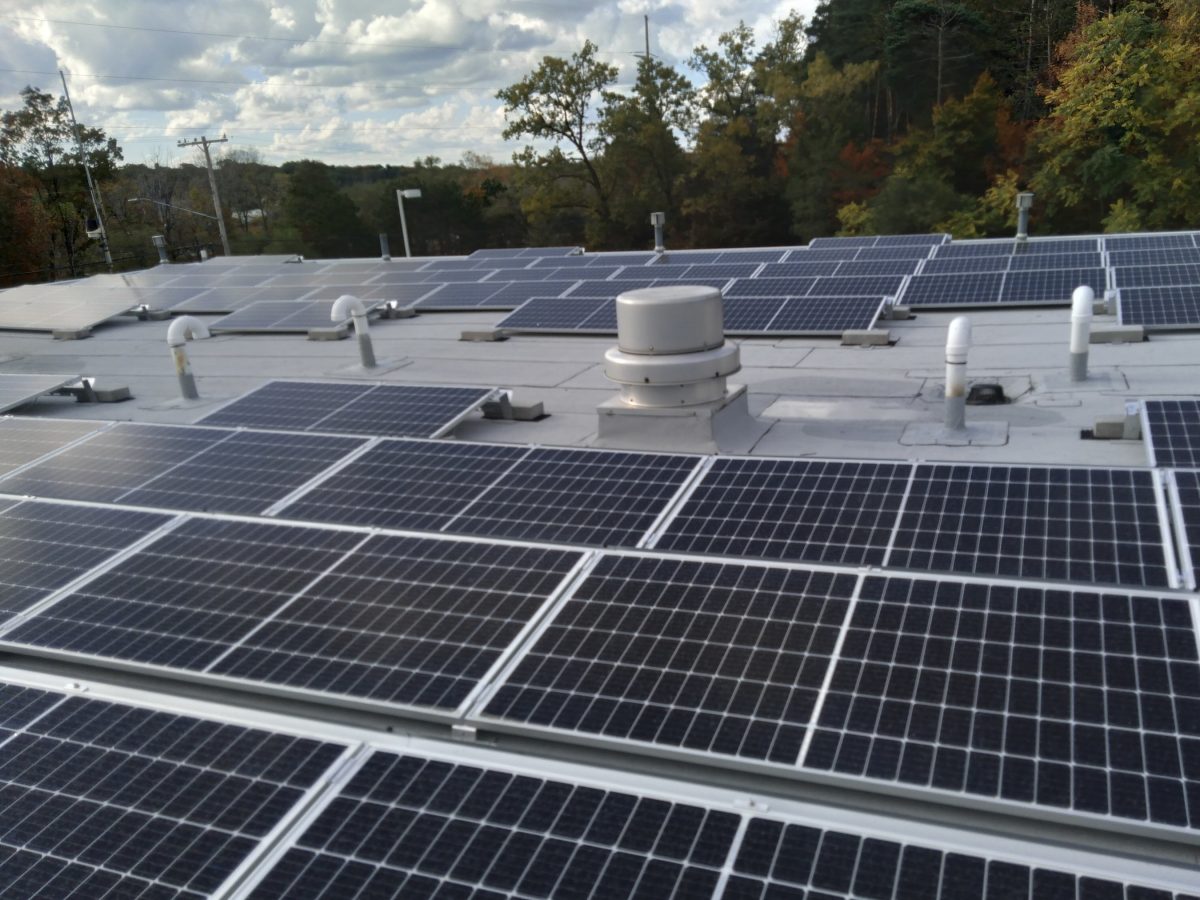
NORTON SHORES, Mich., Jan. 8, 2021 /PRNewswire/ — New Energy Equity, along with their development partner Chart House Energy, has completed a 326 kW-DC solar development project consisting of three separate municipal buildings in Norton Shores, MI. The three rooftops, totaling about 21,000 square feet, includes the City of Norton Shores Fire Station, Public Works building, and City Hall. Working with the City of Norton Shores and Chart House Energy will add to New Energy Equity’s continued expansion throughout Michigan. Outside of Michigan, New Energy Equity has completed over 150 projects, totaling more than 185 MW in the Midwest Region.

New Energy Equity provided the upfront development financing, engineering and design support and long-term financing for the project. The project allows the City to save money on their annual electricity bills with no upfront costs. New Energy Equity will continue to work with the City of Norton Shores, Chart House Energy, and other local organizations across the state to promote the use of clean renewable energy.

«This project is expected to offset around 420 MWh per year, roughly equivalent to the annual energy usage of about 50 households. We are thrilled to see our partnership with New Energy Equity result in the successful installation of solar across the region,» says Jon Ledsworth of Chart House Energy.

«When cities like Norton Shores prioritize access to clean energy for their community, they not only save money on their electricity costs, but they also reduce their carbon footprint.» says New Energy Equity CEO and President Matthew Hankey. «We are excited about this project and the partnership between the City of Norton Shores, New Energy Equity and Chart House Energy. «

New Energy Equity recently completed a series of projects in the area totaling 647 kW-DC and has a local development pipeline exceeding 5 MW for 2021 in the state of Michigan.

About New Energy Equity

Founded in 2013 and headquartered in Annapolis, Maryland, New Energy Equity develops and finances solar power generation assets, providing clean electricity to commercial, industrial, municipal, and utility customers under long-term contracts. New Energy Equity successfully developed over 250MW of solar projects since 2013. The company was ranked as the sixth-largest developer on Solar Power World’s «2019 Top Solar Contractors» list and was voted as one of the fastest-growing energy companies in D.C., Maryland, and Virginia by Inc. Magazine in 2020.

For more information please visit New Energy Equity’s website at www.newenergyequity.com.  To stay up-to-date on current news, subscribe to our newsletter, follow us on LinkedIn, Twitter, & our blog.

Media inquiries:
Bridget Plunkett, Marketing Associate
T:   801-866-3687
E: bplunkett@newenergyequity.com

Cision View original content to download multimedia:http://www.prnewswire.com/news-releases/new-energy-equity-expands-mi-portfolio-with-city-of-norton-shores-301203508.html

SOURCE New Energy Equity

The U.S. Private Sector Job Quality Index (JQI)® December 2020

NEW YORK, Jan. 8, 2021 /PRNewswire-PRWeb/ — Following the release of the Employment Situation Report for December 2020 by the U.S. Bureau of Labor Statistics (BLS), the U.S. Private Sector Job Quality Index (JQI)® has been revised to a level of 81.24, down by…

NEW YORK, Jan. 8, 2021 /PRNewswire-PRWeb/ — Following the release of the Employment Situation Report for December 2020 by the U.S. Bureau of Labor Statistics (BLS), the U.S. Private Sector Job Quality Index (JQI)® has been revised to a level of 81.24, down by 0.91% from its revised level one month earlier and reflecting a higher proportion – relative to the prior month – of U.S. production and non-supervisory (P&NS) jobs paying less than the mean weekly income of all P&NS jobs («Low Quality Jobs»), relative to those jobs paying above such mean. The JQI remains heavily impacted by the extraordinary disruption in the number and composition of private sector production and non-supervisory jobs since the beginning of the U.S. impact of the COVID19 global pandemic, with regard to which the following additional special factors should be noted:

  • the BLS Employment Situation Report for December reflects a 95,000 decline in private sector payrolls, finally reflecting the cumulative impact of the sustained historically high level of initial weekly claims for unemployment insurance benefits which itself is reflective of overall damage to employers as well as virus surges, colder weather and the elimination of pretty much all benefits to job creation arising from the Coronavirus Aid, Relief, and Economic Security Act (CARES Act), including the Payroll Protection Program (PPP) and the federal unemployment insurance benefit supplement, prior to the enactment of additional relief at the very end of 2020 (which had no impact on December results).
  • More workers in Low Quality jobs who were laid off during the peak crisis months, returning to their jobs starting in mid-year and through the fall, were again laid off in December. This will stall the JQI reversion back to its pre-pandemic, lower levels to the extent that those lower quality jobs continue to be lost over the winter; and
  • the JQI may rise or fall for a period of time to the extent that such large numbers of Low Quality Jobs have been substantially eliminated or restored (temporarily or otherwise), as offset by the significantly higher benchmark mean weekly income used in computing the index since the elimination of large numbers of Low Quality Jobs.

The mean weekly wage income of all P&NS jobs as of the current reading (which reflects the level as of November 2020) increased to 847.88, a change of 0.29% from its revised level the month prior. This reflects the continued absence (as a result of the pandemic) of the low-wage/low-hours positions that had grown substantially in number over the course of the past four years. The JQ-Instant™ preliminary read of the 95,000 loss in all private sector, non-farm payrolls for December 2020 shows that 100% of the losses in private sector jobs were in industry sectors offering P&NS jobs with an average weekly income below the mean weekly income of all P&NS jobs (i.e. «Low Quality Jobs»). This reading was due to a very substantial loss of jobs in the leisure and hospitality sector – particularly in the restaurant industry – and the dramatic increase in the average weekly income for all P&NS jobs resulting from the elimination of millions of Low Quality Jobs during the COVID19 crisis, causing several marginal sectors to fall below the new average weekly income measure. This distortion will ultimately sort itself out during the course of this year.

Dan Alpert, co-creator of the U.S. Private Sector Job Quality Index, said, «More workers in Low Quality jobs who were laid off during the peak crisis months, returning to their jobs starting in mid-year and through the fall, were again laid off in December.»

For an explanatory video on the JQI, please see: http://www.vimeo.com/jqi.

This news release presents data from the most recent JQI reading calculated through the month immediately prior to the month covered by this release. The JQI assesses job quality in the United States by measuring desirable higher-wage/higher-hour jobs versus lower-wage/lower-hour jobs. The JQI offers a near-real time analytical tool to policymakers, researchers and financial market participants with relevance to a variety of trends in the economy at large. The JQI analyzes a representative sample of the economy using production and non-supervisory job (P&NS) data from 180 different industry groups spanning across all 20 super-sectors into which the BLS groups establishments. The principal data utilized is contained in the Current Employment Survey (CES, also often referred to as the establishment survey) P&NS data on average weekly hours, average hourly wage and total employment for each given industry group (seasonally adjusted, in all cases). The JQI is updated on a monthly basis contemporaneously with the release of new CES data from the BLS.

The JQ-Instant reading is for the month covered by this release and has implications for the likely direction of the JQI itself in future months. As the JQI is reported as a three-month rolling average of actual monthly readings, significant imbalances (readings varying from an even distribution between high and low quality jobs) in the JQ-Instant results would suggest future JQI readings moving in the direction of the dominant side of such distribution.

The U.S. Private Sector Job Quality Index (patent pending) is a joint development of the Program on the Law and Regulation of Financial Institutions and Markets at the Jack G. Clarke Institute of Cornell Law School, the University of Missouri Kansas City Department of Economics, the Coalition for a Prosperous America, and the Global Institute for Sustainable Prosperity.

For more information, and to read the full report, visit https://www.jobqualityindex.com/.

©2020 JQI IP Holdings LLC. «Private Sector Job Quality Index» and «JQI» are registered trademarks of JQI IP Holdings LLC. The Private Sector Job Quality Index is patent pending, application number US 62/900,923. Cornell logo and Cornell Law School and Jack G. Clarke Program names and references used with permission.

Media Contact

Melissa Tallman, Coalition for a Prosperous America, 315.269.4205, melissa@prosperousamerica.org


SOURCE U.S. Private Sector Job Quality Index

Iowa’s Sports Betting Market Poised for Boom with Expiration of In-Person Registration, According to PlayIA.com

LAS VEGAS, Jan. 8, 2021 /PRNewswire/ — Iowa took a monumental step in its development as a sports betting industry on New Year’s Day with the expiration of the state’s in-person registration requirement to bet online, opening the door to exponential growth that should generate billions in annual wagers, according to analysts for PlayIA,…

LAS VEGAS, Jan. 8, 2021 /PRNewswire/ — Iowa took a monumental step in its development as a sports betting industry on New Year’s Day with the expiration of the state’s in-person registration requirement to bet online, opening the door to exponential growth that should generate billions in annual wagers, according to analysts for PlayIA, which tracks Iowa’s legal sports betting and gambling industries.

«The in-person registration requirement has unquestionably stunted the growth of Iowa’s online sports betting, which the main engine in every state where online sports betting is legal,» said Jessica Welman, analyst for PlayIA.com. «With the requirement in place, Iowa would have never reached its potential as a market. Letting the requirement expire is akin to correcting a mistake, and we expect Iowa to blossom because of that correction.»

PlayIA analysts projected in 2019 that within five years Iowa would grow into a market that generated more than $4 billion in bets annually, more than $300 million a year in operator revenue, and more than $20 million a year in state taxes.

But Iowa’s start has been muted by in-person-registration, which required that online bettors sign up in-person at a physical sportsbook. Since launching in August 2019, Iowa has generated a total $682.6 million in wagers and $53.4 million revenue, according to official statistics. That has produced $3.7 million in state taxes.

Illinois launched earlier this year with an in-person registration requirement and then suspended it over the summer. The effect on that market was immediate. With just one operator, Illinois grew wagers to $52.5 million in July 2020 from $8.3 million in June 2020 and saw an immediate influx of 230,000 mobile sports betting accounts in the days after the state lifted in-person registration requirements, all as a slew of new operators launched.

In the months since, Illinois has grown to the fourth largest market in the U.S., generating $434.4 million in wagers in October 2020 alone.

«Illinois showed just how much drag in-person registration puts on a market,» said Dustin Gouker, analyst for PlayIA.com. «It was an uneven, unsure start, but almost as soon as the registration requirement was suspended the market embarked on an expansion that has been the most rapid in U.S. history.»

In November, Iowa ranked No. 7 among states where sports betting is legal with a state record $87.2 million in wagers. That still significantly lagged No. 6 Colorado, which has about twice the population as Iowa but attracted $231.2 million in November bets.

Home to some of the best-known brands in online sports betting, operators’ interest in the Hawkeye State has already increased. BetMGM, one of the largest operators in the U.S., launched on Monday. And more could come soon.

«With a fair tax rate and strong regulatory framework, Iowa was already an attractive market for operators,» Welman said. «This was the missing piece. With the in-person registration requirement now gone, Iowa can truly reach its potential as a sports betting market.»

For more information and analysis on regulated sports betting in Iowa, visit PlayIA.com/news.

About the PlayUSA.com Network:

The PlayUSA.com Network and its state-focused branches is a leading source for news, analysis, and research related to the market for regulated online gaming in the U.S.

Contact:
Zack Hall, DVA Advertising & PR, 541-389-2411, 288749@email4pr.com 

Cision View original content to download multimedia:http://www.prnewswire.com/news-releases/iowas-sports-betting-market-poised-for-boom-with-expiration-of-in-person-registration-according-to-playiacom-301203501.html

SOURCE PlayIA.com

Home Prices Up 13%, Pending Sales Rise 38%

SEATTLE, Jan. 8, 2021 /PRNewswire/ — (NASDAQ: RDFN) — The median home sale price increased 13% year over year to $319,000 during the 4-week period ending January 3, according to a new report from Redfin (<a target="_blank"…

SEATTLE, Jan. 8, 2021 /PRNewswire/ — (NASDAQ: RDFN) — The median home sale price increased 13% year over year to $319,000 during the 4-week period ending January 3, according to a new report from Redfin (redfin.com), the technology-powered real estate brokerage.

Below are other key housing market takeaways for 400+ U.S. metro areas during the 4-week period ending January 3.

  • Pending home sales were up 38% year over year.
  • New listings of homes for sale were up 7% from a year earlier—the smallest increase since July.
  • Active listings (the number of homes listed for sale at any point during the period) fell 32% from 2020 to a new all-time low.
  • 38% of homes that went under contract had an accepted offer within the first two weeks on the market, well above the 25% rate during the same period a year ago.
  • The average sale-to-list price ratio, which measures how close homes are selling to their asking prices, declined slightly to 99.3%—still 1.5 percentage points higher than a year earlier.
  • For the week ending January 3, the seasonally adjusted Redfin Homebuyer Demand Index—a measure of requests for home tours and other services from Redfin agents—was up 32% from pre-pandemic levels in January and February of 2020.
  • For the week ending January 7, 30-year mortgage rates fell to another new record low of 2.65%.

«The economy faces new challenges in the next few weeks, which are likely to see continued political instability and rising coronavirus cases,» said Redfin chief economist Daryl Fairweather. «Still, it’s unlikely that either will have a meaningful or long-term impact on homebuying demand, which, already extremely strong, is now bolstered by even lower mortgage rates. Migration and progressive economic policies will shape the housing market in the months to come. The recent migration of Americans to affordable places like Atlanta,  Phoenix and suburbs across the country has contributed to what will be a major change in fiscal and economic policy starting on January 20. While more government spending could lead to moderate mortgage-rate increases, it will also likely include programs to make homeownership affordable to more people.»


To view the full report, including charts and methodology, please visit: https://www.redfin.com/news/housing-market-prices-up-13/

About Redfin
Redfin (www.redfin.com) is a technology-powered residential real estate company, redefining real estate in the consumer’s favor in a commission-driven industry. We do this by integrating every step of the home buying and selling process and pairing our own agents with our own technology, creating a service that is faster, better and costs less. We offer brokerage, iBuying, mortgage, and title services, and we are the #1 nationwide brokerage website, offering a host of online tools to consumers, including the Redfin Estimate. We represent people buying and selling homes in over 90 markets in the United States and Canada. Since our launch in 2006, we have saved our customers over $800 million and we’ve helped them buy or sell more than 235,000 homes worth more than $115 billion.

For more information or to contact a local Redfin real estate agent, visit www.redfin.com. To learn about housing market trends and download data, visit the Redfin Data Center. To be added to Redfin’s press release distribution list, email press@redfin.com. To view Redfin’s press center, click here.


Cision View original content to download multimedia:http://www.prnewswire.com/news-releases/home-prices-up-13-pending-sales-rise-38-301203491.html

SOURCE Redfin

Global Automotive Hub Motors Market (2020 to 2028) – Featuring Protean, Elaphe and Michelin Group Among Others

DUBLIN, Jan. 8, 2021 /PRNewswire/ — The «Automotive Hub Motors Market Size, Market Share, Application Analysis, Regional Outlook, Growth Trends, Key Players, Competitive Strategies and Forecasts, 2020 to 2028» report has been added to ResearchAndMarkets.com’s offering.

Research and Markets Logo

The report offers strategic insights into the global automotive hub motors market along with the market size and estimates for the duration 2018 to 2028. The said research study covers an in-depth analysis of market segments based on motor type, application, and cross-sectional study across different geographies and sub-geographical regions. The study covers the comparative analysis of different segments for the years 2019 & 2028. The report also provides a prolific view on market dynamics such as market drivers, restraints, and opportunities. In addition, the report includes a section providing insights on the key trends followed in the market.

An automotive hub motor also called a wheel motor, in-wheel motor, or wheel hub drive is an electric motor fitted in the hub of the wheel. These motors are primarily used in electric bicycles and are witnessing a steady rise across other applications such as electric cars and commercial vehicles. The most prominent factor driving the market growth is the consistently rising penetration of electric bicycles as well as vehicles across different countries including China, Germany, Japan, Belgium, Norway, France, the U.K., and the Netherlands. The penetration of electric vehicles is witnessing strong growth, especially in Europe. Subsequently, the demand for hub motors would continue expanding over the forecast period.

Another prominent factor fueling the market growth is the superior advantages of automotive hub motors over conventional drives. Several hub motor manufacturers are putting in efforts to develop viable hub motor designs that can cater to a wide range of vehicles. In the near future, many major automotive manufacturers have expressed their desire to venture into the electric vehicle segments considering its huge potential. Thus, the automotive hub motor market can capitalize on this growth of electric vehicles. Nevertheless, major concerns for the automotive hub motors market is the strict necessity of electric supply onboard the vehicle. Similarly, unsprung weight is another major concern affecting the design of vehicles equipped with hub motors.

In order to help strategic decision-makers, the report also includes competitive profiling of the leading automotive hub motor vendors, their business strategy analysis, market positioning, and key developments. Some of the major players profiled in the report are Heinzmann GmbH & Co. KG, Protean Electric Ltd., Elaphe Ltd., Taizhou Quanshun Motor Co., Ltd, Mitsubishi Motors, Schaeffler Technologies AG & Co. KG, TDCM Corporation Ltd., Michelin Group, Magnetic Systems Technology Ltd., SIM-Drive Corporation, GO SwissDrive AG, QS Motor Co., Ltd. and several others. Apart from the company profiles, the report includes a section covering the competitive landscape wherein the market positioning of the companies has been discussed. The section also provides a view of key business strategies adopted by the leading market players.

Other in-depth analysis provided in the report includes:

  • Current and future market trends to justify the forthcoming attractive markets within the automotive hub motors industry
  • Comparative analysis for different segments for the years 2019 & 2028
  • Market fuelers, market impediments, and their impact on the market growth
  • In-depth competitive environment analysis including the positioning of market players and their business strategy analysis
  • Trailing 2-Year market size data (2018 – 2019)
  • SRC (Segment-Region-Country) Analysis

Overall, the research study provides a holistic view of the global automotive hub motors market, offering market size and estimates for the period from 2020 to 2028, keeping in mind the above-mentioned factors.

On the basis of Application, the global automotive hub motors market is segmented into the following categories:

  • Two-wheelers
  • Electric Cars
  • Commercial Vehicles

In 2019, the overall automotive hub motors market worldwide is led by the two-wheelers segment. The segment contributes to more than 40% of the global market revenue, in 2019. Electric bicycles, scooters, and bikes have witnessed fairly high penetration across different countries worldwide. Countries such as China, Japan, South Korea, Germany, the Netherlands, and few others have strong penetration of electric two-wheelers. With the continually rising adoption of electric two-wheelers from countries such as the U.S., India, and other European countries, the segment would continue experiencing strong growth over the forecast period.

The electric cars segment is yet to pick up due to relatively less commercialization of these vehicles. Although there are several production electric cars currently available, electric cars are yet to become popular, as compared to the two-wheelers segment. With the consistently growing efforts towards the betterment of electric car design and affordability, the segment is set to witness high growth in the following years. This would generate a high demand for related components such as a hub motor. Subsequently, electric cars would register the highest growth during the forecast period.

Based on the geography, the global automotive hub motors market is segmented as per the following regions and countries:

  • North America
  • U.S.
  • Canada
  • Europe
  • U.K.
  • Germany
  • France
  • Rest of Europe
  • Asia Pacific
  • Japan
  • China
  • South Asia
  • Rest of Asia Pacific
  • Rest of the World (RoW)
  • Middle East & Africa (MEA)
  • Latin America

The global automotive hub motors market is led by the Asia Pacific region. In 2019, the region contributes to more than 40% of the overall market revenue generated worldwide. The automotive hub motors market here is primarily governed by countries such as China, Japan, and some of the Southeast Asia countries. These countries have strong penetration of electric two-wheelers, making them the most prominent markets for the related components. In addition, China is one of the largest producers of electric two-wheelers and related components. This makes the country one of the largest markets for hub motors.

With the anticipated strong growth in the electric vehicles segment, Asia Pacific is set to maintain its dominant position in the global market in the following years. Europe and North America followed the Asia Pacific, in terms of revenue, in the market. The market here is primarily governed by the strong penetration of electric vehicles in the Western Europe region. Countries including Norway, Germany, the U.K., France, and several others are generating strong demand for electric vehicles. As a result, the region would exhibit strong growth in the automotive hub motor market in the following years.

Key Topics Covered:

Chapter 1 Preface
1.1 Report Description
1.1.1 Purpose of the Report
1.1.2 Target Audience
1.1.3 USP and Key Offerings
1.2 Research Scope
1.3 Market Segmentation
1.4 Research Methodology
1.4.1 Phase I – Secondary Research
1.4.2 Phase II – Primary Research
1.4.3 Phase III – Expert Panel Review
1.4.4 Assumptions
1.4.5 Approach Adopted

Chapter 2 Executive Summary
2.1 Market Snapshot: Global Automotive Hub Motors
2.2 Global Automotive Hub Motors Market, By Type
2.3 Global Automotive Hub Motors Market, By Application
2.4 Global Automotive Hub Motors Market, By Geography

Chapter 3 Market Dynamics
3.1 Introduction
3.1.1 Global Automotive Hub Motors Market Revenue and Growth, 2018 – 2028, (US$ Mn) (%)
3.2 Market Drivers
3.3 Market Growth Inhibitors
3.3.1 Impact Analysis of Drivers and Restraints
3.4 Key Market Trends
3.5 Attractive Investment Proposition
3.6 Competitive Analysis
3.6.1 Market Positioning of Key Vendors
3.6.2 Key Strategies Adopted by the Leading Players

Chapter 4 Global Automotive Hub Motors Market Analysis, by Type
4.1 Overview
4.2 Direct Drive (Gearless) Hub Motor
4.3 Geared Hub Motor

Chapter 5 Global Automotive Hub Motors Market Analysis, By Application
5.1 Overview
5.2 Two-wheelers
5.3 Electric Cars
5.4 Commercial Vehicles

Chapter 6 North America Automotive Hub Motors Market Analysis
6.1 Overview
6.2 North America Automotive Hub Motors Market Analysis, By Type, 2018 – 2028
6.2.1 Comparative Analysis
6.3 North America Automotive Hub Motors Market Analysis, By Application, 2018 – 2028
6.3.1 Comparative Analysis
6.4 North America Automotive Hub Motors Market Analysis, By Region, 2018 – 2028
6.4.1 U.S.
6.4.1.1 U.S. Automotive Hub Motors Market Analysis, By Type, 2018 – 2028
6.4.1.2 U.S. Automotive Hub Motors Market Analysis, By Application, 2018 – 2028
6.4.2 Canada
6.4.2.1 Canada Automotive Hub Motors Market Analysis, By Type, 2018 – 2028
6.4.2.2 Canada Automotive Hub Motors Market Analysis, By Application, 2018 – 2028

Chapter 7 Europe Automotive Hub Motors Market Analysis
7.1 Overview
7.2 Europe Automotive Hub Motors Market Analysis, By Type, 2018 – 2028
7.2.1 Comparative Analysis
7.3 Europe Automotive Hub Motors Market Analysis, By Application, 2018 – 2028
7.3.1 Comparative Analysis
7.4 Europe Automotive Hub Motors Market Revenue, By Region, 2018 – 2028
7.4.1 U.K.
7.4.1.1 U.K. Automotive Hub Motors Market Analysis, By Type, 2018 – 2028
7.4.1.2 U.K. Automotive Hub Motors Market Analysis, By Application, 2018 – 2028
7.4.2 Germany
7.4.2.1 Germany Automotive Hub Motors Market Analysis, By Type, 2018 – 2028
7.4.2.2 Germany Automotive Hub Motors Market Analysis, By Application, 2018 – 2028
7.4.3 France
7.4.3.1 France Automotive Hub Motors Market Analysis, By Type, 2018 – 2028
7.4.3.2 France Automotive Hub Motors Market Analysis, By Application, 2018 – 2028
7.4.4 Rest of Europe
7.4.4.1 Rest of Europe Automotive Hub Motors Market Analysis, By Type, 2018 – 2028
7.4.4.2 Rest of Europe Automotive Hub Motors Market Analysis, By Application, 2018 – 2028

Chapter 8 Asia Pacific Automotive Hub Motors Market Analysis
8.1 Overview
8.2 Asia Pacific Automotive Hub Motors Market Analysis, By Type, 2018 – 2028
8.2.1 Comparative Analysis
8.3 Asia Pacific Automotive Hub Motors Market Analysis, By Application, 2018 – 2028
8.3.1 Comparative Analysis
8.4 Asia Pacific Automotive Hub Motors Market Revenue, By Region, 2018 – 2028
8.4.1 China
8.4.1.1 China Automotive Hub Motors Market Analysis, By Type, 2018 – 2028
8.4.1.2 China Automotive Hub Motors Market Analysis, By Application, 2018 – 2028
8.4.2 Japan
8.4.2.1 Japan Automotive Hub Motors Market Analysis, By Type, 2018 – 2028
8.4.2.2 Japan Automotive Hub Motors Market Analysis, By Application, 2018 – 2028
8.4.3 Rest of Asia Pacific
8.4.3.1 Rest of Asia Pacific Automotive Hub Motors Market Analysis, By Type, 2018 – 2028
8.4.3.2 Rest of Asia Pacific Automotive Hub Motors Market Analysis, By Application, 2018 – 2028

Chapter 9 Rest of the World (RoW) Automotive Hub Motors Market Analysis
9.1 Overview
9.2 RoW Automotive Hub Motors Market Analysis, By Type, 2018 – 2028
9.2.1 Comparative Analysis
9.3 RoW Automotive Hub Motors Market Analysis, By Application, 2018 – 2028
9.3.1 Comparative Analysis
9.4 RoW Automotive Hub Motors Market Revenue, By Region, 2018 – 2028
9.4.1 Middle East & Africa (MEA)
9.4.1.1 MEA Automotive Hub Motors Market Analysis, By Type, 2018 – 2028
9.4.1.2 MEA Automotive Hub Motors Market Analysis, By Application, 2018 – 2028
9.4.2 Latin America
9.4.2.1 Latin America Automotive Hub Motors Market Analysis, By Type, 2018 – 2028
9.4.2.2 Latin America Automotive Hub Motors Market Analysis, By Application, 2018 – 2028

Chapter 10 Company Profiles
10.1 Heinzmann GmbH & Co. KG
10.2 Protean Electric Ltd.
10.3 Elaphe Ltd.
10.4 Taizhou Quanshun Motor Co., Ltd.
10.5 Mitsubishi Motors Corporation
10.6 Schaeffler Technologies AG & Co. KG
10.7 TDCM Corporation Ltd.
10.8 Michelin Group
10.9 Magnetic Systems Technology Ltd.
10.10 SIM-Drive Corporation
10.11 GO SwissDrive AG

For more information about this report visit https://www.researchandmarkets.com/r/tpv8r4

Research and Markets also offers Custom Research services providing focused, comprehensive and tailored research.

Media Contact:

Research and Markets
Laura Wood, Senior Manager
press@researchandmarkets.com   

For E.S.T Office Hours Call +1-917-300-0470
For U.S./CAN Toll Free Call +1-800-526-8630
For GMT Office Hours Call +353-1-416-8900

U.S. Fax: 646-607-1904
Fax (outside U.S.): +353-1-481-1716

Cision View original content:http://www.prnewswire.com/news-releases/global-automotive-hub-motors-market-2020-to-2028—featuring-protean-elaphe-and-michelin-group-among-others-301203338.html

SOURCE Research and Markets
As COVID-19 Ramped Up In December, U.S. Employment Decreased

NEW YORK, Jan. 8, 2021 /PRNewswire/ — In December the number of jobs declined by 140,000, marking the first decline since April. The published unemployment rate remained unchanged at 6.7 percent, but the true rate, after adjusting for the misclassification error, rose from 7.1 to 7.3 percent. The unemployment rate for women and Hispanics rose more visibly. The labor force participation remained unchanged at 61.5 percent.

NEW YORK, Jan. 8, 2021 /PRNewswire/ — In December the number of jobs declined by 140,000, marking the first decline since April. The published unemployment rate remained unchanged at 6.7 percent, but the true rate, after adjusting for the misclassification error, rose from 7.1 to 7.3 percent. The unemployment rate for women and Hispanics rose more visibly. The labor force participation remained unchanged at 61.5 percent.

The drop in employment is primarily due to three factors: 1) deteriorating consumer demand for in-person services because of the acceleration in the spread of the virus; 2) the growing stringency of state and local governments’ pandemic-related policies; and 3) consumers’ growing fears over getting infected. Consumer spending was already down in November, partly driven by lower spending on restaurants and hotels.

The in-person services industries were also the hardest-hit in today’s jobs report. Much of the drop – 372,000 jobs – came from restaurant and bars. Amusements, gambling & recreation industries shed seven percent of their jobs in one month. The large drop in the number of jobs in in-person industries more than offset solid gains in the rest of the labor market.

In the next 1-2 months, we should not expect good news about the spread of the virus. If Europe is any guide, the number of infections could significantly increase. On the upside, the faster than expected fiscal support is providing a larger than expected income boost to consumers. But due to the deteriorating pandemic conditions, these additional funds are unlikely to be directed towards in-person services. These industries are likely to continue to shed jobs, especially in food services. The combination of restrictions on indoor dining and the colder temperature preventing outdoor dining will continue to hurt restaurant jobs for the rest of the winter.

Overall, the drop in employment in in-person services could more than offset the increase in other industries, and lead to a decline in the number of jobs in the US in January-February. The unemployment rate should slightly increase during that period.

Cision View original content to download multimedia:http://www.prnewswire.com/news-releases/as-covid-19-ramped-up-in-december-us-employment-decreased-301203478.html

SOURCE The Conference Board

If You Purchased Certain Disposable Contact Lenses for Your Own Use From June 1, 2013 to December 4, 2018, this Litigation and a Class Action Settlement Could Affect Your Rights

JACKSONVILLE, Fla., Jan. 8, 2021 /PRNewswire-HISPANIC PR WIRE/ — The following statement is being issued regarding In re. Disposable Contact Lens Antitrust Litigation.

A class action settlement has been reached with ABB Optical Group LLC («ABB»), a distributor of disposable contact lenses manufactured by Alcon Vision LCC f/k/a Alcon Laboratories, Inc. («Alcon»); Bausch & Lomb, Inc. («B&L»); Johnson & Johnson Vision Care, Inc. («JJVC»); and Cooper Vision, Inc. («CVI»).

The…

JACKSONVILLE, Fla., Jan. 8, 2021 /PRNewswire-HISPANIC PR WIRE/ — The following statement is being issued regarding In re. Disposable Contact Lens Antitrust Litigation.

A class action settlement has been reached with ABB Optical Group LLC («ABB»), a distributor of disposable contact lenses manufactured by Alcon Vision LCC f/k/a Alcon Laboratories, Inc. («Alcon»); Bausch & Lomb, Inc. («B&L»); Johnson & Johnson Vision Care, Inc. («JJVC»); and Cooper Vision, Inc. («CVI»).

The lawsuit alleges illegal minimum retail pricing policies adopted by contact lens manufacturers called «Unilateral Pricing Policies,» or «UPPs,» for the distribution and sale of certain disposable contact lenses. The safety and effectiveness of contact lenses are not at issue in this lawsuit. For more information, visit the website below. Defendants deny they did anything wrong. The Court has not decided who is right. 

Notice was previously provided for settlements with B&L and CVI and the formation of «Litigation Classes.» ABB has since agreed to a settlement, and the Court has permitted those who purchased only contact lenses manufactured by B&L an additional opportunity to opt-out of the Litigation Classes. If you are a Settlement Class Member, you can participate in the ABB Settlement regardless of whether you participated in the earlier settlements.

Who Is Included?

The ABB Settlement Class includes certain persons and entities residing in the United States who made retail purchases of disposable contact lenses subject to a UPP. For a list of the contact lenses subject to a UPP and the dates of purchase included in the settlement, please visit the website below.

How can I get a payment?

The ABB Settlement will establish a $30.2 million Settlement Fund. If you already submitted a timely and valid claim for the B&L and/or CVI Settlements, you do not need to submit another claim. You will automatically be included in the ABB Settlement. If you did not submit a claim in either of the earlier settlements, you must submit a claim for the ABB Settlement in order to receive compensation. You will not be able to share in the B&L or CVI Settlements if you did not submit a timely and valid Proof of Claim in those settlements. You can file a claim at the website.  The deadline to file a claim is March 10, 2021. The Net Settlement Fund will be distributed at a later stage of this Action.  Please be patient and check the website for updates.

Your other options.

If you do not want to be legally bound by the ABB Settlement you must exclude yourself by March 10, 2021. In addition, consumers who purchased only contact lenses manufactured by B&L have until March 10, 2021 to request exclusion from the Litigation Classes. You may object to the ABB Settlement by March 10, 2021.  The Detailed Notice explains how to exclude yourself or object. The Court will hold a Fairness Hearing on July 2, 2021, to consider whether to approve the ABB Settlement. Lead Counsel will ask the Court for attorneys’ fees of up to one-third (33.3%) of the ABB, B&L, and CVI Settlement Funds, after payment of Court-approved costs and expenses. In addition, Lead Counsel will ask the Court for reimbursement of costs and expenses for their work in this Action, and may also seek service awards for the Class Representatives, all subject to the Court’s approval. You may appear at the hearing, yourself or through an attorney you hire, but you don’t have to.  For more information, call or visit the website.   

www.ContactLensSettlement.com                1-877-253-3649


SOURCE United States District Court for the Middle District of Florida

If You Purchased Certain Disposable Contact Lenses for Your Own Use From June 1, 2013 to December 4, 2018, this Litigation and a Class Action Settlement Could Affect Your Rights

JACKSONVILLE, Fla., Jan. 8, 2021 /PRNewswire-HISPANIC PR WIRE/ — The following statement is being issued regarding In re. Disposable Contact Lens Antitrust Litigation.

A class action settlement has been reached with ABB Optical Group LLC («ABB»), a distributor of disposable contact lenses manufactured by Alcon Vision LCC f/k/a Alcon Laboratories, Inc. («Alcon»); Bausch & Lomb, Inc. («B&L»); Johnson & Johnson Vision Care, Inc. («JJVC»); and Cooper Vision, Inc. («CVI»).

The…

JACKSONVILLE, Fla., Jan. 8, 2021 /PRNewswire-HISPANIC PR WIRE/ — The following statement is being issued regarding In re. Disposable Contact Lens Antitrust Litigation.

A class action settlement has been reached with ABB Optical Group LLC («ABB»), a distributor of disposable contact lenses manufactured by Alcon Vision LCC f/k/a Alcon Laboratories, Inc. («Alcon»); Bausch & Lomb, Inc. («B&L»); Johnson & Johnson Vision Care, Inc. («JJVC»); and Cooper Vision, Inc. («CVI»).

The lawsuit alleges illegal minimum retail pricing policies adopted by contact lens manufacturers called «Unilateral Pricing Policies,» or «UPPs,» for the distribution and sale of certain disposable contact lenses. The safety and effectiveness of contact lenses are not at issue in this lawsuit. For more information, visit the website below. Defendants deny they did anything wrong. The Court has not decided who is right. 

Notice was previously provided for settlements with B&L and CVI and the formation of «Litigation Classes.» ABB has since agreed to a settlement, and the Court has permitted those who purchased only contact lenses manufactured by B&L an additional opportunity to opt-out of the Litigation Classes. If you are a Settlement Class Member, you can participate in the ABB Settlement regardless of whether you participated in the earlier settlements.

Who Is Included?

The ABB Settlement Class includes certain persons and entities residing in the United States who made retail purchases of disposable contact lenses subject to a UPP. For a list of the contact lenses subject to a UPP and the dates of purchase included in the settlement, please visit the website below.

How can I get a payment?

The ABB Settlement will establish a $30.2 million Settlement Fund. If you already submitted a timely and valid claim for the B&L and/or CVI Settlements, you do not need to submit another claim. You will automatically be included in the ABB Settlement. If you did not submit a claim in either of the earlier settlements, you must submit a claim for the ABB Settlement in order to receive compensation. You will not be able to share in the B&L or CVI Settlements if you did not submit a timely and valid Proof of Claim in those settlements. You can file a claim at the website.  The deadline to file a claim is March 10, 2021. The Net Settlement Fund will be distributed at a later stage of this Action.  Please be patient and check the website for updates.

Your other options.

If you do not want to be legally bound by the ABB Settlement you must exclude yourself by March 10, 2021. In addition, consumers who purchased only contact lenses manufactured by B&L have until March 10, 2021 to request exclusion from the Litigation Classes. You may object to the ABB Settlement by March 10, 2021.  The Detailed Notice explains how to exclude yourself or object. The Court will hold a Fairness Hearing on July 2, 2021, to consider whether to approve the ABB Settlement. Lead Counsel will ask the Court for attorneys’ fees of up to one-third (33.3%) of the ABB, B&L, and CVI Settlement Funds, after payment of Court-approved costs and expenses. In addition, Lead Counsel will ask the Court for reimbursement of costs and expenses for their work in this Action, and may also seek service awards for the Class Representatives, all subject to the Court’s approval. You may appear at the hearing, yourself or through an attorney you hire, but you don’t have to.  For more information, call or visit the website.   

www.ContactLensSettlement.com                1-877-253-3649


SOURCE United States District Court for the Middle District of Florida