Mopar Announces Accessories for New, Redesigned 2021 Chrysler Pacifica

AUBURN HILLS, Mich., Feb. 11, 2021 /PRNewswire/ — Today, Mopar announced accessories for the new, redesigned 2021 Chrysler Pacifica – America’s most capable minivan with all-wheel drive (AWD) and still the first and only plug-in hybrid minivan.

<div…

AUBURN HILLS, Mich., Feb. 11, 2021 /PRNewswire/ — Today, Mopar announced accessories for the new, redesigned 2021 Chrysler Pacifica – America’s most capable minivan with all-wheel drive (AWD) and still the first and only plug-in hybrid minivan.

  • Mopar offers more than 85 quality-tested, factory-backed accessories for Chrysler brand’s minivan lineup
  • Accessories, including carriers, cargo bins and a pet kennel, available to customize the refreshed exterior and interior of the 2021 Chrysler Pacifica
  • For more information on Mopar accessories for new 2021 Chrysler minivan models, visit the Mopar eStore

«Mopar offers more than 85 quality-tested, factory-backed accessories across Chrysler brand’s award-winning minivan lineup,» said Mark Bosanac, North America Vice President, Mopar Service, Parts & Customer Care. «From roof racks to pet kennels, Mopar offers even more innovative storage options for the new, redesigned Chrysler Pacifica.»

Below are select Mopar accessories available for the new 2021 Chrysler Pacifica, as well as the entry-level Chrysler Voyager (with Mopar part number and U.S. MSRP). For more information, visit the Mopar eStore

Rooftop cargo boxes (TCBOX624 – 13 cubic feet capacity, $565 | TCBOX614 – 14 cu. ft. capacity, $490 | TCBOX625 – 17 cu. ft. capacity, $595): Regardless of weather conditions, these tough, lockable, thermoplastic carriers keep cargo dry and secure. Each carrier features a gas-cylinder opening system, allowing the hinged lid to gently open and close. Aerodynamic design limits wind resistance and provides sleek styling. For use with crossbars and/or side rails, which are sold separately.

Rooftop cargo bags (82207198 – 11 cu. ft. capacity, $148 | TCINT869 – 16 cu. ft. capacity, $225): Black nylon and soft-sided cargo bags are weatherproof and provide additional storage space. Each cargo bag features a covered zipper opening, lined seams and sewn-in tie-down straps. For use with crossbars and/or side rails, which are sold separately.

Ski and snowboard carrier (TCS92725 | $255): For winter sports enthusiasts, this carrier provides convenient, safe transportation of skis and snowboards. This roof-mounted carrier can hold up to six pairs of skis or four snowboards, or a combination of both. The unit features silver anodized-aluminum construction and integrated locks that open from either side for easy loading and unloading. For use with crossbars and/or side rails, which are sold separately.

Upright bike carrier (TCOES599 | $200): Roof-mounted carrier uses worry-free automatic self-adjusting jaws for secure clamping every time. Mounts to production Stow ‘n Place Roof Rack Kit or Mopar Roof Rack Kit (82214552 | $410 – sold separately).

Fork-mount bike carrier (TCFKM526AB | $175): Roof-mounted carrier for one bicycle features a reinforced head that combines aerodynamics, durability and style. Mounts to production Stow ‘n Place Roof Rack Kit or Mopar Roof Rack Kit (82214552 | $410 – sold separately).

Pet kennel (82214536 | $190): The soft-sided temporary kennel with a Chrysler logo is perfect for safely transporting pets. The kennel is collapsible and stores flat when not in use.

Stow ‘n Go cargo bins (82214532AC | $139): This set of two black bins provide additional removable storage options underneath the second-row floor. Bins are lightweight and washable.

Foldable cooler (82214506AB | $41.25): The Chrysler-branded, soft-sided, collapsible cooler has carry handles and fits into most storage spaces.

All-weather floor mats (82214515AE – gas model, $260 | 82214516AE – PHEV model, $260): For maximum protection of carpeted floors, this five-piece mat set (first, second and third rows with second- to third-row runner) are molded and feature deep ribs to trap water, snow, salt, mud, dirt and grime.

Media/radio screen protector film (82215574 – 7-inch, $20 | 82215337 – 8.4-inch, $20 | 82216070AA – 10.1-inch, $25): Scratch-resistant, anti-glare clear film reduces fingerprints and smudges and also provides increased clarity. Protector film does not negatively affect the touchscreen accuracy and is removable with no damage to the screen.

Roadside safety kit (82213499AB | $116): Includes safety flashlight, fleece blanket, six-gauge jumper cables, safety triangle, pliers, gloves, flathead and Phillips-head screwdrivers, and two bungee cords.

Chrysler Pacifica
The Chrysler brand continues to set the pace for the minivan segment with the new 2021 Chrysler Pacifica. The first-ever minivan to offer both gas and hybrid powertrains, Chrysler is elevating its minivan game to new levels, creating a new top-of-the-line Pinnacle model in the segment, offering AWD capability paired with Pacifica’s class-exclusive Stow ‘n Go seating, more standard safety features than any vehicle in the industry, new FamCAM interior camera, wireless charging, next-generation Uconnect 5 connectivity, an athletic new look and loads more creature comforts and interior storage for the 2021 model year. The Pacifica Hybrid delivers more than 80 miles per gallon equivalent (MPGe) in electric-only mode, an all-electric range of more than 30 miles and a total range of more than 500 miles.

The Chrysler Pacifica continues to hold its status as the most awarded minivan five years in a row with more than 140 honors and industry accolades. As the first company to introduce the minivan and through six generations of the vehicle, 116 minivan firsts have been produced, including nearly 40 minivan-first features on the Pacifica. The company has sold more than 15 million minivans globally since 1983, twice as many as any other manufacturer over 37 years.

Mopar
Mopar (a simple contraction of the words MOtor and PARts) offers exceptional service, parts and customer-care. Born in 1937 as the name of a line of antifreeze products, the Mopar brand has evolved over more than 80 years to represent both complete care and authentic performance for owners and enthusiasts worldwide.

Mopar made its mark in the 1960s during the muscle-car era, with Mopar Performance Parts to enhance speed and handling for both road and racing use, and expanded to include technical service and customer support. Today, the Mopar brand’s global reach distributes more than 500,000 parts and accessories in more than 130 markets. With more than 50 parts distribution centers and 25 customer-contact centers globally, Mopar integrates service, parts and customer-care operations in order to enhance customer and dealer support worldwide.

Complete information on the Mopar brand is available at www.mopar.com. Mopar is part of the portfolio of brands offered by leading global automaker and mobility provider Stellantis. For more information regarding Stellantis (NYSE: STLA), please visit www.stellantis.com.

Follow Mopar and company news and video on:
Company blog: http://blog.stellantisnorthamerica.com
Media website: http://media.stellantisnorthamerica.com
Facebook: https://www.facebook.com/mopar
Instagram: https://www.instagram.com/officialmopar
Twitter: https://twitter.com/OfficialMOPAR
YouTube: https://www.youtube.com/c/mopar or https://www.youtube.com/StellantisNA

Cision View original content to download multimedia:http://www.prnewswire.com/news-releases/mopar-announces-accessories-for-new-redesigned-2021-chrysler-pacifica-301226934.html

SOURCE Stellantis

REI adventure travel broadens US trip offerings in response to demand for active vacations

SEATTLE, Feb. 11, 2021 /PRNewswire/ — In recent months, REI adventure travel has engaged with hundreds of co-op members who wish to plan safe and responsible active vacations. To meet this demand, the co-op added 17 new itineraries in the United States and more departure dates for its most popular adventures. Whatever someone’s activity interest, ability or available time, there are now more opportunities for hiking and cycling, extended weekend adventures,…

SEATTLE, Feb. 11, 2021 /PRNewswire/ — In recent months, REI adventure travel has engaged with hundreds of co-op members who wish to plan safe and responsible active vacations. To meet this demand, the co-op added 17 new itineraries in the United States and more departure dates for its most popular adventures. Whatever someone’s activity interest, ability or available time, there are now more opportunities for hiking and cycling, extended weekend adventures, women’s and family travel, and more.

«We restarted our domestic multiday adventures trips last September and combined with encouraging news around vaccination availability, it’s clear our guests long to explore,» said Cynthia Dunbar, REI adventure travel director of sales, service and operations. «Sales for our domestic trips are up by nearly 10 percent to 2019, which was one our strongest years in our nearly 35-year history.»

With more than 100 itineraries across the United States, REI is the largest operator of adventure travel tours in the country. In addition, REI continues to diversify with expansion in hiking, backpacking, cycling, women’s, Under 35, families, and weekend adventures. The most recent introductions include:

  • San Juan Islands Family Kayak: Over three days, paddle the Cascadia Marine Trail; watch for sea lion, otter, and countless marine and wildlife species; learn about the native Salish tribe; and camp in a private setting with guide-prepared meals.
  • San Juan Islands Women’s Cycling Weekend: Delight one’s senses on a four-day women’s camping, cycling and culinary adventure on San Juan, Lopez and Orcas Islands. Guests may select an eBike at no additional fee for rides through rolling hillsides, farmlands and forests.
  • Rocky Mountain National Park Hiking & Camping: Discover the park’s splendor through an itinerary that showcases lush forests, flower-filled meadows, waterfalls and inspiring views.  Midway through the trip, guests raft the whitewater of Colorado’s only designated «Wild and Scenic River» for an exhilarating change of pace. A five-day Rocky Mountain National Park Family Adventure was also introduced.
  • Yosemite Backpacking Half Dome–5 Day: Building on the popularity of REI’s Yosemite trips, the co-op introduced a five-day itinerary so guests have added time to explore the beauty of the backcountry after ascending the iconic Half Dome. Today, REI has 15 Yosemite adventures, including trips designed for families, women, travelers aged 35 years and younger, and those who prefer to sleep in a lodge versus a tent. 

«Our focus to design trips in the backcountry and away from high tourist areas has long resonated with guests. Presently, our most popular hiking and backpacking destinations are in Zion and Bryce, Yellowstone, Arizona’s Sedona and Superstition Mountains, and along the Pacific Coast Trail,» added Dunbar.

To ensure traveler confidence, REI examined its entire trip assortment to ensure its operations meet health and safety guidelines, and added new policies to ensure the health and well-being of all travelers. REI also lowered the minimum guest number on every private departure trip where groups of four or more travelers receive the same pricing per person as REI’s regular trips. For guests who prefer to plan a vacation over a longer timeline, departure dates for 2022 are also available.

About the REI Co-op
REI is a specialty outdoor retailer, headquartered near Seattle. The nation’s largest consumer co-op, REI is a growing community of more than 19 million members who expect and love the best quality gear, inspiring expert classes and trips, and outstanding customer service. REI has 168 locations in 39 states and the District of Columbia. If you can’t visit a store, you can shop at REI.comREI Outlet or the REI shopping app. REI isn’t just about gear. Adventurers can take the trip of a lifetime with REI’s active adventure travel company, a global leader that runs more than 200 itineraries across all continents. In every community where REI has a presence, professionally trained instructors share their expertise by hosting beginner-to advanced-level classes and workshops about a wide range of activities. To build on the infrastructure that makes life outside possible, REI invests millions annually in hundreds of local and national nonprofits that create access to—and steward—the outdoor places that inspire us all.


Cision View original content to download multimedia:http://www.prnewswire.com/news-releases/rei-adventure-travel-broadens-us-trip-offerings-in-response-to-demand-for-active-vacations-301227018.html

SOURCE REI Co-op

More than 18,500 Individuals Unlawfully Detained by L.A. County Sheriff’s Department Over ICE Holds to Receive Compensation from $14 Million Settlement

MEXICO CITY, Feb. 11, 2021 /PRNewswire-HISPANIC PR WIRE/ — Individuals who were held in L.A. County jail based on ICE holds in the period from October 2010 to June 2014 may be eligible to participate in a financial settlement to compensate them for rights violations committed by the L.A. County Sheriff’s Department (LASD). More than 18,500 people are entitled to receive restitution from the $14 million USD

MEXICO CITY, Feb. 11, 2021 /PRNewswire-HISPANIC PR WIRE/ — Individuals who were held in L.A. County jail based on ICE holds in the period from October 2010 to June 2014 may be eligible to participate in a financial settlement to compensate them for rights violations committed by the L.A. County Sheriff’s Department (LASD). More than 18,500 people are entitled to receive restitution from the $14 million USD settlement. Class members are eligible to receive from $250 to $25,000 based on the time they were held and other details. In order to receive compensation, individuals must submit a claim — which does not require them to disclose their immigration status — no later than October 10, 2021. All information submitted by claimants will be kept confidential.

The class action suit Roy v. County of Los Angeles was brought by immigrants unlawfully detained by the LASD — sometimes for months —  due to «ICE hold» requests (also known as immigration detainers). A federal court ruled that LASD violated the constitution by jailing people solely on the basis of these holds. Lee Baca was L.A. Sheriff for most of the period in which violations took place; Baca is currently serving a three-year prison term for obstructing a federal investigation.

«As immigrants, we come from different countries, and law enforcement bodies act like basic protections don’t apply to us,» said Antonia C., who was detained after being wrongfully accused of car theft. She was denied bail because of an ICE hold and kept in jail for 70 days in 2012. «They broke my family and home. When they lock you up, they break you. They hurt my physical and mental health. All of us who were affected by this arrangement between ICE and the Sheriff’s Department, we need to put our voices together. While no amount of money will ever be enough to mend our scars, this compensation fund is so important. We need to take what we’re owed and show them that what they did to us — to our families — matters.»

Antonia’s daughter, who prefers to remain anonymous, said: «These actions don’t only affect people who were jailed — think about their families. I was only 11 years old when my mom was torn away. They broke us apart. I was filled with confusion and sadness. Without my mom by my side, I felt like I didn’t have a place in this world. We lost everything. Every day that your family member isn’t there is painful. Think of everything you miss — we will never get that time back. My mom is my own personal superhero — she’s strong and kind-hearted. I’m so proud of her for bringing this case and playing an important role in establishing this compensation fund. Injustice often goes without consequence — you don’t usually get anything. But this feels different. It’s like my mom and I, and countless other families, might finally get closure and justice.»

In collaboration with the ACLU of Southern California and the law firm of McLane, Bednarski & Litt, Centro de los Derechos del Migrante, Inc. (CDM) is conducting media and public outreach to identify class members and encourage them to come forward with claims. CDM, a binational migrant workers’ rights organization has successfully identified class members and assisted in settlement distribution in high-profile immigration and migrant worker lawsuits. In this case, the organization will focus its efforts on reaching Spanish-speaking class members in Mexico, Guatemala, Honduras, Nicaragua, Ecuador, and California.

«This case embodies a pervasive practice: local law enforcement agencies bowing to ICE and undermining immigrants’ rights. This unconstitutional deference to ICE policies has brutal consequences for individuals, families and communities across borders,» said Evy Peña, CDM’s Communications and Development Director. «We have reason to believe that people may have been deported as a result of the L.A. Sheriff’s actions. While locating class members may pose a challenge, given the geographic range of our search, we see this as an opportunity. Every qualified class member who was treated unlawfully will be able to receive compensation, regardless of where they are.»

«Let this settlement be a wake-up call to all those law enforcement agencies around the country that today continue to jail people unlawfully at ICE’s warrantless requests,» said Jennie Pasquarella, co-counsel on the case, ACLU SoCal director of immigrants’ rights and senior staff attorney. «They should stop or be held liable in damages to all the people they’ve unlawfully detained.»

«For years, the Los Angeles County Sheriff’s Department, the largest law enforcement agency in the United States, callously denied immigrants constitutional protections that universally apply to all other jail detainees — unjustifiably holding them without cause as prisoners,» said Lindsay Battles, co-counsel on the case, and an attorney with McLane, Bednarski & Litt. «This settlement holds the sheriff’s department accountable for thousands of unlawful incarcerations and provides a measure of compensation to every person injured by their unconstitutional policies.»

Individuals who believe they may be victims are encouraged to visit www.ICEHoldCaseLA.com  or call 1-833-537-1192 to learn more about how to file a claim.

The answers to frequently asked questions can be found below.

Who is affected?

More than 18,500 people are entitled to compensation from the settlement covering ICE detainers issued from October 2010 to June 2014. There are 3 categories of people affected:

  1. 4th Amendment Class: Immigrants who were detained beyond the time they were due to be released from criminal custody solely based on an ICE hold (October 2010June 2014).
  2. Equal Protection Class: Immigrants whose bail was less than $25,000 who would not have been booked into jail if there was no ICE hold (October 2010June 2014).
  3. No-Bail Class: Immigrants who were denied bail because of an ICE hold (October 2010October 2012).

How much money can class members get?

Class members are eligible to receive from $250 up to $25,000, based on how long they were held and other circumstances:

  1. Class members who were not permitted to post bail will receive $250 if they qualify and file the proper sworn statement.
  2. Class members could receive up to $1,000 for each day they were detained solely on an immigration detainer, up to a maximum of $25,000.

It is anticipated that many class members who were detained solely on an immigration detainer will receive several thousand dollars. 

Surplus funds, if any after class members are paid, will go to programs that provide legal representation to persons facing immigration consequences because of an arrest or conviction.

How to get money from the settlement?

To receive money, you must make a claim no later than October 10, 2021. You can file a claim online, by email or by mail. Go to www.ICEHoldCaseLA.com to learn more about how to file a claim form.

What are my other options?

Exclude Yourself: If you want to remove yourself from the lawsuit entirely, or if you want to be able to file your own lawsuit, or be part of a different lawsuit, then you must take steps to exclude yourself. You must mail your Exclusion Request, postmarked no later than October 10, 2021.

Object: You can remain a class member and object to any part of the settlement by October 10, 2021.

Do nothing: If you do not file a claim, you will not get money from the settlement, but you will still be bound by the terms of the Settlement.

Visit the website www.ICEHoldCaseLA.com for more detailed information.

How do I know my information will be kept confidential?

The parties in this case agree to keep confidential all information you submit in connection with the settlement. We will not tell ICE that you submitted a claim. Your contact information and family members’ contact information will not be disclosed to anyone other than attorneys for the plaintiffs and the case administrator.

How long will this process take?

The court has scheduled a hearing for November 19, 2021 to decide whether to approve the settlement. The motion for attorney’s fees and cost will be posted on the website after they are filed. You may attend the hearing at your own cost, but you do not have to. After final court approval, it will take at least two to three months or longer, to process claims, calculate the amount due to each class member, and begin payments.

This is only a summary. For more details, go to the website www.ICEHoldCaseLA.com or call 1-833-537-1192. The website has links to all settlement documents in this case, as well as the motion for attorneys’ fees. 

SOURCE CLU of Southern California, the law firm of McLane, Bednarski & Litt, the National Day Laborer Organizing Network, and the National Immigrant Justice Center

Más de 18,500 personas detenidas ilegalmente por el Departamento del Sheriff del condado de Los Ángeles debido a las retenciones de ICE recibirán una compensación de un acuerdo de $14 millones

CIUDAD DE MÉXICO, 11 de febrero de 2021 /PRNewswire-HISPANIC PR WIRE/ — Las personas que estuvieron detenidas en la cárcel del condado de Los Ángeles debido a las retenciones de ICE en el período de octubre de 2010 a junio de 2014 pueden ser elegibles para participar en un acuerdo financiero para compensarlas por violaciones de derechos cometidas por el Departamento del Sheriff del Condado de Los Ángeles (LASD). Más de 18,500 personas tienen derecho a recibir una restitución del acuerdo de $14

CIUDAD DE MÉXICO, 11 de febrero de 2021 /PRNewswire-HISPANIC PR WIRE/ — Las personas que estuvieron detenidas en la cárcel del condado de Los Ángeles debido a las retenciones de ICE en el período de octubre de 2010 a junio de 2014 pueden ser elegibles para participar en un acuerdo financiero para compensarlas por violaciones de derechos cometidas por el Departamento del Sheriff del Condado de Los Ángeles (LASD). Más de 18,500 personas tienen derecho a recibir una restitución del acuerdo de $14 millones de dólares. Los miembros de la clase son elegibles para recibir de $250 a $25,000 dólares según el tiempo que estuvieron detenidos y otros detalles. Para recibir una compensación, las personas deben presentar un reclamo, que no requiere que revelen su estatus migratorio, a más tardar el 10 de octubre de 2021. Toda la información presentada por los reclamantes se mantendrá confidencial.

La demanda colectiva Roy v. Condado de Los Ángeles fue presentada por inmigrantes detenidos ilegalmente por el LASD, a veces durante meses, debido a solicitudes de «retención de ICE» (también conocidas como retenciones de inmigración). Un tribunal federal dictaminó que LASD violó la constitución al encarcelar a personas únicamente por estas retenciones. Lee Baca fue alguacil de Los Ángeles durante la mayor parte del período en el que se produjeron violaciones; Baca actualmente cumple una pena de prisión de tres años por obstruir una investigación federal.

«Como inmigrantes, venimos de diferentes países y los cuerpos policiales actúan como si las protecciones básicas no se aplicaran a nosotros,» dijo Antonia C., quien fue detenida luego de ser acusada injustamente de robo de auto. Se le negó la libertad bajo fianza debido a una retención de ICE y estuvo en la cárcel durante 70 días en el 2012. «Rompieron mi familia y mi hogar. Cuando te encierran, te rompen. Dañaron mi salud física y mental. Todas las personas que nos vimos afectadas por este arreglo entre ICE y el Departamento del Sheriff debemos unir nuestras voces. Si bien ninguna cantidad de dinero será suficiente para reparar nuestras cicatrices, este fondo de compensación es muy importante. Necesitamos tomar lo que se nos debe y mostrarles que lo que nos hicieron, a nuestras familias, importa.»

La hija de Antonia, que prefiere permanecer en el anonimato, dijo: «Estas acciones no solo afectan a las personas que fueron encarceladas, piensen en sus familias. Yo tenía solo 11 años cuando me separaron de mi mamá. Nos separaron. Estaba llena de confusión y tristeza. Sin mi mamá a mi lado, sentía que no tenía un lugar en este mundo. Perdimos todo. Cada día que tu familiar no está ahí es doloroso. Piensen en todo lo que nos perdimos, nunca recuperaremos ese tiempo. Mi mamá es mi superhéroe personal; es fuerte y de buen corazón. Estoy muy orgullosa de ella por presentar este caso y desempeñar un papel importante en el establecimiento de este fondo de compensación. La injusticia a menudo no tiene consecuencias, por lo general no obtienes nada. Pero esto se siente diferente. Es como si mi mamá y yo, y muchas otras familias, finalmente pudiéramos obtener un cierre y justicia.»

En colaboración con la ACLU del Sur de California y el bufete de abogados de McLane, Bednarski & Litt, el Centro de los Derechos del Migrante, Inc. (CDM) está llevando a cabo actividades de divulgación pública y en los medios de comunicación para identificar a los miembros de la clase y alentarlos a presentar reclamos. CDM, una organización binacional de derechos de las y los trabajadores migrantes ha identificado exitosamente a miembros de la clase y ha ayudado en la distribución de asentamientos en demandas de inmigración de alto perfil. En este caso, la organización centrará sus esfuerzos en llegar a los miembros de la clase de habla hispana en México, Guatemala, Honduras, Nicaragua, Ecuador y California.

«Este caso representa una práctica generalizada: las agencias locales de aplicación de la ley se inclinan ante ICE y socavan los derechos de las personas inmigrantes. Esta deferencia inconstitucional a las políticas de ICE tiene consecuencias brutales para las personas, familias y comunidades a través de las fronteras,» dijo Evy Peña, directora de Comunicaciones y Desarrollo del CDM. «Tenemos razones para creer que las personas pueden haber sido deportadas como resultado de las acciones del alguacil de Los Ángeles. Si bien ubicar a los miembros de la clase puede representar un desafío, dado el alcance geográfico de nuestra búsqueda, vemos esto como una oportunidad. Cada miembro calificado de la clase que fue tratado ilegalmente podrá recibir una compensación, independientemente de dónde se encuentre.»

«Dejemos que este acuerdo sea una llamada de atención para todas las agencias de aplicación de la ley en todo el país que hoy continúan encarcelando a personas ilegalmente por solicitudes sin orden judicial de ICE,» dijo Jennie Pasquarella, co-abogada del caso, directora de derechos de inmigrantes de ACLU SoCal y abogada senior. «Deberían detener o ser responsables por daños y perjuicios a todas las personas que han detenido ilegalmente.»

«Durante años, el Departamento del Sheriff del condado de Los Ángeles, la agencia de aplicación de la ley más grande de los Estados Unidos, negó cruelmente a los inmigrantes las protecciones constitucionales que se aplican universalmente a todos los demás detenidos en la cárcel, reteniéndolos injustificadamente sin causa como prisioneros,» dijo Lindsay Battles, co- abogada en el caso y socia de McLane, Bednarski & Litt. «Este acuerdo responsabiliza al departamento del alguacil por miles de encarcelamientos ilegales y proporciona una medida de compensación a cada persona lesionada por sus políticas inconstitucionales».

Se anima a las personas que creen que pueden ser víctimas a visitar www.ICEHoldCaseLA.com o llamar al 1-833-537-1192 para obtener más información sobre cómo presentar un reclamo.

Las respuestas a las preguntas frecuentes se encuentran a continuación.

¿A quiénes les afecta?

Más de 18.500 personas tienen derecho a una compensación del acuerdo que cubre las retenciones de ICE emitido desde octubre de 2010 hasta junio de 2014. Hay 3 categorías de personas afectadas:

(1) Clase de la Cuarta Enmienda: Inmigrantes que fueron detenidos más allá del tiempo en que debían ser liberados de la custodia penal únicamente en base a una retención de ICE (octubre de 2010 – junio de 2014).

(2) Clase de Igualdad de Protección: Inmigrantes cuya fianza fue de menos de $25,000 que no habrían sido ingresados en la cárcel si no hubiera una retención de ICE (octubre de 2010 – junio de 2014).

(3) Clase sin fianza: inmigrantes a quienes se les negó la fianza debido a una retención de ICE (octubre de 2010 – octubre de 2012).

¿Cuánto dinero pueden obtener los miembros de la clase?

Los miembros del grupo son elegibles para recibir desde $250 hasta $25,000, según el tiempo que estuvieron detenidos y otras circunstancias:

(1) Los miembros del grupo a los que no se les permitió pagar la fianza recibirán $250 si califican y presentan la declaración jurada correspondiente.

(2) Los miembros de la clase podrían recibir hasta $1,000 por cada día que estuvieran detenidos únicamente por una orden de detención de inmigración, hasta un máximo de $25,000.

Se prevé que muchos miembros de la clase que fueron detenidos únicamente por una orden de retención de inmigración recibirán varios miles de dólares.

Los fondos excedentes, si los hay después de que se les pague a los miembros de la clase, se destinarán a programas que brindan representación legal a personas que enfrentan consecuencias de inmigración debido a un arresto o condena.

¿Cómo obtener dinero del acuerdo?

Para recibir dinero, debe presentar un reclamo a más tardar el 10 de octubre de 2021. Puede presentar una reclamación en línea, por correo electrónico o por correo. Vaya a www.ICEHoldCaseLA.com para obtener más información sobre cómo presentar un formulario de reclamo.

¿Cuáles son mis otras opciones?

Excluirse: si desea retirarse de la demanda por completo, o si desea poder presentar su propia demanda o ser parte de una demanda diferente, debe tomar las medidas necesarias para excluirse. Debe enviar por correo su Solicitud de exclusión, con matasellos a más tardar el 10 de octubre de 2021.

Objeto: Puede seguir siendo miembro de la clase y objetar cualquier parte del acuerdo antes del 10 de octubre de 2021.

No hacer nada: si no presenta un reclamo, no recibirá dinero del acuerdo, pero aún estará sujeto a los términos del acuerdo.

Visite el sitio web www.ICEHoldCaseLA.com para obtener información más detallada.

¿Cómo sé que mi información se mantendrá confidencial?

Las partes en este caso acuerdan mantener la confidencialidad de toda la información que envíe en relación con el acuerdo. No le diremos a ICE que presentó un reclamo. Su información de contacto y la información de contacto de los miembros de su familia no se divulgarán a nadie más que a los abogados de los demandantes y al administrador del caso.

¿Cuánto tiempo llevará este proceso?

El tribunal ha programado una audiencia para el 19 de Noviembre de 2021 para decidir si aprueba el acuerdo. La moción de honorarios y costos de abogados se publicará en el sitio web después de que se presenten. Puede asistir a la audiencia por su cuenta, pero no es obligatorio. Después de la aprobación final de la corte, tomará al menos dos o tres meses o más procesar las reclamaciones, calcular la cantidad adeudada a cada miembro del grupo y comenzar los pagos.

Esto es sólo un resumen. Para obtener más detalles, visite el sitio web www.ICEHoldCaseLA.com o llame al 1-833-537-1192. El sitio web tiene enlaces a todos los documentos del acuerdo en este caso, así como a la moción de honorarios de abogados.


FUENTE CLU of Southern California, the law firm of McLane, Bednarski & Litt, the National Day Laborer Organizing Network, and the National Immigrant Justice Center

Más de 18,500 personas detenidas ilegalmente por el Departamento del Sheriff del condado de Los Ángeles debido a las retenciones de ICE recibirán una compensación de un acuerdo de $14 millones

CIUDAD DE MÉXICO, 11 de febrero de 2021 /PRNewswire-HISPANIC PR WIRE/ — Las personas que estuvieron detenidas en la cárcel del condado de Los Ángeles debido a las retenciones de ICE en el período de octubre de 2010 a junio de 2014 pueden ser elegibles para participar en un acuerdo financiero para compensarlas por violaciones de derechos cometidas por el Departamento del Sheriff del Condado de Los Ángeles (LASD). Más de 18,500 personas tienen derecho a recibir una restitución del acuerdo de $14

CIUDAD DE MÉXICO, 11 de febrero de 2021 /PRNewswire-HISPANIC PR WIRE/ — Las personas que estuvieron detenidas en la cárcel del condado de Los Ángeles debido a las retenciones de ICE en el período de octubre de 2010 a junio de 2014 pueden ser elegibles para participar en un acuerdo financiero para compensarlas por violaciones de derechos cometidas por el Departamento del Sheriff del Condado de Los Ángeles (LASD). Más de 18,500 personas tienen derecho a recibir una restitución del acuerdo de $14 millones de dólares. Los miembros de la clase son elegibles para recibir de $250 a $25,000 dólares según el tiempo que estuvieron detenidos y otros detalles. Para recibir una compensación, las personas deben presentar un reclamo, que no requiere que revelen su estatus migratorio, a más tardar el 10 de octubre de 2021. Toda la información presentada por los reclamantes se mantendrá confidencial.

La demanda colectiva Roy v. Condado de Los Ángeles fue presentada por inmigrantes detenidos ilegalmente por el LASD, a veces durante meses, debido a solicitudes de «retención de ICE» (también conocidas como retenciones de inmigración). Un tribunal federal dictaminó que LASD violó la constitución al encarcelar a personas únicamente por estas retenciones. Lee Baca fue alguacil de Los Ángeles durante la mayor parte del período en el que se produjeron violaciones; Baca actualmente cumple una pena de prisión de tres años por obstruir una investigación federal.

«Como inmigrantes, venimos de diferentes países y los cuerpos policiales actúan como si las protecciones básicas no se aplicaran a nosotros,» dijo Antonia C., quien fue detenida luego de ser acusada injustamente de robo de auto. Se le negó la libertad bajo fianza debido a una retención de ICE y estuvo en la cárcel durante 70 días en el 2012. «Rompieron mi familia y mi hogar. Cuando te encierran, te rompen. Dañaron mi salud física y mental. Todas las personas que nos vimos afectadas por este arreglo entre ICE y el Departamento del Sheriff debemos unir nuestras voces. Si bien ninguna cantidad de dinero será suficiente para reparar nuestras cicatrices, este fondo de compensación es muy importante. Necesitamos tomar lo que se nos debe y mostrarles que lo que nos hicieron, a nuestras familias, importa.»

La hija de Antonia, que prefiere permanecer en el anonimato, dijo: «Estas acciones no solo afectan a las personas que fueron encarceladas, piensen en sus familias. Yo tenía solo 11 años cuando me separaron de mi mamá. Nos separaron. Estaba llena de confusión y tristeza. Sin mi mamá a mi lado, sentía que no tenía un lugar en este mundo. Perdimos todo. Cada día que tu familiar no está ahí es doloroso. Piensen en todo lo que nos perdimos, nunca recuperaremos ese tiempo. Mi mamá es mi superhéroe personal; es fuerte y de buen corazón. Estoy muy orgullosa de ella por presentar este caso y desempeñar un papel importante en el establecimiento de este fondo de compensación. La injusticia a menudo no tiene consecuencias, por lo general no obtienes nada. Pero esto se siente diferente. Es como si mi mamá y yo, y muchas otras familias, finalmente pudiéramos obtener un cierre y justicia.»

En colaboración con la ACLU del Sur de California y el bufete de abogados de McLane, Bednarski & Litt, el Centro de los Derechos del Migrante, Inc. (CDM) está llevando a cabo actividades de divulgación pública y en los medios de comunicación para identificar a los miembros de la clase y alentarlos a presentar reclamos. CDM, una organización binacional de derechos de las y los trabajadores migrantes ha identificado exitosamente a miembros de la clase y ha ayudado en la distribución de asentamientos en demandas de inmigración de alto perfil. En este caso, la organización centrará sus esfuerzos en llegar a los miembros de la clase de habla hispana en México, Guatemala, Honduras, Nicaragua, Ecuador y California.

«Este caso representa una práctica generalizada: las agencias locales de aplicación de la ley se inclinan ante ICE y socavan los derechos de las personas inmigrantes. Esta deferencia inconstitucional a las políticas de ICE tiene consecuencias brutales para las personas, familias y comunidades a través de las fronteras,» dijo Evy Peña, directora de Comunicaciones y Desarrollo del CDM. «Tenemos razones para creer que las personas pueden haber sido deportadas como resultado de las acciones del alguacil de Los Ángeles. Si bien ubicar a los miembros de la clase puede representar un desafío, dado el alcance geográfico de nuestra búsqueda, vemos esto como una oportunidad. Cada miembro calificado de la clase que fue tratado ilegalmente podrá recibir una compensación, independientemente de dónde se encuentre.»

«Dejemos que este acuerdo sea una llamada de atención para todas las agencias de aplicación de la ley en todo el país que hoy continúan encarcelando a personas ilegalmente por solicitudes sin orden judicial de ICE,» dijo Jennie Pasquarella, co-abogada del caso, directora de derechos de inmigrantes de ACLU SoCal y abogada senior. «Deberían detener o ser responsables por daños y perjuicios a todas las personas que han detenido ilegalmente.»

«Durante años, el Departamento del Sheriff del condado de Los Ángeles, la agencia de aplicación de la ley más grande de los Estados Unidos, negó cruelmente a los inmigrantes las protecciones constitucionales que se aplican universalmente a todos los demás detenidos en la cárcel, reteniéndolos injustificadamente sin causa como prisioneros,» dijo Lindsay Battles, co- abogada en el caso y socia de McLane, Bednarski & Litt. «Este acuerdo responsabiliza al departamento del alguacil por miles de encarcelamientos ilegales y proporciona una medida de compensación a cada persona lesionada por sus políticas inconstitucionales».

Se anima a las personas que creen que pueden ser víctimas a visitar www.ICEHoldCaseLA.com o llamar al 1-833-537-1192 para obtener más información sobre cómo presentar un reclamo.

Las respuestas a las preguntas frecuentes se encuentran a continuación.

¿A quiénes les afecta?

Más de 18.500 personas tienen derecho a una compensación del acuerdo que cubre las retenciones de ICE emitido desde octubre de 2010 hasta junio de 2014. Hay 3 categorías de personas afectadas:

(1) Clase de la Cuarta Enmienda: Inmigrantes que fueron detenidos más allá del tiempo en que debían ser liberados de la custodia penal únicamente en base a una retención de ICE (octubre de 2010 – junio de 2014).

(2) Clase de Igualdad de Protección: Inmigrantes cuya fianza fue de menos de $25,000 que no habrían sido ingresados en la cárcel si no hubiera una retención de ICE (octubre de 2010 – junio de 2014).

(3) Clase sin fianza: inmigrantes a quienes se les negó la fianza debido a una retención de ICE (octubre de 2010 – octubre de 2012).

¿Cuánto dinero pueden obtener los miembros de la clase?

Los miembros del grupo son elegibles para recibir desde $250 hasta $25,000, según el tiempo que estuvieron detenidos y otras circunstancias:

(1) Los miembros del grupo a los que no se les permitió pagar la fianza recibirán $250 si califican y presentan la declaración jurada correspondiente.

(2) Los miembros de la clase podrían recibir hasta $1,000 por cada día que estuvieran detenidos únicamente por una orden de detención de inmigración, hasta un máximo de $25,000.

Se prevé que muchos miembros de la clase que fueron detenidos únicamente por una orden de retención de inmigración recibirán varios miles de dólares.

Los fondos excedentes, si los hay después de que se les pague a los miembros de la clase, se destinarán a programas que brindan representación legal a personas que enfrentan consecuencias de inmigración debido a un arresto o condena.

¿Cómo obtener dinero del acuerdo?

Para recibir dinero, debe presentar un reclamo a más tardar el 10 de octubre de 2021. Puede presentar una reclamación en línea, por correo electrónico o por correo. Vaya a www.ICEHoldCaseLA.com para obtener más información sobre cómo presentar un formulario de reclamo.

¿Cuáles son mis otras opciones?

Excluirse: si desea retirarse de la demanda por completo, o si desea poder presentar su propia demanda o ser parte de una demanda diferente, debe tomar las medidas necesarias para excluirse. Debe enviar por correo su Solicitud de exclusión, con matasellos a más tardar el 10 de octubre de 2021.

Objeto: Puede seguir siendo miembro de la clase y objetar cualquier parte del acuerdo antes del 10 de octubre de 2021.

No hacer nada: si no presenta un reclamo, no recibirá dinero del acuerdo, pero aún estará sujeto a los términos del acuerdo.

Visite el sitio web www.ICEHoldCaseLA.com para obtener información más detallada.

¿Cómo sé que mi información se mantendrá confidencial?

Las partes en este caso acuerdan mantener la confidencialidad de toda la información que envíe en relación con el acuerdo. No le diremos a ICE que presentó un reclamo. Su información de contacto y la información de contacto de los miembros de su familia no se divulgarán a nadie más que a los abogados de los demandantes y al administrador del caso.

¿Cuánto tiempo llevará este proceso?

El tribunal ha programado una audiencia para el 19 de Noviembre de 2021 para decidir si aprueba el acuerdo. La moción de honorarios y costos de abogados se publicará en el sitio web después de que se presenten. Puede asistir a la audiencia por su cuenta, pero no es obligatorio. Después de la aprobación final de la corte, tomará al menos dos o tres meses o más procesar las reclamaciones, calcular la cantidad adeudada a cada miembro del grupo y comenzar los pagos.

Esto es sólo un resumen. Para obtener más detalles, visite el sitio web www.ICEHoldCaseLA.com o llame al 1-833-537-1192. El sitio web tiene enlaces a todos los documentos del acuerdo en este caso, así como a la moción de honorarios de abogados.


FUENTE CLU of Southern California, the law firm of McLane, Bednarski & Litt, the National Day Laborer Organizing Network, and the National Immigrant Justice Center

Sony Field Tests Show ATSC 3.0 TV Broadcasting To Vehicles Is Ideal For Solid Reception In Difficult «On The Move» Conditions

SAN DIEGO, Feb. 11, 2021 /PRNewswire/ — Newly released field testing done by Sony Electronics Inc. demonstrates the real-world advantages of robust next-generation TV broadcasting now being rolled out across the USA. The first substantial upgrade in local station broadcasting in more than two decades, named ATSC 3.0 or NEXTGEN TV, allows a TV station to custom tailor their broadcast to simultaneously reach different types of viewers on a variety of devices – including those in moving…

SAN DIEGO, Feb. 11, 2021 /PRNewswire/ — Newly released field testing done by Sony Electronics Inc. demonstrates the real-world advantages of robust next-generation TV broadcasting now being rolled out across the USA. The first substantial upgrade in local station broadcasting in more than two decades, named ATSC 3.0 or NEXTGEN TV, allows a TV station to custom tailor their broadcast to simultaneously reach different types of viewers on a variety of devices – including those in moving vehicles. And while robust passenger infotainment is one potential benefit, another more substantial opportunity exists for local TV stations to easily transmit software updates and information to fleets of future cars and trucks.

Sony Field Tests Show ATSC 3.0 Broadcasting to Vehicles Ideal for Solid Reception in Difficult ‘On the Move’ Conditions

A joint effort of Sony’s Semiconductor and Home Entertainment and Sound Products groups, the field tests were carried out with the assistance of the Pearl TV broadcasters and support from the Phoenix Model Market partners in Arizona and News-Press and Gazette Co. of Santa Barbara, California.

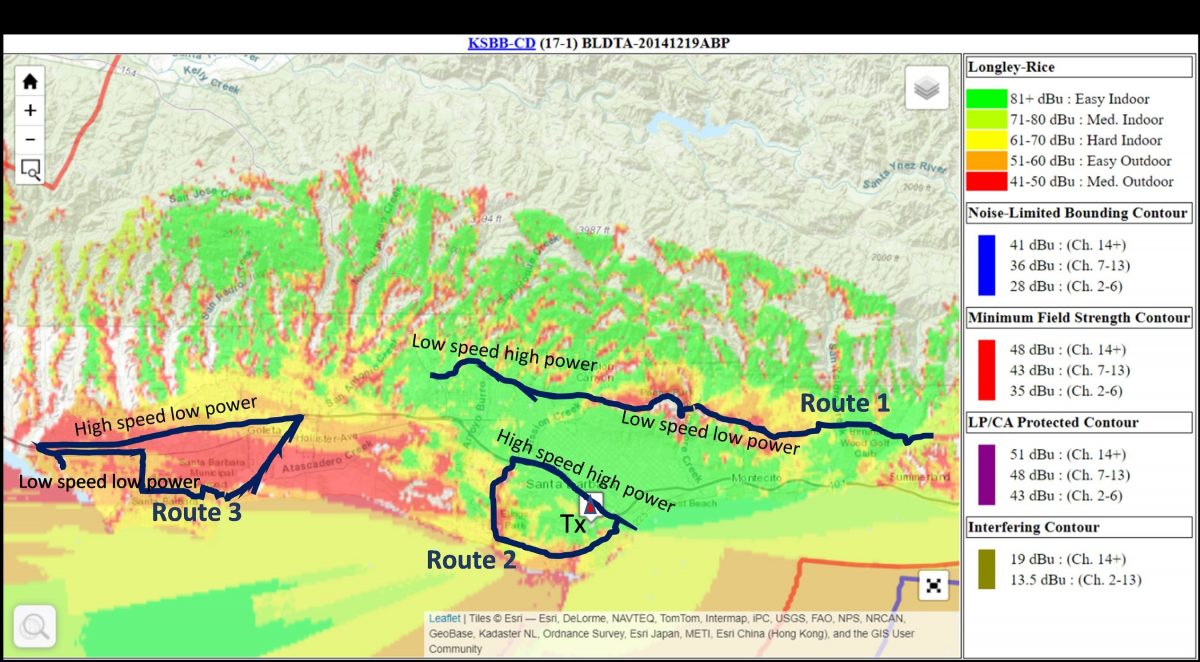
Testing was done to see how new worldwide demodulator chips from Sony Semiconductor and related software for ATSC 3.0 created by Sony Home Entertainment and Solutions of America would perform in a real-world environment. Difficult mountain passes and urban settings near Phoenix, Arizona provided one exceptionally complex reception challenge while another route along the Pacific coast near Santa Barbara, California had its own difficult reception environment.  

«For the field testing areas selected, there are some rolling hills, rural canyons and light urban canyon terrain causing echo delays,» said Mike Nejat, VP of Engineering at Sony Home Entertainment and Solutions of America. We wanted to find out if ATSC 3.0 can support multiple services, show an example configuration for automotive service, test the configuration with separate solutions in a variety of markets, terrains, and driving conditions, and test the simultaneous delivery of files not related to television entertainment to see how this transmission and reception system might appeal to new customers like automakers and fleet operators.

«Diversity can only help reception»

The Sony field testing, outlined in a paper (https://www.sony.com/en_us/ATSC-automotive-field-tests.html) written by engineers Luke Fay, Graham Clift, and Fred Ansfield, was done to test the capabilities of ATSC 3.0 transmissions and mobile reception. Driving routes in both Phoenix and Santa Barbara were chosen based on difficult reception areas, including a circle around the Paradise Valley north of Camelback Mountain in Arizona and along Highway 192 in California.  Four different routes in Arizona and two in California allowed engineers to test different signal-to-noise power levels and highway speeds above and below 55 mph. 

A key finding: to accommodate all channel conditions of strong and weak signal strength, it could be beneficial to have a mix of active and passive reception antennas. «Diversity can only help reception,» the paper states.

«Sometimes simplicity contains the greatest brilliance,» said Pearl TV Chief Technical Officer Dave Folsom. «The real brilliance in Sony’s chip and implementation is the use and enabling of diversity antenna reception. Pearl TV and the Phoenix Model Market partners know that mobile reception is particularly hampered by smaller, less efficient antenna systems in a motion environment with the signals reflecting off of adjacent automobiles, buildings, or terrain. In Sony’s implementation they can use up to four antennas and their signal outputs which likely arrive at different levels and times at any given time that are then added together efficiently. Diversity reception has been around for years and has been used in situations like wireless microphones and microwave reception. The brilliance of Sony’s design is the reduction of this capability to a small chip and using it to enable efficient NEXTGEN TV mobile reception.»

Broadcasters in Detroit recently launched a «Motown 3.0 Test Track» and expect to test the Sony implementation this spring, as part of the broader initiative now underway in Michigan. Detroit is one of more than 20 cities now offering NEXTGEN TV broadcasts powered by ATSC 3.0 technology. By merging over-the-air TV with the Internet, NEXTGEN TV is expected to change the way viewers watch live broadcast television. Stations can now personalize their news, sports, live events and shows with interactive features that give viewers the content most relevant to them. More information about the upgrades – including specific stations and available receivers – is available at www.WatchNextGenTV.com.

About Sony Electronics Inc.
Sony Electronics is a subsidiary of Sony Corporation of America and an affiliate of Sony Corporation (Japan), one of the most comprehensive entertainment companies in the world, with a portfolio that encompasses electronics, music, motion pictures, mobile, gaming, robotics and financial services. Headquartered in San Diego, California, Sony Electronics is a leader in electronics for the consumer and professional markets. Operations include research and development, engineering, sales, marketing, distribution and customer service. Sony Electronics creates products that innovate and inspire generations, such as the award-winning Alpha Interchangeable Lens Cameras and revolutionary high-resolution audio products. Sony is also a leading manufacturer of end-to-end solutions from 4K professional broadcast and A/V equipment to industry leading 4K and 8K Ultra HD TVs. Visit http://www.sony.com/news for more information.

About Pearl TV:
Pearl TV is a business organization of U.S. broadcast companies with a shared interest in exploring forward-looking broadcasting opportunities, including innovative ways of promoting local broadcast TV content and developing digital media and wireless platforms for the broadcast industry.  Pearl’s membership, comprising more than 750 TV stations, includes nine of the largest broadcast companies in America: Cox Media Group, Graham Media Group, Gray Television, Hearst Television Inc., Meredith Local Media Group, Nexstar Media Group, Sinclair Broadcast Group, the E.W. Scripps Company, and TEGNA, Inc.

About the Phoenix Model Market:
The Phoenix Model Market is a collaborative effort with a dozen Phoenix, Arizona TV broadcasters who are launching next-gen TV service marketwide, as a model for the TV industry.  Participating TV groups and stations in the Phoenix Model Market include: Arizona State University’s Arizona PBS (KAET), E.W. Scripps’ KNXV (ABC), Fox Television Stations’ KSAZ-TV (Fox) and KUTP (MyTV), Meredith’s KPHO (CBS) and KTVK (Independent), E.W. Scripps’ KASW-TV (CW); Telemundo Station Group’s KTAZ (Telemundo), TEGNA’s KPNX (NBC), and Univision’s KFPH-CD (UniMas) and KTVW (Univision).

Cision View original content to download multimedia:http://www.prnewswire.com/news-releases/sony-field-tests-show-atsc-3-0-tv-broadcasting-to-vehicles-is-ideal-for-solid-reception-in-difficult-on-the-move-conditions-301226878.html

SOURCE Sony Electronics, Inc.

More than 18,500 Individuals Unlawfully Detained by L.A. County Sheriff’s Department Over ICE Holds to Receive Compensation from $14 Million Settlement

MEXICO CITY, Feb. 11, 2021 /PRNewswire-HISPANIC PR WIRE/ — Individuals who were held in L.A. County jail based on ICE holds in the period from October 2010 to June 2014 may be eligible to participate in a financial settlement to compensate them for rights violations committed by the L.A. County Sheriff’s Department (LASD). More than 18,500 people are entitled to receive restitution from the $14 million USD

MEXICO CITY, Feb. 11, 2021 /PRNewswire-HISPANIC PR WIRE/ — Individuals who were held in L.A. County jail based on ICE holds in the period from October 2010 to June 2014 may be eligible to participate in a financial settlement to compensate them for rights violations committed by the L.A. County Sheriff’s Department (LASD). More than 18,500 people are entitled to receive restitution from the $14 million USD settlement. Class members are eligible to receive from $250 to $25,000 based on the time they were held and other details. In order to receive compensation, individuals must submit a claim — which does not require them to disclose their immigration status — no later than October 10, 2021. All information submitted by claimants will be kept confidential.

The class action suit Roy v. County of Los Angeles was brought by immigrants unlawfully detained by the LASD — sometimes for months —  due to «ICE hold» requests (also known as immigration detainers). A federal court ruled that LASD violated the constitution by jailing people solely on the basis of these holds. Lee Baca was L.A. Sheriff for most of the period in which violations took place; Baca is currently serving a three-year prison term for obstructing a federal investigation.

«As immigrants, we come from different countries, and law enforcement bodies act like basic protections don’t apply to us,» said Antonia C., who was detained after being wrongfully accused of car theft. She was denied bail because of an ICE hold and kept in jail for 70 days in 2012. «They broke my family and home. When they lock you up, they break you. They hurt my physical and mental health. All of us who were affected by this arrangement between ICE and the Sheriff’s Department, we need to put our voices together. While no amount of money will ever be enough to mend our scars, this compensation fund is so important. We need to take what we’re owed and show them that what they did to us — to our families — matters.»

Antonia’s daughter, who prefers to remain anonymous, said: «These actions don’t only affect people who were jailed — think about their families. I was only 11 years old when my mom was torn away. They broke us apart. I was filled with confusion and sadness. Without my mom by my side, I felt like I didn’t have a place in this world. We lost everything. Every day that your family member isn’t there is painful. Think of everything you miss — we will never get that time back. My mom is my own personal superhero — she’s strong and kind-hearted. I’m so proud of her for bringing this case and playing an important role in establishing this compensation fund. Injustice often goes without consequence — you don’t usually get anything. But this feels different. It’s like my mom and I, and countless other families, might finally get closure and justice.»

In collaboration with the ACLU of Southern California and the law firm of McLane, Bednarski & Litt, Centro de los Derechos del Migrante, Inc. (CDM) is conducting media and public outreach to identify class members and encourage them to come forward with claims. CDM, a binational migrant workers’ rights organization has successfully identified class members and assisted in settlement distribution in high-profile immigration and migrant worker lawsuits. In this case, the organization will focus its efforts on reaching Spanish-speaking class members in Mexico, Guatemala, Honduras, Nicaragua, Ecuador, and California.

«This case embodies a pervasive practice: local law enforcement agencies bowing to ICE and undermining immigrants’ rights. This unconstitutional deference to ICE policies has brutal consequences for individuals, families and communities across borders,» said Evy Peña, CDM’s Communications and Development Director. «We have reason to believe that people may have been deported as a result of the L.A. Sheriff’s actions. While locating class members may pose a challenge, given the geographic range of our search, we see this as an opportunity. Every qualified class member who was treated unlawfully will be able to receive compensation, regardless of where they are.»

«Let this settlement be a wake-up call to all those law enforcement agencies around the country that today continue to jail people unlawfully at ICE’s warrantless requests,» said Jennie Pasquarella, co-counsel on the case, ACLU SoCal director of immigrants’ rights and senior staff attorney. «They should stop or be held liable in damages to all the people they’ve unlawfully detained.»

«For years, the Los Angeles County Sheriff’s Department, the largest law enforcement agency in the United States, callously denied immigrants constitutional protections that universally apply to all other jail detainees — unjustifiably holding them without cause as prisoners,» said Lindsay Battles, co-counsel on the case, and an attorney with McLane, Bednarski & Litt. «This settlement holds the sheriff’s department accountable for thousands of unlawful incarcerations and provides a measure of compensation to every person injured by their unconstitutional policies.»

Individuals who believe they may be victims are encouraged to visit www.ICEHoldCaseLA.com  or call 1-833-537-1192 to learn more about how to file a claim.

The answers to frequently asked questions can be found below.

Who is affected?

More than 18,500 people are entitled to compensation from the settlement covering ICE detainers issued from October 2010 to June 2014. There are 3 categories of people affected:

  1. 4th Amendment Class: Immigrants who were detained beyond the time they were due to be released from criminal custody solely based on an ICE hold (October 2010June 2014).
  2. Equal Protection Class: Immigrants whose bail was less than $25,000 who would not have been booked into jail if there was no ICE hold (October 2010June 2014).
  3. No-Bail Class: Immigrants who were denied bail because of an ICE hold (October 2010October 2012).

How much money can class members get?

Class members are eligible to receive from $250 up to $25,000, based on how long they were held and other circumstances:

  1. Class members who were not permitted to post bail will receive $250 if they qualify and file the proper sworn statement.
  2. Class members could receive up to $1,000 for each day they were detained solely on an immigration detainer, up to a maximum of $25,000.

It is anticipated that many class members who were detained solely on an immigration detainer will receive several thousand dollars. 

Surplus funds, if any after class members are paid, will go to programs that provide legal representation to persons facing immigration consequences because of an arrest or conviction.

How to get money from the settlement?

To receive money, you must make a claim no later than October 10, 2021. You can file a claim online, by email or by mail. Go to www.ICEHoldCaseLA.com to learn more about how to file a claim form.

What are my other options?

Exclude Yourself: If you want to remove yourself from the lawsuit entirely, or if you want to be able to file your own lawsuit, or be part of a different lawsuit, then you must take steps to exclude yourself. You must mail your Exclusion Request, postmarked no later than October 10, 2021.

Object: You can remain a class member and object to any part of the settlement by October 10, 2021.

Do nothing: If you do not file a claim, you will not get money from the settlement, but you will still be bound by the terms of the Settlement.

Visit the website www.ICEHoldCaseLA.com for more detailed information.

How do I know my information will be kept confidential?

The parties in this case agree to keep confidential all information you submit in connection with the settlement. We will not tell ICE that you submitted a claim. Your contact information and family members’ contact information will not be disclosed to anyone other than attorneys for the plaintiffs and the case administrator.

How long will this process take?

The court has scheduled a hearing for November 19, 2021 to decide whether to approve the settlement. The motion for attorney’s fees and cost will be posted on the website after they are filed. You may attend the hearing at your own cost, but you do not have to. After final court approval, it will take at least two to three months or longer, to process claims, calculate the amount due to each class member, and begin payments.

This is only a summary. For more details, go to the website www.ICEHoldCaseLA.com or call 1-833-537-1192. The website has links to all settlement documents in this case, as well as the motion for attorneys’ fees. 

SOURCE CLU of Southern California, the law firm of McLane, Bednarski & Litt, the National Day Laborer Organizing Network, and the National Immigrant Justice Center

«Missed Opportunity for Advertisers» – Latinos Nearly Absent from Super Bowl Ads

SANTA MONICA, Calif., Feb. 11, 2021 /PRNewswire/ — When Dr. Ines Poza began tracking minority representation in Super Bowl ads twenty years ago, she found something disturbing. «Celebrities aside, only white men, white women and animals were protagonists, with Blacks or Asians filling in about 10% of background characters.»  Work testing ad concepts for the Total Market and Latino audiences piqued her interest in studying Super Bowl ads.  «I could see the population…

SANTA MONICA, Calif., Feb. 11, 2021 /PRNewswire/ — When Dr. Ines Poza began tracking minority representation in Super Bowl ads twenty years ago, she found something disturbing. «Celebrities aside, only white men, white women and animals were protagonists, with Blacks or Asians filling in about 10% of background characters.»  Work testing ad concepts for the Total Market and Latino audiences piqued her interest in studying Super Bowl ads.  «I could see the population landscape changing and wondered if this would be reflected in the ultimate ad showcase – the Super Bowl. Back then, not so much.»

Poza reports an encouraging shift.  «Most ads this year featured a minority as protagonist, had minorities featured as secondary characters, with the majority of ads with celebrities featuring at least one who is also a minority.»

While this is positive, Poza notes there is still something troubling. «Almost no one in the ads looks like the nearly 52 million Latinos living in the U.S.» explaining, «Aside from two Weather Tech and an Anheuser Busch ad, no one who can readily be identified as Latino was included. Blacks, mixed-race individuals and Asians were featured throughout, which is great, but not Latinos.»

The U.S. Census Bureau and Pew Research Center report Latinos comprise about 18% of the U.S. population with Blacks representing 13%, Asians 6% and non-Hispanic Whites about 60%.  As the fastest growing minority, Latinos are projected to represent nearly 30% of the U.S. by 2050. 

As to why, despite these figures, Latinos were almost completely absent from ads this year, Poza offers, «Advertisers are still trying to figure out how to reach U.S. Latino consumers, thinking multi-racial individuals featured are reasonable proxies. But there’s no substitute for meaningful representation.» adding, «This was a missed opportunity to connect with the fastest growing consumer segment. Advertisers can and should do better given the ad buy and potential market share the Super Bowl represents.»

As for continuing to monitor Super Bowl ads, Poza says, «I’m looking forward to next year!»

Dr. Ines Poza, founder of market research firm Poza Consulting Services based in Santa Monica, CA can be reached at ines@pozaconsulting.com.

Cision View original content:http://www.prnewswire.com/news-releases/missed-opportunity-for-advertisers–latinos-nearly-absent-from-super-bowl-ads-301226953.html

SOURCE Poza Consulting Services

More than 18,500 Individuals Unlawfully Detained by L.A. County Sheriff’s Department Over ICE Holds to Receive Compensation from $14 Million Settlement

MEXICO CITY, Feb. 11, 2021 /PRNewswire/ — Individuals who were held in L.A. County jail based on ICE holds in the period from October 2010 to June 2014 may be eligible to participate in a financial settlement to compensate them for rights violations committed by the L.A. County Sheriff’s Department (LASD). More than 18,500 people are entitled to receive restitution from the $14 million USD settlement. Class…

MEXICO CITY, Feb. 11, 2021 /PRNewswire/ — Individuals who were held in L.A. County jail based on ICE holds in the period from October 2010 to June 2014 may be eligible to participate in a financial settlement to compensate them for rights violations committed by the L.A. County Sheriff’s Department (LASD). More than 18,500 people are entitled to receive restitution from the $14 million USD settlement. Class members are eligible to receive from $250 to $25,000 based on the time they were held and other details. In order to receive compensation, individuals must submit a claim — which does not require them to disclose their immigration status — no later than October 10, 2021. All information submitted by claimants will be kept confidential.

The class action suit Roy v. County of Los Angeles was brought by immigrants unlawfully detained by the LASD — sometimes for months —  due to «ICE hold» requests (also known as immigration detainers). A federal court ruled that LASD violated the constitution by jailing people solely on the basis of these holds. Lee Baca was L.A. Sheriff for most of the period in which violations took place; Baca is currently serving a three-year prison term for obstructing a federal investigation.

«As immigrants, we come from different countries, and law enforcement bodies act like basic protections don’t apply to us,» said Antonia C., who was detained after being wrongfully accused of car theft. She was denied bail because of an ICE hold and kept in jail for 70 days in 2012. «They broke my family and home. When they lock you up, they break you. They hurt my physical and mental health. All of us who were affected by this arrangement between ICE and the Sheriff’s Department, we need to put our voices together. While no amount of money will ever be enough to mend our scars, this compensation fund is so important. We need to take what we’re owed and show them that what they did to us — to our families — matters.»

Antonia’s daughter, who prefers to remain anonymous, said: «These actions don’t only affect people who were jailed — think about their families. I was only 11 years old when my mom was torn away. They broke us apart. I was filled with confusion and sadness. Without my mom by my side, I felt like I didn’t have a place in this world. We lost everything. Every day that your family member isn’t there is painful. Think of everything you miss — we will never get that time back. My mom is my own personal superhero — she’s strong and kind-hearted. I’m so proud of her for bringing this case and playing an important role in establishing this compensation fund. Injustice often goes without consequence — you don’t usually get anything. But this feels different. It’s like my mom and I, and countless other families, might finally get closure and justice.»

In collaboration with the ACLU of Southern California and the law firm of McLane, Bednarski & Litt, Centro de los Derechos del Migrante, Inc. (CDM) is conducting media and public outreach to identify class members and encourage them to come forward with claims. CDM, a binational migrant workers’ rights organization has successfully identified class members and assisted in settlement distribution in high-profile immigration and migrant worker lawsuits. In this case, the organization will focus its efforts on reaching Spanish-speaking class members in Mexico, Guatemala, Honduras, Nicaragua, Ecuador, and California.

«This case embodies a pervasive practice: local law enforcement agencies bowing to ICE and undermining immigrants’ rights. This unconstitutional deference to ICE policies has brutal consequences for individuals, families and communities across borders,» said Evy Peña, CDM’s Communications and Development Director. «We have reason to believe that people may have been deported as a result of the L.A. Sheriff’s actions. While locating class members may pose a challenge, given the geographic range of our search, we see this as an opportunity. Every qualified class member who was treated unlawfully will be able to receive compensation, regardless of where they are.»

«Let this settlement be a wake-up call to all those law enforcement agencies around the country that today continue to jail people unlawfully at ICE’s warrantless requests,» said Jennie Pasquarella, co-counsel on the case, ACLU SoCal director of immigrants’ rights and senior staff attorney. «They should stop or be held liable in damages to all the people they’ve unlawfully detained.»

«For years, the Los Angeles County Sheriff’s Department, the largest law enforcement agency in the United States, callously denied immigrants constitutional protections that universally apply to all other jail detainees — unjustifiably holding them without cause as prisoners,» said Lindsay Battles, co-counsel on the case, and an attorney with McLane, Bednarski & Litt. «This settlement holds the sheriff’s department accountable for thousands of unlawful incarcerations and provides a measure of compensation to every person injured by their unconstitutional policies.»

Individuals who believe they may be victims are encouraged to visit www.ICEHoldCaseLA.com  or call 1-833-537-1192 to learn more about how to file a claim.

The answers to frequently asked questions can be found below.

Who is affected?

More than 18,500 people are entitled to compensation from the settlement covering ICE detainers issued from October 2010 to June 2014. There are 3 categories of people affected:

  1. 4th Amendment Class: Immigrants who were detained beyond the time they were due to be released from criminal custody solely based on an ICE hold (October 2010June 2014).
  2. Equal Protection Class: Immigrants whose bail was less than $25,000 who would not have been booked into jail if there was no ICE hold (October 2010June 2014).
  3. No-Bail Class: Immigrants who were denied bail because of an ICE hold (October 2010October 2012).

How much money can class members get?

Class members are eligible to receive from $250 up to $25,000, based on how long they were held and other circumstances:

  1. Class members who were not permitted to post bail will receive $250 if they qualify and file the proper sworn statement.
  2. Class members could receive up to $1,000 for each day they were detained solely on an immigration detainer, up to a maximum of $25,000.

It is anticipated that many class members who were detained solely on an immigration detainer will receive several thousand dollars. 

Surplus funds, if any after class members are paid, will go to programs that provide legal representation to persons facing immigration consequences because of an arrest or conviction.

How to get money from the settlement?

To receive money, you must make a claim no later than October 10, 2021. You can file a claim online, by email or by mail. Go to www.ICEHoldCaseLA.com to learn more about how to file a claim form.

What are my other options?

Exclude Yourself: If you want to remove yourself from the lawsuit entirely, or if you want to be able to file your own lawsuit, or be part of a different lawsuit, then you must take steps to exclude yourself. You must mail your Exclusion Request, postmarked no later than October 10, 2021.

Object: You can remain a class member and object to any part of the settlement by October 10, 2021.

Do nothing: If you do not file a claim, you will not get money from the settlement, but you will still be bound by the terms of the Settlement.

Visit the website www.ICEHoldCaseLA.com for more detailed information.

How do I know my information will be kept confidential?

The parties in this case agree to keep confidential all information you submit in connection with the settlement. We will not tell ICE that you submitted a claim. Your contact information and family members’ contact information will not be disclosed to anyone other than attorneys for the plaintiffs and the case administrator.

How long will this process take?

The court has scheduled a hearing for November 19, 2021 to decide whether to approve the settlement. The motion for attorney’s fees and cost will be posted on the website after they are filed. You may attend the hearing at your own cost, but you do not have to. After final court approval, it will take at least two to three months or longer, to process claims, calculate the amount due to each class member, and begin payments.

This is only a summary. For more details, go to the website www.ICEHoldCaseLA.com or call 1-833-537-1192. The website has links to all settlement documents in this case, as well as the motion for attorneys’ fees. 

Cision View original content:http://www.prnewswire.com/news-releases/more-than-18-500-individuals-unlawfully-detained-by-la-county-sheriffs-department-over-ice-holds-to-receive-compensation-from-14-million-settlement-301226493.html

SOURCE CLU of Southern California, the law firm of McLane, Bednarski & Litt, the National Day Laborer Organizing Network, and the National Immigrant Justice Center

ClimeCo Expands Leadership Around Federal Climate Policy with the Hire of Rosemary O’Brien

BOYERTOWN, Pa., Feb. 11, 2021 /PRNewswire/ — ClimeCo LLC (ClimeCo) is pleased to announce the hiring of <span…

BOYERTOWN, Pa., Feb. 11, 2021 /PRNewswire/ — ClimeCo LLC (ClimeCo) is pleased to announce the hiring of Rosemary O’Brien to provide clients with additional leadership in emerging federal climate policy. Before joining ClimeCo, O’Brien had a 40-year career with a global nitrogen fertilizer manufacturer, where she directed strategy for various legislative and regulatory issues. Her experience spans a broad spectrum of issues facing the fertilizer industry, including carbon policy and implementation, regulatory compliance programs in North America and the United Kingdom, and corporate sustainability. 

«ClimeCo has unique capabilities to assist global companies in the quickly evolving climate change arena,» says O’Brien.

«I had the pleasure of working with Rosemary for over a decade while she served as Vice President of Government Affairs for one of ClimeCo’s foundational clients,» said William Flederbach, President and CEO of ClimeCo. «During that time, Rosemary taught ClimeCo so much about government engagement strategy and effective communication styles. We complemented each other extremely well and always created value together. Now that value creation will continue, with Rosemary engaging heavily in ClimeCo’s agricultural business, from opportunities in the manufacturing life cycle to land application, and more.»

O’Brien will serve as Vice President, Climate Policy and Strategy, focusing on ClimeCo’s manufacturing and agricultural sectors, including farming.  With her knowledge of federal climate policies, she will be a client leader for strategizing, developing, and implementing carbon policy and ESG.

«ClimeCo has unique capabilities to assist global companies in the quickly evolving climate change arena,» says O’Brien. «ClimeCo’s expertise across many sectors can help clients plan and shape climate policy priorities and arm them with innovative ideas to assist policymakers with goals for zero-emissions platforms.»

O’Brien holds a B.A. from the University of New Hampshire and an MBA from American University.  She has served in multiple leadership positions on a range of public policy advocacy and environmental issues. She is dedicated to the advancement of the public policy profession by mentoring and encouraging new entries into this field.

About ClimeCo

ClimeCo is a respected advisor, transaction facilitator, and trader of environmental commodity market products. We specialize in regulated carbon, regional criteria pollutant trading programs, voluntary markets, sustainability, and project development and financing of GHG abatement and mitigation systems. For more information or to discuss how ClimeCo can drive value for your organization, contact us at 484.415.0501, info@climeco.com, or through our website climeco.com.


Cision View original content to download multimedia:http://www.prnewswire.com/news-releases/climeco-expands-leadership-around-federal-climate-policy-with-the-hire-of-rosemary-obrien-301226995.html

SOURCE ClimeCo