Human Horizons’ Super Smart-SUV Set to Rollout First Half of 2021

YANCHENG, China, Oct. 30, 2020 /PRNewswire/ — Leading Chinese smart mobility and autonomous driving research company, Human Horizons, announced that the first pre-production models of the HiPhi X super SUV have started to roll off the factory assembly line utilizing its AVP technology. HiPhi X was officially unveiled at the 2020 Beijing Auto Show as the world’s first autonomous driving vehicle to utilize 5G enabled vehicle-to-everything (V2X) technologies. It combines cutting-edge technical…

YANCHENG, China, Oct. 30, 2020 /PRNewswire/ — Leading Chinese smart mobility and autonomous driving research company, Human Horizons, announced that the first pre-production models of the HiPhi X super SUV have started to roll off the factory assembly line utilizing its AVP technology. HiPhi X was officially unveiled at the 2020 Beijing Auto Show as the world’s first autonomous driving vehicle to utilize 5G enabled vehicle-to-everything (V2X) technologies. It combines cutting-edge technical innovation with premium class luxury. Deliveries of HiPhi X will commence in the first half of 2021.
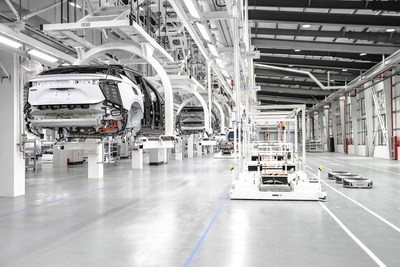
Finished vehicles are able to automatically drive themselves from the production line to designated delivery areas, allowing for completely unmanned transfer and pickup.

One of the defining features of the HiPhi X is the inbuilt Level 4 Autonomous Valet Parking (AVP) technology which allows for smart-parking and summon in supported areas. During production, this technology proves very useful as finished vehicles are able to automatically drive themselves from the production line to designated delivery areas, allowing for completely unmanned transfer and pickup. This functionality revolutionizes traditional automotive manufacturing, leading to a safer, cleaner, and more efficient production line.

For manufacturing of the HiPhi X, Human Horizons has developed a dynamic body production line which provides both fully automated and flexible production. The body of the vehicle is put joined using adaptive spot welding, flow drill screws (FDS) and self-piercing rivets (SPR) as used in the aviation industry. These jointing technologies combined with world class adhesives and sealers ensure the steel and aluminum materials combine to achieve complete air and water tightness, as well as a more stable and durable body. The production process is fully automated and consumes significantly less energy.
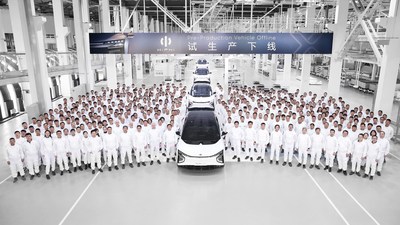
Through a dedication to optimizing and automating the entire production and business process, Human Horizons are moving ever closer to realizing their goal of a mass-produced smart super-SUV, the HiPhi X.

In keeping with the environmentally friendly production ethos of the company, painting of the HiPhi X is also fully automated. The HiPhi X uses state-of-the-art automatic painting technology provided by German Dürr Group to coat all inner and outer surfaces using robots. This creates a finish that rivals other luxury cars such as Porsche. Within the unmanned spraying area, the factory also adopts circulating air, dry mist, rotary adsorption, regenerative thermal oxidizers (RTO), and other world-class technologies to further reduce energy consumption and cut down on the emission of volatile organic compounds (VOC’s). In doing so, the HiPhi X more than meets the requirements of even the most stringent of international standards to create a more environmentally friendly manufacturing facility.

As smart-retail continues to develop and pressure traditional business processes, Human Horizons has invested in a complete digital system linking together the entire organization’s online and offline processes. This covers areas such as order placement, production scheduling, quality management, error prevention, equipment management and supply chain management. The system automatically relays information to relevant parties. This automatic coordination of information greatly accelerates internal process speed and reduces the risk of human error.

The logistics processing of parts and vehicles has also been largely automated. Throughout the vehicle assembly process, automated guided vehicles (AGV) and ultra-quiet EMS transportation technology create a safer work environment. Large-scale use of the 360°AGV logistics distribution system, over-the-air (OTA) high-speed wireless technology, and remote vehicle activation allow for unmanned on-demand transportation of both parts and vehicles.

Through a dedication to optimizing and automating the entire production and business process, Human Horizons is moving ever closer to realizing their goal of a mass-produced smart super-SUV, the HiPhi X.

About the HiPhi Brand

HiPhi is a premium brand created by Human Horizons and enhanced by its users. HiPhi X is an EV with a lightweight hybrid- aluminum construction. It also embeds sustainability with the adoption of vegan leather and the use of recyclable materials to further increase the sustainable nature of Human Horizons’ EV products.

About Human Horizons

Human Horizons is established for R&D in innovative and leading intelligent mobility technologies as well as the industrialisation of future-oriented smart vehicles. Furthermore, Human Horizons builds smart transportation technologies and contributes to the development of smart cities, which will redefine human mobility.

HiPhi Logo

Photo – https://mma.prnewswire.com/media/1324069/Human_Horizons.jpg
Photo – https://mma.prnewswire.com/media/1324070/Human_Horizons.jpg
Logo – https://mma.prnewswire.com/media/1213394/HiPhi_Logo.jpg

Inspirations from the Global Leader: Getting to 100% Electric Delivery Vehicles

A new report series from Rocky Mountain Institute brings new insights from Shenzhen—the global electric vehicle leader— on how to fully electrify urban delivery and logistics vehicles.

BEIJING, Oct. 29, 2020 /PRNewswire/ — Today Rocky Mountain Institute (RMI) launched a six-volume report series which explores the experience of the City of Shenzhen, China in addressing carbon emissions and air pollution through the electrification of its urban freight…

A new report series from Rocky Mountain Institute brings new insights from Shenzhen—the global electric vehicle leader— on how to fully electrify urban delivery and logistics vehicles.

BEIJING, Oct. 29, 2020 /PRNewswire/ — Today Rocky Mountain Institute (RMI) launched a six-volume report series which explores the experience of the City of Shenzhen, China in addressing carbon emissions and air pollution through the electrification of its urban freight sector. Shenzhen is leading the world in electric vehicle adoption and the details of how it is moving towards 100% electrification can provide lessons for cities around the world.

Utilization of a vehicle is one of the biggest determining factors to wider adoption of electric vehicles in fleet and logistics applications. This report series—Putting Electric Logistics Vehicles to Work in Shenzhen—focuses on understanding the policies, charging infrastructure, technology, and market development advances critical to achieving full utilization of electric logistics vehicles (ELVs).

This report series contains insights based on the lessons drawn from Shenzhen relevant to global leaders, including state and city governments, logistics delivery and retail goods industries, and the financial sector. The key insights from our work relevant to these leaders include:

  • Full logistics electrification is possible. Shenzhen’s experience shows that a rapid transition to the use of EVs in urban logistics is feasible and, with the proper policy framework, vehicle operators will rapidly electrify.
  • Policy must evolve as logistics electrification progresses. As the low-hanging fruit of logistics electrification is picked, policy makers must be prepared to pivot towards harder use cases. Being able to dynamically adjust policy to the needs of distinct market segments as they electrify is critical to success.
  • Growing an ELV fleet is a necessary but insufficient condition for logistics electrification. Policy makers often set EV targets in terms of share of sales or share of fleet. Getting EVs into the hands of operators is the first step in full logistics electrification. Cities must also ensure that ELVs are able to displace the use of fossil fuel vehicles.
  • Encourage innovation and entrepreneurialism in the supporting ecosystem. Cities and the financial sector can support innovation in multiple ways, including engaging with industry to support innovative pilots that support proof-of-concept for new approaches to logistics electrification.

To read the full report, visit RMI website at:
https://rmi.org/insight/putting-electric-logistics-vehicles-to-work-in-shenzhen/


IDTechEx Explains how Electric Vehicles are Eliminating Rare-Earths

BOSTON, Oct. 29, 2020 /PRNewswire/ — Magnetic materials are key to producing electric vehicles. Many of the electric vehicles on the market use kilograms of magnetic materials to drive their electric motors. In fact, over 80% of electric cars sold globally utilized permanent magnet-based motors in 2019. These magnets are typically made with rare-earth materials such as neodymium and dysprosium, which have a very geographically constrained supply chain. China accounts…

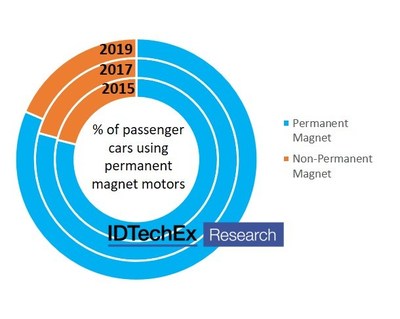
BOSTON, Oct. 29, 2020 /PRNewswire/ — Magnetic materials are key to producing electric vehicles. Many of the electric vehicles on the market use kilograms of magnetic materials to drive their electric motors. In fact, over 80% of electric cars sold globally utilized permanent magnet-based motors in 2019. These magnets are typically made with rare-earth materials such as neodymium and dysprosium, which have a very geographically constrained supply chain. China accounts for the vast majority of rare-earth production worldwide and this has, in the past, led to huge price volatility. In 2011, after China restricted its exports of rare-earths, the price of neodymium and dysprosium rose by approximately 750% and 2000% respectively.

The percentage of electric and plug-in hybrid cars using permanent-magnet based motors has been rising in recent years. Source: IDTechEx, “Materials for Electric Vehicles 2020-2030”, www.IDTechEx.com/EVMaterials

While these prices have settled, rare-earths also present environmental concerns. The ores that rare-earths are extracted from are often laced with radioactive materials such as thorium. Separating the materials requires huge amounts of carcinogenic compounds like sulphate, ammonia and hydrochloric acid. Processing 1 tonne of rare-earths can produce up to 2000 tonnes of toxic waste.

Vehicle manufacturers are aware of these issues and many have made statements about either the elimination or reduction of rare-earths in their electric motors. Renault’s Zoe has utilized a wound rotor configuration to replace magnets with copper windings, BMW’s new 5th generation drivetrain has eliminated rare-earths and Audi has opted for an aluminium rotor induction motor for the e-tron. A variety of companies, including Bentley are also investigating switched reluctance motors for EV applications which require no magnets or copper in their rotors.

However, despite these trends, the new IDTechEx report «Materials for Electric Vehicles 2020-2030» finds that in recent years, there has been an increased shift towards more permanent magnet-based motors: 2019 saw this increase to 82% compared to 79% in 2015. Permanent magnet motors typically have better efficiency during normal driving conditions than their alternatives, this in turn can result in improved driving range. For this reason, we have seen Tesla transition from using copper induction motors in the Model S and X to using a permanent magnet motor in the Model 3 and Y (although dual motor variants use an ACIM on the front for a performance boost). Additionally, the Chinese electric vehicle market is the largest in the world and due to their control of the rare-earth supply, most Chinese vehicle models utilize permanent magnet motors.

Whilst there has been much publicity and drive towards rare-earth reduction, in practice we are seeing an increase in the number of permanent magnet motors. However, these motors are using less magnetic material in total and OEMs such as Nissan and Honda have reduced or eliminated the heavy rare-earth components like dysprosium. Despite the potential reduction per vehicle of materials like neodymium, the overall increase in the global EV market will lead to an overall increase in the demand for rare-earth materials.

For more information, IDTechEx has provided analysis and forecasts for over 30 materials essential in the construction of electric vehicle traction motors, battery cells and battery packs in the latest report: «Materials for Electric Vehicles 2020-2030«.

IDTechEx analyzes adoption of electric vehicles, battery trends and demand across more than 100 different mobility sectors. This is summarized in a master electric vehicle report, found at www.IDTechEx.com/EV. Further in depth analysis can be found in the full portfolio of electric vehicle research available at www.IDTechEx.com/research/EV.

IDTechEx guides your strategic business decisions through its Research, Subscription and Consultancy products, helping you profit from emerging technologies. For more information, contact research@IDTechEx.com or visit www.IDTechEx.com.

Media Contact: 

Natalie Moreton 
Digital Marketing Manager 
press@IDTechEx.com 
+44(0)1223 812300 

Images download:

https://www.dropbox.com/sh/0kbihym6nba17by/AADnl_AVooNsVI6uVsC4tdX0a?dl=0 

Social Media Links:

Twitter: https://www.twitter.com/IDTechEx
LinkedIn: https://www.linkedin.com/company/idtechex/
Facebook: https://www.facebook.com/IDTechExResearch

IDTechEx Logo

Photo: https://mma.prnewswire.com/media/1319174/IDTechEx_Electric_Vehicles.jpg

Logo: https://mma.prnewswire.com/media/478371/IDTechEx_Logo.jpg

DENSO Products and Services Americas Named 2020 North American Aftermarket Automotive Company of the Year

DENSO recognized for excellence in aftermarket products, model customer service and training programs

SANTA CLARA, Calif., Oct. 29, 2020 /PRNewswire/ — Based on its recent analysis of the North American automotive aftermarket, Frost & Sullivan has honored DENSO Products and Services Americas, Inc. with its <a target="_blank"…

DENSO recognized for excellence in aftermarket products, model customer service and training programs

SANTA CLARA, Calif., Oct. 29, 2020 /PRNewswire/ — Based on its recent analysis of the North American automotive aftermarket, Frost & Sullivan has honored DENSO Products and Services Americas, Inc. with its 2020 North American Aftermarket Automotive Company of the Year Award. The international consulting firm, a global expert in strategic growth, recognizes companies and organizations that model excellence in growth strategy and implementation, product and technology innovation, and leadership that increases customer value and market penetration.

«As an OE-quality supplier, DENSO leverages its innovative capabilities in design and development to bring newer automotive products to the aftermarket much faster than many of its competitors,» said Anuj Monga, global research manager and specializing in aftermarket, automotive and transportation practices for Frost & Sullivan. «DENSO’s aftermarket products and services also serve markets beyond the automotive industry, including agriculture, logistics and security.»

DENSO Products and Services Americas is an affiliate of global mobility supplier DENSO Corp., whose extensive product portfolio includes powertrain, electronic, thermal, information and safety systems. Headquartered in Long Beach, California, DENSO’s aftermarket group has led the industry in developing high-tech products and services to support new electronic functionalities while continuing to meet North America’s demand for best-in-class replacement auto parts for millions of vehicles in operation. New product lines include telematics-focused connected car applications and alternate powertrain solutions for electric and hybrid vehicles.

DENSO has also stayed ahead of the curve by developing sensor applications for advanced driver-assisted systems and automous vehicles and meeting the growing market demand for alternate powertrain solutions and related control units, motor generators and battery monitoring units. The company’s comprehensive support services include state-of-the-art training programs to equip technicians with the latest skills and technical expertise, a best practice that positions DENSO to drive its brand closer to its channel partners while closing the gap in skill sets between the OE and independent aftermarket workforce.

Frost & Sullivan specializes in research and analysis of business performance, innovation and navigating disruption. The firm’s annual Best Practices awards honor companies in a variety of global regions and markets for outstanding achievement and superior performance in leadership, technological innovation, customer service, strategic product development and other areas. Industry analysts compare market participants and measure performance through in-depth interviews, analysis, and extensive secondary research to identify best practices in the industry.

About Frost & Sullivan

For over five decades, Frost & Sullivan has become world-renowned for its role in helping investors, corporate leaders and governments navigate economic changes and identify disruptive technologies, Mega Trends, new business models and companies to action, resulting in a continuous flow of growth opportunities to drive future success. Contact us: Start the discussion.

Contact:

Lindsey Whitaker
P: +1 (210) 477-8457
E: lindsey.whitaker@frost.com

About DENSO

DENSO is a $47.6 billion global mobility supplier that develops advanced technology and components for nearly every vehicle make and model on the road today. With manufacturing at its core, DENSO invests in its 221 facilities in 35 countries to produce thermal, powertrain, mobility, electrification, & electronic systems, to create jobs that directly change how the world moves. The company’s 170,000+ employees are paving the way to a mobility future that improves lives, eliminates traffic accidents, and preserves the environment. Globally headquartered in Kariya, Japan, DENSO spent 9.9 percent of its global consolidated sales on research and development in the fiscal year ending March 31, 2020. For more information about global DENSO, visit https://www.denso.com/global/en.

In North America, DENSO is headquartered in Southfield, Michigan, and employs 27,000+ engineers, researchers and skilled workers across 51 sites in the U.S., Canada and Mexico. In the United States alone, DENSO employs 17,700+ employees across 14 states (and the District of Columbia) and 41 sites. In fiscal year ending March 31, 2020, DENSO in North America generated $10.9 billion in consolidated sales. DENSO is committed to advancing diversity and inclusion inside the company and beyond – a principle that brings unique perspectives together, bolsters innovation and pushes DENSO forward. Join us, and craft not only how the world moves, but also your career: www.densocareers.com. For more information, go to https://www.denso.com/us-ca/en/.

Dan Alf
P: +1 (310) 513-7353
E: dan.alf@na.denso.com

Lexus Design Award India 2021 Receives Over a Thousand Original Entries, Announces Esteemed Panel of Judges and Mentors

– Lexus Design Award India offers recognition & accolades to winners from 10 different categories of design

– In its fourth year, the Lexus Design Award India 2021 has received over 1000 entries from designers and creators across India

– The board of venerable and noted designers from the Indian design fraternity are all set to mentor and assess the rising talent for the Lexus Design Award India 2021

PANEL OF JUDGES: Dhimant Panchal, <span…

– Lexus Design Award India offers recognition & accolades to winners from 10 different categories of design

– In its fourth year, the Lexus Design Award India 2021 has received over 1000 entries from designers and creators across India

– The board of venerable and noted designers from the Indian design fraternity are all set to mentor and assess the rising talent for the Lexus Design Award India 2021

PANEL OF JUDGES: Dhimant Panchal, Unmesh Kulkarni, Rashmi Korjan, Shibani Dasgupta, Anuj Sharma and David Nordstrom

PANEL OF MENTORS: Michael Foley, Nandita Abraham, Ayush Kasliwal, Nishma Pandit, Karishma Shahani Khan, Amit Krishn Gulati

NEW DELHI, MUMBAI and BANGALORE, India, Oct. 29, 2020 /PRNewswire/ — Lexus India has announced its lineup of esteemed judges and mentors for the Lexus Design Awards India 2021. The panel aims to identify the next generation of talent in the country, evaluating the entries on the three key design principles of Lexus – Anticipate, Innovate and Captivate, to build a better tomorrow. The Lexus Design Award India has seen an increase in entries over the years, with over a thousand original entrants competing to win the prestigious award this year.

Now in its fourth edition, the design competition recognizes innovative talent and designs, central to the award’s mission to recognize and nurture designs that are an amalgamation of design and technology and can play a role in building a better tomorrow. The annual event engages with both established & budding creative talent across the country, aspiring to win the coveted trophy for their state-of-the-art designs.

On the judging panel this year is Professor Dhimant Panchal, Industrial designer and Fashion & Lifestyle Accessory designer, David Nordstrom Vice President, Lexus Asia Pacific Division, Unmesh Kulkarni founding member of Oceanic Circle, Rashmi Korjan founder of India’s first all-women run product design firm The Design Concern and co-founded Studio Korjan, fashion designer Anuj Sharma and Shibani Dasgupta lifestyle accessory designer and creator of Baaya Design.

«The Lexus Design Award India provides a great platform for designers to showcase their work. I am excited to be a part of the judging panel this year and look forward to seeing the innovative ideas that come from our design talent across India,» comments Professor Dhimant Panchal, Jury Chairperson for LDAI 2021.

Finalists of the Conceptual category will have an exclusive opportunity to receive guidance from renowned designers in India to bring their creations & design to life and develop prototypes of their ideas for final judgment. LDAI trophy designer Michael Foley– founder of Foley Designs, Nandita Abraham– President of Pearl Academy, Ayush Kasliwal– Creative Director and CEO, AKDPL, Nishma Pandit– co-founder of Ticket Design- a multidisciplinary design consulting firm, Karishma Shahani Khan– founder of clothing and textile label Ka-Sha Designs and Amit Krishn Gulati– award-winning industrial designer entrepreneur and educator will mentor the finalists selected.

«We are delighted to announce the line-up of judges and mentors for the Lexus Design Award India 2021 who come with an immense knowledge of design and innovation and are celebrated globally for their stellar contribution. Over the last three years, Lexus Design Award India has continued to further cement its footprint in the design fraternity and have established itself as a premier design award. Attracting entries from a pool of talent, we are confident that this year’s winners will bring about ideas which will help us craft a better tomorrow.» said P.B. Venugopal, President, Lexus India.

Following the mentorship program, the 6 finalists of the Conceptual category will go on to present their projects to the jury panel for evaluation. The final winners will then be announced along with the Established category winners at the Lexus Design Award India event in January 2021.

The Lexus Design Award India is conducted in knowledge partnership with Association of Designers of India – ADI. Emulating the same brand commitment as that of Lexus’, ADI ensures that their efforts are in the direction of promoting best practices in the profession of design in India. ADI is India’s only association, that through its 8 chapters, promotes and strengthens the capabilities of the Indian design professionals & students, as well as presents a unified voice to influence public policy, shape the industry and benefit people at large through design.

Details of the Lexus Design Award India 2021 can be found at www.lexusdesign.in

About Lexus Design Award India

The Lexus Design Award India (LDAI) seeks to recognize and reward the best industrial design executed by Indian designers, institutions, design consultancy firms, and in-house design teams of companies. Good design is defined by LDAI as the synthesis of ergonomic, aesthetic, commercial, industrial, and scientific disciplines to create products that simplify, enrich and better human existence. Lexus, as a brand, has always stood for excellence in design, ergonomics, sustainability, technological superiority, and responsible consumption; and the LDAI will mirror these brand values.

About Lexus Design Award

First launched in 2013, the Lexus Design Award is an international design competition that targets up-and-coming creators from around the world. The award seeks to foster the growth of ideas that contribute to society by supporting designers and creators whose works can help to shape a better future. It provides a unique opportunity for six finalists to work with globally recognized designers as a mentor to create prototypes of their designs, and then exhibit them at one of the design calendar’s most important events.

About Lexus

Lexus launched in 1989 with a flagship sedan and a guest experience that helped define the premium automotive industry. In 1998, Lexus introduced the luxury crossover category with the launch of the Lexus RX. The luxury hybrid sales leader, Lexus delivered the world’s first luxury hybrid and has since sold over 1.5 million hybrid vehicles. A global luxury automotive brand with an unwavering commitment to bold, uncompromising design, exceptional craftsmanship, and exhilarating performance, Lexus has developed its lineup to meet the needs of the next generation of global luxury guests and is currently available in over 90 countries worldwide. Lexus associates/team members across the world are dedicated to crafting amazing experiences that are uniquely Lexus, and that excite and change the world.

Website: www.lexusindia.co.in
Facebook: @LexusIndia
Instagram: @lexus_india
Official Hashtag: #LexusDesignAward

Logo: https://mma.prnewswire.com/media/1323168/LDAI_2021_Jury_Mentors_Final.jpg

Automotive Sensor Market to Reach $37.65 Billion, Globally, by 2027 at 10.2% CAGR: Allied Market Research

Increase in use of pressure sensors in the automotive industry, surge in demand for automotive sensors in hybrid and electric cars, and rise in use of custom designed electronics devices fuel the growth of the global automotive sensor market.

PORTLAND, Ore., Oct. 28, 2020 /PRNewswire/ — Allied Market Research published a report, titled, «Global Automotive Sensor Market by Type (Temperature Sensors, Pressure Sensors, Motion Sensors, Speed Sensors, and Gas Sensors) and Application…

Increase in use of pressure sensors in the automotive industry, surge in demand for automotive sensors in hybrid and electric cars, and rise in use of custom designed electronics devices fuel the growth of the global automotive sensor market.

PORTLAND, Ore., Oct. 28, 2020 /PRNewswire/ — Allied Market Research published a report, titled, «Global Automotive Sensor Market by Type (Temperature Sensors, Pressure Sensors, Motion Sensors, Speed Sensors, and Gas Sensors) and Application (Powertrain, Chassis, Body Electronics, Safety & Security, and Telematics): Global Opportunity Analysis and Industry Forecast, 2020–2027.» According to the report, the global automotive sensor industry was estimated at $16.40 billion in 2019, and is anticipated to hit $37.65 billion by 2027, registering a CAGR of 10.2% from 2020 to 2027.

Allied_Market_Research_Logo

Drivers, restraints, and opportunities-

Increase in use of pressure sensors in the automotive industry, surge in demand for automotive sensors in hybrid and electric cars, and rise in use of custom designed electronics devices fuel the growth of the global automotive sensor market. On the other hand, high development cost of automotive sensors impedes the growth to some extent. Nevertheless, technological advancement in the automobile industry and growing automotive sector are expected to create lucrative opportunities in the near future.

Download Sample Report: https://www.alliedmarketresearch.com/request-sample/725 

Covid-19 scenario-

  • During the first phase of the lockdown, a number of regulations were imposed on the transportation sector and accordingly, there was a significant decline in the demand for automotive sensors from the automobile vertical.
  • Also, huge disruptions in the supply chain affected the market negatively.
  • However, with the government bodies across the world coming up with several relaxations, the global market is projected to go back to its stance soon.

The temperature sensor segment to maintain the lion’s share-

Based on type, the temperature sensor segment accounted for around one-fourth of the global automotive sensor market revenue in 2019 and is anticipated to retain its dominance till 2027, owing to rise in demand for self-propelled temperature sensor in the automotive industry. Simultaneously, the gas sensor segment would grow at the fastest CAGR of 14.7% from 2020 to 2027. There has been a significant rise in the use of gas sensors in order to detect different types of harmful gases in the atmosphere. This factor has fueled the segment growth.

Industry Analysis Post COVID: https://www.alliedmarketresearch.com/request-for-customization/725?reqfor=covid 

The powertrain segment to dominate by 2027-

Based on application, the powertrain segment contributed to around one-fourth of the global automotive sensor market share in 2019 and is expected to rule the roost by the end of 2027. This is attributed to its better fuel economy. The body electronics segment, on the other hand, would portray the fastest CAGR of 12.7% during the study period. Increase in demand for high-end technologies such as collision avoidance, driver assistance, and premium audio systems drives the segment growth.

Asia-Pacific, followed by North America, garnered the major share in 2019-

Based on geography, Asia-Pacific, followed by North America, garnered the major share in 2019, holding nearly half of the global automotive sensor market. The same region would also manifest the fastest CAGR of 11.3% throughout the forecast period. Rapid growth of industrialization, low operating cost, and increase in population are some of the key factors responsible for the market growth in the region.

Enquire For More Details: https://www.alliedmarketresearch.com/purchase-enquiry/725 

Key players in the industry-

  • DENSO Corporation
  • Infineon Technologies AG
  • AUTOLIV INC
  • Continental AG
  • STMicroelectronics N.V
  • Valeo
  • Sensata Technologies
  • Robert Bosch
  • Delphi Automotive Company
  • NXP Semiconductor

Access AVENUE – A Subscription-Based Library (Premium On-Demand, Subscription-Based Pricing Model) @ https://www.alliedmarketresearch.com/library-access

Avenue is a user-based library of global market report database, provides comprehensive reports pertaining to the world’s largest emerging markets. It further offers e-access to all the available industry reports just in a jiffy. By offering core business insights on the varied industries, economies, and end users worldwide, Avenue ensures that the registered members get an easy as well as single gateway to their all-inclusive requirements.

Avenue Library Subscription | Request For 14 Days Free Trial of Before Buying:
https://www.alliedmarketresearch.com/avenue/trial/starter

Similar Reports:

Automotive Electronics Market by Vehicle Type (Passenger Car, LCV and HCV), Component (Sensors, Actuators, Processors, Microcontrollers, and Other), Application (ADAS, Infotainment, Body Electronics, Safety System, Power Train and Others), and Distribution Channel (OEM and Aftermarket): Global Opportunity Analysis and Industry Forecast, 2019–2026

Automotive LiDAR Sensors Market by Technology (Solid State and Mechanical), by Application (Autonomous Cars and Semi-autonomous Cars) – Global Opportunity Analysis and Industry Forecast, 2020-2027

Automotive Catalytic Converter Market by Type (Two-Way Oxidation Catalytic Converter, Three-Way Oxidation-Reduction Catalytic Converter, and Diesel Oxidation Catalyst), Catalyst (Platinum, Palladium, and Rhodium) – Global Opportunity Analysis and Industry Forecast, 2020-2027

Pressure Sensor Market by Type (Absolute Pressure Sensor, Gauge Pressure Sensor, and Differential Pressure Sensor), Technology (Piezoresistive, Electromagnetic, Capacitive, Resonant Solid State, Optical, and Others), and Application (Automotive, Oil & Gas, Consumer Electronics, Medical, Industrial and Others): Global Opportunity Analysis and Industry Forecast, 2020–2027

About Us:

Allied Market Research (AMR) is a full-service market research and business-consulting wing of Allied Analytics LLP based in Portland, Oregon. Allied Market Research provides global enterprises as well as medium and small businesses with unmatched quality of «Market Research Reports» and «Business Intelligence Solutions.» AMR has a targeted view to provide business insights and consulting to assist its clients to make strategic business decisions and achieve sustainable growth in their respective market domain.

We are in professional corporate relations with various companies and this helps us in digging out market data that helps us generate accurate research data tables and confirms utmost accuracy in our market forecasting. Each and every data presented in the reports published by us is extracted through primary interviews with top officials from leading companies of domain concerned. Our secondary data procurement methodology includes deep online and offline research and discussion with knowledgeable professionals and analysts in the industry.

Contact:
David Correa
5933 NE Win Sivers Drive
#205, Portland, OR 97220
United States
USA/Canada (Toll Free): 
1-800-792-5285, 1-503-894-6022, 1-503-446-1141
UK: +44-845-528-1300
Hong Kong: +852-301-84916
India (Pune): +91-20-66346060
Fax: +1(855)550-5975
help@alliedmarketresearch.com
Web: https://www.alliedmarketresearch.com 
Follow Us on LinkedIn and Twitter

Logo: https://mma.prnewswire.com/media/636519/Allied_Market_Research_Logo.jpg


AirCar – The Flying Car Passed Flight Tests. Next Stop: Driving a New Market

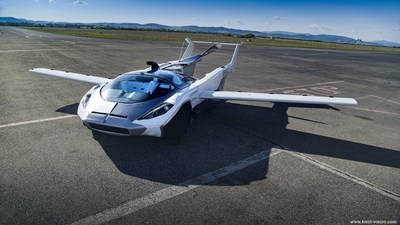
NITRA, Slovakia, Oct. 28, 2020 /PRNewswire/ — AirCar (V5) is the latest generation flying car that transforms from road vehicle into air vehicle in less than 3-minutes. Useful for leisure and self-driving journeys, and also as a commercial taxi service, the dual mode transformation vehicle can go from driving to flying mode with the click of a button.


<img id="prnejpg962cleft" title="AirCar – The Flying Car…

NITRA, Slovakia, Oct. 28, 2020 /PRNewswire/ — AirCar (V5) is the latest generation flying car that transforms from road vehicle into air vehicle in less than 3-minutes. Useful for leisure and self-driving journeys, and also as a commercial taxi service, the dual mode transformation vehicle can go from driving to flying mode with the click of a button.


AirCar - The Flying Car Passed Flight Tests. Next Stop: Driving a New Market


The fifth generation flying car designed by Professor Stefan Klein completed two 1500′ AGL flights at Piestany airport in Slovakia this week. The model safely achieved two full airport patterns, including two takeoffs and landings.

Cars can be heavy, but planes must be light. The two-seat model weights 1,100kg and can carry additional load of 200kg per flight. Powered by a BMW 1.6l engine, the car-plane has an effective power output of 140HP. Estimated travel range of AirCar is 1,000km and flight consumption of 18 l/h.

AirCar takes you from ground to sky with a takeoff of 300m reaching speeds up to 200 km/h. But most importantly, the stability and controllability of the AirCar is accessible to any pilot.

«The key flight parameters confirmed all theoretical concepts and calculations that the development of the AirCar was based on. Following the completion of all required flight tests in compliance with EASA regulations, we will deliver a model with a certified ADEPT, 300HP engine within the next 6 next months,» said Professor Stefan Klein, Klein Vision’s CTO and test pilot. «The good news is, we already have a buyer,» Professor Klein added.

«With AirCar you will arrive at your destination without the hassle of getting a ride to airport and passing through commercial security, you can drive your AirCar to the golf course, the office, the mall or your hotel and park it in a normal parking space,» said Anton Zajac, Klein Vision’s co-founder, investor and pilot. 

«The wing and tail deployment/retraction mechanism is very impressive, converting the automobile into an airplane. The cockpit providing space for the driver/pilot and a passenger is very roomy and nicely styled. The overall appearance of the flying car on road and in the air is superb,» added Dr. Branko Sarh, Boeing Co. Senior Technical Fellow (ret).

Latest AirCar test flight video: https://www.youtube.com/watch?v=QAnIjwwzupI&feature=youtu.be&ab_channel=KleinVision

For more information on Klein Vision company click here, or visit www.klein-vision.com.

Notes to editors: Photography available on request.

About Klein Vision, s.r.o.

Klein Vision is a research and development company that turned professor Klein’s 30 year old dream into reality. The company developed a patented technology that made an affordable flying car a reality.

Photo – https://mma.prnewswire.com/media/1321536/Klein_Vision_AirCar.jpg


Level 1 and 2 Autonomous Truck Sales to Reach 1.1 Million Units By 2040 in North America and Europe

OEMs will need to exhibit agile strategies to support AV technologies through alliances and acquisitions, says Frost & Sullivan

SANTA CLARA, California, Oct. 28, 2020 /PRNewswire/ — Frost & Sullivan’s recent analysis, Opportunities and Use Cases for Autonomous Trucking, Forecast to 2040, maps the autonomous technology roadmap and market trends in the two leading regions: North America and the European Union. Level 1…

OEMs will need to exhibit agile strategies to support AV technologies through alliances and acquisitions, says Frost & Sullivan

SANTA CLARA, California, Oct. 28, 2020 /PRNewswire/ — Frost & Sullivan’s recent analysis, Opportunities and Use Cases for Autonomous Trucking, Forecast to 2040, maps the autonomous technology roadmap and market trends in the two leading regions: North America and the European Union. Level 1 features are predominant in the medium and heavy commercial vehicle (MHCV) segment, with an estimated 45% penetration. The commercial launch of Level 2 features started this year. By 2030, Level 4 autonomous trucks will account for transportation of ~6.4% of general freights by ton-miles in the United States, leading to savings of $4.75 billion in annual freight costs.

Driven by the regulatory stimulus, Level 1 and Level 2 features are expected to grow exponentially to reach estimated cumulative sales of 1.1 million units (penetration of 88%) by 2040. Level 4 trucks are expected to be commercialized post-2025 in countries spearheading autonomous mobility transition with progressive government policies, innovation, infrastructure, and societal acceptance.

For further information on this analysis, please visit: http://frost.ly/4f7

«Long haul is expected to see an imminent increase in autonomous trucks after 2025, whereas progress in an urban application will be similar to that of the passenger vehicles segment,» said Jagadesh Chandran, Automotive & Transportation Research Analyst at Frost & Sullivan. «Autonomous trucks require extensive mapping and analysis of geographic, static, and dynamic traffic data along with developments in the storage and broadcast channels for cooperative and precise functioning.»

Chandran added: «Due to the COVID-19 pandemic, the trucking industry faced issues such as driver shortage and surge in commodity demand triggered by panic shopping. Autonomous trucks offer a solution to mitigate such scenarios by being safe, less human-dependent and with the capability to operate continuously for longer durations.»

OEMs and players in the trucking industry can remain competitive in the transforming landscape by tapping these growth opportunities:

  • Develop ecosystems that support Autonomous Vehicle technologies through alliances and acquisitions of players with domain expertise, as the industry faces a monetization opportunity shift from an OEM centric model to multi-stakeholder model. Invest in machine learning and artificial intelligence, research and development (R&D), support regulatory framework and infrastructure development Companies need to focus in these areas for faster commercialization of autonomous trucks.
  • Provide new solutions, such as product liability, cybersecurity, data sales, or infrastructure insurance, to help overcome current obstacles to autonomous truck deployment.
  • Collaborate with all involved stakeholder in the development of a liability framework plan for the application of autonomous trucks.
  • Develop Autonomous Vehicle businesses in uses cases that offer immediate scope for implementation and offer autonomous service solutions around freight transportation model.

Opportunities and Use Cases for Autonomous Trucking, Forecast to 2040 is the latest addition to Frost & Sullivan’s Automotive & Transportation research and analyses available through the Frost & Sullivan Leadership Council, which helps organizations identify a continuous flow of growth opportunities to succeed in an unpredictable future.

About Frost & Sullivan

For over five decades, Frost & Sullivan has become world-renowned for its role in helping investors, corporate leaders and governments navigate economic changes and identify disruptive technologies, Mega Trends, new business models and companies to action, resulting in a continuous flow of growth opportunities to drive future success. Contact us: Start the discussion.

Opportunities and Use Cases for Autonomous Trucking, Forecast to 2040
K3B0

Contact:
Zuzana Zukarnain
Corporate Communications
Phone: +60192657808
Email: zuzana.zukarnain@frost.com

http://www.frost.com


PAL-V World’s First Flying Car Hits The Road

Have you ever seen a flying car passing you on the highway? Now this is a real possibility!

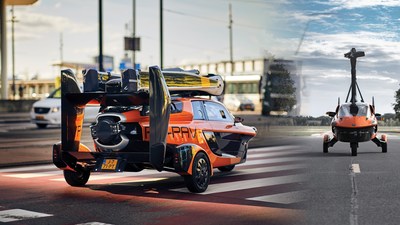
The PAL-V Liberty has been approved for road usage and can now be spotted on the European roads.

RAAMSDONKSVEER, Netherlands, Oct. 28, 2020 /PRNewswire/ — Who hasn’t dreamed about a flying car? Taking your car for a ride in the sky?  This dream is one step closer now. After flying and driving the test prototype in 2012, PAL-V started the design of the Liberty, its commercial product. Recently…

Have you ever seen a flying car passing you on the highway? Now this is a real possibility!

The PAL-V Liberty has been approved for road usage and can now be spotted on the European roads.

RAAMSDONKSVEER, Netherlands, Oct. 28, 2020 /PRNewswire/ — Who hasn’t dreamed about a flying car? Taking your car for a ride in the sky?  This dream is one step closer now. After flying and driving the test prototype in 2012, PAL-V started the design of the Liberty, its commercial product. Recently the Liberty passed the stringent European road admission tests and now is allowed on the streets with an official license plate. This completed a rigorous and extensive drive test program carried out on test tracks since February 2020. From high-speed ovals, brake and noise pollution testing, the PAL-V is now ready to take on the roads.


Flying Car PAL-V Liberty Road Admission


Mike Stekelenburg, CTO of PAL-V, explained how he experienced this journey: «With the memories in mind of fly and drive testing our proof of concept, the PAL-V One, I was looking forward to testing the Liberty. We have been cooperating with the road authorities for many years to reach this milestone. The excitement you feel in the team is huge. It was very challenging to make a «folded aircraft» pass all road admission tests.» Stekelenburg adds: «For me, the trick in successfully making flying car is to ensure that the design complies with both air and road regulations. I feel the energy and motivation in our team to push hard for the last few milestones and get the Liberty certified for flying too.»

The PAL-V will be undergoing endurance testing for the coming months, people can witness the PAL-V on the European roads from now on.

Hans Joore, test-driver of PAL-V, states: «When I fired-up the PAL-V for the first time I got goosebumps! All the effort that we put into it came together at that crucial moment. Hearing the vehicle come to life was just magnificent and driving it was great. It’s very smooth and responsive to the steering and with a weight of just 660 kg it accelerates really well. The overall experience is like a sportscar. It feels sensational.»

Since 2015 the PAL-V Liberty design has been going through aviation certification with EASA (European Aviation Safety Agency). Finalization is expected in 2022. The PAL-V Liberty significantly benefits from the certification experience accumulated in the earlier flight test program with the PAL-V One. Over 1200 test reports need to be completed before the final 150 hours of flight testing can take place. After this the deliveries to customers will start.

PAL-V CEO, Robert Dingemanse, added: «It’s another great step forward for us, now we ‘drive’ ahead to the last milestones. In parallel we organize roadshows across Europe to demonstrate the PAL-V to customers: Where shall we meet?»

www.PAL-V.com/roadshow 

Photo – https://mma.prnewswire.com/media/1320542/PAL_V_Flying_Car.jpg


Passenger Car Accessories Aftermarket worth $248.41 Bn, Globally, by 2026 at 8.5% CAGR: Allied Market Research

Stringent government regulations to replace, rise in the trend of vehicle customization coupled with increase in disposable income, and high focus on the well-being of drivers fuel the growth of the global passenger car accessories aftermarket.

PORTLAND, Ore., Oct. 27, 2020 /PRNewswire/ — Allied Market Research published a report, titled, «

Stringent government regulations to replace, rise in the trend of vehicle customization coupled with increase in disposable income, and high focus on the well-being of drivers fuel the growth of the global passenger car accessories aftermarket.

PORTLAND, Ore., Oct. 27, 2020 /PRNewswire/ — Allied Market Research published a report, titled, «Passenger Car Accessories Aftermarket by Type (External Accessories and Internal Accessories) and Application (Roof Rack, LED Lights, Body Kits, Body Covers, Alloy Wheels, Tires, Car Care Products, Window Films, Seat & Steering Covers, Electronic Accessories, Knobs, Floor Mats, Sunshades, Car Organizers, Air Fresheners, Vacuum Cleaners, Pillows & Cushions, and Others): Global Opportunity Analysis and Industry Forecast, 2019–2026.» According to the report, the global passenger car accessories aftermarket industry was estimated at $128.97 billion in 2018, and is anticipated to hit $248.41 billion by 2026, registering a CAGR of 8.5% from 2019 to 2026.

Allied_Market_Research_Logo

Download Report Sample at https://www.alliedmarketresearch.com/request-sample/6473

Drivers, restraints, and opportunities-

Stringent government regulations to replace or upgrade the accessories, rise in the trend of vehicle customization coupled with increase in disposable income, and high focus on the well-being of drivers fuel the growth of the global passenger car accessories aftermarket. On the other hand, decrease in global vehicle production, surge in the drift toward shared mobility, rise in raw-material prices, and high automotive import tariffs restrain the growth to some extent. However, technological advancements, growth in demand for luxurious vehicles, and untapped developing markets in Africa and Asia are expected to create lucrative opportunities in the segment.

COVID-19 scenario-

  • Disruptions in Chinese parts exports, interruptions in large scale manufacturing across Europe, and the closure of assembly plants in the United States have impacted the global passenger car accessories aftermarket badly.
  • Moreover, the global lockdown has compelled people to stay back at home. So, quite naturally, there’s been a steep fall in the zest to upgrade their cars with advanced features. However, with several government bodies coming up with relaxations on the existing restrictions, the global market is expected to recover shortly.

Get detailed COVID-19 impact analysis on the Passenger Car Accessories Aftermarket Request Here!

The external accessories segment to retain its dominance by 2026-

Based on type, the external accessories segment accounted for more than half of the global passenger car accessories aftermarket share in 2018, and is expected to rule the roost by the end of 2026. Rise in disposable income of people along with the strict vehicle acts in some of the countries are driving the growth of the segment. The internal accessories segment, on the other hand, would register the fastest CAGR of 9.2% during the study period. The fact that internal car accessories give a stylish look to the car from inside and also provides convenient and comfort features to the driver as well as co-drivers spurs the segment growth.

The tyres segment to rule the roost-

Based on application, the tyres segment contributed to nearly one-third of the global passenger car accessories aftermarket revenue in 2018, and is projected to lead trail till 2026. Installation of right tyres on cars not only allows the vehicles to get proper traction over the road but it also plays a crucial role in improving their performance. This factor has driven the segment growth. Simultaneously, the alloy wheels segment would garner the fastest CAGR of 18.6% throughout the forecast period. One of the main benefits of alloy wheels is their lightweight feature that results in better handling and reduction of the overall weight of the vehicle. This aspect has propelled the growth of the segment.

Interested to Procure The Data? Inquire here at https://www.alliedmarketresearch.com/purchase-enquiry/6473

Asia-Pacific to dominate in terms of revenue, North America to grow at a moderate rate-

Based on geography, Asia-Pacific held the major share in 2018, generating more than half of the global passenger car accessories aftermarket. The Asia-Pacific automotive motor industry is controlled by government policies that encourage sustainable manufacturing and investments in the sector. At the same time, LAMEA would register the fastest CAGR of 11.0% by 2026. Factors such as growth in IoT and rise in the demand for advanced technologies in automobiles propel the growth of the market.  However, North America would portray a CAGR of 9.3% from 2019 to 2026.

Frontrunners in the industry-

  • CEAT Limited
  • Continental Corporation
  • Michelin
  • Pirelli Tyre C S.p.A.
  • JK Tyre & Industries Limited
  • MRF Limited
  • Volkswagen AG
  • Sumitomo Rubber Industries, Ltd.
  • Visteon Corporation
  • The Yokohama Rubber Co., Ltd.
  • Hella KGaA Hueck & Co.
  • Bridgestone Corporation
  • Panasonic Corporation
  • HARMAN International
  • Ford Motor Company
  • Audi AG
  • Alpine Electronics, Inc.
  • The Goodyear Tire & Rubber Company
  • Pioneer Corporation
  • BMW Group
  • DENSO Corporation

Schedule a Free Consultation Call with Our Analysts/Industry Experts to Find Solution for Your Business at https://www.alliedmarketresearch.com/connect-to-analyst/6473

Similar Reports We Have on Automotive & Transportation Industry:

Automotive Aftermarket by Product (Wear-and-Tear Parts, Crash-Relevant Parts, Accessories, and Diagnostic Products) and Distribution Channel (Offline and Online) by Application (Consumer Vehicle and Commercial Vehicle) – Global Opportunity Analysis and Industry Forecast, 2017-2030.

Automotive Accessories Market by Component (External Component (Racks, LED Lights, Body Kits, Chrome Accessories, Covers, Alloy Wheels, Window Films, Helmets, and Others) and Internal Component (Covers, Electronics Accessories, Knobs, Communication System, Mats, Fragrance, Central Locking System, Dash Kits, and Others)), Distribution Channel (Original Equipment Manufacturer and Aftersales), and Application (Passenger Cars, Commercial Vehicle, and Two-wheelers) – Global Opportunity Analysis and Industry Forecast, 2017-2030.

Exterior Car Accessories Market by Product Type (Racks, LED Lights, Body Kits, Chrome Accessories, Covers, Alloy Wheels, Window Films) and by Distribution Channel (Aftermarket and Original Equipment Manufacturer (OEM)) – Global Opportunity Analysis and Industry Forecast, 2017-2030.

Automotive Repair and Service Market by Part (Engine Oil, Gear Oil, Brake Oil, Grease, Tires, Batteries, Wear & Tear Parts, Air Filter, Cabin Filter, Oil Filter, Wiper Blades, Collision Body, Starters & Alternators, Lighting, Exhaust Components, Spark Plugs, and Others), Service Providers (Automobile Dealerships, Franchise General Repairs, Specialty Shops, Locally Owned Repair Shops/Body Shops, Tire Shops, and Others), and Vehicle Type (Passenger Cars, LCVs, and HCVs): Global Opportunity Analysis and Industry Forecast, 2018–2030.

Roadside Assistance Market by Service (Towing, Tire Replacement, Fuel Delivery, Jump Start/Pull Start, Lockout/ Replacement Key Service, Winch, Battery Assistance, Trip Routing/ Navigational Assistance, and Other Mechanic Services), Provider (Auto Manufacturer, Motor Insurance, Independent Warranty, and Automotive Clubs), and Vehicle (Passenger Vehicle and Commercial Vehicle (LCV and HCV)): Global Opportunity Analysis and Industry Forecast, 2019–2030.

About Allied Market Research

Allied Market Research (AMR) is a full-service market research and business-consulting wing of Allied Analytics LLP, based in Portland, Oregon. AMR provides global enterprises as well as medium and small businesses with unmatched quality of «Market Research Reports» and «Business Intelligence Solutions.» AMR has a targeted view to provide business insights and consulting to assist its clients to make strategic business decisions and achieve sustainable growth in their respective market domain.

AMR introduces its online premium subscription-based library Avenue, designed specifically to offer cost-effective, one-stop solution for enterprises, investors, and universities. With Avenue, subscribers can avail an entire repository of reports on more than 2,000 niche industries and more than 12,000 company profiles. Moreover, users can get an online access to quantitative and qualitative data in PDF and Excel formats along with analyst support, customization, and updated versions of reports.

Contact:

David Correa
5933 NE Win Sivers Drive
#205, Portland, OR 97220
United States
USA/Canada (Toll Free):
+1-800-792-5285, +1-503-894-6022, +1-503-446-1141
UK: +44-845-528-1300
Hong Kong: +852-301-84916
India (Pune): +91-20-66346060
Fax: +1(855)550-5975
help@alliedmarketresearch.com
Web: www.alliedmarketresearch.com 
Allied Market Research Blog: https://blog.alliedmarketresearch.com 
Follow Us on | Facebook | Twitter | LinkedIn

Logo: https://mma.prnewswire.com/media/636519/Allied_Market_Research_Logo.jpg