Automotive Shielding Market Worth $24.7 Billion by 2025 – Exclusive Report by MarketsandMarkets™

CHICAGO, March 27, 2020 /PRNewswire/ — According to the new market research report «Automotive Shielding Market by Shielding (Heat, EMI), Heat Application (Engine, Turbocharger, Battery Management, Fuel Tank), EMI Application (ACC, ECU, LDW, BSD, AEB, FCW, DMS), Material Type,…

CHICAGO, March 27, 2020 /PRNewswire/ — According to the new market research report «Automotive Shielding Market by Shielding (Heat, EMI), Heat Application (Engine, Turbocharger, Battery Management, Fuel Tank), EMI Application (ACC, ECU, LDW, BSD, AEB, FCW, DMS), Material Type, Vehicle (PC, LCV, HCV), and Region – Global Forecast to 2025″, published by MarketsandMarkets™, the Automotive Shielding Market is projected to grow from USD 20.2 billion in 2020 to USD 24.7 billion by 2025, at a CAGR of 4.1%. The market is driven by factors such as the rising demand for fuel-efficient vehicles, growing safety concerns, and the high adoption rate of advanced electrical and electronic components in vehicles. In addition, increasing focus on driving comfort and in-cabin experience would fuel the demand for heat and EMI shielding during the forecast period.

MarketsandMarkets Logo

Browse in-depth TOC on «Automotive Shielding Market»

120 – Tables
50 – Figures
150 – Pages

Download PDF Brochure:
https://www.marketsandmarkets.com/pdfdownloadNew.asp?id=221737808 

The engine control module is expected to be the largest segment among EMI applications in the Automotive Shielding Market

Engine control module, which is also known as Electronic Control Unit (ECU), is a term used for any embedded system that controls one or more electrical systems/subsystems in a vehicle. Modern-day vehicles can have more than 50 ECUs. The ECU gathers data from sensors installed in a vehicle. It uses this data to enhance the working of various operations such as the timing of fuel injection, spark timing, stability control, and in-vehicle telematics.

The EMI shielding market for ECM is expected to increase due to the increased use of ECMs in a vehicle. The number of ECMs in a vehicle has increased due to factors such as rising demand for advanced electrical & electronic components, emission regulations, and safety & security concerns. In addition, the growing demand for high performance engines in the luxury vehicle segment is expected to increase the need for EMI shielding for ECM. ECM is responsible for air-fuel mixture, ignition timing, and valve timing. High performance engines require advanced ECM to deliver the desired performance. 

Exhaust system segment is expected to lead among heat applications in the automotive shielding market

The exhaust system heat shield retains heat in the exhaust system of the vehicle and acts as a thermal barrier for exhaust components. Exhaust system heat shields are used in the muffler, exhaust manifolds, catalytic convertor, and exhaust downpipe. These heat shields can reduce 70% of the heat radiating from the exhaust system.

Most of the vehicles are now equipped with exhaust system heat shields to reduce the amount of heat radiated by the exhaust system and protect the other body parts. Increasing stringency of fuel economy standards in the EU, Japan, and China has led OEMs to focus on vehicle lightweighting and aerodynamics. In December 2018, the European Commission presented a bill to set fuel economy standards. It aimed to reduce the average CO2 emission of passenger cars and vans by 15% in 2025 and 37.5% in 2030. For light commercial vehicles, the authority targeted to cut down emissions by 15% in 2025 and 31% in 2030.

Request FREE Sample Report:
https://www.marketsandmarkets.com/requestsampleNew.asp?id=221737808 

Asia Pacific is expected to be the largest market by 2025

China, India, and Japan account for the largest shares of the Automotive Shielding Market in Asia Pacific. The growth of the market in Asia Pacific can be attributed to the high vehicle production and increased use of advanced electronics in Japan, South Korea, India, and China. The governments of these countries have recognized the growth potential of the automotive industry and have consequently taken different initiatives to encourage major OEMs to enter their domestic markets. This has led to an increase in vehicle production volumes over the years, which caters not only to domestic demand but also overseas demand.

Major players like Dana and Lydall are investing and increasing their footprint in the Asia Pacific market. For instance, in 2018, Dana inaugurated a plant that would manufacture thermal management products for conventional and new-energy vehicles in Yancheng, China. The rising penetration of such companies in Asia Pacific will drive the overall market.

The Automotive Shielding Market is dominated by global players such as Tenneco Inc (US), Laird (UK), Henkel (Germany), Dana Incorporated (US), Morgan Advanced Materials (UK), 3M (US), Parker Hannifin (Chomerics) (US), and KGS KITAGAWA INDUSTRIES CO (Japan).

Browse Related Reports:

Automotive Heat Shield Market by Application (Engine, Exhaust, Under Bonnet, Under Chassis, Turbocharger), Product (Single Shell, Double Shell, Sandwich), Function (Acoustic, Non-Acoustic), Material, Vehicle, and Region – Global Forecast to 2027

Thermal System Market for Automotive By Application (Front & Rear AC, Engine & Transmission, Seat, Steering, Battery, Motor, Power Electronics, Waste Heat Recovery), Technology, Electric & ICE Components, Vehicle Type and Region – Global Forecast to 2027

About MarketsandMarkets™ 

MarketsandMarkets™ provides quantified B2B research on 30,000 high growth niche opportunities/threats which will impact 70% to 80% of worldwide companies’ revenues. Currently servicing 7500 customers worldwide including 80% of global Fortune 1000 companies as clients. Almost 75,000 top officers across eight industries worldwide approach MarketsandMarkets™ for their painpoints around revenues decisions.

Our 850 fulltime analyst and SMEs at MarketsandMarkets™ are tracking global high growth markets following the «Growth Engagement Model – GEM». The GEM aims at proactive collaboration with the clients to identify new opportunities, identify most important customers, write «Attack, avoid and defend» strategies, identify sources of incremental revenues for both the company and its competitors. MarketsandMarkets™ now coming up with 1,500 MicroQuadrants (Positioning top players across leaders, emerging companies, innovators, strategic players) annually in high growth emerging segments. MarketsandMarkets™ is determined to benefit more than 10,000 companies this year for their revenue planning and help them take their innovations/disruptions early to the market by providing them research ahead of the curve.

MarketsandMarkets’s flagship competitive intelligence and market research platform, «Knowledge Store» connects over 200,000 markets and entire value chains for deeper understanding of the unmet insights along with market sizing and forecasts of niche markets.

Contact:
Mr. Sanjay Gupta
MarketsandMarkets™ INC.
630 Dundee Road
Suite 430
Northbrook, IL 60062
USA: +1-888-600-6441
Email: sales@marketsandmarkets.com
Research Insight: https://www.marketsandmarkets.com/ResearchInsight/automotive-shielding-market.asp

Visit Our Website: https://www.marketsandmarkets.com

Content Source: https://www.marketsandmarkets.com/PressReleases/automotive-shielding.asp

Logo: https://mma.prnewswire.com/media/660509/MarketsandMarkets_Logo.jpg  

Increasing Acceptance of Autonomous Vehicles Uncovers Multi-billion Dollar Opportunities in Mobility Services

Supported by innovative new business models, autonomous vehicle services market to cross $200 billion by 2030, finds Frost & Sullivan

SANTA CLARA, California, March 27, 2020 /PRNewswire/ — With autonomous vehicles (AVs) promising drastically reduced operating expenses and healthy profit margins, there has been a huge inflow of new entrants into the market for autonomous vehicle services. These companies are offering myriad services for AVs,…

Supported by innovative new business models, autonomous vehicle services market to cross $200 billion by 2030, finds Frost & Sullivan

SANTA CLARA, California, March 27, 2020 /PRNewswire/ — With autonomous vehicles (AVs) promising drastically reduced operating expenses and healthy profit margins, there has been a huge inflow of new entrants into the market for autonomous vehicle services. These companies are offering myriad services for AVs, employing innovative new business models that threaten the dominance of OEMs. A recent analysis by Frost & Sullivan indicates that the autonomous vehicle services market is expected to grow from a mere $1.1 billion in 2019 to $202.5 billion in 2030 at a CAGR of 60.1%, facilitated by mutually beneficial business models across the entire mobility value chain.

Photo – https://mma.prnewswire.com/media/1138295/Frost_and_Sullivan.jpg

«For an autonomous technology to be viable, it needs to have a profitable and sustainable business model,» said Manish Menon, Mobility Industry Analyst at Frost & Sullivan. «The key challenge is to quickly evolve from the current sales and leasing business models to investing in the assets and capabilities that can support NextGen solutions in the autonomous mobility space and its associated services. This is especially pertinent for OEMs as revenues from vehicle sales and leasing will drastically decrease.»

Frost & Sullivan’s latest research, Future Business Models of Autonomous Vehicle Services, 2030, analyzes the emerging global market for autonomous vehicle services, assesses the new business models supporting these services, and provides detailed revenue forecasts through 2030.

For further information on this analysis, please visit:  http://frost.ly/41b

Of all the AV services clusters, peripheral services will roughly account for 55% of the market in 2030. The mobility services market is expected to grow from $0.01 million in 2019 to $22.41 billion in 2030, showcasing the most drastic cluster for expansion in the next decade. The autonomous logistic services market is also predicted to develop at a CAGR of 41.7% in the same time frame, driven by consumer demand for faster delivery.

«Autonomous vehicles can be used to gather data about passengers that can be leveraged to optimize vehicle routing and demand generation,» noted Kamalesh Mohanarangam, Mobility Program Manager at Frost & Sullivan. «Between 2020 and 2030, OEMs will begin consolidating the car data ecosystem, and vehicle usage data will become the new currency for value creation amongst B2B/B2C entities.»

OEMs and service providers operating in this sector can also explore the opportunities in:

  • Realigning business models along the lines of internet and software companies for better implementation of subscription or pay-as-you-go models.
  • Mining shared data from OEMs and data aggregators to create new service offerings, analyze efficient vehicle routing, and ensure optimal fleet utilization.
  • Collaborating with governments to integrate planned rapid transport systems with autonomous taxi and shuttle services.
  • Partnering and investing in AD technology companies to optimize the movement of goods within the supply chain ecosystem.
  • Integrating real-time data tracking systems to enable value-added, in-vehicle, on-demand services suited to passenger preferences.

Future Business Models of Autonomous Vehicle Services, 2030 is a part of Frost & Sullivan’s Automotive and Transportation Growth Partnership Service program, which helps organizations identify a continuous flow of growth opportunities to succeed in an unpredictable future.

About Frost & Sullivan

For over five decades, Frost & Sullivan has become world-renowned for its role in helping investors, corporate leaders and governments navigate economic changes and identify disruptive technologies, Mega Trends, new business models and companies to action, resulting in a continuous flow of growth opportunities to drive future success. Contact us: Start the discussion.

Future Business Models of Autonomous Vehicle Services, 2030
MEDD-18

Contact:
Francesca Valente
Global Corporate Communications Director
P: +1 210 348 10 12
E: Francesca.Valente@frost.com
http://ww2.frost.com

CRU: Chinese EV Sales Hit by the Covid-19 Outbreak

LONDON, March 26, 2020 /PRNewswire/ — The global outbreak of coronavirus Covid-19 has killed more than 15,000 people and has put millions into isolation. Notwithstanding the human cost, the effect on markets has been pronounced.

<img id="prnejpg5c40left" title="Chinese EV sales hit by the Covid-19 outbreak" border="0" alt="Chinese EV sales hit by the Covid-19 outbreak" align="middle" imagelabel="General"…

LONDON, March 26, 2020 /PRNewswire/ — The global outbreak of coronavirus Covid-19 has killed more than 15,000 people and has put millions into isolation. Notwithstanding the human cost, the effect on markets has been pronounced.

Chinese EV sales hit by the Covid-19 outbreak

The pandemic has hit the Chinese EV sector hard, and CRU believes that weak sales will last at least until early Q2 2020. Nonetheless, we continue to forecast Chinese EV sales growth in 2020 over 2019’s total.

EV sales in China dropped 75.2% y/y in February, with a decline of 79.1% for the whole Chinese auto industry. This was a far steeper fall than many expected but in line with our warnings in our previous analysis.

CRU expects the Chinese EV market will remain becalmed until at least April. This is based on our market calls, analysis of the epidemic timeline and the review of the necessary measures the Chinese government has taken to fight Covid-19. Despite the steady decline of case numbers in China, many consumers continue to be wary of visiting dealerships. However, it is worth noting that the subdued sales in January had little to do with the virus outbreak as it was not until January 23 that the government announced the lockdown of Wuhan city and the Chinese New Year holidays followed the next day.

Despite the disruptions to Q1 2020, we expect EV sales to grow slightly this year for the following reasons.

–  Supportive government policies are expected to be implemented. President Xi mentioned the need for incentives targeting the automotive industry during the meeting of the Chinese Politburo Standing Committee, the highest decision-making body in China, on 3 February. The Ministry of Commerce and several local governments have also announced positive policies, with more likely to come this year. There is debate among decision makers about whether EV subsidy policies should remain at current levels or fall as was previously scheduled.

–  Pent-up demand for electric vehicles is likely to emerge later this year once the Covid-19 outbreak has passed. Much of the sales lost in Q1 can be made up for later in the year. Automotive sales in January and February are typically low anyway and combined they generally account for less than one eighth of sales.

Read the full story:

https://www.crugroup.com/knowledge-and-insights/insights/2020/chinese-ev-sales-hit-by-the-covid-19-outbreak/ 

Read more about CRU: http://bit.ly/About_CRU

About CRU

CRU offers unrivalled business intelligence on the global metals, mining and fertilizer industries through market analysis, price assessments, consultancy and events.

Since our foundation by Robert Perlman in 1969, we have consistently invested in primary research and robust methodologies, and developed expert teams in key locations worldwide, including in hard-to-reach markets such as China.

CRU employs over 280 experts and has more than 11 offices around the world, in Europe, the Americas, China, Asia and Australia – our office in Beijing opened in 2004 and Singapore in 2018.

When facing critical business decisions, you can rely on our first-hand knowledge to give you a complete view of a commodity market. And you can engage with our experts directly, for the full picture and a personalised response.

CRU – big enough to deliver a high-quality service, small enough to care about all of our customers.

CRU Logo

Logo: https://mma.prnewswire.com/media/536199/CRU_Logo.jpg

Photo: https://mma.prnewswire.com/media/1138008/CRU_Chinese_EV_Covid.jpg

Hyundai Mobis makes inroads into the global ‘safety technology’ market with the world’s first roof airbag

– The airbag prevents passengers from being ejected from the sunroof and becoming injured in a rollover accident

-The evaluation results of the roof airbag shared at the technical seminars hosted by the National Highway Traffic Safety Administration (NHTSA) and SAE

SEOUL, South Korea, March 26, 2020 /PRNewswire/ — Hyundai Mobis said on 26 March that the company is concentrating on enhancing the reliability of new safety devices like the roof airbag and is planning to leverage its…

– The airbag prevents passengers from being ejected from the sunroof and becoming injured in a rollover accident

-The evaluation results of the roof airbag shared at the technical seminars hosted by the National Highway Traffic Safety Administration (NHTSA) and SAE

SEOUL, South Korea, March 26, 2020 /PRNewswire/ — Hyundai Mobis said on 26 March that the company is concentrating on enhancing the reliability of new safety devices like the roof airbag and is planning to leverage its differentiated technology to take on the global market.

Hyundai Mobis’ roof airbag is deployed under the surface side of the vehicle in a rollover accident, covering the entire roof in just 0.08 seconds, protecting and preventing all passengers from being ejected from the sunroof.

Since it began mass-producing its first airbags in 2002, Hyundai Mobis has continuously introduced advanced airbag technologies. Recently, the company is developing convergence technologies in safety on a full scale.

Meanwhile, the National Highway Traffic Safety Administration (NHTSA) conducted a safety evaluation of Hyundai Mobis’ roof airbag.

Last January, NHTSA gave a presentation on the ‘Status of NHTSA’s Roof Ejection Mitigation Research’ at 2020 SAE Government/Industry Meeting hosted by the Society of Automotive Engineers (SAE) and disclosed the evaluation results of Hyundai Mobis’ roof airbag.

NHTSA is a US government agency whose mission is to save lives, prevent injuries and reduce economic costs due to road traffic crashes, through education, research, safety standards and enforcement activity.

About Hyundai Mobis

Hyundai Mobis is the 7th largest leading automotive supplier. Founded in 1977 and headquartered in Seoul, South Korea, Hyundai Mobis is to become a lifelong technology partner for vehicles and people.

It is excellent in sensors, sensor fusion in controllers and software design capabilities in safety control. As Hyundai Mobis internalized all core auto component technologies, it has various product groups in ADAS based on its state-of-the-art technologies which combined sensors and these technologies. Its products also include core modules (chassis, cockpit and front-end), brakes, suspension, steering, airbags, lights and automotive electronics.

Mobis currently has more than 30,000 employees and has been manufacturing in more than 30 regions in 10 countries including South Korea, China, Germany, India and the United States. In addition to its R&D headquarters in South Korea, Mobis has 4 technology centers in Germany, China, India and the United States.

Media Contacts

Hyundai Mobis PR, Hanbyul Kim, khb@mobis.co.kr [EOD]

Linglong Tire Donated Medical Supplies to Serbia to Fight COVID-19

BEIJING, March 26, 2020 /PRNewswire/ — On March 25, Shandong Linglong Tyre Co., Ltd. donated 300,000 disposable surgical masks, 2,000 sets of medical protective clothing, and 10,000 COVID-19 antibody test kits to the Serbian government through the Embassy of the Republic of Serbia in the People’s Republic of China. These medical supplies will arrive in Serbia soon. This is also the first time that Linglong Tire has donated to a…

BEIJING, March 26, 2020 /PRNewswire/ — On March 25, Shandong Linglong Tyre Co., Ltd. donated 300,000 disposable surgical masks, 2,000 sets of medical protective clothing, and 10,000 COVID-19 antibody test kits to the Serbian government through the Embassy of the Republic of Serbia in the People’s Republic of China. These medical supplies will arrive in Serbia soon. This is also the first time that Linglong Tire has donated to a country outside of China since the global spread of COVID-19.

Linglong Tire Donated Medical Supplies to Serbia to Fight COVID-19

On March 30, 2019, the project launch ceremony of Linglong’s second overseas manufacturing base, Linglong International Europe D.O.O. Zrenjanin, was held in Serbia successfully. Serbian President Aleksandar Vucic also made his appearance at this ceremony and delivered his speech. As an important foreign investment project in Serbia, the completion of this project will offer job opportunities to local people, raise their income and living standards and promote local economic development.

Meanwhile, since the construction of its project in Serbia, Linglong actively fulfills its corporate responsibilities and gives back to the local government and people through the sponsorship of Serbian SuperLiga and Sino-European Chess Elite Tournament in Serbia, which could better strengthen the culture exchanges between China and Serbia and improve Linglong’s brand awareness in Serbia.

As a tire maker focusing on its international development, Linglong always actively fulfills its corporate responsibilities to the countries where its overseas manufacturing bases are located. The donation of medical supplies demonstrates Linglong’s responsibility to work together with Serbian people to overcome this crisis.

Currently, the battle against the COVID-19 pandemic has come to a critical period. In response to the call of building community with shared future for mankind, Linglong Tire will pay close attention to the global epidemic development and make its contribution to the victory of the battle against the COVID-19. 

Photo – https://mma.prnewswire.com/media/1137846/Linglong_Tire.jpg


Mobile Robots and Autonomous Vehicles: IDTechEx Analysts Discuss How Coronavirus Pushes Logistic Automation up the Agenda

BOSTON, March 25, 2020 /PRNewswire/ — Last week Amazon announced that it planned on hiring 100,000 extra workers to meet the rise in demand for online shopping created by Coronavirus-caused shutdowns and social distancing. On 19 March 2020, unions said workers were demanding that Amazon takes their lives seriously. The night before a facility in Queens, NY, had been closed for deep cleaning after an employee tested positive for the virus….

BOSTON, March 25, 2020 /PRNewswire/ — Last week Amazon announced that it planned on hiring 100,000 extra workers to meet the rise in demand for online shopping created by Coronavirus-caused shutdowns and social distancing. On 19 March 2020, unions said workers were demanding that Amazon takes their lives seriously. The night before a facility in Queens, NY, had been closed for deep cleaning after an employee tested positive for the virus. There are reports that some Amazon warehouse workers in Italy and Spain have tested positive. In France, several hundred Amazon workers protested to demand better measures to protect their safety. In Italy, there have been calls for a strike. This and similar developments once again bring into focus the motivation, and at times the imperative, to increase automation in the logistics and delivery chain.

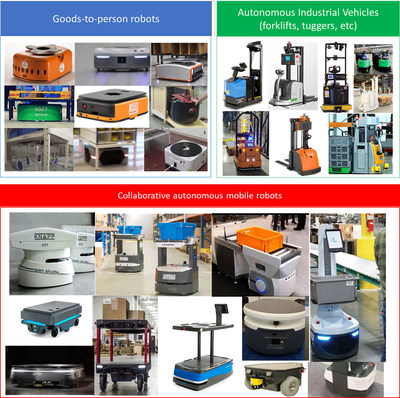
1. An uncomprehensive list of firms whose products are shown in the panel: Amazon, Geek Plus, GreyOrange, Flashhold (Quicktron), HIK Vision, Scallog, Eiratech, Hitachi, SeeGrid, Baylo, Vena Technologies, Kollmorgen, HIK Vision, AutoGuide (Teredyne), RoboCV, Knapp, Omron Adept Mobile Robotics, Mobile Industrial Robots (Teredyne), Locus Robotics, Canvas Technologies (Amazon), 6 River (Shopify), Otto Motors, Fetch Robotics. For more information, please visit www.IDTechEx.com/Mobile

IDTechEx have been examining the technological and commercial trends in this field for several years. Their report «Mobile Robots, Autonomous Vehicles, and Drones in Logistics, Warehousing, and Delivery 2020-2040» focuses on automation of movement in every step of the logistics and delivery chain ranging from a warehouse or a factory to the delivery of goods to the final customer destination. This landscape – and therefore, the scope of the report – includes the following:

1.  Automated guide carts and vehicles
2.  Autonomous mobile industry vehicles (forklifts, tugs, etc.)
3.  Goods-to-person automated carts/robots
4.  Collaborative autonomous mobile robots
5.  Mobile picking robot (regular- and irregular-shaped items)
6.  Autonomous trucks (level 4 and 5)
7.  Delivery vans and pods (level 4 and 5)
8.  Last-mile side-walk delivery robots
9.  Delivery drones

The emerging technology research firm finds that this market – in total – will reach $81 and $290 billion in 2030 and 2040, respectively. This is a colossal transfer of value from wage expenses to a combination of capital investments and service subscription to autonomous robots of various types. This staggering headline is, of course, very large, and hides the key individual trends characterizing each technology and use case. In the remainder of this article, IDTechEx analysts seek to highlight the key trends.

Goods-to-person automated carts/robots

Large fleets of robots are already deployed to help automate the goods-to-person step in many fulfilment centres. These robots move racks within robot-only zones, bringing them to manned picking stations.

This is a fast-growing market space. The landscape was set on fire when Amazon acquired Kiva Systems for $775M in 2012, thereby leaving a gap on the market. Today, significant well-funded alternatives such as GeekPlus (389$M), GreyOrange (170$M), and HIK Vision ($6Bn revenue) have emerged, achieving promising and growing deployment figures. The number of start-ups has also increased, especially within the 2015-2017 period.

IDTechEx forecasts the annual unit sales to double within six years. Despite the large deployments already, they assess the real global inflection point to arrive around 2024 beyond at which point the pace of deployment will dramatically accelerate. Indeed, the research firm forecasts that between 2020 and 2030, more than 1 million such robots will be sold accumulatively. It is, therefore, an exciting time. To learn more, please visit www.IDTechEx.com/Mobile.

Collaborative autonomous mobile robots

Another major trend is the use of autonomous mobile robots and vehicles. Autonomous mobile robots are emerging, which offer infrastructure-independent navigation in defined indoor environments. These robots boost productivity and enable many hybrid human-robot interaction modes. They can also bring automation to warehouses and fulfilment centres which were not specifically designed and built to support robotic goods-to-person.

The technology is enabled by better SLAM algorithms. The algorithms – based on different sensors, including stereo camera and 2D lidars – are evolved enough to handle safe autonomous navigation within many structured indoor environments with a high degree of control and predictability.

The technology options however are still many, and choices have long-lasting strategic consequences. The business models are also various and evolving. Some are offering their technology as RaaS (robot as a service).

There have also been some notable recent acquisitions. Amazon acquired a company focused on camera-based navigation, which would enable object detection and classification, and thus more intelligent navigation. Shopify acquired a firm with a full solution, including the entire software stack. Overall, the IDTechEx report «Mobile Robots, Autonomous Vehicles, and Drones in Logistics, Warehousing, and Delivery 2020-2040» forecasts that more than 200k robots could be sold within the 2020-2030 period (this figure includes those that can perform picking of regularly or irregularly shaped items).

The report «Mobile Robots, Autonomous Vehicles, and Drones in Logistics, Warehousing, and Delivery 2020-2040» provides a comprehensive analysis of all the key players, technologies, and markets. It includes technology roadmaps and twenty-year market forecasts, in unit numbers and revenue, for all the technologies outlined at the beginning of the article (13 forecast lines). It offers a twenty-year model because IDTechEx’s technology roadmap suggests that these changes will take place over long timescales. In their detailed forecasts, the report clearly explains the different stages of market growth.

Mobile Picking Robots

Picking or grasping technology is an essential component of warehouse automation. Today, many firms and research groups are deploying deep learning to enable robots to pick novel and irregularly shaped items rapidly and with high success rates.

A limited number of firms have integrated picking arms on mobile platforms. Today, these mainly pick box-shaped items in known environments. However, progress will bring these technologies to more varied items. It will also allow better integration of the robotic arm with the mobile platform.

In the short term, more learning is required. However, recent advances on the algorithm side suggest that progress will be rapid although the algorithms will need to achieve not just high rates but also high-speed to drive down the ROI on these tools. In the very long term though, IDTechEx forecast that 36% and 38% of AMRs in warehouses sold in 2040 will be able to pick regular – as well as irregular-shaped items, respectively. This points towards a major long-term technology transformation, requiring automation beyond just autonomy of movement. IDTechEx Analysts consider this a major technology development opportunity.

Autonomous forklifts and other industrial vehicles

Autonomous forklifts and tugs are emerging onto the market. The navigation technology has progressed significantly. Naturally, the cost of autonomous forklifts is higher, but the claimed ROI by many suppliers is within 12-18 months. The cost includes the installation and maintenance as well as the cost of the autonomous sensor suite, traction control and drivers, and the software, which can be amortized over a growing deployed fleet. Overall, price parity on an annual operational cost basis is nearly at hand in some high wage territories.

The unit sales here can reach 1.8k in 2020, which seems a high number but still small relative to the addressable market. Over the past 1.5 years, however, this market has also entered the early stages of its growth phase. Analysis and interviews conducted by IDTechEx suggest that inflection point is likely to be reached around 2025-2027. After this point, they project the sales to grow, already exceeding 100k units by 2030. Note that IDTechEx generally develops 20-year forecasts for autonomous mobility as the technology will inevitably take time to be rolled out.

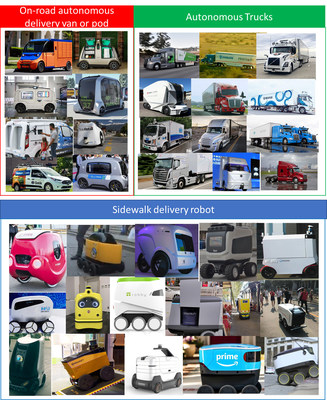
Long-haul truck delivery

Long-haul trucks are a prime target for autonomous mobility. This is because autonomous mobility can address many industry pain-points and because there is a clear commercial case, unlike passenger vehicles. The first pain point is that there is a shortage of drivers, which could increase to 160k per 2028 in the USA. The second pain point is the operating cost, this is because wages are high, and likely to go up given that demand outstrips supply. Safety requirements limit the number of uninterrupted hours a driver can spend on the road, limiting the productivity of the asset. Finally, the long stretches of highway lend themselves well to autonomous mobility, unlike the chaotic conditions in dense urban driving.

IDTechEx has carefully analyzed the companies and technologies behind autonomous trucking. Their report «Mobile Robots, Autonomous Vehicles, and Drones in Logistics, Warehousing, and Delivery 2020-2040» offers deep technology analysis and granular market forecasts. It is plausible that the deployed trucks could exceed 1300 units by the end of 2020; this is still a small number but shows the direction of travel. The report finds that the deployment of level-4 autonomous trucks will grow slowly until 2025, after which point the growth has the potential to rise rapidly. IDTechEx’s estimate suggests that the market could reach 550k level-4 units/year by 2030. Their roadmap suggests that level-5 will remain virtually non-existent for another decade and will only grow beyond 2030. To see the full 2020-2040 forecasts, segmented by autonomy level, please visit www.IDTechEx.com/Mobile.

Last-mile delivery vans and side-walk robots

This is an interesting technological frontier. The cost of last-mile delivery is often 50% of the total cost. As such, there is a strong commercial incentive to automate this step to boost productivity. There are two approaches: on-road last-mile delivery vans or pods and side-walk robotic. 

The on-road vans and pods share many technological challenges with other on-road autonomous vehicles. The difference however, is that they can operate in limited well-mapped and known-environments and that they can potentially travel at low-speeds. They also will not have passengers on-board, simplifying some of the safety challenges.

IDTechEx’s report identifies and profiles the key companies active in this field. They analyze the technological progress, challenges, and innovation opportunity. The report develops short-, medium-, and long-term market forecasts segmented by level of autonomous. It finds that package (or similar) delivery vans and pods will be deployed in small number until 2026. Indeed, the annual deployments will remain below 3k units/year until 2026. The market growth for level-4 vans/pods will then accelerate, especially from 2027 onwards.  Level-5 mobility will only arrive from 2032 onwards and even then, only in small numbers.

The side-walk robots have their own unique design and technology challenges. The economics underpinning their business cases are also different. The key for them is extending the autonomy level of the side-walk robots to a point where very large fleets with a very small number of remote human teleoperators can be deployed. 

Here too, despite the progress, the deployment will remain small in the short term. IDTechEx forecast that annual deployment will remain around or below 3k unit/annually until 2024, their model however projects a hump in 2025. This is likely because the technology will have reached enough maturity to prove its business case and also to address many of the edge points in its autonomous navigation. The market has the potential to then rapidly accelerate to 30k units/year by 2030. The costs will, of course, be low especially as the camera and lidar costs (if lidar is deployed) will be dramatically reduced and the fleet-to-operator ratio driven up. The money – as forecast in the report – will be in the services which scale with the accumulated fleet size and utilization rate thereof.

This report «Mobile Robots, Autonomous Vehicles, and Drones in Logistics, Warehousing, and Delivery 2020-2040» provides a comprehensive analysis of all the key players, technologies, and markets. It offers technology roadmaps and twenty-year market forecasts, in unit numbers and revenue, for all the technologies outlined above (13 forecast lines). It builds a twenty-year model because IDTechEx’s technology roadmap suggests that these changes will take place over long timescales. In the detailed forecasts, the research firm clearly explains the different stages of market growth and outline the key assumptions/conditions as well as data points that underpin the model.

To connect with others on this topic, join us at The IDTechEx Show! USA 2020, November 18-19 2020, Santa Clara, USA. Presenting the latest emerging technologies at one event, with six concurrent conferences and a single exhibition covering 3D Printing and 3D Electronics, Electric Vehicles, Energy Storage, Graphene & 2D Materials, Healthcare, Internet of Things, Printed Electronics, Sensors and Wearable Technology. Please visit www.IDTechEx.com/USA to find out more.

IDTechEx guides your strategic business decisions through its Research, Consultancy and Event products, helping you profit from emerging technologies. For more information on IDTechEx Research and Consultancy contact research@IDTechEx.com or visit www.IDTechEx.com.

Media Contact:

Jessica Abineri
Marketing Coordinator
press@IDTechEx.com
+44-(0)-1223-812300

2. An uncomprehensive list of firms whose products are shown in the panel: Zhen Robotics, Meituan-Dianping, ZMP, Alibaba, Continental, Segway, Refraction, TwinWheel, Robby Technology, Amazon, Dispatch (Acquired by Amazon), Starship Technologies, KiwiBot, JD, TeleRetail, Toyota, Neolix, Nuro, Ford, Gatik, TuSimple, embark, Starsky (shut down), Ike, Einride, Kodiak, PlusAI, Fabu, Daimler, Waymo, Hyundai, Baidu, DroneFutureAviation. For more information, please visit www.IDTechEx.com/Mobile


IDTechEx Logo

Photo 1: https://mma.prnewswire.com/media/1137650/IDTEchEx_Mobile_Robots_1.jpg

Photo 2: https://mma.prnewswire.com/media/1137651/IDTEchEx_Mobile_Robots_2.jpg

Logo: https://mma.prnewswire.com/media/478371/IDTechEx_Logo.jpg

Visiongain Publishes Automotive Engine Encapsulation Market 2020-2030 Report

LONDON, March 25, 2020 /PRNewswire/ — Market and Volume Forecasts by Type (Engine-mounted and Body-mounted), by Material (Carbon Fiber, Polypropylene, Polyurethane, Polyamide and Others), Fuel (Diesel, Gasoline and Others), Vehicle Type (Passenger Cars, Light Commercial Vehicles and Heavy Commercial Vehicles) with Regional and National Market Analysis and Financial Analysis of Leading Companies

<img…

LONDON, March 25, 2020 /PRNewswire/ — Market and Volume Forecasts by Type (Engine-mounted and Body-mounted), by Material (Carbon Fiber, Polypropylene, Polyurethane, Polyamide and Others), Fuel (Diesel, Gasoline and Others), Vehicle Type (Passenger Cars, Light Commercial Vehicles and Heavy Commercial Vehicles) with Regional and National Market Analysis and Financial Analysis of Leading Companies

Visiongain Logo

The global automotive engine encapsulation market is expected to grow by healthy growth rate of 5.3% over the forecast period from 2020 to 2030. The market was valued at $4.5 billion in 2019 and is expected to reach $7.9 billion by the end of forecast period 2030. Government stringent regulation, energy efficient components are demanded by the OEMs, rising environmental concern, and demand of low-noise cars; are the major factors boosting the demand of overall engine encapsulation in automotive market. The growing demand for fuel-efficient cars, combined with strict emission standards, has driven the development of the market for encapsulation of automotive engines. Engine encapsulation guarantees heat retention, enabling the engine with low fuel consumption and emissions to achieve its operating temperature.

Asia Pacific is expected to be the largest market for automotive engine encapsulation. Rising production and consumption of vehicles, growing high-end luxury cars demand, and technological advancements; all these factors are expected to propel the automotive engine encapsulation demand in APAC region. The growth of middle-class population and standard of living in the region, particularly in China and India, is driving the sales of vehicles which further supported to the overall market demand.

Download samples here:

https://www.visiongain.com/report/automotive-engine-encapsulation-market-report-2020-2030/#download_sampe_div 

Leading companies featured in the Automotive Engine Encapsulation Market Report 2020-2030 report include Continental AG, 3M, Adler Pelzer Holding GmbH, Autoneum Holding AG, BASF Corporation, Elringklinger AG, Evonik, Furukawa Electric Co., Ltd, SA Automotive, SAINT-GOBAIN among others. Mergers & acquisitions and joint ventures constitute some of the industry players’ common strategies for reducing product price overall and maintaining extremely competitive conditions. In order to guarantee continued raw material supplies and ease of installation services, many actors in the sector create alliances with raw material providers and third-party installers.

The comprehensive report provides market estimates and forecasts for leading domestic markets across the world for the period from 2020 to 2030. In addition, the report includes dedicated leading companies covering 10 leading engine encapsulation producers.

The report on the Automotive Engine Encapsulation Market Report 2020-2030 will appreciate anyone who wants to better understand the market in various end use industries. It will be useful for companies that want to better understand the part of the market in which they are already involved or those that want to enter or expand into another regional or technical part of the Automotive Engine Encapsulation industry.

Visiongain’s timely report reveals how best to compete in this profitable market space and maximize your company’s potential.

To find out more about this report please contact Sara Peerun at sara.peerun@visiongain.com or refer to our website: https://www.visiongain.com/report/automotive-engine-encapsulation-market-report-2020-2030/

This report addresses the pertinent issues:

– Where are the most lucrative market prospects?
– Who are the leadings companies and what does the competitive landscape look like?
– What are the regional, technical and regulatory barriers to market entry?
– What are the technological issues and roadmap driving the market?
– Why is the market prospering and how can you fully exploit this?
– When will the market fully mature and why?

Research and Analysis Highlights

335 Tables, Charts and Graphs Illustrating the Global Automotive Engine Encapsulation Market Prospects

Market Segmentation 2020-2030:

The global automotive engine encapsulation market is segmented on the basis of type, materials, fuel, vehicle type, and geography.

Automotive Engine Encapsulation Submarket Forecasts by Type Covering the Period 2020-2030 ($M & Volume)
– Engine-mounted Market Forecast 2020-2030 ($M & Volume)
– Body-mounted Market Forecast 2020-2030 ($M & Volume)

Automotive Engine Encapsulation Submarket Forecasts by Materials from 2020-2030 ($M & Volume)
– Carbon Fiber Market Forecast 2020-2030 ($M & Volume)
– Polypropylene Market Forecast 2020-2030 ($M & Volume)
– Polyurethane Market Forecast 2020-2030 ($M & Volume)
– Polyamide Market Forecast 2020-2030 ($M & Volume)
– Other Materials Market Forecast 2020-2030 ($M & Volume)

Automotive Engine Encapsulation Submarket Forecasts by Fuel from 2020-2030 ($M & Volume)
– Diesel Market Forecast 2020-2030 ($M & Volume)
– Gasoline Market Forecast 2020-2030 ($M & Volume)
– Other Fuel Market Forecast 2020-2030 ($M & Volume)

Automotive Engine Encapsulation Submarket Forecasts by Vehicle Type from 2020-2030 ($M & Volume)
– Passenger Cars Market Forecast 2020-2030 ($M & Volume)
– Light Commercial Vehicles Market Forecast 2020-2030 ($M & Volume)
– Heavy Commercial Vehicles Market Forecast 2020-2030 ($M & Volume)

Regional Automotive Engine Encapsulation Market Forecasts 2020-2030:

North America Automotive Engine Encapsulation Forecast 2020-2030 ($M & Volume)
– US Market Forecast 2020-2030 ($M & Volume)
– Canada Market Forecast 2020-2030 ($M & Volume)
– Mexico Market Forecast 2020-2030 ($M & Volume)

South America Automotive Engine Encapsulation Forecast 2020-2030 ($M & Volume)
– Brazil Market Forecast 2020-2030 ($M & Volume)
– Argentina Market Forecast 2020-2030 ($M & Volume)
– Colombia Market Forecast 2020-2030 ($M & Volume)
– Rest of South America Market Forecast 2020-2030 ($M & Volume)

Europe Automotive Engine Encapsulation Forecast 2020-2030 ($M & Volume)
– Germany Market Forecast 2020-2030 ($M & Volume)
– France Market Forecast 2020-2030 ($M & Volume)
– UK Market Forecast 2020-2030 ($M & Volume)
– Czech Republic Market Forecast 2020-2030 ($M & Volume)
– Spain Market Forecast 2020-2030 ($M & Volume)
– Turkey Market Forecast 2020-2030 ($M & Volume)
– Russia Market Forecast 2020-2030 ($M & Volume)
– Slovakia Market Forecast 2020-2030 ($M & Volume)
– Italy Market Forecast 2020-2030 ($M & Volume)
– Poland Market Forecast 2020-2030 ($M & Volume)
– Rest of Europe Market Forecast 2020-2030 ($M & Volume)

Asia Pacific Automotive Engine Encapsulation Forecast 2020-2030 ($M & Volume)
– China Market Forecast 2020-2030 ($M & Volume)
– Japan Market Forecast 2020-2030 ($M & Volume)
– India Market Forecast 2020-2030 ($M & Volume)
– South Korea Market Forecast 2020-2030 ($M & Volume)
– Thailand Market Forecast 2020-2030 ($M & Volume)
– Malaysia Market Forecast 2020-2030 ($M & Volume)
– Indonesia Market Forecast 2020-2030 ($M & Volume)
– Taiwan Market Forecast 2020-2030 ($M & Volume)
– Rest of Asia Pacific Market Forecast 2020-2030 ($M & Volume)

Rest of the World Automotive Engine Encapsulation Forecast 2020-2030 ($M & Volume)
– Middle East Market Forecast 2020-2030 ($M & Volume)
– Africa Market Forecast 2020-2030 ($M & Volume)

Profiles of 10 Leading Companies, Involved in Automotive Engine Encapsulation Market
– Continental AG
3M
– Adler Pelzer Holding GmbH
– Autoneum Holding AG
– BASF Corporation
– Elringklinger AG
– Evonik
– Furukawa Electric Co., Ltd
– SA Automotive
– Saint-Gobain

SWOT And Porter’s Five Forces Analysis

Did you know that we also offer a report add-on service? Email sara.peerun@visiongain.com to discuss any customized research needs you may have.

Companies covered in the report include:

3M
Adler Pelzer Holding GmbH
Autoneum Holding AG
BASF Corporation
Carcoustics Shared Services GmbH
Continental AG
Elringklinger AG
Evonik
Furukawa Electric Co., Ltd
Greiner Group
Hennecke GmbH
Polytec Holding AG
RoEchling SE & Co. Kg
SA Automotive
Saint-Gobain
UGN, Inc.
Uniproducts (India) Ltd.
Woco Industrietechnik GmbH

To discuss this report please e-mail Sara Peerun on sara.peerun@visiongain.com 

Logo: http://mma.prnewswire.com/media/523989/Visiongain_Logo.jpg

Deployment in Automotive Industry Drives Rapid Penetration of Automated Guided Vehicle Market, Industry 4.0 to Herald Evolution, Observes TMR

  • Advances in navigation technologies bolster capabilities of automated guided vehicles (AGVs)
  • Adoption of automation in material handling processes will help market reach ~US$ 4 bn by 2027

ALBANY, New York, March 25, 2020 /PRNewswire/ — Rise in adoption of automation in wide range of material handling operations and intra-logistic applications in manufacturing, retail, healthcare, logistics, food and beverages, and aerospace drives…

  • Advances in navigation technologies bolster capabilities of automated guided vehicles (AGVs)
  • Adoption of automation in material handling processes will help market reach ~US$ 4 bn by 2027

ALBANY, New York, March 25, 2020 /PRNewswire/ — Rise in adoption of automation in wide range of material handling operations and intra-logistic applications in manufacturing, retail, healthcare, logistics, food and beverages, and aerospace drives the demand for various types of automated guided vehicle. Adoption of smart factories for automotive manufacturing is at the forefront of growth.

Transparency_Market_Research_Logo

Future Outlook: A shift toward make-to-order manufacturing in various sectors and the steady strides that Industry 4.0 has made in all realms impart momentum for the growth to continue unabated in the next few years. The automated guided vehicle market is projected to garner a CAGR of ~14% from 2019 to 2027 to reach worth of ~US$ 4 bn by 2027-end.

Analysts at TMR opine that: «Manufacturers across the world in bid to achieve high production and efficient goals will continue to adopt automated guided vehicles. Though automotive sector accounts for maximum share of revenues for players in the automated guided vehicle market, they should also look for food, beverages, and distribution and logistics sectors for fresh revenue streams.»

Key Takeaways in Automated Guided Vehicle Market Study

  • Of all end-use areas, the automotive held a major share in the AGV market; deployment by auto manufacturers and auto part manufacturers key to future growth
  • Of all vehicle types, tugger AVGs is anticipated to hold the major market share during the forecast period; their high productivity accounts for the popularity
  • Asia Pacific is expected to offer sizable opportunities to market players
  • Forklift automated guided vehicles see substantial prospects in the food and beverages sector

Explore  151 pages of Automated Guided Vehicle Market (Type: Forklift AGVs, Load Transfer AGVs, Pallet Trucks, Assembly Line Vehicles, Light Load Transporters, Tugger AGVs, and Others; and End Use: Distribution & Logistics, Automotive, Aerospace, Healthcare, Retail, Manufacturing, Food & Beverages, and Others) – Global Industry Analysis, Size, Share, Growth, Trends, and Forecast, 2019 – 2027 at https://www.transparencymarketresearch.com/automated-guided-vehicle-market.html

Automated Guided Vehicle Market: Key Driving Factors and Avenues

The automated guided vehicle market has come a long way, despite the fact that the Industry 4.0 is still largely in nascent stage. The evolution of the market hinges on the back of the increasing adoption of robotics and other automation systems in smart manufacturing. Following trends are worth noticing:

  • Increasing deployment of smart factories by automotive manufacturers is a key trend spurring deployment of automated guided vehicles.
  • Proposition of dramatic reduction of overhead costs and increasing productivity gains drive penetration of AGVs in food and beverages manufacturing. Strides being made by the sectors propel demand.
  • Rapid expansion of e-commerce in numerous developing economies has spurred the demand for AGVs in warehouses and material handling, thus bolstering the market prospects
  • New avenues in the AGV market emanate from their integration with manufacturing execution systems (MESs) and ERP. This helps industries pursue the trend of make-to-order (MTO) manufacturing.

Download PDF Brochure – https://www.transparencymarketresearch.com/sample/sample.php?flag=B&rep_id=9368

Automated Guided Vehicle Market: Region-wise Analysis

Analysts at TMR have assessed the prospects of various regional markets. In 2018, North America and Europe jointly accounted for the leading share in the automated guided vehicles market. In large part, this is due to the sheer pace of industrial automation.

However, Asia Pacific is expected to account for a higher share than Europe by 2027-end. Proliferation of automated warehouse solutions, especially for automotive and food manufacturers, and rise in deployment for materials handling are expected to help the regional market cruise ahead of other key markets by the end of the assessment period. Further, a significant shift of global purchasing power to Asia Pacific is expected to drive prospects of the regional market.

Analyze automated guided vehicle market growth in 30+ countries including US, Canada, Germany, United Kingdom, France, Italy, Russia, Poland, Benelux, Nordic, China, Japan, India, and South Korea. Request a sample of the study.

Automated Guided Vehicle Market Competition Landscape

Players are actively looking for strengthening their technical expertise in automated warehouse solutions to bolster their market position. Some of the key companies are leveraging the growing trend of smart factories, in order to get a competitive edge over their peers. Several providers of automated guided vehicles have also been adopting modern automation software. Further, a few players are leveraging the benefits of the 3D imaging technology to boost the competencies of AGVs.

Top names in the automated guided vehicle market include Transbotics, Seegrid Corporation, E&K Automation GMBH, JBT Corporation, Dematic GmbH & Co. KG, Bastian Solutions LLC, and Toyota Industries Corporation.

View Detailed Table of Contents at https://www.transparencymarketresearch.com/report-toc/9368

Global Automated Guided Vehicle Market: Segmentation

Automated Guided Vehicle Market, by

  • Forklift AGVs
  • Load Transfer AGVs
  • Pallet Trucks
  • Assembly Line Vehicles
  • Light Load Transporters
  • Tugger AGVs
  • Others

Automated Guided Vehicle Market,

  • Distribution & Logistics
  • Automotive
  • Aerospace
  • Healthcare
  • Retail
  • Manufacturing
  • Food & Beverages
  • Others

Automated Guided Vehicle Market, by Region

  • North America
    • U.S.
    • Canada
    • Mexico
  • Europe
    • Germany
    • U.K.
    • France
    • Italy
    • Rest of Europe
  • Asia Pacific
    • China
    • India
    • Japan
    • Singapore
    • Rest of Asia Pacific
  • Middle East & Africa
    • South Africa
    • Rest of Middle East & Africa
  • Latin America
    • Brazil
    • Argentina
    • Rest of South America

Explore Transparency Market Research’s award-winning coverage of the Global Automotive & Transport Industry:

Automotive Camshaft Market – The global automotive camshaft market is projected to surpass ~US$ 27 Bn by 2027, expanding at a CAGR of ~3% during the forecast period. Asia Pacific and Latin America are anticipated to witness high growth in vehicle production and subsequently, estimated to boost the camshaft market during the forecast period.

Automotive Testing, Inspection, and Certification Market – The concept of TIC (Testing, Inspection, and Certification) is gradually becoming commonplace due to increased awareness about environmental regulations. Companies in the automotive testing, inspection, and certification market are leveraging opportunities in government as well as in the leasing and fleet companies to generate new revenue streams.

Automotive Battery Thermal Management System Market – Increase in sales of plug-in electric vehicles and hybrid EVs are some of the key drivers contributing to the growth of the automotive battery thermal management system market. This trend is prominent in the U.S. Hence, companies in the market for automotive battery thermal management systems should eye opportunities in North America, since the market in the region is expected to witness significant growth.

Automotive Electric Actuator Market – The growing awareness about safety for vehicle drivers has led to automation and performance-enhancing features in vehicles worldwide. Automotive electric actuators are increasingly being used to safely open tailgates, lower ramps, and to adjust the mirrors in vehicles. This is evident since the automotive electric actuator market is expected to reach ~US$ 11.7 Bn by the end of 2027.

Gain access to Market Ngage, an AI-powered, real-time business intelligence that goes beyond the archaic research solutions to solve the complex strategy challenges that organizations face today. With over 15,000+ global and country-wise reports across 50,000+ application areas, Market Ngage is your tool for research on-the-go. From tracking new investment avenues to keeping a track of your competitor’s moves, Market Ngage provides you with all the essential information to up your strategic game. Power your business with Market Ngage’s actionable insights and remove the guesswork in making colossal decisions.

About Transparency Market Research

Transparency Market Research is a global market intelligence company, providing global business information reports and services. Our exclusive blend of quantitative forecasting and trends analysis provides forward-looking insight for thousands of decision makers. Our experienced team of analysts, researchers, and consultants use proprietary data sources and various tools and techniques to gather and analyze information.

Our data repository is continuously updated and revised by a team of research experts, so that it always reflects the latest trends and information. With a broad research and analysis capability, Transparency Market Research employs rigorous primary and secondary research techniques in developing distinctive data sets and research material for business reports.

Contact

Mr Rohit Bhisey
Transparency Market Research
State Tower,
90 State Street,
Suite 700,
Albany NY – 12207
United States
USA – Canada Toll Free: 866-552-3453
Email: sales@transparencymarketresearch.com
Website: http://www.transparencymarketresearch.com
Blog: https://tmrblog.com/

Logo – https://mma.prnewswire.com/media/1085206/Transparency_Market_Research_Logo.jpg

Automotive Diagnostic Scan Tools Market Worth $52.9 Billion by 2025 – Exclusive Report by MarketsandMarkets™

CHICAGO, March 25, 2020 /PRNewswire/ — According to the new market research report «Automotive Diagnostic Scan Tools Market by Workshop Equipment, Vehicle, Handheld Scan Tools (Scanner, Code Reader, Digital Pressure Tester, TPMS Tool, Battery Analyzer), Offering,…

CHICAGO, March 25, 2020 /PRNewswire/ — According to the new market research report «Automotive Diagnostic Scan Tools Market by Workshop Equipment, Vehicle, Handheld Scan Tools (Scanner, Code Reader, Digital Pressure Tester, TPMS Tool, Battery Analyzer), Offering, Connectivity, and Region – Global Forecast to 2025″, published by MarketsandMarkets™, the Automotive Diagnostic Scan Tools Market is estimated to be USD 41.0 billion in 2020 and is projected to reach a market size of USD 52.9 billion by 2025, growing at a CAGR of 5.2% during the forecast period.

MarketsandMarkets_Logo

The major factors behind the growth of the global automotive diagnostic scan tools market are the growing preference of consumers for high-end cars, rising stringent emission norms and an increase in the number of automotive workshops globally.

Browse in-depth TOC on «Automotive Diagnostic Scan Tools Market»
113 – Tables
52 – Figures
175 – Pages

Download PDF Brochure:
https://www.marketsandmarkets.com/pdfdownloadNew.asp?id=1299 

The battery analyzer segment is estimated to be the fastest-growing market in the Automotive Diagnostic Scan Tools Market during the forecast period, by handheld scan tools

The battery analyzer segment is expected to witness the fastest growth in the automotive diagnostic scan tools market. Battery analyzers have gained significant importance with the increase in vehicle electrification in automobiles. Periodic battery analysis is needed because batteries tend to have a shorter life than the components it powers. Also, the increasing demand for electric vehicles, which in turn pushing the growth of automotive batteries, is boosting the demand for battery analyzers in the market globally. 

The passenger car segment is estimated to be the largest growing market in the Automotive Diagnostic Scan Tools Market during the forecast period, by vehicle type

The passenger car segment is expected to be the largest growing segment, by value, of the automotive diagnostic scan tools market during the forecast period. The increasing sales of passenger cars coupled with high demand for premium segment cars are majorly responsible for the fastest growth of the passenger car segment in the global market.

Request FREE Sample Report:
https://www.marketsandmarkets.com/requestsampleNew.asp?id=1299 

The Wi-Fi segment is estimated to be the largest growing market in the Automotive Diagnostic Scan Tools Market during the forecast period, by connectivity type

Wi-Fi is one of the upcoming technologies in vehicle diagnostics. Wi-Fi provides a better operation range than USB and Bluetooth connectivity. Wi-Fi is used for DoIP (Diagnostics over Internet Protocol) and is expected to register significant growth over Bluetooth during the forecast period. Moreover, the presence of countries such as China, Japan, and South Korea, which are expected to adopt remote diagnostics with the help of DoIP, is further expected to drive market growth.

Asia Pacific is estimated to be the largest growing regional market for Automotive Diagnostic Scan Tools Market

The Asia Pacific region is projected to be the fastest-growing market for automotive diagnostic scan tools during the forecast period. The market growth in the region can be attributed to the rapid growth of the automotive sector in countries such as China, Japan, India, Thailand, and South Korea. Moreover, the improved lifestyle of consumers and rapid urbanization have boosted the demand for passenger vehicles as well as commercial vehicles, which, in turn, would trigger the growth of the automotive diagnostic scan tools market in the region.

The key players in the Automotive Diagnostic Scan Tools Market are Bosch (Germany), Continental (Germany), Denso (Japan), Siemens (Germany), Delphi (UK), Snap-on (US), and KPIT (India)

Browse Related Reports:

Automotive Test Equipment Market by Vehicle Type (PC & CV), Product Type, Application (Engine Dyno, Chassis Dyno, Emission Test System & Wheel Alignment), End Market (OEM Assembly, OEM R&D & Authorized Service Center) & Region – Global Forecast to 2025

Powertrain Sensor Market by Sensor Type for ICE Vehicle (Position, Pressure, Speed, Temperature), Sensor Type for EV (Position, Temperature, Current, Voltage), Propulsion, Powertrain Subsystem, Vehicle Type, EV Type, and Region – Global Forecast to 2027

About MarketsandMarkets™ 

MarketsandMarkets™ provides quantified B2B research on 30,000 high growth niche opportunities/threats which will impact 70% to 80% of worldwide companies’ revenues. Currently servicing 7500 customers worldwide including 80% of global Fortune 1000 companies as clients. Almost 75,000 top officers across eight industries worldwide approach MarketsandMarkets™ for their painpoints around revenues decisions.

Our 850 fulltime analyst and SMEs at MarketsandMarkets™ are tracking global high growth markets following the «Growth Engagement Model – GEM». The GEM aims at proactive collaboration with the clients to identify new opportunities, identify most important customers, write «Attack, avoid and defend» strategies, identify sources of incremental revenues for both the company and its competitors. MarketsandMarkets™ now coming up with 1,500 MicroQuadrants (Positioning top players across leaders, emerging companies, innovators, strategic players) annually in high growth emerging segments. MarketsandMarkets™ is determined to benefit more than 10,000 companies this year for their revenue planning and help them take their innovations/disruptions early to the market by providing them research ahead of the curve.

MarketsandMarkets’s flagship competitive intelligence and market research platform, «Knowledge Store» connects over 200,000 markets and entire value chains for deeper understanding of the unmet insights along with market sizing and forecasts of niche markets.

Contact:

Mr. Sanjay Gupta
MarketsandMarkets™ INC.
630 Dundee Road
Suite 430
Northbrook, IL 60062
USA: +1-888-600-6441
Email: sales@marketsandmarkets.com
Research Insight: https://www.marketsandmarkets.com/ResearchInsight/automotive-diagnostic-scan-tools-market.asp
Visit Our Website: https://www.marketsandmarkets.com
Content Source: https://www.marketsandmarkets.com/PressReleases/automotive-diagnostic-scan-tools.asp

Logo:  https://mma.prnewswire.com/media/660509/MarketsandMarkets_Logo.jpg
 

Visiongain Publishes Automotive Digital Cockpit Market 2020-2030 Report

LONDON, March 24, 2020 /PRNewswire/ — Market and Volume Forecasts by Equipment (Digital Instrument Cluster, Advanced Head Unit, HUD, Camera Based Driver Monitoring System and Others), by Propulsion (ICE Vehicle and Electric Vehicle (Battery Electric Vehicle (BEV), Hybrid Electric Vehicle (HEV), Plug-In Hybrid Electric Vehicle (PHEV) and Fuel Cell Electric Vehicle (FCEV)), by Vehicle Type (Passenger Cars, Light Commercial Vehicles and Heavy commercial Vehicles) with Regional and National Market…

LONDON, March 24, 2020 /PRNewswire/ — Market and Volume Forecasts by Equipment (Digital Instrument Cluster, Advanced Head Unit, HUD, Camera Based Driver Monitoring System and Others), by Propulsion (ICE Vehicle and Electric Vehicle (Battery Electric Vehicle (BEV), Hybrid Electric Vehicle (HEV), Plug-In Hybrid Electric Vehicle (PHEV) and Fuel Cell Electric Vehicle (FCEV)), by Vehicle Type (Passenger Cars, Light Commercial Vehicles and Heavy commercial Vehicles) with Regional and National Market Analysis and Financial Analysis of Leading Companies

Visiongain Logo

The global market for automotive digital cockpit is expected to grow with the healthy CAGR of 11.6% during the forecast period from 2020-2030. The global market is valued at $16.3 billion in 2019 and has the potential to reach $54.5 billion by the end of forecast period of 2030. Increasing vehicle production along with rising vehicle demand globally, growing number of connected vehicles, rising digitalization, and technological advancement in the field of vehicle human machine interface; are the major factors contributing in the growth of automotive digital cockpit market.

By vehicle type, passenger cars segment is the major market for digital cockpit and acquired largest share in 2019. It is anticipated that the increasing demand for connected car features in passenger cars and the adoption of semi-autonomous and autonomous vehicles across the globe will drive market growth in this segment. The push of OEM to offer their customers an improved user experience also increased the demand for a digital cockpit. Also, healthy growth in production and consumption of passenger cars especially in APAC region is further expected to fuel the demand of digital cockpit.

Asia Pacific is estimated to be the fastest growing market for automotive digital cockpit owing to the largest producer and consumer of vehicles. Presence of major developing economies such as China and India which offers exponential growth for automotive production as well as demand is the prime factor contributing in being major market for automotive digital cockpit. Over the years, the volumes of vehicle manufacturing have risen, with OEMs in this region responding not only to national demand, but also to demand from abroad.

Download samples here:

https://www.visiongain.com/report/automotive-digital-cockpit-market-report-2020-2030/#download_sampe_div

Leading companies featured in the Automotive Digital Cockpit Market Report 2020-2030 report include APTIV, Continental AG, Denso Corporation, Faurecia, Garmin, HYUNDAI MOBIS, Nippon, Panasonic, Robert Bosch GmbH, Visteon among others. Mergers & acquisitions and joint ventures constitute some of the industry players’ common strategies for reducing product price overall and maintaining extremely competitive conditions. In order to guarantee continued raw material supplies and ease of installation services, many actors in the sector create alliances with raw material providers and third-party installers.

The comprehensive report provides market estimates and forecasts for leading domestic markets across the world for the period from 2020 to 2030. In addition, the report includes dedicated leading companies covering 10 leading automotive digital cockpit industry producers.

The report on the Automotive Digital Cockpit Market Report 2020-2030 will appreciate anyone who wants to better understand the market in various vehicle types. It will be useful for companies that want to better understand the part of the market in which they are already involved or those that want to enter or expand into another regional or technical part of the Automotive Digital Cockpit industry.

Visiongain’s timely report reveals how best to compete in this profitable market space and maximize your company’s potential.

This report addresses the pertinent issues:
– Where are the most lucrative market prospects?
– Who are the leadings companies and what does the competitive landscape look like?
– What are the regional, technical and regulatory barriers to market entry?
– What are the technological issues and roadmap driving the market?
– Why is the market prospering and how can you fully exploit this?
– When will the market fully mature and why?

To find out more about this report please contact Sara Peerun at sara.peerun@visiongain.com or refer to our website: https://www.visiongain.com/report/automotive-digital-cockpit-market-report-2020-2030/

Research and Analysis Highlights

280 Tables, Charts and Graphs Illustrating the Global Automotive Digital Cockpit Market Prospects

Market Segmentation 2020-2030:
The global automotive digital cockpit market is segmented on the basis of Equipment, Propulsion, vehicle type, and geography.

Automotive Digital Cockpit Submarket Forecasts by Equipment Covering the Period 2020-2030 ($B & Volume)
– Digital Instrument Cluster Market Forecast 2020-2030 ($B & Volume)
– Advanced Head Unit Market Forecast 2020-2030 ($B & Volume)
– HUD Forecast 2020-2030 ($B & Volume)
– Camera Based Driver Monitoring System Market Forecast 2020-2030 ($B & Volume)
– Others Market Forecast 2020-2030 ($B & Volume)

Automotive Digital Cockpit Submarket Forecasts by Propulsion from 2020-2030 ($B & Volume)
– ICE Vehicle Market Forecast 2020-2030 ($B & Volume)
– Electric Vehicle Market Forecast 2020-2030 ($B & Volume)
– Battery Electric Vehicle (BEV) Market Forecast 2020-2030 ($B & Volume)
– Hybrid Electric Vehicle (HEV) Market Forecast 2020-2030 ($B & Volume)
– Plug-In Hybrid Electric Vehicle (PHEV) Market Forecast 2020-2030 ($B & Volume)
– Fuel Cell Electric Vehicle (FCEV)Market Forecast 2020-2030 ($B & Volume)

Automotive Digital Cockpit Submarket Forecasts by Vehicle Type from 2020-2030 ($B & Volume)
– Passenger Cars Market Forecast 2020-2030 ($B & Volume)
– Light Commercial Vehicles Market Forecast 2020-2030 ($B & Volume)
– Heavy Commercial Vehicles Market Forecast 2020-2030 ($B & Volume)

Regional Automotive Digital Cockpit Market Forecasts 2020-2030

North America Automotive Digital Cockpit Forecast 2020-2030 ($B & Volume)
– US Market Forecast 2020-2030 ($B & Volume)
– Canada Market Forecast 2020-2030 ($B & Volume)
– Mexico Market Forecast 2020-2030 ($B & Volume)

South America Automotive Digital Cockpit Forecast 2020-2030 ($B & Volume)
– Brazil Market Forecast 2020-2030 ($B & Volume)
– Argentina Market Forecast 2020-2030 ($B & Volume)
– Colombia Market Forecast 2020-2030 ($B & Volume)
– Rest of South America Market Forecast 2020-2030 ($B & Volume)

Europe Automotive Digital Cockpit Forecast 2020-2030 ($B & Volume)
– Germany Market Forecast 2020-2030 ($B & Volume)
– France Market Forecast 2020-2030 ($B & Volume)
– UK Market Forecast 2020-2030 ($B & Volume)
– Czech Republic Market Forecast 2020-2030 ($B & Volume)
– Spain Market Forecast 2020-2030 ($B & Volume)
– Turkey Market Forecast 2020-2030 ($B & Volume)
– Russia Market Forecast 2020-2030 ($B & Volume)
– Slovakia Market Forecast 2020-2030 ($B & Volume)
– Italy Market Forecast 2020-2030 ($B & Volume)
– Poland Market Forecast 2020-2030 ($B & Volume)
– Rest of Europe Market Forecast 2020-2030 ($B & Volume)

Asia Pacific Automotive Digital Cockpit Forecast 2020-2030 ($B & Volume)
– China Market Forecast 2020-2030 ($B & Volume)
– Japan Market Forecast 2020-2030 ($B & Volume)
– India Market Forecast 2020-2030 ($B & Volume)
– South Korea Market Forecast 2020-2030 ($B & Volume)
– Thailand Market Forecast 2020-2030 ($B & Volume)
– Malaysia Market Forecast 2020-2030 ($B & Volume)
– Indonesia Market Forecast 2020-2030 ($B & Volume)
– Taiwan Market Forecast 2020-2030 ($B & Volume)
– Rest of Asia Pacific Market Forecast 2020-2030 ($B & Volume)

Rest of the World Automotive Digital Cockpit Forecast 2020-2030 ($B & Volume)
– Middle East Market Forecast 2020-2030 ($B & Volume)
– Africa Market Forecast 2020-2030 ($B & Volume)

Profiles of 10 Leading Companies, Involved in Automotive Digital Cockpit Market
– APTIV
– Continental AG
– Denso Corporation
– Faurecia
– Garmin
– HYUNDAI MOBIS
– Nippon
– Panasonic
– Robert Bosch GmbH
– Visteon

SWOT And Porter’s Five Forces Analysis

Did you know that we also offer a report add-on service? Email sara.peerun@visiongain.com to discuss any customized research needs you may have.

Companies covered in the report include:

Aptiv
Calsonic Kansei Corporation
Clarion
Continental AG
Denso Corporation
Desay SV
Faurecia
Garmin
Harman
Hyundai Mobis
Japan Display, Inc.
Luxoft
Magna International
Magneti Marelli
Nippon
Panasonic
Pioneer
Preh
Robert Bosch GmbH
Toshiba
Valeo
Visteon
Wayray
Yazaki
ZF Friedrichshafen

To discuss this report please e-mail Sara Peerun on sara.peerun@visiongain.com

Logo: http://mma.prnewswire.com/media/523989/Visiongain_Logo.jpg