Alaska Airlines adds more ‘sun and fun’ destinations from Anchorage

SEATTLE, Dec. 16, 2020 /PRNewswire/ — Alaska Airlines continues to strengthen its presence at one of the airline’s key hubs in Anchorage with new nonstop service to three «sun and fun» destinations – Las Vegas, Denver and San Francisco – and the expansion to year-round service to a popular fourth destination, Phoenix.

SEATTLE, Dec. 16, 2020 /PRNewswire/ — Alaska Airlines continues to strengthen its presence at one of the airline’s key hubs in Anchorage with new nonstop service to three «sun and fun» destinations – Las Vegas, Denver and San Francisco – and the expansion to year-round service to a popular fourth destination, Phoenix.

Come this summer, Alaska will fly eight nonstops from Anchorage to these destinations in the Lower 48: Chicago O’Hare, Denver, Las Vegas, Los Angeles, San Francisco, Seattle, Phoenix and Portland. Four of the cities on the West Coast are also Alaska hubs, which allow for improved connectivity for guests traveling to other locations.

The newly announced routes will connect Anchorage to more places that offer warm sunshine, big city vibes and the sky’s the limit on what to do. New service to Las Vegas, Denver and San Francisco begins this summer; the Las Vegas flight will be offered year-round with seasonal flights to Denver and San Francisco. The current seasonal flight between Anchorage and Phoenix will now fly year-round.

The AnchorageSan Francisco flight – first announced in August 2019 – was scheduled to start in April 2020, but it was delayed due to the pandemic.

Tickets for the new routes are now on sale at alaskaair.com.

«The demand for leisure travel in 2021 is beginning to return as our guests look ahead, and we’re offering even more nonstops to take Alaskans to the places they want to go,» said Marilyn Romano, Alaska Airlines’ regional vice president. «We believe our guests will love the convenient nonstops to Vegas, Denver and San Francisco, in addition to our daily nonstop flight to Phoenix that’s now set to fly year-round.»

Start Date

End Date

City Pair

Frequency

Aircraft

 May 20, 2021

Year-round

Anchorage – Las Vegas

Th, F, Sa, Su

737

June 17, 2021

Aug. 16, 2021

Anchorage – Denver

Daily

737

June 17, 2021

Aug. 16, 2021

Anchorage – San Francisco

Daily

737

Year-round

Year-round

Anchorage – Phoenix

Daily

737

In addition to Alaska’s continuing commitment to service at Anchorage, the airline partners with non-profit organizations throughout the state focused on helping those impacted by the pandemic. Alaska Airlines and Alaska Air Cargo are currently supporting residents across the state by transporting COVID-19 vaccines, including to some of the most remote communities in the U.S.

«More than 1,800 Alaska Airlines employees call Alaska home, making our connections to the communities we serve here very personal. We’re here in good times and in difficult times,» said Romano. «We’re honored to play our role to make sure this life-saving vaccine gets to the people who need it most as quickly and safely as possible.»

About Alaska Airlines
Alaska Airlines and its regional partners serve more than 115 destinations across the United States and North America. The airline provides essential air service for our guests along with moving crucial cargo shipments, while emphasizing Next-Level Care. Alaska is known for low fares, award-winning customer service and sustainability efforts. Guests can earn and redeem miles on flights to more than 800 destinations worldwide with Alaska and its Global Partners. On March 31, 2021, Alaska will officially become a member of the oneworld global alliance. Learn more about Alaska at newsroom.alaskaair.com and blog.alaskaair.com. Alaska Airlines and Horizon Air are subsidiaries of Alaska Air Group (NYSE: ALK).


Cision View original content to download multimedia:http://www.prnewswire.com/news-releases/alaska-airlines-adds-more-sun-and-fun-destinations-from-anchorage-301193838.html

SOURCE Alaska Airlines

BBH to Deliver «Quintuple-Play» of Guest-Facing Services to Treasure Island Las Vegas

YOUNGSTOWN, Ohio, Dec. 16, 2020 /PRNewswire-PRWeb/ — Broadband Hospitality (BBH), a preferred provider of unified technology solutions for hotels, resorts, apartment complexes, student housing, and senior living communities, announced today that it has been awarded an agreement to provide a bundle of five guest-facing services to the Treasure Island Hotel and Casino located in Las Vegas, Nevada.

BBH has been selected to design, install and support guestroom…

YOUNGSTOWN, Ohio, Dec. 16, 2020 /PRNewswire-PRWeb/ — Broadband Hospitality (BBH), a preferred provider of unified technology solutions for hotels, resorts, apartment complexes, student housing, and senior living communities, announced today that it has been awarded an agreement to provide a bundle of five guest-facing services to the Treasure Island Hotel and Casino located in Las Vegas, Nevada.

BBH has been selected to design, install and support guestroom WiFi, public WiFi, guestroom DirecTV programming, BBH interactive television with BBH’s screen-casting solution, and Treasure Island’s mobile app for guest Android and iPhones. In-room services will be delivered over existing coaxial cabling via Wave 2 G.hn technology provided by BBH.

«We are very pleased to announce the selection of Broadband Hospitality as a key technology partner for Treasure Island,» stated Don Voss, vp of sales and marketing at Treasure Island. «After careful consideration of many options available in the market, we believe that BBH’s ability to deploy a tightly-integrated bundle of guest-facing services and technology-based amenities best positions Treasure Island to significantly exceed our leisure and convention guest expectations.»

As a result of the agreement, Treasure Island will be able to deliver coordinated content to on-site guests via the new Treasure Island mobile app and in-room ITV, enabling Treasure Island to communicate with guests whether they are on property or off property. New in-room features such as screen-casting, available in all rooms at launch, will provide guests with the opportunity to access their own streaming content and easily cast it to their in-room television.

«Treasure Island is in a unique position to transform the guest experience through technology, and we absolutely wanted a partner that could help us to deliver these exciting initiatives,» said Jennifer Renzelman, vp of communications at Treasure Island. «We look forward to enhancing guest services while utilizing the BBH platforms to provide our guests and convention attendees with up-to-the-minute promotional and informational updates.»

Wave 2 G.hn technology is a key component of the on-site network architecture. «From an infrastructure perspective, the ability to deliver these high-end services at Gigabit Ethernet speeds, with full layer 2+ network functionality, was critical to our overall strategy,» stated John Troutwine, svp sales and marketing at Broadband Hospitality. This provides us with the flexibility and throughput we need while utilizing the building’s existing copper cabling.»

About Broadband Hospitality
With 25+ years of technology experience, Broadband Hospitality (BBH) is a single source provider of innovative technology solutions that help hotels, resorts, apartment complexes, student housing properties, and senior living communities improve performance and enhance the experience for guests and residents. BBH products and services include High-Def TV and ITV, High-Speed WiFi, Fiber Circuits, PBX and Phone Systems, Low-Voltage Wiring, CCTV, Audio/Video Solutions, Mobile Applications, Digital Signage, and Panic & Safety Systems. BBH is an AT&T Platinum Partner, DIRECTV L&I 2018 Dealer of the Year and a DIRECTV Dealer Advisory Council member. The company draws from a nationwide network of industry-leading vendors as well as its internal software development team to deliver cost-effective, flexible and high-function solutions for clients seeking a unified technology strategy with 24x7x365 USA-based support.

BBH is headquartered in Youngstown, Ohio and its software development division based in Fort Lauderdale, Florida. BBH currently supports 1000+ customers across the USA, Mexico, and the Caribbean as well as cruise lines around the world. To learn more, please visit http://www.bbhnow.com.

About Treasure Island
Treasure Island on the Las Vegas Strip is a privately owned hotel and casino. Boasting nearly 3,000 guest rooms, Treasure Island is a world-class destination for headline entertainment. Home to Mystère, the classic Cirque du Soleil performance combines the powerful athleticism, high-energy acrobatics and inspiring imagery that has become the company’s hallmark. Upscale and casual dining choices, hip nightspots and indulgent spa and shopping experiences further complement the one-of-a-kind Treasure Island guest experience. For more information about Treasure Island, visit http://www.treasureisland.com, or follow on Instagram, Twitter or Facebook @TIVegas.

Media Contact

John Troutwine, Broadband Hospitality, 412-480-4294, jtroutwine@bbhnow.com

Twitter, Facebook


SOURCE Broadband Hospitality

Ottopia was selected as one of the most suitable solutions to be integrated into L4 autonomous vehicles with a leading German OEM

Ottopia’s Teleoperation platform has been evaluated by leading automotive players and was recently selected by the BMW Group as a preferred multi SIM teleoperation technology to support autonomous driving services

TEL AVIV, Israel, Dec. 16, 2020 /PRNewswire/ — Teleoperation is the ability to control a vehicle or machine remotely. Imagine a human sitting in a control center, she is guiding an autonomous vehicle on how to overcome an obstacle such as a double-parked car. More generally, when…

Ottopia’s Teleoperation platform has been evaluated by leading automotive players and was recently selected by the BMW Group as a preferred multi SIM teleoperation technology to support autonomous driving services

TEL AVIV, Israel, Dec. 16, 2020 /PRNewswire/ — Teleoperation is the ability to control a vehicle or machine remotely. Imagine a human sitting in a control center, she is guiding an autonomous vehicle on how to overcome an obstacle such as a double-parked car. More generally, when a self-driving vehicle isn’t entirely sure what to do, it can stop and call for remote human assistance.

In recent years there’s growing consensus that teleoperation is a critical enabler for the deployment of self-driving vehicles on public roads. There’s also increasing regulation across the globe that allow or even mandate self-driving vehicles to be teleoperation-enabled.

Founded in 2018, Ottopia has been developing an AI-based teleoperation platform to meet the standards of the automotive industry. Ottopia’s patent-pending technology enables continuous data transfer to and from a moving vehicle, with minimal delay and using minimal bandwidth. Ottopia’s software platform leverages artificial intelligence that predicts the quality of each cellular carrier along the vehicle’s route, utilizing the best performing networks at every moment, while compressing the data in real-time to always fit the network capacity.

Over the course of several months, Ottopia’s solution had been put to the test on public roads while using public LTE networks on an autonomous BMW Group vehicle. The test included transferring 360 degrees High Definition video from a moving vehicle to a control center located at the BMW Group´s Autonomous Driving Campus in Unterschleißheim, and measuring multiple performance metrics such as delay and video quality.

Many performance metrics have been recorded and analyzed for On-Demand Mobility Services for Autonomous Driving.

Amit Rosenzweig, founder and CEO of Ottopia, commented: «We are happy that Ottopia’s technology was evaluated by a company that epitomizes quality. It’s been a real pleasure working closely with the BMW Group team.»

For more information contact:
Amit Rosenzweig 
CEO 
info@ottopia.tech

Southwest Airlines Intends To Serve Fresno And Santa Barbara

DALLAS, Dec. 16, 2020 /PRNewswire/ — Southwest Airlines Co. (NYSE: LUV) today shared its intention to bring service to

DALLAS, Dec. 16, 2020 /PRNewswire/ — Southwest Airlines Co. (NYSE: LUV) today shared its intention to bring service to Santa Barbara Airport and Fresno Yosemite International Airport in the second quarter of 2021.

«Our arrival in the Heart of California, both on the Central Coast and in the Central Valley, will round out nearly four decades of investment in our California Customers and communities,» Southwest Airlines Chief Commercial Officer & Executive Vice President Andrew Watterson said. «While other airlines seem to fall in and out of love with the state, we’re focused on increasing the reach of our low fares and flexible policies in places where we expect them to make a difference.»

«For years residents and businesses throughout Central California have expressed a desire for Southwest service and connectivity to their vast network of destinations and renowned customer service,» said Kevin Meikle, Director of Aviation for Fresno Yosemite International Airport. «Southwest will expand the Central Valley’s air transportation gateway to Yosemite, Sequoia and Kings Canyon National Parks, and we look forward to our new partnership with Southwest and their arrival in the spring.»

«We salute Southwest’s bold decision to enter one of the most vibrant and beautiful regions in California, bringing visitors to our sweeping coastline to experience our mild Mediterranean climate and distinctive Spanish-influenced architecture,» said Mayor Cathy Murillo of Santa Barbara. «For our residents, our partnership with Southwest will energize the economic rebound to come in 2021.»

Along with Palm Springs, which received its first Southwest flight on Nov. 19, 2020, the addition of Fresno and Santa Barbara will position Southwest Airlines as an option in 13 California airports before summer 2021, further deepening the carrier’s commitment to the Golden State. Southwest long has carried more air travelers to, from, and within California than any other carrier, a legacy sustained in the most recent reporting of U.S. Department of Transportation data on airline passengers traveling nonstop.

Cautionary Statement Regarding Forward-Looking Statements 

This news release contains forward-looking statements within the meaning of Section 27A of the Securities Act of 1933, as amended, and Section 21E of the Securities Exchange Act of 1934, as amended. Specific forward-looking statements include, without limitation, statements related to the Company’s network plans and expectations, including its intention to serve Santa Barbara Airport and Fresno Yosemite International Airport and other new destinations. These forward-looking statements, based on the Company’s current intent and expectations, are not guarantees of future actions. Forward-looking statements involve risks, uncertainties, assumptions, and other factors that are difficult to predict and that could cause actual results to vary materially from those expressed in or indicated by them. Among others, factors are (i) the Company’s ability to obtain necessary approvals and the impact of governmental regulations and other governmental actions related to the Company’s operations; (ii) the extent of the impact of the COVID-19 pandemic on overall demand for air travel and the Company’s related business plans and decisions; (iii) the impact of economic conditions, governmental actions, extreme or severe weather and natural disasters, fears of terrorism or war, actions of competitors, fuel prices, consumer perception, and other factors beyond the Company’s control, on consumer behavior and the Company’s business decisions, plans, and strategies; (iv) the Company’s dependence on third parties; (v) the impact of labor matters on the Company’s plans and expectations; and (vi) other factors, as described in the Company’s filings with the Securities and Exchange Commission, including the detailed factors discussed under the heading «Risk Factors» in the Company’s Annual Report on Form 10-K for the fiscal year ended December 31, 2019, and in the Company’s Quarterly Report on Form 10-Q for the fiscal quarter ended September 30, 2020.

ABOUT SOUTHWEST AIRLINES CO.

In its 50th year of service, Dallas-based Southwest Airlines Co. continues to differentiate itself from other air carriers with exemplary Customer Service delivered by nearly 58,000 Employees to a Customer base that topped 130 million passengers in 2019. Southwest became the nation’s largest domestic air carrier in 2003 and maintains that ranking based on the U.S. Department of Transportation’s most recent reporting of domestic originating passengers boarded. In peak travel seasons during 2019, Southwest operated more than 4,000 weekday departures among a network of 101 destinations in the United States and 10 additional countries. In 2020, the carrier added service to Hilo, Hawaii; Cozumel, Mexico; Miami, and Palm Springs, Calif. Southwest will begin service to two new seasonal destinations in Colorado, Steamboat Springs and Montrose (Telluride) on Dec. 19, 2020. In 2021, Southwest will begin service to both Chicago (O’Hare) and Sarasota/Bradenton on February 14; both Savannah/Hilton Head and Colorado Springs on March 11; Houston (Bush) on April 12; and, Jackson, Miss., on June 6. The carrier has announced an intention to add service in the second quarter of 2021 in Fresno and Santa Barbara.

The carrier issued its Southwest® Promise in May 2020 to highlight new and round-the-clock efforts to support its Customers and Employees wellbeing and comfort. Among the changes are enhanced cleaning efforts at airports and onboard aircraft, and face covering requirements for Customers and Employees. Additional details about the Southwest Promise are available at Southwest.com/Promise.

Southwest coined Transfarency® to describe its purposed philosophy of treating Customers honestly and fairly, and low fares actually staying low. Southwest is the only major U.S. airline to offer bags fly free® to everyone (first and second checked pieces of luggage, size and weight limits apply, some carriers offer free checked bags on select routes or in qualified circumstances). Southwest does not charge change fees, though fare differences might apply.

Southwest is one of the most honored airlines in the world, known for a triple bottom line approach that contributes to the carrier’s performance and productivity, the importance of its People and the communities they serve, and an overall commitment to efficiency and the planet. Learn more about how the carrier gives back to communities across the world by visiting Southwest.com/citizenship.

Book Southwest Airlines’ low fares online at Southwest.com or by phone at 800-I-FLY-SWA.


Cision View original content to download multimedia:http://www.prnewswire.com/news-releases/southwest-airlines-intends-to-serve-fresno-and-santa-barbara-301194033.html

SOURCE Southwest Airlines Co.

Nuvve Corporation and IoTecha Announce Joint Deployment of a Global Bidirectional Electric Vehicle Charging System for Vehicle-to-Grid Applications

SAN DIEGO, Dec. 16, 2020 /PRNewswire/ — Nuvve Corporation, a San Diego-based, green energy technology company and a leader in vehicle-to-grid (V2G) technology, and

SAN DIEGO, Dec. 16, 2020 /PRNewswire/ — Nuvve Corporation, a San Diego-based, green energy technology company and a leader in vehicle-to-grid (V2G) technology, and IoTecha Corp., an industry leader in electric vehicle (EV) smart charging technology, are joining forces to deploy and commercialize a bidirectional charging solution for electric vehicles with the Combined Charging Standard (CCS) plugs supporting the ISO/IEC15118 protocol. This approach allows automotive OEMs using the CCS plug for their vehicles to enable bidirectional energy flow on their vehicles when coupled with IoTecha and Nuvve technology. Future versions of the standard will be supported by over-the-air software updates.

The new V2G solution will allow EVs to perform bidirectional charging services while using state of the art, secure, cloud-to-cloud integrations. Using IoTecha’s robust ISO/IEC 15118 technology, which has already been deployed in thousands of chargers and has been successfully interoperability tested with most EV brands, users will benefit from an easy-to-use plug and play system. For electric utilities, the solution uses the industry’s most stringent requirements ensuring precision metering and fast dispatch of services with high granularity. Finally, the communication protocol will ensure EV battery protection thanks to Nuvve’s GIVe™ V2G platform using advanced battery information data from the vehicle.

«The technology integration with IoTecha will enable a highly scalable implementation for V2G that can be used with multiple hardware providers and OEMs,» says Gregory Poilasne, CEO and chairman of Nuvve Corporation. «This is what is going to allow us to have standard supported products that can be securely connected and controlled.»

«Our IoT.ON™ platform, which includes our cloud and Combined Charging System on Module (CCSoM) controller modules, enables V2G implementation and allows us to take the CCS standard to the next level by integrating with Nuvve’s software platform,» says Oleg Logvinov, President and CEO of IoTecha. «Growing the ecosystem in a standards-based and secure way is what IoTecha is all about. Bidirectional functionality is a much-needed feature for EV sales growth.»

One of the first implementations of this integration will benefit electric school buses. It’s becoming more widely known that electric buses create a cleaner environment for kids to travel to school. But an additional benefit with V2G is that the overall cost of electric buses to school districts can be lowered because the buses can offset costs when parked by providing grid and building services. With their large batteries and powerful chargers combined with the standard CCS-1 plug, electric school buses will be able to deliver a variety of services, from energy market participation to building energy optimization and resiliency services.

Nuvve announced recently a definitive merger agreement with Newborn Acquisition Corp. (Nasdaq: NBAC), which will result in Nuvve becoming a listed public company at closing.

About Nuvve Corporation
Nuvve Corporation is a San Diego-based green energy technology company whose mission is to lower the cost of electric vehicle ownership while supporting the integration of renewable energy sources, including solar and wind. Our proprietary vehicle-to-grid (V2G) technology – Nuvve’s Grid Integrated Vehicle (GIVe™) platform – is refueling the next generation of electric vehicle fleets through cutting-edge, bidirectional charging solutions. Since our founding in 2010, Nuvve has been responsible for successful V2G projects on five continents and is deploying commercial services worldwide. For more information please visit www.nuvve.com or follow us on LinkedIn and Twitter.

Nuvve Press Contact
Marc Trahand, EVP Marketing
marc@nuvve.com 
+1 858 250 9740

Nuvve Investor Contact
Lytham Partners
Robert Blum
nuvve@lythampartners.com
+1 602 889 9700

About IoTecha
IoTecha is accelerating the Electric Vehicle revolution by providing an integrated Platform called IoT.ON™ – consisting of software, hardware and Cloud components – for the Smart Charging infrastructure and ultimately enabling the integration of tens of millions of Electric Vehicles with the Power Grid. IoTecha customers are prominent global manufacturers of both Electric Vehicles and EV charging stations. IoTecha  products include V2G and HomePlug Protocol Analyzer, Combined Charging System on Module (and custom modules), EV charging stations and IoT.ON Cloud-based services. http://www.iotecha.com

IoTecha Press Contact:
Brenda Mancuso
brenda@iotecha.com
+1 908 300 5178

About Newborn Acquisition Corp.
Newborn Acquisition Corp. is a blank check company, holding approximately $57.5 million in its trust account, formed for the purpose of effecting a merger, share exchange, asset acquisition, share purchase, reorganization or similar business combination with one or more businesses.

Important Information and Where to Find it
In connection with the proposed business combination, Nuvve Holdings, as the successor to Newborn, will file a registration statement on Form S-4 (the «Form S-4») with the SEC. The Form S-4 will include a preliminary proxy statement/prospectus of Newborn and Nuvve Holdings, which Newborn will file with the SEC as a proxy statement on Schedule 14A, for the solicitation of proxies from Newborn’s shareholders and for the offering of Nuvve Holdings’ securities to the security holders of Newborn and Nuvve in the business combination. Additionally, Newborn and Nuvve Holdings will file other relevant materials with the SEC in connection with the business combination. Copies may be obtained free of charge at the SEC’s web site at www.sec.gov. The definitive proxy statement/prospectus will be mailed to Newborn shareholders as of a record date to be established for voting on the proposed business combination. Investors and security holders of Newborn are urged to read the proxy statement/prospectus and the other relevant materials when they become available before making any voting decision with respect to the proposed business combination because they will contain important information about the business combination and the parties to the business combination. The information contained on, or that may be accessed through, the websites referenced in this press release is not incorporated by reference into, and is not a part of, this press release.

Participants in the Solicitation
Newborn and its directors and officers may be deemed participants in the solicitation of proxies of Newborn’s shareholders in connection with the proposed business combination. Nuvve and its officers and directors may also be deemed participants in such solicitation. Security holders may obtain more detailed information regarding the names, affiliations and interests of certain of Newborn’s executive officers and directors in the solicitation by reading Newborn’s Annual Report on Form 10-K for the fiscal year ended December 31, 2019, and the proxy statement/prospectus and other relevant materials filed with the SEC in connection with the business combination when they become available. Information concerning the interests of Newborn’s participants in the solicitation, which may, in some cases, be different than those of their stockholders generally, will be set forth in the proxy statement/prospectus relating to the business combination when it becomes available.

No Offer or Solicitation
This communication does not constitute an offer to sell or the solicitation of an offer to buy any securities or constitute a solicitation of any vote or approval.

Forward Looking Statements
The information in this press release includes «forward-looking statements» within the meaning of Section 27A of the Securities Act of 1933, as amended, and Section 21E of the Securities Exchange Act of 1934, as amended. All statements, other than statements of present or historical fact included in this presentation, regarding the proposed business combination between Newborn and Nuvve and Nuvve’s strategy, future operations, estimated and projected financial performance, prospects, plans and objectives are forward-looking statements. When used in this press release, the words «could,» «should,» «will,» «may,» «believe,» «anticipate,» «intend,» «estimate,» «expect,» «project,» the negative of such terms and other similar expressions are intended to identify forward-looking statements, although not all forward-looking statements contain such identifying words. These forward-looking statements are based on management’s current expectations and assumptions about future events and are based on currently available information as to the outcome and timing of future events. Except as otherwise required by applicable law, Newborn and Nuvve disclaim any duty to update any forward-looking statements, all of which are expressly qualified by the statements in this section, to reflect events or circumstances after the date of this press release. Newborn and Nuvve caution you that these forward-looking statements are subject to numerous risks and uncertainties, most of which are difficult to predict and many of which are beyond the control of either Newborn or Nuvve. In addition, Newborn cautions you that the forward-looking statements contained in this press release are subject to the following factors: (i) the occurrence of any event, change or other circumstances that could delay the business combination or give rise to the termination of the agreements related thereto; (ii) the outcome of any legal proceedings that may be instituted against Newborn or Nuvve following announcement of the transactions; (iii) the inability to complete the business combination due to the failure to obtain approval of the shareholders of Newborn, or other conditions to closing in the merger agreement; (iv) the risk that the proposed business combination disrupts Nuvve’s current plans and operations as a result of the announcement of the transactions; (v) Nuvve’s ability to realize the anticipated benefits of the business combination, which may be affected by, among other things, competition and the ability of Nuvve to grow and manage growth profitably following the business combination; (vi) costs related to the business combination; (vii) risks related to the rollout of Nuvve’s business and the timing of expected business milestones; (viii) Nuvve’s dependence on widespread acceptance and adoption of electric vehicles and increased installation of charging stations; (ix) Nuvve’s ability to maintain effective internal controls over financial reporting, including the remediation of identified material weaknesses in internal control over financial reporting relating to segregation of duties with respect to, and access controls to, its financial record keeping system, and Nuvve’s accounting staffing levels; (x) Nuvve’s current dependence on sales of charging stations for most of its revenues; (xi) overall demand for electric vehicle charging and the potential for reduced demand if governmental rebates, tax credits and other financial incentives are reduced, modified or eliminated or governmental mandates to increase the use of electric vehicles or decrease the use of vehicles powered by fossil fuels, either directly or indirectly through mandated limits on carbon emissions, are reduced, modified or eliminated; (xii) potential adverse effects on Nuvve’s revenue and gross margins if customers increasingly claim clean energy credits and, as a result, they are no longer available to be claimed by Nuvve; (xiii) the effects of competition on Nuvve’s future business; (xiv) risks related to Nuvve’s dependence on its intellectual property and the risk that Nuvve’s technology could have undetected defects or errors; (xv) changes in applicable laws or regulations; (xvi) the COVID-19 pandemic and its effect directly on Nuvve and the economy generally; (xvii) risks related to disruption of management time from ongoing business operations due to the proposed business combination; (xvii) risks relating to privacy and data protection laws, privacy or data breaches, or the loss of data; and (xix) the possibility that Nuvve may be adversely affected by other economic, business, and/or competitive factors. Should one or more of the risks or uncertainties described in this press release materialize or should underlying assumptions prove incorrect, actual results and plans could differ materially from those expressed in any forward-looking statements. Additional information concerning these and other factors that may impact the operations and projections discussed herein can be found in the reports that Newborn has filed and will file from time to time with the SEC, including its Annual Report on Form 10-K for the fiscal year ended December 31, 2019. Newborn’s SEC filings are available publicly on the SEC’s website at www.sec.gov.

Cision View original content to download multimedia:http://www.prnewswire.com/news-releases/nuvve-corporation-and-iotecha-announce-joint-deployment-of-a-global-bidirectional-electric-vehicle-charging-system-for-vehicle-to-grid-applications-301193720.html

SOURCE Nuvve Corporation

XCMG Introduces Advanced Mining Equipment and Autonomous Machinery to Brazil, Boosting Local Industrial Development

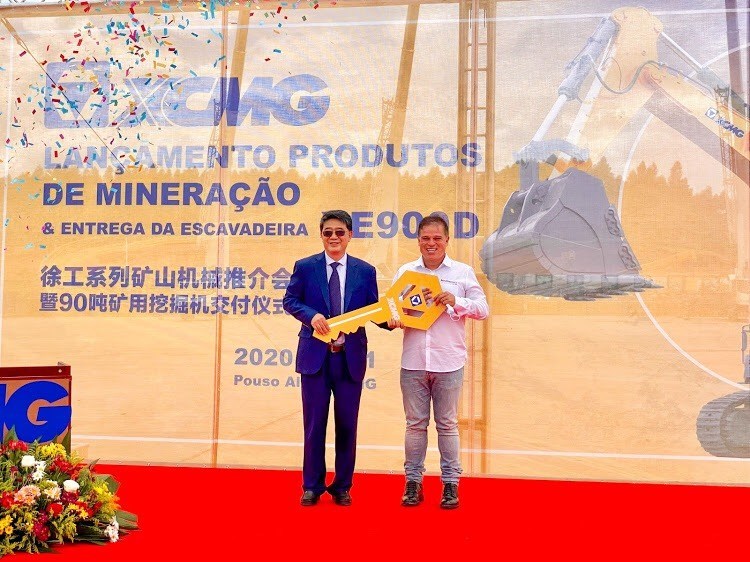
POUSO ALEGRE, Brazil, Dec. 16, 2020 /PRNewswire/ — Leading construction machinery manufacturer XCMG (000425.SZ) showcased its mining equipment series – including a 90-ton mining excavator which was recently delivered to the country – and intelligent autonomous machines at a special promotion event in Pouso Alegre, in Minas Gerais state in Brazil.

POUSO ALEGRE, Brazil, Dec. 16, 2020 /PRNewswire/ — Leading construction machinery manufacturer XCMG (000425.SZ) showcased its mining equipment series – including a 90-ton mining excavator which was recently delivered to the country – and intelligent autonomous machines at a special promotion event in Pouso Alegre, in Minas Gerais state in Brazil.

XCMG 90-ton mining excavator XE900D Has Been Delivered at Pouso Agegre, Brazil to Boost Local Industrial Development.

The event marks a milestone for XCMG on their entry into the Brazilian mining equipment market, bringing ground-breaking achievements in digital mining, autonomous driving as well as remote control. The newly introduced technologies and products will boost the local Brazilian mining industry to enable improved safety management with lower operation costs.

During the event, XCMG delivered its first 90 ton hydraulic excavator and received booking order for four 75-ton excavators, eight 90-ton mining trucks, twenty remotely controlled 21-ton excavators and two 7-ton loaders.

A representative from the authority responsible for economic development in Minas Gerais – CODEMGE – noted that the state, with its major mining industry, will benefit from having such high-quality engineering equipment from a leading manufacturer such as XCMG to jumpstart its economic development.

«Mining equipment is an emerging pillar of XCMG and an important area for the company to achieve its strategic goals,» said Wang Yansong, Vice President of XCMG and President of XCMG Brazil. «XCMG will seize opportunities in the Brazilian mining market to provide comprehensive, intelligent construction solutions for the industry that are safe, efficient and customer-centric.»

Highlighted products unveiled at the event include:

XE900D, the hydraulic excavator with a total weight of 90 tons and a 535-horsepower engine. The machine is a first-choice product for mid-to-large scale opencast mining tasks, such as for operation in Brazilian metal mines for iron, copper and gold, thanks to its best-in-class power, digging force and advanced stability, durability and safety. It also brings higher efficiency while maintaining a low level of fuel consumption.

The ET120 walking excavator and the XE225BR intelligent hydraulic excavator  autonomously operated but controlled remotely. These two unmanned machines have significant advantages in terrain mobility and environment adaptability, and are a top choice for local construction partners working in complicated geographical conditions.

A representative from the Brazilian Mining Association noted that XCMG is an influential partner in Brazil and indeed South America. The association is looking forward to developing a closer relationship with XCMG that is mutually beneficial for the industrial community.

Cision View original content to download multimedia:http://www.prnewswire.com/news-releases/xcmg-introduces-advanced-mining-equipment-and-autonomous-machinery-to-brazil-boosting-local-industrial-development-301194023.html

SOURCE XCMG

Standard Motor Products Awards $20,000 to its Blue Streak® Scholarship Winners

NEW YORK, Dec. 16, 2020 /PRNewswire/ — Standard Motor Products, Inc. (SMP) announces the winners of its annual Blue Streak® ‘Better Then, Better Now’ Automotive Scholarship Contest: Jade Etchart, of Cedar City, UT, Ndayishimiye Bisamaza, of Phoenix, AZ, Mario Zaragoza, of Mabton, WA, and Mikel Cole, of

NEW YORK, Dec. 16, 2020 /PRNewswire/ — Standard Motor Products, Inc. (SMP) announces the winners of its annual Blue Streak® ‘Better Then, Better Now’ Automotive Scholarship Contest: Jade Etchart, of Cedar City, UT, Ndayishimiye Bisamaza, of Phoenix, AZ, Mario Zaragoza, of Mabton, WA, and Mikel Cole, of Klamath Falls, OR.

All four winners will receive a $5,000 scholarship to apply toward their education in automotive technology or repair at a technical school or college.

Hundreds of students entered the competition by completing an online questionnaire that was evaluated on relevance, creativity, and thoughtfulness relating to the automotive repair industry. Upon review, judges believed that Mr. Etchart, Mr. Bisamaza, Mr. Zaragoza, and Mr. Cole best exhibited the qualities reflecting the legendary Standard® Blue Streak® brand.

Commenting on the announcement, John Herc, Vice President Engine Management Marketing stated, «We are proud to continue supporting the technicians of the future. I can say with confidence that the Auto Care industry is in good hands. I congratulate the winners and thank all those who participated.»

The competition was open to legal residents of the 50 United States, District of Columbia, and Puerto Rico who are 18 years of age or older, and currently enrolled full-time in high school, or in an accredited two-or four-year College, University or post-high school educational program.

About Blue Streak by Standard
Since its introduction, the Blue Streak® brand has been known for premium automotive quality. Made to stand the test of time, Blue Streak® parts are always engineered for superior performance and durability. Featuring heavier-duty ignition coils, premium VVT components, and hi-temp blower motor resistor kits, the Blue Streak® line has been the professional technicians’ choice since 1934, and every Blue Streak® part is backed by our limited lifetime warranty. To learn more, visit StandardBlueStreak.com.

About SMP
With over 100 years in business, Standard Motor Products, Inc. is a leading independent manufacturer and distributor of premium automotive replacement parts. SMP supplies independent professional technicians and do-it-yourselfers with high quality replacement parts for engine management, ignition, emissions, fuel and safety-related systems, as well as temperature control products for domestic and import cars and light trucks. SMP® products are sold worldwide through both traditional and non-traditional distribution channels. For more information, download the SMP® Parts App or visit www.smpcorp.com.

37-18 Northern Blvd., Long Island City, NY  11101 (718) 392-0200   www.smpcorp.com 


Cision View original content to download multimedia:http://www.prnewswire.com/news-releases/standard-motor-products-awards-20-000-to-its-blue-streak-scholarship-winners-301193999.html

SOURCE Standard Motor Products, Inc.

Accelerating Transformation: ZF Presents Middleware and Establishes Global Software Center

FRIEDRICHSHAFEN, Germany, Dec. 16, 2020 /PRNewswire/ — 


Accelerating Transformation: ZF Presents Middleware and Establishes Global Software Center

FRIEDRICHSHAFEN, Germany, Dec. 16, 2020 /PRNewswire/ — 

  • Middleware as «mediator» between the vehicle’s operating system and its software applications
  • Development process will be significantly accelerated
  • Customers and end-users will benefit from functions-on-demand and updates throughout the lifetime of the vehicle
  • Middleware will be available in series vehicles from 2024
  • Individual approach: ZF adapts to software challenges by setting up a Global Software Center

The vehicle of the future will feature high levels of networking and automation defined by software. But a «software-defined car» is much more than a «smartphone on wheels» even if the vehicle operation increasingly resembles that of a smartphone. The difference is the quality and quantity of hardware systems that need to be intelligently connected by a software platform to help move people comfortably and safely.

Accelerating Transformation: ZF Presents Middleware and Establishes Global Software Center

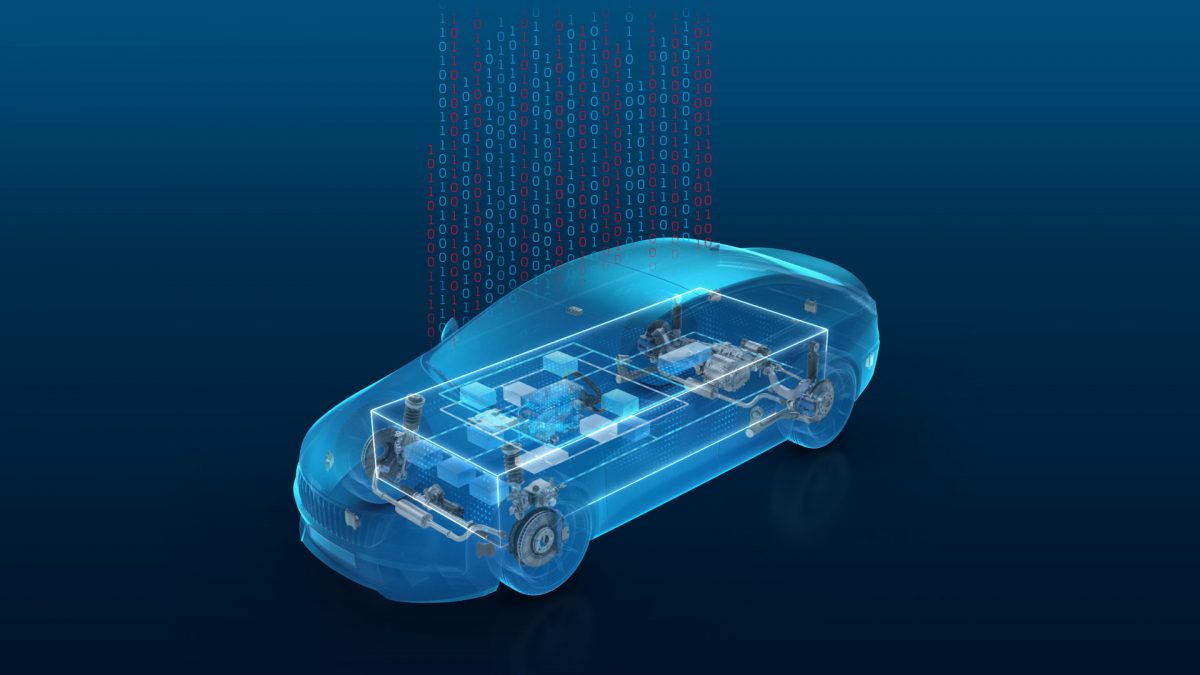
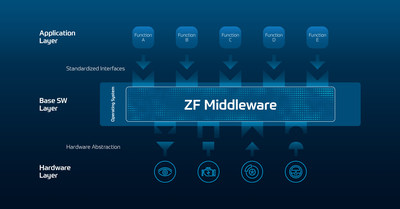
In a preview to CES 2021, ZF presented its new middleware. This open software platform is a «mediator» between a vehicle computer’s operating system and its software applications. Key functions of the middleware are the abstraction of computing hardware from software applications and the communication between these applications.

«The new ZF middleware underpins ZF’s claim to be one of the world’s leading system suppliers for the software-defined car of the future», says Dr. Dirk Walliser, Senior Vice President Research & Development, Innovation & Technology at ZF. «Our customers benefit from accelerated development processes and significantly reduced complexity when integrating hardware and software. Throughout the vehicle’s lifetime functions can be updated or additionally offered on-demand.»

As a comprehensive software platform, the ZF middleware will be available in series vehicles from 2024. Its development is closely connected to the development of application software for mobility domains like automated driving, integrated safety, vehicle motion control and electric mobility.

System Solutions for the Software-Defined Car

Bits and bytes have been allowing vehicle components to communicate with each other for almost five decades since the first electronic control units (ECUs) were installed in cars in the 1970’s. Today, vehicles may have up to 100 different ECUs. Each of them includes its own software. In new and future vehicle platforms, the electric and electronic architecture (E/E architecture) will change dramatically. Software functions move away from decentralized controllers towards a centralized system with only a few dedicated domain control units (DCUs), e.g. for automated driving functions. All these software applications benefit from a smoothly integrated middleware platform managing system integration.

Middleware reduces Complexity for System Integration

Being a connector to the software applications and the hardware components of a vehicle, only the middleware needs to be connected to the operating system. This approach minimizes the interfaces, guarantees fast communication with all parts of the system and can help to significantly reduce the complexity of system integration for the OEM.

The same principle applies for the development of hardware components. The middleware simplifies their flexible integration into vehicles providing communication in «one universal language». It «translates» and standardizes the communication between the vehicles different hard- and software layers.

Accelerated and Improved Processes

The open hard- and software architecture enables an accelerated and improved development process between ZF, vehicle manufacturers and other partners – from the first step of development and during the entire lifetime of the vehicle. As a result, vehicle manufacturers and end customers benefit from innovative vehicle functions that are always state-of-the-art. Depending on the OEM’s software architecture, ZF  offers a modular approach with its middleware from a full platform solution to single modules that can be integrated into the OEM’s software platform. Thanks to its own scalable ZF ProAI supercomputing platform for next generation vehicles, ZF is capable of providing traditional and New Automotive Customers with comprehensive systems comprising software, computing and sensor hardware as well as connected actuators.

Global Software Center to be established in 2021

ZF has prepared for these new challenges in the triad of software, functions and smart systems and is proactively pursuing numerous development processes by establishing a Global Software Center at the turn of the year that will be headed by Dr. Nico Hartmann, Vice President, Software Solutions & Global Software Center.

«Our Global Software Center will be responsible for developing software systems for future architectures on a group-wide level and making them available to the entire company», says Dr. Dirk Walliser. This will allow ZF to coordinate and standardize new trends, technologies, methods, procedures, tools and functions in order to make the resulting software available to all ZF divisions on a common development platform.

«Our approach represents a fresh and different look at software: We do not aim to ‘centralize’ software development. The reason is simple: Where experienced teams have long been developing interlinked hardware and software at component level, we will not reduce competencies. Instead, we provide complementary support and run joint software integration projects to create ideal overall conditions. This allows the expert teams to focus on their work but still have access to the latest resources via the Global Software Center. On the other hand, pure software products – such as our middleware – can be created centrally in the Global Software Center and then made available to everyone for further use,» says Dr. Nico Hartmann.

In the medium term, this will lead to uniform structures and a uniform development environment throughout the ZF Group. Software will be developed or adapted much faster to meet the needs of future software-defined vehicles through integrated cooperation with customers and partners.

The simultaneous and interlinked hardware and software development processes at ZF provide innovative, integrated and industry-leading solutions. They are not only unparalleled at component level but can also be expanded to comprehensive and intelligent vehicle systems that create a unique user experience.

ZF Friedrichshafen AG

ZF is a global technology company and supplies systems for passenger cars, commercial vehicles and industrial technology, enabling the next generation of mobility. ZF allows vehicles to see, think and act. In the four technology domains Vehicle Motion Control, Integrated Safety, Automated Driving, and Electric Mobility, ZF offers comprehensive solutions for established vehicle manufacturers and newly emerging transport and mobility service providers. ZF electrifies different kinds of vehicles. With its products, the company contributes to reducing emissions and protecting the climate.

ZF, which acquired WABCO Holdings Inc. on May 29, 2020, now has 160,000 employees worldwide with approximately 260 locations in 41 countries. In 2019, the two then-independent companies achieved sales of €36.5 billion (ZF) and $3.4 billion (WABCO).

For further press information and photos please visit: www.zf.com

Cision View original content to download multimedia:http://www.prnewswire.com/news-releases/accelerating-transformation-zf-presents-middleware-and-establishes-global-software-center-301193913.html

SOURCE ZF

Toyota Introduces Second-Generation Mirai Fuel Cell Electric Vehicle as Design and Technology Flagship Sedan

NEWPORT COAST, Calif., Dec. 16, 2020 /PRNewswire-HISPANIC PR WIRE/ — Beauty, technology and a hint of the future come together in Toyota’s new flagship sedan, the all-new 2021 Mirai. The 2016-2020 Mirai was the first production fuel-cell electric vehicle (FCEV) offered for sale to retail customers in North America. Now, for 2021, Toyota has fully rebooted the Mirai as a premium rear-wheel drive sports-luxury FCEV with striking design, cutting-edge technology, more…

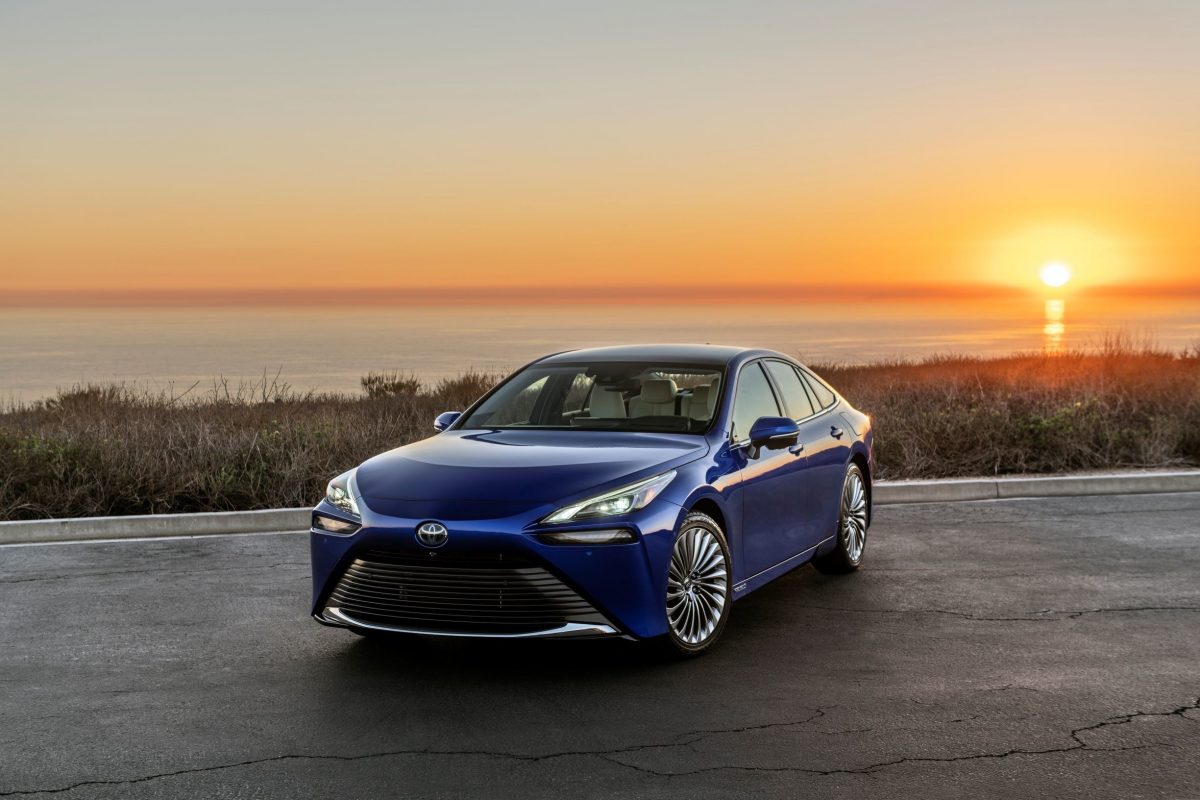
NEWPORT COAST, Calif., Dec. 16, 2020 /PRNewswire-HISPANIC PR WIRE/ — Beauty, technology and a hint of the future come together in Toyota’s new flagship sedan, the all-new 2021 Mirai. The 2016-2020 Mirai was the first production fuel-cell electric vehicle (FCEV) offered for sale to retail customers in North America. Now, for 2021, Toyota has fully rebooted the Mirai as a premium rear-wheel drive sports-luxury FCEV with striking design, cutting-edge technology, more engaging driving performance and a significantly longer EPA-estimated range rating.
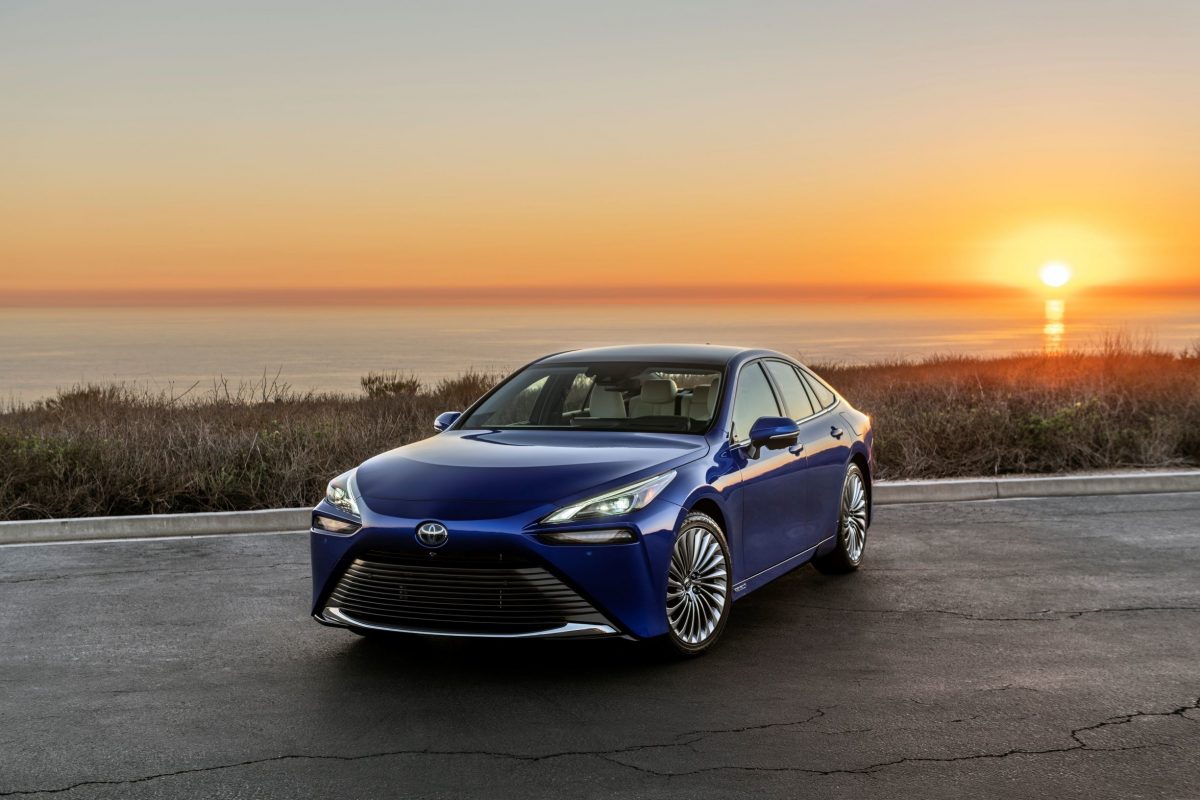
For 2021, Toyota has fully rebooted the Mirai as a premium rear-wheel drive sports-luxury FCEV with striking design, cutting-edge technology, more engaging driving performance and a significantly longer EPA-estimated range rating.

The model name, which means future in Japanese, is wholly appropriate, as the 2021 Mirai is powered by the latest evolution of the brand’s advanced fuel cell electric vehicle (FCEV) powertrain. The new Mirai is one part of an electrification strategy that also includes Toyota’s current and future hybrids and upcoming battery electric vehicles (BEVs). Toyota put the auto industry on the road to modern electrification in 1997 with the first Prius hybrid and today remains the global leader in gas/electric hybrid sales.

Built on the rear-wheel drive GA-L platform that also underpins the larger Lexus LS sedan, the 2021 Toyota Mirai makes a major design departure from the front-wheel drive first-generation version. The body is lower, longer, and wider, with its bolder stance accentuated by standard 19-inch alloy wheels.

A more powerful fuel cell system provides a more engaging driving experience than its pioneering forerunner. The rear-wheel drive layout and four-wheel independent suspension deliver a true sports-luxury sedan driving feel, with greater handling agility than before, yet also with a more comfortable ride. The RWD layout also allowed for increased hydrogen storage to boost EPA-estimated range to 402 miles (Mirai XLE grade), a 30 percent increase over the first-generation Mirai.

The new Mirai’s clean, modern profile was inspired by coupes, yet the new design is also more practical than before. Improved use of space enables a five-seat cabin versus the four-seat layout in the first-generation Mirai. The new Mirai’s interior matches the elegant tone of the exterior.

The 2021 Mirai features more advanced user and safety tech, including Toyota Safety Sense 2.5+. This latest generation of Toyota’s driver-assist technology suite includes Full Speed Dynamic Radar Cruise Control, automatic emergency braking, and Lane Keep Assist. In addition, Blind Spot Monitor with Rear Cross Traffic Alert is standard on the 2021 Mirai.

Electrifying Design, Slippery Aero

The switch to a rear-wheel drive platform delivers a «twofer» in the 2021 Mirai. The new layout facilitates the coupe-like proportions and bolder stance. At the same time, the new platform allowed for a roomier cabin with more usable space on the inside and in the trunk. The result is neither «form follows function» nor the opposite; it is perhaps better described as «form marries function,» and it’s a beautiful marriage, indeed.

The 2021 Mirai conveys a sense of motion with a classic GT car stance (long-hood, sweeping roofline, short rear deck), rendered in a practical four-door sedan package. The cabin silhouette flows rearward with flush, smooth side surfaces, accented by a dynamic sculpted rocker area with a kickup near the rear wheel.

The body tapers to the rear and blends into an integrated rear spoiler. The effect is that of a single metal form sculpted into a bold shape. The Limited grade is equipped with an exclusive dual-panel panorama roof, which features fixed glass panels and a power sunshade.

The 2021 Mirai will be offered in five exterior colors: Black, Oxygen White, Supersonic Red, Hydro Blue, and Heavy Metal. Hydro Blue, exclusive to the Limited grade, is created with primer, silver base, clear, blue clear, and final clear layers.

The «function» aspect of Mirai manifests in a larger body with more passenger room. Wheelbase, height, length and width are all increased over the first-generation Mirai. Weight increases by just 176 lbs., yet weight distribution improves to near 50:50, and the center of gravity is lower to significantly enhance handling agility.

2021 Mirai (XLE grade)

2016-2020 Mirai

Change for 2021 model

Wheelbase

114.9 in. (2920mm)

 109.4 in. (2780mm)

 +5.5 in. (+140mm)

Length

4975mm (195.8 in.)

192.5 in. (4890mm)

 +3.3 in. (+85mm)

Width

74.2 in. (1885mm)

71.4 in. (1815mm)

+2.7 in. (+70mm)

Height

57.9 in. (1470mm)

60.4 in. (1535mm)

-2.5 in. (-65mm)

Seating capacity

5

4

+1

Curb weight

4,255 lbs.

4,079 lbs.

+176 lbs.

Weight distribution

50:50

58:42

Improved agility and handling

Sleek Details

The 2021 Mirai introduces a new lighting signature for a Toyota sedan, with long, narrow headlights that sweep rearward into the fenders. Both grades are equipped with auto-leveling bi-beam LED headlights, multi-LED front and rear turn signal indicators, Daytime Running Lights (DRL), and clearance lights. The LED side marker lamps are etched with the Mirai logo.

At the rear, a thin LED taillight panel spans the car’s width, tapered in the center, and creates a unique nighttime signature with three distinct gradation lines. Color-keyed heated power-folding outside mirrors feature turn signal indicators, defrosters, blind spot warning, and puddle lights.

As much as the new Mirai design catches the eye and tugs at the heart, it is bound to cheat … the wind, that is. The super-low 0.29 coefficient of drag owes not only to the body’s shape, but also to details such as optimized airflow through the wheel wells, a flat full undercover, aero stabilizing fins at the front edge of the side windows and windshield wipers that retract to a lower position when not in use.

The wipers show the kind of detail Toyota infused to raise comfort and convenience to a higher level in the Mirai. They feature direct-spray washer fluid arms, and, when in use, operate more quietly thanks to slower speed at the reversing point.

The Mirai XLE grade rides on standard 19-inch five-twin-spoke aerodynamic wheels, with the Limited grade distinguished by black machined-finished versions. The Limited also offers optional 20-inch Super Chrome alloy wheels.

Flagship Accommodations

The Mirai’s clean, modern layout is infused with a hint of luxury. The cabin embraces occupants in comfort and understated elegance while making cutting-edge multimedia tech easily accessible.

The concept starts with more interior room than the first-gen Mirai, with clever design that further heightens the feeling of spaciousness. The dash panel appears as a single sculptural form, seamlessly integrating all controls, displays and ventilation. The dash is nearly 3 inches wider than in the first-gen Mirai and is also angled more steeply (28.4 degrees vs. 32.7 degrees), enhancing the feeling of spaciousness.

As on Toyota’s GR Supra sports car, the Mirai’s dash design flows into the door panels to wrap the driver and passenger, and the driver section is further defined by a console that’s more enclosing on that side. The console armrest is a significant 3.7 in. wider and 2.3 in. longer than in the first Mirai.

The feeling of luxury comes through in the choice of materials. Major portions of the dash, as well as the console armrest, are wrapped in SofTex synthetic leather. A seamless punched-metal panel resembling a speaker grille runs atop the dash, concealing the audio speakers and creating a sophisticated textural design element. This motif is repeated on the rear package shelf, as well.

Elegant copper-color or satin chrome metal trim outlines the console and then rises to follow the edge of the SoftTex dash covering. With copper trim, the upholstery stitching is beige; with satin chrome trim, it’s gray. The climate control outlet vents blend into a thin horizontal trim panel running just beneath the metal trim line.

Two rows of switches, one below the center display and another within the dash trim below that, are zoned by function. Three-dimensional steps give the steering wheel switches a high-quality feel.

Comfort and Tech: Above and Beyond

The Mirai combines exacting craftsmanship and high tech to give the Mirai comfort that’s above the ordinary. Starting with what’s «above,» the headliner is hardly conventional. An infrared reflective layer on the roof-facing surface blocks that part of the spectrum to help reduce heat buildup inside the cabin, resulting in reduced electrical load on the air conditioning system. Also within the headliner, a layer of Thinsulate™ also helps to block heat as well as provide additional sound damping. The side windows are UV-Protected and water-repellent.

The Mirai XLE grade features SoftTex upholstery and heated, power-adjustable front seats (8-way for driver, 4-way for passenger). The Limited steps up to perforated SoftTex-trimmed heated and ventilated front and rear seats, including an 8-way power front passenger seat.

The Limited interior is available in dramatic two-tone color schemes: white and brown or black. LED ambient lighting includes eight driver-selectable colors and blue footwell illumination. A standard digital rear view mirror with a HomeLink® transmitter in the Limited can be switched from conventional to digital modes. The latter relays an expansive camera view from behind the vehicle and can also brighten the nighttime image.

For rear seat passengers in the Limited, digital touch switches on the rear of the center console operate the audio and climate controls and the panorama roof’s power sunshade. The Limited features manual sunshades for the side windows and a power shade for the rear window.

Dual Digital Displays

The Mirai XLE and Limited both employ an 8-inch color TFT LCD digital gauge cluster and a 12.3-inch touchscreen multimedia display. Within the 8-inch gauge cluster, a 4.2-in. multi-information display includes an ECO drive indicator that helps the driver to maximize fuel efficiency by providing acceleration guidance and assigning a score on economical driving. Hydrogen fuel level and remaining range are always shown.

The 12.3-inch display provides easy access for the driver or front passenger, and the multimedia, climate control, and navigation content can be toggled from left and right. Both model grades come standard with a Dynamic Navigation three-year free trial and Premium Audio playing through 14 JBL® speakers, including subwoofer. The system features the latest in-demand connectivity tech, including Bluetooth® wireless technology, Android Auto™, Apple CarPlay®, Amazon Alexa compatibility and SiriusXM® with 3-month All Access trial.

The 12.3-inch display also relays imagery from the Bird’s Eye View Camera with Perimeter Scan, Overhead 360-Degree View in drive and reverse, and Curb View (standard on Limited and available for XLE).

FCEV: Making Electricity from Hydrogen

Even those familiar with EVs may still be unacquainted with FCEVs. The easiest way to understand an FCEV is that it is a «plug-less» electric vehicle. There’s no need to charge the battery, which can take several hours in an EV even with fast charging. Instead, the FCEV driver simply fills the tank with hydrogen in about five minutes, just as millions of drivers do every day with gas vehicles.

With an FCEV, the fuel is non-toxic, compressed hydrogen gas rather than liquid gasoline. As it did with the first-generation Mirai, Toyota will include up to $15,000 of complimentary hydrogen.

An FCEV generates its own electricity onboard from hydrogen, with water as the only emission. A fuel cell «stack» combines the stored hydrogen with oxygen from the air, and a chemical reaction that produces electric current, and water, which drops out of a hidden vent pipe beneath the car.

The fuel cell is composed of an anode, a cathode, and an electrolyte membrane. Hydrogen is passed through the anode, and oxygen through the cathode. The hydrogen molecules are split into electrons and protons. As protons pass through the electrolyte membrane, electrons go through a circuit, generating an electric current. At the cathode, the protons, electrons, and oxygen combine to produce water molecules. There are no other byproducts.

The excess electricity generated by the Mirai’s fuel cell and by regenerative braking is stored in a lithium-ion battery. As a result, pressing the accelerator pedal yields immediate flow of electric power jointly from the fuel cell and battery to the rear-mounted AC synchronous electric motor, which drives the rear wheels through a fixed gear ratio.

Smaller, Lighter, More Powerful

The second-gen Mirai features a more highly evolved FC system. Still 650v as in the first Mirai, the next-generation fuel cell stack is about 20 percent smaller and 50 percent lighter than the previous stack, and so fits easily under the hood. The new, smaller stack allowed the switch to rear-wheel drive. In comparison, the first-gen Mirai was FWD, and the larger stack was placed under a raised section of the passenger compartment floor.

A compact, lightweight power control unit is now integrated with the FC stack case, further reducing overall system size. Relocating the air intake manifold and optimizing the gas channel separator electrodes and seals has resulted in a 12-percent increase in power output over the first-gen stack (128kw, up from 114kw). That translates to 182 hp and 221 lb-ft. of torque vs. 151 hp and 247 lb-ft for the first-gen Mirai.

In the 2021 Mirai, a lithium-ion battery is smaller and lighter (98.3 lb. vs. 103.4 lb.) and has higher capacity than the nickel metal-hydride battery used in the first-gen model (310.8v and 4.0 Ah, compared to 244.8v and 6.5 Ah in the earlier car). The more compact battery package fits between the rear seat and trunk, and the trunk can carry 2-3 golf bags. Cooling air for the battery is silently pulled in from the cabin.

In the Toyota Mirai, compressed hydrogen fuel is stored in three 10,000-psi carbon-fiber-reinforced high-pressure tanks: one mounted longitudinally in the center of the car; another mounted transversely under the rear seat, and a third below the battery. The three tanks together hold about 11 pounds of hydrogen.

Electric «Supercharger»

There’s no combustion in an FCEV, of course, but there is a kind of air supercharger. An electric air compressor pressurizes the intake air, and a water-cooled intercooler reduces the temperature of the compressed air before it enters the FC stack. A water-cooled oil cooler integrated with the air compressor helps to provide reliability.

The intake system is designed to mitigate noise, which will be virtually unnoticeable to occupants. The inlet design and sound-absorbing material in the air cleaner prevent air column resonance. By necessity, the intake air for the fuel cell must be purified; the electret air cleaner element captures ultra-fine particles (PM 2.5), and a charcoal filter removes chemical substances. The resulting air released from the system is cleaner than the intake air.

Driving the Mirai

Driving the Toyota Mirai is like driving a Toyota Hybrid – meaning a thoroughly «normal» experience. Get in, buckle up, push the Start button, and the Mirai is ready to drive immediately. Shift the gear selector into D, and off you go. While the 2021 Mirai will initially be offered only in California, it is fully optimized for cold weather operation; the FC system has been tested in extremely cold conditions and can start at an outside temperature as low as -22°F. 

Operation of the FC system and battery is seamless. Normal initial acceleration uses battery energy, like a battery EV would. After initial acceleration, it smoothly transitions to FC+EV operation, and then fully to FC power to the EV drivetrain when cruising. As a result, the driver feels a natural, linear response to the accelerator.

Like a Toyota hybrid vehicle, the FC also sends electricity to be stored in the battery, and the battery is also charged by the motor-generator during deceleration. Direct current from the battery is converted into three-phase alternating current for the FC air compressor and the electric drive motor. In the 2021 Mirai, a second DC/DC converter augments the main DC/DC converter to respond to the auxiliary load increase.

The Mirai provides excellent everyday driving performance, for example accelerating from 25 mph to 45 mph in 2.8 seconds. The driver can tailor the driving feel via the Drive Mode Select switch, which offers ECO, NORMAL and SPORT modes. NORMAL provides an excellent balance between driving performance and fuel efficiency. Selecting ECO mode prioritizes efficiency by optimizing air conditioning operation, while SPORT mode quickens accelerator response and tightens steering feel for a more dynamic driving experience.

As on Toyota Hybrids, Predictive Efficient Drive can learn repeatedly traveled routes to optimize charging and discharging of the battery to help maximize fuel economy and driving range.

Luxury Car Chassis

To make the second-generation Mirai its new sedan flagship, Toyota based it on the GA-L platform also used for the Lexus LS sedan. (The LS uses a larger version of the platform.) The change to rear-wheel drive and resulting new layout for the FC system and EV powertrain yield a near 50:50 weight distribution, versus 58:42 for the front-wheel drive first-gen Mirai.

The high-strength platform provides the foundation for superb handling agility and an exceptionally smooth, quiet ride. Laser screw welding and adhesive structure bonding, proven on many other Toyota and Lexus models, are among the construction techniques used to give the Mirai a truly premium feel on the road.

The suspension is completely new and fully befitting a flagship luxury-sport sedan. Sophisticated multilink suspension replaces strut-type front suspension and beam axle rear suspension used for the first-gen Mirai. Suspension geometry and stiffness provide highly responsive, direct-feeling steering. The result is a much higher level of handling precision, giving the second-gen Mirai a distinctly sporting feel to match its future-looking powertrain.

Active Cornering Assist engages the stability control to reduce understeer in certain cornering situations. Hill Start Assist Control, standard for both grades, allows smoother, safe takeoffs from stops on hills.

Electric power steering delivers quick response, with a tight 38.6-ft. turning circle for easy maneuverability. Both the XLE and Limited grades are equipped with 19 x 8-inch alloy wheels and 235/55R19 all-season tires. The Limited in addition offers optional 20 x 8.5-inch turbine-style Super Chrome alloy wheels with 245/45ZR20 tires.

Mirai Safety

Toyota Safety Sense 2.5+ equips the 2021 Mirai to help avoid collisions or mitigate their impact. Also featured on other 2021 Toyotas, including the Camry and Highlander, TSS 2.5+ is the next phase in Toyota’s evolution of active safety systems. A number of functions that are part of the Toyota Safety Sense have been enhanced.

For starters, the Pre-Collision System with Pedestrian Detection (PCS w/PD), features multiple enhancements. By enhancing the system capabilities, it is now possible for the system to help detect not only the vehicle ahead but also a preceding bicyclist in daytime and even a preceding pedestrian in low-light conditions. TSS 2.5+ also enhances the PCS w/PD system with intersection support. At intersections, the system may detect an oncoming vehicle or pedestrian when performing a left-hand turn and may provide audio/visual alerts and automatic braking in certain conditions. Additional PCS functions include emergency steering assist, which is designed to stabilize the driver’s emergency steering maneuvers within their lane while avoiding a preceding pedestrian, bicyclist or vehicle.

Each Mirai comes equipped with Full-Speed Dynamic Radar Cruise Control (DRCC), which can activate the feature above 30 mph, have a system designed to perform vehicle-to-vehicle distance controls down to 0 mph and resume from a stop. DRCC also includes a new feature that allows for smoother overtaking of slower vehicles. If traveling behind a vehicle traveling slower than the preset speed, once the driver engages the turn signal and initiates steering input the system will provide an initial increase in acceleration in preparation for changing lanes; after changing lanes, the vehicle will continue acceleration until it reaches the preset driving speed.

Lane Departure Alert is designed to help notify the driver via steering wheel vibrations or audible alert if it senses the vehicle is leaving the lane without engaging a turn signal. When DRCC is set and engaged, Lane Tracing Assist (LTA) is designed to assist the driver by providing a slight steering force to help center the vehicle in its lane using visible lane markers or a preceding vehicle.

Additional TSS 2.5+ features include Automatic High Beams, which detects preceding or oncoming vehicles and automatically switches between high beam and low beam headlights. Road Sign Assist (RSA), which is designed to recognize certain road sign information using a forward-facing camera and display them on the multi-information display (MID). With DRCC engaged and activated, RSA can also adjust speed up to the posted speed limit if driving slower or down to the posted speed limit if driving faster than posted.

In addition to the TSS 2.5+ system, to help Mirai drivers change lanes with confidence, Blind Spot Monitor is designed to help detect and warn you of vehicles approaching or positioned in the adjacent lanes. Rear Cross Traffic Alert (RCTA) can offer added peace of mind by helping to detect vehicles approaching from either side while backing out and alerting you with a visual and audible warning.

Two-Grade Model Strategy

Toyota will offer the 2021 Mirai in two grades, XLE and Limited, rather than only a top-of-line mono-spec version as with the first-generation model. The new strategy will make the Mirai accessible to a wider market.

The Mirai XLE comes well equipped with standard SofTex-trimmed seating featuring heated, 8-way power driver and 4-way power passenger seats; dual-zone automatic climate control with remote feature; Smart Key System remote keyless entry system with trunk-release, panic button and remote illuminated entry; auto-leveling LED headlamps; LED front interior reading lights; Toyota Premium Multimedia system with navigation and 14 JBL speakers; Qi wireless charger; power tilt/telescoping steering wheel; auto-dimming rearview mirror, and electronic parking brake.

Connected Services include Safety Connect® with 1-year trial; Service Connect with 10-year trial; Remote Connect with 1-year trial; Wi-Fi Connect with up to 2 GB within 3-month trial, and Destination Assist with 1-year trial. (See toyota.com/connected-services and toyota.com/audio-multimedia for details.)

As an option, the XLE offers the Advanced Technology Package that includes Bird’s Eye View Camera, Front and Rear Parking Assist with Automated Braking, and Front Seat Foot Illumination.

The Mirai Limited grade makes those features standard, along with ventilated front seats, heated rear seating, three-zone automatic climate control (two-zone in front, one-zone in rear with separate digital control panel), ambient lighting, and a panorama roof.

Mirai Pricing

The 2021 Mirai will roll into dealers with more grades, more options and a lower starting MSRP. The Mirai XLE grade has a starting MSRP of $49,500, which is $9,050 less than the starting MSRP of the outgoing 2020 Mirai. An Advanced Technology Package, which includes Bird’s Eye View camera, front and rear Parking Assist with Automated Braking and front seat foot illumination, can be added to the XLE for $1,410.

The Limited grade has a starting MSRP of $66,000, with optional 20″ Super Chrome Alloy wheels available for an additional $1,120. Both the XLE and Limited grades have a Special Color price of $425 for Oxygen White, Heavy Metal, Supersonic Red and Hydro Blue (Limited only).

Mirai XLE grade will have a starting lease price of $499 a month, while the Limited grade lease pricing starts at $549 a month. Special launch incentives will be available when this next-generation Mirai first goes on sale, including special finance rates, retail cash back and launch cash back.

Each Mirai comes with up to $15,000 of complimentary hydrogen. Extended ToyotaCare, good for three years or 35,000 miles, will come standard with each Mirai. Other owner benefits include roadside assistance for three years (unlimited miles), an eight-year/100,000-mile FCEV warranty on key fuel cell electric vehicle components, a complimentary rental experience for up to 21 days during the first three years of ownership, and much more.

Toyota’s Fuel Cell Future

Toyota, projects that fuel cell electric technology will one day be as common as the company’s hybrid electric technology.

Fuel cell technology pre-dates the automobile by half a century. In 1838, a Welsh physicist combined hydrogen and oxygen in the presence of an electrolyte and produced an electric current, though not enough to be useful. By the 1960s, the technology was being used in America’s Gemini and Apollo spacecraft, where it provided crews with both electricity and water from stored hydrogen and oxygen.

Fuel cells had been studied for the automotive sector, but the technology only recently became practical and cost-effective. Toyota began its fuel cell development around the same time as its original Prius nearly 25 years ago, and the Mirai shares technology from the company’s hybrid program.

Toyota developed the solid-polymer electrolyte fuel cells used in the first- and second-generation Mirai models. To help foster FCEV proliferation, the company has released over 5000 of its patents, royalty-free.

Toyota remains committed to fuel cell technology as a powertrain for the future. It is a scalable technology that can be made small enough to power a phone or large enough to power a building, or anything in between. For example, Toyota recently installed fuel cell powertrains in a fleet of Kenworth class-8 semi-trucks that are rated for a maximum 80,000-pound load. These big rigs are currently used for moving freight in and around the Ports of Los Angeles and Long Beach, California.

More FCEVs will be entering the market over the next few years, as the cost, size and weight of fuel cell systems are reduced and the fueling infrastructure grows.

Ample Domestic Fuel Supply

Hydrogen can be produced from a variety of domestic resources. The goal of the Hydrogen Council, for which Toyota is a founding member, is to use decarbonized hydrogen for transportation such as that produced from bio-resources or renewable electricity via electrolysis by 2030. As of November 2020, the U.S. Department of Energy Alternative Fuels Data Center indicated 43 hydrogen fueling stations open in California, plus one in Hawaii. Toyota has joined with other manufacturers, as well as local governments, to help expand the number of hydrogen fueling stations that are built each year and to expand the market.

About Toyota

Toyota (NYSE:TM) has been a part of the cultural fabric in the U.S. for more than 60 years, and is committed to advancing sustainable, next-generation mobility through our Toyota and Lexus brands, plus our nearly 1,500 dealerships. 

Toyota has created a tremendous value chain and directly employs more than 36,000 in the U.S. The company has contributed world-class design, engineering, and assembly of more than 30 million cars and trucks at our 9 manufacturing plants, 10 including our joint venture in Alabama that is scheduled to begin production in 2021.

To help inspire the next generation for a career in STEM-based fields, including mobility, Toyota launched its virtual education hub at www.TourToyota.com with an immersive experience and chance to visit many of our U.S. manufacturing facilities. The hub also includes a series of free STEM-based lessons and curriculum through Toyota USA Foundation partners, virtual field trips and more. For more information about Toyota, visit www.toyotanewsroom.com.


Media Contacts:

Nathan Kokes
469-292-3103
nathan.kokes@toyota.com

Zachary Reed
469-292-3499
zachary.reed@toyota.com


Note to Editors: Photos and b-roll can be found on ToyotaNewsroom.com 

For customer inquiries, please call: 800-331-4331

Toyota logo. (PRNewsFoto/Toyota Media Relations)

Photo – https://mma.prnewswire.com/media/1386593/Toyota_2021_Mirai_Limited_Hydro_Blue_007_2.jpg  
Logo – https://mma.prnewswire.com/media/1386591/TOYOTA_MEDIA_RELATIONS_LOGO.jpg


SOURCE Toyota

Toyota Introduces Second-Generation Mirai Fuel Cell Electric Vehicle as Design and Technology Flagship Sedan

NEWPORT COAST, Calif., Dec. 16, 2020 /PRNewswire/ — Beauty, technology and a hint of the future come together in Toyota’s new flagship sedan, the all-new 2021 Mirai. The 2016-2020 Mirai was the first production fuel-cell electric vehicle (FCEV) offered for sale to retail customers in North America. Now, for 2021, Toyota has fully rebooted the Mirai as a premium rear-wheel drive sports-luxury FCEV with striking design, cutting-edge technology, more engaging driving…

NEWPORT COAST, Calif., Dec. 16, 2020 /PRNewswire/ — Beauty, technology and a hint of the future come together in Toyota’s new flagship sedan, the all-new 2021 Mirai. The 2016-2020 Mirai was the first production fuel-cell electric vehicle (FCEV) offered for sale to retail customers in North America. Now, for 2021, Toyota has fully rebooted the Mirai as a premium rear-wheel drive sports-luxury FCEV with striking design, cutting-edge technology, more engaging driving performance and a significantly longer EPA-estimated range rating.

The model name, which means future in Japanese, is wholly appropriate, as the 2021 Mirai is powered by the latest evolution of the brand’s advanced fuel cell electric vehicle (FCEV) powertrain. The new Mirai is one part of an electrification strategy that also includes Toyota’s current and future hybrids and upcoming battery electric vehicles (BEVs). Toyota put the auto industry on the road to modern electrification in 1997 with the first Prius hybrid and today remains the global leader in gas/electric hybrid sales.

Built on the rear-wheel drive GA-L platform that also underpins the larger Lexus LS sedan, the 2021 Toyota Mirai makes a major design departure from the front-wheel drive first-generation version. The body is lower, longer, and wider, with its bolder stance accentuated by standard 19-inch alloy wheels.

A more powerful fuel cell system provides a more engaging driving experience than its pioneering forerunner. The rear-wheel drive layout and four-wheel independent suspension deliver a true sports-luxury sedan driving feel, with greater handling agility than before, yet also with a more comfortable ride. The RWD layout also allowed for increased hydrogen storage to boost EPA-estimated range to 402 miles (Mirai XLE grade), a 30 percent increase over the first-generation Mirai.

The new Mirai’s clean, modern profile was inspired by coupes, yet the new design is also more practical than before. Improved use of space enables a five-seat cabin versus the four-seat layout in the first-generation Mirai. The new Mirai’s interior matches the elegant tone of the exterior.

The 2021 Mirai features more advanced user and safety tech, including Toyota Safety Sense 2.5+. This latest generation of Toyota’s driver-assist technology suite includes Full Speed Dynamic Radar Cruise Control, automatic emergency braking, and Lane Keep Assist. In addition, Blind Spot Monitor with Rear Cross Traffic Alert is standard on the 2021 Mirai.

Electrifying Design, Slippery Aero

The switch to a rear-wheel drive platform delivers a «twofer» in the 2021 Mirai. The new layout facilitates the coupe-like proportions and bolder stance. At the same time, the new platform allowed for a roomier cabin with more usable space on the inside and in the trunk. The result is neither «form follows function» nor the opposite; it is perhaps better described as «form marries function,» and it’s a beautiful marriage, indeed.

The 2021 Mirai conveys a sense of motion with a classic GT car stance (long-hood, sweeping roofline, short rear deck), rendered in a practical four-door sedan package. The cabin silhouette flows rearward with flush, smooth side surfaces, accented by a dynamic sculpted rocker area with a kickup near the rear wheel.

The body tapers to the rear and blends into an integrated rear spoiler. The effect is that of a single metal form sculpted into a bold shape. The Limited grade is equipped with an exclusive dual-panel panorama roof, which features fixed glass panels and a power sunshade.

The 2021 Mirai will be offered in five exterior colors: Black, Oxygen White, Supersonic Red, Hydro Blue, and Heavy Metal. Hydro Blue, exclusive to the Limited grade, is created with primer, silver base, clear, blue clear, and final clear layers.

The «function» aspect of Mirai manifests in a larger body with more passenger room. Wheelbase, height, length and width are all increased over the first-generation Mirai. Weight increases by just 176 lbs., yet weight distribution improves to near 50:50, and the center of gravity is lower to significantly enhance handling agility.

2021 Mirai (XLE grade)

2016-2020 Mirai

Change for 2021 model

Wheelbase

114.9 in. (2920mm)

 109.4 in. (2780mm)

 +5.5 in. (+140mm)

Length

4975mm (195.8 in.)

192.5 in. (4890mm)

 +3.3 in. (+85mm)

Width

74.2 in. (1885mm)

71.4 in. (1815mm)

+2.7 in. (+70mm)

Height

57.9 in. (1470mm)

60.4 in. (1535mm)

-2.5 in. (-65mm)

Seating capacity

5

4

+1

Curb weight

4,255 lbs.

4,079 lbs.

+176 lbs.

Weight distribution

50:50

58:42

Improved agility and handling

Sleek Details

The 2021 Mirai introduces a new lighting signature for a Toyota sedan, with long, narrow headlights that sweep rearward into the fenders. Both grades are equipped with auto-leveling bi-beam LED headlights, multi-LED front and rear turn signal indicators, Daytime Running Lights (DRL), and clearance lights. The LED side marker lamps are etched with the Mirai logo.

At the rear, a thin LED taillight panel spans the car’s width, tapered in the center, and creates a unique nighttime signature with three distinct gradation lines. Color-keyed heated power-folding outside mirrors feature turn signal indicators, defrosters, blind spot warning, and puddle lights.

As much as the new Mirai design catches the eye and tugs at the heart, it is bound to cheat … the wind, that is. The super-low 0.29 coefficient of drag owes not only to the body’s shape, but also to details such as optimized airflow through the wheel wells, a flat full undercover, aero stabilizing fins at the front edge of the side windows and windshield wipers that retract to a lower position when not in use.

The wipers show the kind of detail Toyota infused to raise comfort and convenience to a higher level in the Mirai. They feature direct-spray washer fluid arms, and, when in use, operate more quietly thanks to slower speed at the reversing point.

The Mirai XLE grade rides on standard 19-inch five-twin-spoke aerodynamic wheels, with the Limited grade distinguished by black machined-finished versions. The Limited also offers optional 20-inch Super Chrome alloy wheels.

Flagship Accommodations

The Mirai’s clean, modern layout is infused with a hint of luxury. The cabin embraces occupants in comfort and understated elegance while making cutting-edge multimedia tech easily accessible.

The concept starts with more interior room than the first-gen Mirai, with clever design that further heightens the feeling of spaciousness. The dash panel appears as a single sculptural form, seamlessly integrating all controls, displays and ventilation. The dash is nearly 3 inches wider than in the first-gen Mirai and is also angled more steeply (28.4 degrees vs. 32.7 degrees), enhancing the feeling of spaciousness.

As on Toyota’s GR Supra sports car, the Mirai’s dash design flows into the door panels to wrap the driver and passenger, and the driver section is further defined by a console that’s more enclosing on that side. The console armrest is a significant 3.7 in. wider and 2.3 in. longer than in the first Mirai.

The feeling of luxury comes through in the choice of materials. Major portions of the dash, as well as the console armrest, are wrapped in SofTex synthetic leather. A seamless punched-metal panel resembling a speaker grille runs atop the dash, concealing the audio speakers and creating a sophisticated textural design element. This motif is repeated on the rear package shelf, as well.

Elegant copper-color or satin chrome metal trim outlines the console and then rises to follow the edge of the SoftTex dash covering. With copper trim, the upholstery stitching is beige; with satin chrome trim, it’s gray. The climate control outlet vents blend into a thin horizontal trim panel running just beneath the metal trim line.

Two rows of switches, one below the center display and another within the dash trim below that, are zoned by function. Three-dimensional steps give the steering wheel switches a high-quality feel.

Comfort and Tech: Above and Beyond

The Mirai combines exacting craftsmanship and high tech to give the Mirai comfort that’s above the ordinary. Starting with what’s «above,» the headliner is hardly conventional. An infrared reflective layer on the roof-facing surface blocks that part of the spectrum to help reduce heat buildup inside the cabin, resulting in reduced electrical load on the air conditioning system. Also within the headliner, a layer of Thinsulate™ also helps to block heat as well as provide additional sound damping. The side windows are UV-Protected and water-repellent.

The Mirai XLE grade features SoftTex upholstery and heated, power-adjustable front seats (8-way for driver, 4-way for passenger). The Limited steps up to perforated SoftTex-trimmed heated and ventilated front and rear seats, including an 8-way power front passenger seat.

The Limited interior is available in dramatic two-tone color schemes: white and brown or black. LED ambient lighting includes eight driver-selectable colors and blue footwell illumination. A standard digital rear view mirror with a HomeLink® transmitter in the Limited can be switched from conventional to digital modes. The latter relays an expansive camera view from behind the vehicle and can also brighten the nighttime image.

For rear seat passengers in the Limited, digital touch switches on the rear of the center console operate the audio and climate controls and the panorama roof’s power sunshade. The Limited features manual sunshades for the side windows and a power shade for the rear window.

Dual Digital Displays

The Mirai XLE and Limited both employ an 8-inch color TFT LCD digital gauge cluster and a 12.3-inch touchscreen multimedia display. Within the 8-inch gauge cluster, a 4.2-in. multi-information display includes an ECO drive indicator that helps the driver to maximize fuel efficiency by providing acceleration guidance and assigning a score on economical driving. Hydrogen fuel level and remaining range are always shown.

The 12.3-inch display provides easy access for the driver or front passenger, and the multimedia, climate control, and navigation content can be toggled from left and right. Both model grades come standard with a Dynamic Navigation three-year free trial and Premium Audio playing through 14 JBL® speakers, including subwoofer. The system features the latest in-demand connectivity tech, including Bluetooth® wireless technology, Android Auto™, Apple CarPlay®, Amazon Alexa compatibility and SiriusXM® with 3-month All Access trial.

The 12.3-inch display also relays imagery from the Bird’s Eye View Camera with Perimeter Scan, Overhead 360-Degree View in drive and reverse, and Curb View (standard on Limited and available for XLE).

FCEV: Making Electricity from Hydrogen

Even those familiar with EVs may still be unacquainted with FCEVs. The easiest way to understand an FCEV is that it is a «plug-less» electric vehicle. There’s no need to charge the battery, which can take several hours in an EV even with fast charging. Instead, the FCEV driver simply fills the tank with hydrogen in about five minutes, just as millions of drivers do every day with gas vehicles.

With an FCEV, the fuel is non-toxic, compressed hydrogen gas rather than liquid gasoline. As it did with the first-generation Mirai, Toyota will include up to $15,000 of complimentary hydrogen.

An FCEV generates its own electricity onboard from hydrogen, with water as the only emission. A fuel cell «stack» combines the stored hydrogen with oxygen from the air, and a chemical reaction that produces electric current, and water, which drops out of a hidden vent pipe beneath the car.

The fuel cell is composed of an anode, a cathode, and an electrolyte membrane. Hydrogen is passed through the anode, and oxygen through the cathode. The hydrogen molecules are split into electrons and protons. As protons pass through the electrolyte membrane, electrons go through a circuit, generating an electric current. At the cathode, the protons, electrons, and oxygen combine to produce water molecules. There are no other byproducts.

The excess electricity generated by the Mirai’s fuel cell and by regenerative braking is stored in a lithium-ion battery. As a result, pressing the accelerator pedal yields immediate flow of electric power jointly from the fuel cell and battery to the rear-mounted AC synchronous electric motor, which drives the rear wheels through a fixed gear ratio.

Smaller, Lighter, More Powerful

The second-gen Mirai features a more highly evolved FC system. Still 650v as in the first Mirai, the next-generation fuel cell stack is about 20 percent smaller and 50 percent lighter than the previous stack, and so fits easily under the hood. The new, smaller stack allowed the switch to rear-wheel drive. In comparison, the first-gen Mirai was FWD, and the larger stack was placed under a raised section of the passenger compartment floor.

A compact, lightweight power control unit is now integrated with the FC stack case, further reducing overall system size. Relocating the air intake manifold and optimizing the gas channel separator electrodes and seals has resulted in a 12-percent increase in power output over the first-gen stack (128kw, up from 114kw). That translates to 182 hp and 221 lb-ft. of torque vs. 151 hp and 247 lb-ft for the first-gen Mirai.

In the 2021 Mirai, a lithium-ion battery is smaller and lighter (98.3 lb. vs. 103.4 lb.) and has higher capacity than the nickel metal-hydride battery used in the first-gen model (310.8v and 4.0 Ah, compared to 244.8v and 6.5 Ah in the earlier car). The more compact battery package fits between the rear seat and trunk, and the trunk can carry 2-3 golf bags. Cooling air for the battery is silently pulled in from the cabin.

In the Toyota Mirai, compressed hydrogen fuel is stored in three 10,000-psi carbon-fiber-reinforced high-pressure tanks: one mounted longitudinally in the center of the car; another mounted transversely under the rear seat, and a third below the battery. The three tanks together hold about 11 pounds of hydrogen.

Electric «Supercharger»

There’s no combustion in an FCEV, of course, but there is a kind of air supercharger. An electric air compressor pressurizes the intake air, and a water-cooled intercooler reduces the temperature of the compressed air before it enters the FC stack. A water-cooled oil cooler integrated with the air compressor helps to provide reliability.

The intake system is designed to mitigate noise, which will be virtually unnoticeable to occupants. The inlet design and sound-absorbing material in the air cleaner prevent air column resonance. By necessity, the intake air for the fuel cell must be purified; the electret air cleaner element captures ultra-fine particles (PM 2.5), and a charcoal filter removes chemical substances. The resulting air released from the system is cleaner than the intake air.

Driving the Mirai

Driving the Toyota Mirai is like driving a Toyota Hybrid – meaning a thoroughly «normal» experience. Get in, buckle up, push the Start button, and the Mirai is ready to drive immediately. Shift the gear selector into D, and off you go. While the 2021 Mirai will initially be offered only in California, it is fully optimized for cold weather operation; the FC system has been tested in extremely cold conditions and can start at an outside temperature as low as -22°F. 

Operation of the FC system and battery is seamless. Normal initial acceleration uses battery energy, like a battery EV would. After initial acceleration, it smoothly transitions to FC+EV operation, and then fully to FC power to the EV drivetrain when cruising. As a result, the driver feels a natural, linear response to the accelerator.

Like a Toyota hybrid vehicle, the FC also sends electricity to be stored in the battery, and the battery is also charged by the motor-generator during deceleration. Direct current from the battery is converted into three-phase alternating current for the FC air compressor and the electric drive motor. In the 2021 Mirai, a second DC/DC converter augments the main DC/DC converter to respond to the auxiliary load increase.

The Mirai provides excellent everyday driving performance, for example accelerating from 25 mph to 45 mph in 2.8 seconds. The driver can tailor the driving feel via the Drive Mode Select switch, which offers ECO, NORMAL and SPORT modes. NORMAL provides an excellent balance between driving performance and fuel efficiency. Selecting ECO mode prioritizes efficiency by optimizing air conditioning operation, while SPORT mode quickens accelerator response and tightens steering feel for a more dynamic driving experience.

As on Toyota Hybrids, Predictive Efficient Drive can learn repeatedly traveled routes to optimize charging and discharging of the battery to help maximize fuel economy and driving range.

Luxury Car Chassis

To make the second-generation Mirai its new sedan flagship, Toyota based it on the GA-L platform also used for the Lexus LS sedan. (The LS uses a larger version of the platform.) The change to rear-wheel drive and resulting new layout for the FC system and EV powertrain yield a near 50:50 weight distribution, versus 58:42 for the front-wheel drive first-gen Mirai.

The high-strength platform provides the foundation for superb handling agility and an exceptionally smooth, quiet ride. Laser screw welding and adhesive structure bonding, proven on many other Toyota and Lexus models, are among the construction techniques used to give the Mirai a truly premium feel on the road.

The suspension is completely new and fully befitting a flagship luxury-sport sedan. Sophisticated multilink suspension replaces strut-type front suspension and beam axle rear suspension used for the first-gen Mirai. Suspension geometry and stiffness provide highly responsive, direct-feeling steering. The result is a much higher level of handling precision, giving the second-gen Mirai a distinctly sporting feel to match its future-looking powertrain.

Active Cornering Assist engages the stability control to reduce understeer in certain cornering situations. Hill Start Assist Control, standard for both grades, allows smoother, safe takeoffs from stops on hills.

Electric power steering delivers quick response, with a tight 38.6-ft. turning circle for easy maneuverability. Both the XLE and Limited grades are equipped with 19 x 8-inch alloy wheels and 235/55R19 all-season tires. The Limited in addition offers optional 20 x 8.5-inch turbine-style Super Chrome alloy wheels with 245/45ZR20 tires.

Mirai Safety

Toyota Safety Sense 2.5+ equips the 2021 Mirai to help avoid collisions or mitigate their impact. Also featured on other 2021 Toyotas, including the Camry and Highlander, TSS 2.5+ is the next phase in Toyota’s evolution of active safety systems. A number of functions that are part of the Toyota Safety Sense have been enhanced.

For starters, the Pre-Collision System with Pedestrian Detection (PCS w/PD), features multiple enhancements. By enhancing the system capabilities, it is now possible for the system to help detect not only the vehicle ahead but also a preceding bicyclist in daytime and even a preceding pedestrian in low-light conditions. TSS 2.5+ also enhances the PCS w/PD system with intersection support. At intersections, the system may detect an oncoming vehicle or pedestrian when performing a left-hand turn and may provide audio/visual alerts and automatic braking in certain conditions. Additional PCS functions include emergency steering assist, which is designed to stabilize the driver’s emergency steering maneuvers within their lane while avoiding a preceding pedestrian, bicyclist or vehicle.

Each Mirai comes equipped with Full-Speed Dynamic Radar Cruise Control (DRCC), which can activate the feature above 30 mph, have a system designed to perform vehicle-to-vehicle distance controls down to 0 mph and resume from a stop. DRCC also includes a new feature that allows for smoother overtaking of slower vehicles. If traveling behind a vehicle traveling slower than the preset speed, once the driver engages the turn signal and initiates steering input the system will provide an initial increase in acceleration in preparation for changing lanes; after changing lanes, the vehicle will continue acceleration until it reaches the preset driving speed.

Lane Departure Alert is designed to help notify the driver via steering wheel vibrations or audible alert if it senses the vehicle is leaving the lane without engaging a turn signal. When DRCC is set and engaged, Lane Tracing Assist (LTA) is designed to assist the driver by providing a slight steering force to help center the vehicle in its lane using visible lane markers or a preceding vehicle.

Additional TSS 2.5+ features include Automatic High Beams, which detects preceding or oncoming vehicles and automatically switches between high beam and low beam headlights. Road Sign Assist (RSA), which is designed to recognize certain road sign information using a forward-facing camera and display them on the multi-information display (MID). With DRCC engaged and activated, RSA can also adjust speed up to the posted speed limit if driving slower or down to the posted speed limit if driving faster than posted.

In addition to the TSS 2.5+ system, to help Mirai drivers change lanes with confidence, Blind Spot Monitor is designed to help detect and warn you of vehicles approaching or positioned in the adjacent lanes. Rear Cross Traffic Alert (RCTA) can offer added peace of mind by helping to detect vehicles approaching from either side while backing out and alerting you with a visual and audible warning.

Two-Grade Model Strategy

Toyota will offer the 2021 Mirai in two grades, XLE and Limited, rather than only a top-of-line mono-spec version as with the first-generation model. The new strategy will make the Mirai accessible to a wider market.

The Mirai XLE comes well equipped with standard SofTex-trimmed seating featuring heated, 8-way power driver and 4-way power passenger seats; dual-zone automatic climate control with remote feature; Smart Key System remote keyless entry system with trunk-release, panic button and remote illuminated entry; auto-leveling LED headlamps; LED front interior reading lights; Toyota Premium Multimedia system with navigation and 14 JBL speakers; Qi wireless charger; power tilt/telescoping steering wheel; auto-dimming rearview mirror, and electronic parking brake.

Connected Services include Safety Connect® with 1-year trial; Service Connect with 10-year trial; Remote Connect with 1-year trial; Wi-Fi Connect with up to 2 GB within 3-month trial, and Destination Assist with 1-year trial. (See toyota.com/connected-services and toyota.com/audio-multimedia for details.)

As an option, the XLE offers the Advanced Technology Package that includes Bird’s Eye View Camera, Front and Rear Parking Assist with Automated Braking, and Front Seat Foot Illumination.

The Mirai Limited grade makes those features standard, along with ventilated front seats, heated rear seating, three-zone automatic climate control (two-zone in front, one-zone in rear with separate digital control panel), ambient lighting, and a panorama roof.

Mirai Pricing

The 2021 Mirai will roll into dealers with more grades, more options and a lower starting MSRP. The Mirai XLE grade has a starting MSRP of $49,500, which is $9,050 less than the starting MSRP of the outgoing 2020 Mirai. An Advanced Technology Package, which includes Bird’s Eye View camera, front and rear Parking Assist with Automated Braking and front seat foot illumination, can be added to the XLE for $1,410.

The Limited grade has a starting MSRP of $66,000, with optional 20″ Super Chrome Alloy wheels available for an additional $1,120. Both the XLE and Limited grades have a Special Color price of $425 for Oxygen White, Heavy Metal, Supersonic Red and Hydro Blue (Limited only).

Mirai XLE grade will have a starting lease price of $499 a month, while the Limited grade lease pricing starts at $549 a month. Special launch incentives will be available when this next-generation Mirai first goes on sale, including special finance rates, retail cash back and launch cash back.

Each Mirai comes with up to $15,000 of complimentary hydrogen. Extended ToyotaCare, good for three years or 35,000 miles, will come standard with each Mirai. Other owner benefits include roadside assistance for three years (unlimited miles), an eight-year/100,000-mile FCEV warranty on key fuel cell electric vehicle components, a complimentary rental experience for up to 21 days during the first three years of ownership, and much more.

Toyota’s Fuel Cell Future

Toyota, projects that fuel cell electric technology will one day be as common as the company’s hybrid electric technology.

Fuel cell technology pre-dates the automobile by half a century. In 1838, a Welsh physicist combined hydrogen and oxygen in the presence of an electrolyte and produced an electric current, though not enough to be useful. By the 1960s, the technology was being used in America’s Gemini and Apollo spacecraft, where it provided crews with both electricity and water from stored hydrogen and oxygen.

Fuel cells had been studied for the automotive sector, but the technology only recently became practical and cost-effective. Toyota began its fuel cell development around the same time as its original Prius nearly 25 years ago, and the Mirai shares technology from the company’s hybrid program.

Toyota developed the solid-polymer electrolyte fuel cells used in the first- and second-generation Mirai models. To help foster FCEV proliferation, the company has released over 5000 of its patents, royalty-free.

Toyota remains committed to fuel cell technology as a powertrain for the future. It is a scalable technology that can be made small enough to power a phone or large enough to power a building, or anything in between. For example, Toyota recently installed fuel cell powertrains in a fleet of Kenworth class-8 semi-trucks that are rated for a maximum 80,000-pound load. These big rigs are currently used for moving freight in and around the Ports of Los Angeles and Long Beach, California.

More FCEVs will be entering the market over the next few years, as the cost, size and weight of fuel cell systems are reduced and the fueling infrastructure grows.

Ample Domestic Fuel Supply

Hydrogen can be produced from a variety of domestic resources. The goal of the Hydrogen Council, for which Toyota is a founding member, is to use decarbonized hydrogen for transportation such as that produced from bio-resources or renewable electricity via electrolysis by 2030. As of November 2020, the U.S. Department of Energy Alternative Fuels Data Center indicated 43 hydrogen fueling stations open in California, plus one in Hawaii. Toyota has joined with other manufacturers, as well as local governments, to help expand the number of hydrogen fueling stations that are built each year and to expand the market.

About Toyota

Toyota (NYSE:TM) has been a part of the cultural fabric in the U.S. for more than 60 years, and is committed to advancing sustainable, next-generation mobility through our Toyota and Lexus brands, plus our nearly 1,500 dealerships. 

Toyota has created a tremendous value chain and directly employs more than 36,000 in the U.S. The company has contributed world-class design, engineering, and assembly of more than 30 million cars and trucks at our 9 manufacturing plants, 10 including our joint venture in Alabama that is scheduled to begin production in 2021.

To help inspire the next generation for a career in STEM-based fields, including mobility, Toyota launched its virtual education hub at www.TourToyota.com with an immersive experience and chance to visit many of our U.S. manufacturing facilities. The hub also includes a series of free STEM-based lessons and curriculum through Toyota USA Foundation partners, virtual field trips and more. For more information about Toyota, visit www.toyotanewsroom.com.


Media Contacts:

Nathan Kokes
469-292-3103
nathan.kokes@toyota.com

Zachary Reed
469-292-3499
zachary.reed@toyota.com


Note to Editors: Photos and b-roll can be found on ToyotaNewsroom.com 

For customer inquiries, please call: 800-331-4331

Cision View original content to download multimedia:http://www.prnewswire.com/news-releases/toyota-introduces-second-generation-mirai-fuel-cell-electric-vehicle-as-design-and-technology-flagship-sedan-301193778.html

SOURCE Toyota