Strong February Sales For Kia Motors America

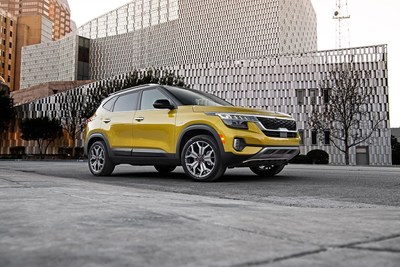
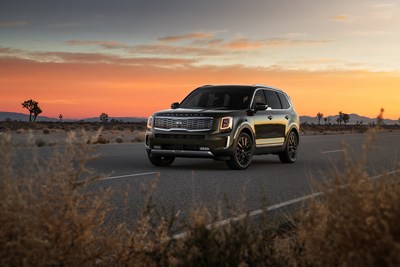
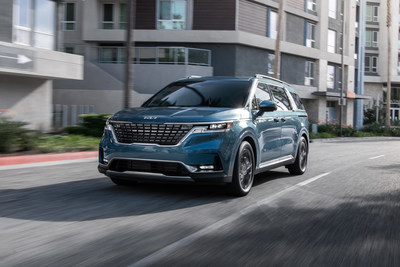
IRVINE, Calif., March 2, 2021 /PRNewswire/ — Kia Motors America today announced February sales of 48,062 units, including the first retail deliveries of the all-new 2022 Carnival MPV. Sales of light trucks have accounted for more than 60-percent of total volume for 28 consecutive months. The award-winning Telluride continues to defy industry convention with a 12-day average turn rate two years after arrival in showrooms.

IRVINE, Calif., March 2, 2021 /PRNewswire/ — Kia Motors America today announced February sales of 48,062 units, including the first retail deliveries of the all-new 2022 Carnival MPV. Sales of light trucks have accounted for more than 60-percent of total volume for 28 consecutive months. The award-winning Telluride continues to defy industry convention with a 12-day average turn rate two years after arrival in showrooms.

«February saw positive advancements for the Kia brand on multiple fronts. The pace of new Sorento SUV sales continued to increase and J.D. Power named Kia the number one mass market brand in the 2021 Vehicle Dependability Study,» said Sean Yoon, president and CEO, Kia Motors North America and Kia Motors America. «The launch activities supporting both Sorento and the all-new 2022 Kia Carnival MPV have been instrumental to Kia’s strong first quarter performance and contributed to a 2.4-percent increase in the year-to-date adjusted daily selling rate of over the same period last year. We are confident that momentum will continue with four all-new or significantly redesigned vehicle introductions scheduled for the remainder of the year.» 

About Kia Motors America
Headquartered in Irvine, California, Kia Motors America continues to top quality surveys and is recognized as one of the 100 Best Global Brands. Kia serves as the «Official Automotive Partner» of the NBA and offers a complete range of vehicles sold through a network of nearly 750 dealers in the U.S., including cars and SUVs proudly assembled in West Point, Georgia.*

For media information, including photography, visit www.kiamedia.com.  To receive custom email notifications for press releases the moment they are published, subscribe at www.kiamedia.com/us/en/newsalert.

*The Telluride, Sorento and K5 are assembled in the United States from U.S. and globally sourced parts.

MONTH OF FEBRUARY

YEAR-TO-DATE

Model

2021

2020

2021

2020

Rio

2,191

1,628

3,924

4,710

Forte

7,370

8,513

14,391

14,761

K5/Optima

6,218

5,760

11,661

11,937

Cadenza

46

192

101

389

Stinger

742

1,063

1,437

1,806

K900

14

23

34

49

Soul

4,915

5,816

10,292

11,346

Niro

1,296

1,951

2,558

3,521

Seltos

5,297

2,798

10,289

2,892

Sportage

7,033

7,934

12,946

14,675

Sorento

5,730

6,875

11,032

12,345

Telluride

6,637

6,754

13,263

11,673

Carnival/Sedona

573

1,416

1,083

2,428

Total

48,062

52,177

93,027

92,532


Cision View original content to download multimedia:http://www.prnewswire.com/news-releases/strong-february-sales-for-kia-motors-america-301238180.html

SOURCE Kia Motors America

Daqo New Energy Announces Three-Year High-Purity Polysilicon Supply Agreement with Zhonghuan Semiconductor

SHANGHAI, March 2, 2021 /PRNewswire/ — Daqo New Energy Corp. (NYSE: DQ) («Daqo New Energy», the «Company» or «we»), a leading manufacturer of high-purity polysilicon for the global solar PV industry, today announced that it has signed a three-year high-purity polysilicon supply agreement with Zhonghuan Semiconductor (SZ:002129) («Zhonghuan») for its solar wafer business. Zhonghuan is a global leading high-quality mono-crystaline solar wafer producer.

Under the supply agreement, Daqo New Energy…

SHANGHAI, March 2, 2021 /PRNewswire/ — Daqo New Energy Corp. (NYSE: DQ) («Daqo New Energy», the «Company» or «we»), a leading manufacturer of high-purity polysilicon for the global solar PV industry, today announced that it has signed a three-year high-purity polysilicon supply agreement with Zhonghuan Semiconductor (SZ:002129) («Zhonghuan») for its solar wafer business. Zhonghuan is a global leading high-quality mono-crystaline solar wafer producer.

Under the supply agreement, Daqo New Energy will provide Zhonghuan with high-purity mono-grade polysilicon in a total amount of 41,000 MT over three years from 2021 to 2023. Actual prices will be negotiated by both parties monthly according to market conditions. As part of the supply agreement, Zhonghuan will make an advance payment to Daqo New Energy.

Mr. Haoping Shen, Chief Executive Officer of Zhonghuan, commented, «We are very pleased to enter into a long-term partnership with Daqo New Energy who shares the same core values with us in terms of innovation and quality. This partnership will help us better execute our strategy as a leading solar products provider to serve the fast-growing global solar PV market.»

Mr. Longgen Zhang, Chief Executive Officer of Daqo New Energy, commented, «We are very pleased to strengthen our cooperation with Zhonghuan through this three-year polysilicon supply agreement. We will continue to expand our capacity to better address the increasing demand for high-purity polysilicon and further improve product quality to accommodate innovative solar PV technologies in future.»

About Zhonghuan Semiconductor

Tianjin Zhonghuan Semiconductor Co., Ltd.(Zhonghuan Semiconductor) is a listed company of Shenzhen Stock Exchange (stock code: 002129). Zhonghuan Semiconductor has been focused on «green, low carbon and sustainable development» and dedicated to two major industries, namely, semiconductor energy-saving and new energy industries. Company products are widely used in smart grid transmission, new energy vehicles, high-speed rail, wind power inverters, integrated circuits, consumer electronics, aerospace, solar power and other fields.

About Daqo New Energy

Daqo New Energy Corp. (NYSE: DQ) («Daqo» or the «Company») is a leading manufacturer of high-purity polysilicon for the global solar PV industry. Founded in 2007, the Company is one of the world’s lowest cost producers of high-purity polysilicon. Daqo’s highly-efficient and technically advanced manufacturing facility in China currently has a nameplate annual polysilicon production capacity of 70,000 metric tons.

For more information, please visit www.dqsolar.com

Safe Harbor Statement

This announcement contains forward-looking statements. These statements are made under the «safe harbor» provisions of the U.S. Private Securities Litigation Reform Act of 1995. These forward-looking statements can be identified by terminology such as «will,» «expects,» «anticipates,» «future,» «intends,» «plans,» «believes,» «estimates» and similar statements. The Company may also make written or oral forward-looking statements in its reports filed or furnished to the U.S. Securities and Exchange Commission, in its annual reports to shareholders, in press releases and other written materials and in oral statements made by its officers, directors or employees to third parties. Statements that are not historical facts, including statements about the Company’s beliefs and expectations, are forward-looking statements. Forward-looking statements involve inherent risks and uncertainties. A number of factors could cause actual results to differ materially from those contained in any forward-looking statement, including but not limited to the following: the demand for photovoltaic products and the development of photovoltaic technologies; global supply and demand for polysilicon; alternative technologies in cell manufacturing; the Company’s ability to significantly expand its polysilicon production capacity and output; the reduction in or elimination of government subsidies and economic incentives for solar energy applications; the Company’s ability to lower its production costs; changes in the political and regulatory environment; and the duration of COVID-19 outbreaks in China and many other countries and the impact of the outbreaks and the quarantines and travel restrictions instituted by relevant governments on economic and market conditions, including potentially weaker global demand for solar PV installations that could adversely affect the Company’s business and financial performance. Further information regarding these and other risks is included in the reports or documents the Company has filed with, or furnished to, the U.S. Securities and Exchange Commission. All information provided in this press release is as of the date hereof, and the Company undertakes no duty to update such information or any forward-looking statement, except as required under applicable law.

Cision View original content:http://www.prnewswire.com/news-releases/daqo-new-energy-announces-three-year-high-purity-polysilicon-supply-agreement-with-zhonghuan-semiconductor-301238091.html

SOURCE Daqo New Energy Corp.

European Companies On 2.7 °C Warming Path, According To CDP And Oliver Wyman

BERLIN, March 2, 2021 /PRNewswire/ — A €4 trillion mismatch is forming between bank lending that aims to be ‘Paris-aligned’ and the market for this corporate lending in Europe, according to new analysis from EU-funded non-profit CDP Europe and global management consulting firm Oliver Wyman.

<a…

BERLIN, March 2, 2021 /PRNewswire/ — A €4 trillion mismatch is forming between bank lending that aims to be ‘Paris-aligned’ and the market for this corporate lending in Europe, according to new analysis from EU-funded non-profit CDP Europe and global management consulting firm Oliver Wyman.

Running hot: accelerating Europe’s path to Paris, released today, estimates that 95% of all corporate lending in Europe comes from banks with a Paris-alignment ambition.

But under 1 in 10 European companies so far have emissions targets aligned with Paris’ well-below 2°C goal – meaning banks financing these companies are far from Paris-aligned today.2

The research is based on nearly 1,000 European companies worth around 80% of Europe’s market value disclosing data in 2020 to CDP, which runs the global environmental disclosure system, and wider market research.

The gap is starting to close. The latest corporate data shows momentum behind better target-setting among companies, with the best decarbonizing fast. 56% of companies report now having a transition plan in place – rising to over three quarters in the energy sector. Encouragingly, over 50% of European companies by market value have now joined the Science Based Targets initiative, which approves whether emissions targets are aligned with the Paris agreement.3

The best companies, in terms of decarbonization, reported total emissions reductions of 15% last year, and cut carbon intensity (emissions per revenue) by one fifth.

But wide differences exist. In the steel and electric utilities sectors, the data shows the best companies are up to 4 times as carbon efficient as the lowest performing. And just 35% of companies in the highest-impact industries are so-far disclosing data on their most important indirect – Scope 3 – emissions, which make up a minimum (and underreported) 80% of all total emissions reported. 

The report authors also modeled three potential scenarios for 2030, setting out alternative rates of acceleration in corporate target-setting. Based on this, capping warming at 1.5°C would take an 8x increase in the current ambition level of European corporates on emissions.4

The scenarios are based on CDP scores, which give an overall indication of a company’s current climate performance, and CDP temperature ratings, which assigns a temperature pathway to companies based on emissions reduction targets.

The report also points to the key role banks and investors play in achieving this target. Currently, only half of institutions assess if clients or investee companies have Paris-aligned strategies. But without more engagement, the report estimates that in a ‘modest acceleration’ scenario banks may need to adjust their lending portfolios by 2030% to meet their Paris goals.

Overall, Europe’s corporate sector is on track for 2.7 °C of global warming by the end of the century – with countries ranging from 2.3°C (Switzerland) to 3.0°C (United Kingdom, Belgium, Italy).

The new report is presented today at the CDP Europe Awards, held with the European Investment Bank on Euronews, where speakers include Angela Merkel and the European Commissioner for Financial Stability, Financial Services and the Capital Markets Union.

Maxfield Weiss, Executive Director of CDP Europe, said of the results:  

«The European corporate sector is running hot. Based on current ambition, it’s on a 2.7°C path of warming – over a degree more than climate science says we need to achieve to prevent climate change’s most catastrophic impacts. That leading corporates across many sectors are now setting ambitious targets and delivering emissions reductions is positive, and shows rapid decarbonization is doable. But with less than 1 in 10 companies having ambitious enough targets, our new data shows we need far more action from corporates and financial institutions to make good on our goals. Banks and investors have their own big ambitions: now we need them to engage companies more to raise the level of disclosure and action so we accelerate Europe’s path to Paris and to deliver the European Green Deal.»

James Davis, Partner, Financial Services and Head of Sustainable Finance Europe, Oliver Wyman, added:

«This year’s paper includes encouraging developments, with more than half of companies setting out transition plans, and many making real strides in cutting emissions. But it also shows how much we need to hasten the pace if we are to hit the Paris targets. Many of the region’s leading financial institutions have set out a big ambition to align their lending and investments with Paris and that will help create a virtuous circle – those companies who are getting ahead of the transition should find it easier to raise capital.»

The full CDP Europe Report is available for download here: www.cdp.net/europeanreport 

About CDP

CDP is a global non-profit that runs the world’s environmental disclosure system for companies, cities, states and regions. Founded in 2000 and working with over 590 investors with $110 trillion in assets, CDP pioneered using capital markets and corporate procurement to motivate companies to disclose their environmental impacts, and to reduce greenhouse gas emissions, safeguard water resources and protect forests. Over 10,000 organizations around the world disclosed data through CDP in 2020, including more than 9,600 companies worth over 50% of global market capitalization, and over 940 cities, states and regions, representing a combined population of over 2.6 billion. Fully TCFD aligned, CDP holds the largest environmental database in the world, and CDP scores are widely used to drive investment and procurement decisions towards a zero carbon, sustainable and resilient economy. CDP is a founding member of the Science Based Targets initiative, We Mean Business Coalition, The Investor Agenda and the Net Zero Asset Managers initiative. Visit cdp.net or follow us @CDP to find out more.

About Oliver Wyman

Oliver Wyman is a global leader in management consulting. With offices in 60 cities across 29 countries, Oliver Wyman combines deep industry knowledge with specialized expertise in strategy, operations, risk management, and organization transformation. The firm has more than 5,000 professionals around the world who work with clients to optimize their business, improve their operations and risk profile, and accelerate their organizational performance to seize the most attractive opportunities. Oliver Wyman is a business of Marsh & McLennan Companies [NYSE: MMC]. For more information, visit www.oliverwyman.com. Follow Oliver Wyman on Twitter @OliverWyman.

1 Based on disclosed emissions reduction target data analyzed by CDP and weighted by total emissions, using the CDP temperature ratings dataset.
2 Under 10% of companies, weighted by the amount they borrow from banks.
3 https://sciencebasedtargets.org/
4 The potential scenarios modelled suggest that to reach the 1.5°C target, a minimum of 65% of European companies would need to have targets in line with at least well-below 2 °C, and 30% would require 1.5°C targets. This compares to today’s 8% and 7% figures.

Cision View original content to download multimedia:http://www.prnewswire.com/news-releases/european-companies-on-2-7-c-warming-path-according-to-cdp-and-oliver-wyman-301238069.html

SOURCE Oliver Wyman

El nuevo informe de Alzheimer’s Association examina las actitudes raciales y étnicas acerca de la atención del alzhéimer y la demencia

CHICAGO, 2 de marzo de 2021 /PRNewswire-HISPANIC PR WIRE/ — Los resultados de dos encuestas nacionales que aparecen en el informe 2021 Alzheimer’s Disease Facts and Figures (Datos y cifras sobre la enfermedad de alzhéimer de 2021) de Alzheimer’s Association revelan que la discriminación es una barrera para la atención del alzhéimer y la demencia. Más de un tercio de los afroamericanos (36 %) y casi un quinto de los hispanoamericanos (18 %) y asiaticoamericanos (19 %) cree que la discriminación sería una barrera…

CHICAGO, 2 de marzo de 2021 /PRNewswire-HISPANIC PR WIRE/ — Los resultados de dos encuestas nacionales que aparecen en el informe 2021 Alzheimer’s Disease Facts and Figures (Datos y cifras sobre la enfermedad de alzhéimer de 2021) de Alzheimer’s Association revelan que la discriminación es una barrera para la atención del alzhéimer y la demencia. Más de un tercio de los afroamericanos (36 %) y casi un quinto de los hispanoamericanos (18 %) y asiaticoamericanos (19 %) cree que la discriminación sería una barrera para recibir atención para el alzhéimer. Además, la mitad o más de los cuidadores no blancos dicen haber sufrido discriminación al explorar los entornos de atención médica para el beneficiario que necesita su atención.
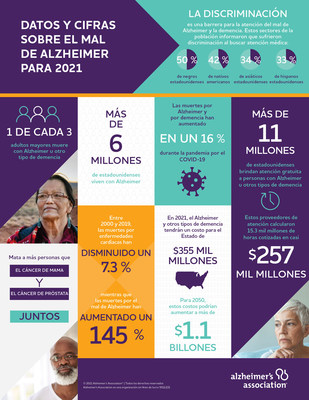
El informe Facts and Figures de 2021 ofrece una mirada en profundidad de las últimas estadísticas nacionales sobre la prevalencia, la incidencia, la mortalidad, los costos de la atención y el impacto en los cuidadores de personas con alzhéimer. Por primera vez, el informe especial adjunto, «Race, Ethnicity and Alzheimer’s in America» (Raza, origen étnico y alzhéimer en Estados Unidos), examina las perspectivas y experiencias de los asiaticoamericanos, afroamericanos, hispanos, nativos americanos y blancos con respecto a la atención del alzhéimer y la demencia.

Los hallazgos del informe revelan que las poblaciones raciales/étnicas no blancas prevén tener y tienen más barreras para acceder a la atención de la demencia y tienen menos confianza en la investigación médica y en el acceso a profesionales de la salud que comprendan sus antecedentes y experiencias étnicas y raciales. Hallazgos destacados:

  • Dos tercios de los afroamericanos (66 %) creen que tienen más dificultades para obtener una atención de excelencia para el alzhéimer u otras demencias. Del mismo modo, dos de cada cinco nativos americanos (40 %) e hispanoamericanos (39 %) creen que su propia raza o etnia tiene más dificultades para obtener atención, al igual que un tercio de los asiaticoamericanos (34 %).
  • Casi dos tercios de los afroamericanos (62 %) creen que la investigación médica está sesgada en contra de las personas de color, una opinión que comparten una cantidad importante de asiaticoamericanos (45 %), nativos americanos (40 %) e hispanoamericanos (36 %). Solo la mitad de los afroamericanos (53 %) confía en que una futura cura para el alzhéimer se compartirá de manera equitativa, independientemente de la raza, el color o la etnia.
  • Menos de la mitad de los afroamericanos (48 %) y los nativos americanos (47 %) se sienten seguros de tener acceso a proveedores que comprendan sus antecedentes y experiencias étnicas o raciales, y apenas alrededor de tres de cada cinco asiaticoamericanos (63 %) e hispanos (59 %) se sienten igual de seguros.

«A pesar de los esfuerzos continuos para abordar las disparidades de salud y atención médica para la demencia y la enfermedad de alzhéimer, los resultados de la encuesta muestran que todavía queda mucho trabajo por hacer», dijo Carl V. Hill, Ph.D., MPH., director de Diversidad, Equidad e Inclusión de Alzheimer’s Association. «Claramente, la discriminación, la falta de diversidad entre los profesionales de atención médica y la desconfianza en la investigación médica crean barreras importantes para la atención médica y exigen la atención completa del país».

No obstante, los episodios de discriminación se extienden más allá de la atención del alzhéimer y la demencia; las encuestas de Alzheimer’s Association revelan que muchos estadounidenses no blancos dicen haber experimentado discriminación en el sistema de atención médica en general. Específicamente:

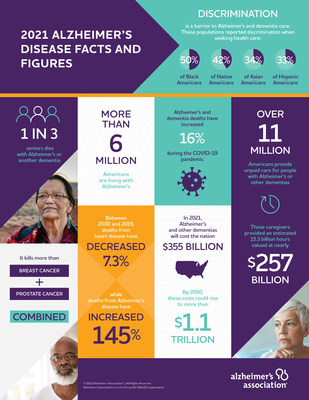
  • La mitad de los afroamericanos (50 %) informa que ha sufrido de discriminación al solicitar atención médica, al igual que más de cuatro de cada diez nativos americanos (42 %) y un tercio de los asiaticoamericanos (34 %) e hispanoamericanos (33 %).

Las experiencias y opiniones de discriminación expresadas por los encuestados en ambas encuestas también se reflejan en sus opiniones sobre la participación en ensayos clínicos.

Los afroamericanos tienen menos interés en los ensayos de investigación clínica para prevenir o retrasar la evolución del alzhéimer. Los estadounidenses blancos son más propensos a expresar interés en los ensayos (82 %), seguidos por los nativos americanos (81 %), los hispanoamericanos (78 %), los asiaticoamericanos (73 %) y, por último, los afroamericanos (67 %).

La razón que se menciona con más frecuencia para no participar en ensayos clínicos entre todos los grupos raciales/étnicos es no querer ser «conejillos de indias». Este sentimiento fue especialmente fuerte entre los afroamericanos (69 %). Además, a casi la mitad de los afroamericanos (45 %) les preocupa que los tratamientos puedan causar enfermedades. Además, tienen el doble de probabilidades que otros grupos de decir que «no confían en la investigación médica» y más del doble de probabilidades que otros grupos raciales o étnicos de decir que «es posible que no reciban un trato justo».

Como se señaló en el informe 2021 Facts and Figures (Hechos y cifras de 2021), las disparidades socioeconómicas y de salud y el racismo sistémico contribuyen a un mayor riesgo de alzhéimer y demencia en las comunidades de color. Según el informe, los afroamericanos y los hispanos de edad avanzada también son desproporcionadamente más propensos a padecer alzhéimer y otras demencias. Además, ambos grupos tienen más probabilidades de tener diagnósticos erróneos en comparación con los blancos de edad avanzada.

«Debemos seguir acelerando los esfuerzos para involucrar a más personas de poblaciones subrepresentadas en la investigación y los ensayos clínicos de la enfermedad de Alzheimer», dijo María Carrillo, Ph.D., directora científica de Alzheimer’s Association. «Si los ensayos no incluyen a participantes diversos, es imposible obtener una comprensión completa de cómo las diferencias raciales y étnicas pueden afectar el beneficio y la seguridad de los posibles tratamientos. Las futuras estructuras de ensayos clínicos y los esfuerzos de reclutamiento deben generar una mejor representación de toda la población para que todos se beneficien de los avances en la investigación del alzhéimer y la demencia».

El impacto de la COVID-19

El informe también examina el impacto devastador que la pandemia de la COVID-19 está teniendo en las personas que sufren de alzhéimer. Según el informe, hubo al menos 42,000 muertes más por alzhéimer y otras demencias en 2020 en comparación con los promedios de los cinco años anteriores, un aumento del 16 %.

El informe destaca datos preliminares y anecdóticos que indican que la pandemia de la COVID-19 también está teniendo efectos adversos en muchos cuidadores familiares. Indica que los desafíos de la prestación de servicios de cuidado relacionados con la pandemia, incluso el cierre de centros de día para adultos y la incapacidad de las familias para visitar o comunicarse con familiares en entornos de cuidados a largo plazo, han causado «angustia emocional y otros resultados negativos en los cuidadores». 

Alzheimer’s Association y representantes de más de 30 países han formado un consorcio internacional para estudiar las consecuencias a corto y largo plazo de la COVID-19 en el cerebro y el sistema nervioso de personas de diferentes edades y distintos antecedentes genéticos.

Datos y cifras sobre el alzhéimer de 2021: un vistazo

Prevalencia, incidencia y mortalidad

  • Se estima que 6.2 millones de estadounidenses de 65 años o más padecerán demencia de tipo alzhéimer en 2021.
  • Más de una de cada nueve personas (11.3 %) de 65 años o más padece demencia de tipo alzhéimer.
  • Dos tercios de los estadounidenses mayores de 65 años con alzhéimer (3.8 millones) son mujeres.
  • Las muertes por alzhéimer entre 2000 y 2019 se han duplicado y superado ese número, y han aumentado un 145 %.
  • Uno de cada tres adultos mayores muere con alzhéimer u otro tipo de demencia.

Cuidado

  • En 2020, más de 11 millones de cuidadores de personas con alzhéimer u otras demencias proporcionaron aproximadamente 15,300 millones de horas de atención no remunerada, una contribución a la nación valuada en $257,000 millones. 
  • Casi la mitad de los cuidadores (48 %) que brindan ayuda a un adulto mayor lo hacen por alguien que padece alzhéimer u otro tipo de demencia. 
  • Aproximadamente dos tercios de los cuidadores son mujeres y un tercio de los cuidadores de personas con demencia son hijas de esas personas.
  • El 41 % de los cuidadores tienen un ingreso familiar de $50,000 o menos.

Costo de la atención

  • En 2021, los pagos totales para todas las personas con alzhéimer u otras demencias se estiman en $355,000 millones (sin incluir el cuidado no remunerado).
  • Se espera que Medicare y Medicaid cubran $239,000 millones o el 67 % de los pagos totales de atención médica y atención a largo plazo para las personas con alzhéimer u otras demencias. Se espera que los gastos de bolsillo sean de $76,000 millones. 
  • Se prevé que el costo total de la atención médica, el cuidado prolongado y el cuidado paliativo para personas con alzhéimer y otros tipos de demencia aumente a más de $1.1 billones en 2050.
  • El costo total de la atención de por vida de una persona que padece demencia se estima en $373,527

A continuación, se incluyen datos adicionales del informe. Puede acceder al texto completo del informe 2021 Alzheimer’s Disease Facts and Figures, incluido el informe especial adjunto «Race, Ethnicity and Alzheimer’s in America» en alz.org/facts. El informe también aparecerá en la edición de marzo de 2021 de Alzheimer’s & Dementia: The Journal of the Alzheimer’s Association.

Otros hallazgos clave del informe «Race, Ethnicity and Alzheimer’s in America»:

  • La preocupación por el desarrollo de alzhéimer es menor entre los nativos americanos (25 %), los afroamericanos (35 %) y los hispanos (41 %), especialmente en comparación con los blancos (48 %).
  • Más de un tercio de los nativos americanos (35 %) y casi tres de cada diez hispanos (28 %) no creen que vivirán lo suficiente para desarrollar alzhéimer u otra demencia.
  • Más de la mitad de los estadounidenses que no son blancos creen que la pérdida significativa de memoria o capacidades cognitivas es «una parte normal del envejecimiento».
  • Los hispanos, afroamericanos y nativos americanos tienen el doble de probabilidades que los blancos de decir que no verán a un médico si experimentan problemas de memoria o de razonamiento.
  • Uno de cada cinco afroamericanos (21 %) e hispanoamericanos (20 %) dice que se sentiría ofendido si un médico sugiriera una evaluación cognitiva.
  • Casi dos de cada tres cuidadores (64 %) en todos los grupos dicen que cuidar es estresante, pero casi todos (92 %) dicen que también es gratificante.

Estadísticas actualizadas del alzhéimer

El informe Facts and Figures de Alzheimer’s Association ofrece una mirada anual de las últimas estadísticas nacionales e información sobre la prevalencia, incidencia, la mortalidad y la morbilidad del alzhéimer, así como también de los costos de atención y cuidado de personas, tanto a nivel nacional como por estado.  

Acerca del informe 2021 Alzheimer’s Disease Facts and Figures 

El informe 2021 Alzheimer’s Disease Facts and Figures de Alzheimer’s Association es una compilación exhaustiva de estadísticas nacionales e información sobre la enfermedad de alzhéimer y las demencias relacionadas. El informe comunica el impacto del alzhéimer en las personas, los familiares, el Gobierno y el sistema de salud nacional. Desde su publicación inicial en 2007, el informe se ha convertido en una fuente preeminente que abarca el amplio espectro de problemas que derivan del alzhéimer. El informe Facts and Figures es una publicación oficial de Alzheimer’s Association.

Acerca de la encuesta

Versta Research realizó dos encuestas en nombre de Alzheimer’s Association: (1) adultos estadounidenses y (2) cuidadores actuales o recientes de adultos de 50 años o más con problemas cognitivos. Se preguntó a los encuestados sobre el acceso a la atención médica y los servicios de apoyo, la confianza en los proveedores y el sistema de atención médica, la participación en ensayos clínicos e investigaciones y las experiencias de los cuidadores. Las encuestas se realizaron del 26 de octubre al 11 de noviembre de 2020. Los datos fueron recopilados por NORC en la Universidad de Chicago a través del panel AmeriSpeak®. AmeriSpeak es un panel basado en probabilidades de todos los hogares estadounidenses. 

La encuesta incluyó a 945 encuestados blancos. Los sobremuestreos de hispanos (n=541), afroamericanos (n=515) y asiaticoamericanos (n=412) se ponderaron contra sus proporciones poblacionales reales para obtener análisis e informes estadísticos. Para la inclusión completa de los nativos americanos, se administró la misma encuesta a una muestra adicional de 406 nativos americanos reclutados a través de paneles en línea (no probabilísticos) con muestreo estratificado y datos ponderados por género, edad, ingresos y educación para alinearlos con los datos de la Oficina del Censo de los EE. UU. Las encuestas se ofrecieron tanto en inglés como en español. Para obtener detalles completos sobre la metodología de la encuesta, consulte la página 73 del informe.

Acerca de Alzheimer’s Association

Alzheimer’s Association lidera el camino para acabar con el alzhéimer y todas las demás demencias, acelera la investigación global, impulsa la reducción de riesgos y la detección temprana, y maximiza la atención y el apoyo de calidad. Nuestra visión es un mundo sin alzhéimer ni todas las demás demencias. Para obtener más información, visite alz.org o llame a la línea de ayuda gratuita las 24 horas del día, los 7 días de la semana: 800.272.3900.

Alzheimer's Association Logo (PRNewsfoto/Alzheimer's Association)

Foto – https://mma.prnewswire.com/media/1447506/2021_FF_Infographic_Spanish_Infographic.jpg
Logo – https://mma.prnewswire.com/media/479350/Alzheimer_s_Association_Logo.jpg

FUENTE Alzheimer’s Association
New Alzheimer’s Association Report Examines Racial and Ethnic Attitudes on Alzheimer’s and Dementia Care

CHICAGO, March 2, 2021 /PRNewswire-HISPANIC PR WIRE/ — Findings from two national surveys appearing in the Alzheimer’s Association 2021 Alzheimer’s Disease Facts and Figures report reveal that discrimination is a barrier to Alzheimer’s and dementia care. More than one-third of Black Americans (36%), and nearly one-fifth of Hispanic Americans (18%) and Asian Americans (19%), believes discrimination would be a barrier to receiving Alzheimer’s care. In addition, half or more of non-White…

CHICAGO, March 2, 2021 /PRNewswire-HISPANIC PR WIRE/ — Findings from two national surveys appearing in the Alzheimer’s Association 2021 Alzheimer’s Disease Facts and Figures report reveal that discrimination is a barrier to Alzheimer’s and dementia care. More than one-third of Black Americans (36%), and nearly one-fifth of Hispanic Americans (18%) and Asian Americans (19%), believes discrimination would be a barrier to receiving Alzheimer’s care. In addition, half or more of non-White caregivers say they have experienced discrimination when navigating health care settings for their care recipient.

The 2021 Facts and Figures report provides an in-depth look at the latest national statistics on Alzheimer’s prevalence, incidence, mortality, costs of care and impact on caregivers. For the first time, the accompanying special report, «Race, Ethnicity and Alzheimer’s» examines perspectives and experiences of Asian, Black, Hispanic, Native and White Americans in regard to Alzheimer’s and dementia care.

Findings in the report, reveal that non-White racial/ethnic populations expect and experience more barriers when accessing dementia care, have less trust in medical research and are less confident that they have access to health professionals who understand their ethnic and racial background and experiences. Among the findings:

  • Two-thirds of Black Americans (66%) believe it is harder for them to get excellent care for Alzheimer’s disease or other dementias. Likewise, 2 in 5 Native Americans (40%) and Hispanic Americans (39%) believe their own race or ethnicity makes it harder to get care, as do one-third of Asian Americans (34%).
  • Nearly two-thirds of Black Americans (62%) believe that medical research is biased against people of color — a view shared by substantial numbers of Asian Americans (45%), Native Americans (40%) and Hispanic Americans (36%) as well. Only half of Black Americans (53%) trust a future cure for Alzheimer’s will be shared equally regardless of race, color or ethnicity.
  • Fewer than half of Black (48%) and Native Americans (47%) feel confident they have access to providers who understand their ethnic or racial background and experiences, and only about 3 in 5 Asian Americans (63%) and Hispanics (59%) likewise feel confident.

«Despite ongoing efforts to address health and health care disparities in Alzheimer’s and dementia care, survey results show there is still a lot of work to be done,» said Carl V. Hill, Ph.D., MPH. chief diversity, equity and inclusion officer, Alzheimer’s Association. «Clearly, discrimination, lack of diversity among health care professionals and mistrust in medical research create significant barriers to care and demand the country’s full attention.»

Episodes of discrimination, however, extend beyond Alzheimer’s and dementia care, the Alzheimer’s Association surveys found that many non-White Americans say they have experienced discrimination in the broader health care system. Specifically:

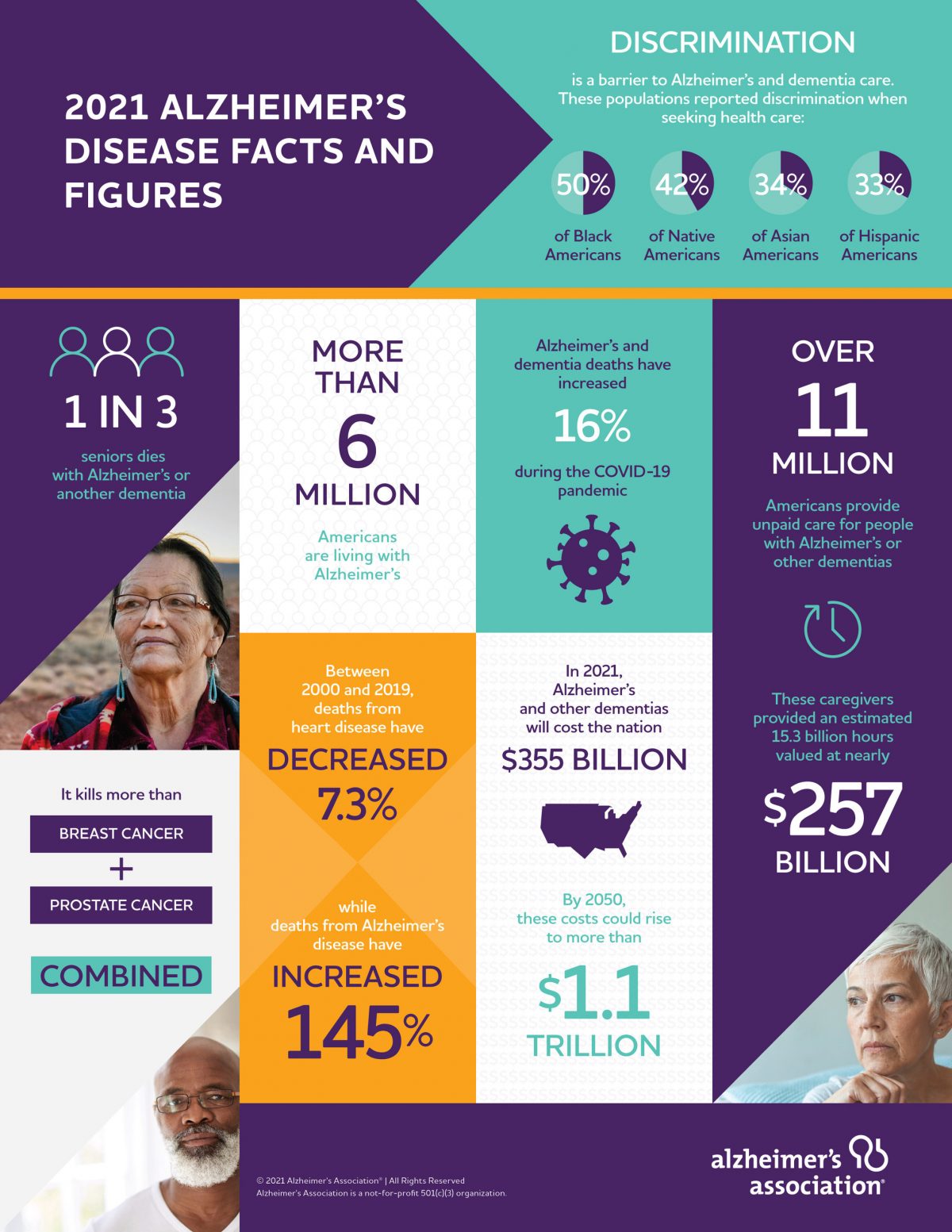
  • Half of Black Americans (50%) report they’ve experienced discrimination when seeking health care; more than 4 in 10 Native Americans (42%) and one-third of Asian Americans (34%) and Hispanic Americans (33%) likewise report having experienced health care discrimination.

The experiences and views of discrimination expressed by respondents in both surveys are also reflected in their views on clinical trial participation.

Black Americans have less interest in clinical research trials to prevent or slow the progression of Alzheimer’s disease. White Americans are most likely to express interest (82%), followed by Native Americans (81%), Hispanic Americans (78%), Asian Americans (73%) and lastly, Black Americans (67%).

The most common reason cited for not participating in clinical trials among all racial/ethnic groups is not wanting to be a «guinea pig.» This sentiment was especially strong among Black Americans (69%). In addition almost half of Black Americans (45%) worry that treatments might cause sickness. They are also twice as likely as other groups to say they «don’t trust medical research.» And they are more than twice as likely as other racial or ethnic groups to say they «might not be treated fairly.»

As noted in the 2021 Facts and Figures report, health and socioeconomic disparities and systemic racism contribute to increased Alzheimer’s and dementia risk in communities of color. According to the report, older Blacks and Hispanics are also disproportionately more likely to have Alzheimer’s and other dementias. In addition, both groups are more likely to have missed diagnoses than older Whites.

«We must continue to accelerate efforts to engage more people from underrepresented populations in Alzheimer’s disease research and clinical trials,’ said Maria Carrillo, Ph.D., chief science officer, Alzheimer’s Association. «If trials do not include diverse participants, it is impossible to get a complete understanding of how racial and ethnic differences may affect the benefit and safety of potential treatments. Future clinical trial structures and recruitment efforts must lead to a better representation of the entire population, so everyone benefits from advances in Alzheimer’s and dementia research.»

Impact of COVID-19

The report also examines the devastating impact the COVID-19 pandemic is having on people living with Alzheimer’s. According to the report, there were at least 42,000 more deaths from Alzheimer’s and other dementias in 2020 compared with averages over the previous five years — a 16% increase.

The report highlights preliminary and anecdotal data indicating the COVID-19 pandemic is also having adverse effects on many family caregivers. It notes that pandemic-related caregiving challenges, including the shutdown of adult day care centers and the inability of families to visit or communicate with relatives in long-term care settings have caused «emotional distress and other negative outcomes among caregivers.» 

The Alzheimer’s Association and representatives from more than 30 countries have formed an international consortium to study the short- and long-term consequences of COVID-19 on the brain and nervous system in people at different ages, and from different genetic backgrounds.

2021 Alzheimer’s Disease Facts and Figures: At a Glance

Prevalence, Incidence and Mortality

  • An estimated 6.2 million Americans age 65 and older are living with Alzheimer’s dementia in 2021.
  • More than 1 in 9 people (11.3%) age 65 and older has Alzheimer’s dementia.
  • Two-thirds of Americans over age 65 with Alzheimer’s dementia (3.8 million) are women.
  • Deaths due to Alzheimer’s between 2000 and 2019, has more than doubled, increasing 145%.
  • 1 in 3 seniors dies with Alzheimer’s or another dementia.

Caregiving

  • In 2020, more than 11 million caregivers of people with Alzheimer’s or other dementias provided an estimated 15.3 billion hours of unpaid care, a contribution to the nation valued at $257 billion.
  • Nearly half of all caregivers (48%) who provide help to older adults do so for someone with Alzheimer’s or another dementia.
  • Approximately two-thirds of caregivers are women, and one-third of dementia caregivers are daughters.
  • Forty-one percent of caregivers have a household income of $50,000 or less.

Cost of Care

  • In 2021, total payments for all individuals with Alzheimer’s or other dementias are estimated at $355 billion (not including unpaid caregiving).
  • Medicare and Medicaid are expected to cover $239 billion or 67% of the total health care and long-term care payments for people with Alzheimer’s or other dementias. Out-of-pocket spending is expected to be $76 billion.
  • Total payments for health care, long-term care and hospice care for people with Alzheimer’s and other dementias are projected to increase to more than $1.1 trillion in 2050.
  • The total lifetime cost of care for someone with dementia is estimated at $373,527.

Additional data from the report is included below. Full text of the 2021 Alzheimer’s Disease Facts and Figures report, including the accompanying special report, «Race, Ethnicity and Alzheimer’s in America,» can be viewed at alz.org/facts. The report will also appear in the March 2021 issue of Alzheimer’s & Dementia: The Journal of the Alzheimer’s Association.

Other Key Findings from «Race, Ethnicity and Alzheimer’s in America:»

  • Concern about developing Alzheimer’s is lower among Native Americans (25%), Blacks (35%) and Hispanics (41%), especially when compared with Whites (48%).
  • More than one-third of Native Americans (35%) and nearly 3 in 10 Hispanics (28%) do not believe they will live long enough to develop Alzheimer’s or another dementia.
  • More than half of non-White Americans believe significant loss of memory or cognitive abilities is «a normal part of aging.»
  • Hispanic, Black and Native Americans are twice as likely as Whites to say they would not see a doctor if experiencing thinking or memory problems.
  • One in 5 Black (21%) and Hispanic Americans (20%) say they would feel insulted if a doctor suggested a cognitive assessment.
  • Nearly 2 in 3 caregivers (64%) across all groups say that caregiving is stressful, but nearly all (92%) say caregiving is rewarding as well.

Updated Alzheimer’s Statistics

The Alzheimer’s Association Facts and Figures report also provides an annual look at the latest national statistics and information on Alzheimer’s prevalence, incidence, mortality and morbidity, costs of care and caregiving, both nationally and state-by-state.  

About 2021 Alzheimer’s Disease Facts and Figures 

The Alzheimer’s Association 2021 Alzheimer’s Disease Facts and Figures report is a comprehensive compilation of national statistics and information on Alzheimer’s disease and related dementias. The report conveys the impact of Alzheimer’s on individuals, families, government and the nation’s health care system. Since its 2007 inaugural release, the report has become the preeminent source covering the broad spectrum of Alzheimer’s issues. The Facts and Figures report is an official publication of the Alzheimer’s Association.

About the Survey

Versta Research conducted two surveys on behalf of the Alzheimer’s Association: (1) U.S. adults and (2) current or recent caregivers of adults age 50 or older with cognitive issues. Respondents were asked about access to care and support services, trust in providers and the health care system, participation in clinical trials and research, and caregiver experiences. Surveys were conducted October 26 – November 11, 2020. Data was collected by NORC at the University of Chicago via the AmeriSpeak® panel. AmeriSpeak is a probability-based panel of all U.S. households. 

The survey included 945 White respondents. Oversamples of Hispanic (n=541), Black (n=515) and Asian Americans (n=412) were weighted back to their true population proportions for statistical analysis and reporting. For full inclusion of Native Americans, the same survey was administered to an additional sample of 406 Native Americans recruited through online (non-probability) panels with sampling stratified and data weighted on gender, age, income and education to match U.S. Census Bureau data. The surveys were offered in both English and Spanish. For complete details regarding survey methodology, see page 73 of the report.

About the Alzheimer’s Association

The Alzheimer’s Association leads the way to end Alzheimer’s and all other dementia — by accelerating global research, driving risk reduction and early detection, and maximizing quality care and support. Our vision is a world without Alzheimer’s and all other dementia. For more information, visit alz.org or call the 24/7 Helpline at 800.272.3900.

Alzheimer's Association Logo

Photo – https://mma.prnewswire.com/media/1446945/2021_FF_English_Infographic.jpg
Logo – https://mma.prnewswire.com/media/479350/Alzheimer_s_Association_Logo.jpg  

SOURCE Alzheimer’s Association

New Alzheimer’s Association Report Examines Racial and Ethnic Attitudes on Alzheimer’s and Dementia Care

CHICAGO, March 2, 2021 /PRNewswire/ — Findings from two national surveys appearing in the Alzheimer’s Association 2021 Alzheimer’s Disease Facts and Figures report reveal that discrimination is a barrier to Alzheimer’s and dementia care. More than one-third of Black Americans (36%), and nearly one-fifth of Hispanic Americans (18%) and Asian Americans (19%), believes discrimination would be a barrier to receiving Alzheimer’s care. In addition, half or more of non-White caregivers say they have…

CHICAGO, March 2, 2021 /PRNewswire/ — Findings from two national surveys appearing in the Alzheimer’s Association 2021 Alzheimer’s Disease Facts and Figures report reveal that discrimination is a barrier to Alzheimer’s and dementia care. More than one-third of Black Americans (36%), and nearly one-fifth of Hispanic Americans (18%) and Asian Americans (19%), believes discrimination would be a barrier to receiving Alzheimer’s care. In addition, half or more of non-White caregivers say they have experienced discrimination when navigating health care settings for their care recipient.

The 2021 Facts and Figures report provides an in-depth look at the latest national statistics on Alzheimer’s prevalence, incidence, mortality, costs of care and impact on caregivers. For the first time, the accompanying special report, «Race, Ethnicity and Alzheimer’s» examines perspectives and experiences of Asian, Black, Hispanic, Native and White Americans in regard to Alzheimer’s and dementia care.

Findings in the report, reveal that non-White racial/ethnic populations expect and experience more barriers when accessing dementia care, have less trust in medical research and are less confident that they have access to health professionals who understand their ethnic and racial background and experiences. Among the findings:

  • Two-thirds of Black Americans (66%) believe it is harder for them to get excellent care for Alzheimer’s disease or other dementias. Likewise, 2 in 5 Native Americans (40%) and Hispanic Americans (39%) believe their own race or ethnicity makes it harder to get care, as do one-third of Asian Americans (34%).
  • Nearly two-thirds of Black Americans (62%) believe that medical research is biased against people of color — a view shared by substantial numbers of Asian Americans (45%), Native Americans (40%) and Hispanic Americans (36%) as well. Only half of Black Americans (53%) trust a future cure for Alzheimer’s will be shared equally regardless of race, color or ethnicity.
  • Fewer than half of Black (48%) and Native Americans (47%) feel confident they have access to providers who understand their ethnic or racial background and experiences, and only about 3 in 5 Asian Americans (63%) and Hispanics (59%) likewise feel confident.

«Despite ongoing efforts to address health and health care disparities in Alzheimer’s and dementia care, survey results show there is still a lot of work to be done,» said Carl V. Hill, Ph.D., MPH. chief diversity, equity and inclusion officer, Alzheimer’s Association. «Clearly, discrimination, lack of diversity among health care professionals and mistrust in medical research create significant barriers to care and demand the country’s full attention.»

Episodes of discrimination, however, extend beyond Alzheimer’s and dementia care, the Alzheimer’s Association surveys found that many non-White Americans say they have experienced discrimination in the broader health care system. Specifically:

  • Half of Black Americans (50%) report they’ve experienced discrimination when seeking health care; more than 4 in 10 Native Americans (42%) and one-third of Asian Americans (34%) and Hispanic Americans (33%) likewise report having experienced health care discrimination.

The experiences and views of discrimination expressed by respondents in both surveys are also reflected in their views on clinical trial participation.

Black Americans have less interest in clinical research trials to prevent or slow the progression of Alzheimer’s disease. White Americans are most likely to express interest (82%), followed by Native Americans (81%), Hispanic Americans (78%), Asian Americans (73%) and lastly, Black Americans (67%).

The most common reason cited for not participating in clinical trials among all racial/ethnic groups is not wanting to be a «guinea pig.» This sentiment was especially strong among Black Americans (69%). In addition almost half of Black Americans (45%) worry that treatments might cause sickness. They are also twice as likely as other groups to say they «don’t trust medical research.» And they are more than twice as likely as other racial or ethnic groups to say they «might not be treated fairly.»

As noted in the 2021 Facts and Figures report, health and socioeconomic disparities and systemic racism contribute to increased Alzheimer’s and dementia risk in communities of color. According to the report, older Blacks and Hispanics are also disproportionately more likely to have Alzheimer’s and other dementias. In addition, both groups are more likely to have missed diagnoses than older Whites.

«We must continue to accelerate efforts to engage more people from underrepresented populations in Alzheimer’s disease research and clinical trials,’ said Maria Carrillo, Ph.D., chief science officer, Alzheimer’s Association. «If trials do not include diverse participants, it is impossible to get a complete understanding of how racial and ethnic differences may affect the benefit and safety of potential treatments. Future clinical trial structures and recruitment efforts must lead to a better representation of the entire population, so everyone benefits from advances in Alzheimer’s and dementia research.»

Impact of COVID-19

The report also examines the devastating impact the COVID-19 pandemic is having on people living with Alzheimer’s. According to the report, there were at least 42,000 more deaths from Alzheimer’s and other dementias in 2020 compared with averages over the previous five years — a 16% increase.

The report highlights preliminary and anecdotal data indicating the COVID-19 pandemic is also having adverse effects on many family caregivers. It notes that pandemic-related caregiving challenges, including the shutdown of adult day care centers and the inability of families to visit or communicate with relatives in long-term care settings have caused «emotional distress and other negative outcomes among caregivers.» 

The Alzheimer’s Association and representatives from more than 30 countries have formed an international consortium to study the short- and long-term consequences of COVID-19 on the brain and nervous system in people at different ages, and from different genetic backgrounds.

2021 Alzheimer’s Disease Facts and Figures: At a Glance

Prevalence, Incidence and Mortality

  • An estimated 6.2 million Americans age 65 and older are living with Alzheimer’s dementia in 2021.
  • More than 1 in 9 people (11.3%) age 65 and older has Alzheimer’s dementia.
  • Two-thirds of Americans over age 65 with Alzheimer’s dementia (3.8 million) are women.
  • Deaths due to Alzheimer’s between 2000 and 2019, has more than doubled, increasing 145%.
  • 1 in 3 seniors dies with Alzheimer’s or another dementia.

Caregiving

  • In 2020, more than 11 million caregivers of people with Alzheimer’s or other dementias provided an estimated 15.3 billion hours of unpaid care, a contribution to the nation valued at $257 billion.
  • Nearly half of all caregivers (48%) who provide help to older adults do so for someone with Alzheimer’s or another dementia.
  • Approximately two-thirds of caregivers are women, and one-third of dementia caregivers are daughters.
  • Forty-one percent of caregivers have a household income of $50,000 or less.

Cost of Care

  • In 2021, total payments for all individuals with Alzheimer’s or other dementias are estimated at $355 billion (not including unpaid caregiving).
  • Medicare and Medicaid are expected to cover $239 billion or 67% of the total health care and long-term care payments for people with Alzheimer’s or other dementias. Out-of-pocket spending is expected to be $76 billion.
  • Total payments for health care, long-term care and hospice care for people with Alzheimer’s and other dementias are projected to increase to more than $1.1 trillion in 2050.
  • The total lifetime cost of care for someone with dementia is estimated at $373,527.

Additional data from the report is included below. Full text of the 2021 Alzheimer’s Disease Facts and Figures report, including the accompanying special report, «Race, Ethnicity and Alzheimer’s in America,» can be viewed at alz.org/facts. The report will also appear in the March 2021 issue of Alzheimer’s & Dementia: The Journal of the Alzheimer’s Association.

Other Key Findings from «Race, Ethnicity and Alzheimer’s in America:»

  • Concern about developing Alzheimer’s is lower among Native Americans (25%), Blacks (35%) and Hispanics (41%), especially when compared with Whites (48%).
  • More than one-third of Native Americans (35%) and nearly 3 in 10 Hispanics (28%) do not believe they will live long enough to develop Alzheimer’s or another dementia.
  • More than half of non-White Americans believe significant loss of memory or cognitive abilities is «a normal part of aging.»
  • Hispanic, Black and Native Americans are twice as likely as Whites to say they would not see a doctor if experiencing thinking or memory problems.
  • One in 5 Black (21%) and Hispanic Americans (20%) say they would feel insulted if a doctor suggested a cognitive assessment.
  • Nearly 2 in 3 caregivers (64%) across all groups say that caregiving is stressful, but nearly all (92%) say caregiving is rewarding as well.

Updated Alzheimer’s Statistics

The Alzheimer’s Association Facts and Figures report also provides an annual look at the latest national statistics and information on Alzheimer’s prevalence, incidence, mortality and morbidity, costs of care and caregiving, both nationally and state-by-state.  

About 2021 Alzheimer’s Disease Facts and Figures 

The Alzheimer’s Association 2021 Alzheimer’s Disease Facts and Figures report is a comprehensive compilation of national statistics and information on Alzheimer’s disease and related dementias. The report conveys the impact of Alzheimer’s on individuals, families, government and the nation’s health care system. Since its 2007 inaugural release, the report has become the preeminent source covering the broad spectrum of Alzheimer’s issues. The Facts and Figures report is an official publication of the Alzheimer’s Association.

About the Survey

Versta Research conducted two surveys on behalf of the Alzheimer’s Association: (1) U.S. adults and (2) current or recent caregivers of adults age 50 or older with cognitive issues. Respondents were asked about access to care and support services, trust in providers and the health care system, participation in clinical trials and research, and caregiver experiences. Surveys were conducted October 26 – November 11, 2020. Data was collected by NORC at the University of Chicago via the AmeriSpeak® panel. AmeriSpeak is a probability-based panel of all U.S. households. 

The survey included 945 White respondents. Oversamples of Hispanic (n=541), Black (n=515) and Asian Americans (n=412) were weighted back to their true population proportions for statistical analysis and reporting. For full inclusion of Native Americans, the same survey was administered to an additional sample of 406 Native Americans recruited through online (non-probability) panels with sampling stratified and data weighted on gender, age, income and education to match U.S. Census Bureau data. The surveys were offered in both English and Spanish. For complete details regarding survey methodology, see page 73 of the report.

About the Alzheimer’s Association

The Alzheimer’s Association leads the way to end Alzheimer’s and all other dementia — by accelerating global research, driving risk reduction and early detection, and maximizing quality care and support. Our vision is a world without Alzheimer’s and all other dementia. For more information, visit alz.org or call the 24/7 Helpline at 800.272.3900.


Cision View original content to download multimedia:http://www.prnewswire.com/news-releases/new-alzheimers-association-report-examines-racial-and-ethnic-attitudes-on-alzheimers-and-dementia-care-301238072.html

SOURCE Alzheimer’s Association

All pure electric Volvo models to be available online only

GOTHENBURG, Sweden , March 2, 2021 /PRNewswire/ — Volvo Cars is fundamentally changing how and where to meet its customers, and will transform the current wholesale model by moving online and with strong customer relationships.

<a href="https://mma.prnewswire.com/media/1446756/pr_phone_2A_unsplash.html"…

GOTHENBURG, Sweden , March 2, 2021 /PRNewswire/ — Volvo Cars is fundamentally changing how and where to meet its customers, and will transform the current wholesale model by moving online and with strong customer relationships.

It aims to be a fully electric car company globally by 2030 and will launch a completely new family of electric cars in coming years – all of which will be available online only.

As part of its new commercial strategy, Volvo Cars will invest heavily in its online sales channels, radically reduce complexity in its product offer, and with transparent and set pricing models.

Combined with online sales, Volvo Cars will focus on a complete convenient customer offering, all under the Care by Volvo name.

«The future of Volvo Cars is defined by three pillars: electric, online and growth,» says Lex Kerssemakers, head of global commercial operations. «We want to offer our customers peace of mind and a care-free way of having a Volvo, by taking away complexity while getting and driving the car. Simplification and convenience are key to everything we do.»

The strategy is focused on the fastest-growing segment in the global car industry: the premium electric market. Volvo Cars is committed to becoming a leader in this segment and will focus on developing electric cars only going forward.

While Volvo Cars is investing heavily in online sales platforms, it will build stronger customer relationships together with its retail partners. They remain a crucial part of the customer experience and will continue to be responsible for a variety of important services such as selling,preparing, delivering and servicing cars.

«Online and off-line need to be fully and seamlessly integrated,» added Lex Kerssemakers. «Wherever the customer is in their journey – online, in a showroom, in a Volvo Studio, or driving the car – the customer experience needs to be top-notch.»

Care by Volvo, until recently known as the name for Volvo Cars’ subscription service, will be expanded into a broader customer offer aimed at increasing overall convenience.

When buying an electric Volvo online, it will come with a convenient care package that includes items such as service, warranty, roadside assistance, as well as insurance where available and home charging options.

On its flagship online store, volvocars.com, the company will radically simplify the process for, and reduce the number of steps involved in, signing up for an electric Volvo.

Customers will be able to choose from attractive pre-configured electric Volvos that are ready for simple and convenient ordering and quick delivery.

Further convenience and simplification comes through transparent and set pricing models. This eliminates the need for negotiations, increases transparency and builds trust.

Volvo Car Group in 2020
For the 2020 financial year, Volvo Car Group recorded an operating profit of 8.5 BSEK (14.3 BSEK in 2019). Revenue over the period amounted to 262.8 BSEK (274.1 BSEK). For the full year of 2020, global sales reached 661,713 cars (705,452), a decline of 6.2 per cent compared to 2019.

About Volvo Car Group
Volvo Cars was founded in 1927. Today, it is one of the most well-known and respected car brands in the world with sales of 661,713 cars in 2020 in about 100 countries. Volvo Cars has been under the ownership of the Zhejiang Geely Holding since 2010.

As of December 2020, Volvo Cars employed approximately 40,000 (41,500) full-time employees. Volvo Cars head office, product development, marketing and administration functions are mainly located in Gothenburg, Sweden. Volvo Cars head office for APAC is located in Shanghai. The company’s main car production plants are located in Gothenburg (Sweden), Ghent (Belgium), South Carolina (US), Chengdu and Daqing (China), while engines are manufactured in Skövde (Sweden) and Zhangjiakou (China) and body components in Olofström (Sweden).

Under its new company purpose, Volvo Cars aims to provide customers with the Freedom to Move in a personal, sustainable and safe way. This purpose is reflected into a number of business ambitions: for example, by the middle of this decade it aims for half of its global sales to be fully electric cars and to establish five million direct consumer relationships. Volvo Cars is also committed to an ongoing reduction of its carbon footprint, with the ambition to be a climate-neutral company by 2040.

For more info, please contact:
Volvo Cars Media Relations
Phone: +46 031-596525
media@volvocars.com

Cision View original content to download multimedia:http://www.prnewswire.com/news-releases/all-pure-electric-volvo-models-to-be-available-online-only-301237904.html

SOURCE Volvo Cars

Volvo Cars to be fully electric by 2030

GOTHENBURG, Sweden, March 2, 2021 /PRNewswire/ — Volvo Cars is committed to becoming a leader in the fast-growing premium electric car market and plans to become a fully electric car company by 2030.

GOTHENBURG, Sweden, March 2, 2021 /PRNewswire/ — Volvo Cars is committed to becoming a leader in the fast-growing premium electric car market and plans to become a fully electric car company by 2030.

By then, the company intends to only sell fully electric cars and phase out any car in its global portfolio with an internal combustion engine, including hybrids.

The company’s transition towards becoming a fully electric car maker is part of its ambitious climate plan, which seeks to consistently reduce the life cycle carbon footprint per car through concrete action.

Its decision also builds on the expectation that legislation as well as a rapid expansion of accessible high quality charging infrastructure will accelerate consumer acceptance of fully electric cars.

Volvo Cars’ move towards full electrification comes together with an increased focus on online sales and a more complete, attractive and transparent consumer offer under the name Care by Volvo. All fully electric models will be available online only.

The 2030 ambition represents an acceleration of Volvo Cars’ electrification strategy, driven by strong demand for its electrified cars in recent years and a firm conviction that the market for combustion engine cars is a shrinking one.

«To remain successful, we need profitable growth. So instead of investing in a shrinking business, we choose to invest in the future – electric and online,» said Håkan Samuelsson, chief executive. «We are fully focused on becoming a leader in the fast-growing premium electric segment.»

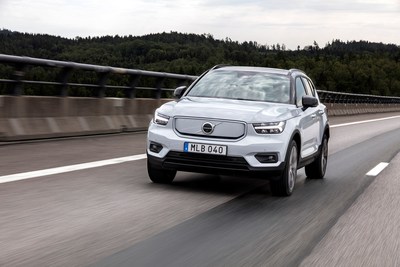
Volvo Cars launched its first fully electric car, the XC40 Recharge, in markets around the globe last year. Later today the company will reveal its second fully electric car, a new model in the 40 Series.

In coming years Volvo Cars will roll out several additional electric models, with more to follow. Already by 2025, it aims for 50 per cent of its global sales to consist of fully electric cars, with the rest hybrids. By 2030, every car it sells should be fully electric.

«There is no long-term future for cars with an internal combustion engine,» said Henrik Green, chief technology officer. «We are firmly committed to becoming an electric-only car maker and the transition should happen by 2030. It will allow us to meet the expectations of our customers and be a part of the solution when it comes to fighting climate change.»

Volvo Car Group in 2020
For the 2020 financial year, Volvo Car Group recorded an operating profit of 8.5 BSEK (14.3 BSEK in 2019). Revenue over the period amounted to 262.8 BSEK (274.1 BSEK). For the full year of 2020, global sales reached 661,713 cars (705,452), a decline of 6.2 per cent compared to 2019.

About Volvo Car Group
Volvo Cars was founded in 1927. Today, it is one of the most well-known and respected car brands in the world with sales of 661,713 cars in 2020 in about 100 countries. Volvo Cars has been under the ownership of the Zhejiang Geely Holding since 2010.

As of December 2020, Volvo Cars employed approximately 40,000 (41,500) full-time employees. Volvo Cars head office, product development, marketing and administration functions are mainly located in Gothenburg, Sweden. Volvo Cars head office for APAC is located in Shanghai. The company’s main car production plants are located in Gothenburg (Sweden), Ghent (Belgium), South Carolina (US), Chengdu and Daqing (China), while engines are manufactured in Skövde (Sweden) and Zhangjiakou (China) and body components in Olofström (Sweden).

Under its new company purpose, Volvo Cars aims to provide customers with the Freedom to Move in a personal, sustainable and safe way. This purpose is reflected into a number of business ambitions: for example, by the middle of this decade it aims for half of its global sales to be fully electric cars and to establish five million direct consumer relationships. Volvo Cars is also committed to an ongoing reduction of its carbon footprint, with the ambition to be a climate-neutral company by 2040.

For more info, please contact:
Volvo Cars Media Relations
Phone: +46 031-596525
media@volvocars.com

Cision View original content to download multimedia:http://www.prnewswire.com/news-releases/volvo-cars-to-be-fully-electric-by-2030-301237784.html

SOURCE Volvo Cars

Los editores de Car and Driver elogian a Kia

IRVINE, California, 1 de marzo de 2021 /PRNewswire-HISPANIC PR WIRE/ — Los modelos Kia Telluride, Sorento, Soul, K5 y Rio, todos se ganaron un lugar en la lista del «2021 Editors’ Choice Award» de Car and Driver para automóviles, camionetas, crossovers y SUV, que representan los estándares de excelencia para 2021. Los vehículos ganadores fueron seleccionados entre más de 400 modelos evaluados por los editores de Car and Driver, y recibieron un «sello de aprobación» tras ser sometidos a rigurosas pruebas…

IRVINE, California, 1 de marzo de 2021 /PRNewswire-HISPANIC PR WIRE/ — Los modelos Kia Telluride, Sorento, Soul, K5 y Rio, todos se ganaron un lugar en la lista del «2021 Editors’ Choice Award» de Car and Driver para automóviles, camionetas, crossovers y SUV, que representan los estándares de excelencia para 2021. Los vehículos ganadores fueron seleccionados entre más de 400 modelos evaluados por los editores de Car and Driver, y recibieron un «sello de aprobación» tras ser sometidos a rigurosas pruebas instrumentales.

Los editores de Car and Driver le hacen un guiño a Kia

«En Kia nos esforzamos constantemente por la satisfacción del conductor, la calidad y el valor general, y nos honra que Car and Driver reconozca nuestros vehículos de toda la línea», expresó Sean Yoon, presidente y director ejecutivo de Kia Motors America y Kia Motors North America. «Tener no solo uno, sino cinco modelos en la lista de elección de los editores, es evidencia de nuestro compromiso por ofrecer vehículos ganadores en todos los segmentos».

En esta exclusiva lista, los modelos Sorento y K5, ambos completamente nuevos para 2021, se unen a los ganadores de los «10Mejores», Telluride y Soul, y al Rio, uno de los principales líderes en valor.

«Hoy en día se venden muchos automóviles y camionetas realmente excelentes», afirmó Sharon Silke Carty jefe de edición de Car and Driver. «Y esta es la lista de los que nosotros recomendaríamos a familia y amigos. Son los vehículos que consideramos confiables, seguros y divertidos de conducir. Estaríamos felices con cualquiera de estos vehículos, o todos, estacionados frente a nuestra casa».

Los criterios considerados para el premio «2021 Editors’ Choice Award» de Car and Driver incluyen los resultados de las rigurosas pruebas instrumentales de Car and Driver, la clasificación que cada vehículo recibe en su segmento de mercado, evaluaciones subjetivas de desempeño de cada vehículo por parte de los editores, su valor y qué tanto cumplen con su misión. La lista completa de los ganadores del premio Elección de los Editores 2021 ya está disponible en CarandDriver.com.  

Acerca de Kia Motors America
Kia Motors America, cuya sede se encuentra en Irvine, California, sigue encabezando las encuestas de calidad y es reconocida como una de las 100 mejores marcas mundiales. Kia es el «Socio automotor oficial» de la NBA y ofrece una gama completa de vehículos que se venden a través de una red de más de 750 concesionarios en los Estados Unidos, entre los que se incluyen automóviles y SUV orgullosamente construidos en West Point, Georgia.*

Para obtener información de prensa, incluyendo fotografías, visite www.kiamedia.com. Para recibir avisos personalizados por correo electrónico sobre comunicados de prensa al momento de su publicación, suscríbase en www.kiamedia.com/us/en/newsalert.

*Los modelos Telluride, Sorento y K5 se ensamblan en los Estados Unidos con partes de los Estados Unidos y de otros países.

Kia Motors America Logo (PRNewsfoto/Kia Motors America)

Fotografía: https://mma.prnewswire.com/media/1446079/Kia_High_Five.jpg

Logotipo: https://mma.prnewswire.com/media/812837/Kia_Motors_America_Logo.jpg

FUENTE Kia Motors America

Kia Motors America anuncia los precios del totalmente nuevo Carnival 2022

La línea entera representa inmenso valor

–  El precio del vehículo multiuso Carnival comienza a a$32,100

–  Un motor V6 de 3.5 litros más potente que proporciona un nivel superior de 290 caballos de fuerza

–  Múltiples configuraciones de asientos, incluye Slide-Flex en la 2.a fila y opciones de disposición estilo sala «VIP»

–  Ofrece un superior espacio para los pasajeros y la carga

–  12 funciones del Sistema Avanzado de…

La línea entera representa inmenso valor

–  El precio del vehículo multiuso Carnival comienza a a$32,100

–  Un motor V6 de 3.5 litros más potente que proporciona un nivel superior de 290 caballos de fuerza

–  Múltiples configuraciones de asientos, incluye Slide-Flex en la 2.a fila y opciones de disposición estilo sala «VIP»

–  Ofrece un superior espacio para los pasajeros y la carga

–  12 funciones del Sistema Avanzado de Asistencia a la Conducción (ADAS) que vienen de manera estándar, y un monitor de punto ciego disponible exclusivo del segmento

IRVINE, California, 1 de marzo de 2021 /PRNewswire-HISPANIC PR WIRE/ — Tras el debut del MPV (vehículo multiuso) Carnival en Norteamérica la semana pasada, Kia Motors America (KMA) anunció los precios para este polifacético vehículo. Desafiando los límites esperados, y reavivando un segmento formal, el MPV Carnival 2022 está disponible en cuatro versiones: LX, EX, SX y SX Prestige. Este totalmente nuevo MPV está programado para salir a la venta en el segundo trimestre de este año, con precios desde $32,100.

Precios del MPV Carnival 2022

LX

$32,100

LX con paquete de asientos

$34,100

EX

$37,600

SX

$41,100

SX Prestige

$46,100

Los precios no incluyen cargos de envío de $1,175. La información completa de los precios está disponible en www.kiamedia.com.

Generalidades
El MPV Carnival está impulsado por un motor V6 de 3.5 litros que ofrece un nivel superior de 290 caballos de fuerza.  El tren motriz tiene una capacidad confiable de hasta 3,500 libras (1,587 kilogramos) para remolques, botes o excursiones. Y esa confiabilidad se refuerza con una lista ampliada de Sistemas Avanzados de Asistencias a la Conducción (ADAS)1 que incluye asistencia para evitar colisiones frontales, asistencia para evitar puntos ciegos y asistencia para mantenerse en el carril, por mencionar solo algunos.  Juntos, estos elementos hacen del Carnival una combinación excepcional de diseño moderno, funcionalidad, seguridad y lujo. 

El totalmente renovado MPV ofrece suficiente espacio con flexibilidad para siete u ocho pasajeros y comodidad para largos viajes turísticos o viajes cortos locales:

  • 168.2 pies cúbicos (4.76 metros cúbicos) de espacio superior para los pasajeros
  • 145.1 pies cúbicos (4.1 metros cúbicos) de espacio superior para carga (detrás de la primera fila) en las versiones LX, EX y SX
  • Asientos «Slide-Flex» para las versiones de ocho pasajeros que permiten múltiples configuraciones, entre ellas, un asiento deslizante en la segunda fila que, al llevarlo totalmente al frente, le permite al pasajero delantero alcanzar con facilidad al bebé o el niño que lo ocupa. Este asiento también se convierte en una práctica mesa
  • Asientos estilo lounge «VIP» en la segunda fila con calefacción y ventilación disponibles, con controles eléctricos, apoyacabezas con apoyo lateral y extensión para piernas en la configuración superior para siete pasajeros
  • Asientos de la segunda fila removibles y asientos de la tercera fila plegables en el suelo para permitir un espacio de carga superior (los asientos de la segunda fila no son removibles en la SX-Prestige)

El MPV Carnival 2022 reemplaza al saliente Sedona, y es el primer Kia que se vende en los Estados Unidos con el nuevo logotipo de la marca que se exhibe con orgullo sobre su esculpido capó.  

Kia Motors America – acerca de nosotros
Con sede en Irvine, California, Kia Motors America sigue encabezando las encuestas de calidad y es reconocida como una de las 100 mejores marcas mundiales. Kia es el «Socio automotor oficial» de la NBA y ofrece una gama completa de vehículos que se venden a través de una red de más de 750 concesionarios en los Estados Unidos, entre los que se incluyen automóviles y SUV orgullosamente ensamblados en West Point, Georgia.*

Para obtener información de prensa, incluyendo fotografías, visite www.kiamedia.com. Para recibir avisos personalizados por correo electrónico sobre comunicados de prensa al momento de su publicación, suscríbase en www.kiamedia.com/us/en/newsalert.

*Los modelos Telluride, Sorento y K5 se ensamblan en los Estados Unidos con partes de los Estados Unidos y de otros países.

1Ningún sistema, sin importar lo avanzado que sea, puede compensar la totalidad de errores del conductor ni las condiciones de manejo. Conduzca con precaución, siempre.

Fotografía: https://mma.prnewswire.com/media/1446078/Kia_Carnival.jpg

Logotipo: https://mma.prnewswire.com/media/1442697/Kia_New_Logo.jpg

FUENTE Kia Motors America