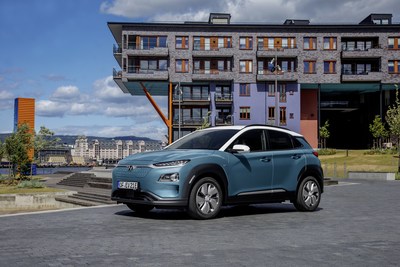
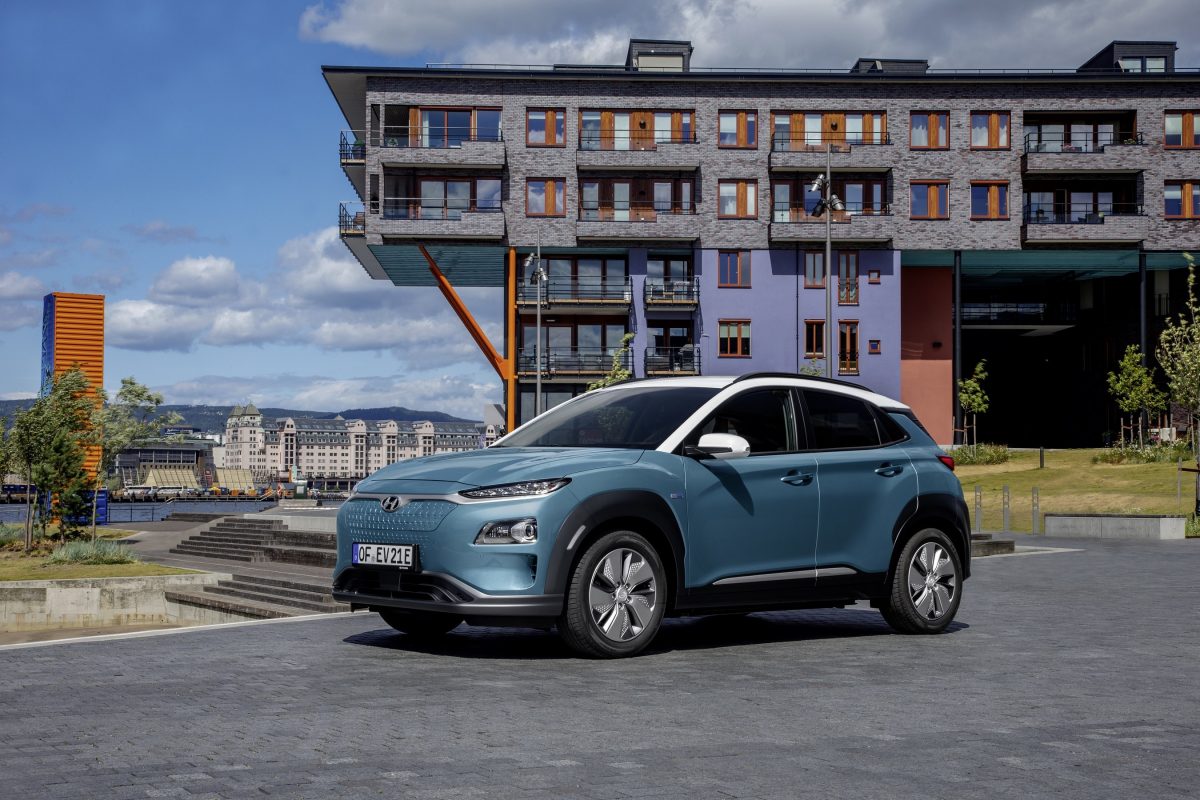
Kona Electric recognized as one of the greatest EVs on sale in TopGear Electric Awards

  • Kona Electric named Best Small Family Car in magazine’s first Electric Awards
  • European road trip covers 1,600 kilometers and 9 countries in under 24 hours – busting the myth that you cannot travel far in an electric car

SEOUL, South Korea, OFFENBACH, Germany and LONDON, April 22, 2020 /PRNewswire/ — Kona Electric has been acknowledged as the Best Small Family Car in the inaugural TopGear Electric…

  • Kona Electric named Best Small Family Car in magazine’s first Electric Awards
  • European road trip covers 1,600 kilometers and 9 countries in under 24 hours – busting the myth that you cannot travel far in an electric car

SEOUL, South Korea, OFFENBACH, Germany and LONDON, April 22, 2020 /PRNewswire/ — Kona Electric has been acknowledged as the Best Small Family Car in the inaugural TopGear Electric Awards, after it completed a 1,600-kilometers road trip across 9 European countries. Hyundai Motor’s fully electric SUV was not only commended for its efficiency and long-distance capability but also for its smooth and effortless performance.

Kona Electric

The 24-hour-long drive took place in December 2019, with BBC TopGear magazine’s Editor-in-Chief Charlie Turner using the European rapid charger network to supply the Kona Electric with 316kWh of electricity, choosing to only charge to 80% capacity in order to maximise driving time. In total 9 countries were visited with the trip starting in the Czech Republic and the 1,600-kilometre drive taking in Germany, Austria, Switzerland, Lichtenstein, France, Luxembourg, Belgium and Holland.

Charlie Turner said: «Whilst we find ourselves in lockdown, having the freedom to travel through as many countries as you want is the stuff of distant dreams. It’s reassuring, however, to know that as electrification becomes an ever growing part of our vehicular future, cars like Kona Electric can already deliver and whilst most won’t cover the miles in the way we did, we’ve proved that range anxiety shouldn’t play a part in long-distance travel.»

Andreas-Christoph Hofmann, Vice Marketing and Product at Hyundai Motor Europe, said: «Following its launch in 2018, Kona Electric has continued to prove itself as an affordable zero-emission all-rounder, combining practicality with range and performance. The most recent updates have brought enhanced connectivity and a three-phase on-board charger, making the overall package even more compelling. We are delighted that TopGear has acknowledged the strengths of Kona Electric, adding to the many previous awards for this remarkable car.»

The full story of the Kona Electric’s epic drive through Europe is published in the current UK edition of TopGear magazine.

About Hyundai Motor Company

Established in 1967, Hyundai Motor Company offers a range of world-class vehicles and mobility services in more than 200 countries. Hyundai Motor sold more than 4.4 million vehicles globally in 2019, and currently employs some 120,000 personnel worldwide. The company is enhancing its product lineup with vehicles designed to help usher in a more sustainable future, while offering innovative solutions to real-world mobility challenges. Through the process, Hyundai aims to facilitate ‘Progress for Humanity’ with smart mobility solutions that vitalize connections between people and provide quality time to its customers.

More information about Hyundai Motor and its products can be found at: http://worldwide.hyundai.com or http://globalpr.hyundai.com

Photo – https://mma.prnewswire.com/media/1158337/Kona.jpg  

700-Mile-Range Triton Model H – the New Electric SUV Launch – Now Taking Pre-Orders

CHERRY HILL, N.J., April 17, 2020 /PRNewswire/ — Triton Solar, a New Jersey-based technology company, is launching its first EV SUV – Triton Model H, an electric SUV – today across the globe.

The project has been ongoing for the last 18 months, and the CEO of <a target="_blank"…

CHERRY HILL, N.J., April 17, 2020 /PRNewswire/ — Triton Solar, a New Jersey-based technology company, is launching its first EV SUV – Triton Model H, an electric SUV – today across the globe.

The project has been ongoing for the last 18 months, and the CEO of Triton Solar, Himanshu Patel, recently mentioned the same in a press release two months back. Things have been serious in the last 12 months since the official beginning of the project within the Triton Solar team, along with the announcement of multiple international partnerships for the same.

Triton Model H is a premium electric SUV designed to comfortably accommodate eight people, along with 200 cubic feet of luggage space. It comes standard with a 200 kWh Triton Solar battery pack, which is a proprietary technology of Triton Solar. The Triton Model H will have a single-charge range of up to 700 miles+.

The biggest question that is being answered today is, «What does the Triton Model H SUV look like?» Triton promise 1500 hp to the wheels, which allows the SUV to carry and pull heavy loads without compromising the driving comfort. It’s a four-wheel-drive quad motor vehicle with an impressive acceleration of 0 to 60 mph in 2.9 seconds.

Triton Model H is now open for pre-orders on our website www.tritonev.co. The first 100 pre-order customers will be delivered the Founder’s Edition, which shall have unique surprise features added on top of the standard features. In the life span of Triton Model H, only 100 Founder’s Edition versions will be made. The booking will completely be on a first-come-first-serve basis.

Himanshu B Patel 

1-856-952-4811

Related Files

Triton_US_Model_H_2021.pdf

Related Links

Triton

Visiongain Publishes Automotive Chassis Market 2020-2030 Report

LONDON, April 17, 2020 /PRNewswire/ — Market and Volume Forecasts by Chassis Type (Backbone, Ladder, Monocoque, Modular and Others), by Material (Steel, Aluminum Alloy, Carbon Fiber Composites and Others), by Vehicle Type (Passenger Cars, Light Commercial Vehicles and Heavy commercial Vehicles) with Regional and National Market Analysis and Financial Analysis of Leading Companies

<img id="prnejpgcc9dleft"…

LONDON, April 17, 2020 /PRNewswire/ — Market and Volume Forecasts by Chassis Type (Backbone, Ladder, Monocoque, Modular and Others), by Material (Steel, Aluminum Alloy, Carbon Fiber Composites and Others), by Vehicle Type (Passenger Cars, Light Commercial Vehicles and Heavy commercial Vehicles) with Regional and National Market Analysis and Financial Analysis of Leading Companies

Visiongain Logo

The global market for automotive chassis is expected to grow with the healthy CAGR of 5.1% during the forecast period from 2020-2030. The global market is valued at $55.6 billion in 2019 and has the potential to reach $96.1 billion by the end of forecast period of 2030. Growing vehicle production along with rising vehicle demand globally, economic development especially in APAC region, and increasing vehicle safety regulations; are the major factors driving the demand of chassis in automotive market. Growing technological advancements in automotive industry, changing preference of the OEMS, and increasing investment in research & development; will have significant impact on the overall automotive chassis market in coming years.

By chassis type, monocoque chassis segment is expected to be the largest market in the global automotive chassis market by 2030 as it is widely used in passenger cars and light commercial vehicles. A monocoque chassis is a framework that combines body and chassis to create a composite structure with a stronger stiffness and weight benefit. The stress produced by the car during movement is spread among the framework in a monocoque chassis and does not form localized stress that may have a greater deformation value. The torsional stiffness of the chassis is high as the stress is spread equally among the framework, which proves advantageous for the suspension as they can be designed to be more robust and increase the vehicle’s efficiency. It demonstrates to be an excellent balance between weight and strength that eventually improves overall efficiency of the vehicle.

Download samples here:

https://www.visiongain.com/report/automotive-chassis-market-report-2020-2030/#download_sampe_div

Asia Pacific is the largest market for automotive chassis owing to the largest producer and consumer of vehicles. Presence of major developing economies such as China and India which offers exponential growth for automotive production as well as demand is the prime factor contributing in being major market for automotive chassis. Over the years, the volumes of vehicle manufacturing have risen, with OEMs in this region responding not only to national demand, but also to demand from abroad.

Leading companies featured in the Automotive Chassis Market Report 2020-2030 report include AISIN SEIKI CO. LTD., American Axle and Manufacturing, Benteler Automobiltechnik GmbH, Hyundai Mobis, Kalyani Group (Bharat Forge), KLT, Magna International Inc., Schaeffler AG, Tower International, ZF Group among others. Mergers & acquisitions and joint ventures constitute some of the industry players’ common strategies for reducing product price overall and maintaining extremely competitive conditions. In order to guarantee continued raw material supplies and ease of installation services, many actors in the sector create alliances with raw material providers and third-party installers.

The comprehensive report provides market estimates and forecasts for leading domestic markets across the world for the period from 2020 to 2030. In addition, the report includes dedicated leading companies covering 10 leading Automotive Chassis industry producers.

The report on the Automotive Chassis Market Report 2020-2030 will appreciate anyone who wants to better understand the market in various vehicle types. It will be useful for companies that want to better understand the part of the market in which they are already involved or those that want to enter or expand into another regional or technical part of the Automotive Chassis industry.

Visiongain’s timely report reveals how best to compete in this profitable market space and maximize your company’s potential.

To find out more about this report please contact Sara Peerun at sara.peerun@visiongain.com or refer to our website: https://www.visiongain.com/report/automotive-chassis-market-report-2020-2030/ 

This report addresses the pertinent issues:
– Where are the most lucrative market prospects?
– Who are the leadings companies and what does the competitive landscape look like?
– What are the regional, technical and regulatory barriers to market entry?
– What are the technological issues and roadmap driving the market?
– Why is the market prospering and how can you fully exploit this?
– When will the market fully mature and why?

Research and Analysis Highlights

280 Tables, Charts and Graphs Illustrating the Global Automotive Chassis Market Prospects

Market Segmentation 2020-2030:

The global automotive chassis market is segmented on the basis of chassis type, material, vehicle type, and geography.

Automotive Chassis Submarket Forecasts by Chassis Type Covering the Period 2020-2030 ($B & Volume)
– Backbone Market Forecast 2020-2030 ($B & Volume)
– Ladder Market Forecast 2020-2030 ($B & Volume)
– Monocoque Forecast 2020-2030 ($B & Volume)
– Modular Market Forecast 2020-2030 ($B & Volume)
– Others Market Forecast 2020-2030 ($B & Volume)

Automotive Chassis Submarket Forecasts by Material from 2020-2030 ($B & Volume)
– Steel Market Forecast 2020-2030 ($B & Volume)
– Aluminum Alloy Market Forecast 2020-2030 ($B & Volume)
– Carbon Fiber Composites Market Forecast 2020-2030 ($B & Volume)
– Others Market Forecast 2020-2030 ($B & Volume)

Automotive Chassis Submarket Forecasts by Vehicle Type from 2020-2030 ($B & Volume)
– Passenger Cars Market Forecast 2020-2030 ($B & Volume)
– Light Commercial Vehicles Market Forecast 2020-2030 ($B & Volume)
– Heavy Commercial Vehicles Market Forecast 2020-2030 ($B & Volume)

Regional Automotive Chassis Market Forecasts 2020-2030:

North America Automotive Chassis Forecast 2020-2030 ($B & Volume)
– US Market Forecast 2020-2030 ($B & Volume)
– Canada Market Forecast 2020-2030 ($B & Volume)
– Mexico Market Forecast 2020-2030 ($B & Volume)

South America Automotive Chassis Forecast 2020-2030 ($B & Volume)
– Brazil Market Forecast 2020-2030 ($B & Volume)
– Argentina Market Forecast 2020-2030 ($B & Volume)
– Colombia Market Forecast 2020-2030 ($B & Volume)
– Rest of South America Market Forecast 2020-2030 ($B & Volume)

Europe Automotive Chassis Forecast 2020-2030 ($B & Volume)
– Germany Market Forecast 2020-2030 ($B & Volume)
– France Market Forecast 2020-2030 ($B & Volume)
– UK Market Forecast 2020-2030 ($B & Volume)
– Czech Republic Market Forecast 2020-2030 ($B & Volume)
– Spain Market Forecast 2020-2030 ($B & Volume)
– Turkey Market Forecast 2020-2030 ($B & Volume)
– Russia Market Forecast 2020-2030 ($B & Volume)
– Slovakia Market Forecast 2020-2030 ($B & Volume)
– Italy Market Forecast 2020-2030 ($B & Volume)
– Poland Market Forecast 2020-2030 ($B & Volume)
– Rest of Europe Market Forecast 2020-2030 ($B & Volume)

Asia Pacific Automotive Chassis Forecast 2020-2030 ($B & Volume)
– China Market Forecast 2020-2030 ($B & Volume)
– Japan Market Forecast 2020-2030 ($B & Volume)
– India Market Forecast 2020-2030 ($B & Volume)
– South Korea Market Forecast 2020-2030 ($B & Volume)
– Thailand Market Forecast 2020-2030 ($B & Volume)
– Malaysia Market Forecast 2020-2030 ($B & Volume)
– Indonesia Market Forecast 2020-2030 ($B & Volume)
– Taiwan Market Forecast 2020-2030 ($B & Volume)
– Rest of Asia Pacific Market Forecast 2020-2030 ($B & Volume)

Rest of the World Automotive Chassis Forecast 2020-2030 ($B & Volume)
– Middle East Market Forecast 2020-2030 ($B & Volume)
– Africa Market Forecast 2020-2030 ($B & Volume)

Profiles of 10 Leading Companies, Involved in Automotive Chassis Market
– AISIN SEIKI CO. LTD.
– American Axle and Manufacturing
– Benteler Automobiltechnik GmbH
– Hyundai Mobis
– Kalyani Group (Bharat Forge)
– KLT
– Magna International Inc.
– Schaeffler AG
– Tower International
– ZF Group

Did you know that we also offer a report add-on service? Email sara.peerun@visiongain.com to discuss any customized research needs you may have.

Companies covered in the report include:

Aichi Forge USA, Inc.
Aisin Seiki Co. Ltd.
Alf Engineering Pvt Ltd
AL-KO
American Axle and Manufacturing
Benteler Automobiltechnik GmbH
Chassis Brakes International
Cheetah Chassis Corporation
CIE Automotive
CIMC Intermodal Equipment
Continental AG
DuPont Automotive
Gestamp Automocion S.L.
Hercules Enterprises
Hyundai Mobis
Jayem Automotives
Kalyani Group (Bharat Forge)
Kässbohrer
KIRCHHOFF Automotive
KLT
Magna International Inc.
Max-Atlas
Robert Bosch GmbH
Satyam Auto Components Pvt. Ltd.
Schaeffler AG
Surin Automotive
Tower International
ZF Group

To discuss this report please e-mail Sara Peerun on sara.peerun@visiongain.com

Logo: https://mma.prnewswire.com/media/523989/Visiongain_Logo.jpg

Visiongain Publishes Automotive Blockchain Market 2020-2030 Report

LONDON, April 16, 2020 /PRNewswire/ — Market Forecasts by Application (Smart Contracts, Supply Chain, Financing, Mobility Solutions and Others), by Provider (Middleware Provider, Infrastructure and Protocols Provider and Application and Solution Provider), by Mobility Type (Personal Mobility, Shared Mobility and Commercial Mobility), by Vehicle Type (Passenger Cars, Light Commercial Vehicles and Heavy Commercial Vehicles), by Technology Type (Open Blockchain, Closed Blockchain, Consortium…

LONDON, April 16, 2020 /PRNewswire/ — Market Forecasts by Application (Smart Contracts, Supply Chain, Financing, Mobility Solutions and Others), by Provider (Middleware Provider, Infrastructure and Protocols Provider and Application and Solution Provider), by Mobility Type (Personal Mobility, Shared Mobility and Commercial Mobility), by Vehicle Type (Passenger Cars, Light Commercial Vehicles and Heavy Commercial Vehicles), by Technology Type (Open Blockchain, Closed Blockchain, Consortium Blockchain and Hybrid Blockchain), by Propulsion (ICE and Electric) with Regional and National Market Analysis and Financial Analysis of Leading Companies

Visiongain Logo

The global market for automotive blockchain is projected to grow with a CAGR of 31.1% during the forecast period from 2020-2030 and is estimated to reach $6.1 billion by 2030. The major drivers of growth for this market are increasing number of connected cars, increasing focus on reducing manipulation of data, the need for faster business transactions, better quality control, and technology advancement along with investment in R&D. The main drivers of development for the automotive blockchain industry are the advantages that blockchain technology offers such as real-time surveillance, auditability, and data scalability. The technology has also become an essential component of the automotive industry’s information technology (IT) budgets with increasing digitization. Blockchain is helpful in different fields such as mobility solutions, connected vehicles, supply chain logistics, retail and leasing, independent driving and IoT.

Download samples here:

https://www.visiongain.com/report/automotive-blockchain-market-report-2020-2030/#download_sampe_div

Blockchain can benefit the automotive industry in many ways. Using smart contracts and IOT, dealerships can automate several processes involved in car sales, service, warranty claim processing and much more. Moreover, it helps the buyer and seller to avoid middlemen or third parties to involve in transactions or insurance claims. This decentralised ledger technology can help to build a state of peacefulness in customers, manufacturers and service centers with it’s transparency and immutability. The applications of Blockchain in automobile industry range from crypto tokens to provide loyalty rewards to their customers to supply chain visibility solution which can hold the integrity of provenance of the vehicle. Maintaining a tamper proof log of all records such as service logs, details of wear and tear of spare parts etc can help the manufacturer to estimate the actual resale value of the vehicle.

To find out more about this report please contact Sara Peerun at sara.peerun@visiongain.com or refer to our website: https://www.visiongain.com/report/automotive-blockchain-market-report-2020-2030/

Leading companies featured in the Automotive Blockchain Market Report 2020-2030 report include IBM, Accenture, Carblock, Carvertical, HCL Technologies, HELBIZ, MICROSOFT, NXM Labs, Tech Mahindra, and Xain among others. Mergers & acquisitions, expansion, and joint ventures constitute some of the industry players’ common strategies for reducing product price overall and maintaining extremely competitive conditions. In order to guarantee continued raw material supplies and ease of installation services, many players in the sector create alliances with raw material providers.

The comprehensive Visiongain report provides market estimates and forecasts for leading domestic markets across the world for the period from 2019 to 2030. In addition, the report includes dedicated leading companies covering 10 leading automotive Blockchain industry producers.

The report on the Automotive Blockchain Market Report 2020-2030 will appreciate anyone who wants to better understand the market in various segment verticals. It will be useful for companies that want to better understand the part of the market in which they are already involved or those that want to enter or expand into another regional or technical part of the automotive Blockchain industry.

Did you know that we also offer a report add-on service? Email sara.peerun@visiongain.com to discuss any customized research needs you may have.

Companies covered in the report include:

Accenture
Bigchaindb
Carblock
Carvertical
Consensys
Context Labs
Cube
Dashride
Ethereum
Factom Inc.
Foam
GEM
HCL Technologies
Helbiz
IBM
Mesosphere Inc.
Microsoft
NXM Labs
Oaken Innovations
Productive Edge LLC
Project Provenance Ltd.
Ripple Labs Inc.
RSK Labs
Shiftmobility
Tech Mahindra
Xain

To discuss this report please e-mail Sara Peerun on sara.peerun@visiongain.com

Logo: http://mma.prnewswire.com/media/523989/Visiongain_Logo.jpg

COVID-19 has Brought About a Demand Vaporization in the Automotive industry, Says Zinnov

– Changing consumer demand, a disrupted supply chain, and production stoppages are impacting the Automotive industry

– Ride sharing firms have been impacted as Uber, Lyft, and other mobility providers have lost upwards of 60% market value as consumers opt out of the «sharing economy.» There will be business model pivots to create alternative revenue streams

– On the other side of recovery, Industry 4.0 and Automation-led initiatives will take center stage as carmakers seek enhanced manufacturing productivity

<span…

– Changing consumer demand, a disrupted supply chain, and production stoppages are impacting the Automotive industry

– Ride sharing firms have been impacted as Uber, Lyft, and other mobility providers have lost upwards of 60% market value as consumers opt out of the «sharing economy.» There will be business model pivots to create alternative revenue streams

– On the other side of recovery, Industry 4.0 and Automation-led initiatives will take center stage as carmakers seek enhanced manufacturing productivity

SANTA CLARA, California, April 15, 2020 /PRNewswire/ — Zinnov, a leading global management and strategy consulting firm, has assessed the shifting gears of the Automotive industry in the shadow of the COVID-19 situation. Zinnov evaluated the impact of COVID-19 on the Global Automotive industry as a whole and on the various players across the automotive value chain including OEMs, Tier-1s, and ride sharing firms. The assessment identified the expected shifts in consumption patterns as well as changing R&D and digital priorities for carmakers on the other side of COVID-19.

Zinnov Logo

The Automotive industry enjoyed an incredible bull run from 2010 to 2018 wherein even developed markets like the US and Europe saw ~5% CAGR growth. This period was defined by technological and consumption pattern disruptions. Carmakers expended budget and effort on large programs focusing on the four key trends that defined this golden age namely Electrification, Autonomous, Connected, and Shared Mobility. The growing market attracted investments even from outside the traditional OEM/Tier-1 supplier community including new-age OEMs (Tesla, Nio, etc.), asset-light companies (Uber, Lyft, etc.), and enterprises from other industry verticals such as Alphabet. However, the Auto industry started witnessing the initial signs of a slowdown in the first quarter of 2019, which has been exacerbated by COVID-19, because of the direct impact on consumer demand.

Taking a data-led approach, Zinnov evaluated multiple factors like shifts in consumer spending as a result of changing risk appetites, supply chain disruptions, industry fiscal health, existing globalization levels of the automotive workforce, and digital readiness, to assess the impact of COVID-19 on the Auto industry.  What is irrefutable, is that the ongoing situation has impacted OEMs and Tier-1s alike, who have collectively lost ~20-40% of their market value since the start of the outbreak.

The initial impact of COVID-19 on the automotive supply chain and production was localized to China, up until January 2020. However, with the spread of the virus to Europe in February and the US in March, Zinnov’s analysis found that the Automotive industry’s key concern shifted from supply chain disruption to demand vaporization.

Zinnov also shared that the sharing/ride-as-a-service economy has been impacted to a greater degree. Uber and Lyft have lost upwards of 60% of their market value/valuations as consumers are increasingly opting out of the sharing economy. The forced lockdowns and social distancing norms have further intensified this problem. All these factors are causing future revenue concerns as well as delay in realization of the already elusive profitability in this space.

The industry is now in the middle of one of its toughest bear phases. Automakers are aggressively leveraging technology, pivoting their business models, and re-engineering their processes and talent to recover from this crisis. There will be an increase in the leverage of online sales channels with carmakers enabling digital showrooms and touchless delivery/shopping through Virtual Reality (VR) solutions. Initial anecdotal evidence points towards an easing of environmental regulations as governments across the globe prioritize spending on economic activity over the environment and EV-related subsidies.

Given the changes across the value chain, automakers will reprioritize their R&D initiatives on the other side of recovery and only two of the four key trends namely Connected and Autonomous are likely to attract a majority of this spend, stated Zinnov. Shared Mobility programs are expected to take a hit given the shift in consumer preference towards «self-owned» cars. However, evidence suggests that «vehicle subscription» will become a trend, with automakers and software companies spending on software to enable such subscription platforms. Auto companies are also most likely to focus on enhancing manufacturing productivity and efficiency by leveraging Plant Automation, Industry 4.0, Cloud-based ERP and PLM systems.

In addition to the measures being taken by the industry and the auto players themselves, governments across the world are also expected to play a crucial role in these extraordinary conditions, stated Zinnov. Auto companies are likely to benefit from their respective governments’ expansionary fiscal policies including explicit bail-out packages.

Speaking about the Auto industry, Sidhant Rastogi, Managing Partner, Zinnov, said, «There will be a definitive shift in the way Auto companies will channelize their investments in the aftermath of COVID-19. In the near-term, the relaxation of emission norms, drying up of environment/EV-related subsidies might force certain automakers to put high investment electric powertrain programs on the back burner. In the long term however, there will be renewed focus on making their digital investments count by enabling digital/touchless walkthrough and delivery experiences, bringing in greater efficiencies by leveraging Industry 4.0 and Automation, and innovating on the existing business models to align to the post COVID-19 reality.»

«Over the next 18-24 months, we see a paradigm shift happening in the way traditional automakers and the new-age players will operate. Auto players will, in all probability, realign their demand generation initiatives and business models, thereby creating opportunities for strategic partnerships and alliances to sustain in a new reality,» he added.

About Zinnov

Founded in 2002, Zinnov is a leading global management and strategy consulting firm, with presence in Santa Clara, Houston, Bangalore, Gurgaon, and Paris. Over the past 18 years, Zinnov has successfully consulted with over 250+ Fortune 500 enterprises and technology companies to develop actionable insights that help them create value – across dimensions of both revenue and optimization. With core expertise in Product Engineering, Digital Transformation, Innovation, and Outsourcing Advisory, Zinnov assists clients by:

  • Enabling global companies to develop and optimize a global engineering footprint through center setups, and technology and functional accelerators to achieve higher R&D efficiencies, innovation, and productivity;
  • Advising global PE firms in asset shortlisting and target evaluation, commercial due diligence, and value creation;
  • Growing revenue for companies’ products and services in newer markets through account intelligence, market entry, and market expansion advisory;
  • Structuring and implementing Digital Transformation levers enabled by technologies like AI/ML, Cloud, IOT, and RPA;
  • Helping global companies outline and drive their open innovation programs, design and operate accelerator programs, and enable collaboration with start-ups across specific use cases and predefined outcomes.

With their team of experienced consultants, subject matter experts, and research professionals, Zinnov serves clients from across multiple industry verticals including Enterprise Software, BFSI, Healthcare, Automotive, Retail, and Telecom in the US, Europe, Japan, and India. 

For more information, visit http://zinnov.com.

Media contact

Nitika Goel
Chief Marketing Officer, Zinnov
media@zinnov.com 
+1-408-390-5797

Logo: https://mma.prnewswire.com/media/694742/Zinnov_Logo.jpg
Visiongain Publishes Automotive Terminal Market 2020-2030 Report

Market Forecasts by Vehicle Type (Passenger Cars, Light Commercial Vehicles and Heavy Commercial Vehicles), by Electric Vehicle (Battery Electric Vehicle (BEV), Hybrid Electric Vehicle (HEV), Plug-In Hybrid Electric Vehicle (PHEV) and Fuel Cell Electric Vehicle (FCEV)), Current Rating (Below 40 Ampere, 41–100 Ampere and Above 100 Ampere), Application (Cooling, Engine, & Emission Control, Safety & Security System, Body Control & Interiors, Infotainment, Lighting System, Battery System and Others) with Regional and National Market Analysis and…

Market Forecasts by Vehicle Type (Passenger Cars, Light Commercial Vehicles and Heavy Commercial Vehicles), by Electric Vehicle (Battery Electric Vehicle (BEV), Hybrid Electric Vehicle (HEV), Plug-In Hybrid Electric Vehicle (PHEV) and Fuel Cell Electric Vehicle (FCEV)), Current Rating (Below 40 Ampere, 41–100 Ampere and Above 100 Ampere), Application (Cooling, Engine, & Emission Control, Safety & Security System, Body Control & Interiors, Infotainment, Lighting System, Battery System and Others) with Regional and National Market Analysis and Financial Analysis of Leading Companies

LONDON, April 15, 2020 /PRNewswire/ — The global automotive terminal market is expected to grow by exponential growth rate of 8.6% over the forecast period from 2020 to 2030. The market was valued at $12.8 billion in 2019 and has the potential to reach $31.9 billion by the end of forecast period 2030. The automotive terminal market is driven by increased demand for automotive safety devices backed by public mandates and a growing number of electrical devices in the car, increasing number of connected cars, rapid technological and innovation changes, and adoption electric vehicles are expected to drive the automotive terminal market. In the coming years, the development of energy-efficient E-Mobility as well as connected cars, autonomous and semi-autonomous cars will generate possibilities for the automotive terminal industry. The market is highly consolidated with only few players which can hinder the overall growth of the market.

Visiongain Logo

Asia Pacific region is expected to be the largest market for automotive terminal due to presence of major developing countries including China, India, and South Korea, leadership in vehicle production and consumption, and adoption of technological advancement by OEMs. Stringent government regulation to install advanced safety technologies and rising adoption of green vehicles are also expected to boost the demand of terminal in APAC automotive market.

Download samples here:

https://www.visiongain.com/report/automotive-terminal-market-report-2020-2030/#download_sampe_div

Leading companies featured in the Automotive Terminal Market Report 2020-2030 report include TE Connectivity, Sumitomo Electric, Delphi, Lear, FURUKAWA ELECTRIC, PKC Group, MOLEX, GROTE INDUSTRIES, Keats Manufacturing, VINEY CORPORATION among others. Mergers & acquisitions and joint ventures constitute some of the industry players’ common strategies for reducing product price overall and maintaining extremely competitive conditions. In order to guarantee continued raw material supplies and ease of installation services, many actors in the sector create alliances with raw material providers and third-party installers.

The comprehensive report provides market estimates and forecasts for leading domestic markets across the world for the period from 2020 to 2030. In addition, the report includes dedicated leading companies covering 10 leading terminal suppliers.

The report on the Automotive Terminal Market Report 2020-2030 will appreciate anyone who wants to better understand the market in various end use industries. It will be useful for companies that want to better understand the part of the market in which they are already involved or those that want to enter or expand into another regional or technical part of the Automotive Terminal industry.

Visiongain’s timely report reveals how best to compete in this profitable market space and maximize your company’s potential.

To find out more about this report please contact Sara Peerun at sara.peerun@visiongain.com or refer to our website: https://www.visiongain.com/report/automotive-terminal-market-report-2020-2030/

This report addresses the pertinent issues:
– Where are the most lucrative market prospects?
– Who are the leadings companies and what does the competitive landscape look like?
– What are the regional, technical and regulatory barriers to market entry?
– What are the technological issues and roadmap driving the market?
– Why is the market prospering and how can you fully exploit this?
– When will the market fully mature and why?

Research and Analysis Highlights

335 Tables, Charts and Graphs Illustrating the Global Automotive Terminal Market Prospects

Market Segmentation 2020-2030:

The global automotive terminal market is segmented on the basis of vehicle type, electric vehicles, current rating, application, and geography.

Automotive Terminal Submarket Forecasts by Vehicle Type Covering the Period 2020-2030 ($B)
– Passenger Cars Market Forecast 2020-2030 ($B)
– Light Commercial Vehicles Market Forecast 2020-2030 ($B)
– Heavy Commercial Vehicles Market Forecast 2020-2030 ($B)

Automotive Terminal Submarket Forecasts by Electric Vehicles from 2020-2030 ($B)
– Battery Electric Vehicle (BEV) Market Forecast 2020-2030 ($B)
– Hybrid Electric Vehicle (HEV) Market Forecast 2020-2030 ($B)
– Plug-In Hybrid Electric Vehicle (PHEV) Market Forecast 2020-2030 ($B)
– Fuel Cell Electric Vehicle (FCEV) Market Forecast 2020-2030 ($B)

Automotive Terminal Submarket Forecasts by Current Rating from 2020-2030 ($B)
– Below 40 Ampere Market Forecast 2020-2030 ($B)
– 41–100 Ampere Market Forecast 2020-2030 ($B)
– Above 100 Ampere Market Forecast 2020-2030 ($B)

Automotive Terminal Submarket Forecasts by Application from 2020-2030 ($B)
– Cooling, Engine, & Emission Control Market Forecast 2020-2030 ($B)
– Safety & Security System Market Forecast 2020-2030 ($B)
– Body Control & Interiors Market Forecast 2020-2030 ($B)
– Infotainment Market Forecast 2020-2030 ($B)
– Lighting System Market Forecast 2020-2030 ($B)
– Battery System Market Forecast 2020-2030 ($B)
– Other Application Market Forecast 2020-2030 ($B)

Regional Automotive Terminal Market Forecasts 2020-2030

North America Automotive Terminal Forecast 2020-2030 ($B)
– US Market Forecast 2020-2030 ($B)
– Canada Market Forecast 2020-2030 ($B)
– Mexico Market Forecast 2020-2030 ($B)

South America Automotive Terminal Forecast 2020-2030 ($B)
– Brazil Market Forecast 2020-2030 ($B)
– Argentina Market Forecast 2020-2030 ($B)
– Colombia Market Forecast 2020-2030 ($B)
– Rest of South America Market Forecast 2020-2030 ($B)

Europe Automotive Terminal Forecast 2020-2030 ($B)
– Germany Market Forecast 2020-2030 ($B)
– France Market Forecast 2020-2030 ($B)
– UK Market Forecast 2020-2030 ($B)
– Czech Republic Market Forecast 2020-2030 ($B)
– Spain Market Forecast 2020-2030 ($B)
– Turkey Market Forecast 2020-2030 ($B)
– Russia Market Forecast 2020-2030 ($B)
– Slovakia Market Forecast 2020-2030 ($B)
– Italy Market Forecast 2020-2030 ($B)
– Poland Market Forecast 2020-2030 ($B)
– Rest of Europe Market Forecast 2020-2030 ($B)

Asia Pacific Automotive Terminal Forecast 2020-2030 ($B)
– China Market Forecast 2020-2030 ($B)
– Japan Market Forecast 2020-2030 ($B)
– India Market Forecast 2020-2030 ($B)
– South Korea Market Forecast 2020-2030 ($B)
– Thailand Market Forecast 2020-2030 ($B)
– Malaysia Market Forecast 2020-2030 ($B)
– Indonesia Market Forecast 2020-2030 ($B)
– Taiwan Market Forecast 2020-2030 ($B)
– Rest of Asia Pacific Market Forecast 2020-2030 ($B)

Rest of the World Automotive Terminal Forecast 2020-2030 ($B)
– Middle East Market Forecast 2020-2030 ($B)
– Africa Market Forecast 2020-2030 ($B)

Profiles of 10 Leading Companies, Involved in Automotive Terminal Market
– TE Connectivity
– Sumitomo Electric
– Delphi
– Lear
– FURUKAWA ELECTRIC
– PKC Group
– MOLEX
– GROTE INDUSTRIES
– Keats Manufacturing
– Viney Corporation

SWOT And Porter’s Five Forces Analysis

Did you know that we also offer a report add-on service? Email sara.peerun@visiongain.com to discuss any customized research needs you may have.

Companies covered in the report include:

Delphi
E Connectivity Ltd.
Furukawa Electric
Grote Industries
Keats Manufacturing
Lear
Molex
PKC Group
Sumitomo Electric
TE Connectivity
Viney Corporation

To discuss this report please e-mail Sara Peerun on sara.peerun@visiongain.com

Logo: http://mma.prnewswire.com/media/523989/Visiongain_Logo.jpg

Kamux’s Transfer of Own Shares for Payment of Share-based Incentives 2019

HELSINKI, April 15, 2020 /PRNewswire/ — The Board of Directors of Kamux Corporation («Company») has confirmed the remuneration to be paid to the key personnel of the Kamux Group in accordance with the terms and conditions of the share-based incentive scheme and the earnings criteria set for the year 2019. According to the terms and conditions of the share-based incentive scheme 2019 and after the deduction of the cash payment portions of the remunerations meant for taxes and tax-like contributions,…

HELSINKI, April 15, 2020 /PRNewswire/ — The Board of Directors of Kamux Corporation («Company») has confirmed the remuneration to be paid to the key personnel of the Kamux Group in accordance with the terms and conditions of the share-based incentive scheme and the earnings criteria set for the year 2019. According to the terms and conditions of the share-based incentive scheme 2019 and after the deduction of the cash payment portions of the remunerations meant for taxes and tax-like contributions, 25 persons included in the 2019 share-based incentive scheme shall receive altogether 40,729 existing shares held by the Company through a directed share issue without consideration.

Further information of the share-based incentive scheme 2019 and its key terms and conditions is available in the Stock Exchange Release of 23 January 2019 and on the website of the company. The issuance of shares in accordance with the terms and conditions of the share-based incentive plan is based on the authorization given to the Board of Directors by the Company’s Annual General Meeting on 26 April 2018, under which the Board of Directors of the Company was authorized to decide on the issuance of a maximum of 400,000 new and/or existing shares to remunerate the Group’s key personnel in accordance with the Company’s share-based incentive scheme established by the Board of Directors on 27 April 2017.

After the transfer of own shares, the company holds 43,954 own shares.

The issued shares will be subject to a transfer restriction during the commitment period. The commitment period begins when the reward is paid and ends on 31 December 2021. A member of the Group’s Management Team must own half of the shares received as a reward based on the scheme until his/her shareholding in the Company corresponds to the value of his/her annual salary (ownership obligation). Each participant must own this number of shares for as long as he/she remains a member of the Group’s Management Team.

In Hämeenlinna, 15 April 2020

KAMUX CORPORATION

The Board of Directors

Kamux Corporation is a retail chain specializing in the sale of used cars and related integrated services that has grown rapidly. Kamux combines online shopping with an extensive showroom network to provide a great customer experience anytime, anywhere. In addition to digital channels, the company has total of 73 car showrooms in Finland, Sweden and Germany. Since its founding, the company has sold more than 250,000 used cars, 55,432 of which were sold in 2019. Kamux’s revenue reached EUR 658.5 million in 2019. In 2019, Kamux’s average number of employees was 595 in terms of full-time equivalent employees. The shares of Kamux are listed on the Nasdaq Helsinki stock exchange.

www.kamux.com

For more information:

Juha Kalliokoski, CEO

Tel. +358-50-544-5538

This information was brought to you by Cision http://news.cision.com

https://news.cision.com/kamux/r/kamux-s-transfer-of-own-shares-for-payment-of-share-based-incentives-2019,c3088035

Automotive Fabrics Market Report Highlights Sales Volume, Price, Revenue, Gross Margin, Historical Growth & Future Perspectives by 2028: Radiant Insights, Inc.

SAN FRANCISCO, April 15, 2020 /PRNewswire/ — The global automotive fabrics market is expected to grow exponentially by 2028; thanks to stern safety standards set by the governments regarding use of airbags in automobiles followed by presence in upholstery, safety…

SAN FRANCISCO, April 15, 2020 /PRNewswire/ — The global automotive fabrics market is expected to grow exponentially by 2028; thanks to stern safety standards set by the governments regarding use of airbags in automobiles followed by presence in upholstery, safety belts, and tires. Automotive fabrics come across as coated, knitted, non-woven, woven, or composite fabrics that are lightweight, soft, elastic, and flexible in terms of design.

The most sought-after automotive interior materials are vinyl, thermoplastic polymers, leather (synthetic leather, artificial leather or PU, and genuine leather), and fabric (tweed, velour, velvet, and body cloth fabric). In automobiles, one generally finds rayon and polyester blends. High-end cars prefer velour. Vinyl acts as a good alternative in terms of pocket-friendliness. However, the basic disadvantage of vinyl is that its temperature rises on getting exposed to sun. Leather proves to be durable with respect to seats. However, synthetic leader is more into it as genuine leather stands expensive and is also banned in several economies.

Asia Pacific leads the automotive fabrics market. This could be credited to an upsurge in the manufacture of vehicles in economies like Japan, China, and India. Besides, several manufacturers are shifting their base to Asia Pacific due to saving on labor. North America and Europe (Germany, in particular) are already the major part of this Automotive fabrics. They have reached saturation though.

Download PDF to know more details about «Automotive Fabrics Market» report 2028.

By application, the automotive fabrics market spans floor covering, upholstery, safety belts, airbags, tires, and pre-assembled interior components. By type of vehicle, the segmentation goes like heavy trucks and buses, light commercial vehicles, and passenger cars. By geography, the segmentation spans North America, LATAM, Asia Pacific, MEA, and Europe.

The latest trend in this regard is their usage in carpets. This usage enables noise absorption and vibration. Increase in awareness on this count is expected to bolster the market of Automotive fabrics in the near future.

The players contributing to the market of automotive fabrics market include Sage Automotive Interiors, Inc.; Adient Plc; and Lear Corporation. Organic growth is the focal point. For instance – «Guilford Performance Textiles» from Lear have their «TeXstyle Enhance» facilitate embossing, pigment printing, high frequency welding, and laser etching.

This report provides detailed historical analysis of global market for Automotive Fabrics from 2013-2018, and provides extensive market forecasts from 2018-2028 by region/country and subsectors. It covers the sales volume, price, revenue, gross margin, historical growth and future perspectives in the Automotive Fabrics market.

Access 124 page research report with TOC on «Automotive Fabrics Market» available with Radiant Insights, Inc. @ https://www.radiantinsights.com/research/2013-2028-report-on-global-automotive-fabrics-market

  • Leading players of Automotive Fabrics including:
    • Adient PLC
    • Lear Corporation
    • Toyota Boshoku Corporation
    • Takata Corporation
    • Suminoe Textile Co., Ltd.
    • Seiren Co., Ltd.
    • SRF Limited
    • Sage Automotive Interiors Inc.
    • Grupo Antolin Irausa, S.A.
    • Tenowo GmbH
    • ACME Mills Company
    • Martur Automotive Seating Systems
    • Glen Raven, Inc.
    • Haartz Corporation
    • Bmd Private Ltd.
    • Borgers Se & Co. KGaA (Germany)
    • Chori Co., Ltd.
    • CMI Enterprises Inc.
    • Heathcoat Fabrics Limited
    • Krishna
    • Moriden America Inc.
    • TB Kawashima Co., Ltd.
    • Trevira GmbH (Germany)
    • Uniroyal Engineered Products LLC
  • Market split by Type, can be divided into:
    • Polyester & Nylon
    • Wool
    • Vinyl
    • Leather
    • Other
  • Market split by Application, can be divided into:
    • Seat
    • Car Roof
    • Carpet
    • Airbags
    • Safety Belts
    • Others
  • Market split by Sales Channel, can be divided into:
    • Direct Channel
    • Distribution Channel
  • Market segment by Region/Country including:
    • North America (United States, Canada and Mexico)
    • Europe (Germany, UK, France, Italy, Russia and Spain etc.)
    • Asia-Pacific (China, Japan, Korea, India, Australia and Southeast Asia etc.)
    • South America Brazil, Argentina, Colombia and Chile etc.)
    • Middle East & Africa (South Africa, Egypt, Nigeria and Saudi Arabia etc.)

Browse reports of similar category available with Radiant Insights, Inc.:

About Radiant Insights, Inc.:

At Radiant Insights, we work with the aim to reach the highest levels of customer satisfaction. Our representatives strive to understand diverse client requirements and cater to the same with the most innovative and functional solutions.

Contact:
Michelle Thoras.
Corporate Sales Specialist
Radiant Insights, Inc.
Phone: +1-415-349-0054
Toll Free: 1-888-928-9744
Email: sales@radiantinsights.com 
Web: https://www.radiantinsights.com 
Blog: https://radiantinsightsinc.blogspot.com 

Electric Vehicle Market to Reach $802.81 Bn, Globally, by 2027 at 22.6% CAGR: Allied Market Research

Surge in demand for fuel-efficient, high-performance, and low-emission vehicles along with stringent regulations of governments regarding vehicle emissions propel the growth of the global electric vehicle market

PORTLAND, Oregon, April 14, 2020 /PRNewswire/ — Allied Market Research published a report, titled, «Electric Vehicle Market by Type (Battery Electric Vehicles…

Surge in demand for fuel-efficient, high-performance, and low-emission vehicles along with stringent regulations of governments regarding vehicle emissions propel the growth of the global electric vehicle market

PORTLAND, Oregon, April 14, 2020 /PRNewswire/ — Allied Market Research published a report, titled, «Electric Vehicle Market by Type (Battery Electric Vehicles (BEV), Hybrid Electric Vehicles (HEV), and Plug-in Hybrid Electric Vehicles (PHEV)), Vehicle Class (Mid-Priced and Luxury), and Vehicle Type (Two-wheelers, Passenger Cars, and Commercial Vehicles): Global Opportunity Analysis and Industry Forecast, 2020–2027.» According to the report, the global electric vehicle industry generated $162.34 billion in 2019, and is estimated to reach $802.81 billion by 2027, growing at a CAGR of 22.6% from 2020 to 2027.

Allied_Market_Research_Logo

Download Sample Report (256 Pages PDF with Insights) @ https://www.alliedmarketresearch.com/request-sample/2404

Drivers, restraints, and opportunities

Rise in demand for high-performance, fuel-efficient, and low-emission vehicles along with strict government regulations toward vehicle emissions drive the growth of the global electric vehicle market. However, high cost of manufacturing and less fuel economy & serviceability hinder the market growth. On the other hand, advancements in technologies and supportive government initiatives create new opportunities in the coming years.

The HEV segment to maintain its dominant share throughout the forecast period

Based on type, the hybrid electric vehicle (HEV) segment accounted for the highest market share in 2019, contributing to nearly half of the global electric vehicle market, and is expected to maintain its dominant share throughout the forecast period. This is due to wide availability of hybrid electric vehicles worldwide with advancements in technology. However, the battery electric vehicle (BEV) segment is estimated to portray the highest CAGR of 23.3% from 2020 to 2027, owing to increase in demand for battery electric vehicles across the globe with stringent government regulations.

Interested to Procure The Data? Enquire Here @ https://www.alliedmarketresearch.com/purchase-enquiry/2404

The passenger car segment to continue its leadership position during the forecast period

Based on vehicle type, the passenger car segment contributed to nearly three-fourths of the global electric vehicle market in 2019, and is estimated to continue its leadership position during the forecast period. This is due to the emergence of battery operated vehicles by different automobile manufacturers across the world. However, the commercial vehicle segment would register the largest CAGR of 30.0% from 2020 to 2027, owing to demand for emission free commercial vehicles.

North America to grow at the fastest CAGR

Based on region, North America is expected to contribute the fastest CAGR of 27.5% from 2020 to 2027. This is due to wide adoption of electric operated vehicles in the region for complying with the emission norms. However, Asia-Pacific held more than half of the global electric vehicle market in 2019, and is expected to maintain its lion’s share throughout the forecast period. This is due to the developed automotive industry in the region and the novel developments by different manufacturers.

Request for Customization @ https://www.alliedmarketresearch.com/request-for-customization/2404

Leading market players

  • Tesla
  • BMW Group 
  • Nissan Motor Corporation 
  • Toyota Motor Corporation
  • Volkswagen AG
  • General Motors
  • Daimler AG
  • Energica Motor Company S.p.A
  • BYD Company Motors
  • Ford Motor Company

Schedule a Call with Our Analysts/Industry Experts @ https://www.alliedmarketresearch.com/connect-to-analyst/2404

Avenue | The Market Research Library Access

Avenue, a user-based library of global market report database, provides comprehensive reports pertaining to the world’s largest emerging markets. It further offers e-access to all the available industry reports just in a jiffy. Avenue is a premium subscription-based model that serves as an informative solution on which the world-leading companies can rely on.

Avenue is a premium subscription-based model that serves as an informative solution on which the world-leading companies can rely on.

Sign up and start using your 14-day free trial: https://www.alliedmarketresearch.com/avenueTrial

Similar Reports:

Electric Bike Market

Luxury Car Market

Hydrogen Fuel Cell Vehicle Market

Autonomous Vehicle Market

Pre-book Offer 12% Discount:

Electric Mobility Scooter Market

Low Emission Vehicle Market

About us:

Allied Market Research (AMR) is a full-service market research and business-consulting wing of Allied Analytics LLP based in Portland, Oregon. Allied Market Research provides global enterprises as well as medium and small businesses with unmatched quality of «Market Research Reports» and «Business Intelligence Solutions.» AMR has a targeted view to provide business insights and consulting to assist its clients to make strategic business decisions and achieve sustainable growth in their respective market domain.

We are in professional corporate relations with various companies and this helps us in digging out market data that helps us generate accurate research data tables and confirms utmost accuracy in our market forecasting. Each and every data presented in the reports published by us is extracted through primary interviews with top officials from leading companies of domain concerned. Our secondary data procurement methodology includes deep online and offline research and discussion with knowledgeable professionals and analysts in the industry.

Contact us:
David Correa
5933 NE Win Sivers Drive
#205, Portland, OR 97220
United States
Toll Free (USA/Canada): 1-800-792-5285, 1-503-894-6022, 1-503-446-1141
UK: +44-845-528-1300
Hong Kong: +852-301-84916
India (Pune): +91-20-66346060
Fax: +1-855-550-5975
help@alliedmarketresearch.com 
Web: https://www.alliedmarketresearch.com
Follow us on: https://www.linkedin.com/company/allied-market-research
Allied Market Research Blog: blog.alliedmarketresearch.com   

Logo: https://mma.prnewswire.com/media/636519/Allied_Market_Research_Logo.jpg

Hyundai Mobis expands its technical center in Hyderabad, India to strengthen software development of future vehicles

  • It will set up the second technical center in a new IT complex near the first one in Hyderabad.
  • Aiming to address the continuous expansion of automobile software development and secure stability
  • Expected to strengthen its position as a software-specialized center

SEOUL, South Korea, April 14, 2020 /PRNewswire/ — As part of its global R&D networking in Korea, North…

  • It will set up the second technical center in a new IT complex near the first one in Hyderabad.
  • Aiming to address the continuous expansion of automobile software development and secure stability
  • Expected to strengthen its position as a software-specialized center

SEOUL, South Korea, April 14, 2020 /PRNewswire/ — As part of its global R&D networking in Korea, North America, Europe, China and India, Hyundai Mobis (KRX:012330) will expand its technical center in India, which develops and validates automotive software. Through this, the company aims to strengthen its R&D activities in India, particularly software development for autonomous vehicles. 

Hyundai Mobis announced that it will set up and operate the second technical center in a new IT complex adjacent to its first technical center in Hyderabad, India. The purpose of this move is to strengthen automobile software development, which has recently been growing exponentially, and secure supply stability.

With its over 700 local talents specializing in ICT and software, Hyundai Mobis’ Indian technical center develops and validates various software programs for vehicles and also collaborates with the technical center in Korea. The major items that the Indian center works on are mostly automotive electronic parts, such as IVI applications, airbag control units (ACUs), electronic braking systems (MEB5) and the AUTOSAR platform.

The first technical center will validate and develop software for mass-production products, including IVI (In-Vehicle Infotainment), chassis control systems (MDPS, ABS, electronic suspension, etc.) and airbag control units (ACUs), and develop custom products for local customers.

The new second technical center will focus on the development of control logic for autonomous driving and parking and recognition algorithms for autonomous driving sensors (camera, radar, lidar). The strategy is to improve the accuracy of autonomous driving sensor data by developing a deep learning-based image recognition algorithm and signal processing algorithm, while developing various control logic to support mass production.

To this end, the company will also develop software performance improvement tools to improve the reliability of autonomous driving software. One good example is to build databases on image recognition algorithm learning through PC-based virtual environment simulation of various driving situations. This is expected to upgrade the autonomous driving control algorithm and strengthen software development capabilities through efficient analysis of radar/lidar sensor data.

Starting from its technical center in Korea, Hyundai Mobis has been building a global R&D network in the US, Germany, China and India, with a total of over 5,000 R&D employees. Based on close cooperation, these centers are performing R&D activities to take the initiative in future automotive technologies. 

The North American center focuses on the advanced development of elemental technologies for autonomous driving, including automatic lane change logic and driver status evaluation logic. The European center focuses on the development of core algorithms for autonomous driving, such as camera and radar sensors. The Chinese center plays a role as a locally specialized R&D center with global competitiveness, working on custom products for global OE customers. The Korean center, as the company’s R&D headquarter, establishes technical roadmaps and strategies, and leads technical development for future vehicles in cooperation with overseas technical centers.

Hyundai Mobis also runs ‘Mobis Ventures’, an ‘open innovation’ center, in Silicon Valley, the US, and Shenzhen, China, in an effort to discover global startups.

The company’s development efforts through its overseas technical centers are currently paying off. The North American center has succeeded in developing ‘DDREM (Departed Driver Rescue & Exit Maneuver)’, which monitors the driver status and autonomously moves the vehicle to a safe zone, and the Chinese center has presented ‘the face-recognition smart key technology,’ which enables the driver to enter and start the vehicle through face recognition without the smart key.

For more information contact:
Hanbyul Kim
khb@mobis.co.kr